Self-Employed Septic System Services Contract
About this form
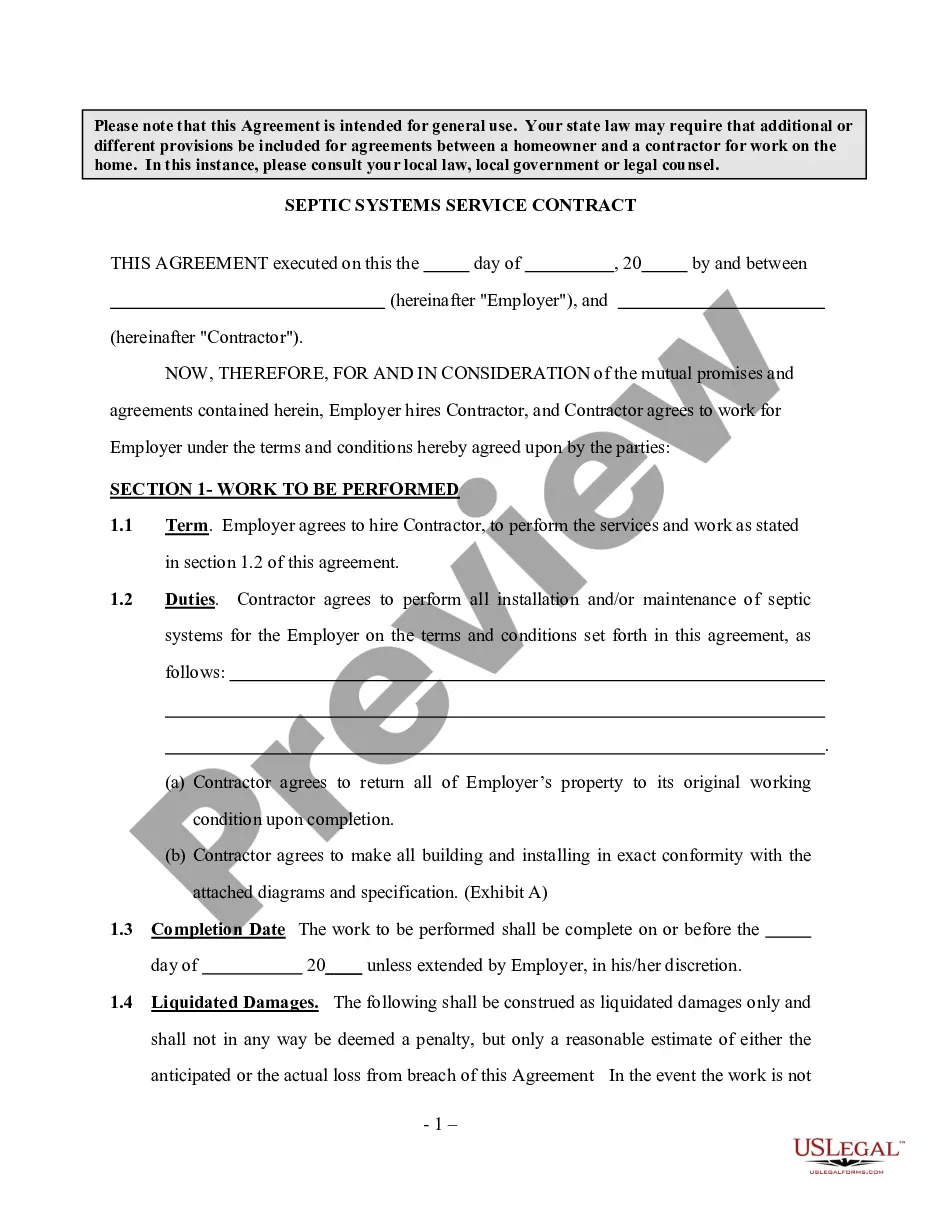
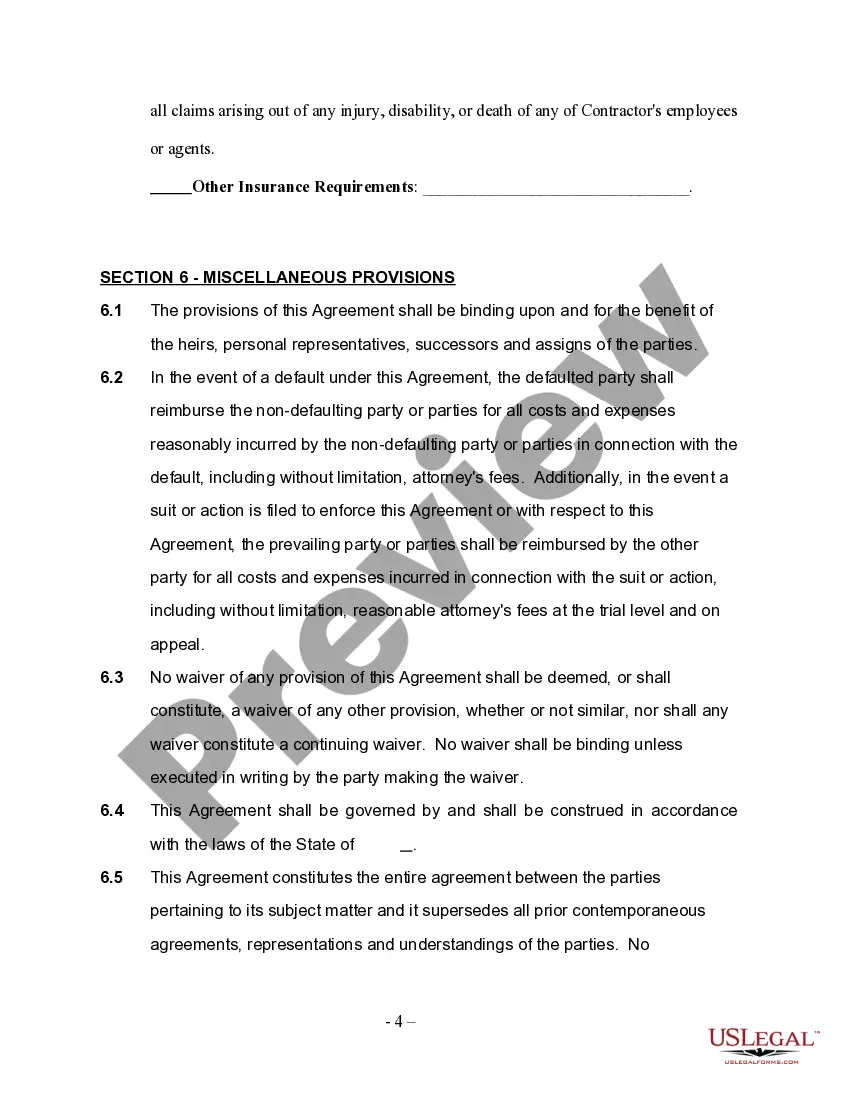
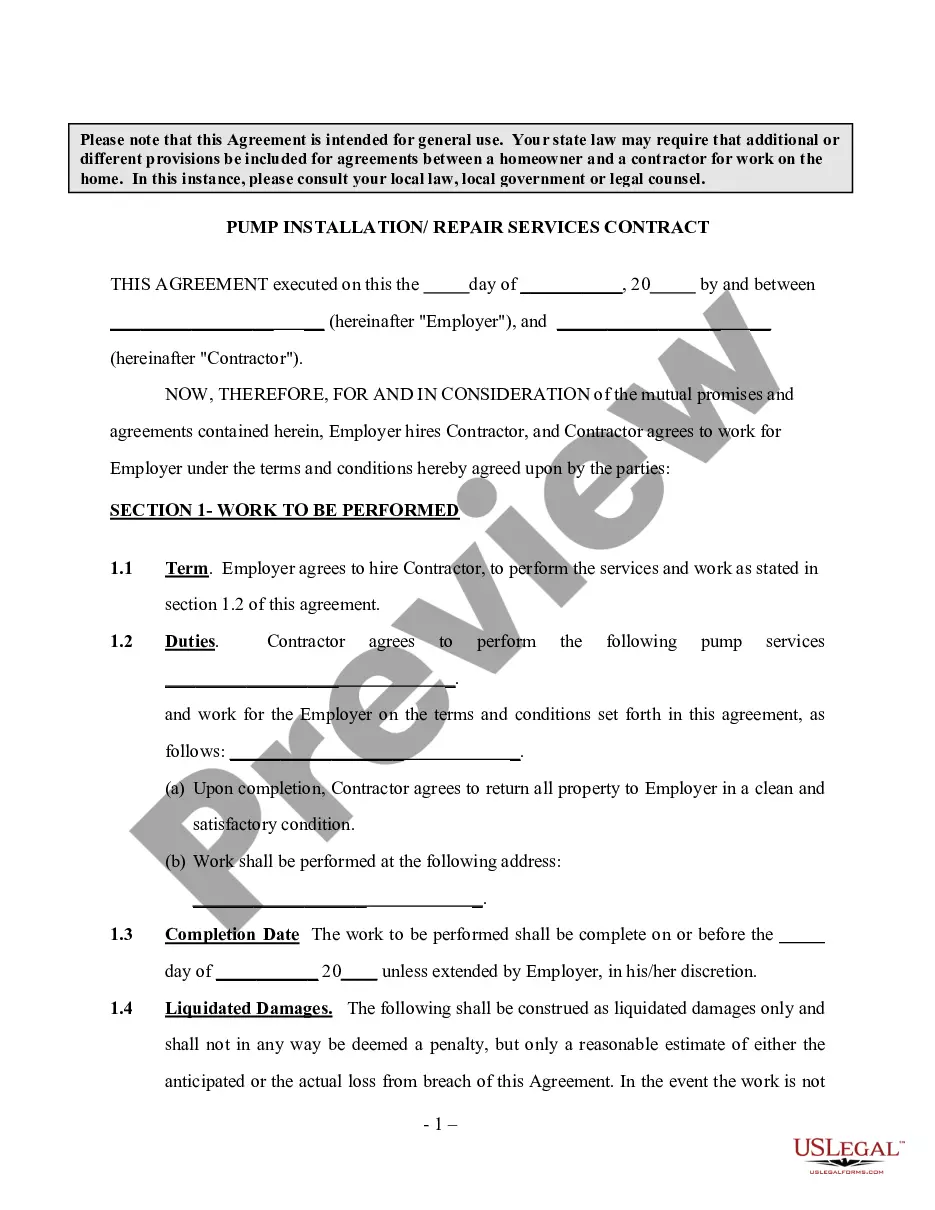
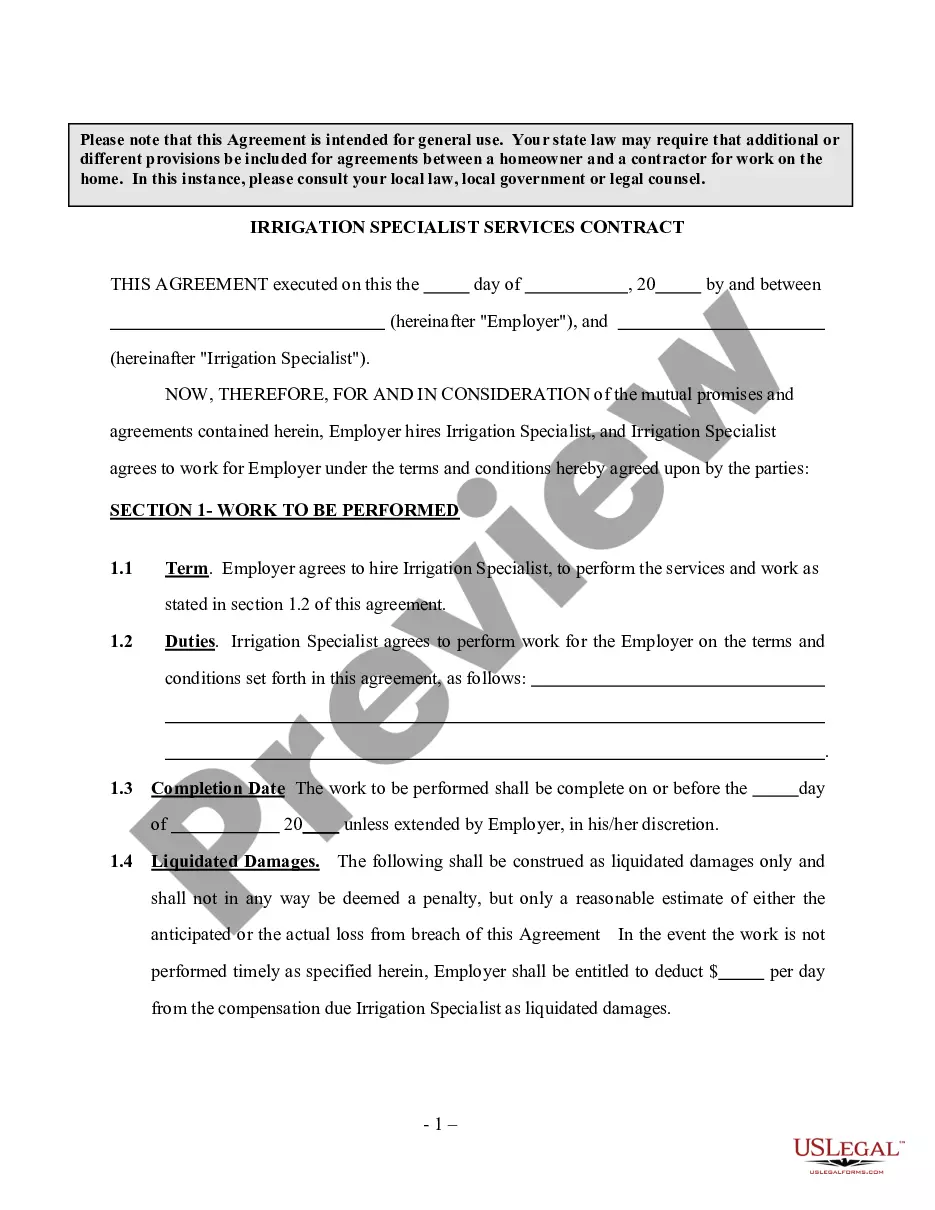
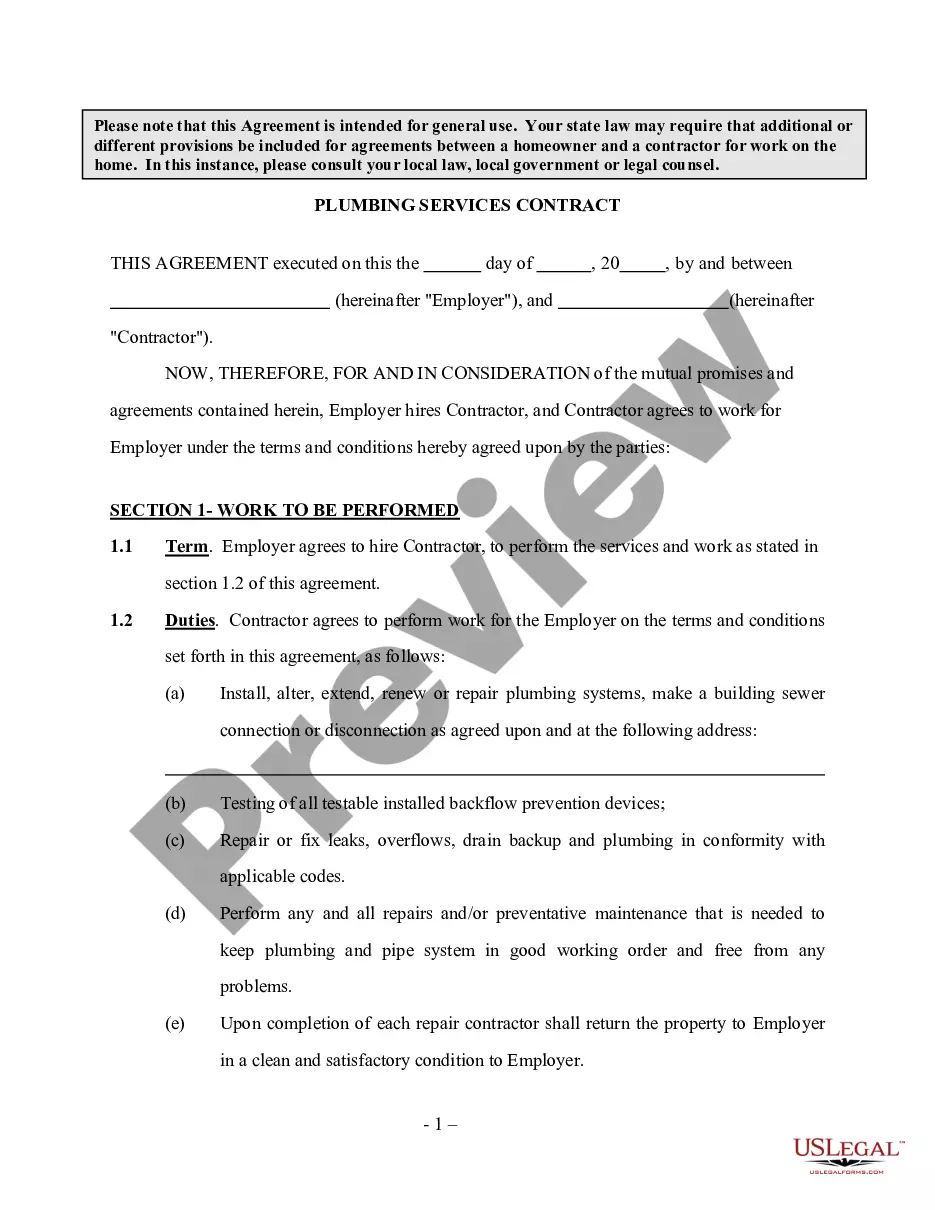
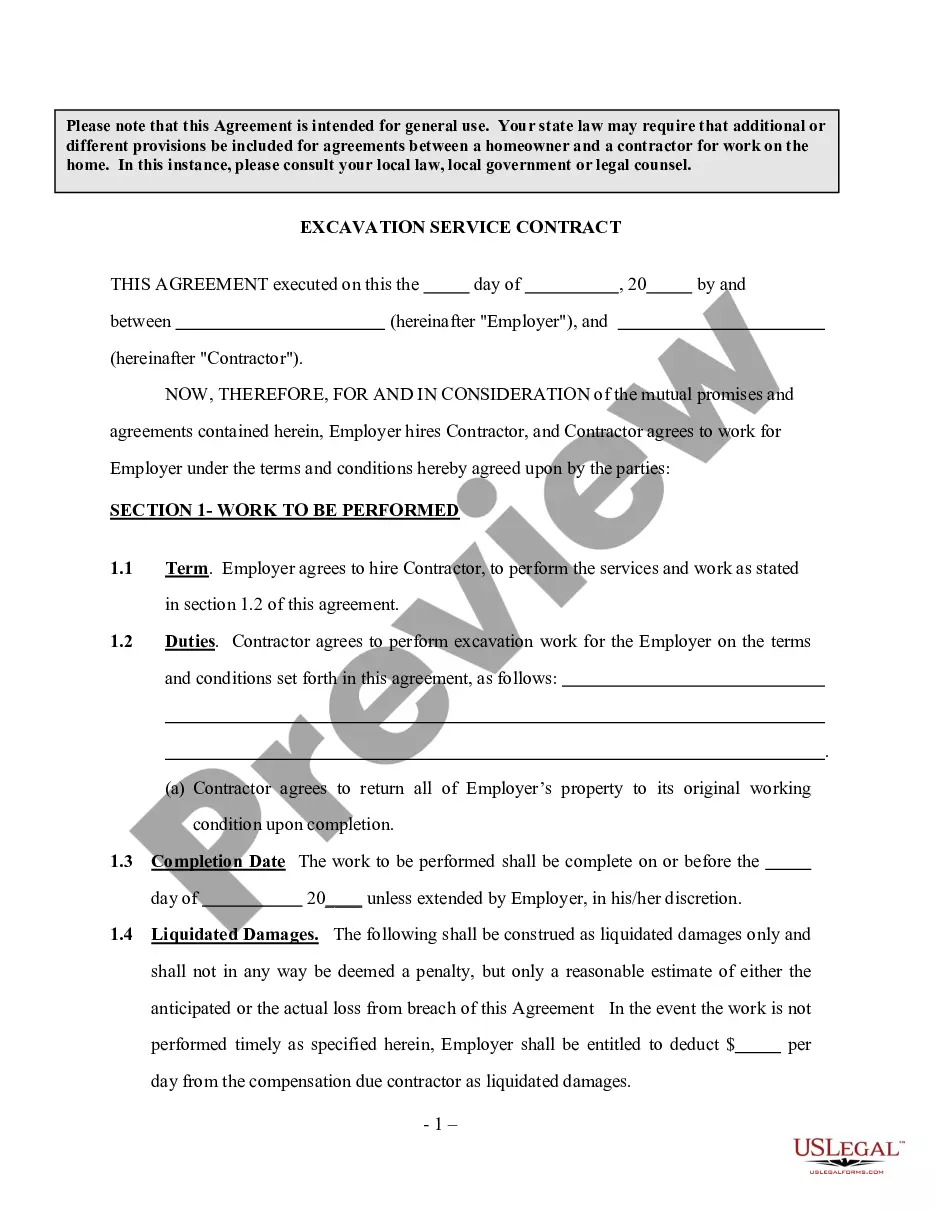
The Self-Employed Septic System Services Contract is a legal document that formalizes an agreement between a homeowner (the Employer) and an independent contractor (the Contractor) for the provision, installation, and maintenance of a septic system. This contract outlines the specific services to be performed, ensuring clarity and mutual understanding between both parties. Unlike general service agreements, this contract specifically focuses on septic system services, which is crucial due to the unique regulations and standards involved in this field.
Form components explained
- Work to be performed: This section details the services and work the Contractor agrees to undertake.
- Term: Specifies the duration of the contract and the timeline for the completion of services.
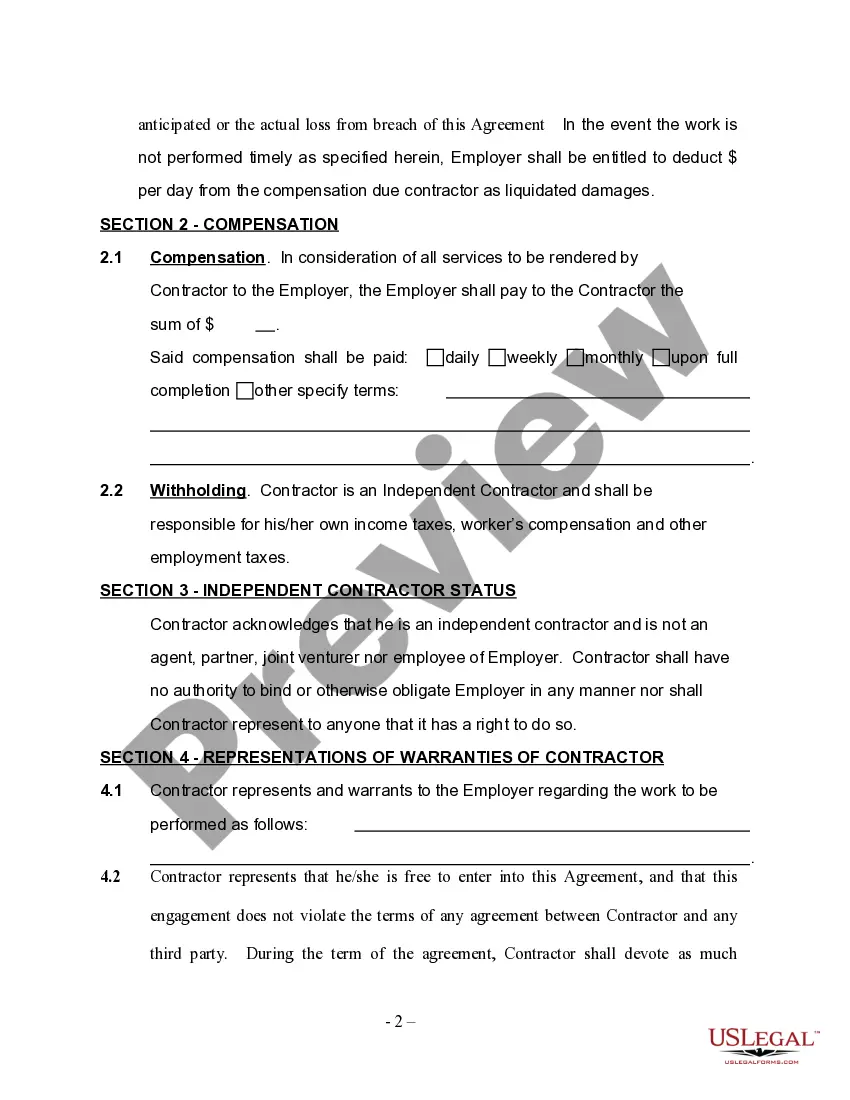
- Independent contractor status: Clarifies the Contractor's status as an independent entity, emphasizing that they are not an employee of the Employer.
- Compensation: Details the payment structure, including fees, payment methods, and schedules.
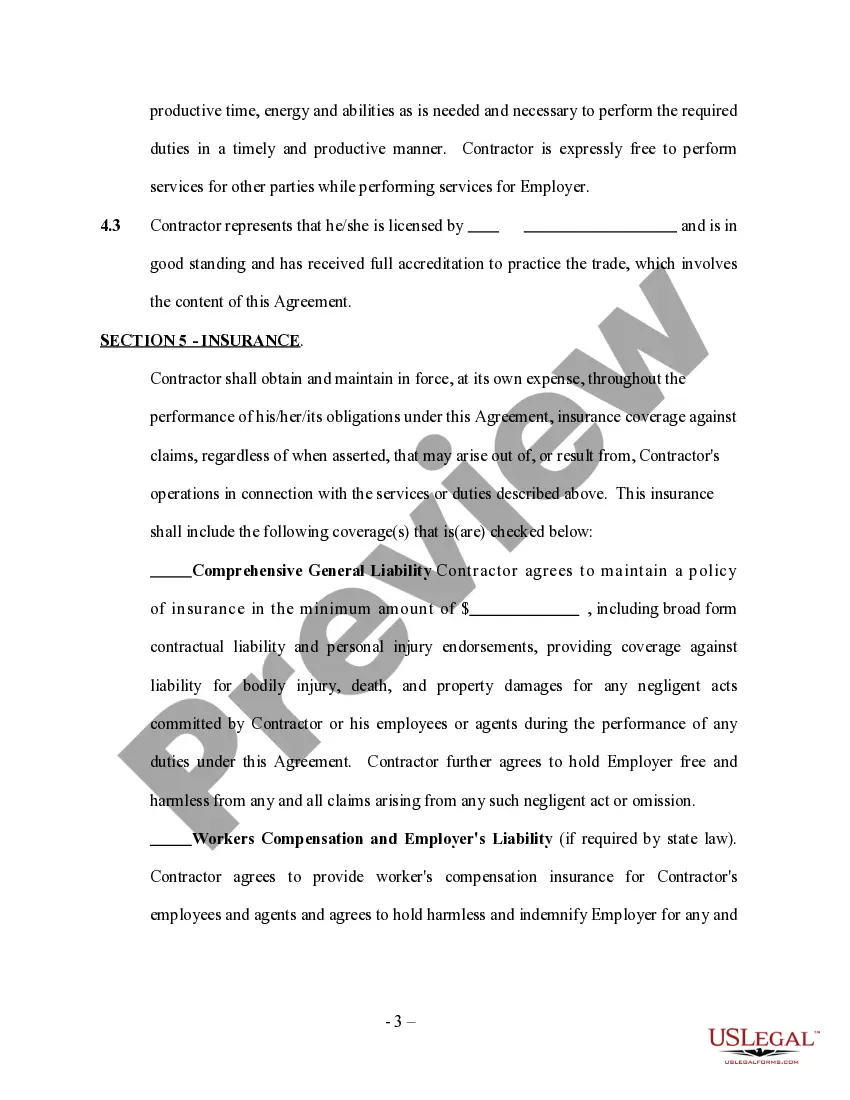
- Liability and insurance: Outlines expectations regarding insurance coverage and liability for damages or accidents during the work.

Situations where this form applies
This contract should be used when a homeowner hires an independent contractor to provide and install a septic system. It is essential for any parties wishing to establish a formal working relationship under the specified terms, particularly to ensure compliance with state regulations regarding septic systems. It can also be beneficial when the scope of work is complex or when specific guarantees or warranties are provided by the Contractor.
Who should use this form
This contract is intended for:
- Homeowners looking to hire independent contractors for septic system installation or maintenance.
- Independent contractors providing septic system services.
- Parties seeking clarity and legal protection in their working relationship concerning septic systems.
How to prepare this document
- Identify the parties: Clearly list the names and addresses of the Employer and Contractor.
- Specify the work: Detail the specific services to be performed regarding the septic system.
- Enter the term: Indicate the duration of the contract and any specific timelines for service completion.
- Outline compensation: Provide details regarding payment rates, methods, and timelines.
- Review and sign: Both parties should review the contract, make necessary adjustments, and sign to make the agreement legally binding.
Is notarization required?
In most cases, this form does not require notarization. However, some jurisdictions or signing circumstances might. US Legal Forms offers online notarization powered by Notarize, accessible 24/7 for a quick, remote process.
Get your form ready online
Our built-in tools help you complete, sign, share, and store your documents in one place.
Make edits, fill in missing information, and update formatting in US Legal Forms—just like you would in MS Word.
Download a copy, print it, send it by email, or mail it via USPS—whatever works best for your next step.
Sign and collect signatures with our SignNow integration. Send to multiple recipients, set reminders, and more. Go Premium to unlock E-Sign.
If this form requires notarization, complete it online through a secure video call—no need to meet a notary in person or wait for an appointment.
We protect your documents and personal data by following strict security and privacy standards.

Make edits, fill in missing information, and update formatting in US Legal Forms—just like you would in MS Word.

Download a copy, print it, send it by email, or mail it via USPS—whatever works best for your next step.

Sign and collect signatures with our SignNow integration. Send to multiple recipients, set reminders, and more. Go Premium to unlock E-Sign.

If this form requires notarization, complete it online through a secure video call—no need to meet a notary in person or wait for an appointment.

We protect your documents and personal data by following strict security and privacy standards.
Common mistakes
- Failing to specify the details of work to be performed.
- Not including payment terms or deadlines.
- Overlooking state-specific requirements for septic system contracts.
- Neglecting to clarify the status of the Contractor as independent.
- Not having both parties sign the contract.
Why complete this form online
- Convenience: Download and customize your contract from anywhere.
- Editability: Easily modify the form to meet your specific needs.
- Reliability: Legal forms created by licensed attorneys ensure compliance with applicable laws.
- Cost-effective: Access to professionally drafted forms without the high costs of legal fees.
Legal use & context
- The contract outlines the responsibilities of both parties regarding septic system services.
- It helps protect the rights of both the homeowner and the contractor by defining terms and expectations.
- This agreement can be enforced in a court of law, provided all relevant laws and regulations are followed.
- It serves as evidence of the agreement should any disputes arise regarding the services provided.
Summary of main points
- The Self-Employed Septic System Services Contract formalizes the agreement between a homeowner and an independent contractor.
- Clarity in terms, pricing, and responsibilities helps prevent disputes.
- State-specific regulations may affect the form, so local consultation is advisable.
- Utilizing this online form offers convenience and legal reliability.
Looking for another form?

Form popularity
FAQ
The septic pumping career field currently features a lot of job vacancies, making it great for job searchers trying to break in. This gives workers strong opportunities, even those with an initial lack of experience. A lot of people looking for new careers want something recession-proof with continuous job growth.
STEP 1: Plan your business. STEP 2: Form a legal entity. STEP 3: Register for taxes. STEP 4: Open a business bank account & credit card. STEP 5: Set up business accounting. STEP 6: Obtain necessary permits and licenses. STEP 7: Get business insurance.
STEP 1: Plan your business. STEP 2: Form a legal entity. STEP 3: Register for taxes. STEP 4: Open a business bank account & credit card. STEP 5: Set up business accounting. STEP 6: Obtain necessary permits and licenses. STEP 7: Get business insurance.
Selling a House With a Septic Tank: No Sewer, No Problem! It's time to put the house on the market, and you're nervous about how buyers will perceive the septic tankyour property's means of wastewater treatment. However, home sales involving septic tanks are par for the course.
The cost to supply and install a Septic System with a Sand Filter for an average 4 bedroom home ranges between $15,000 and $20,000. We will come out to service your system after it has been operating for 6 months. Ongoing Costs: There are no ongoing service contracts.
Although you can install your own septic tank, we recommend professional installation due to the amount of expertise and specialized equipment needed. In this article, we'll discuss the types of septic systems available to homeowners and the process and cost behind installation.
Installer Certification or Licensing. Septic Tank Professional Exam. Septic System Business License. Septic Tank Installation Permit.
This guidance is restricted to the Homeowner installing a conventional septic tank and drainfield system for their primary residence.An onsite wastewater permit is required to install or modify your own on-site wastewater treatment system. You are only allowed to install your own system.