Indemnification of Lessor
What is this form?
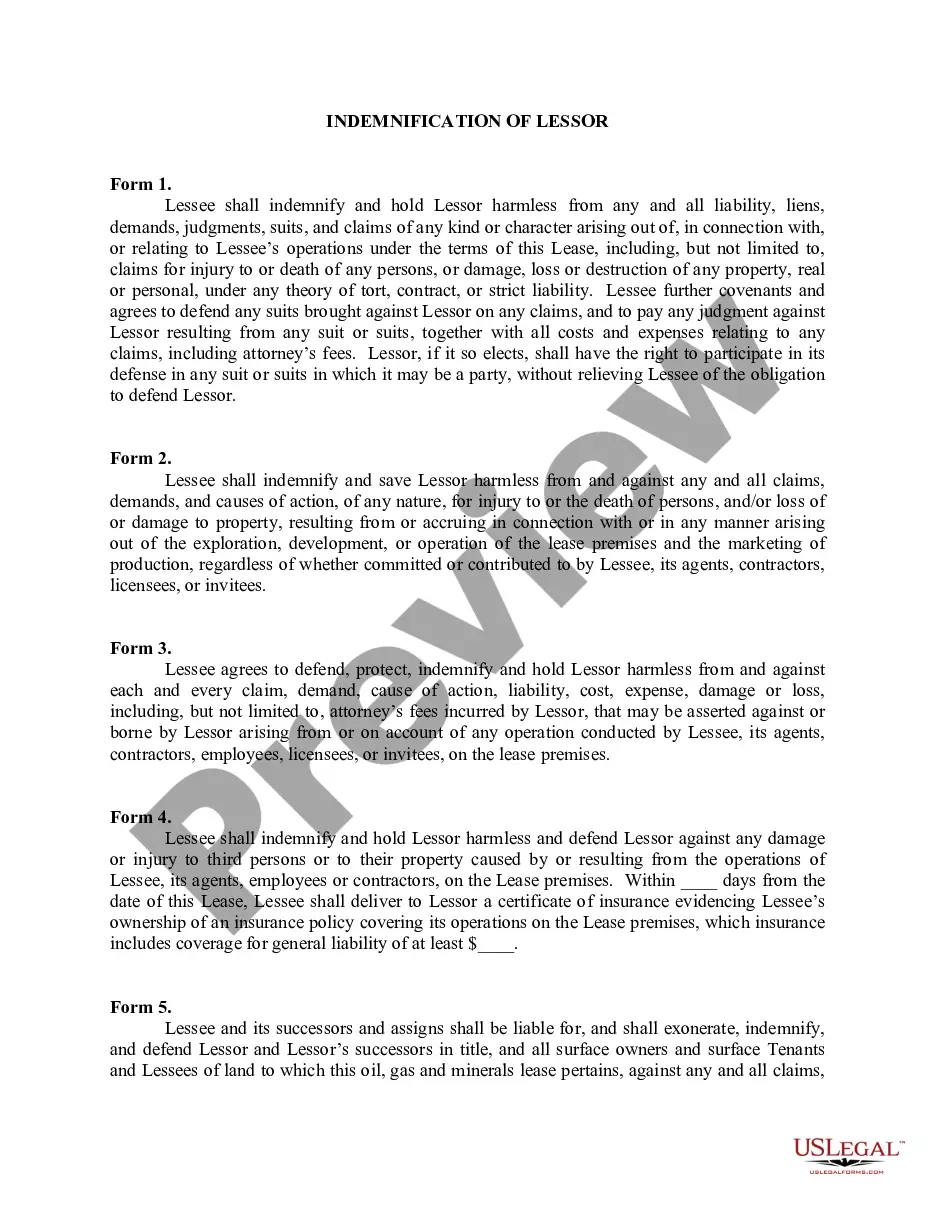
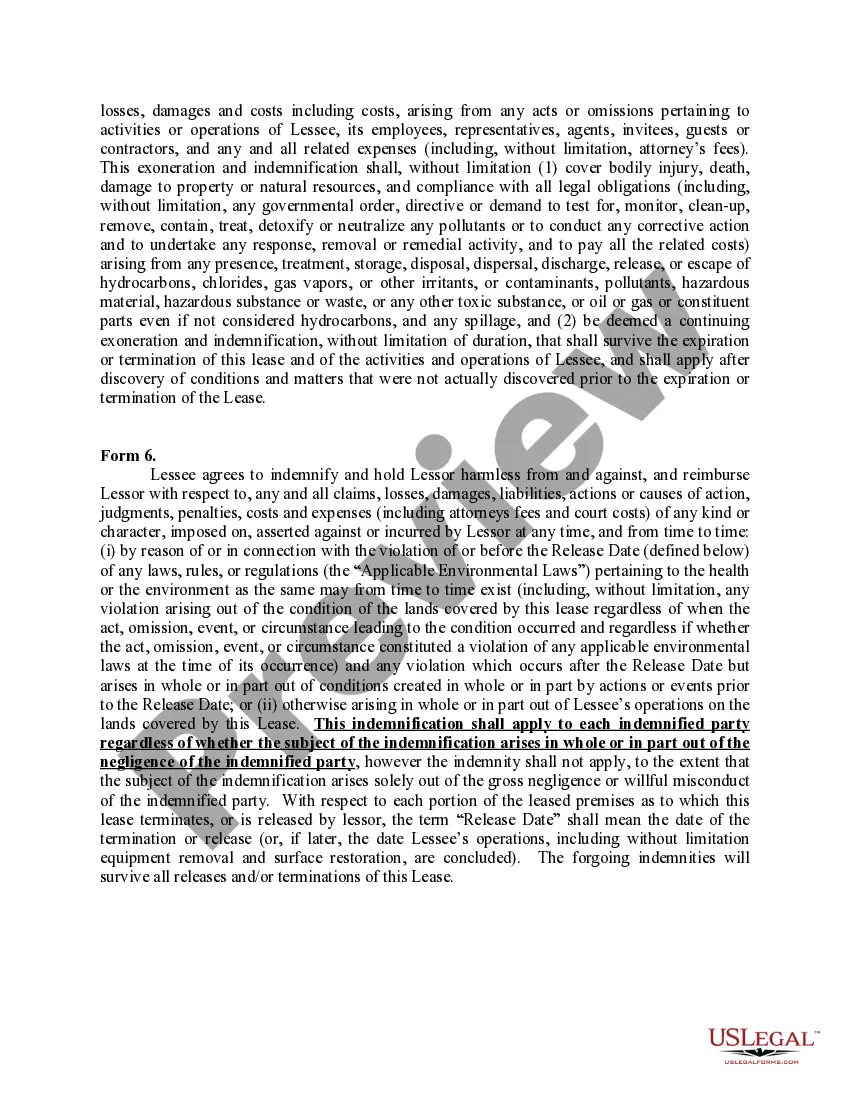
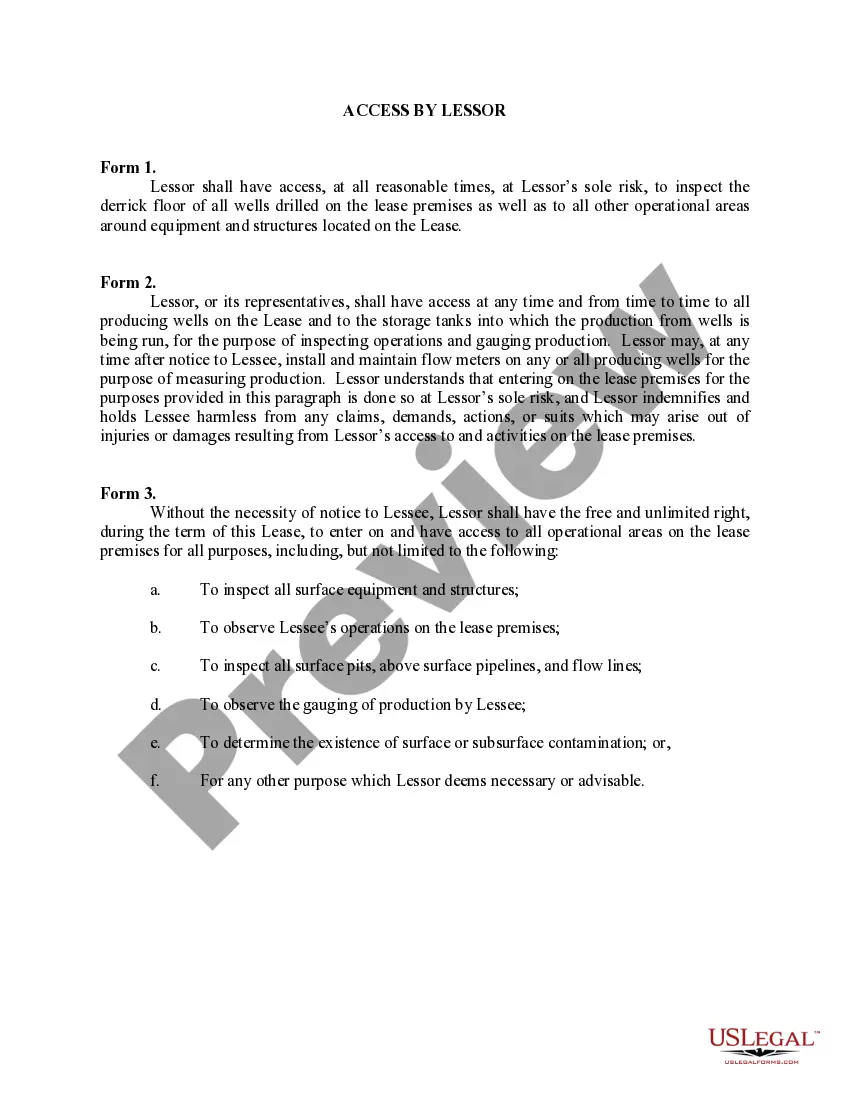
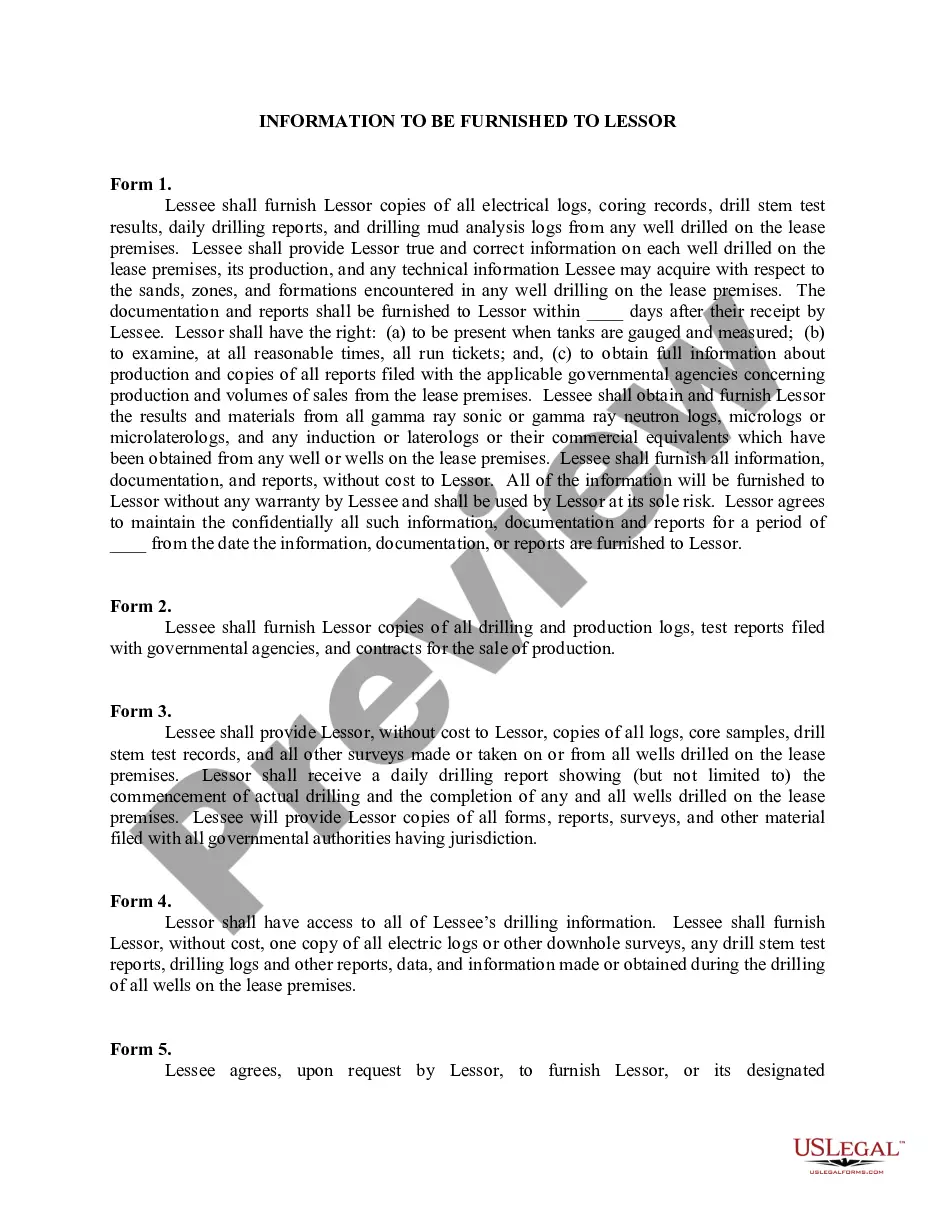
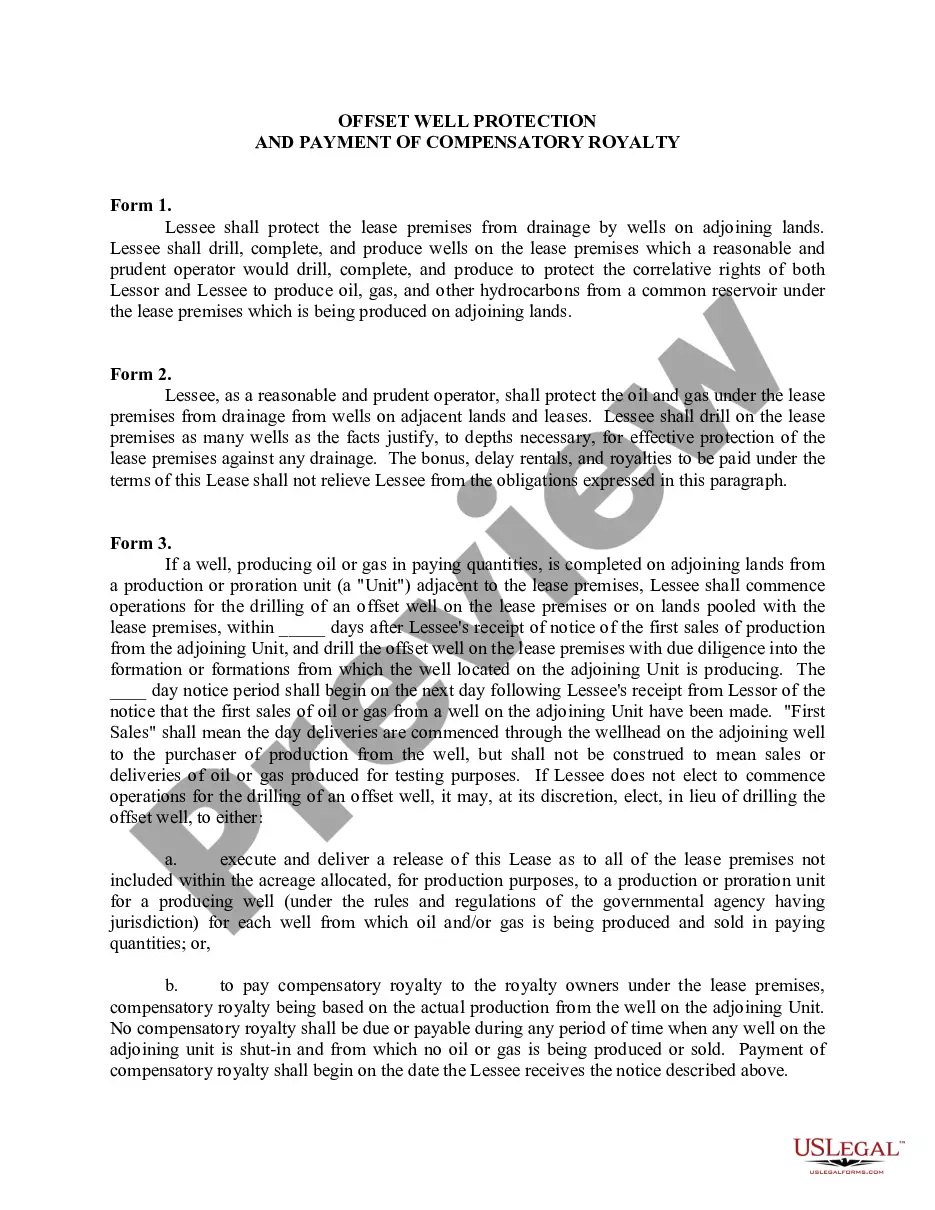
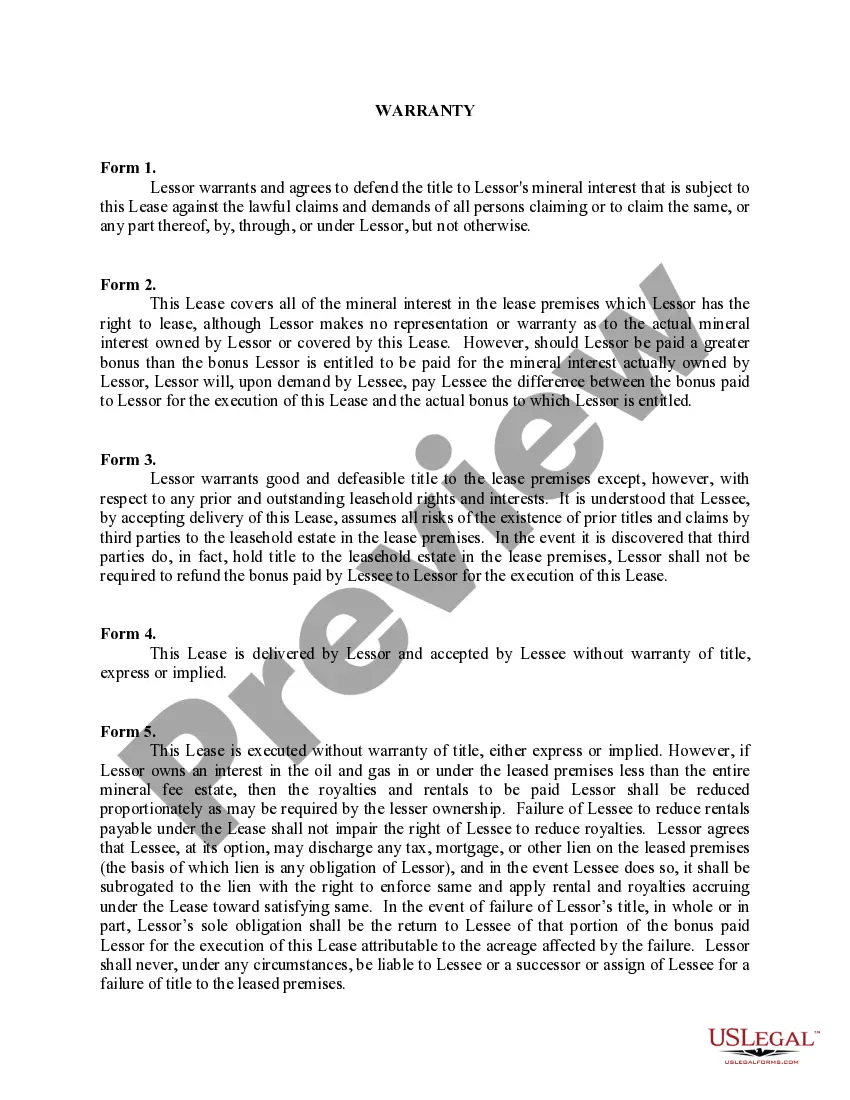
The Indemnification of Lessor form is a legal document that outlines the responsibilities of the Lessee to indemnify and protect the Lessor against various claims related to lease operations. This form can be used as a rider to an existing Oil and Gas Lease, allowing Lessors to specify additional protections and limitations based on their concerns. It differs from standard lease agreements by explicitly detailing indemnification in diverse scenarios, including personal injury and environmental liabilities.
Key components of this form
- Indemnification clause detailing Lessee's obligations to defend and hold Lessor harmless from claims.
- Responsibilities for covering legal fees and judgments against the Lessor.
- Provisions for insurance requirements to protect against lease-related claims.
- Specific environmental law compliance and liabilities tied to the Lessee's operations.
- Continuous indemnification that survives beyond the lease term.
When to use this document
This form should be utilized when entering a lease agreement involving oil and gas operations, especially if the Lessor has specific concerns about liabilities. It is particularly relevant in situations where the Lessor wants to secure additional protections against potential claims arising from Lessee's actions or negligence during lease operations. This can include incidents of personal injury, property damage, or violations of environmental regulations.
Who needs this form
- Lessors seeking additional protection against liabilities associated with lease agreements.
- Lessees wanting to clarify their responsibilities in the lease contract.
- Landowners involved in oil and gas leasing who wish to establish clear indemnity terms.
- Legal professionals assisting clients in drafting lease agreements.
Instructions for completing this form
- Identify the parties involved, including the Lessor and Lessee.
- Specify the property and the scope of the lease agreement.
- Detail the indemnification obligations and any specific claims to be covered.
- Include any insurance requirements as per the lease terms.
- Both parties must sign and date the document to make it legally effective.
Notarization guidance
This form does not typically require notarization unless specified by local law. However, it is recommended to verify any notarization requirements specific to the jurisdiction where the lease is executed to ensure its legal validity.
Get your form ready online
Our built-in tools help you complete, sign, share, and store your documents in one place.
Make edits, fill in missing information, and update formatting in US Legal Forms—just like you would in MS Word.
Download a copy, print it, send it by email, or mail it via USPS—whatever works best for your next step.
Sign and collect signatures with our SignNow integration. Send to multiple recipients, set reminders, and more. Go Premium to unlock E-Sign.
If this form requires notarization, complete it online through a secure video call—no need to meet a notary in person or wait for an appointment.
We protect your documents and personal data by following strict security and privacy standards.

Make edits, fill in missing information, and update formatting in US Legal Forms—just like you would in MS Word.

Download a copy, print it, send it by email, or mail it via USPS—whatever works best for your next step.

Sign and collect signatures with our SignNow integration. Send to multiple recipients, set reminders, and more. Go Premium to unlock E-Sign.

If this form requires notarization, complete it online through a secure video call—no need to meet a notary in person or wait for an appointment.

We protect your documents and personal data by following strict security and privacy standards.
Mistakes to watch out for
- Failing to clearly define the scope of indemnification.
- Not including insurance requirements, which can leave the Lessor exposed to risks.
- Omitting signatures from either party, leading to potential legal disputes.
- Neglecting to review state-specific laws that might impact the agreement.
Benefits of completing this form online
- Convenience of downloading and completing forms from anywhere.
- Editability to customize specific provisions to meet your needs.
- Access to forms drafted by licensed attorneys, ensuring they meet legal standards.
- Instant availability allows for quick processing of lease agreements.
Key takeaways
- The Indemnification of Lessor form protects property owners from liabilities associated with lessee operations.
- It includes crucial indemnification clauses designed for oil and gas leases.
- Completing this form accurately ensures legal protection and compliance with state laws.
- The form is suitable for property owners and lessees involved in oil and gas transactions.
Looking for another form?
Form popularity
FAQ
To indemnify someone is to absolve that person from responsibility for damage or loss arising from a transaction. Indemnification is the act of not being held liable for or being protected from harm, loss, or damages, by shifting the liability to another party.
Indemnity is a contractual agreement between two parties. In this arrangement, one party agrees to pay for potential losses or damages caused by another party.With indemnity, the insurer indemnifies the policyholderthat is, promises to make whole the individual or business for any covered loss.
Transitive verb. 1 : to secure against hurt, loss, or damage. 2 : to make compensation to for incurred hurt, loss, or damage. Other Words from indemnify Synonyms Choose the Right Synonym Example Sentences Learn More about indemnify.
A written lease should protect both the landlord and the tenant. Most leases are either of six month or one year duration. A standard lease form can be obtained from a book or stationery store. You can usually add special provisions to these forms to fit your special lease problems or needs.
You should look to limit indemnification clauses by narrowing their scope, putting in caps on damages, and clearly defining the indemnifiable acts (i.e. the representations and warranties in the example above). Also consider purchasing insurance as a means to limit your financial risk.
Unless the landlord is grossly negligent in getting the repairs made, the tenant does not have any recourse (other than to sue for breach of the lease) against the landlord and the tenant's insurance should cover his losses.Often, a tenant will request mutual indemnification from the landlord.
Company/Business/Individual Name shall fully indemnify, hold harmless and defend _______ and its directors, officers, employees, agents, stockholders and Affiliates from and against all claims, demands, actions, suits, damages, liabilities, losses, settlements, judgments, costs and expenses (including but not
Transitive verb. 1 : to secure against hurt, loss, or damage. 2 : to make compensation to for incurred hurt, loss, or damage. Other Words from indemnify Synonyms Choose the Right Synonym Example Sentences Learn More about indemnify.
Indemnify. hold harmless. defend.