Affidavit for Transferring Property After Death in Joint Tenancy with Right of Survivorship by Surviving Tenant when one Tenant Is Deceased
About this form
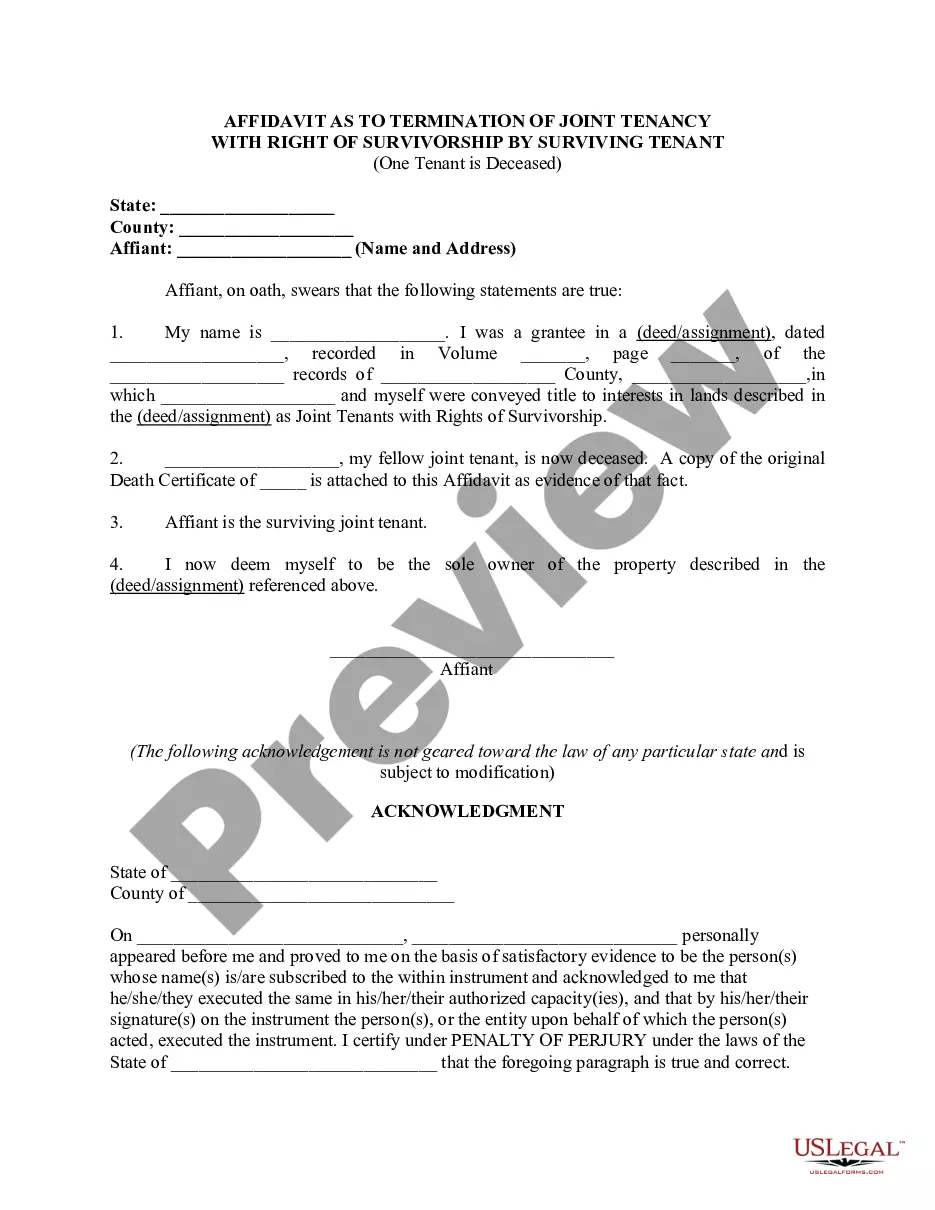
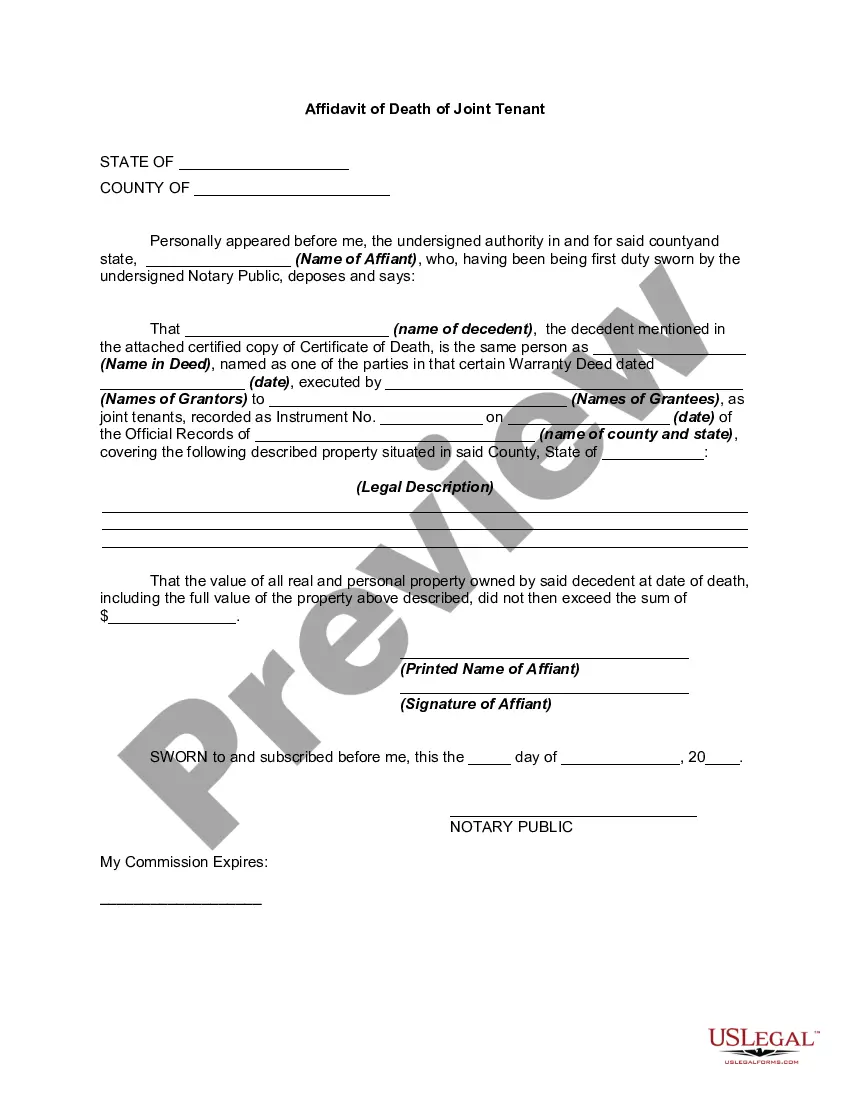
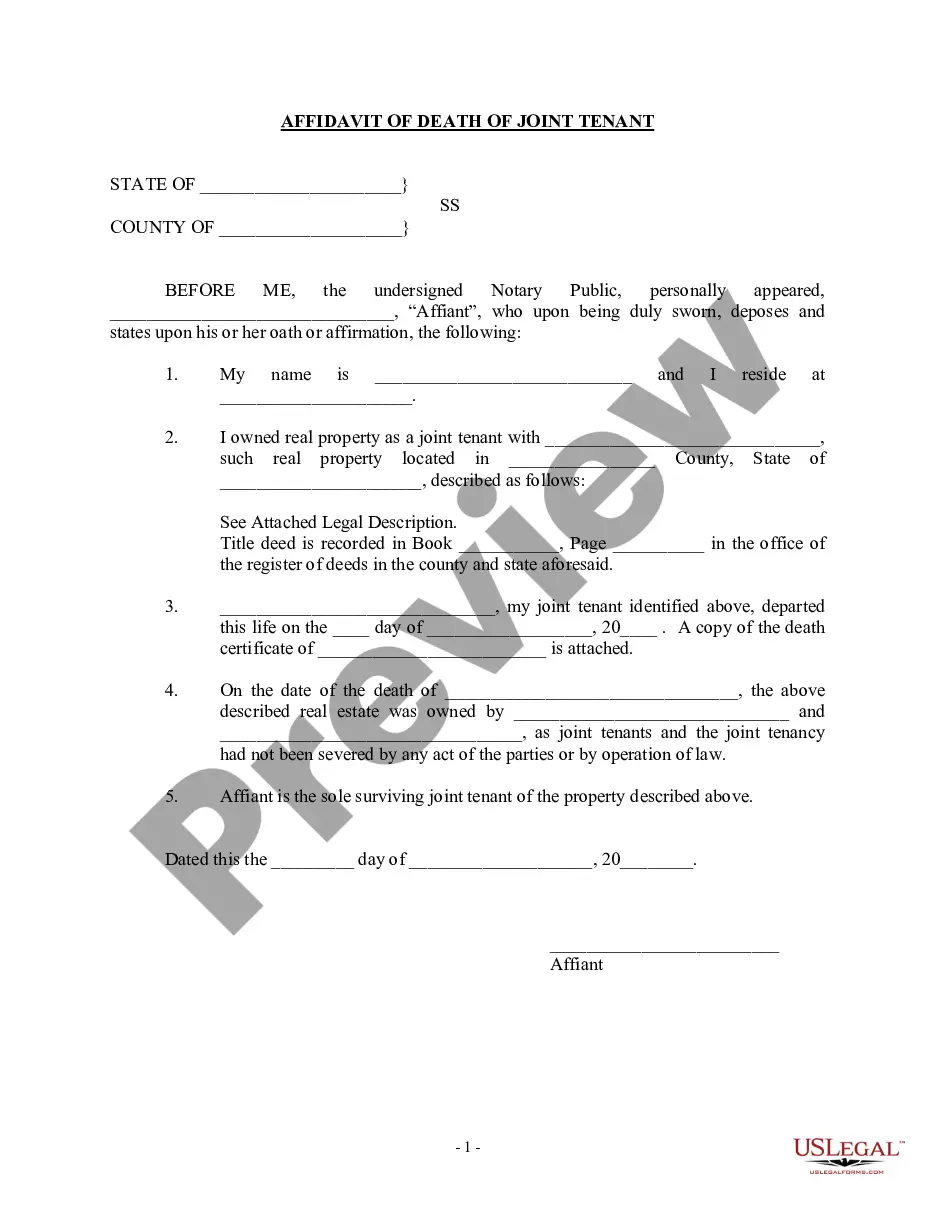
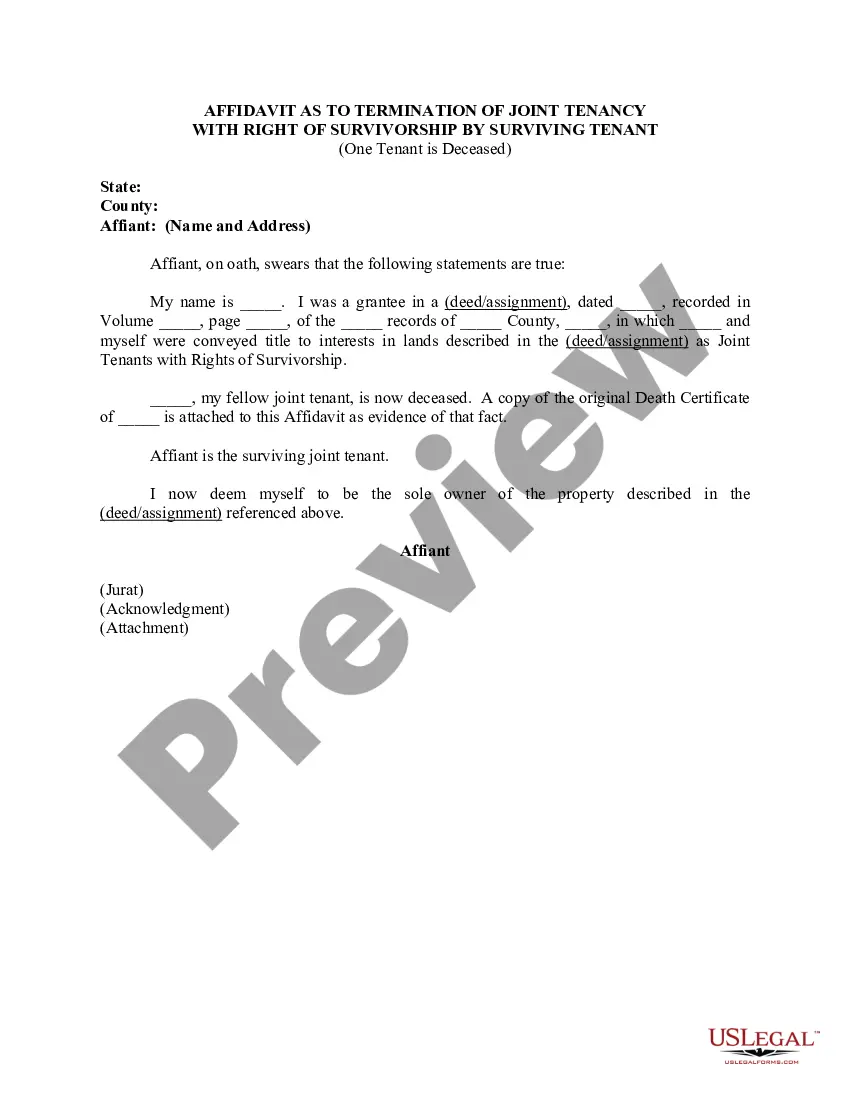
The Affidavit for Transferring Property After Death in Joint Tenancy with Right of Survivorship by Surviving Tenant is a legal document used to establish the transfer of property ownership to the surviving joint tenant after the death of one tenant. This affidavit serves as a formal statement confirming the death of a joint tenant and is necessary to update the property deed to reflect that the surviving tenant is now the sole owner. It differs from other property transfer forms by specifically addressing situations involving joint tenancy with right of survivorship, ensuring a smooth transition of property rights without the need for probate.
Key components of this form
- Identification of the affiant, the surviving joint tenant.
- Details regarding the original deed, including date and recording information.
- Confirmation of the death of the other joint tenant, supported by a death certificate.
- Declaration of the affiant as the sole owner of the property after the other tenant's death.
- Anotarization section for legal verification of the signatory's identity.

When to use this form
This affidavit should be used when one of the joint tenants in a property ownership arrangement has passed away, and the surviving tenant needs to update the property deed to reflect their sole ownership. It is particularly relevant in situations where the property needs to be sold, refinanced, or transferred without going through the lengthy probate process.
Who should use this form
- Surviving joint tenants looking to establish sole ownership of a property after the death of a co-tenant.
- Individuals seeking to avoid probate on a jointly owned property.
- Persons handling estate matters for deceased individuals with joint property ownership.
Completing this form step by step
- Identify yourself as the surviving joint tenant by providing your name and address.
- Specify details about the original deed, including the date it was recorded and the county records information.
- Attach a copy of the death certificate of the deceased joint tenant.
- Declare your status as the surviving tenant and your intent to claim sole ownership of the property.
- Sign the affidavit in the presence of a notary public for verification.
Does this document require notarization?
This document requires notarization to meet legal standards. US Legal Forms provides secure online notarization powered by Notarize, allowing you to complete the process through a verified video call, available 24/7.
Get your form ready online
Our built-in tools help you complete, sign, share, and store your documents in one place.
Make edits, fill in missing information, and update formatting in US Legal Forms—just like you would in MS Word.
Download a copy, print it, send it by email, or mail it via USPS—whatever works best for your next step.
Sign and collect signatures with our SignNow integration. Send to multiple recipients, set reminders, and more. Go Premium to unlock E-Sign.
If this form requires notarization, complete it online through a secure video call—no need to meet a notary in person or wait for an appointment.
We protect your documents and personal data by following strict security and privacy standards.

Make edits, fill in missing information, and update formatting in US Legal Forms—just like you would in MS Word.

Download a copy, print it, send it by email, or mail it via USPS—whatever works best for your next step.

Sign and collect signatures with our SignNow integration. Send to multiple recipients, set reminders, and more. Go Premium to unlock E-Sign.

If this form requires notarization, complete it online through a secure video call—no need to meet a notary in person or wait for an appointment.

We protect your documents and personal data by following strict security and privacy standards.
Avoid these common issues
- Failing to include a copy of the death certificate, which is essential for validation.
- Not properly notarizing the affidavit, which may render it invalid.
- Providing incorrect details about the original deed, leading to potential legal issues.
Benefits of using this form online
- Convenience of downloading anytime from anywhere.
- Editability to easily fill in personal details and make necessary adjustments.
- Reliable templates drafted by licensed attorneys to ensure legal compliance.
Looking for another form?

Form popularity
FAQ
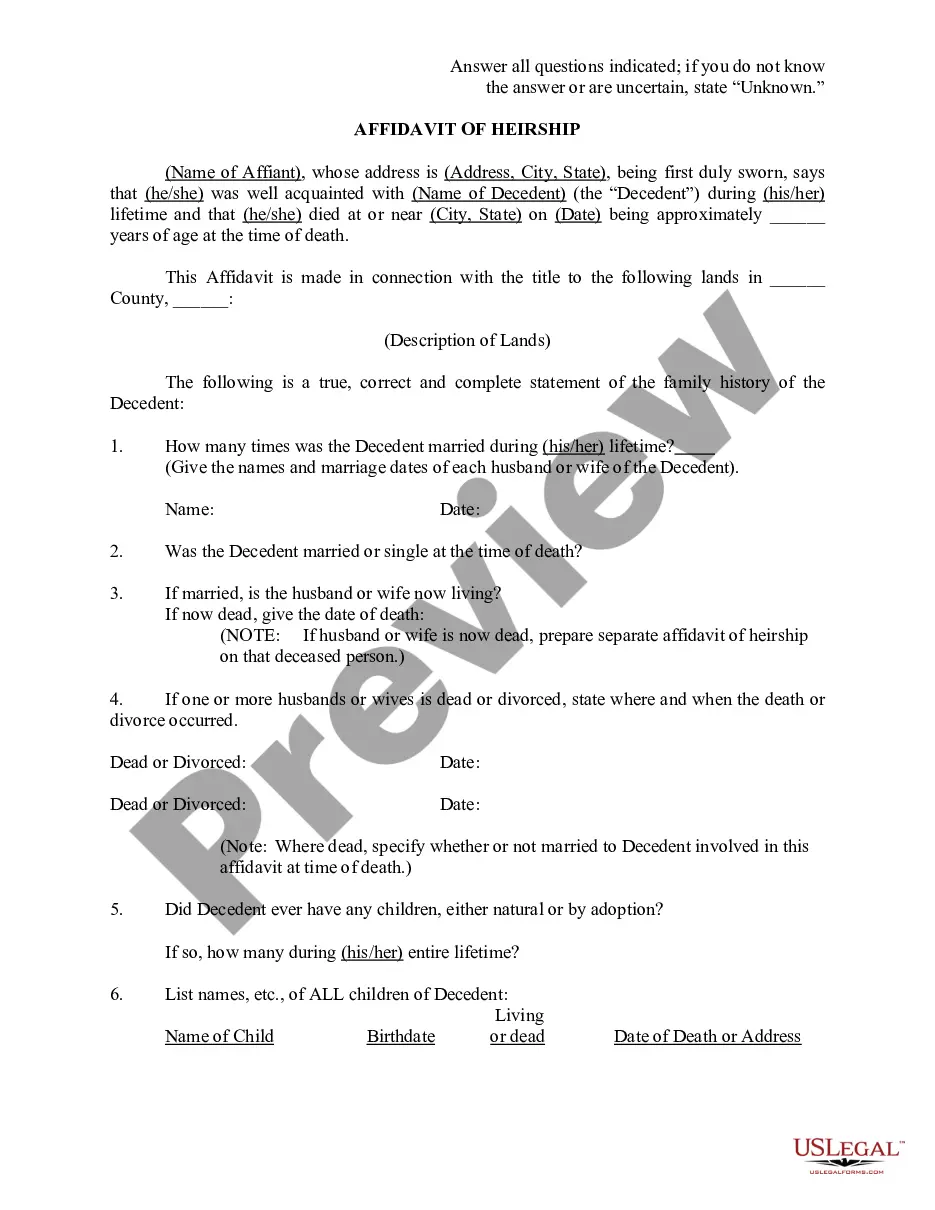
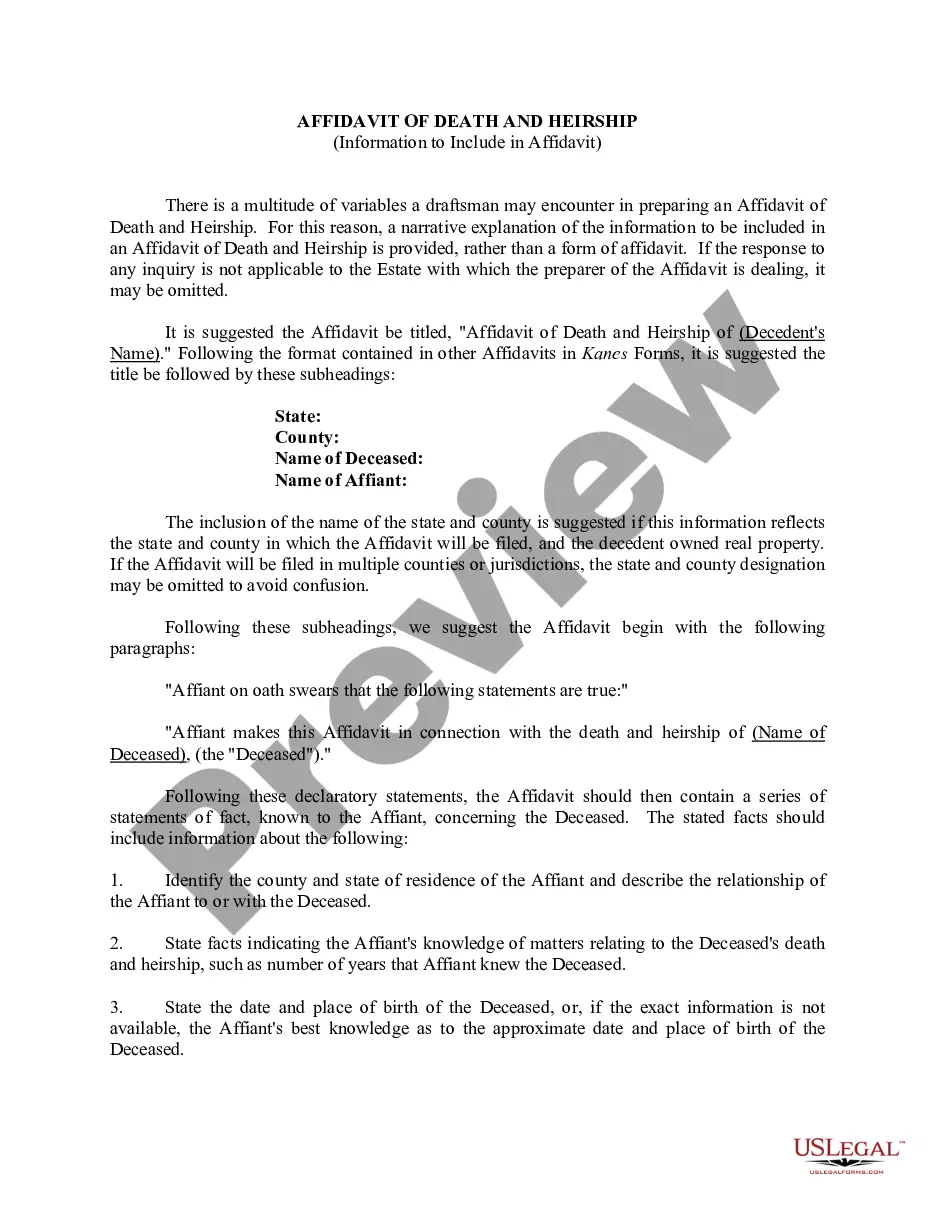
This form is a legal document used to transfer property to the surviving joint tenant after the death of the other joint tenant. It confirms the death, identifies the affiant, details the original deed, and declares the surviving tenant as the sole owner. It updates the deed and, in many cases, avoids probate. It requires a death certificate and notarization.
Yes. The affidavit needs to be sworn and notarized to verify the signatory’s identity and the facts stated. This form includes a notarization section as part of the legal verification, which helps it be accepted when updating the property deed after death.
No. A death certificate is an official government record of death, while this form uses the death certificate to confirm death for transferring property. The affidavit itself is the sworn statement used to declare the surviving tenant as the sole owner and to update the deed.
The form requires that the death of the other joint tenant be confirmed, typically via a death certificate, and then the affidavit is used to declare the surviving tenant as sole owner and record the deed update. The form itself does not prescribe four stages; rely on the death certificate for verification.
Not addressed in this form; it focuses on transferring property after death by the surviving tenant, with required statements: affiant identification, original deed details, death confirmation, and notarization. For evaluating the advantages or disadvantages of joint tenancy, or other related issues, consult a licensed attorney.
This form is tailored to transferring property to the surviving joint tenant after a co-tenant dies. It requires identifying the affiant, linking to the original deed, confirming death with a death certificate, declaring the surviving tenant as the sole owner, and provides a notarization section to verify identity.