Use and Occupancy Agreement by Purchaser Pre-closing
Understanding this form
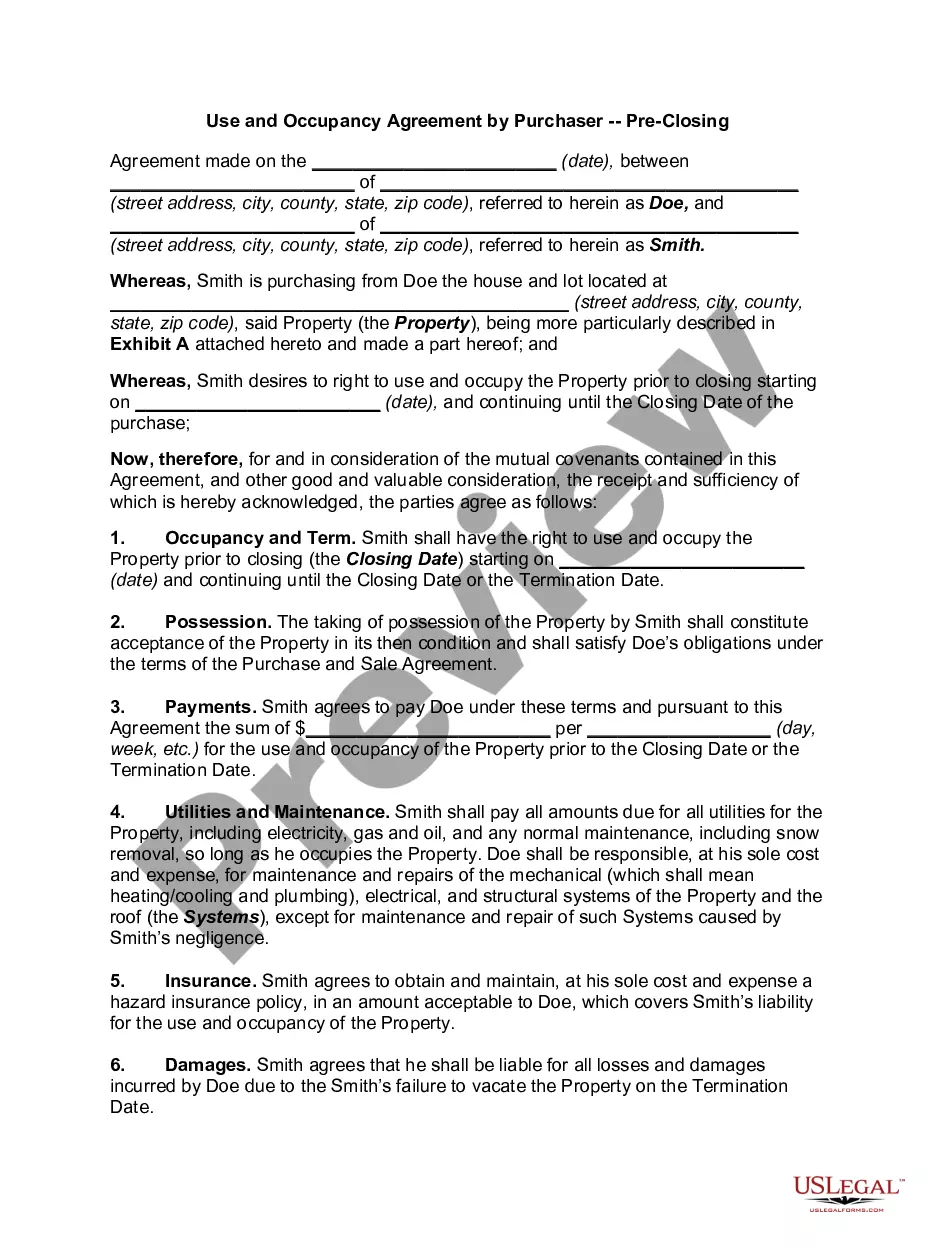
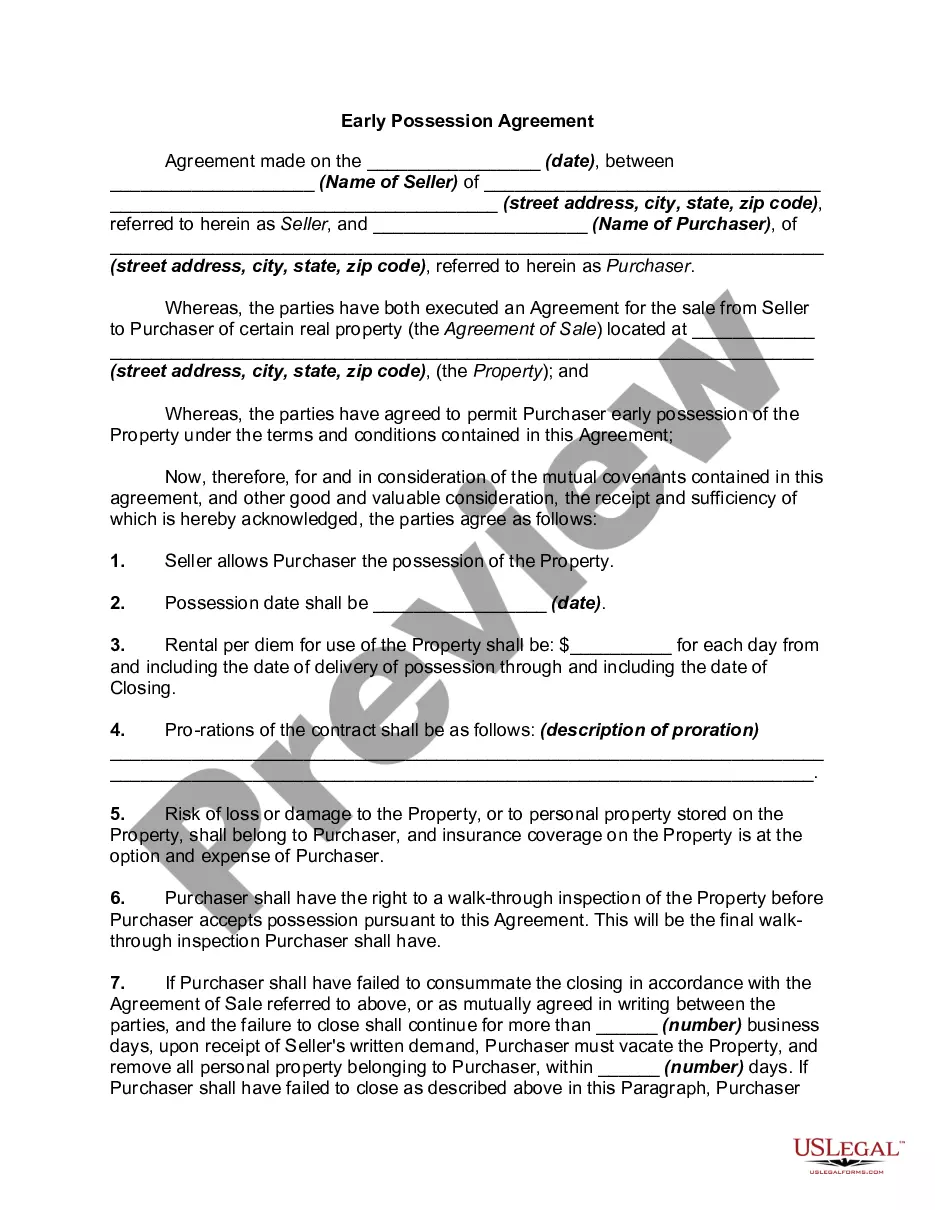
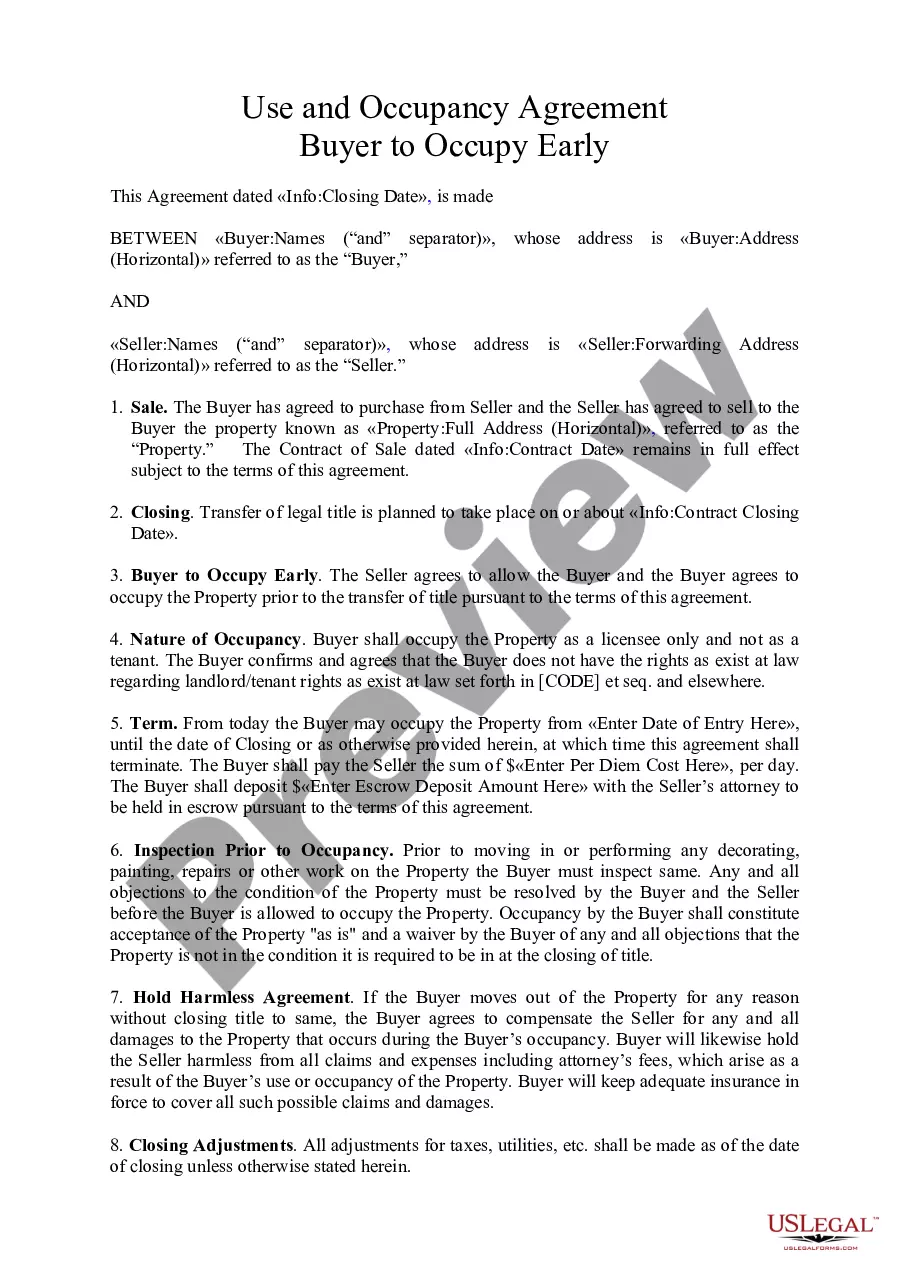
The Use and Occupancy Agreement by Purchaser Pre-closing allows a buyer of residential property to occupy the property before the official closing date. This agreement outlines the terms under which the buyer can use the property, ensuring both parties understand their rights and responsibilities during this pre-closing period. Unlike a standard lease, this form is specifically intended for situations involving a property sale pending finalization.
Form components explained
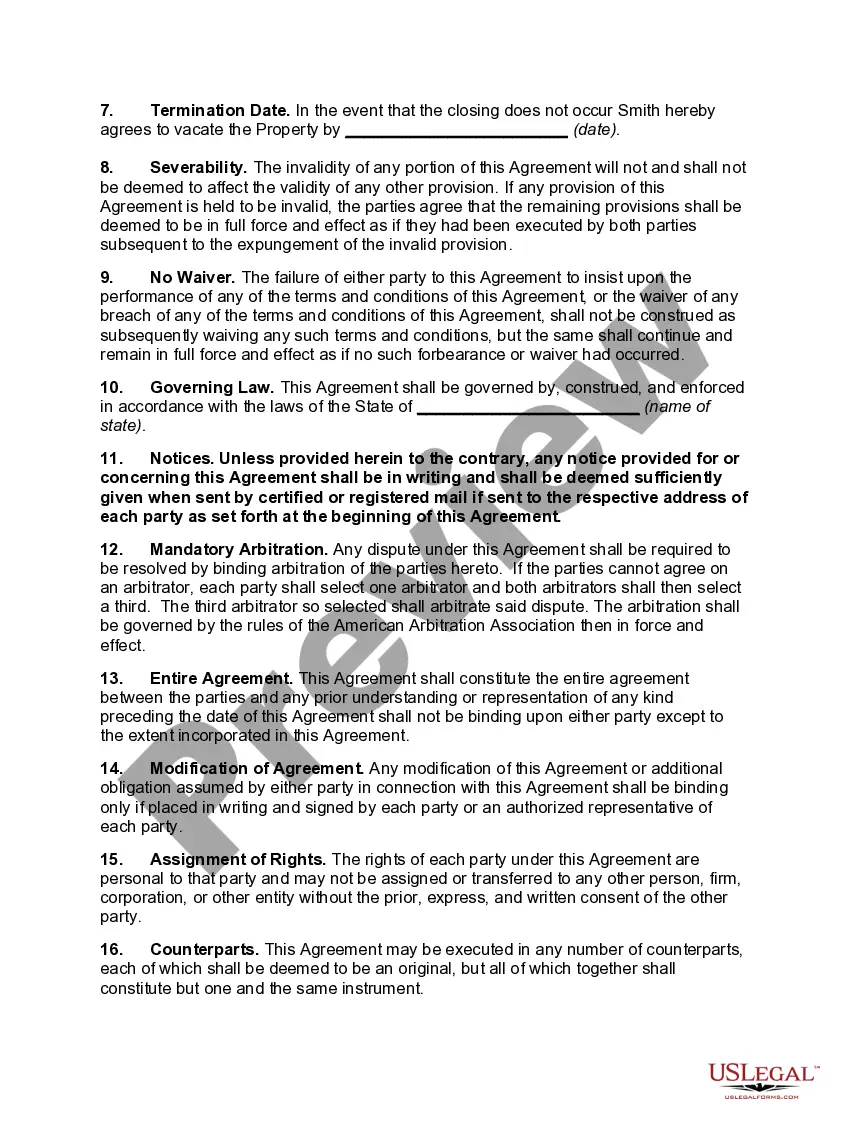
- Occupancy and Term: Specifies the start date for occupancy and the duration until closing.
- Payments: Details the rental fee the purchaser must pay for using the property before closing.
- Utilities and Maintenance: Outlines responsibilities for utility payments and maintenance of the property.
- Insurance: Requires the purchaser to obtain a hazard insurance policy for the property.
- Termination Date: States when the purchaser must vacate the property if closing does not occur.
When to use this document
This form is particularly useful when a buyer wishes to move into a property before the closing date. Common scenarios include the need for the buyer to start renovations, immediate residency for personal reasons, or when the seller is ready for the buyer to move in before the final transaction is completed.
Intended users of this form
This agreement is intended for:
- Purchasers of residential properties.
- Property sellers willing to allow occupancy prior to closing.
- Individuals or entities involved in real estate transactions where pre-closing occupancy is necessary.
Instructions for completing this form
- Identify the parties involved: Fill in the names and addresses of both the buyer and the seller.
- Specify the property: Enter the address of the property that is the subject of the agreement.
- Detail the occupancy dates: Provide the start date of occupancy and any termination date if applicable.
- Outline payment terms: State the amount the purchaser will pay for occupancy and the payment frequency.
- Review responsibilities: Ensure both parties understand their obligations regarding utilities, maintenance, and insurance.
Does this document require notarization?
This form must be notarized to be legally valid. US Legal Forms provides secure online notarization powered by Notarize, allowing you to complete the process through a verified video call.
Get your form ready online
Our built-in tools help you complete, sign, share, and store your documents in one place.
Make edits, fill in missing information, and update formatting in US Legal Forms—just like you would in MS Word.
Download a copy, print it, send it by email, or mail it via USPS—whatever works best for your next step.
Sign and collect signatures with our SignNow integration. Send to multiple recipients, set reminders, and more. Go Premium to unlock E-Sign.
If this form requires notarization, complete it online through a secure video call—no need to meet a notary in person or wait for an appointment.
We protect your documents and personal data by following strict security and privacy standards.

Make edits, fill in missing information, and update formatting in US Legal Forms—just like you would in MS Word.

Download a copy, print it, send it by email, or mail it via USPS—whatever works best for your next step.

Sign and collect signatures with our SignNow integration. Send to multiple recipients, set reminders, and more. Go Premium to unlock E-Sign.

If this form requires notarization, complete it online through a secure video call—no need to meet a notary in person or wait for an appointment.

We protect your documents and personal data by following strict security and privacy standards.
Typical mistakes to avoid
- Failing to specify clear dates for occupancy and termination.
- Not detailing payment terms, leading to misunderstandings.
- Ignoring local laws that may affect the agreement's enforceability.
- Overlooking insurance requirements, which can expose either party to liability.
Benefits of completing this form online
- Convenience: Easily download and complete the form at your own pace.
- Editability: Customizable to fit specific terms and conditions of your agreement.
- Reliability: Forms are prepared by licensed attorneys to ensure legal compliance.
Legal use & context
- This agreement is enforceable under contract law as it outlines specific terms agreed upon by both parties.
- It's crucial for both parties to understand their obligations to avoid legal disputes.
- Local laws may impose additional requirements or limit the enforceability of certain clauses.
Main things to remember
- The Use and Occupancy Agreement facilitates pre-closing occupancy for buyers, ensuring clarity on rights and responsibilities.
- Properly completing this form can prevent common misunderstandings and legal issues.
- Always consider local laws and the need for specific adjustments to the agreement.
Looking for another form?


Form popularity
FAQ
Moving in before the closing date is also known as taking early possession of the property. It's generally not feasible to move in early unless the seller has already vacated the property.Buyers who start moving into the property before closing may discover certain drawbacks or problems with the property.
What is an early occupancy agreement? An early occupancy agreement is basically an agreement to rent the home you are going to buy before you actually close on the purchase. You agree to pay an extra amount of money per day to the sellers for the right to live in your new home before you legally own it.
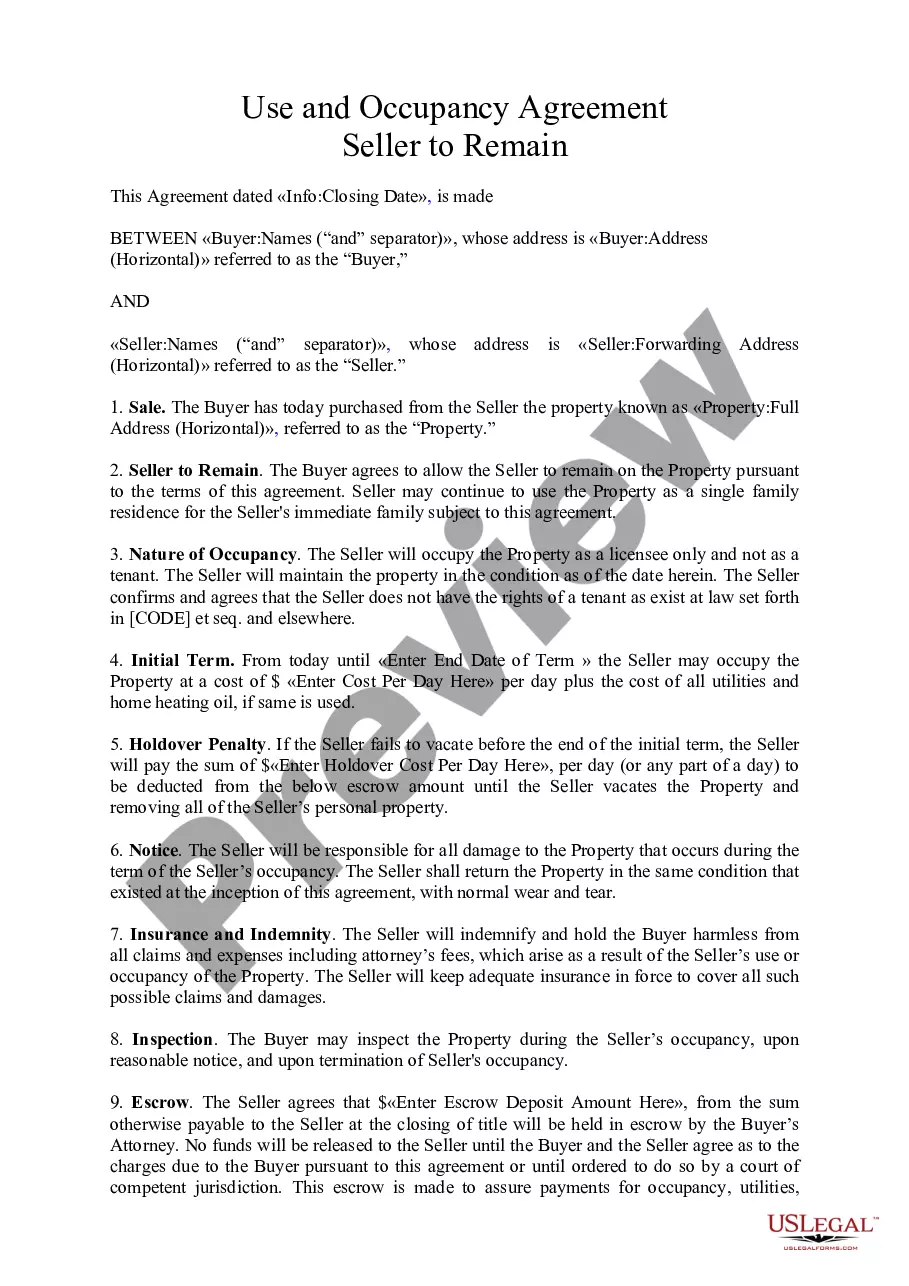
It's usually put in place if the buyer needs to move into the property before ownership can be transferred. One important thing to understand is that this agreement is not the same as a lease.The agreement solely allows them the right to use the property.
Aviara Real Estate, a California brokerage, says the sale might fail to go through if the buyer can't qualify for financing or is otherwise unable to meet the terms of the sale.Allowing a buyer to move in early can prolong or even sabotage the sales process.
You wouldn't sign the rental contract without documenting the pre-existing damage. An apartment is no different: Don't sign the lease until you're satisfied the property is in good shape inside and out. Most home buyers hire a professional to do a home inspection before closing, but this never occurs to many renters.
Aviara Real Estate, a California brokerage, says the sale might fail to go through if the buyer can't qualify for financing or is otherwise unable to meet the terms of the sale.Allowing a buyer to move in early can prolong or even sabotage the sales process.
Early occupancy is a term that is used to describe when a seller of a home allows the buyer to move into that home before the actual sale is closed. This type of arrangement can be a very positive selling method for a seller who needs to make a quick sale, but it can also have its drawbacks.
The contract terms will determine when you can move in after closing. In some cases, it will be immediately after the closing appointment. You will receive the keys and head straight to your new home. In other situations, the seller may request 30, 45 or even 60 days of occupancy after the closing of the home.
Moving in before the closing date is also known as taking early possession of the property. It's generally not feasible to move in early unless the seller has already vacated the property.Buyers who start moving into the property before closing may discover certain drawbacks or problems with the property.