Use and Occupancy Agreement when Seller plans to Remain
Understanding this form
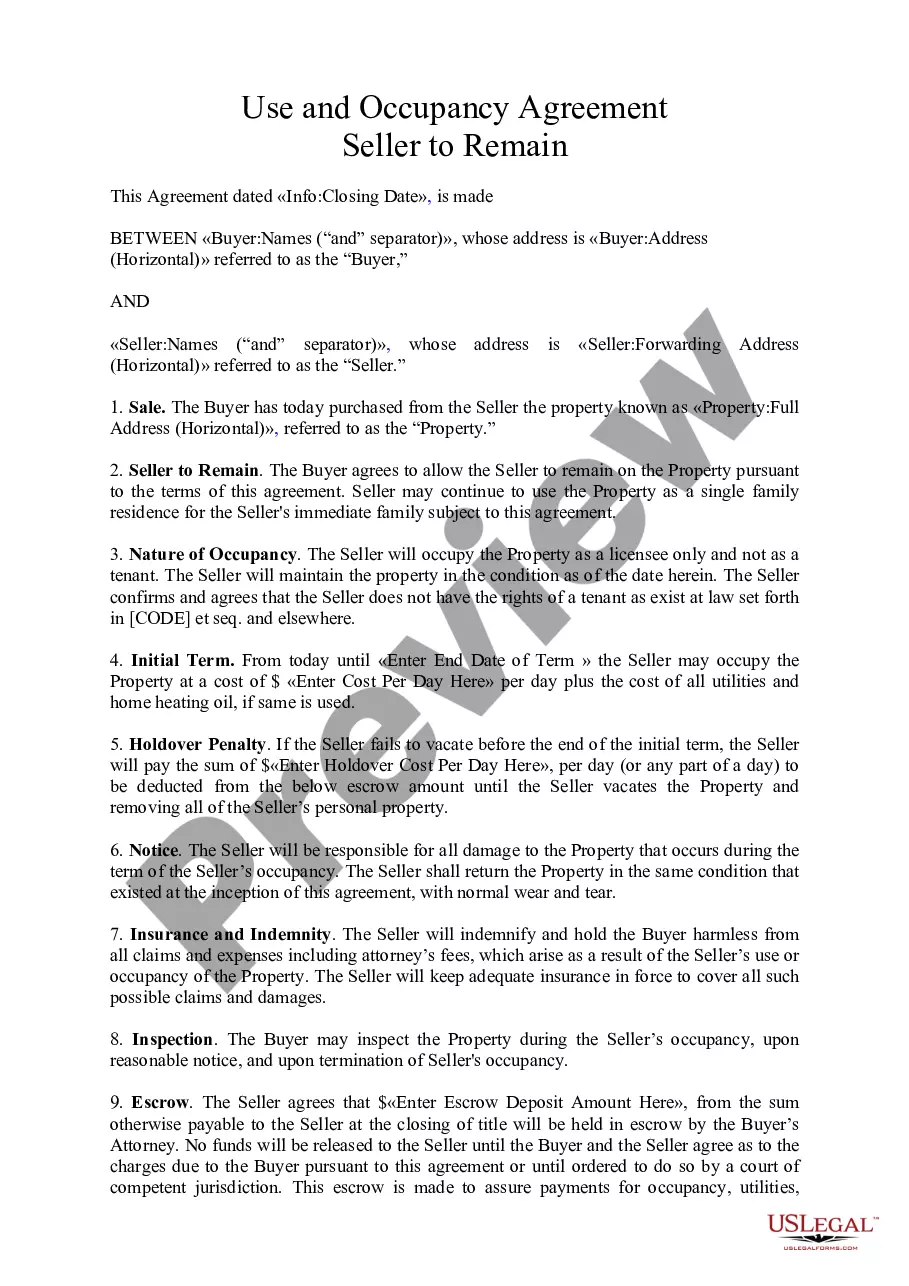
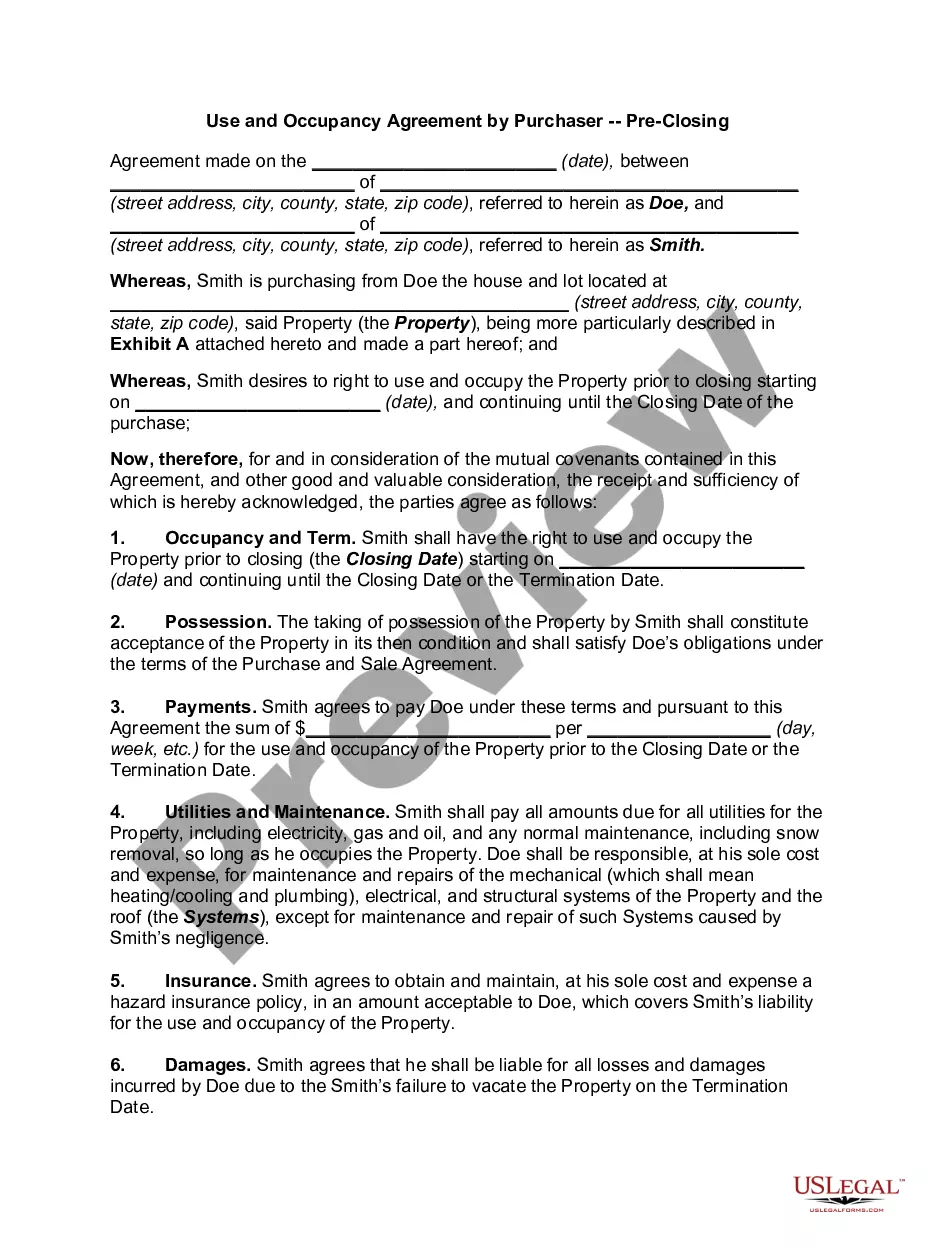
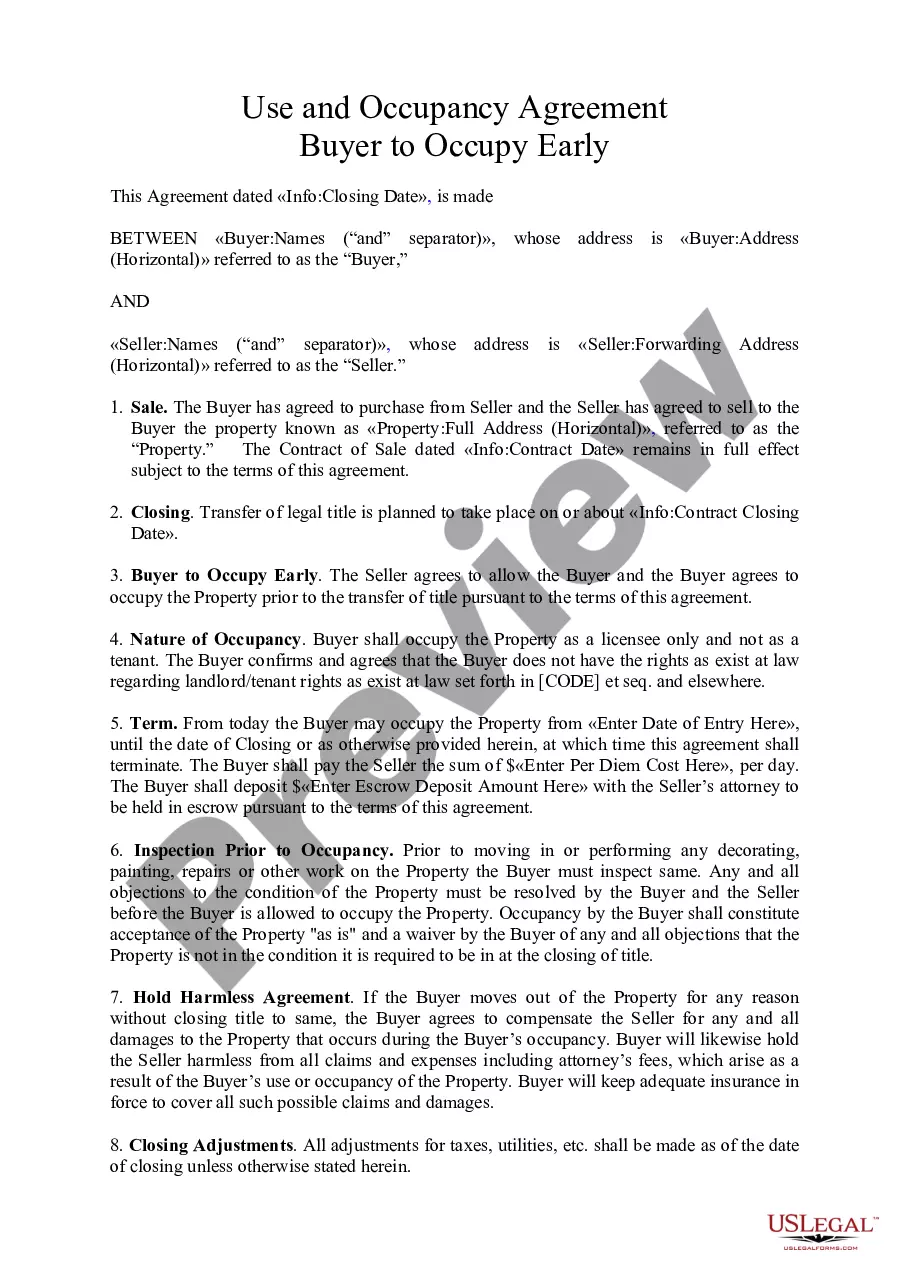
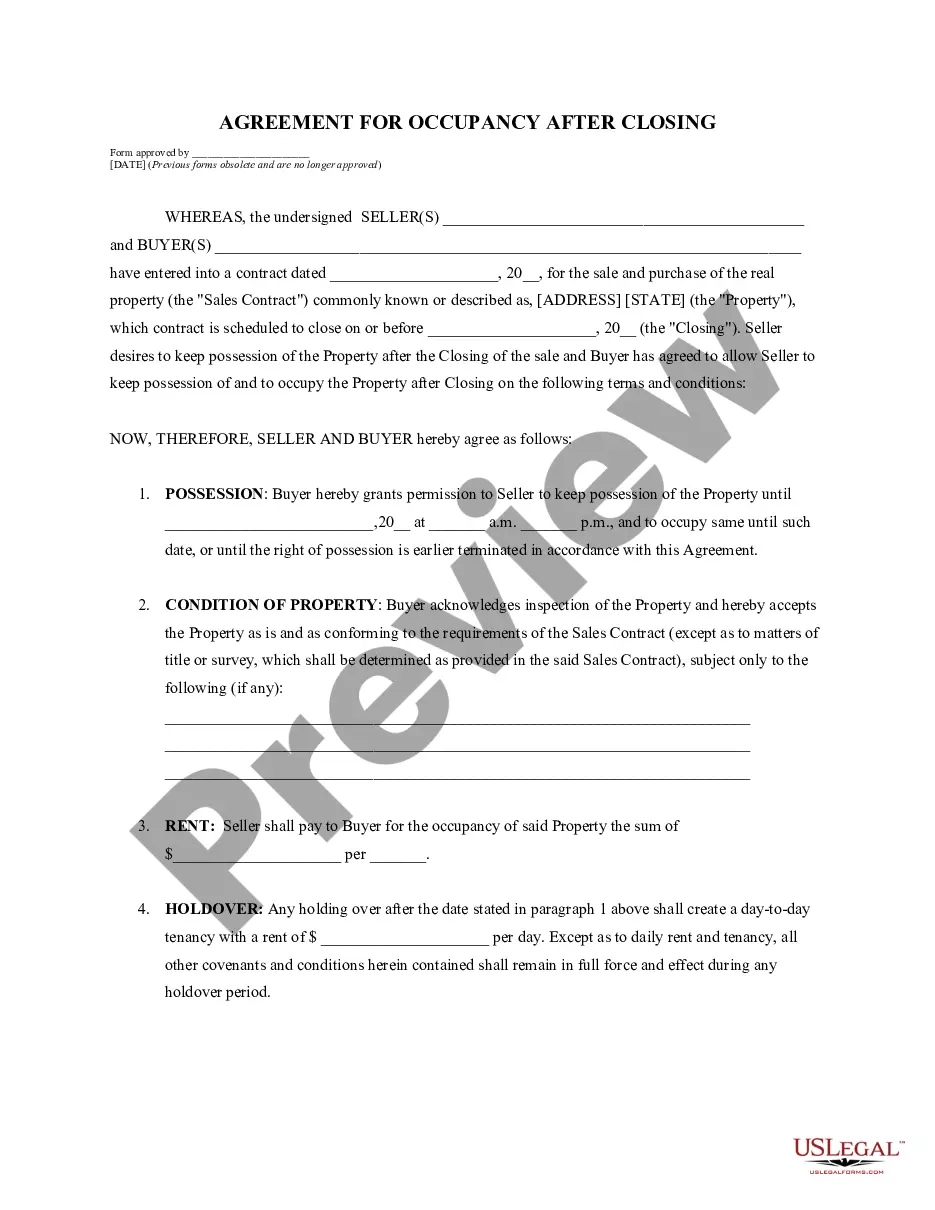
The Use and Occupancy Agreement when Seller Plans to Remain is a temporary legal agreement that allows the seller to continue occupying their property after it has been sold, under specified terms. This form is particularly useful for buyers who need immediate access to a property, or sellers who require additional time to transition to a new residence. Unlike standard rental agreements, this form allows sellers to occupy the property as a licensee, meaning they do not have the same legal rights as tenants.
Main sections of this form
- Identification of the buyer and seller, including their addresses.
- Specification of the property being sold.
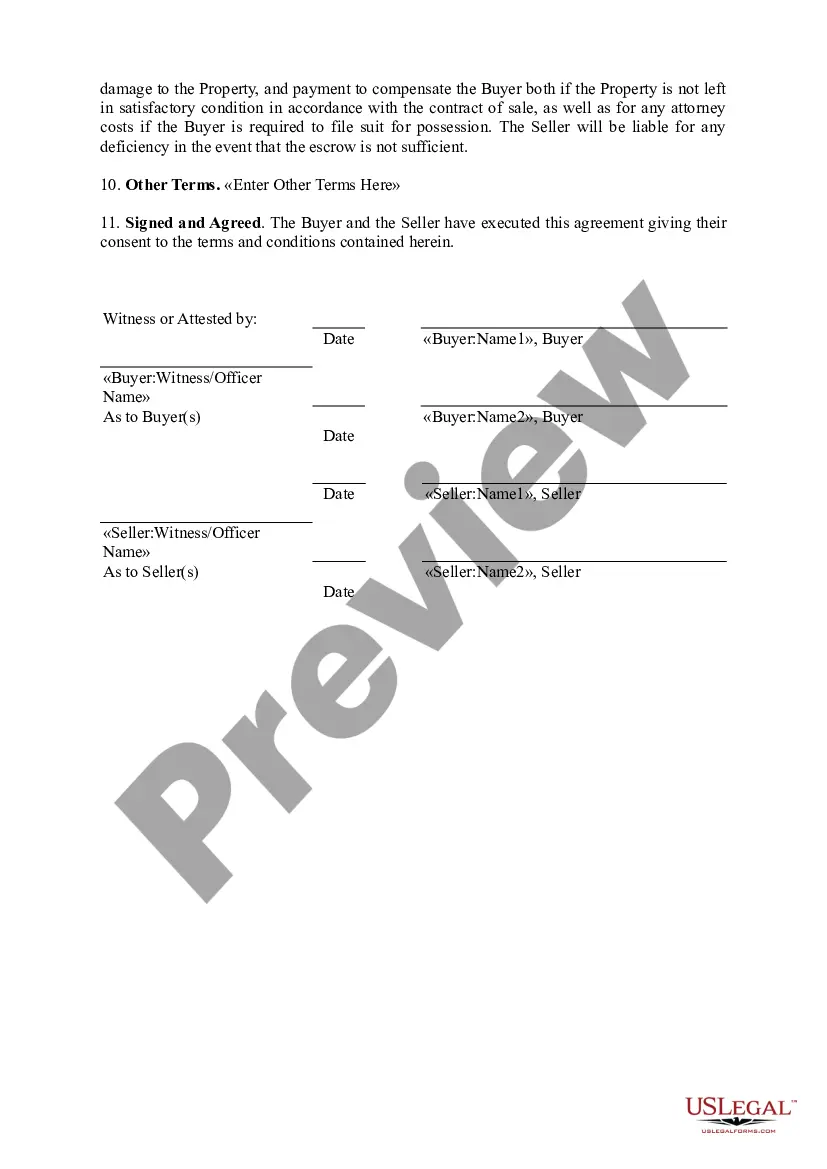
- Terms for the seller's occupancy, including duration and costs.
- Conditions related to property maintenance and repairs.
- Escrow provisions to manage payments and potential damages.
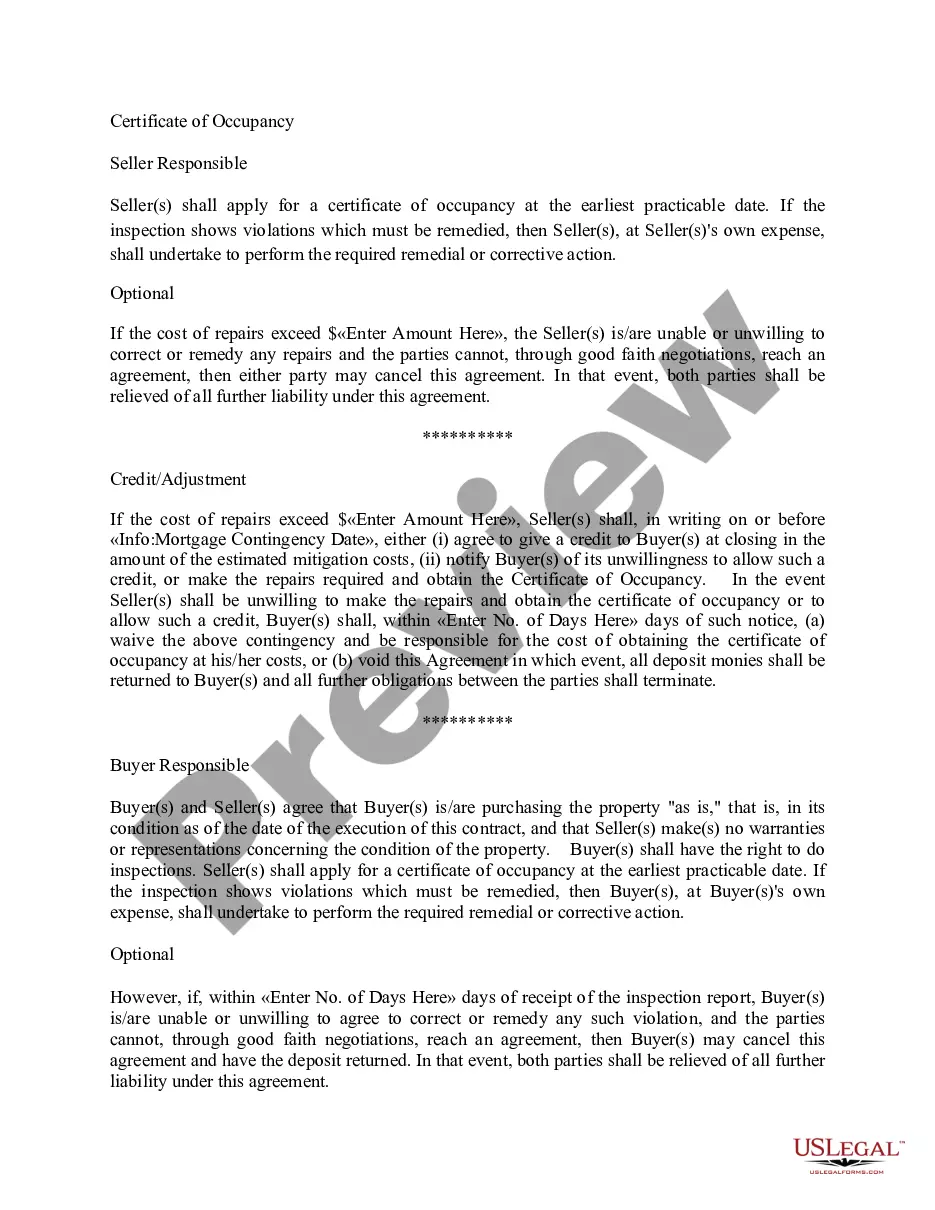
- Provisions for property inspection during the seller's occupancy.
When this form is needed
This agreement is essential in situations where the seller needs to stay in the property for a specific period after selling it. Common scenarios include when the seller has not yet found a new home or needs extra time to relocate. It is also applicable when the buyer requires immediate access to the property for personal use or renovation before the official transfer of ownership.
Who should use this form
- Home buyers who wish to allow the seller to stay in the property post-sale.
- Sellers needing a short-term arrangement to remain in their home after closing.
- Real estate agents facilitating transactions where temporary occupancy is necessary.
Steps to complete this form
- Identify the parties involved: Buyer and Seller names and addresses.
- Specify the property details: Provide the full address of the property being sold.
- Enter the duration of the sellerâs occupancy and associated costs per day.
- Include any escrow amounts and conditions for holding funds.
- Sign and date the agreement to confirm both parties consent to the terms.
Is notarization required?
This form does not typically require notarization unless specified by local law. Users should verify local regulations to determine if notarization is necessary in their jurisdiction.
Get your form ready online
Our built-in tools help you complete, sign, share, and store your documents in one place.
Make edits, fill in missing information, and update formatting in US Legal Forms—just like you would in MS Word.
Download a copy, print it, send it by email, or mail it via USPS—whatever works best for your next step.
Sign and collect signatures with our SignNow integration. Send to multiple recipients, set reminders, and more. Go Premium to unlock E-Sign.
If this form requires notarization, complete it online through a secure video call—no need to meet a notary in person or wait for an appointment.
We protect your documents and personal data by following strict security and privacy standards.

Make edits, fill in missing information, and update formatting in US Legal Forms—just like you would in MS Word.

Download a copy, print it, send it by email, or mail it via USPS—whatever works best for your next step.

Sign and collect signatures with our SignNow integration. Send to multiple recipients, set reminders, and more. Go Premium to unlock E-Sign.

If this form requires notarization, complete it online through a secure video call—no need to meet a notary in person or wait for an appointment.

We protect your documents and personal data by following strict security and privacy standards.
Common mistakes
- Failing to specify the exact dates for occupancy.
- Not including provisions for property maintenance and utilities.
- Ignoring local laws that may impact the agreement's enforceability.
Why complete this form online
- Convenient and accessible, allowing for quick completion and download.
- Editability ensures that details can be tailored to specific needs.
- Reliability with forms drafted by licensed attorneys, ensuring compliance with legal standards.
Looking for another form?

Form popularity
FAQ
Use and Occupancy Agreement When Seller Plans to Remain is a written contract that governs a seller’s continued occupancy of the property after closing. It formalizes the occupancy arrangement, clarifies who is responsible for property care during the stay, and sets the conditions under which the seller may remain on the premises, protecting both buyer and seller.
A Use and Occupancy Agreement When Seller Plans to Remain is typically used when the seller will stay in the property after closing. The form creates a written plan that confirms occupancy rights and expectations, helping prevent disputes and ensuring a clear process for possession and responsibilities during the occupancy period.
Without an occupancy agreement, a buyer may face uncertainty about when the seller must vacate, who is responsible for ongoing property conditions, and potential disputes over access. The Use and Occupancy Agreement When Seller Plans to Remain helps define possession timing and the parties' responsibilities to reduce those risks.
Common mistakes include vague or missing occupancy terms, unclear start and end dates for possession, and failing to address who is responsible for ongoing maintenance during occupancy. The Use and Occupancy Agreement When Seller Plans to Remain focuses on clarifying these terms to avoid disputes.
Red flags include vague language about occupancy, missing dates for occupancy or termination, and failure to specify remedies if terms are breached. The Use and Occupancy Agreement When Seller Plans to Remain is designed to address occupancy specifics and reduce ambiguity that often leads to disputes after closing.
What makes this form different is that it is tailored for a situation where the seller will remain in the property after closing, establishing occupancy terms that reflect that arrangement. A standard form generally assumes immediate vacating, whereas this version focuses on occupancy during the post-closing period.