Full, Final and Absolute Mutual Release
What this document covers
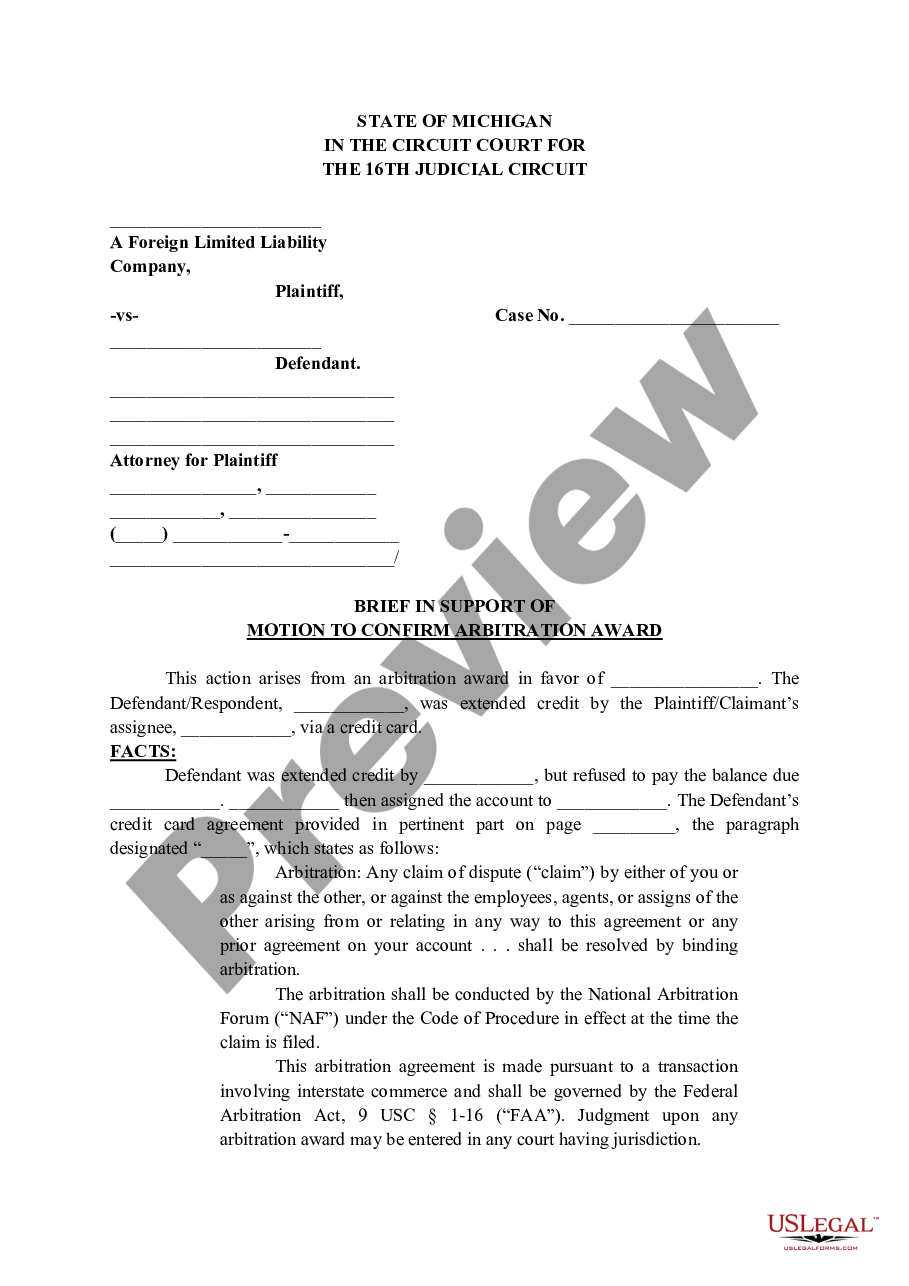
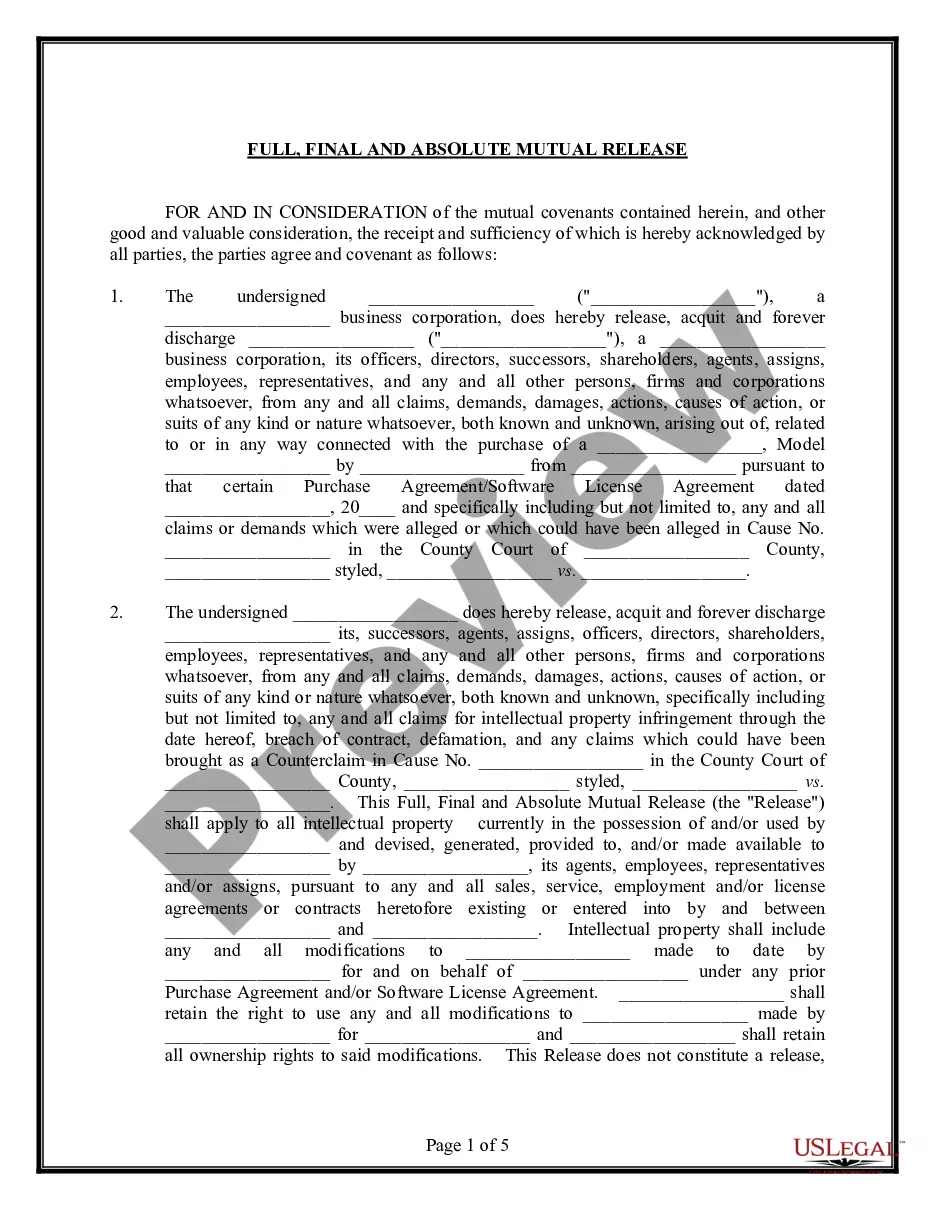
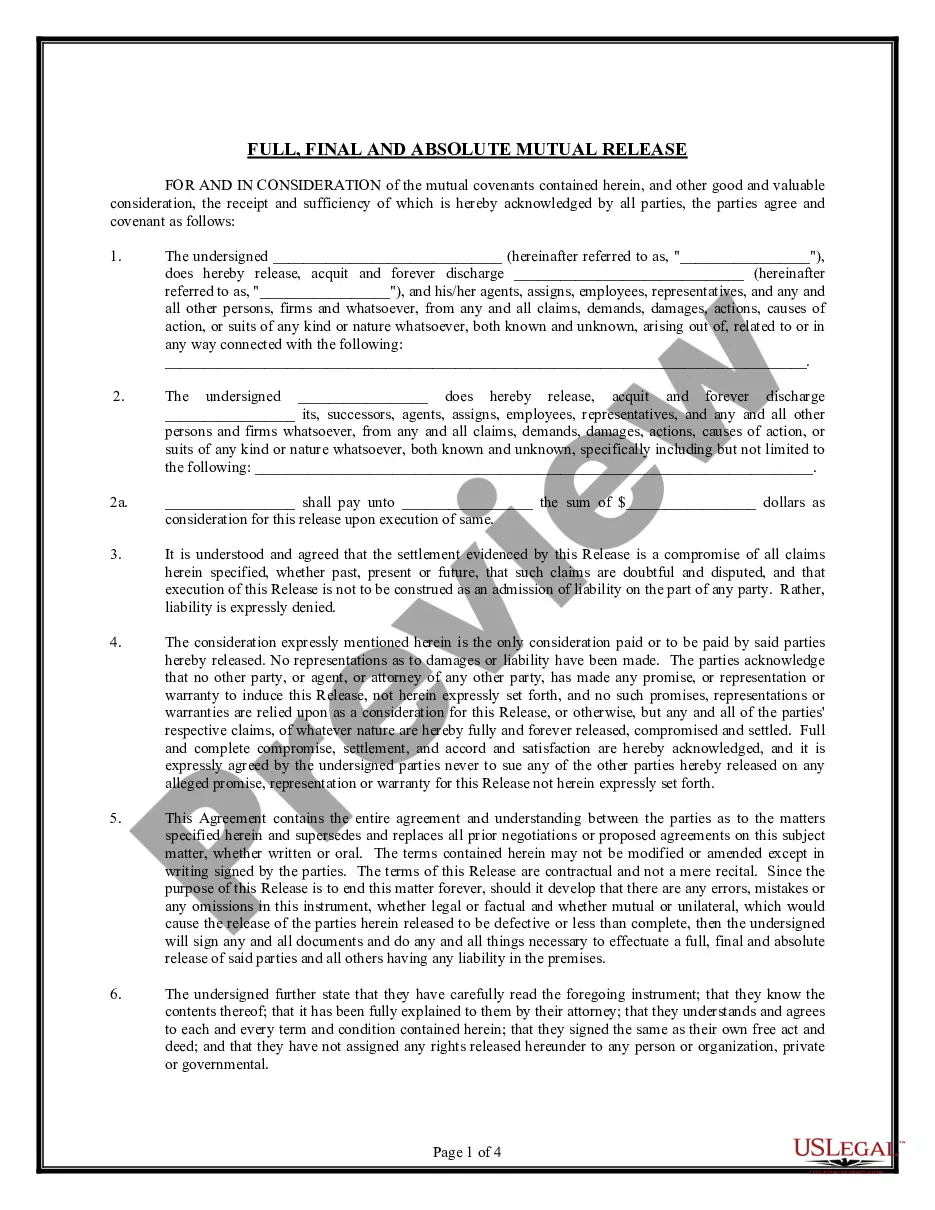
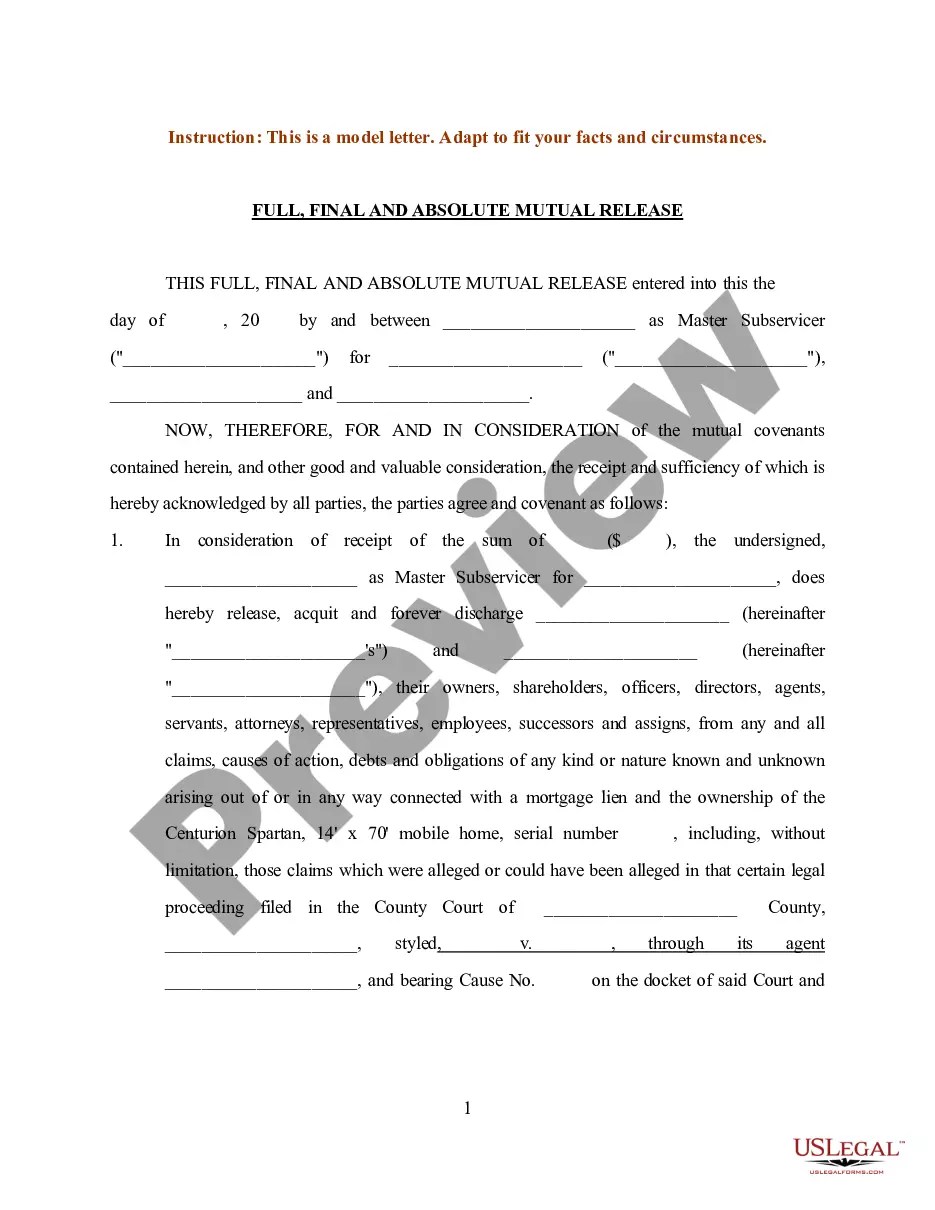
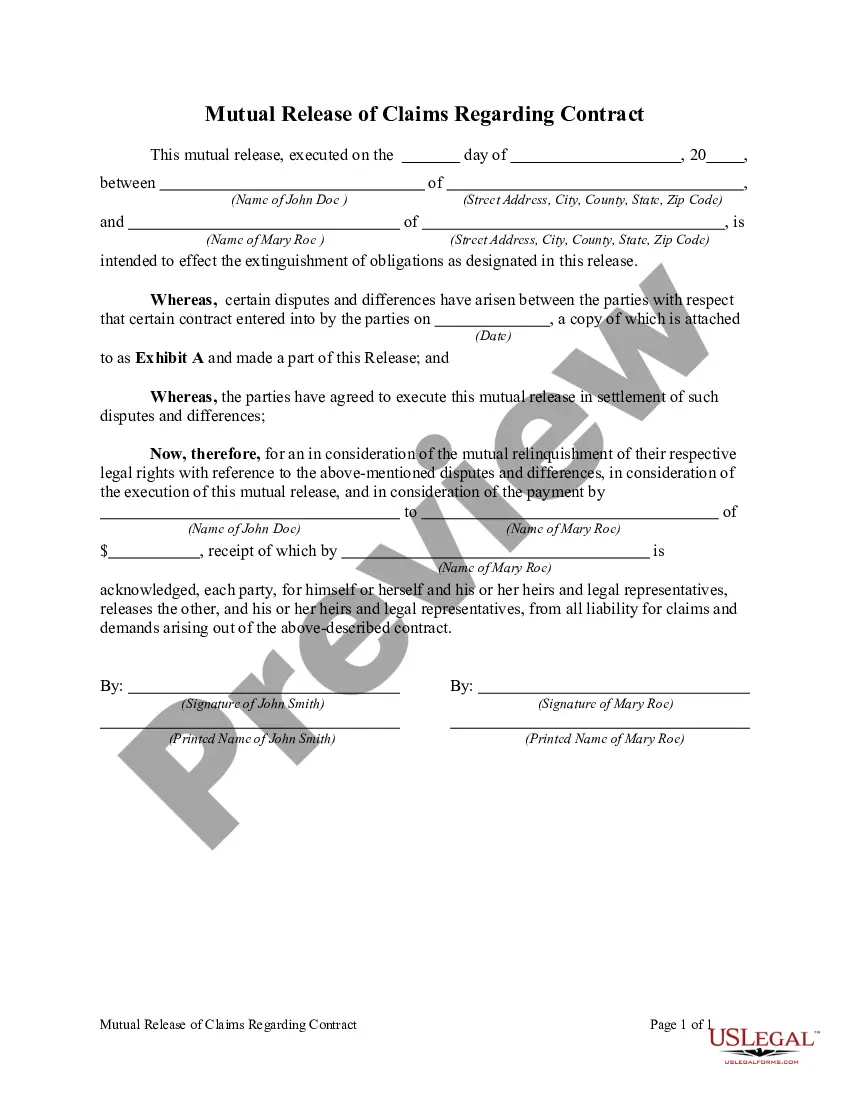
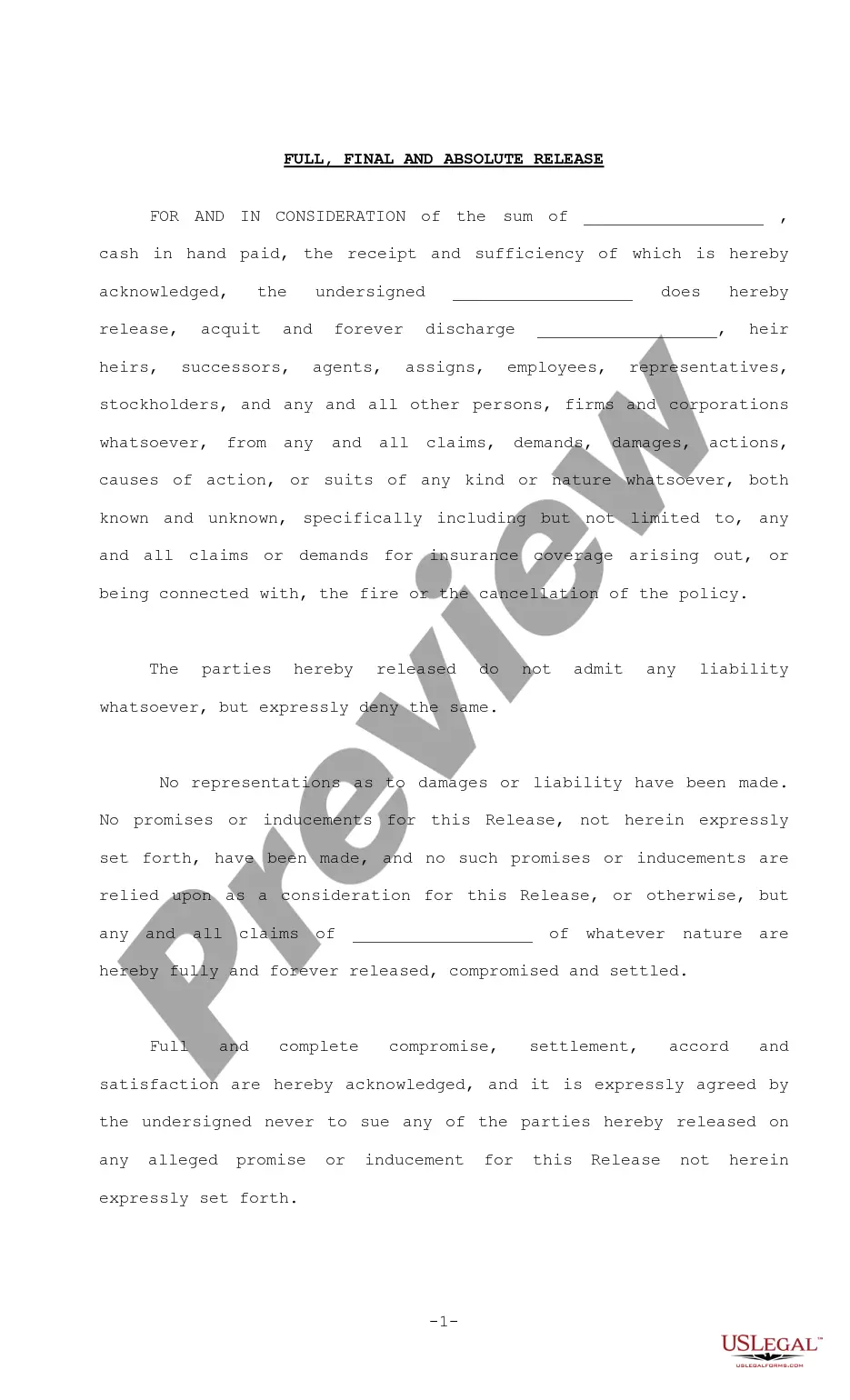
The Full, Final and Absolute Mutual Release is a legal document that formalizes an agreement between two parties to release each other from any future claims related to the purchase of computer equipment and/or software. Unlike other release forms, this document is comprehensive, discharging all claims, whether known or unknown, resulting from the specified transactions. It provides a clear resolution to disputes, ensuring that both parties cannot seek further action regarding the settled matters.
Main sections of this form
- Releases parties from all known and unknown claims arising from a specific transaction.
- Includes detailed definitions of parties involved and the scope of the release.
- Covers intellectual property rights related to the purchased equipment or software.
- Establishes that the release is a compromise and not an admission of liability.
- Outlines the governing law for the agreement and stipulations for legal proceedings.


When this form is needed
This form should be used when two parties have reached a settlement regarding disputes over the purchase of computer equipment or software. It is especially useful if there are disagreements involving claims, such as intellectual property issues or breach of contract, and both parties wish to clearly release each other from future liability. Utilizing this form finalizes the agreement and helps to prevent potential legal conflicts in the future.
Who can use this document
- Businesses entering into agreements regarding software licenses or equipment purchases.
- Individuals looking to resolve disputes over past transactions related to computer-related products.
- Parties involved in legal actions that require a formal settlement of claims.
- Legal counsel assisting clients in drafting agreements to prevent future claims.
Steps to complete this form
- Identify all parties involved in the transaction, including their official names and business designations.
- Clearly specify the equipment or software being released, including model numbers and purchase agreement details.
- Include any relevant details about claims that are being released, ensuring all are known and listed.
- Each party should sign and date the form, confirming their understanding of the terms.
- Consider having the form notarized for added legal validity, as required by local law.
Does this form need to be notarized?
This form needs to be notarized to ensure legal validity. US Legal Forms provides secure online notarization powered by Notarize, allowing you to complete the process through a verified video call, available anytime.
Get your form ready online
Our built-in tools help you complete, sign, share, and store your documents in one place.
Make edits, fill in missing information, and update formatting in US Legal Forms—just like you would in MS Word.
Download a copy, print it, send it by email, or mail it via USPS—whatever works best for your next step.
Sign and collect signatures with our SignNow integration. Send to multiple recipients, set reminders, and more. Go Premium to unlock E-Sign.
If this form requires notarization, complete it online through a secure video call—no need to meet a notary in person or wait for an appointment.
We protect your documents and personal data by following strict security and privacy standards.

Make edits, fill in missing information, and update formatting in US Legal Forms—just like you would in MS Word.

Download a copy, print it, send it by email, or mail it via USPS—whatever works best for your next step.

Sign and collect signatures with our SignNow integration. Send to multiple recipients, set reminders, and more. Go Premium to unlock E-Sign.

If this form requires notarization, complete it online through a secure video call—no need to meet a notary in person or wait for an appointment.

We protect your documents and personal data by following strict security and privacy standards.
Typical mistakes to avoid
- Failing to include all parties involved in the transaction.
- Omitting specific details about the claims being released.
- Not having the document reviewed by legal counsel.
- Neglecting to sign and date the document properly.
- Assuming the form does not require a notary, if local laws vary.
Why complete this form online
- Convenient access to a professionally drafted legal document tailored for your needs.
- Easier to customize and fill in specifics related to your situation directly online.
- Quick downloads accessible anytime, eliminating the need for waiting on physical delivery.
- Guidance available throughout the process, ensuring all necessary components are included.
Legal use & context
- This release serves as a final settlement of disputes related to the transaction.
- It helps protect parties from future claims tied to the agreement.
- Legal enforceability depends on the precise execution of the form and adherence to state laws.
Main things to remember
- The Full, Final and Absolute Mutual Release provides a comprehensive discharge from all claims arising from a specific transaction.
- Properly completing this form guarantees legal closure for both parties.
- Utilizing an online form simplifies the process, making it accessible and quick to customize for any situation.
Looking for another form?


Form popularity
FAQ
A Mutual Release Agreement is a straightforward document that allows you to settle disputes quickly and professionally. No matter what your dispute, a Mutual Release Agreement allows both parties to agree to drop all claims and get out of the contract.
There is now a document called the mutual release whenever a purchase agreement does not go to closing. If the deal falls apart because of inspection, mortgage, or any issue the buyer and seller must sign and agree on who gets the earnest money. BOTH PARTIES MUST AGREE AND SIGN the mutual release.
This includes releasing the Released Party from all claims for damages, costs, expenses, and compensation.This release and discharge shall be a fully binding and complete settlement among all Parties to this Agreement and their heirs, assigns, and successors.
There is now a document called the mutual release whenever a purchase agreement does not go to closing. If the deal falls apart because of inspection, mortgage, or any issue the buyer and seller must sign and agree on who gets the earnest money. BOTH PARTIES MUST AGREE AND SIGN the mutual release.
A release is an agreement not to sue; it waives your right to sue and company and "releases" your employer from legal liability for claims you may have against it. A release may be as broad or as narrow as the parties agree to make it.
Lawyers call an agreement to settle a dispute a "release," because in exchange for some act (often the payment of money), one person gives up (or releases) his or her claim against another.
A release of all claims form may be included as part of a settlement agreement, which is a document agreeing to resolve the parties' differences, dismiss their claims, and release the opposing parties from liability. Release of all claims forms are also called liability waiver forms.
The purpose of a full and final release is simple. It is an explicit acknowledgement by the settling Plaintiff that it has agreed to resolve its claims as against one or more Defendants, and as a result of that settlement, it is releasing those Defendants from the claims at issue.
The purpose of a full and final release is simple. It is an explicit acknowledgement by the settling Plaintiff that it has agreed to resolve its claims as against one or more Defendants, and as a result of that settlement, it is releasing those Defendants from the claims at issue.