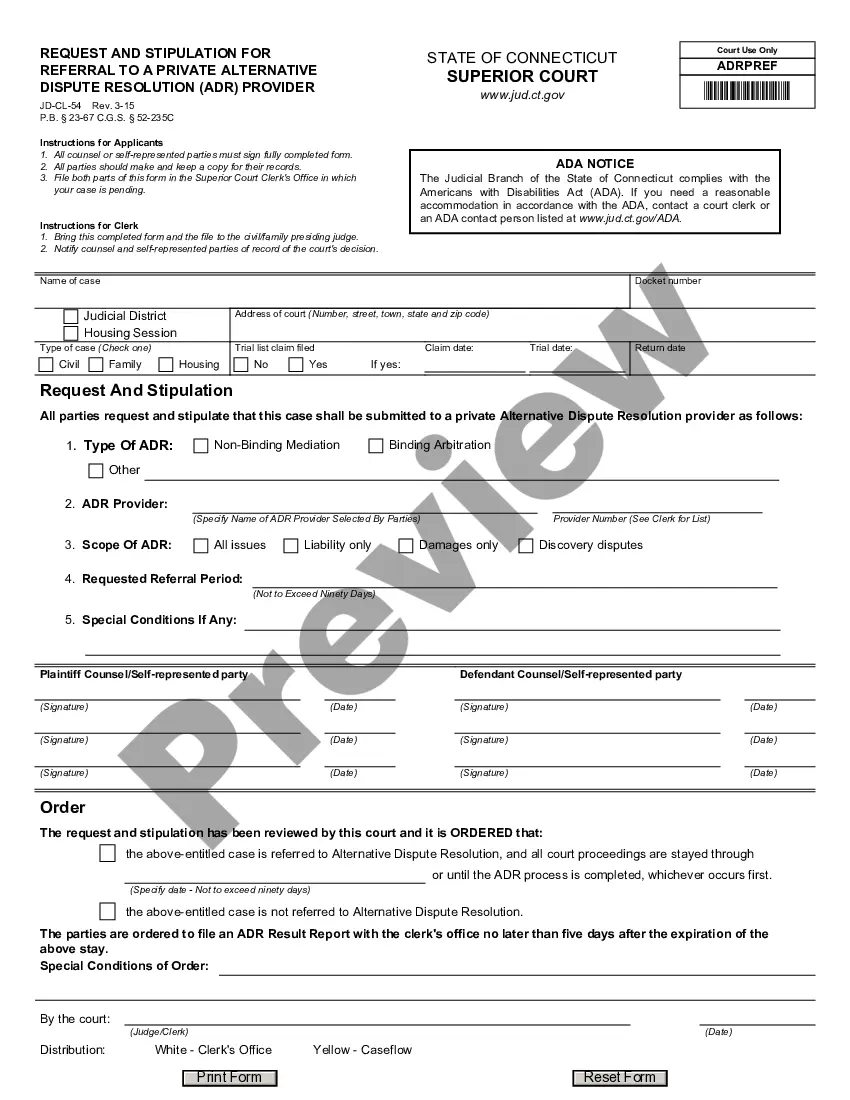
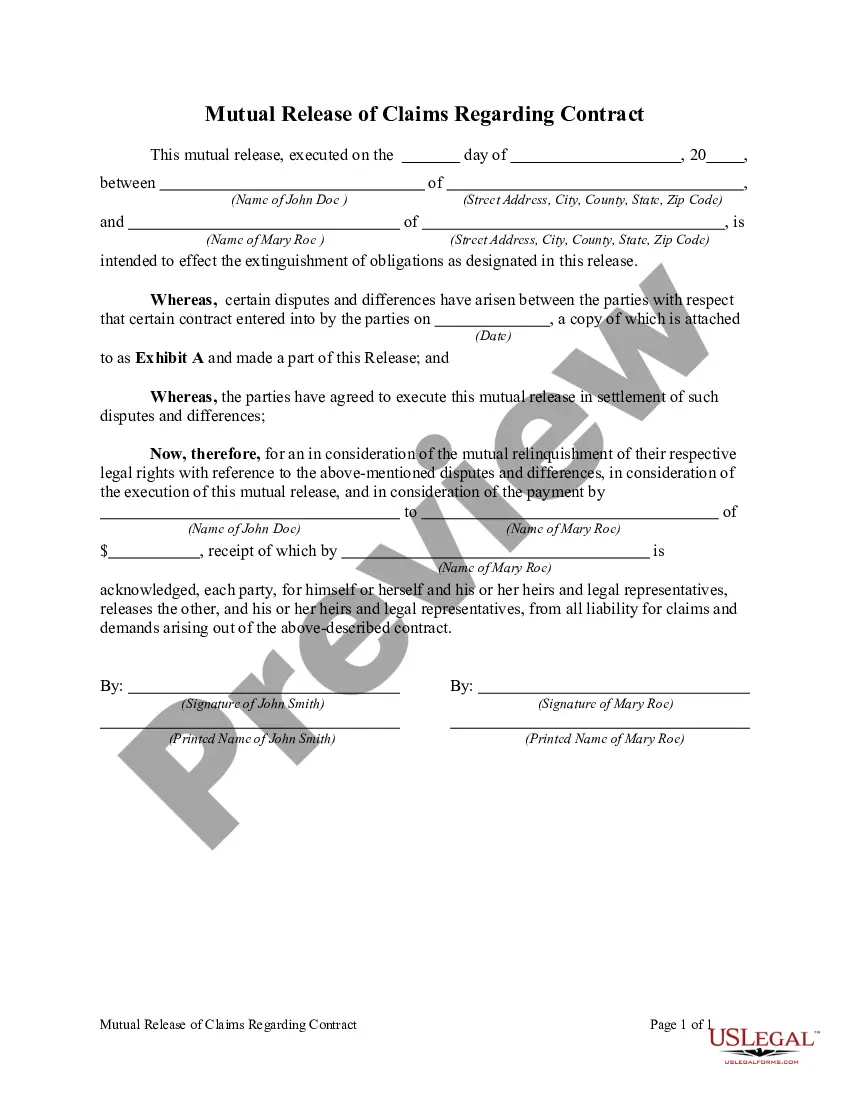
Mutual Release of Claims Regarding Contract
About this form
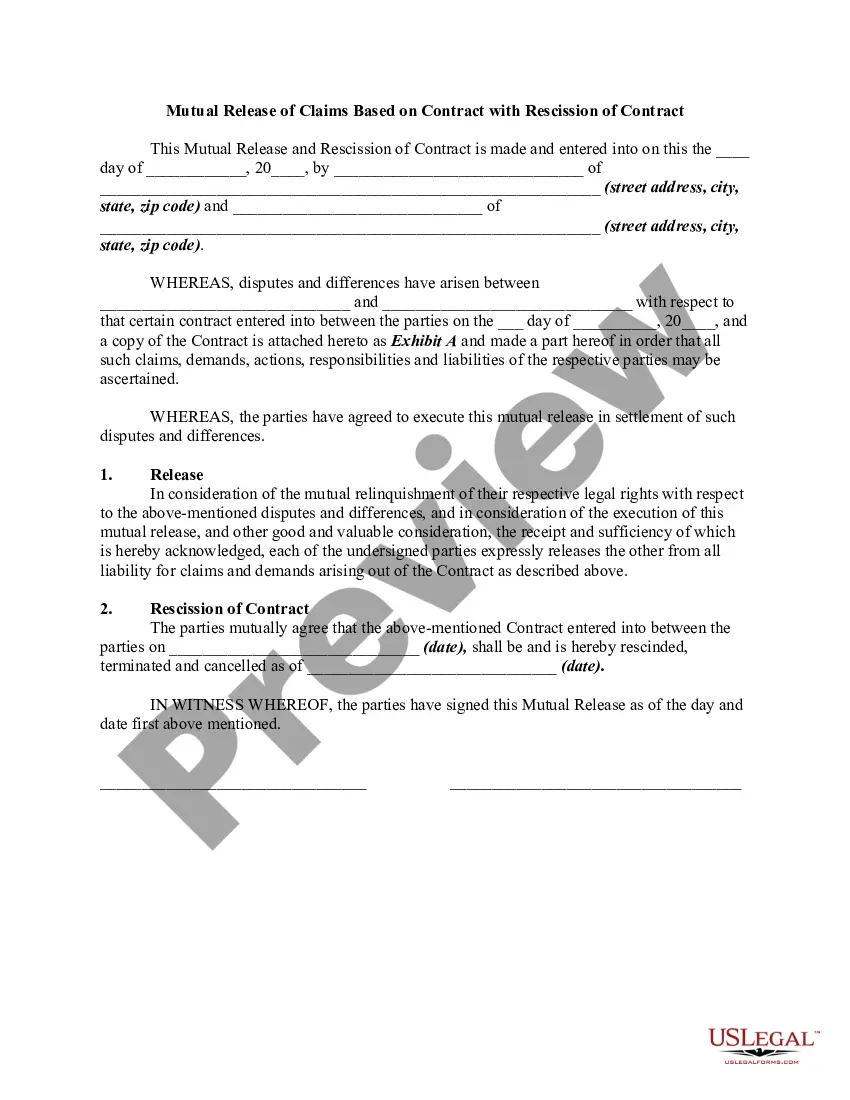
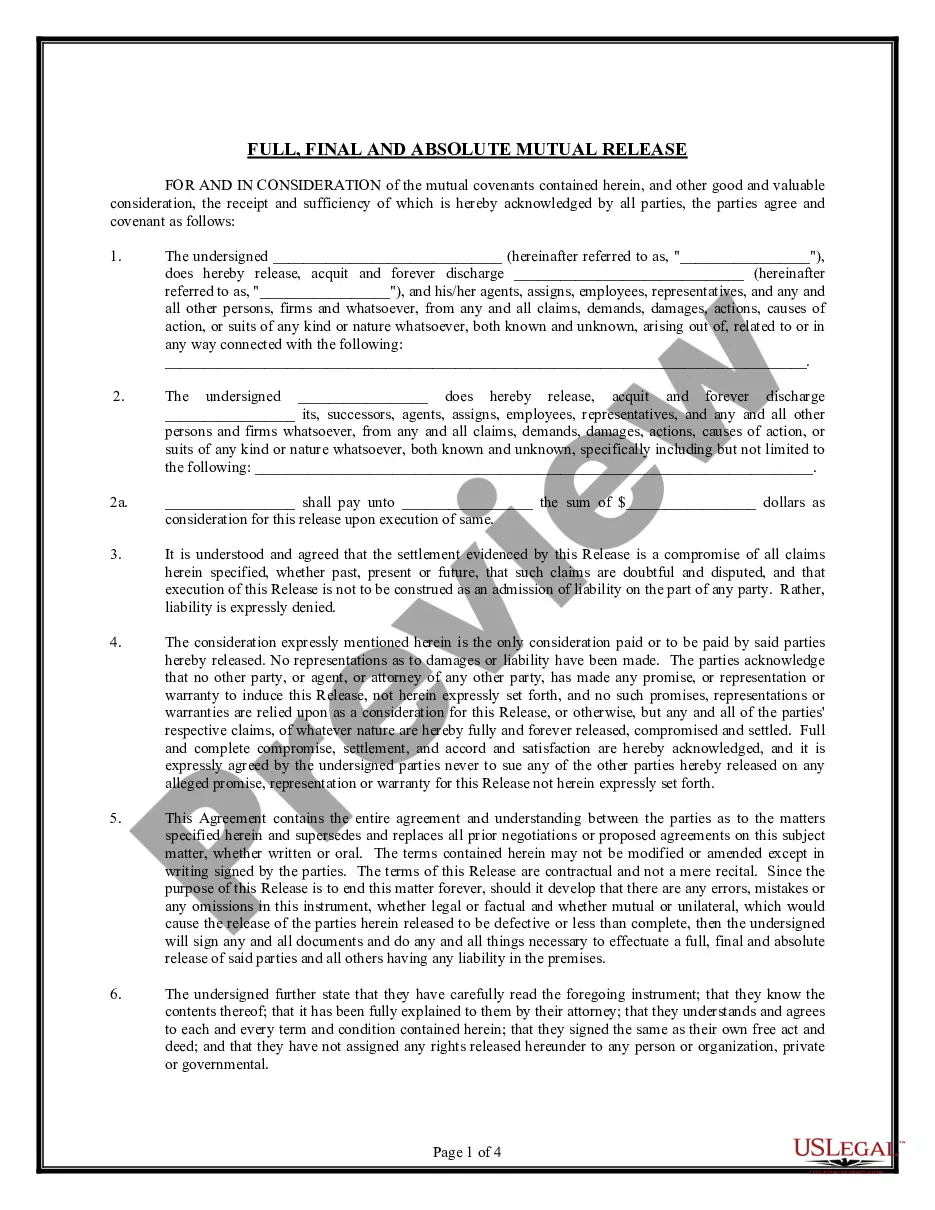
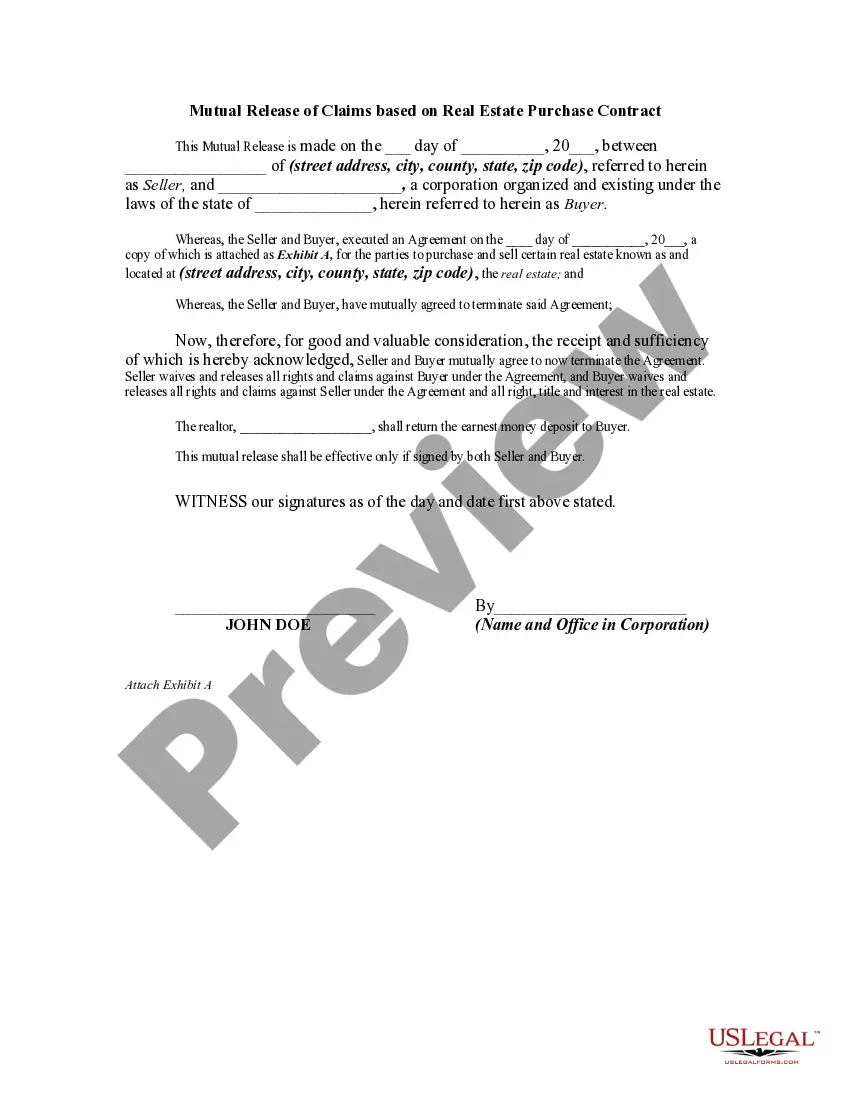
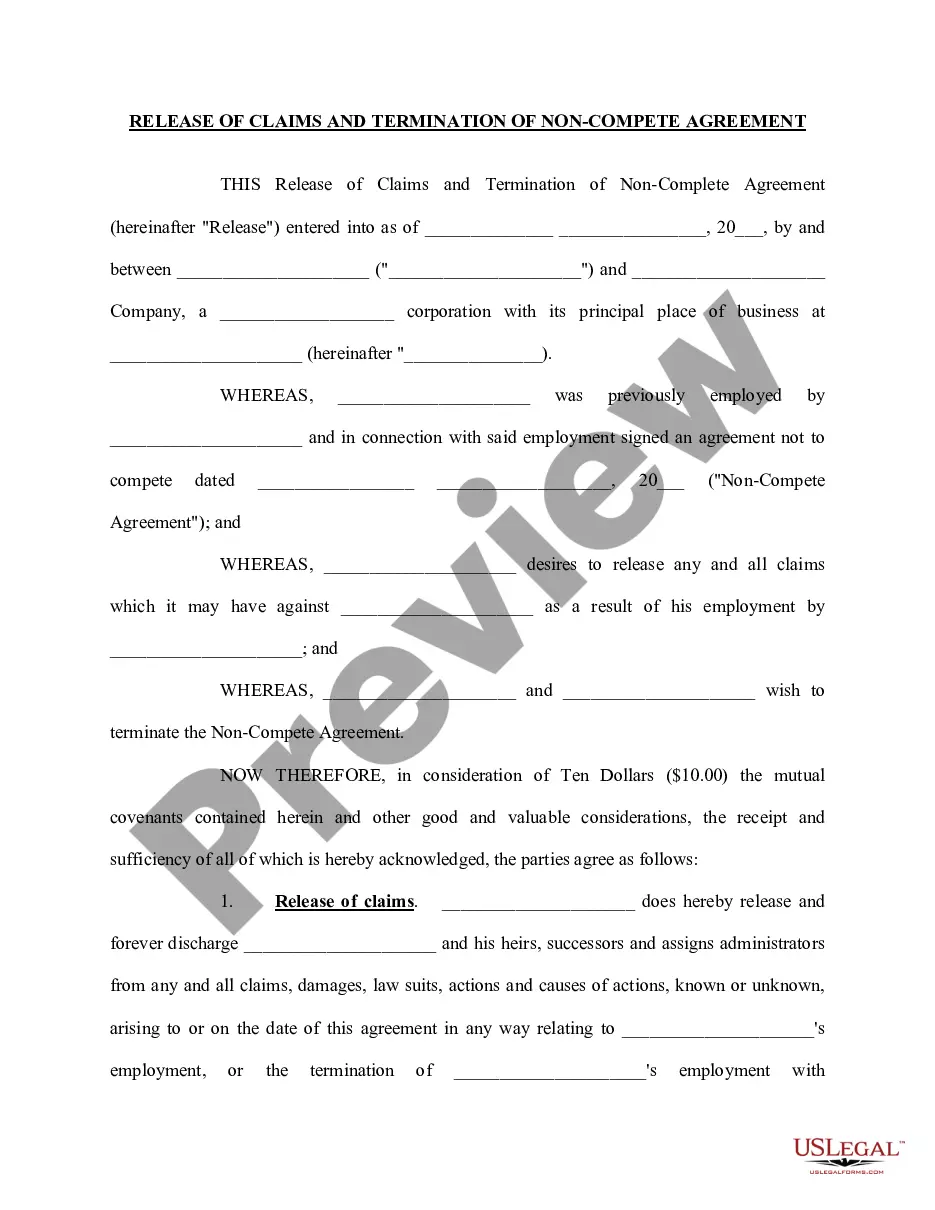
The Mutual Release of Claims Regarding Contract is a legal document that allows two parties to mutually relinquish any rights or claims against each other related to a specific contract or dispute. This form is vital in resolving disagreements by ensuring that neither party can pursue legal action for issues covered in the release. Unlike other agreements that may only address one party's obligations, this mutual release distinctly addresses the interests of both parties, fostering a clean conclusion to their contractual relationship.
Key components of this form
- Identification of the parties involved in the agreement.
- A detailed description of the claims being released.
- Consideration clause specifying any payments exchanged, if applicable.
- Signatures of both parties to validate the agreement.
- Date of execution to establish when the release takes effect.
Common use cases
This form is essential when two parties have resolved their disputes or differences arising from a contract. It should be used when both parties agree to settle their claims amicably, thereby preventing future legal actions based on these claims. Common scenarios include disputes over contract terms, services rendered, or payment issues that have been amicably resolved.
Who can use this document
This form is suitable for:
- Individuals or businesses entering into a contractual agreement that has led to disputes.
- Parties wishing to formally acknowledge the resolution of a disagreement.
- Participants in mediation or arbitration seeking to finalize their settlement terms.
How to complete this form
- Identify the parties by providing their names and addresses at the beginning of the form.
- Clearly state the claims or disputes being released in the designated section.
- Specify any consideration, such as monetary compensation, if applicable.
- Ensure that both parties sign the document in the provided spaces.
- Insert the date when the agreement is executed.
Notarization requirements for this form
This form usually doesn’t need to be notarized. However, local laws or specific transactions may require it. Our online notarization service, powered by Notarize, lets you complete it remotely through a secure video session, available 24/7.
Get your form ready online
Our built-in tools help you complete, sign, share, and store your documents in one place.
Make edits, fill in missing information, and update formatting in US Legal Forms—just like you would in MS Word.
Download a copy, print it, send it by email, or mail it via USPS—whatever works best for your next step.
Sign and collect signatures with our SignNow integration. Send to multiple recipients, set reminders, and more. Go Premium to unlock E-Sign.
If this form requires notarization, complete it online through a secure video call—no need to meet a notary in person or wait for an appointment.
We protect your documents and personal data by following strict security and privacy standards.

Make edits, fill in missing information, and update formatting in US Legal Forms—just like you would in MS Word.

Download a copy, print it, send it by email, or mail it via USPS—whatever works best for your next step.

Sign and collect signatures with our SignNow integration. Send to multiple recipients, set reminders, and more. Go Premium to unlock E-Sign.

If this form requires notarization, complete it online through a secure video call—no need to meet a notary in person or wait for an appointment.

We protect your documents and personal data by following strict security and privacy standards.
Mistakes to watch out for
- Failing to clearly identify all parties involved in the agreement.
- Omitting details about the specific claims being released.
- Not including signatures from both parties.
- Forgetting to date the agreement, which can lead to confusion about its effective date.
Benefits of using this form online
- Convenience: Download the form instantly without needing to visit a lawyer.
- Editability: Customize the form according to your specific needs before finalizing it.
- Reliability: Forms are drafted by licensed attorneys to ensure legal compliance.
Legal use & context
- This form is legally binding when properly executed by all parties.
- It helps prevent future claims that could arise from the contract in question.
- Understanding the implications of this form can enhance dispute resolution efforts.
Main things to remember
- The Mutual Release of Claims is essential for settling contract disputes.
- Ensure all parties understand and agree to the terms outlined in the form.
- Consult with a legal professional if there are any uncertainties regarding its use.
Looking for another form?
Form popularity
FAQ
A Mutual Release Agreement is a straightforward document that allows you to settle disputes quickly and professionally. No matter what your dispute, a Mutual Release Agreement allows both parties to agree to drop all claims and get out of the contract.
There is now a document called the mutual release whenever a purchase agreement does not go to closing. If the deal falls apart because of inspection, mortgage, or any issue the buyer and seller must sign and agree on who gets the earnest money. BOTH PARTIES MUST AGREE AND SIGN the mutual release.
A contract release is an agreement in which one party agrees it has no claims against the party that's named in the release. A release is commonly known as a release of liability or any of the following: Release agreement. Release form.
A release is a type of contract in which you agree that you have no claims of any type against the party named in the release. Releases are often used in connection with a settlement of legal claims.Another type of release is also sometimes referred to as a waiver; a release of liability and waiver of claims.
To receive permission to break the contract, you will have to write a letter asking your employer, or whomever you are contractually obligated to, if they would release you from your contract. Your letter should be a standard business letter, typed and with no errors. Use letterhead if appropriate.
Lawyers call an agreement to settle a dispute a "release," because in exchange for some act (often the payment of money), one person gives up (or releases) his or her claim against another.
The releasee is the party who is being released from a claim or possible claim.For example, Party A could agree to release a claim against Party B in exchange for company stock, a motor vehicle, or even a used lawnmower.
No matter what your dispute, a Mutual Release Agreement allows both parties to agree to drop all claims and get out of the contract. You can also agree to pay each other, or one party, for any damages.
The main difference between releases and waivers is the transferring of ownership. When rights are released, they are transferred to another party. When rights are waived, they are gone altogether. If intellectual property rights are waived, the IP can be used by any other party that has access to it.