Maine Heirship Affidavit - Descent

About this form
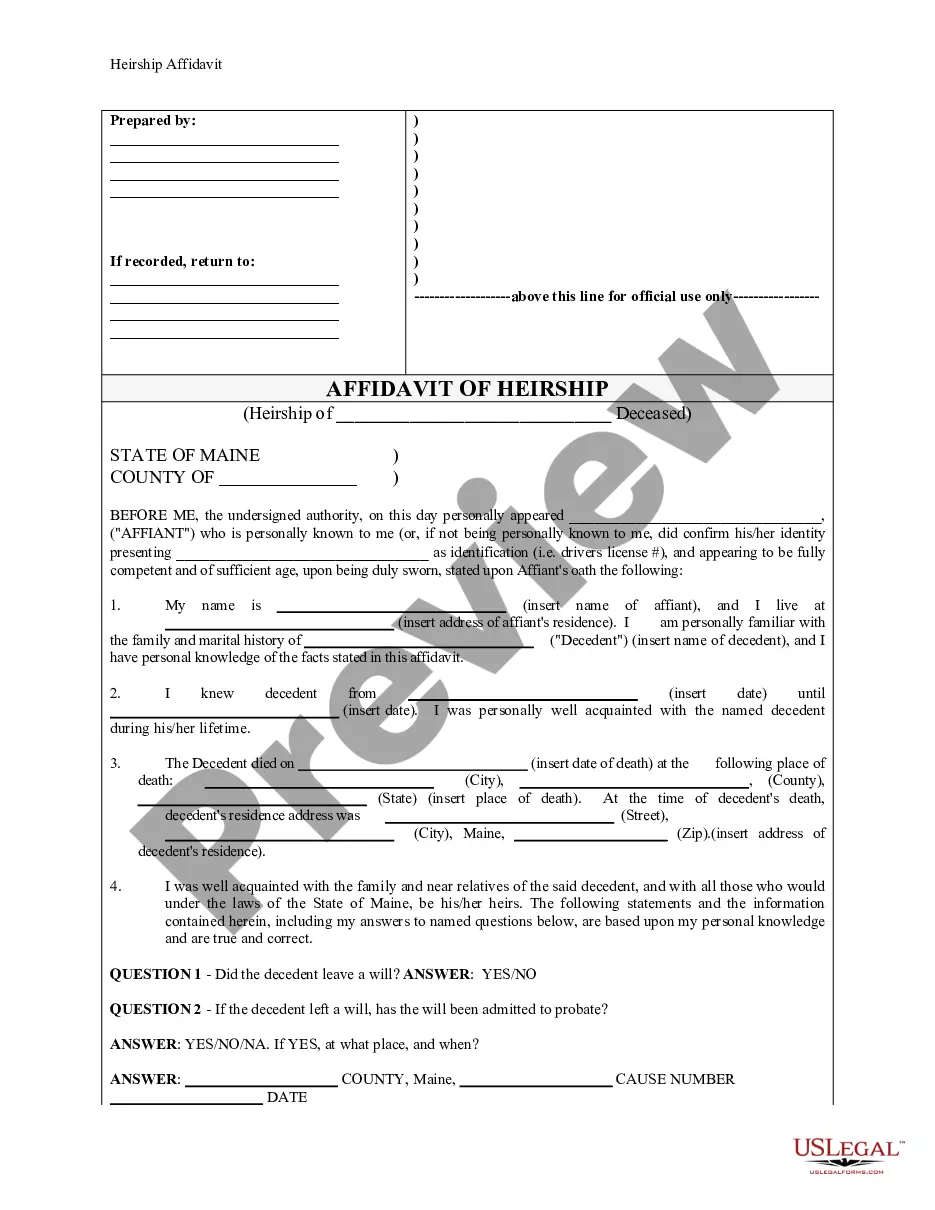
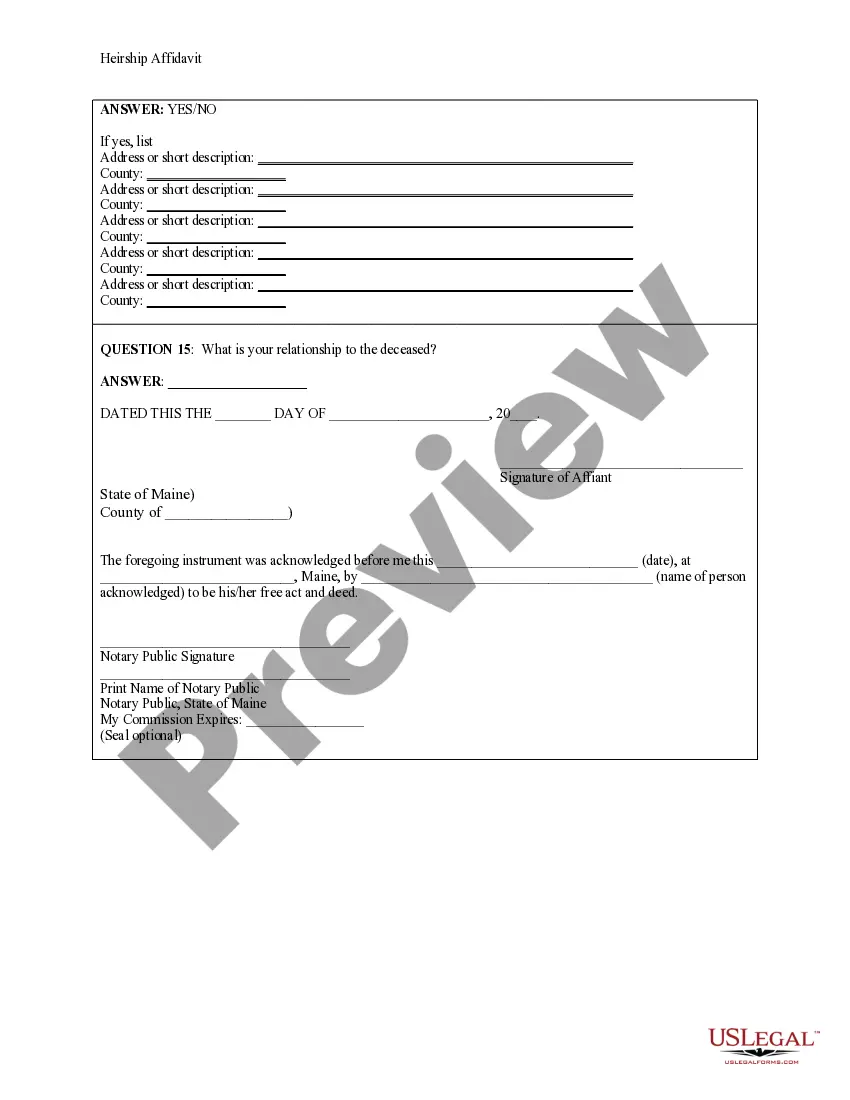
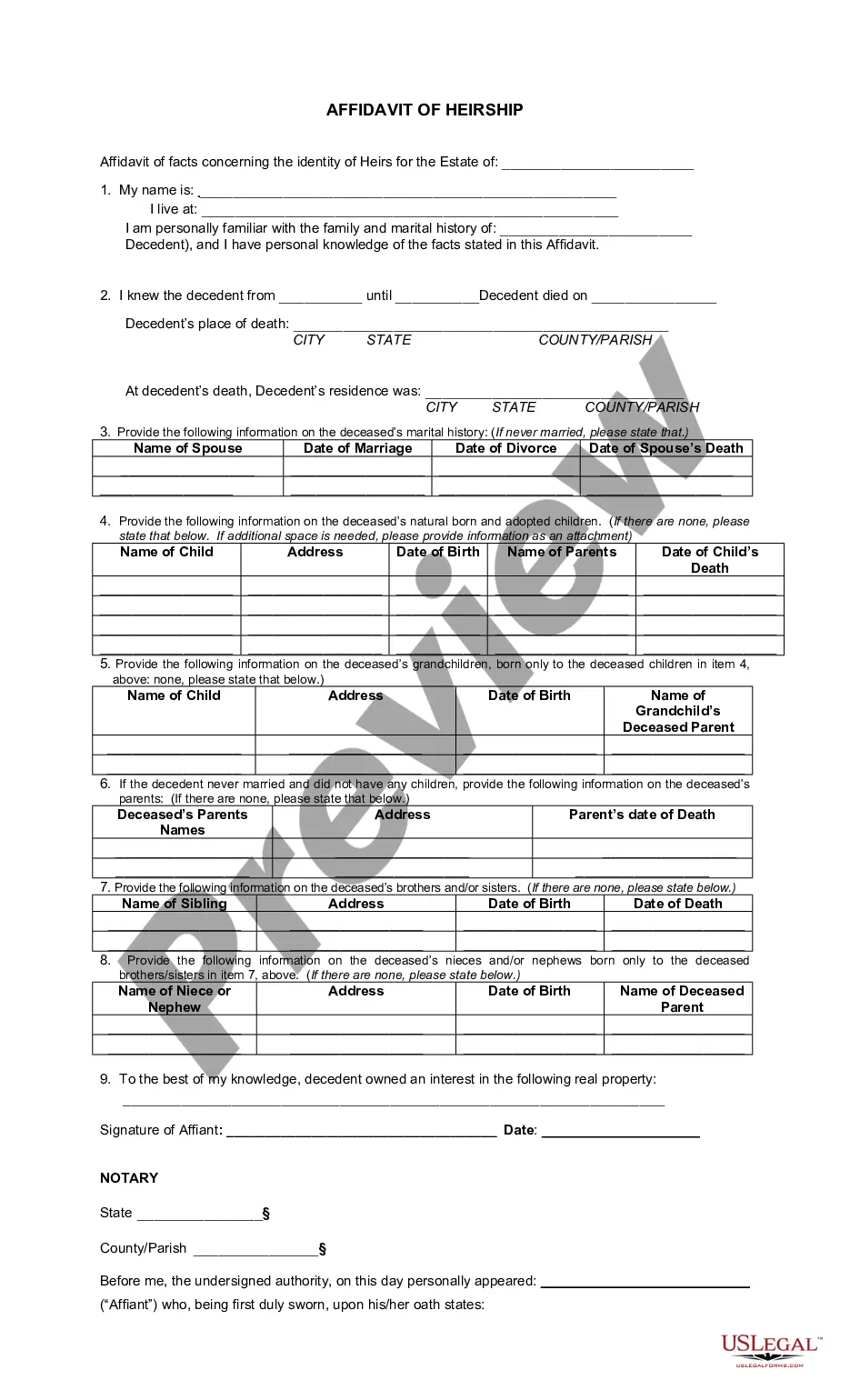
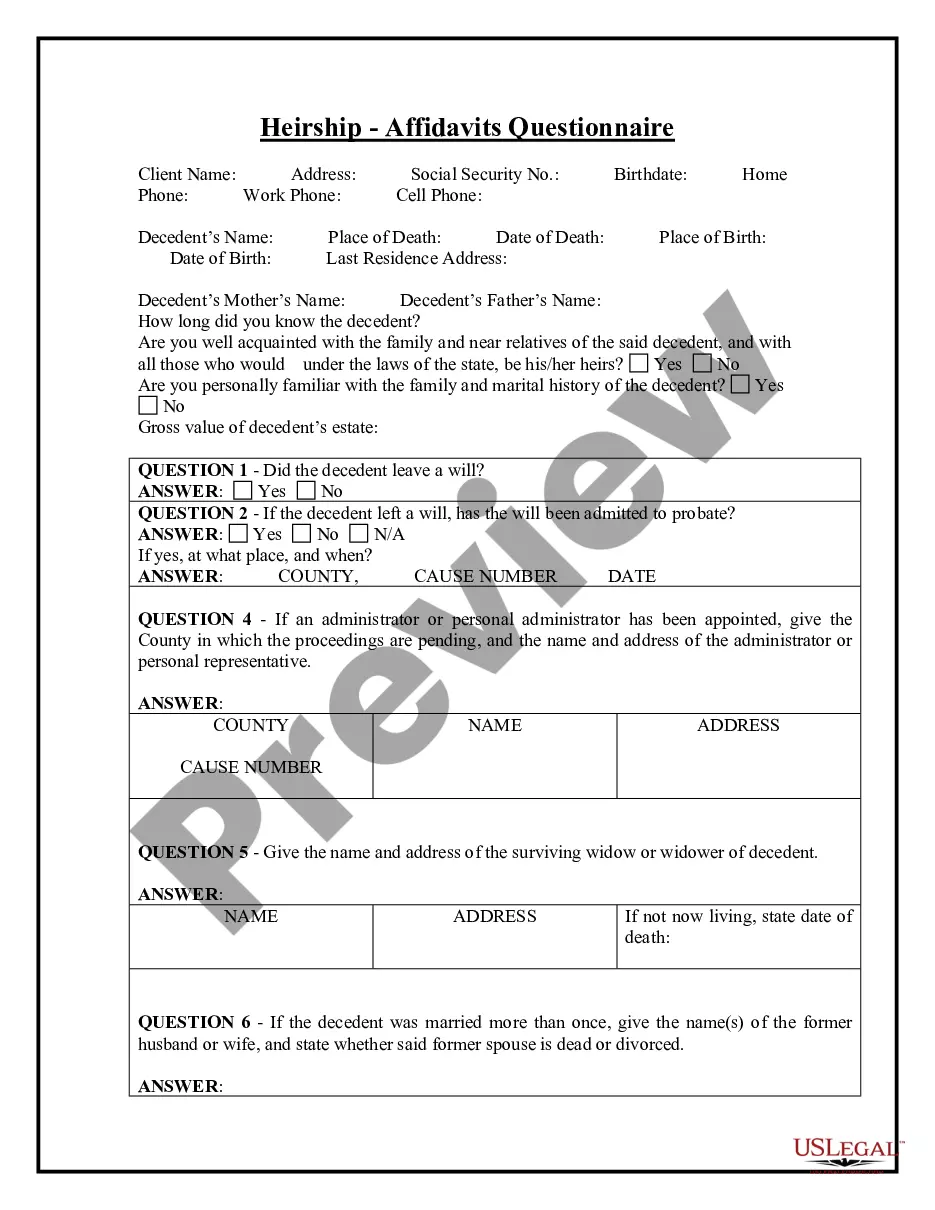
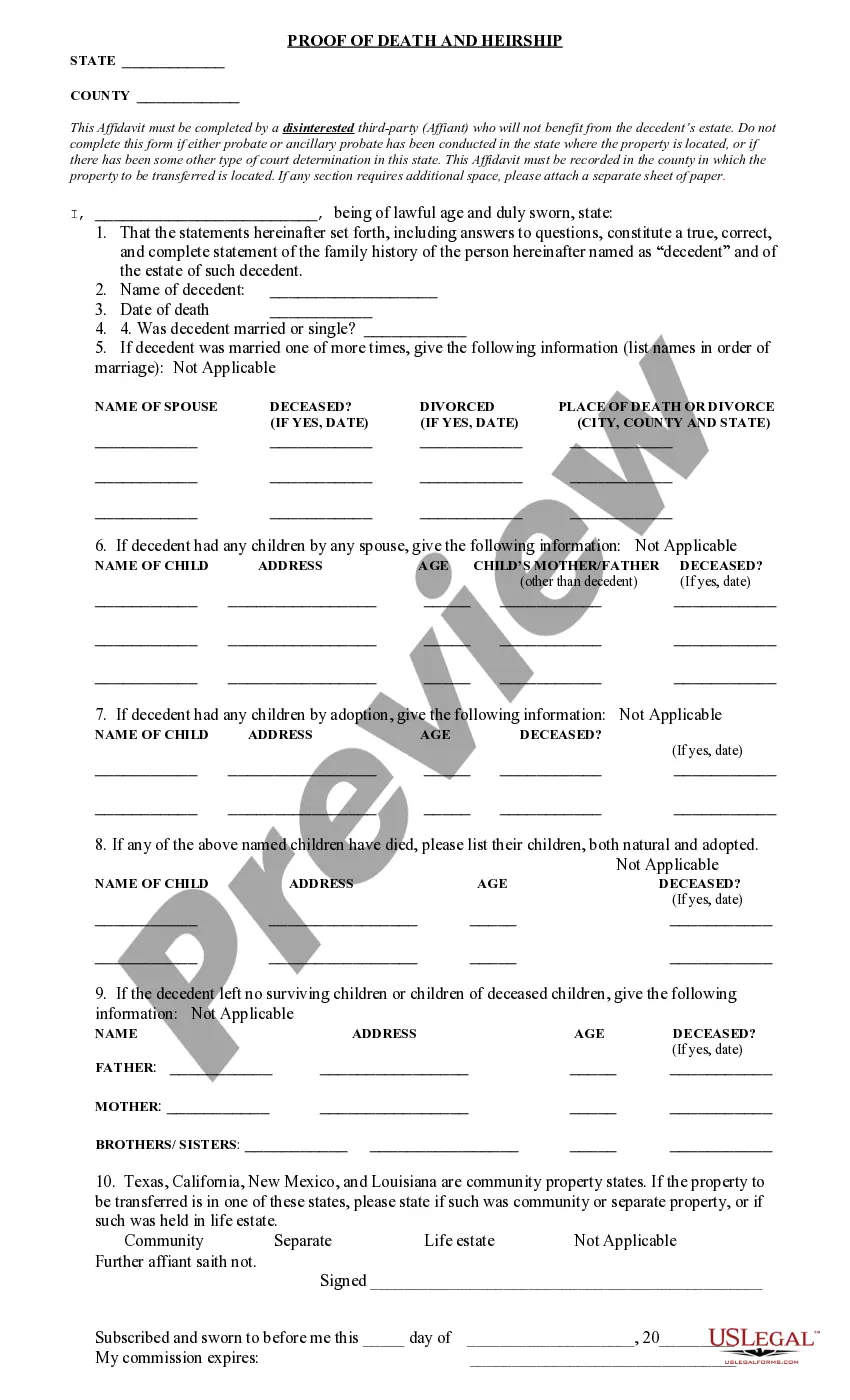
The Heirship Affidavit - Descent is a legal document used to declare the heirs of a deceased individual. This form serves to establish ownership of personal and real property, especially when someone dies intestate (without a will). It is an essential tool for heirs to protect their rights and may be recorded in official land records if needed. Unlike a will, which outlines an individual's wishes for asset distribution, this affidavit specifically identifies rightful heirs, ensuring their legal standing in property matters.
Main sections of this form
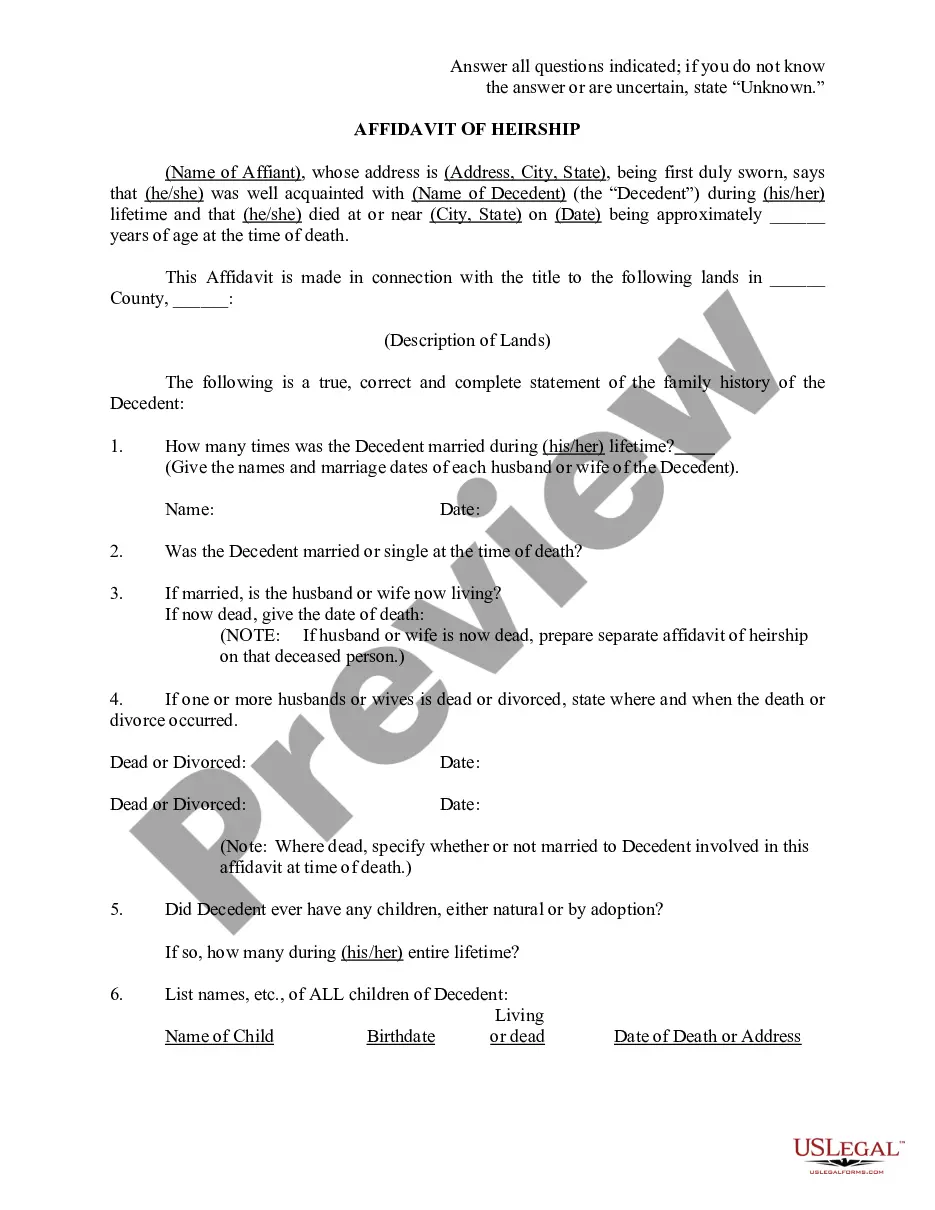
- Name and address of the affiant.
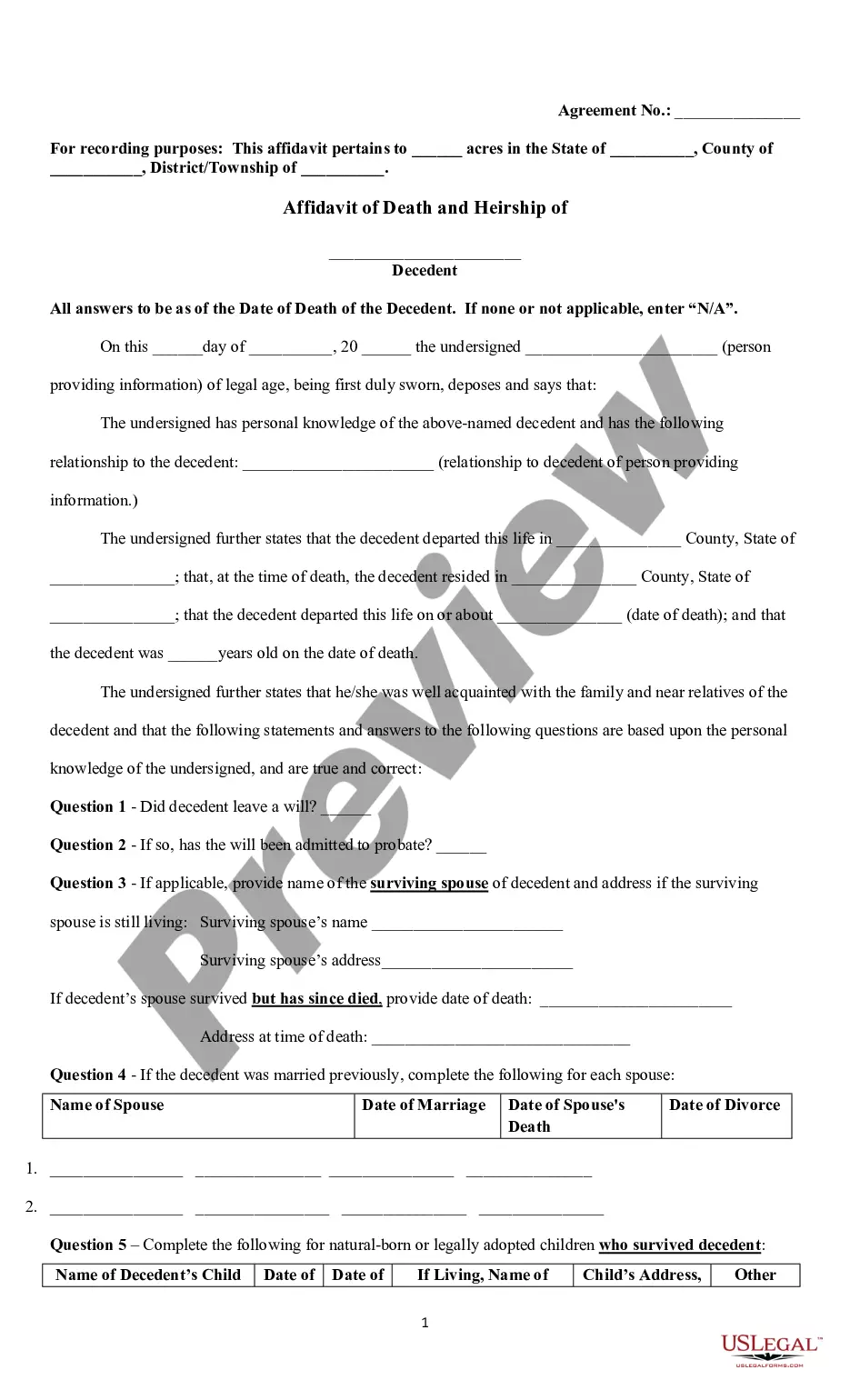
- Name and details of the deceased, including date of death and last residence.
- Questions about the existence of a will and probate proceedings.
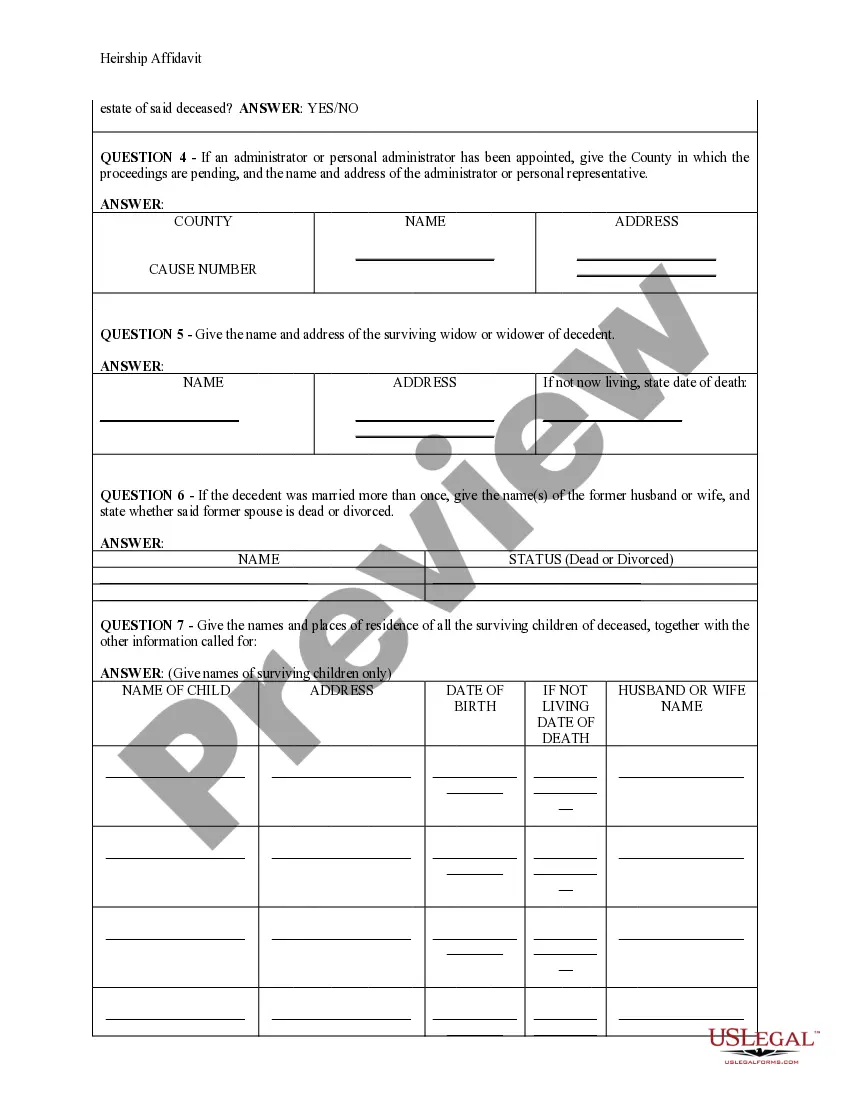
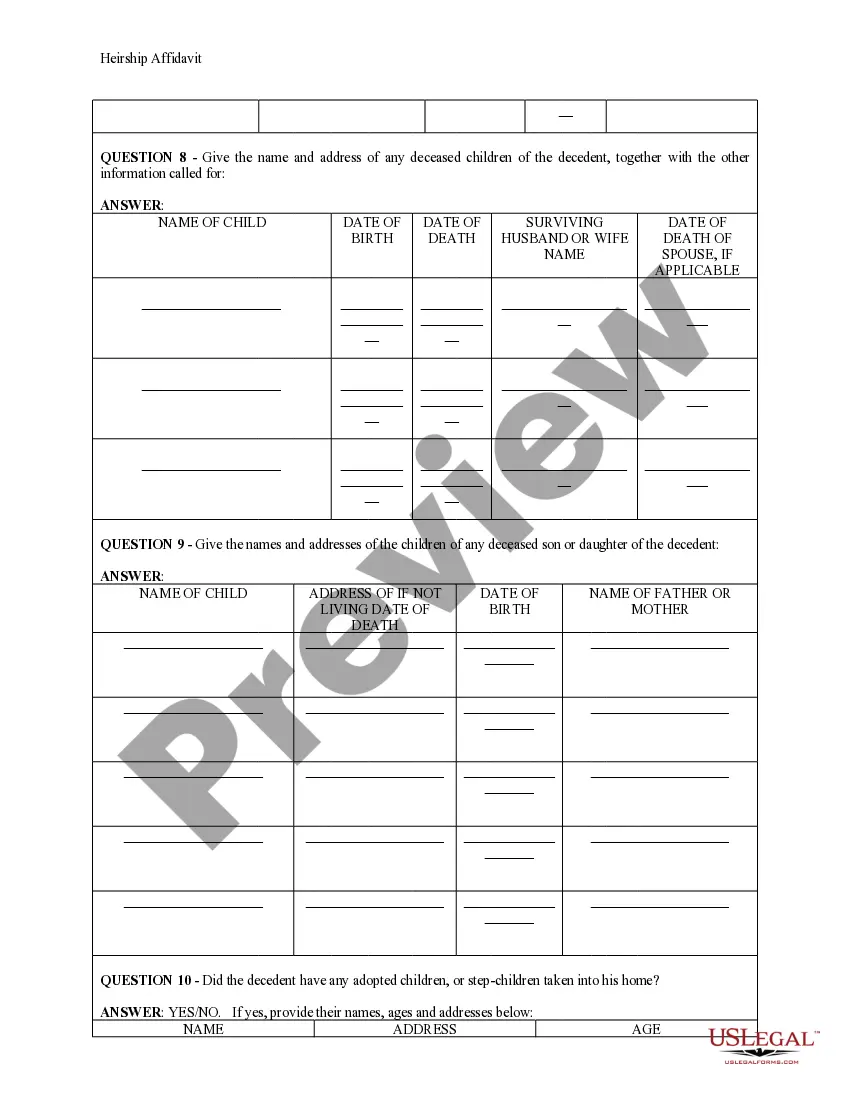
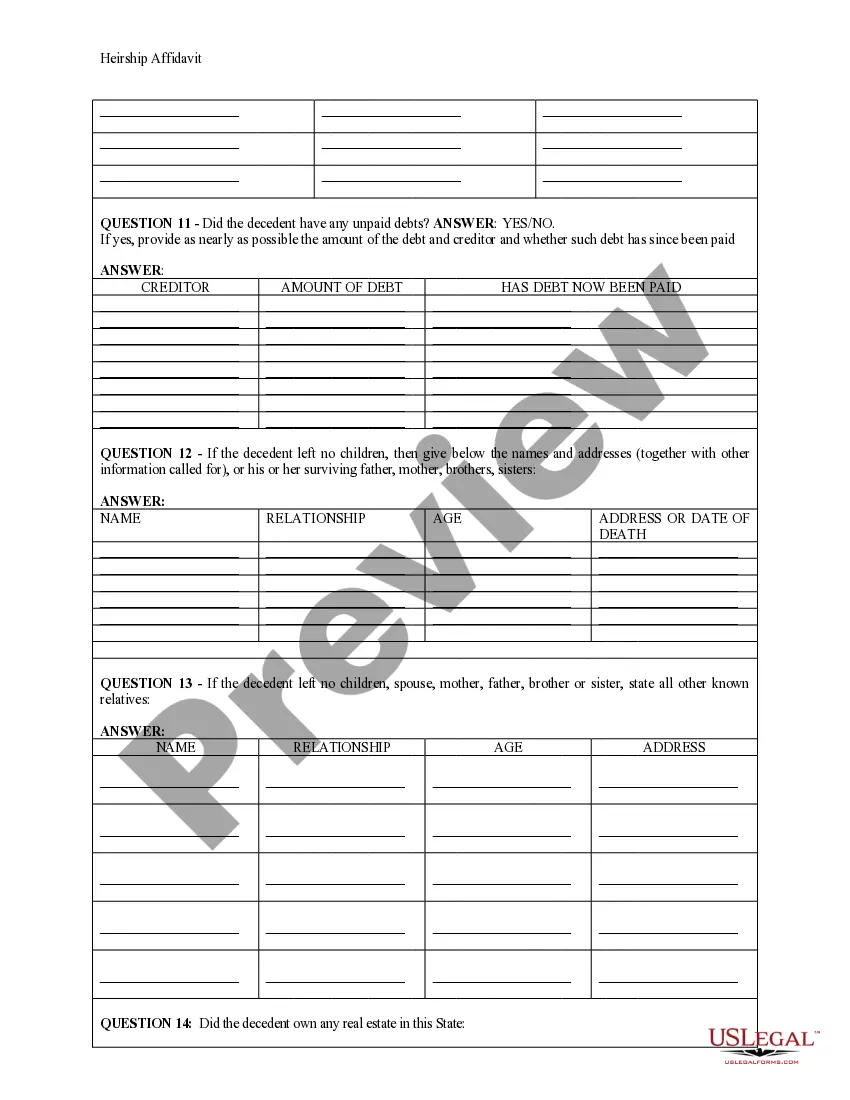
- Information regarding survivors: spouse, children, and other relatives.
- Details about the deceased's real estate ownership.
- Signature of the affiant and notarization section.
When to use this document
This form is commonly used in situations where a person has passed away without a will, leaving behind assets that need to be claimed by their heirs. For example, if a father dies and leaves a son but no estate was opened, the son may use this affidavit to confirm his status as an heir while selling or transferring property. It is also vital for recording property in official land records when required.
Who can use this document
- Individuals who need to establish their legal status as heirs of a deceased person.
- Persons selling or transferring inherited property without a will.
- Administrators or representatives managing a deceased's estate.
- Family members who wish to clarify inheritance claims without engaging in lengthy probate processes.
Completing this form step by step
- Identify the affiant by filling in the name and residence address.
- Provide the name of the deceased along with the date and place of death.
- Answer questions regarding the existence of a will and whether a probate has occurred.
- List surviving relatives, including spouse and children, along with their relevant details.
- Specify any real estate ownership details to clarify property rights.
- Complete the signature section and ensure notarization to validate the affidavit.
Does this form need to be notarized?
This form must be notarized to be legally valid. US Legal Forms provides secure online notarization powered by Notarize, allowing you to complete the process through a verified video call.
Get your form ready online
Our built-in tools help you complete, sign, share, and store your documents in one place.
Make edits, fill in missing information, and update formatting in US Legal Forms—just like you would in MS Word.
Download a copy, print it, send it by email, or mail it via USPS—whatever works best for your next step.
Sign and collect signatures with our SignNow integration. Send to multiple recipients, set reminders, and more. Go Premium to unlock E-Sign.
If this form requires notarization, complete it online through a secure video call—no need to meet a notary in person or wait for an appointment.
We protect your documents and personal data by following strict security and privacy standards.

Make edits, fill in missing information, and update formatting in US Legal Forms—just like you would in MS Word.

Download a copy, print it, send it by email, or mail it via USPS—whatever works best for your next step.

Sign and collect signatures with our SignNow integration. Send to multiple recipients, set reminders, and more. Go Premium to unlock E-Sign.

If this form requires notarization, complete it online through a secure video call—no need to meet a notary in person or wait for an appointment.

We protect your documents and personal data by following strict security and privacy standards.
Common mistakes to avoid
- Failing to provide complete information about the deceased and their heirs.
- Not getting the affidavit notarized, when required.
- Omitting responses to critical questions regarding wills and probate status.
- Incorrectly listing heirs or their details, leading to potential disputes.
Why use this form online
- Immediate access to legal documents tailored to your needs.
- Easy customization and editing of the form before downloading.
- Convenience of completing the process from home without appointments.
- Reliable templates drafted by licensed attorneys, ensuring legal compliance.
Key takeaways
- The Heirship Affidavit - Descent identifies heirs when dealing with intestate situations.
- Correctly completing this affidavit is essential for claiming inheritance and managing property.
- Notarization is a crucial step for legal validity.
- This form is specific to Maine's legal framework.
Looking for another form?


Form popularity
FAQ
1. This form should be completed by someone other than an Heir. This person should be someone who is familiar with the family history of the deceased (decedent), and who will obtain no benefit from the Estate. The person who fills out the form is referred to as the AFFIANT.
If you are named as an heir, you may have to prove to the estate trustee that you are the person named. This can be done by showing the estate trustee identification or providing an affidavit.
A fee of $15 for the first page and $4 for each additional page is common. Ask if you can file the two affidavits of heirship as one document. Some counties let you file the two affidavits of heirship as one document if the decedent and property descriptions are the same.
An affidavit of heirship should be signed by two disinterested witnesses. To qualify as a disinterested witness, one must be knowledgeable about the deceased and his or her family history, but cannot benefit financially from the estate.
A fee of $15 for the first page and $4 for each additional page is common. Ask if you can file the two affidavits of heirship as one document. Some counties let you file the two affidavits of heirship as one document if the decedent and property descriptions are the same.
An affidavit of heirship must be filed with the real property records in the county where the land is located. Call the county clerk and ask how much their filing fees are. The filing fees vary from county to county.
Harris County Civil Courthouse. 201 Caroline, Suite 800. (713) 274-8585.
Does an affidavit of heirship need to be recorded in Texas? Yes, after the affidavit is signed and executed, it must be filed with the county deed records where the decedent's real property is located.
When a person who owns real property dies intestate, and there is no survivor mentioned in the deed, the heirs of the decedent, must file an affidavit of descent to establish their chain of title to the property. This affidavit, is known as an affidavit of descent.