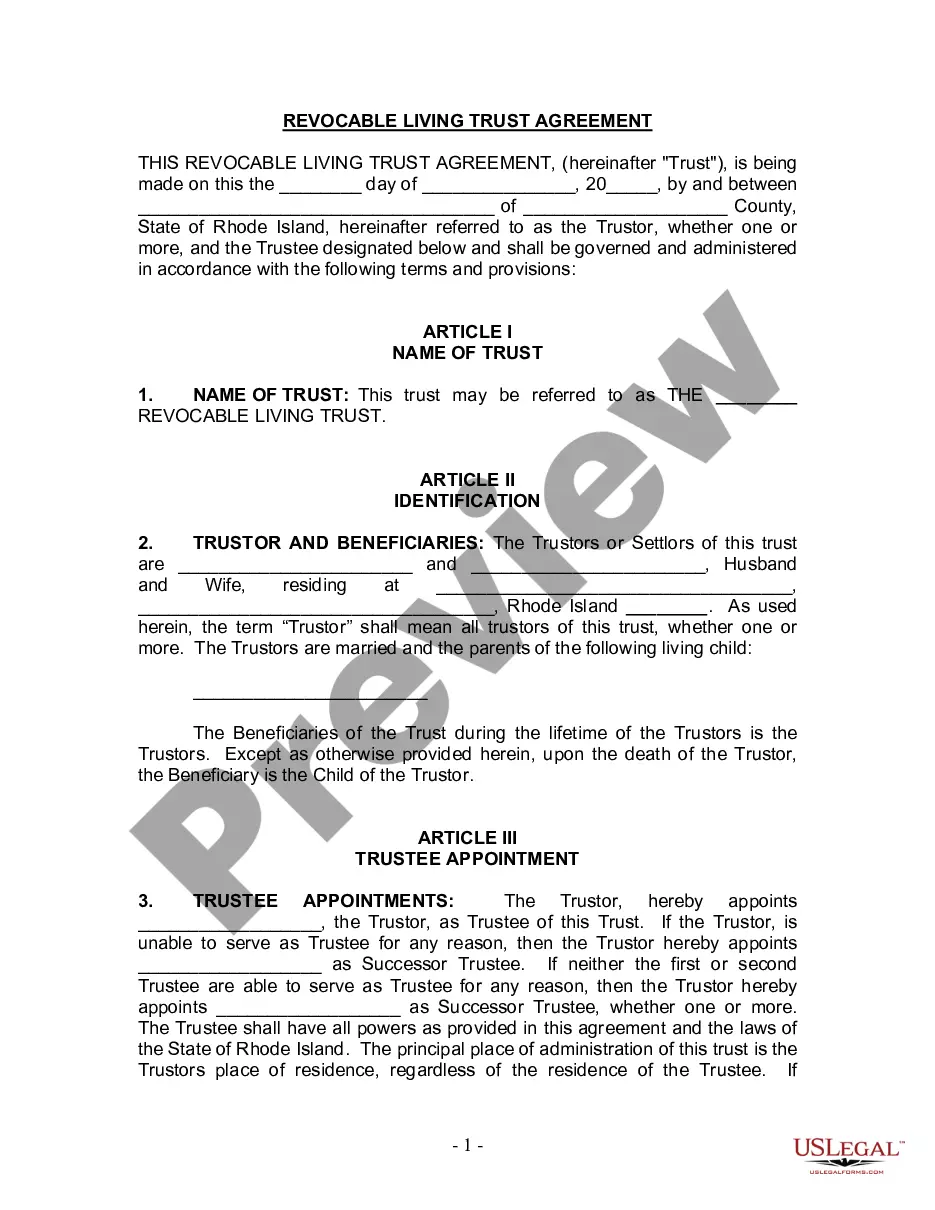
Agreement for Occupancy After Closing: by Seller
Overview of this form
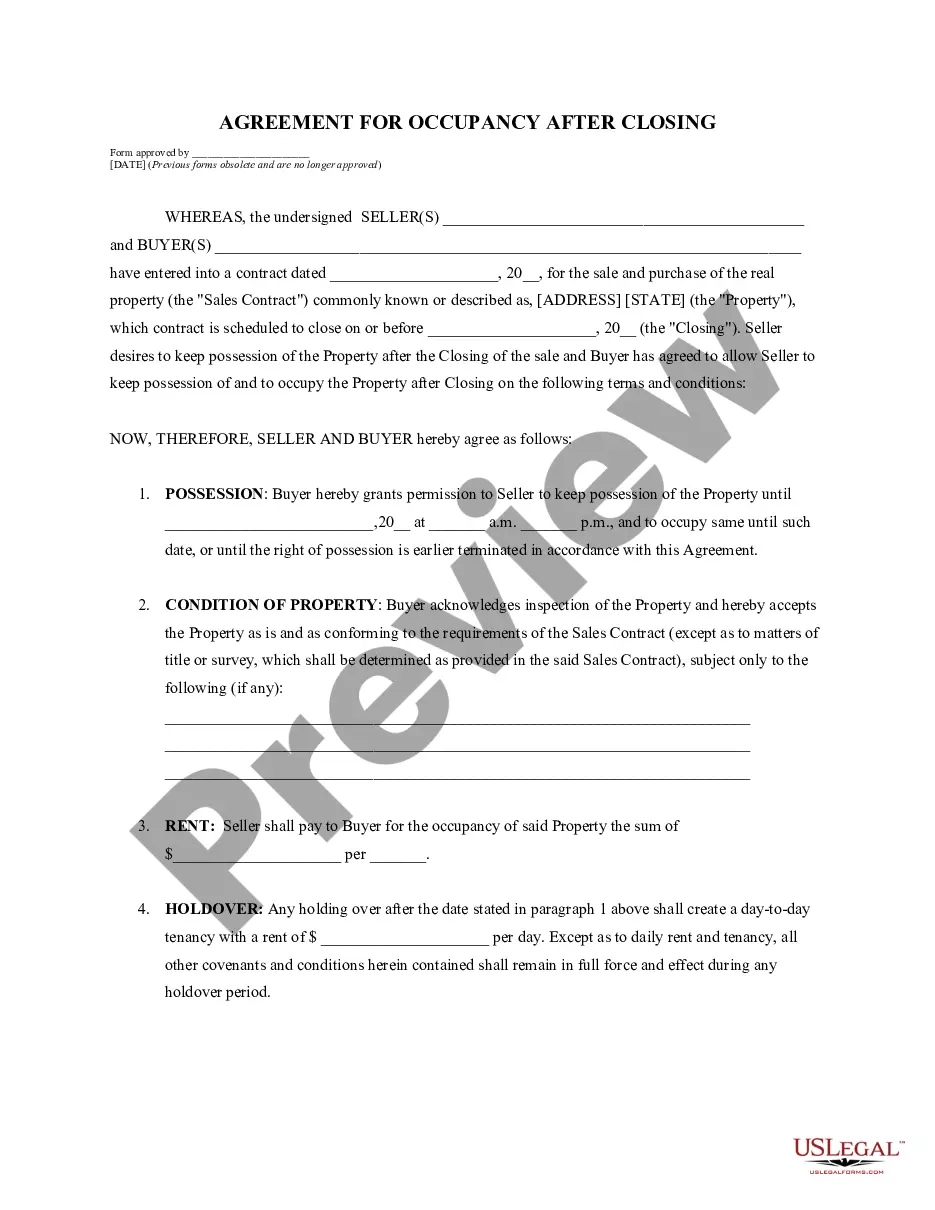
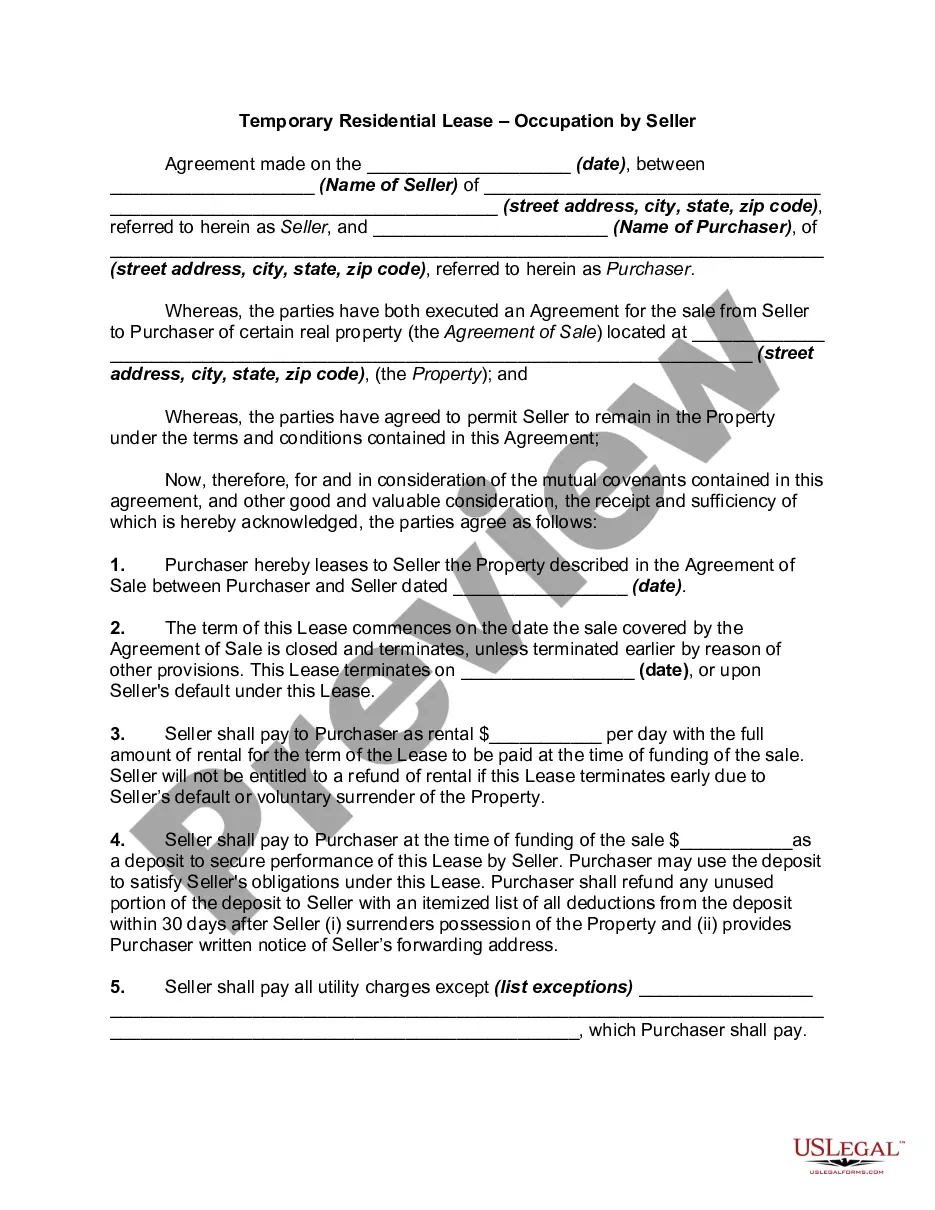
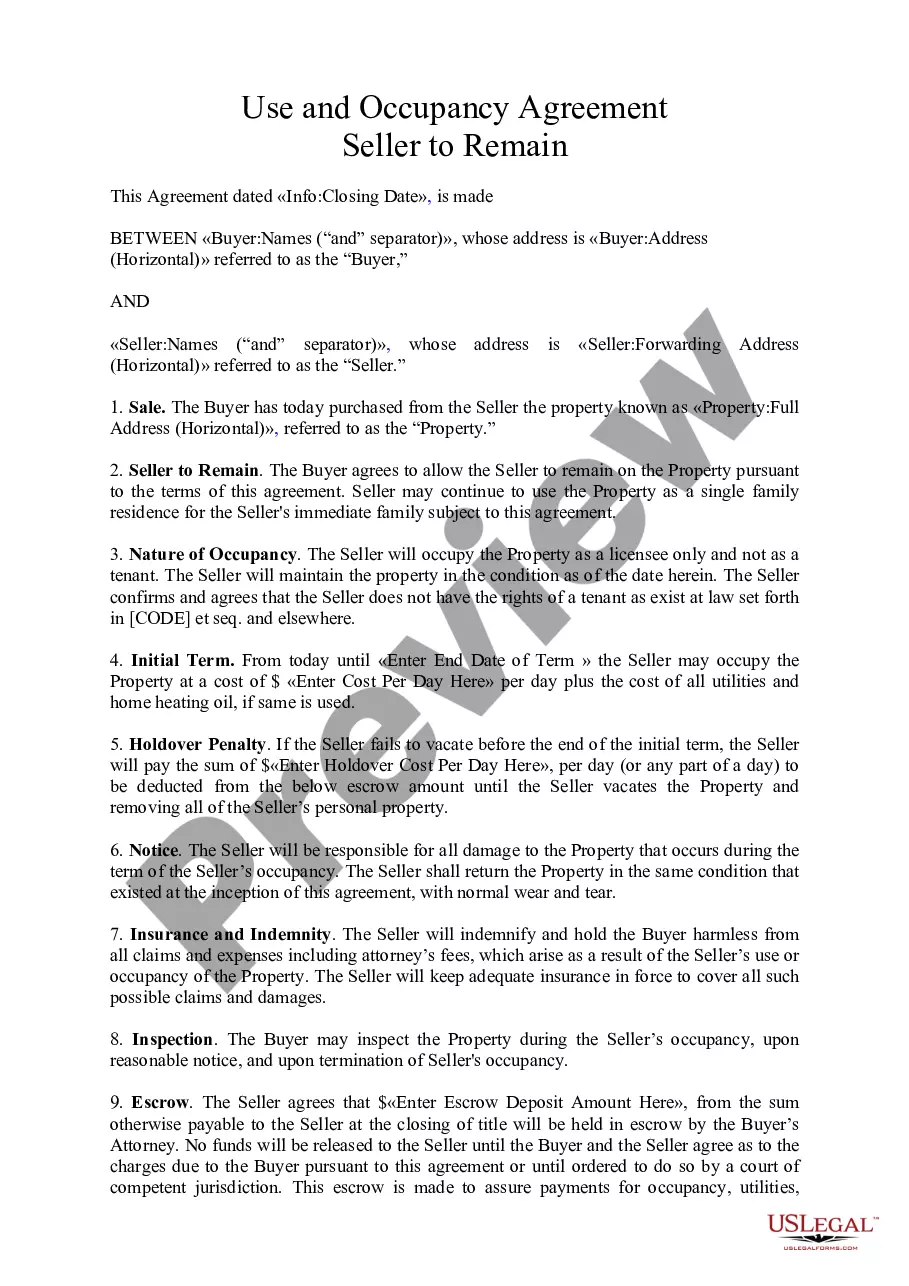
The Agreement for Occupancy After Closing: by Seller is a legal document that allows the seller to remain in a residential property after the sale has been finalized. This form stipulates the terms under which the seller can continue to occupy the property beyond the closing date, distinguishing it from standard sale agreements. It is a vital tool for ensuring both parties understand their rights and responsibilities regarding occupancy post-closing.
Key parts of this document
- Identification of parties involved (Seller and Buyer).
- Specifications of the property being sold.
- Terms for occupancy, including duration and rental payment.
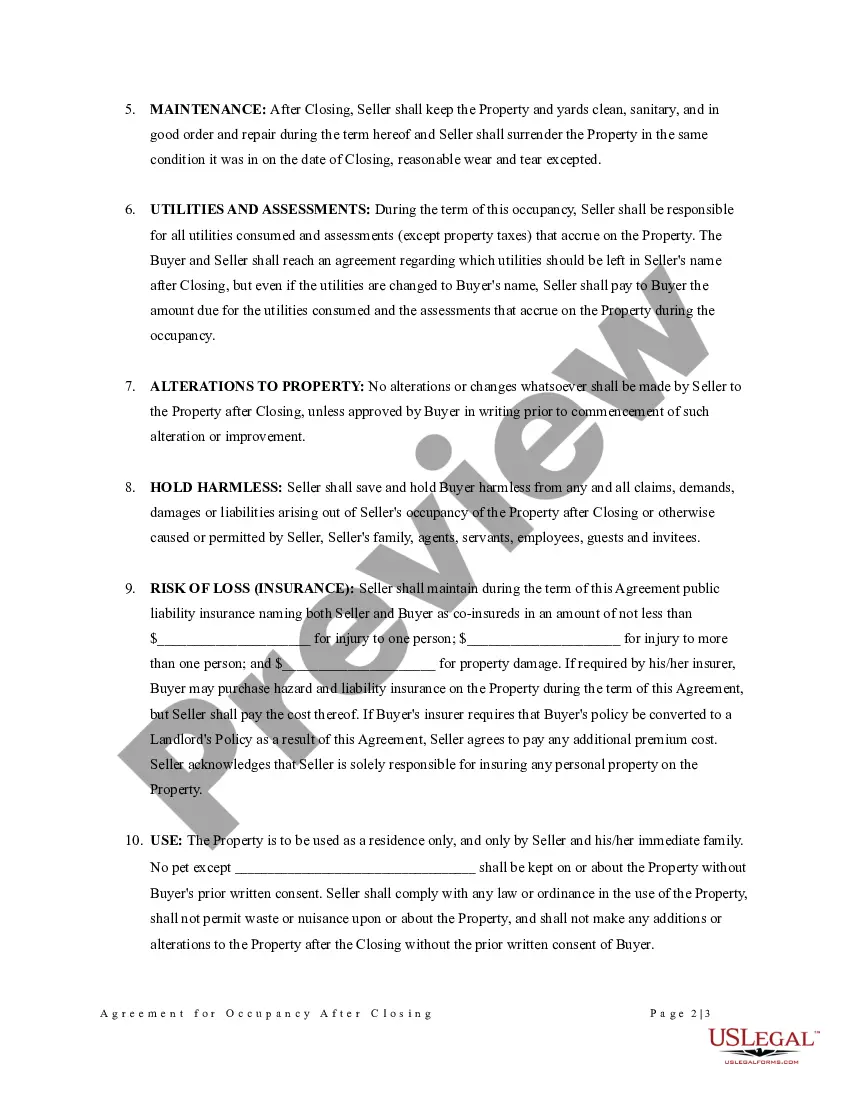
- Responsibilities for maintenance and utilities.
- Conditions for alterations to the property.
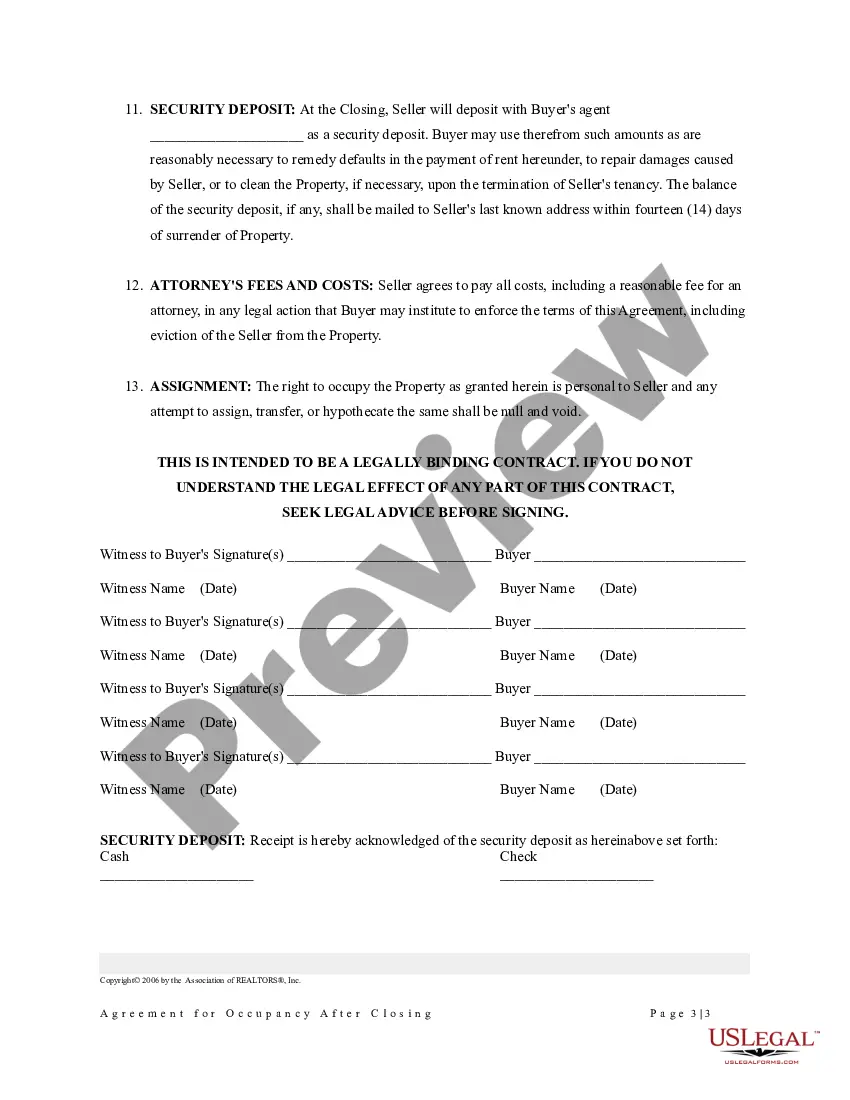
- Provisions for a security deposit.
Common use cases
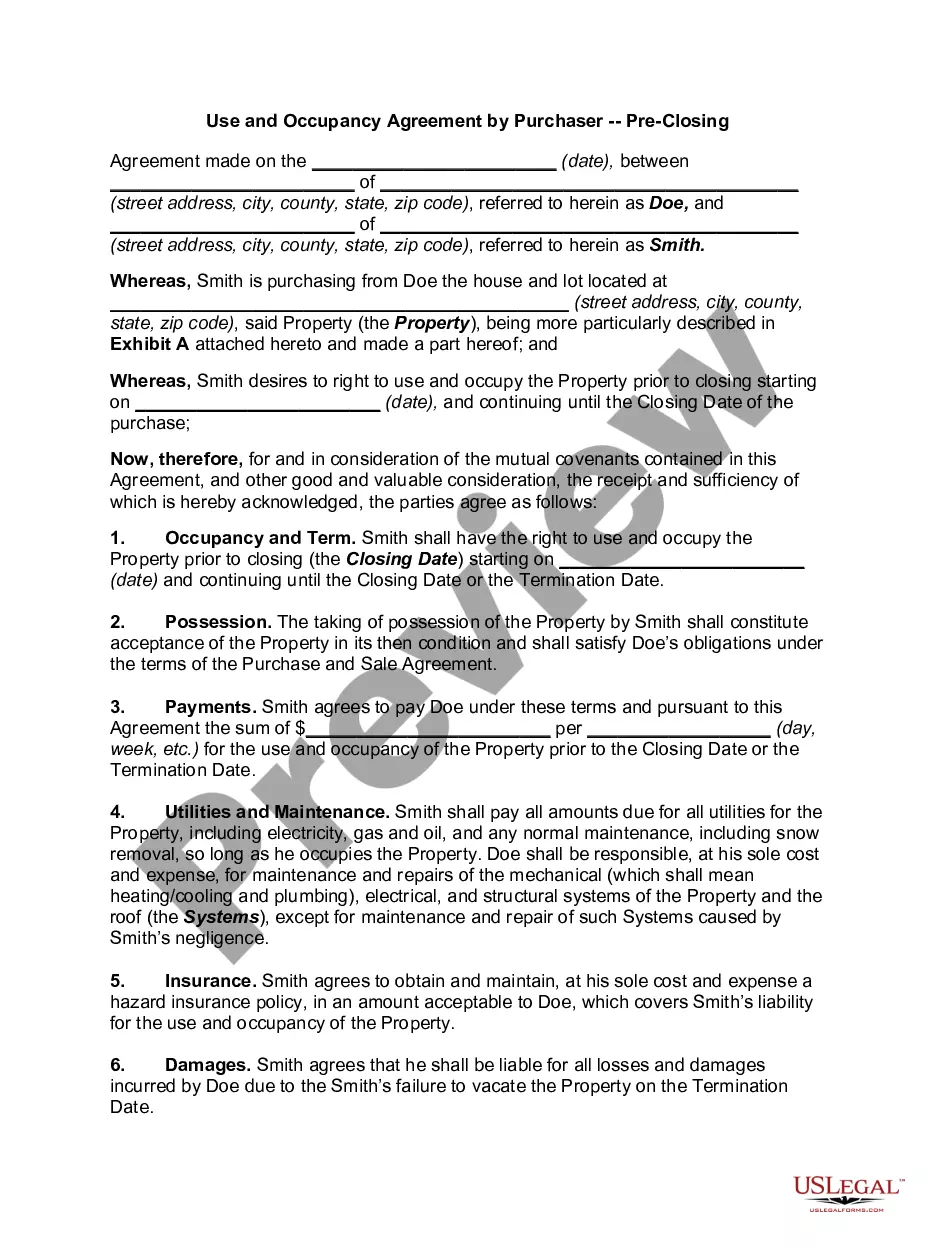
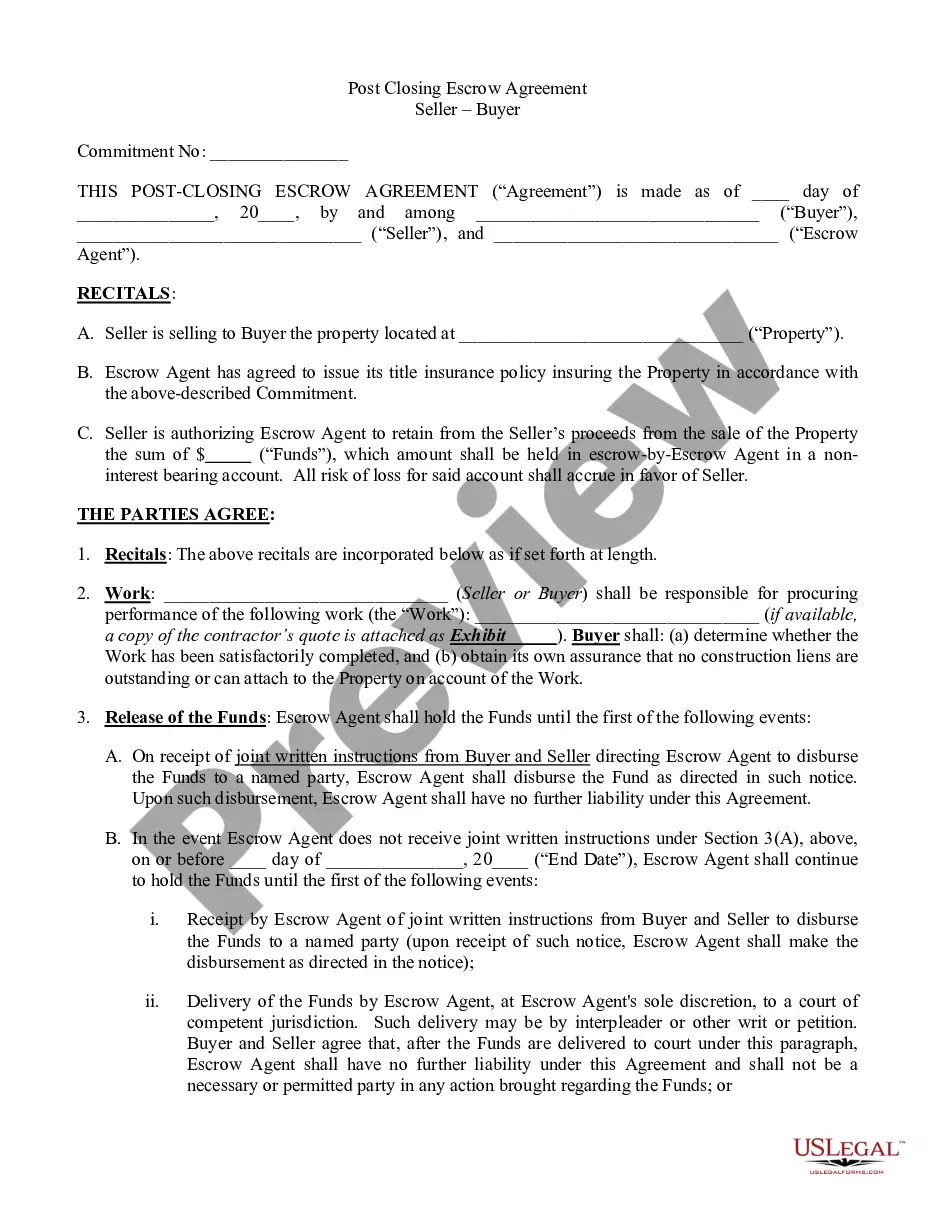
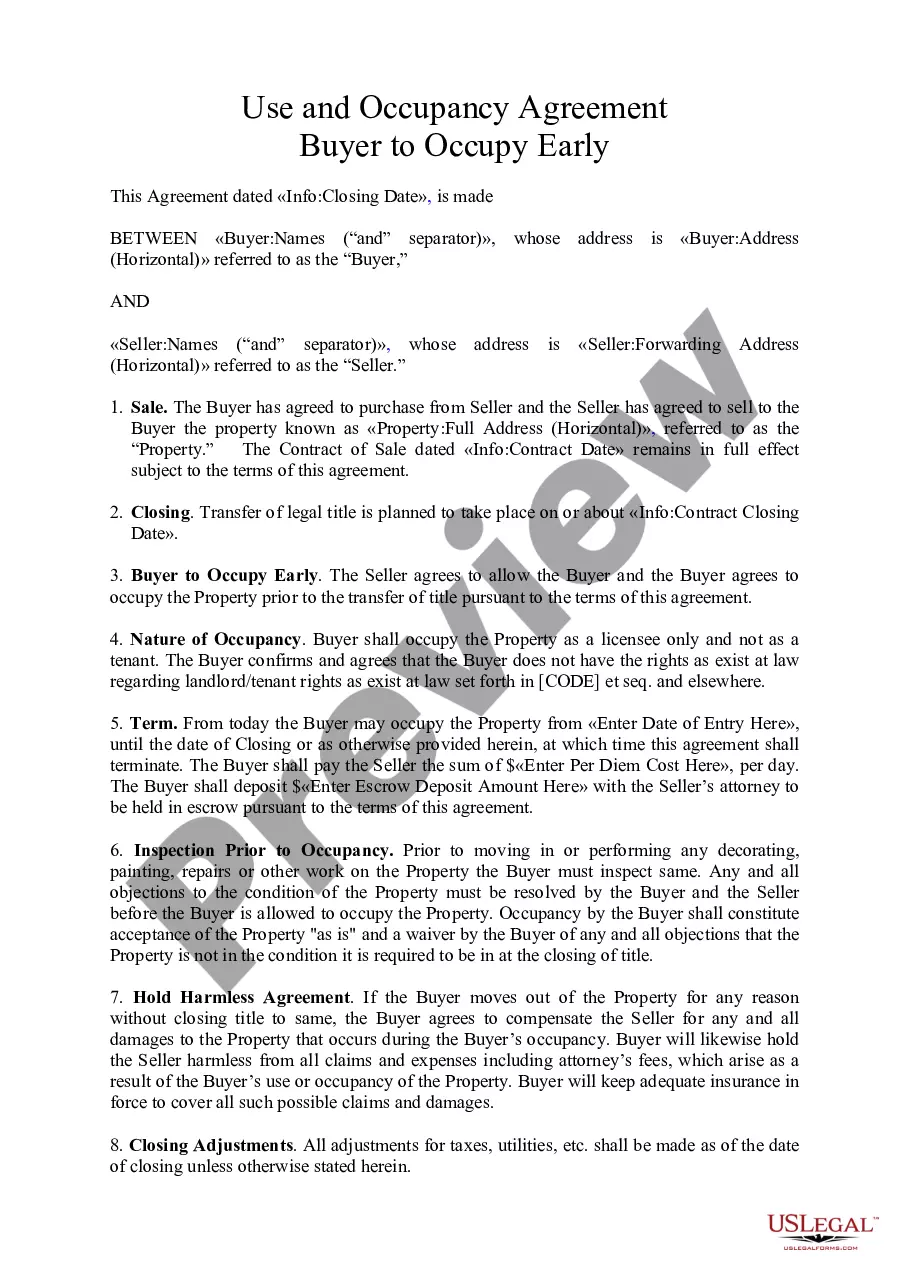
This form is particularly useful in situations where the seller is unable to vacate the property immediately after closing, perhaps due to relocation logistics or needs to finalize their next housing arrangement. It helps to formalize an agreement that allows for continued occupancy under agreed-upon conditions, minimizing potential conflicts or misunderstandings.
Intended users of this form
- Home sellers who need extra time before moving out after selling their property.
- Home buyers who are willing to allow the seller to stay temporarily.
- Real estate agents facilitating final sales typically requiring clarity on occupancy terms.
Instructions for completing this form
- Identify and fill in the full names of the Seller(s) and Buyer(s).
- Specify the property address and relevant closing date.
- Detail the terms of occupancy, including rent payment schedule and duration.
- Complete sections related to utilities, maintenance, and alterations.
- Sign the form with witnesses as required to make it legally binding.
Notarization guidance
This form does not typically require notarization unless specified by local law. However, having it notarized can provide additional validation and security for both the Seller and Buyer.
Get your form ready online
Our built-in tools help you complete, sign, share, and store your documents in one place.
Make edits, fill in missing information, and update formatting in US Legal Forms—just like you would in MS Word.
Download a copy, print it, send it by email, or mail it via USPS—whatever works best for your next step.
Sign and collect signatures with our SignNow integration. Send to multiple recipients, set reminders, and more. Go Premium to unlock E-Sign.
If this form requires notarization, complete it online through a secure video call—no need to meet a notary in person or wait for an appointment.
We protect your documents and personal data by following strict security and privacy standards.

Make edits, fill in missing information, and update formatting in US Legal Forms—just like you would in MS Word.

Download a copy, print it, send it by email, or mail it via USPS—whatever works best for your next step.

Sign and collect signatures with our SignNow integration. Send to multiple recipients, set reminders, and more. Go Premium to unlock E-Sign.

If this form requires notarization, complete it online through a secure video call—no need to meet a notary in person or wait for an appointment.

We protect your documents and personal data by following strict security and privacy standards.
Common mistakes
- Failing to include the closing date and property details accurately.
- Not specifying the rental amount or payment terms.
- Neglecting to address maintenance responsibilities during occupancy.
- Forgetting to have the form signed by all parties and witnesses.
Benefits of completing this form online
- Convenience of downloading and editing the form at your own pace.
- Access to professionally drafted templates ensuring legal compliance.
- Ability to customize content to suit specific situations and needs.
Looking for another form?
Form popularity
FAQ
First tuesday Form 271, Interim Occupancy Agreement is used to establish a landlord-tenant relationship between the seller and the buyer when the seller agrees to give the buyer possession to the property being sold at any time prior to the close of escrow.
These types of deals are often known as ?Post-Occupancy Agreements?. By definition, this is an agreement where the buyer of a property agrees to allow the seller of the property to stay on the property past the settlement date.
The use and occupancy agreement ? often referred to as the ?U&O,? ? is an agreement between a buyer and seller, where one of them is permitted to occupy the property for a set period. It's usually put in place if the buyer needs to move into the property before ownership can be transferred.
back agreement is a rental or lease agreement between the home buyer and seller that allows the seller to take out their home equity and continue to live in the house after the closing date in exchange for rental payments.
With later possession dates, or those that are 30 to 90 days after closing, the buyer may offer a lease-back agreement to the seller (also called a post-closing possession agreement). This means the buyer leases the home back to the seller for a certain period of time after closing at an agreed-upon price.
A PCOA is when a seller will stay in the property past the closing date or settlement date. PCOAs, also known as Post-Closing Possession Agreements, Post-Occupancy Agreements (POA), or ?rent backs,? can vary widely in price and structure.
Occupancy ? In Michigan, the concept of ?occupancy? exists. This refers to the fact that you, the seller, can negotiate a period AFTER the closing in which you will continue to live in the home, while paying the buyer some agreed-upon daily rental rate.