Self-Employed Plumbing Services Contract
Understanding this form
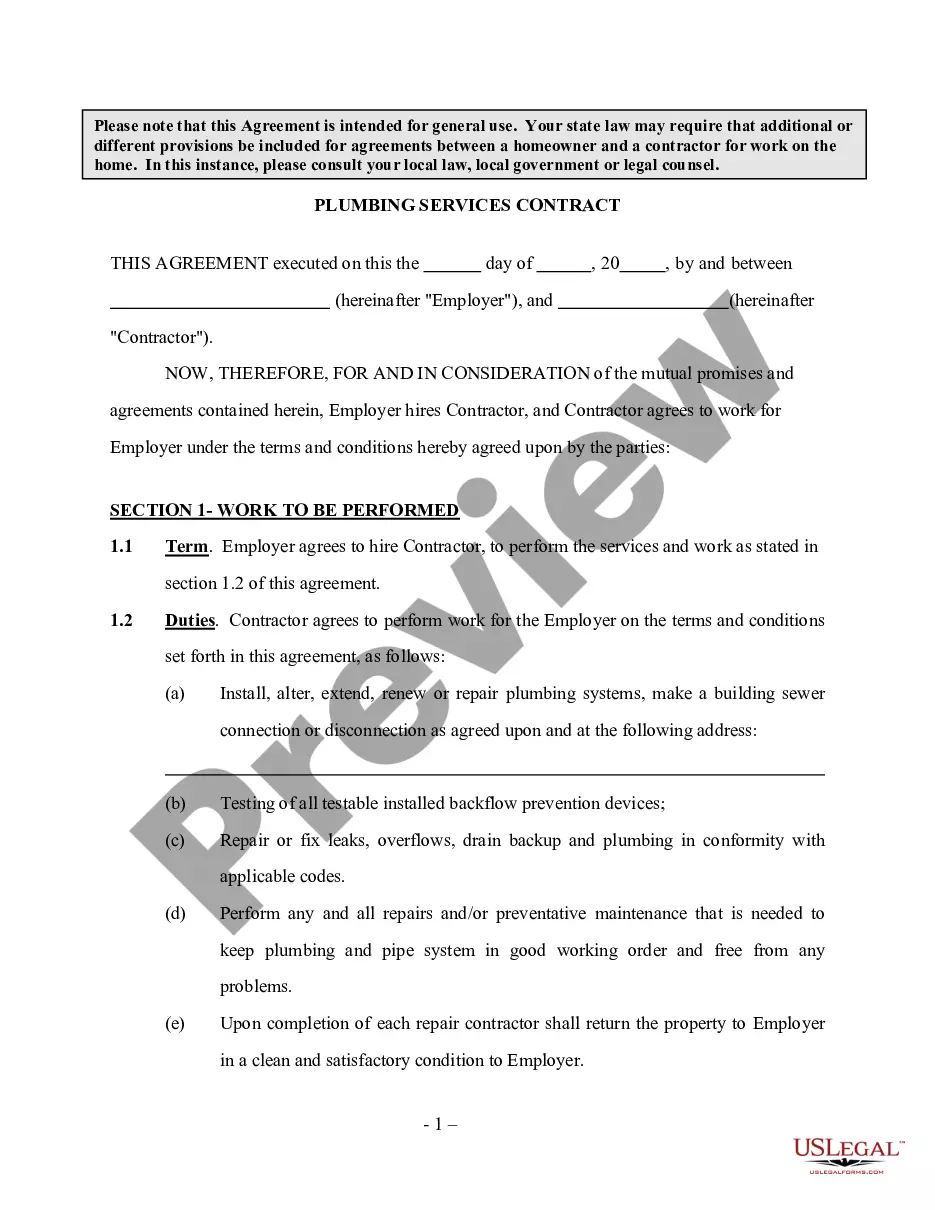
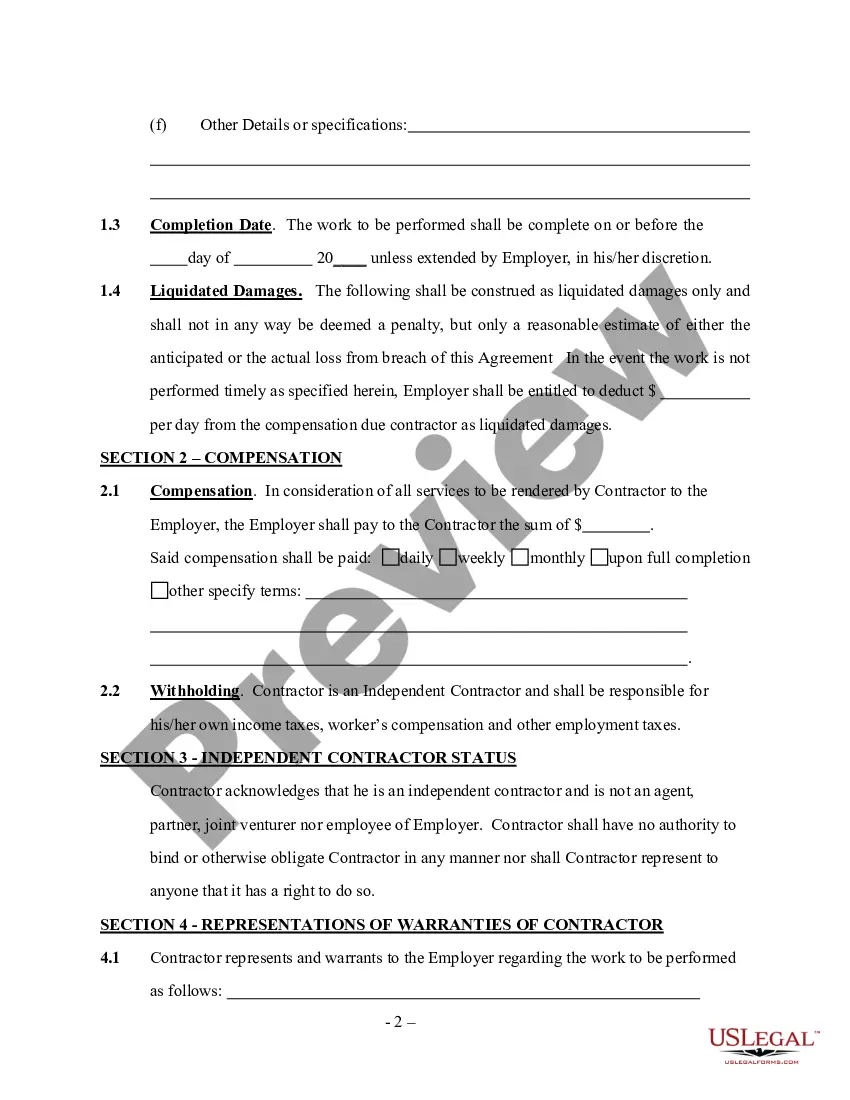
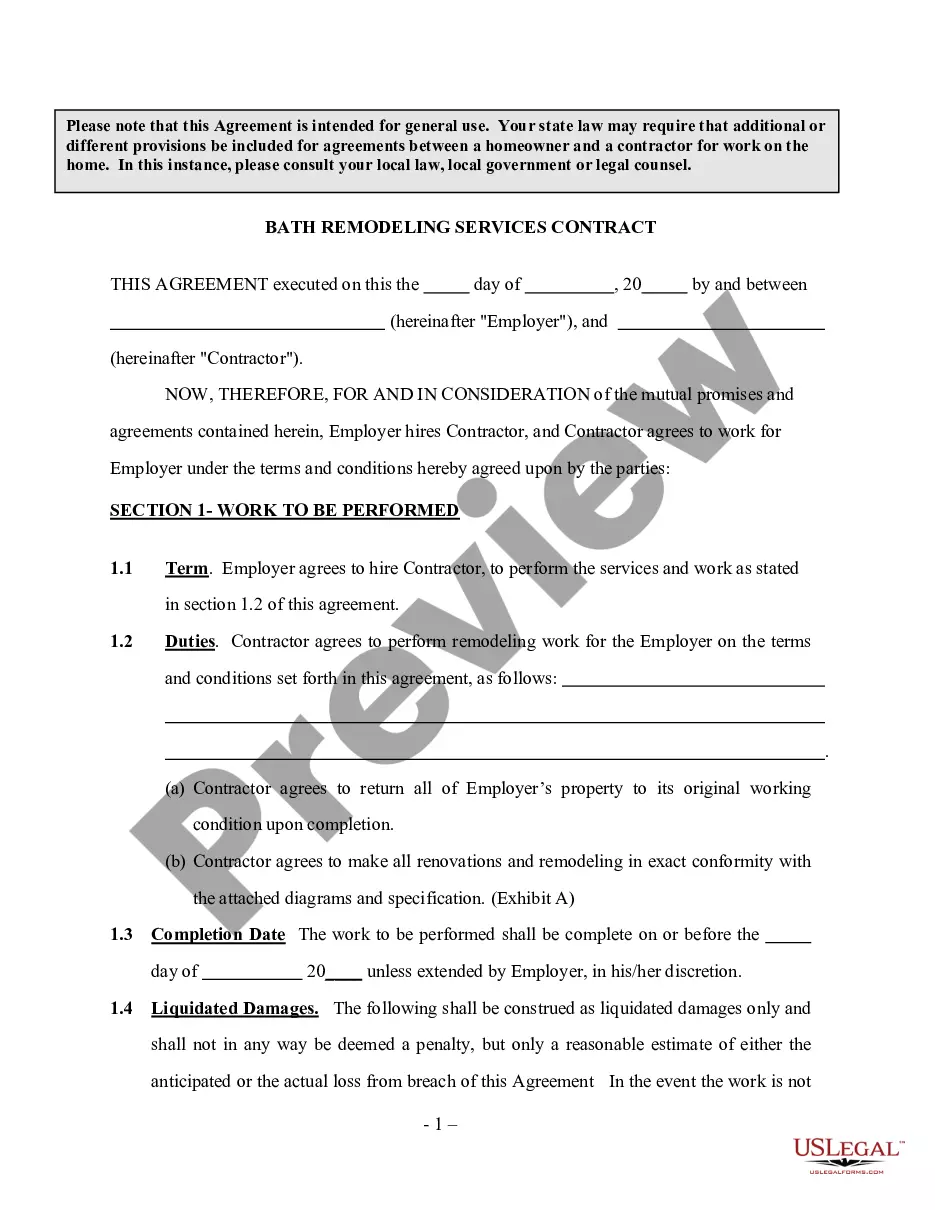
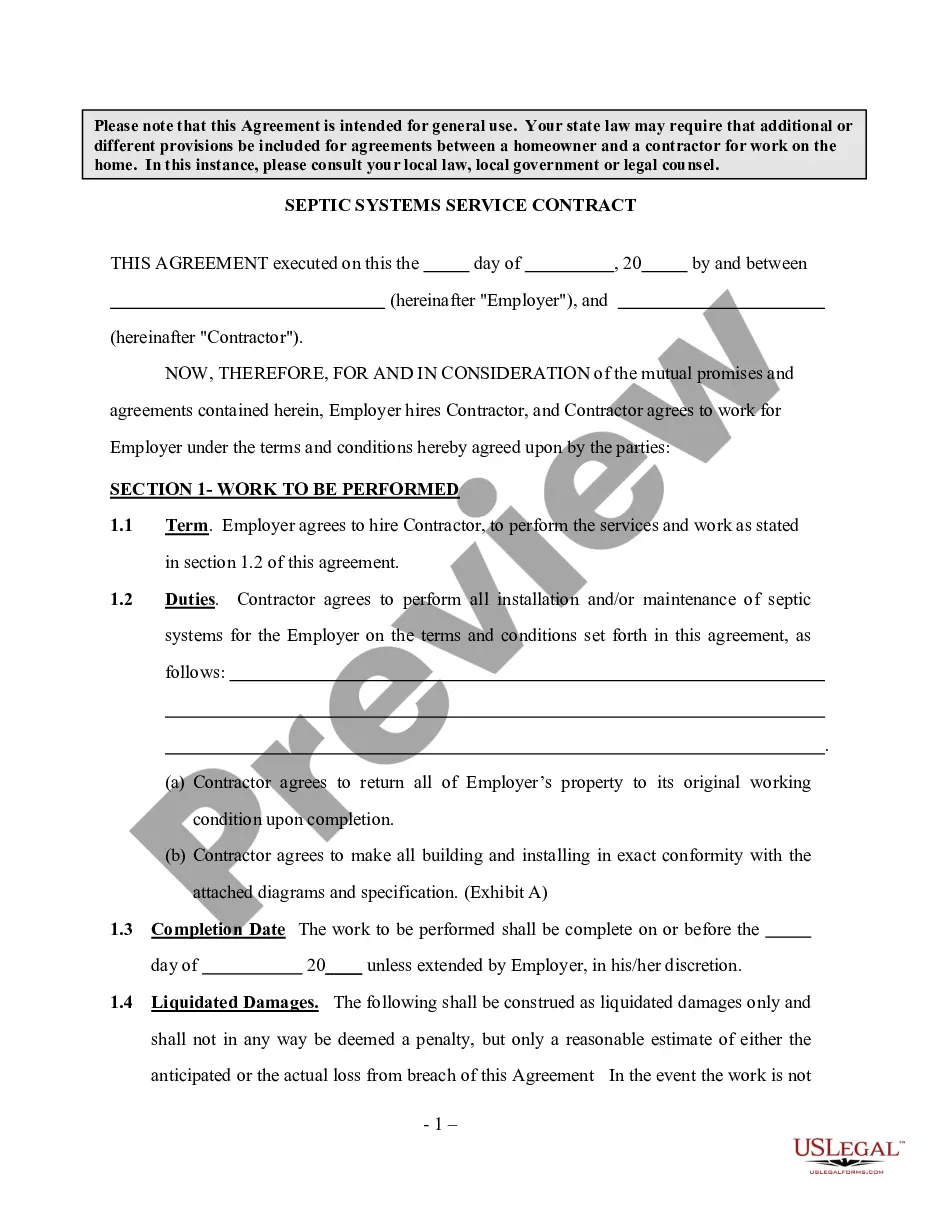
The Self-Employed Plumbing Services Contract is a legal document used when a homeowner hires a plumbing contractor as an independent party to perform plumbing services. This form outlines the obligations and rights of both the employer and the contractor, ensuring clear agreements on the work to be performed, payment terms, and other essential aspects of the contractor relationship. It is distinct from employee agreements since it emphasizes the independent status of the contractor.
Main sections of this form
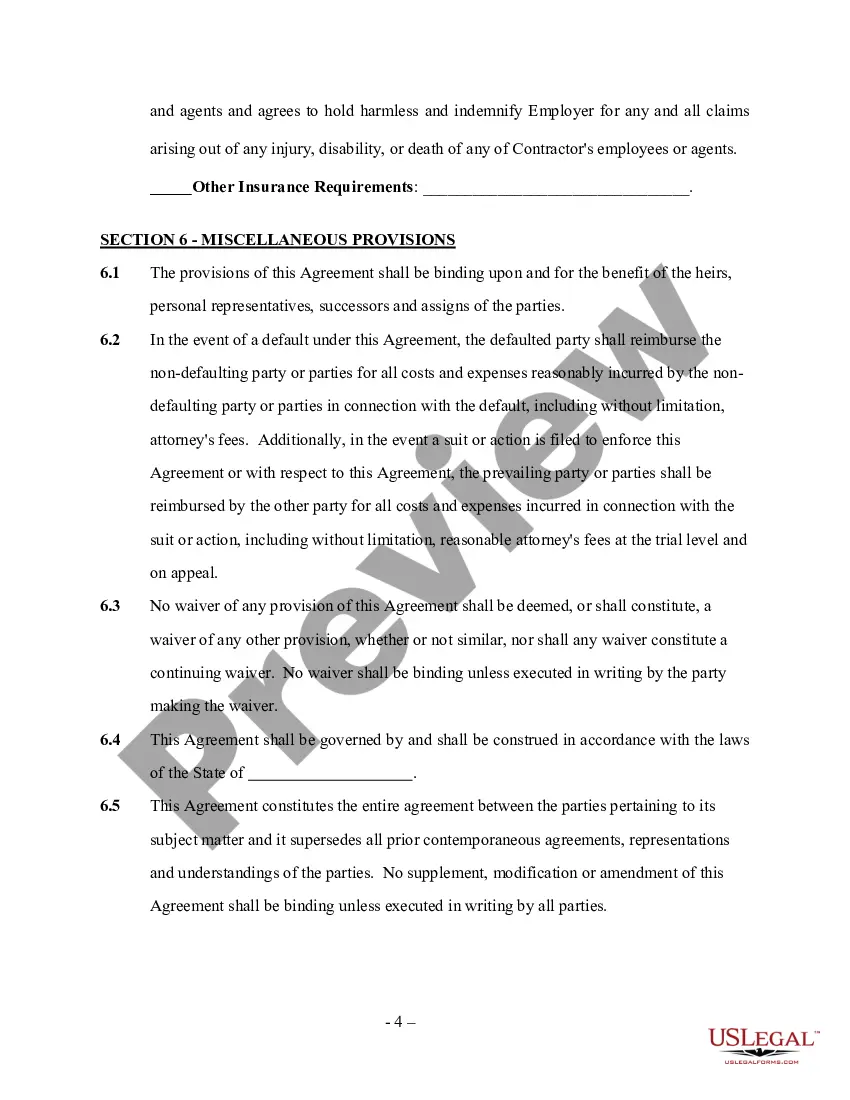
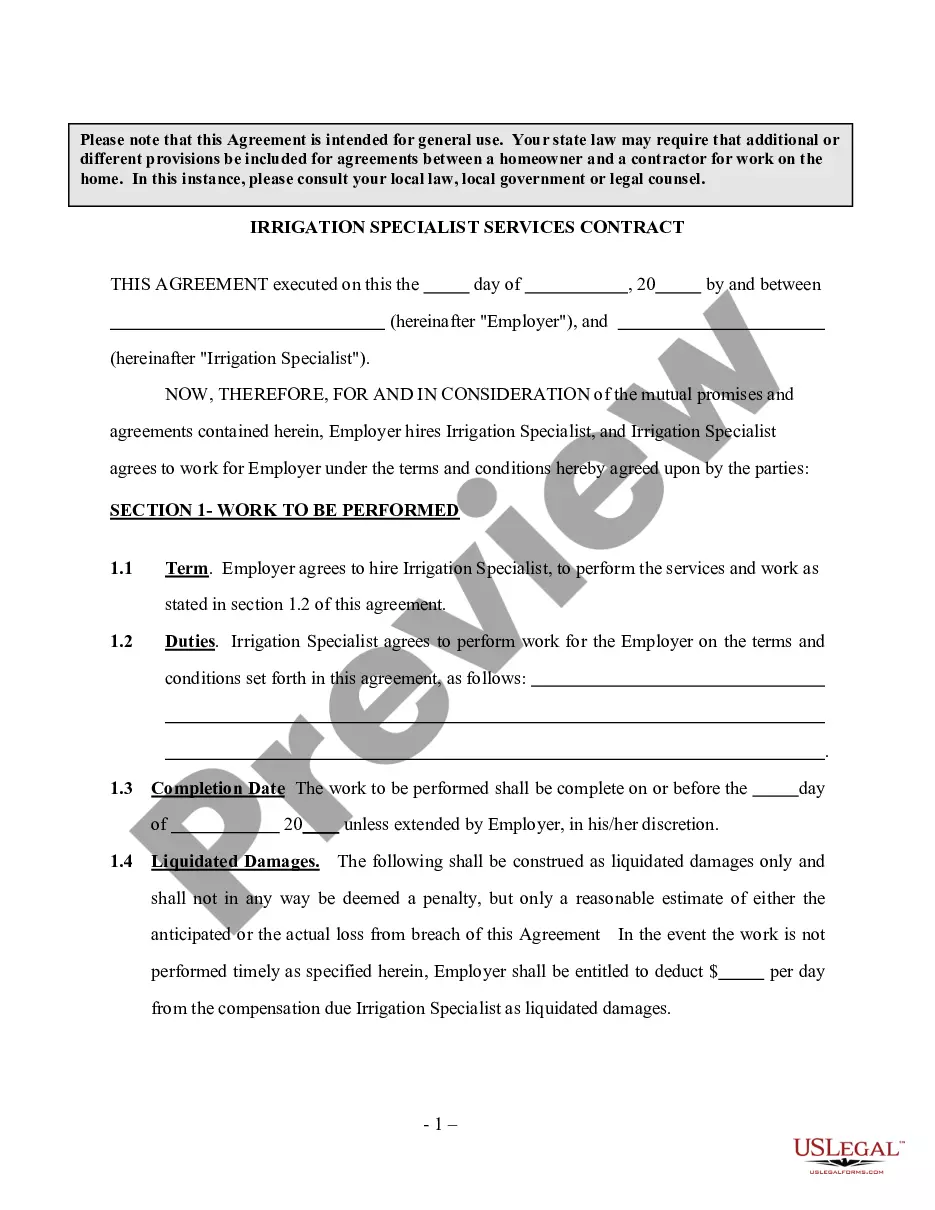
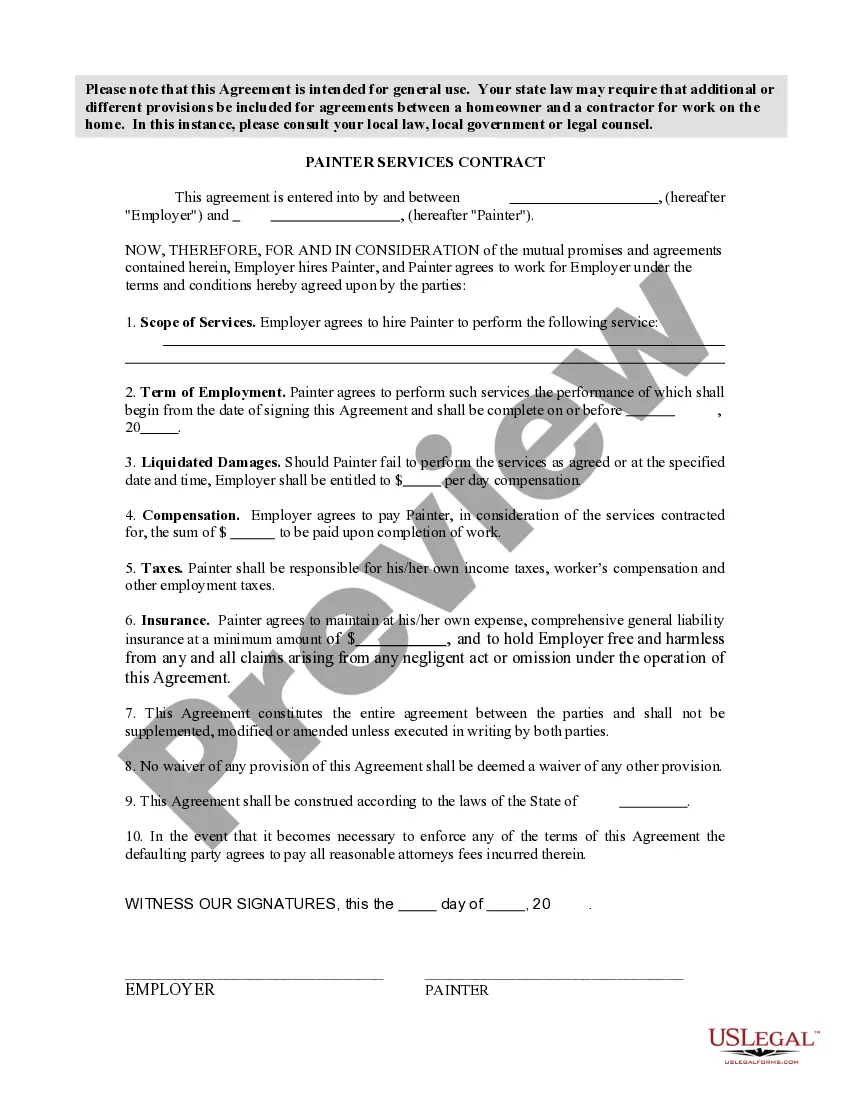
- Section 1: Work to be Performed - Details the specific plumbing tasks that the contractor is hired to undertake.
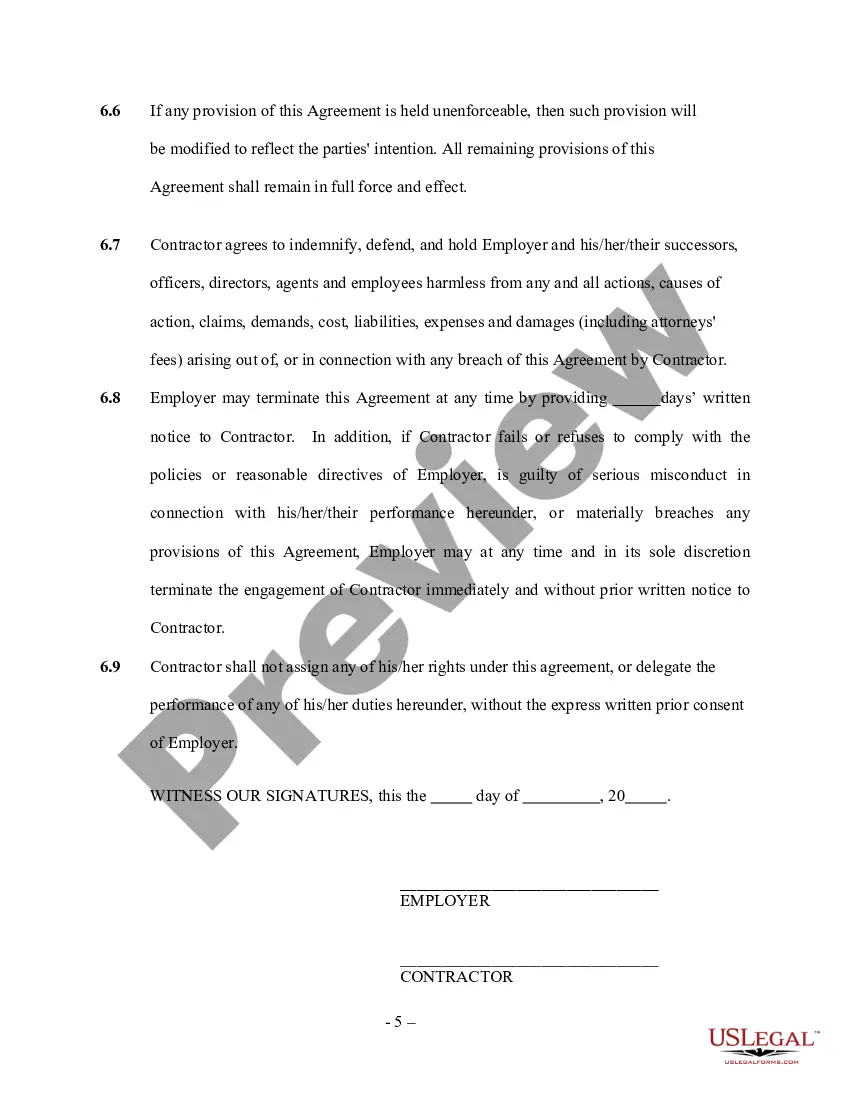
- Independent Contractor Status - Clarifies that the contractor is not an employee and cannot represent the employer in any capacity.
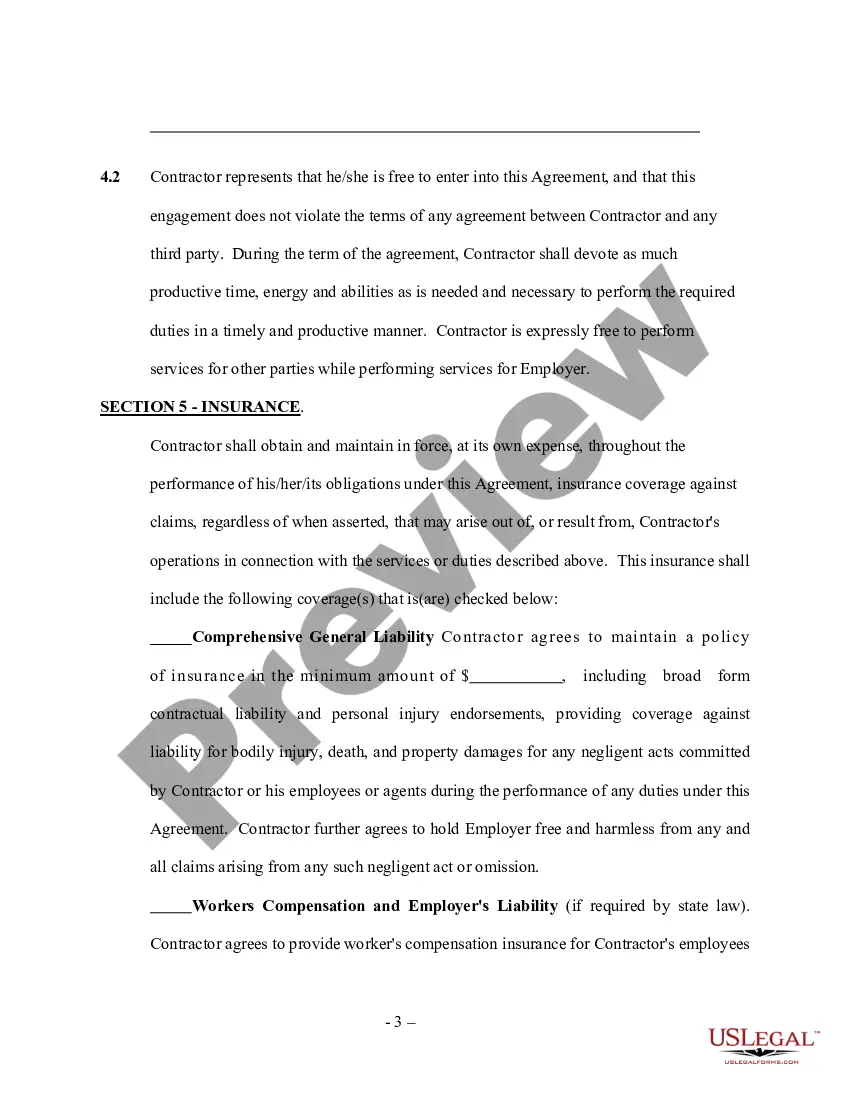
- Section 5: Insurance Requirements - Specifies the need for contractors to maintain insurance against potential claims arising from their work.
- Contract Completion - Outlines the expectations for returning the work area in a clean and satisfactory condition after job completion.


When this form is needed
This form is needed when a homeowner or business requires plumbing services from an independent contractor. It is particularly useful for renovations, repairs, or regular maintenance that require specific professional plumbing expertise. If you are hiring a plumber for a one-time job or an ongoing plumbing project, this contract ensures that both parties understand their responsibilities and rights.
Intended users of this form
- Homeowners or business owners seeking plumbing services.
- Independent plumbing contractors who need a formal agreement with clients.
- Real estate professionals coordinating plumbing services for properties.
Instructions for completing this form
- Identify the parties: Enter the names and contact information of the employer and the contractor.
- Describe the work: Clearly outline the plumbing services to be provided in Section 1.2.
- Define the insurance obligations: Indicate the types of insurance required as mentioned in Section 5.
- Set the payment terms: Specify how and when the contractor will be compensated for their services.
- Sign and date the contract: Ensure both parties review and sign the agreement to make it legally binding.
Notarization guidance
In most cases, this form does not require notarization. However, some jurisdictions or signing circumstances might. US Legal Forms offers online notarization powered by Notarize, accessible 24/7 for a quick, remote process.
Get your form ready online
Our built-in tools help you complete, sign, share, and store your documents in one place.
Make edits, fill in missing information, and update formatting in US Legal Forms—just like you would in MS Word.
Download a copy, print it, send it by email, or mail it via USPS—whatever works best for your next step.
Sign and collect signatures with our SignNow integration. Send to multiple recipients, set reminders, and more. Go Premium to unlock E-Sign.
If this form requires notarization, complete it online through a secure video call—no need to meet a notary in person or wait for an appointment.
We protect your documents and personal data by following strict security and privacy standards.

Make edits, fill in missing information, and update formatting in US Legal Forms—just like you would in MS Word.

Download a copy, print it, send it by email, or mail it via USPS—whatever works best for your next step.

Sign and collect signatures with our SignNow integration. Send to multiple recipients, set reminders, and more. Go Premium to unlock E-Sign.

If this form requires notarization, complete it online through a secure video call—no need to meet a notary in person or wait for an appointment.

We protect your documents and personal data by following strict security and privacy standards.
Mistakes to watch out for
- Failing to define the scope of work clearly, leading to misunderstandings.
- Not including insurance requirements, which can expose both parties to risks.
- Overlooking local legal requirements, potentially rendering the agreement unenforceable.
Advantages of online completion
- Convenience: Download and fill the form from anywhere at any time.
- Editability: Customize the contract to fit the specific project and parties involved.
- Assurance: Access forms drafted by licensed attorneys to ensure legal validity.
Legal use & context
- The contract serves as a formal agreement, making it easier to resolve disputes should they arise.
- It helps protect both parties by clearly delineating expectations and responsibilities.
- Enforceable under contract law provided both parties agree to the terms and conditions.
Quick recap
- The Self-Employed Plumbing Services Contract is essential for formalizing agreements with plumbing contractors.
- Properly completed, this contract protects the rights of both the employer and the contractor.
- Consult local laws to ensure compliance with state-specific requirements.
Looking for another form?


Form popularity
FAQ
The simple answer is YES. You can write your own contracts. There is no requirement that they must be written by a lawyer. There is no requirement that they have to be a certain form or font.
The certainty of terms and as the meaning suggest that Michael was certain in buying the car at $800.00 and on the other hand Boris was certain to sell his car to Michael for $800.00. So both parties were definite in their dealings which constitutes to a simple contract.
Here's an easy way to price a plumbing job: Determine your base hourly rate by writing down how much you want to make per week and dividing it by the number of billable hours you can work. Calculate your overhead and profit margin, then add that to your base hourly rate. This is your net billable hourly rate.
The national average for a major plumbing project is about $4.50 per square foot of construction area. In general, the larger the building the more expensive it is to plumb. Bigger buildings typically require more fixtures and pipes usually need to run farther.
The most basic rule of contract law is that a legal contract exists when one party makes an offer and the other party accepts it. For most types of contracts, this can be done either orally or in writing.
Get it in writing. Keep it simple. Deal with the right person. Identify each party correctly. Spell out all of the details. Specify payment obligations. Agree on circumstances that terminate the contract. Agree on a way to resolve disputes.
Drafting a contract. Provide details of the parties. Describe services or results. Set out payment details. Assign intellectual property rights. Explain how to treat confidential information. Identify who is liable indemnity. Provide insurance obligations.
Step 1: Write Down the Names of the Client and the Professional. Step 2: Write Down the Scope of the Work. Step 3: Specify the Payment Terms and the Other Terms and Conditions. Step 4: Make Room for the Contract Acceptance.