Private Annuity Agreement
Overview of this form
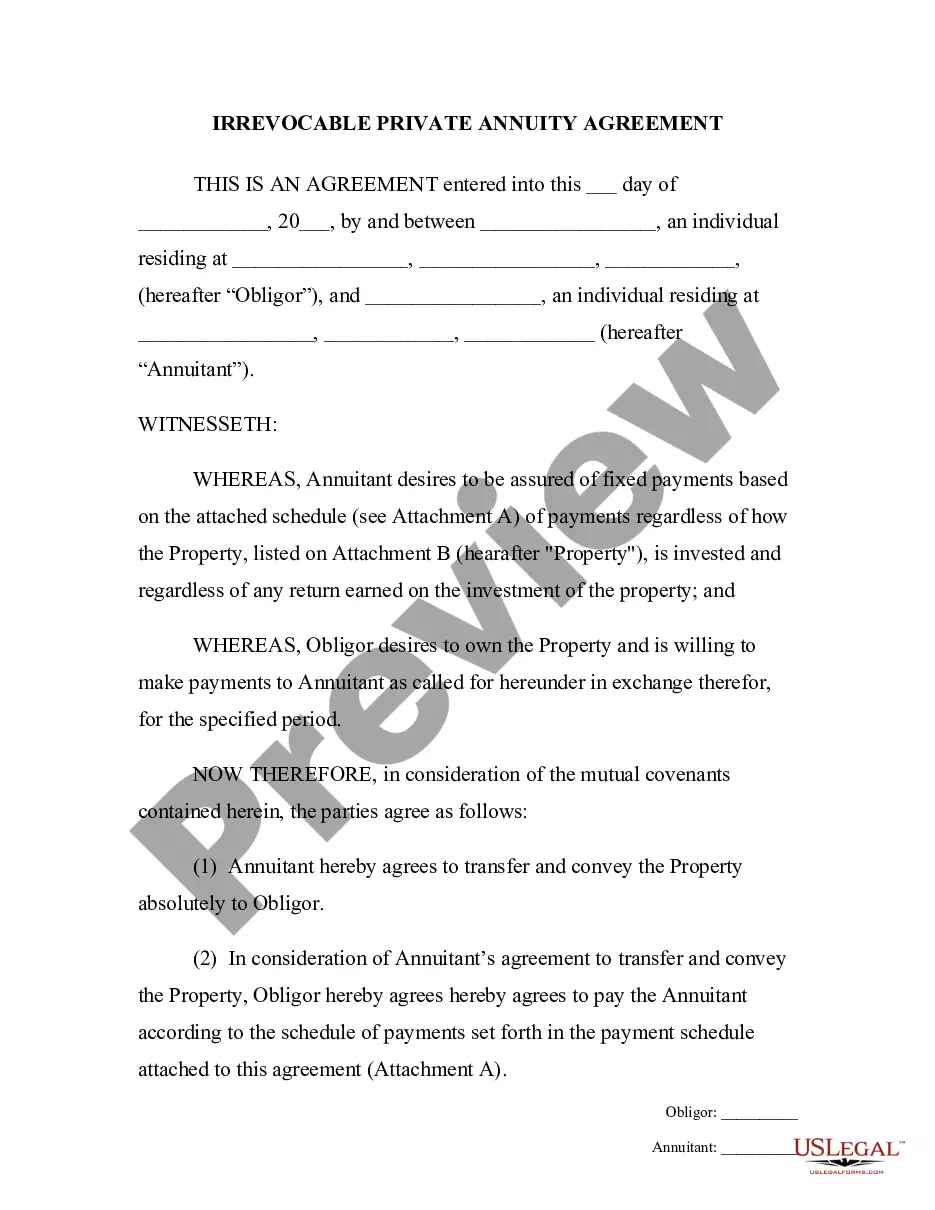
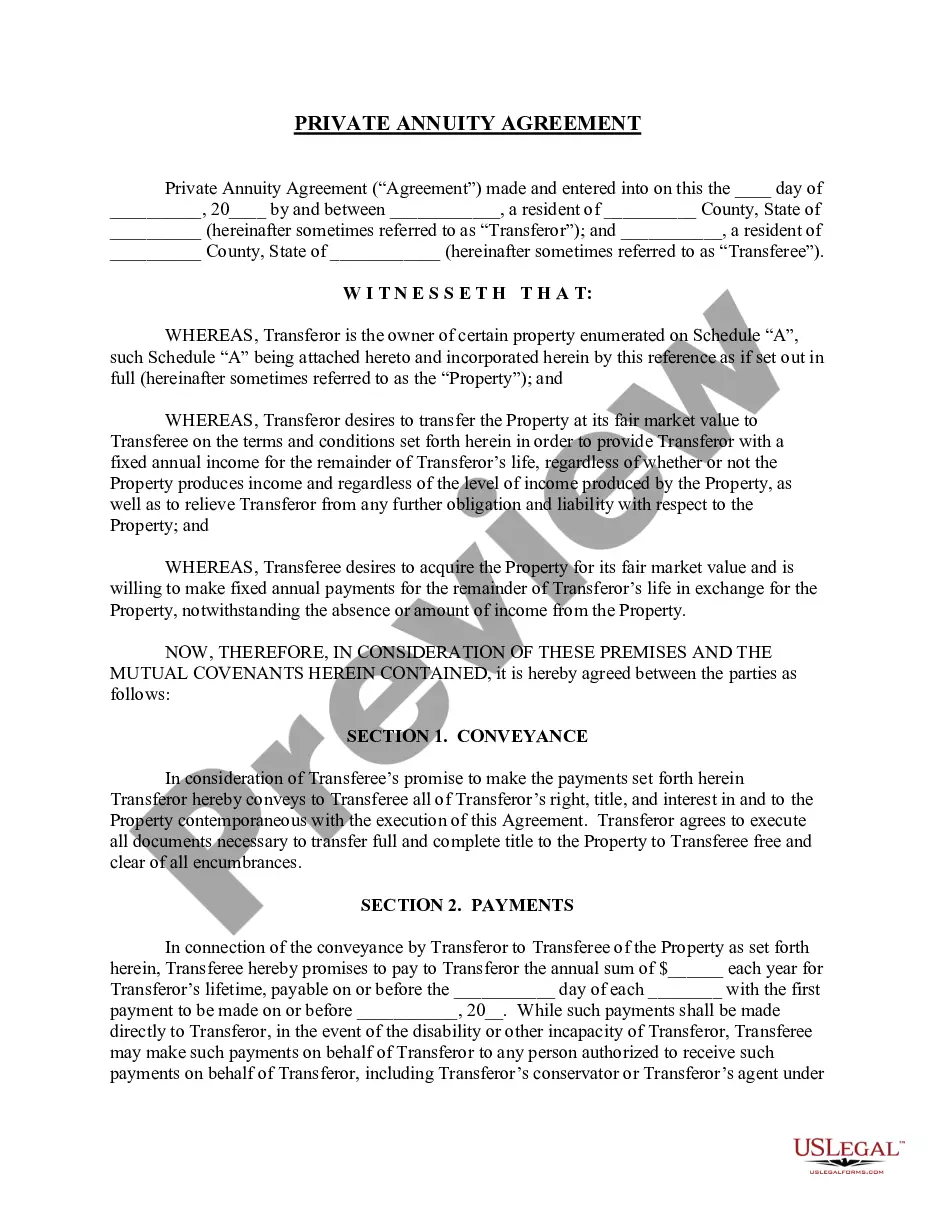
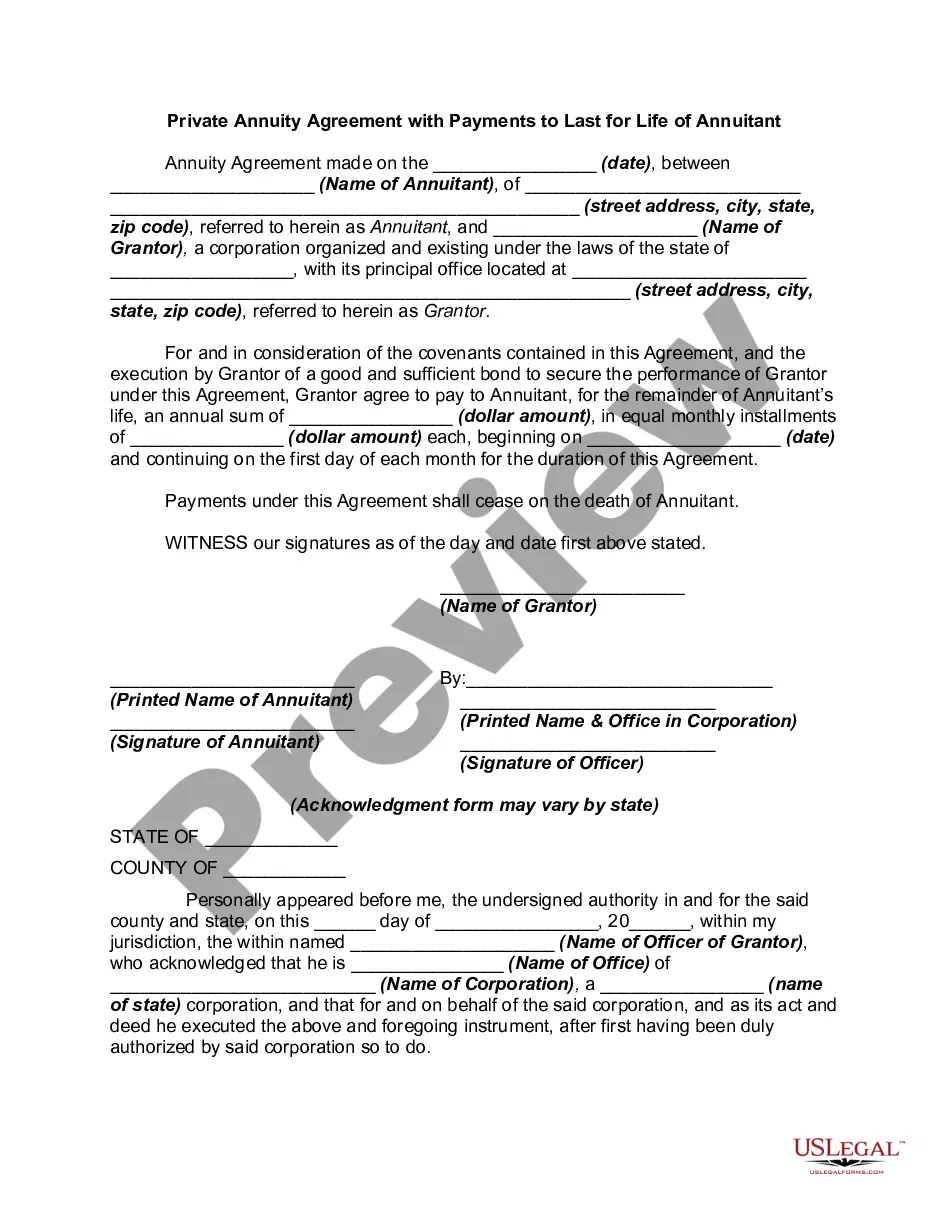
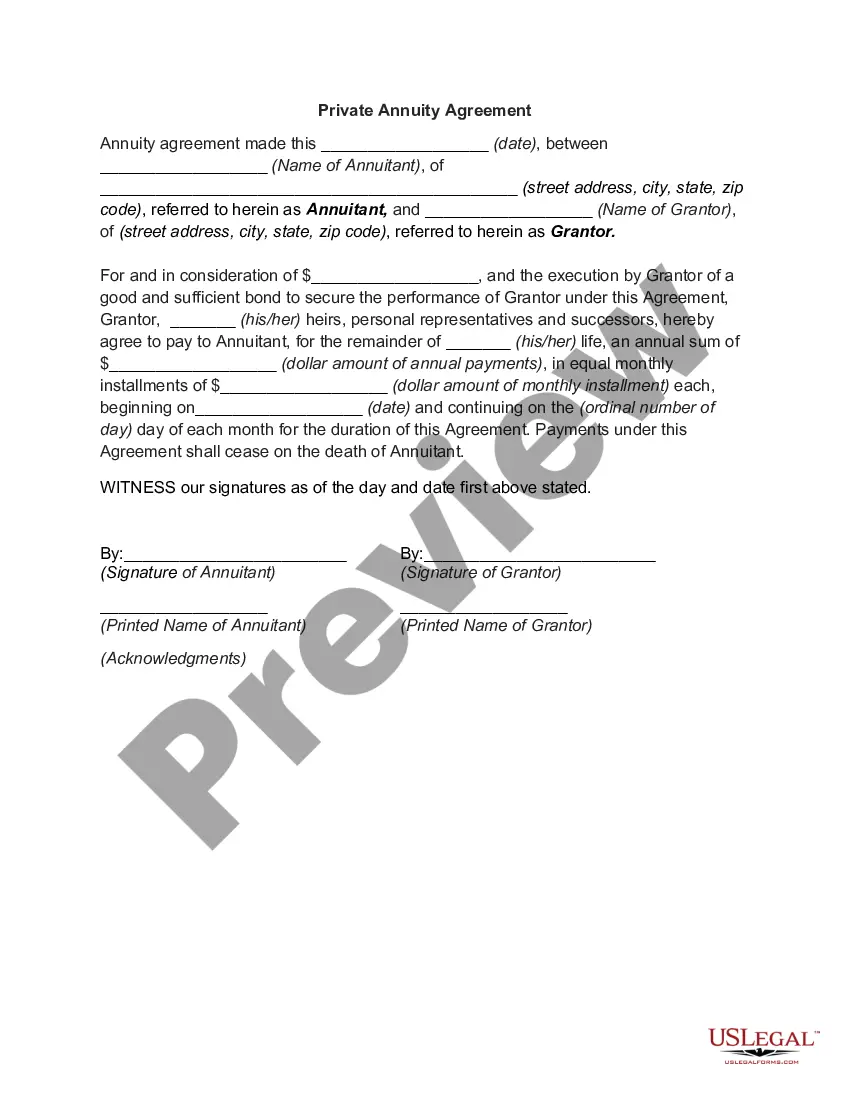
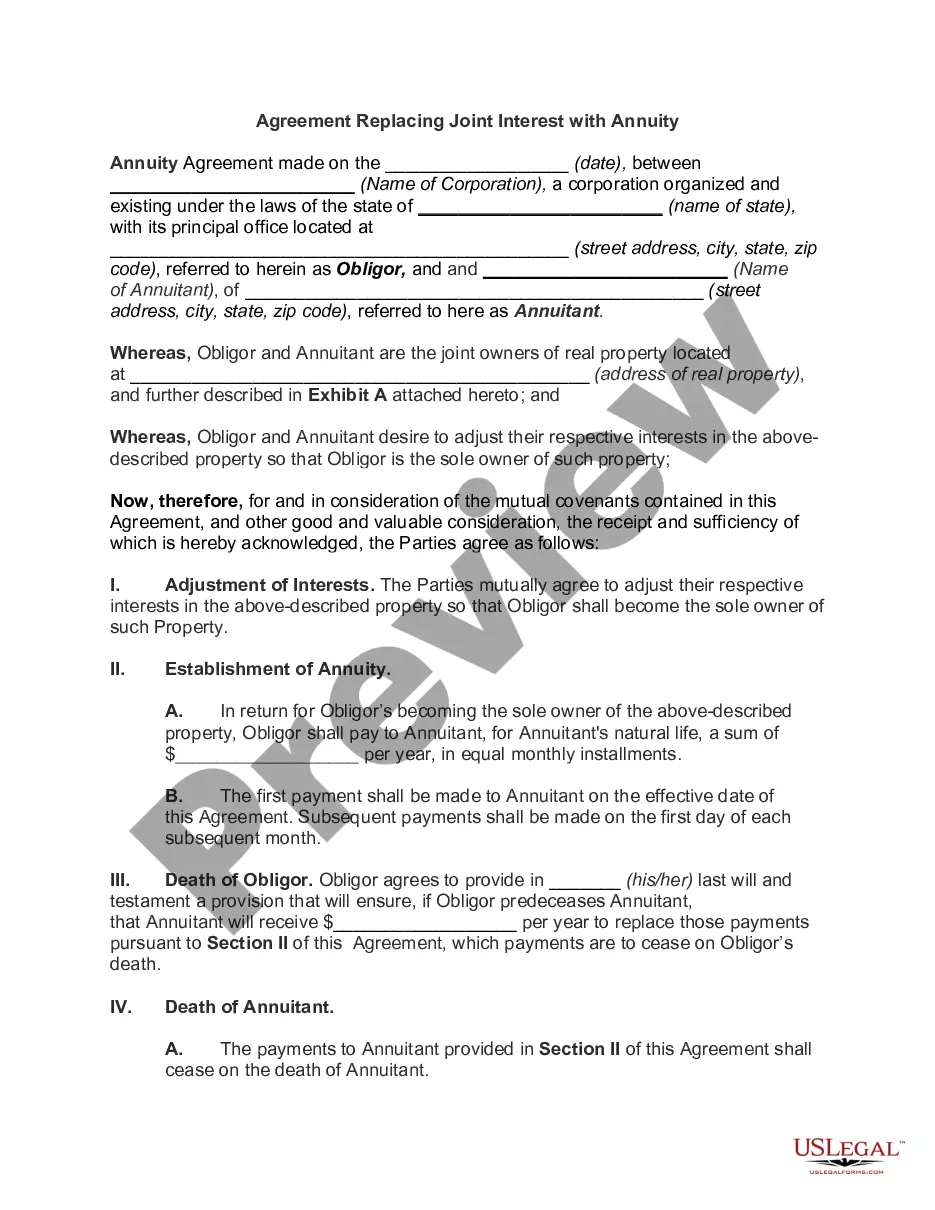
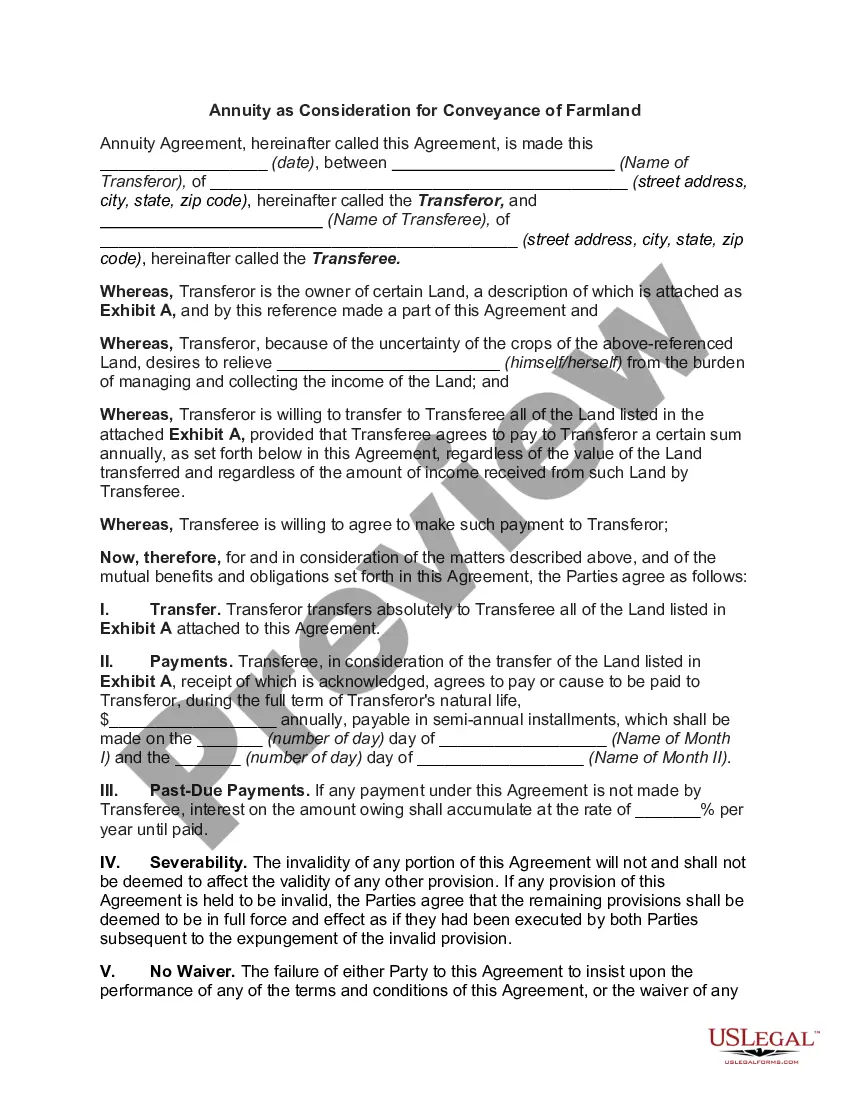
A private annuity agreement is a contract that outlines the terms under which one party agrees to transfer property or assets to another party. In return, the receiving party makes periodic payments to the transferor, offering financial security over a set period. This agreement is distinct from other types of annuity contracts by its focus on private transactions between individuals rather than financial institutions, making it a flexible option for estate planning and financial arrangements.
Form components explained
- Identification of the Obligor (payer) and Annuitant (recipient).
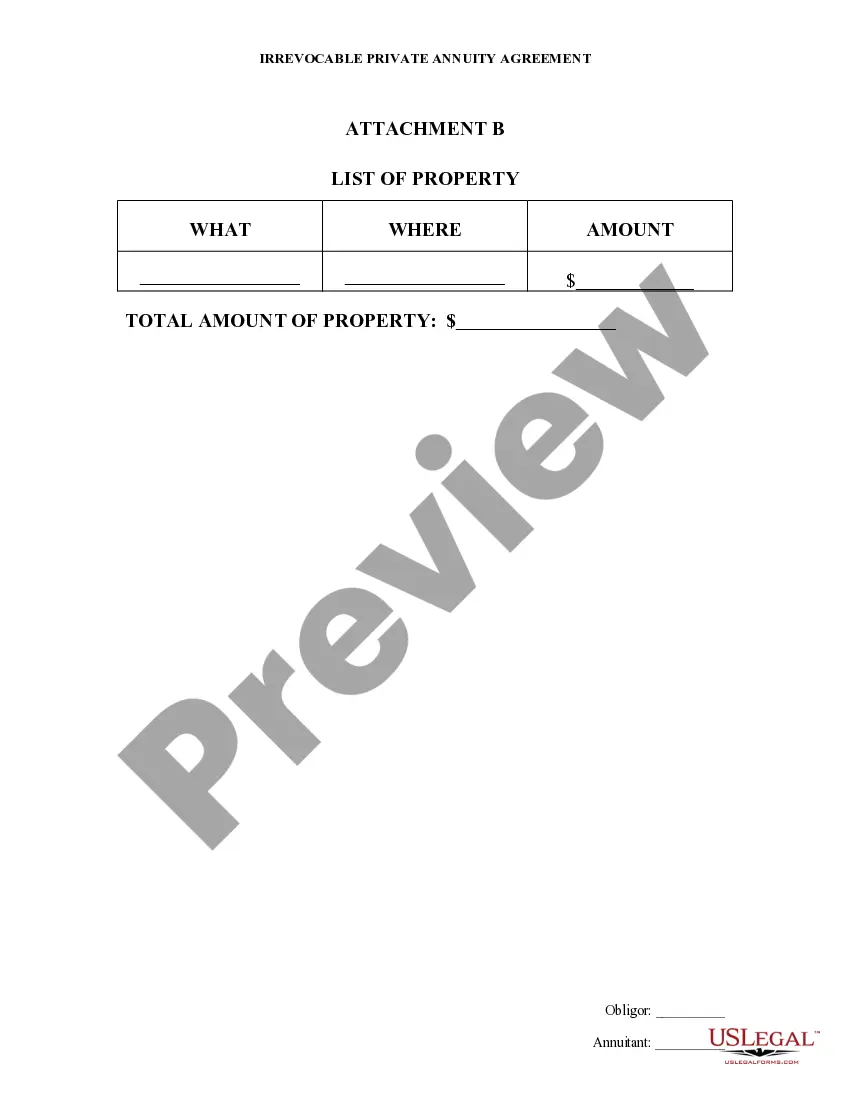
- Description of the property being transferred (Attachment B).
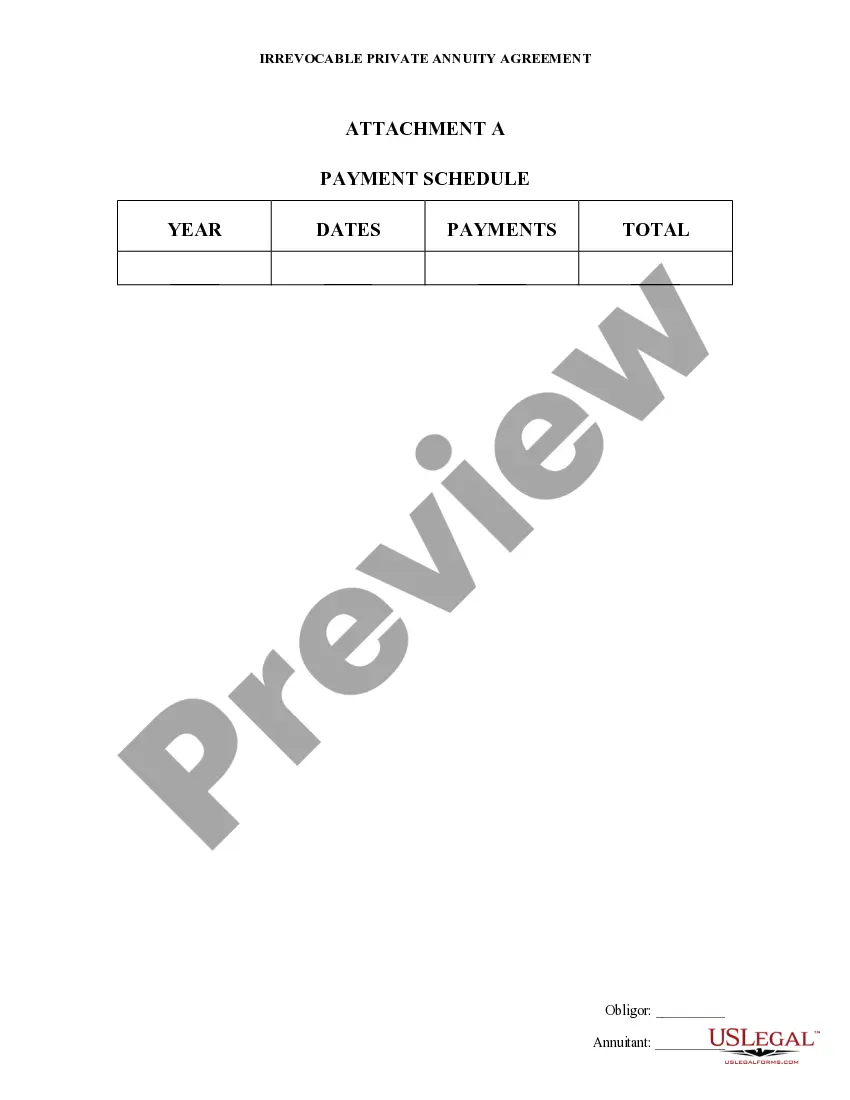
- A detailed payment schedule (Attachment A) indicating the amount and timing of payments.
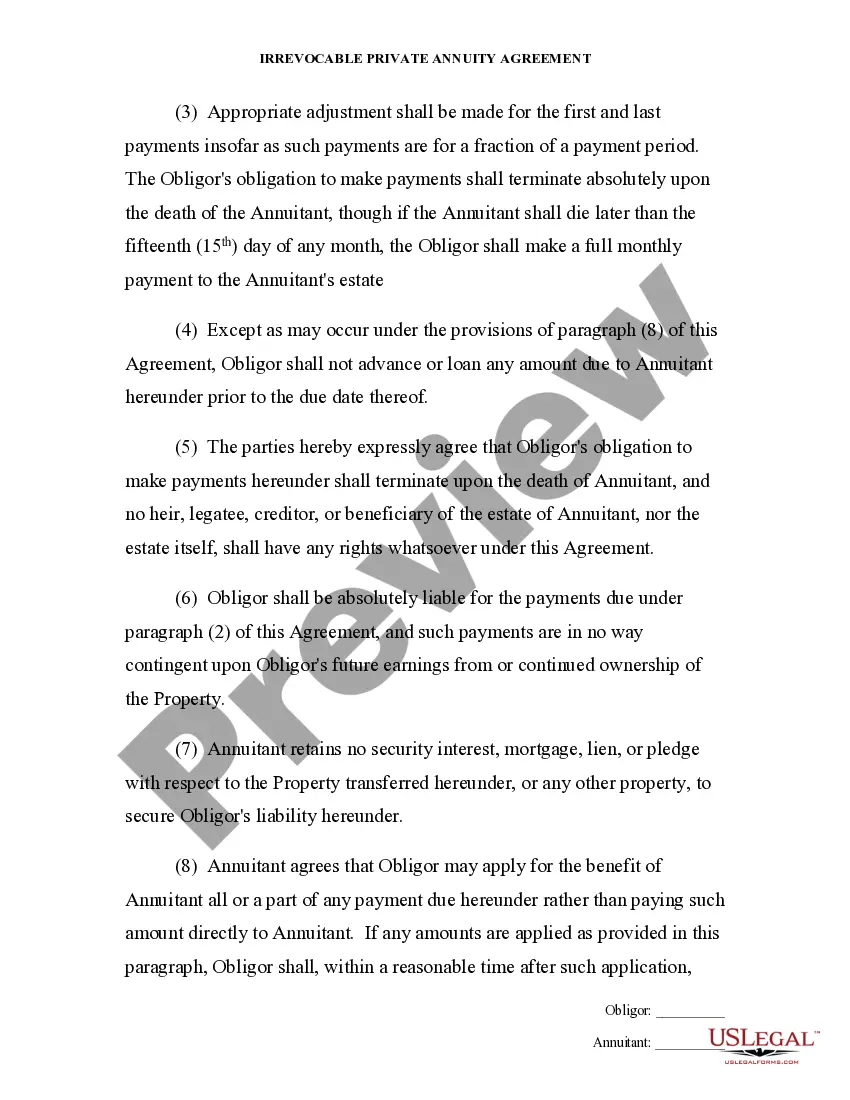
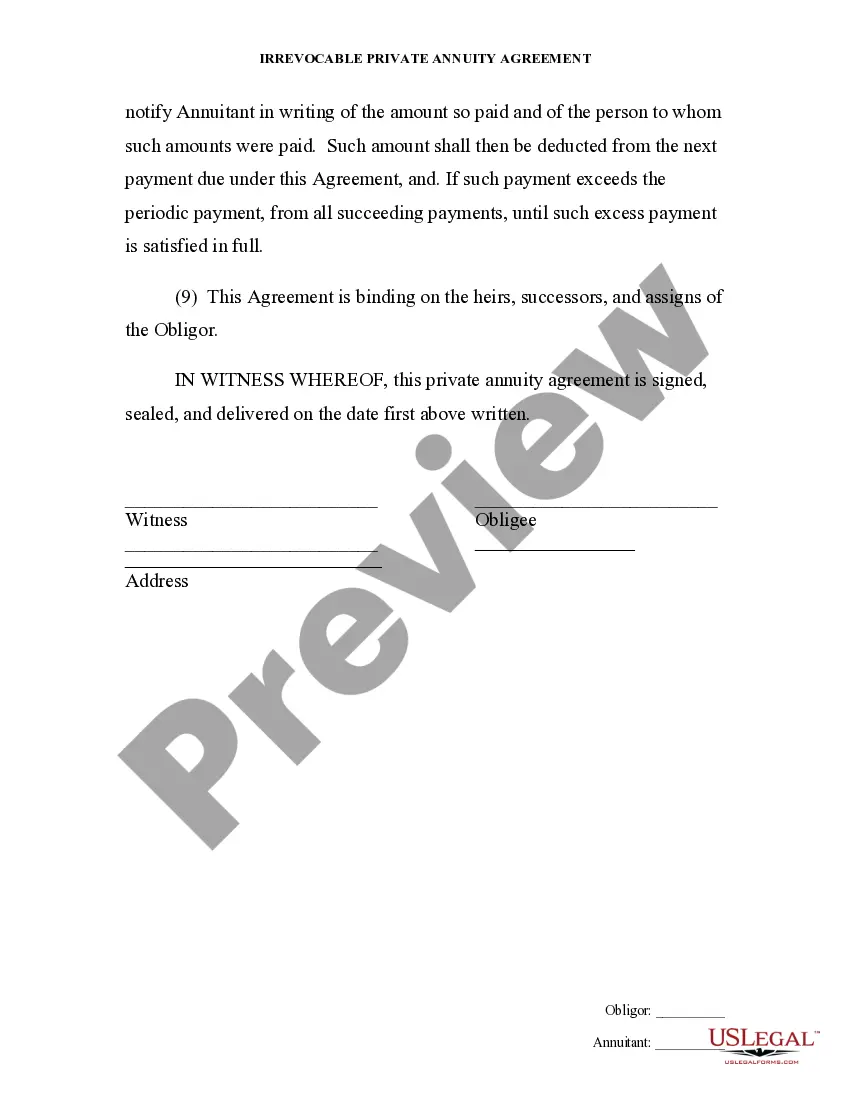
- Terms for payment termination, especially upon the death of the Annuitant.
- Clauses related to the non-contingent nature of payments on the Obligor's future earnings.
Situations where this form applies
This form is useful in scenarios where an individual desires to receive steady income from a lump sum or property, often for retirement purposes or estate planning. It is appropriate when the Annuitant wishes to transfer assets while ensuring a regular income stream, and the Obligor is seeking to acquire those assets while committing to scheduled payments.
Who this form is for
- Individuals looking to solidify financial agreements between family members or friends.
- Estate planners seeking a structured way to transfer assets while ensuring payments to a beneficiary.
- Retirees who want to convert part of their asset holdings into guaranteed income.
Instructions for completing this form
- Identify and enter the names and addresses of both the Obligor and Annuitant.
- Detail the property to be transferred in Attachment B.
- Complete the payment schedule in Attachment A, specifying amounts and payment intervals.
- Set the date of the agreement and sign where indicated.
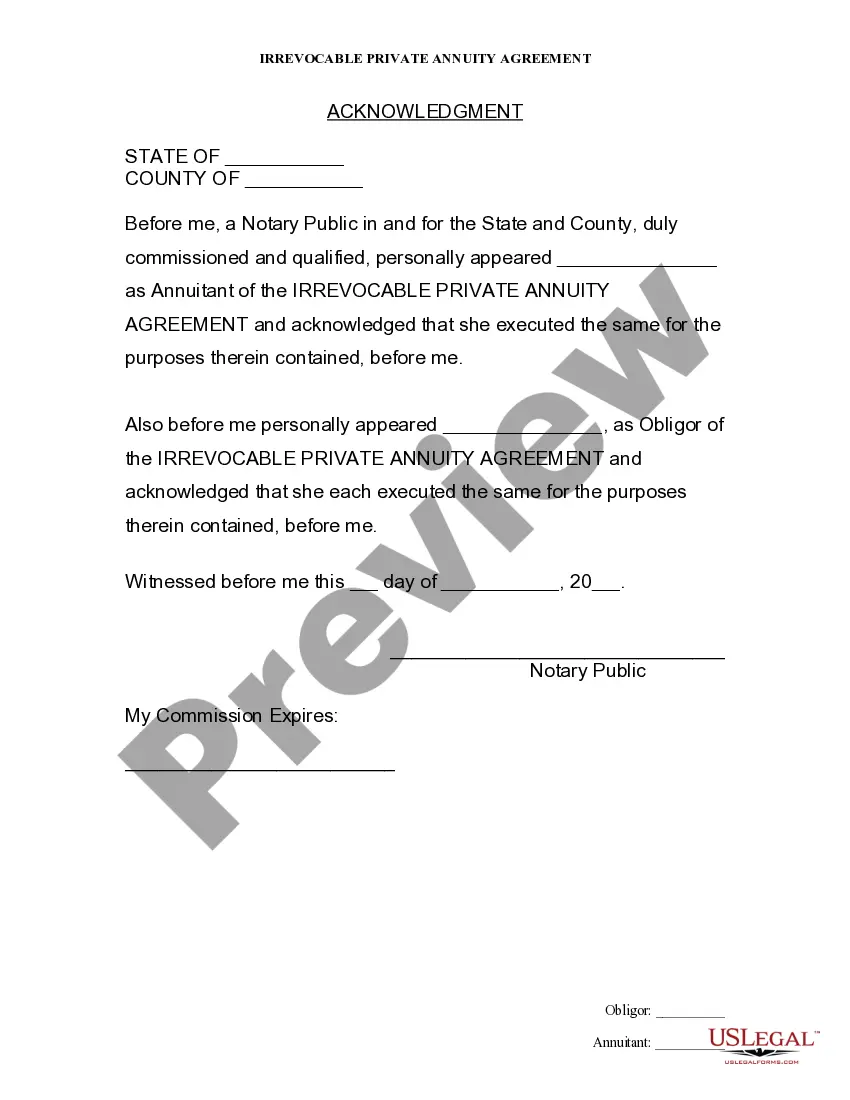
- If applicable, have the document notarized to ensure its legality.
Is notarization required?
This form does not typically require notarization unless specified by local law. However, it is advisable to have it notarized to ensure that it is legally binding and protects against future disputes.
Get your form ready online
Our built-in tools help you complete, sign, share, and store your documents in one place.
Make edits, fill in missing information, and update formatting in US Legal Forms—just like you would in MS Word.
Download a copy, print it, send it by email, or mail it via USPS—whatever works best for your next step.
Sign and collect signatures with our SignNow integration. Send to multiple recipients, set reminders, and more. Go Premium to unlock E-Sign.
If this form requires notarization, complete it online through a secure video call—no need to meet a notary in person or wait for an appointment.
We protect your documents and personal data by following strict security and privacy standards.

Make edits, fill in missing information, and update formatting in US Legal Forms—just like you would in MS Word.

Download a copy, print it, send it by email, or mail it via USPS—whatever works best for your next step.

Sign and collect signatures with our SignNow integration. Send to multiple recipients, set reminders, and more. Go Premium to unlock E-Sign.

If this form requires notarization, complete it online through a secure video call—no need to meet a notary in person or wait for an appointment.

We protect your documents and personal data by following strict security and privacy standards.
Typical mistakes to avoid
- Failing to clearly describe the property being transferred.
- Not specifying the payment schedule accurately.
- Omitting the necessary signatures or not having the agreement notarized when required.
Why use this form online
- Immediate access to professionally drafted legal templates.
- Convenience of downloading and editing forms at your own pace.
- Confidence in the reliability of documents created by licensed attorneys.
Legal use & context
- This type of agreement is enforceable in most jurisdictions if properly executed.
- It is a useful tool for estate planning and can provide tax advantages under certain circumstances.
What to keep in mind
- A private annuity agreement provides a structured method for transferring property while securing periodic payments.
- It is essential to complete all sections accurately to avoid future disputes.
- Consider local laws and the benefits of notarization to enhance the documentâs legal validity.
Looking for another form?

Form popularity
FAQ
Each annuity payment is treated as part tax-free return of basis, part capital gain, and part ordinary income until your entire basis is recovered. Once your basis is recovered, the entire annuity is treated as part capital gain and part ordinary income until you have surpassed your life expectancy.
There are three ways to avoid paying taxes on annuities, purchasing a Roth Annuity or Charitable Gift Annuity for retirement income and a long-term care annuity to pay for qualified long-term care facilities and services. Finally, most structured settlements are income-tax-free.
A $50,000 annuity would pay you approximately $260 each month for the rest of your life if you purchased the annuity at age 70 and began taking payments immediately. This guide will answer the following questions: What is the monthly payout for a $50,000 annuity?
A private annuity is an arrangement where an individual (the ?annuitant?) transfers assets to another (the ?obligor?) in exchange for regular payments for the remainder of the annuitant's life (an ?annuity?).
Each annuity payment is treated as part tax-free return of basis, part capital gain, and part ordinary income until your entire basis is recovered. Once your basis is recovered, the entire annuity is treated as part capital gain and part ordinary income until you have surpassed your life expectancy.
Investing in a private annuity comes with the risk of inflation, which is when prices rise faster than your payments. This can drastically reduce an individual's purchasing power over time and bring financial difficulties to those who rely on their annuity income.
Disadvantages of a Private Annuity The buyer takes on 'reverse mortality risk'. If the seller lives longer than expected, the buyer could pay considerably more than the fair market value for the asset he/she bought. If the buyer stops paying, the seller generally has no collateral.
Annuity withdrawals made before you reach age 59½ are typically subject to a 10% early withdrawal penalty tax.