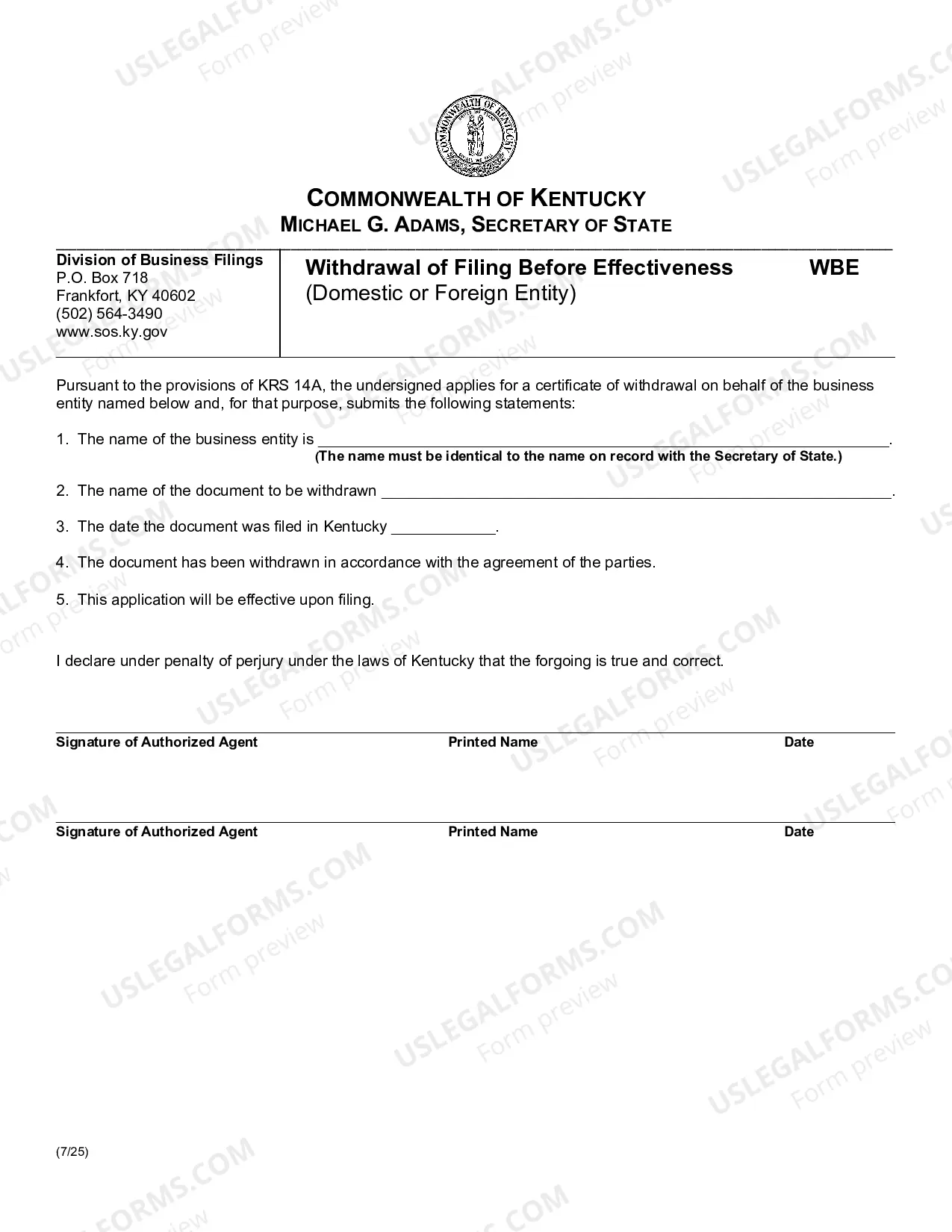
Annuity as Consideration for Conveyance of Farmland
Understanding this form
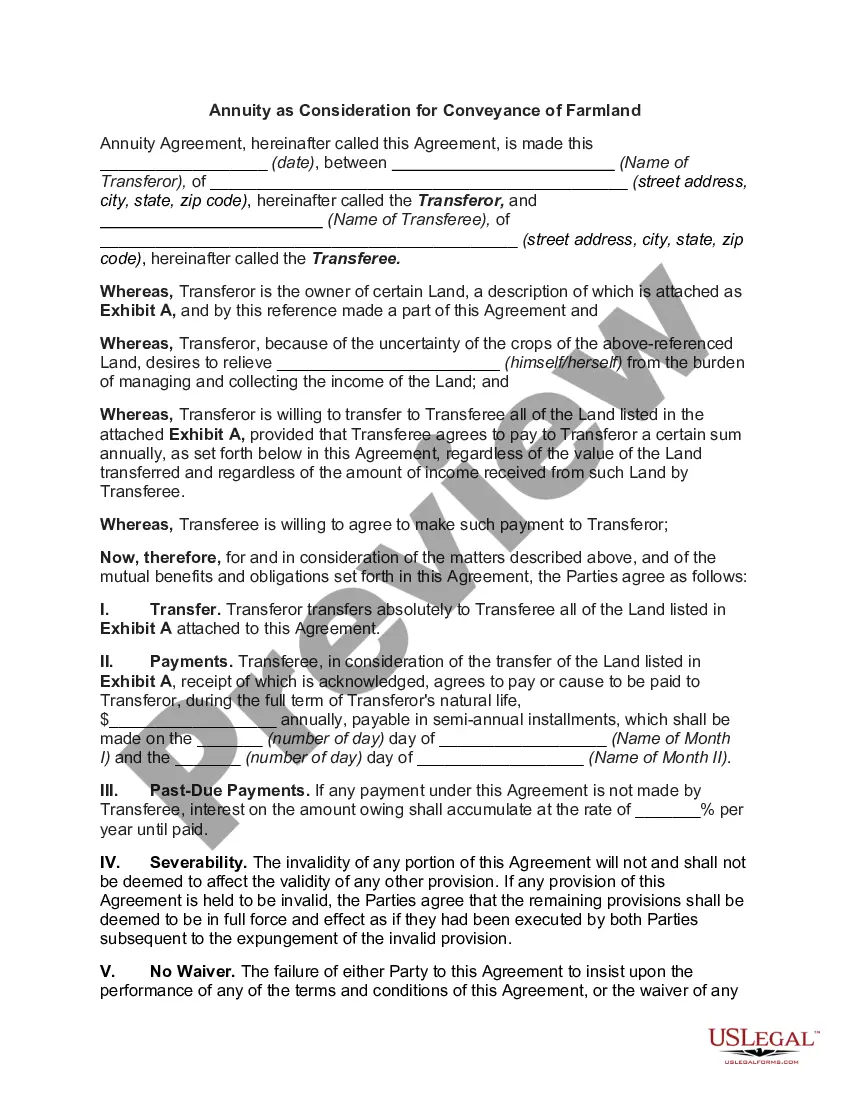
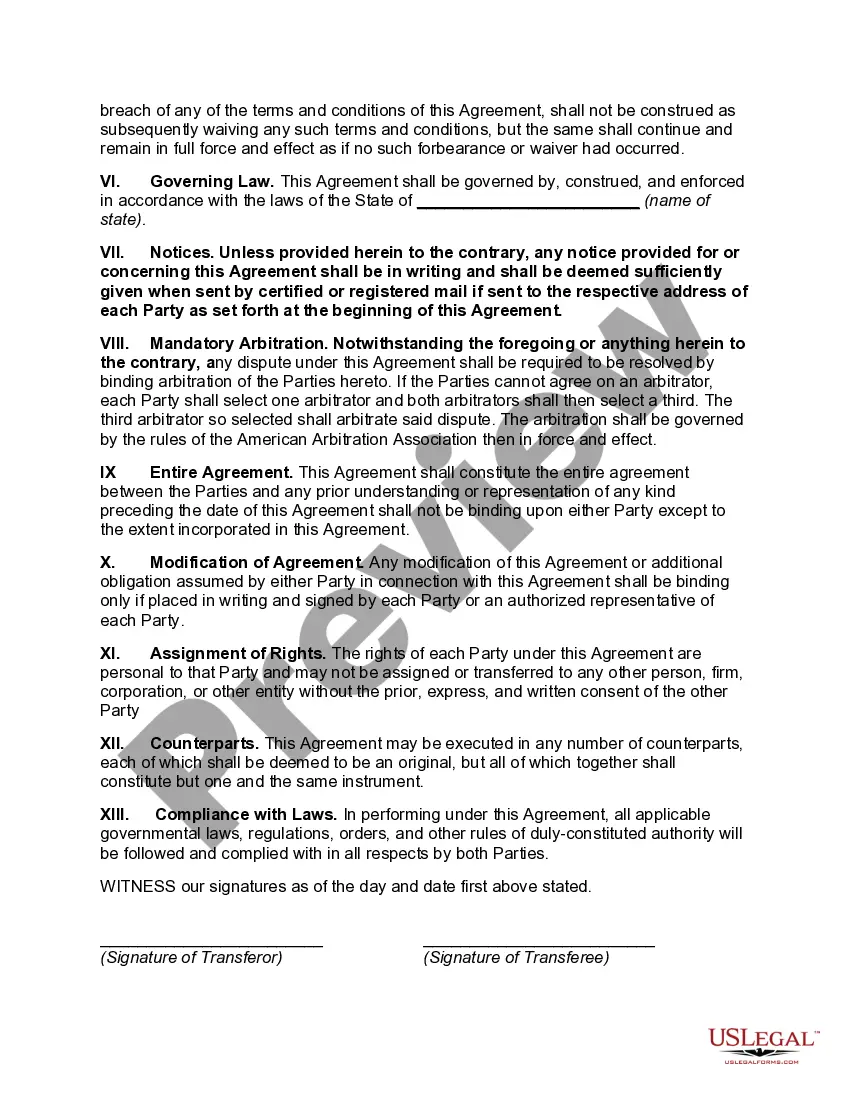
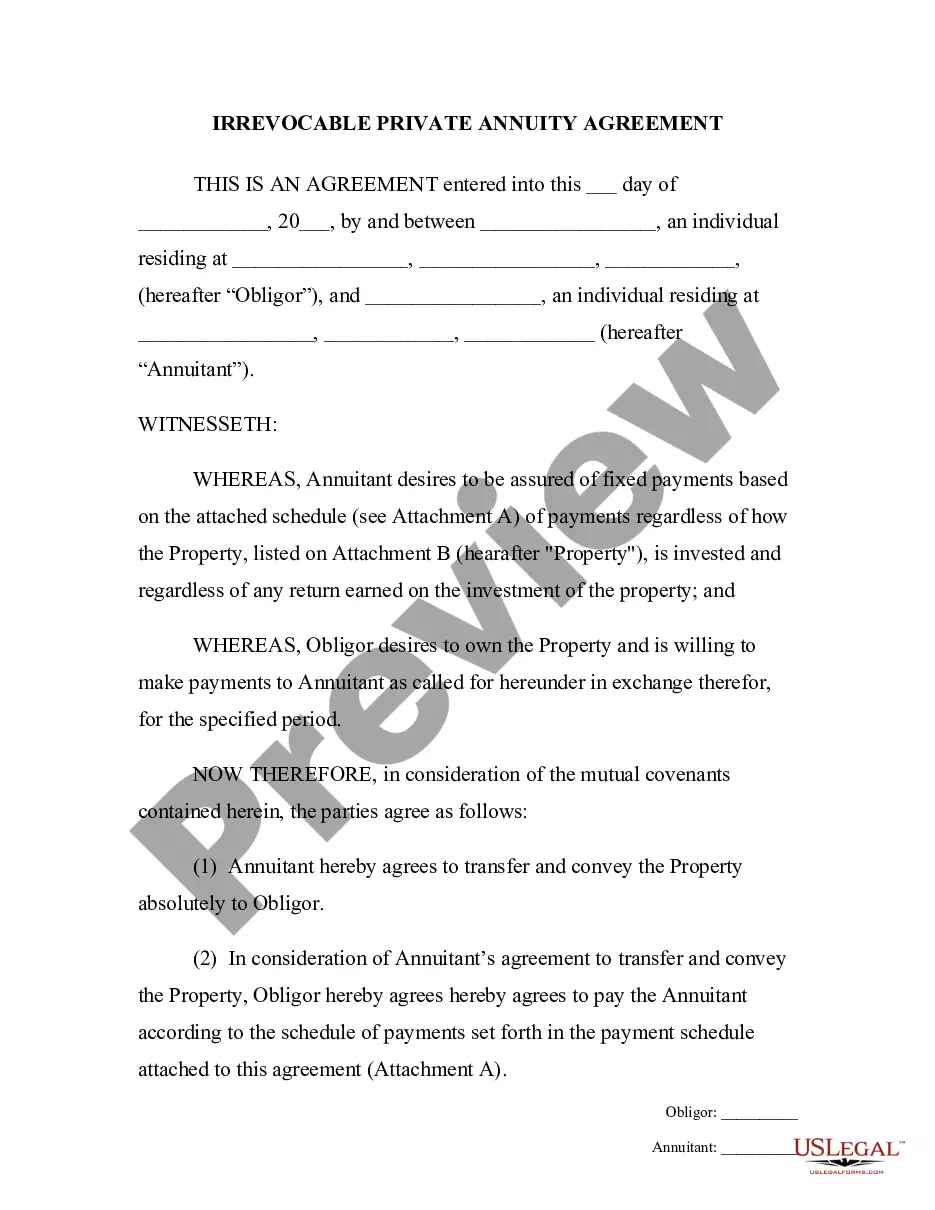
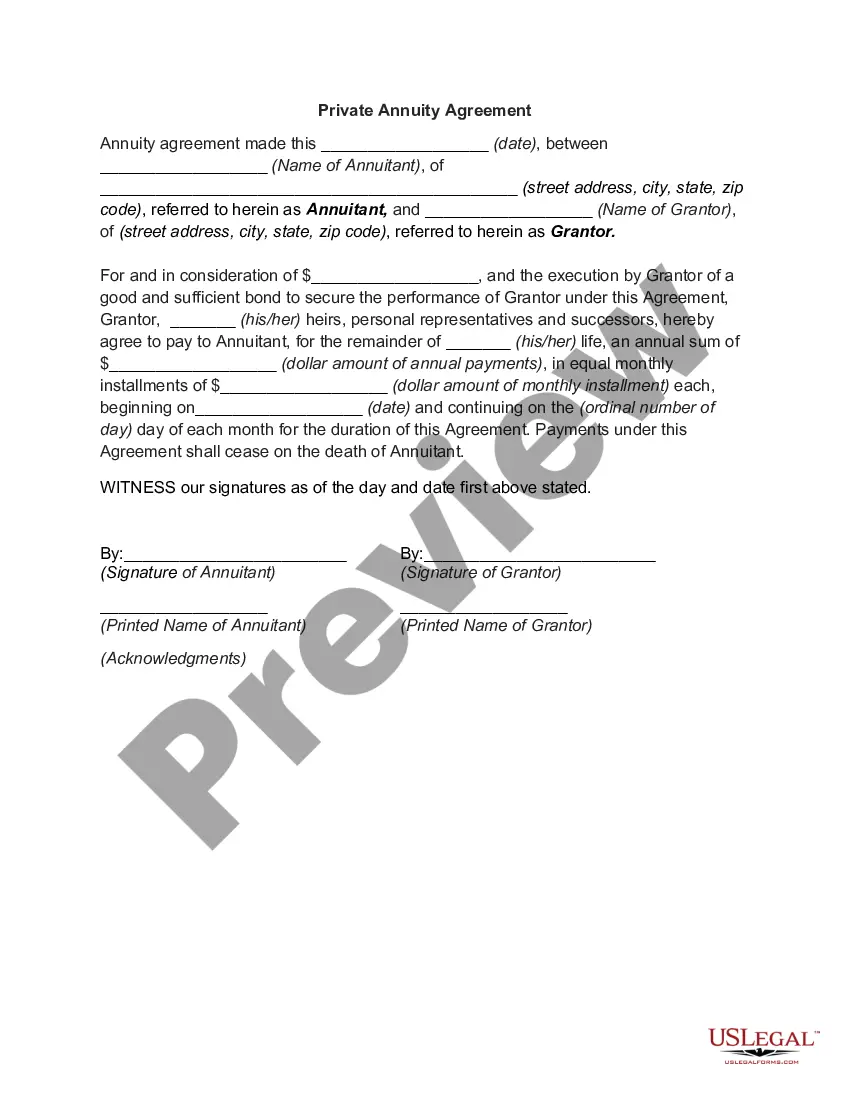
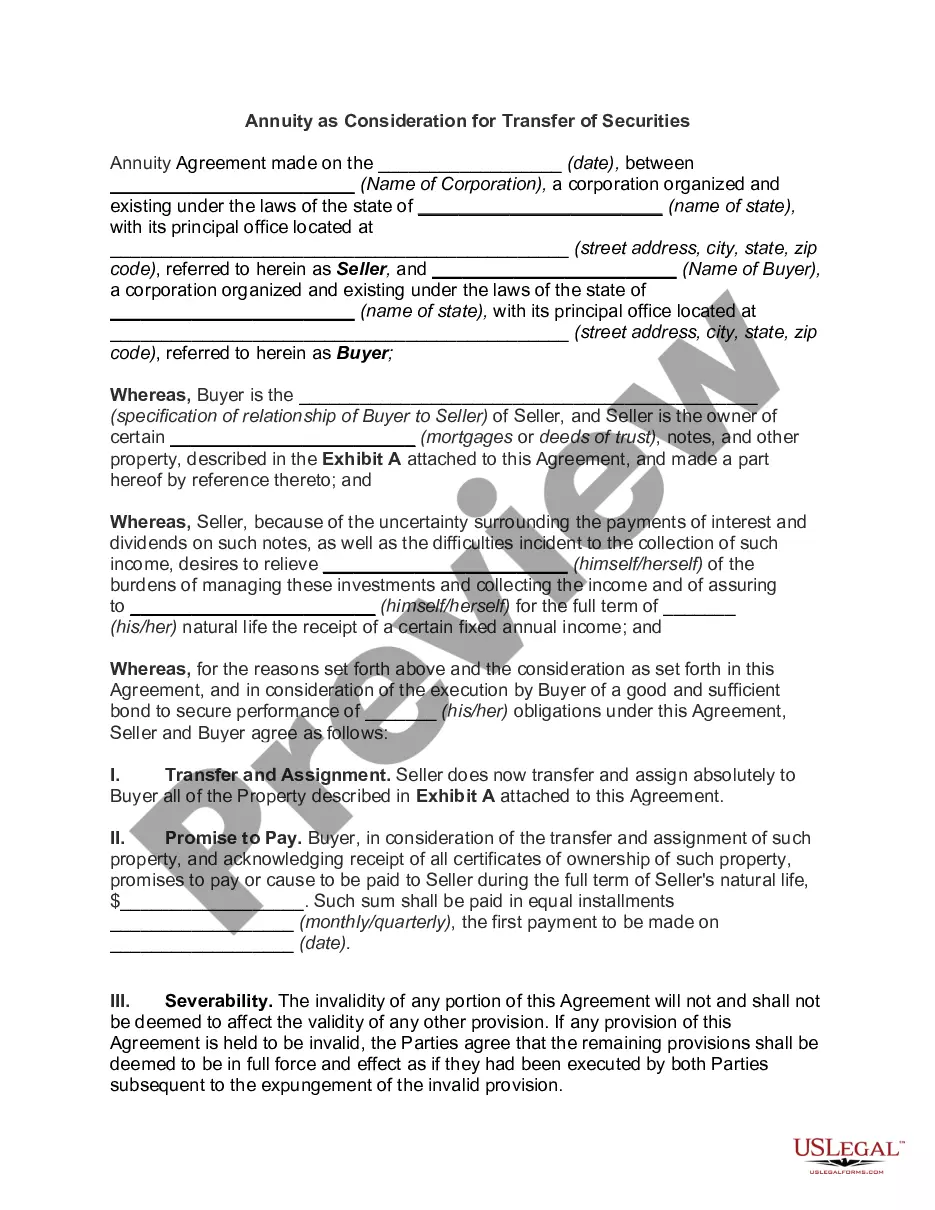
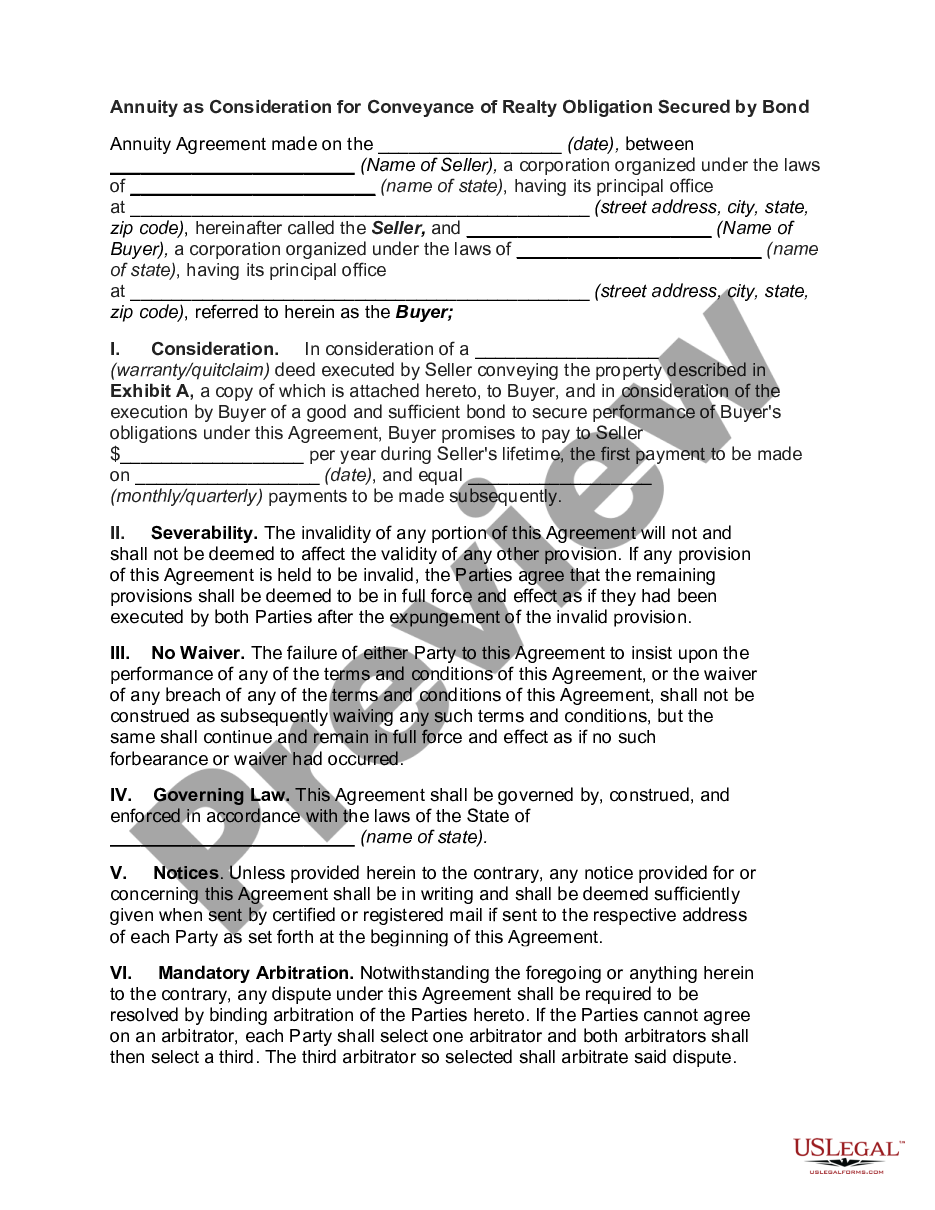
The Annuity as Consideration for Conveyance of Farmland is a legal document used for transferring ownership of farmland while establishing an annuity payment plan. This form allows a transferor to sell their land in exchange for regular payments, providing financial security without ongoing property management responsibilities. Itâs particularly useful in situations where the landowner wants to ensure steady income while offloading the complexities of owning and managing farmland.
Form components explained
- Date of agreement: The date when the agreement is executed.
- Transferor information: Details of the individual or entity transferring the land.
- Transferee information: Details of the individual or entity receiving the land.
- Land description: A detailed description of the land being transferred, attached as Exhibit A.
- Payment details: Specifies the payment amount and schedule agreed upon by the parties.
- Governing law: Indicates which state laws will govern the agreement.

When this form is needed
This form is essential in situations where a farmland owner wishes to sell their property but prefers to receive payments over time rather than a lump sum. It is particularly useful for individuals looking to secure a steady income stream in retirement or those who wish to simplify estate management. It can also serve as a financial arrangement between family members or business partners involved in agriculture.
Intended users of this form
- Landowners looking to sell farmland without an immediate payout.
- Individuals seeking a guaranteed income stream through annuity payments.
- Farmers transitioning ownership to family members while maintaining a source of income.
- Investors interested in purchasing farmland with structured payment agreements.
Completing this form step by step
- Identify the parties involved by filling in the names and addresses of both the transferor and transferee.
- Provide an accurate description of the farmland in Exhibit A.
- Specify the annual payment amount and the dates on which payments will be made.
- Sign the agreement in the presence of witnesses, as appropriate.
- Ensure each party retains a copy of the signed agreement for their records.
Is notarization required?
This form does not typically require notarization unless specified by local law. Always check local regulations to ensure compliance with legal standards necessary for enforcement of the agreement.
Get your form ready online
Our built-in tools help you complete, sign, share, and store your documents in one place.
Make edits, fill in missing information, and update formatting in US Legal Forms—just like you would in MS Word.
Download a copy, print it, send it by email, or mail it via USPS—whatever works best for your next step.
Sign and collect signatures with our SignNow integration. Send to multiple recipients, set reminders, and more. Go Premium to unlock E-Sign.
If this form requires notarization, complete it online through a secure video call—no need to meet a notary in person or wait for an appointment.
We protect your documents and personal data by following strict security and privacy standards.

Make edits, fill in missing information, and update formatting in US Legal Forms—just like you would in MS Word.

Download a copy, print it, send it by email, or mail it via USPS—whatever works best for your next step.

Sign and collect signatures with our SignNow integration. Send to multiple recipients, set reminders, and more. Go Premium to unlock E-Sign.

If this form requires notarization, complete it online through a secure video call—no need to meet a notary in person or wait for an appointment.

We protect your documents and personal data by following strict security and privacy standards.
Mistakes to watch out for
- Failing to accurately describe the land being transferred.
- Not specifying the payment schedule clearly, leading to potential disputes.
- Overlooking necessary witness signatures where required by state law.
- Not attaching Exhibit A, which details the land description.
Advantages of online completion
- Immediate access to a professionally drafted legal document.
- Convenience of downloading and completing the form at your own pace.
- Easily customizable to fit specific needs or situations.
- Cost-effective alternative to hiring an attorney for basic transactions.
Looking for another form?
Form popularity
FAQ
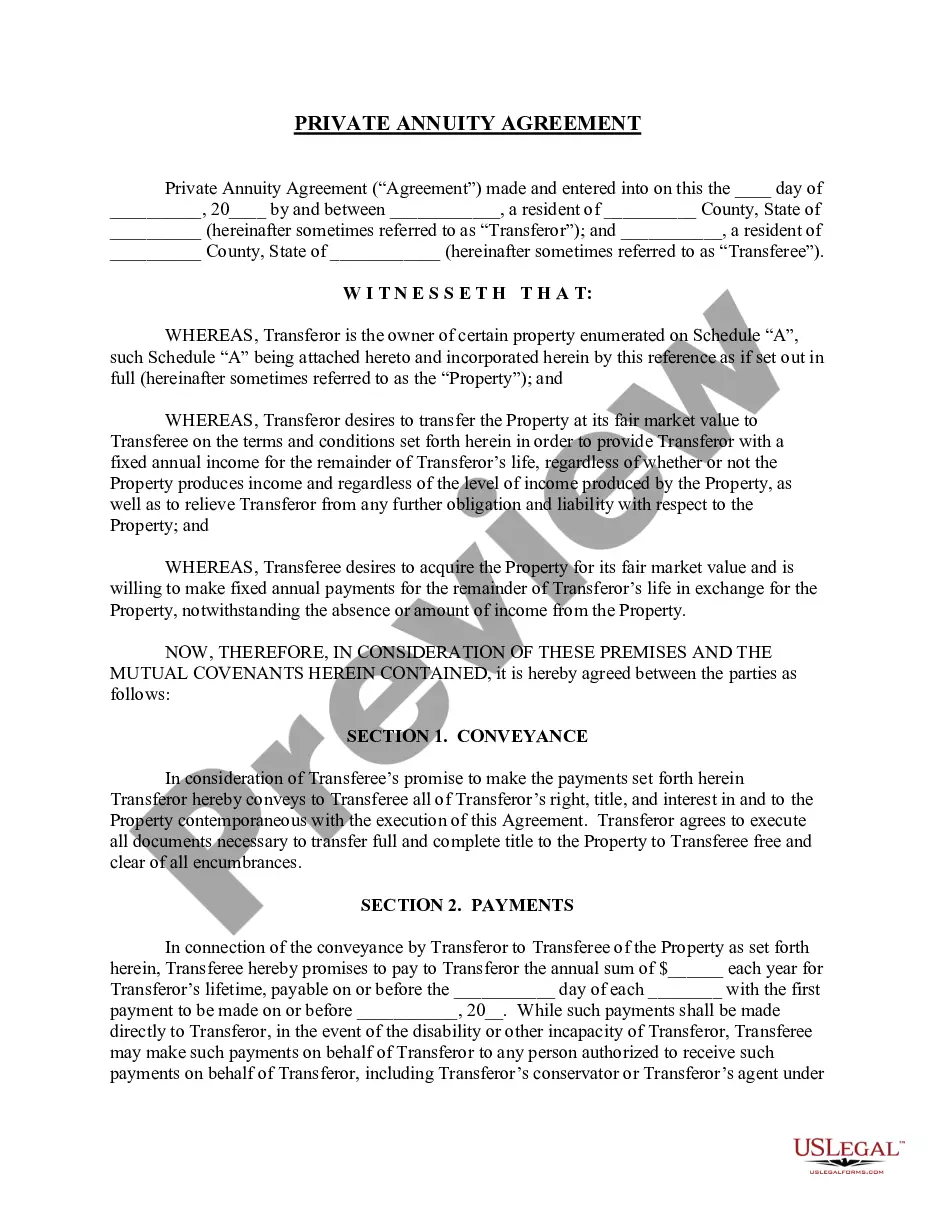
A private annuity is an arrangement where an individual (the ?annuitant?) transfers assets to another (the ?obligor?) in exchange for regular payments for the remainder of the annuitant's life (an ?annuity?).
A private annuity allows you to remove a sizable asset from your estate without incurring federal estate tax or state death taxes. This is because a private annuity is a sale of property for which you receive a fair price and because the annuity payments cease at your death (in the case of a single life annuity).
If you set the annuity up on a joint life basis, your beneficiary will continue to receive a proportion of the income you were receiving. Be aware that if you opted for a single life annuity, the payments would stop when you die.
Inherited Property The basis of any property, real or personal, acquired from a decedent is usually its FMV on the date of the decedent's death. If the farm is a joint holding, the surviving spouse is entitled to a stepped-up basis on ½ of such property.
Gene has a few tips for other farmers looking to pass down the farm. Let the younger generation carve their own niche.Encourage the kids to work somewhere else first.Don't be afraid to gift the farm corporation while you are still active.Turn over management years before you retire.Listen to them.
Annuitants pay taxes as they receive payments from their annuity. The tax rate depends on a variety of factors, including the type of annuity, payout option, and type of funds used for the premium. Some people use pre-tax dollars, such as funds from a 401(k) or IRA, to buy an annuity.
Each annuity payment is treated as part tax-free return of basis, part capital gain, and part ordinary income until your entire basis is recovered. Once your basis is recovered, the entire annuity is treated as part capital gain and part ordinary income until you have surpassed your life expectancy.
Annuities are taxed as ordinary income when inherited. The proceeds of inheritance are taxable. If a beneficiary opts to receive the money all at once, they must pay taxes immediately. This is only if you take a lump sum.