Easements For Construction, Operation And Maintenance Of Sanitary Sewer Lines And Related Facilities
What this document covers
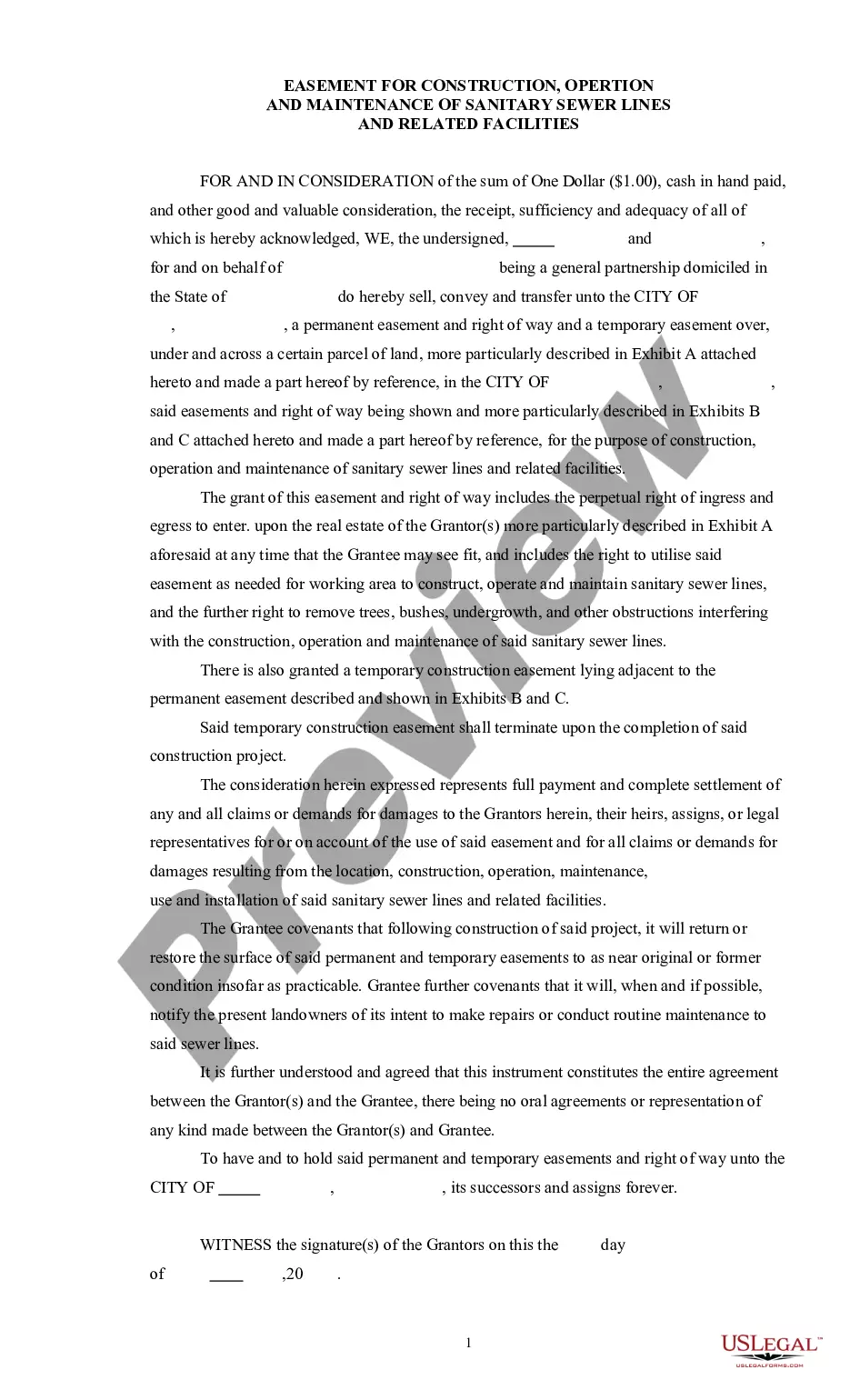
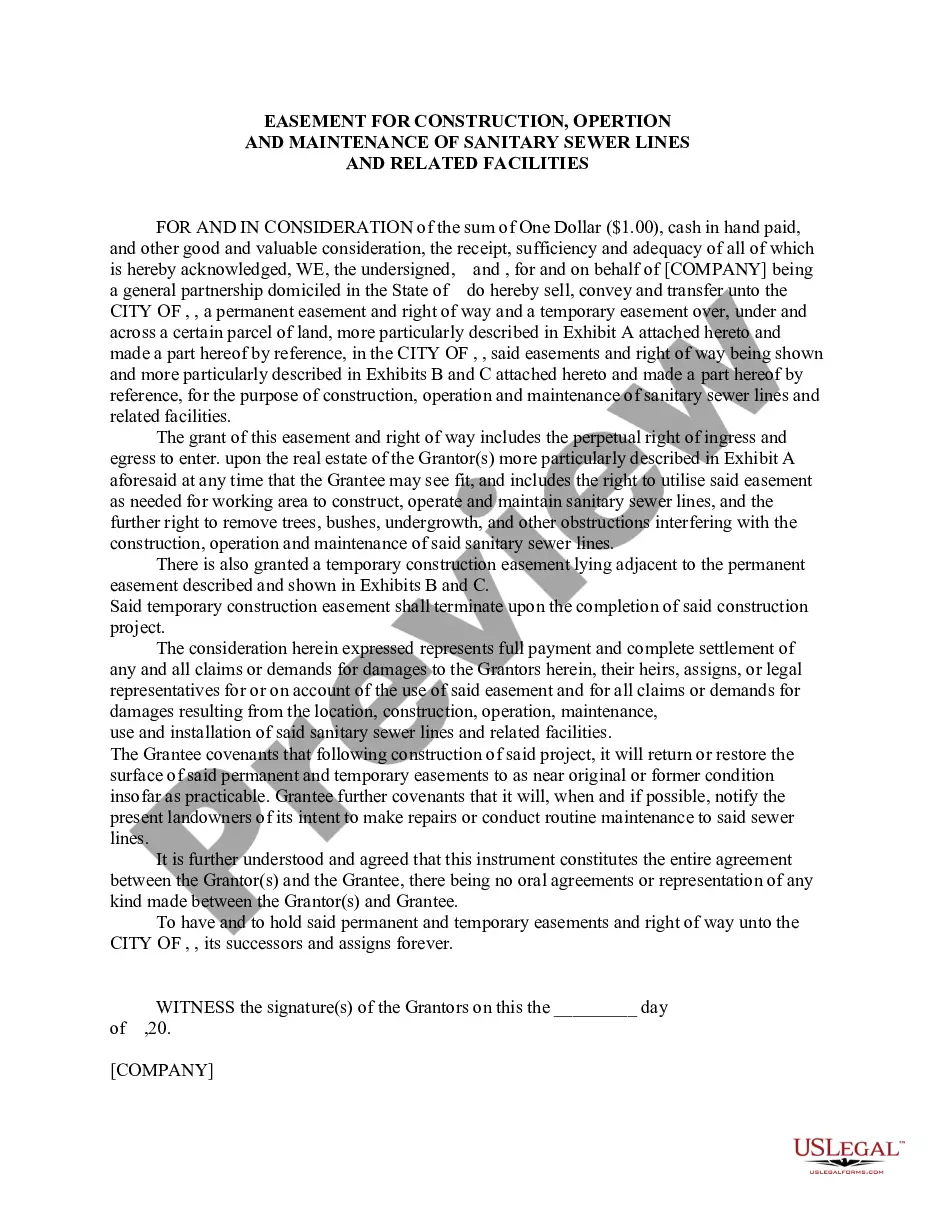
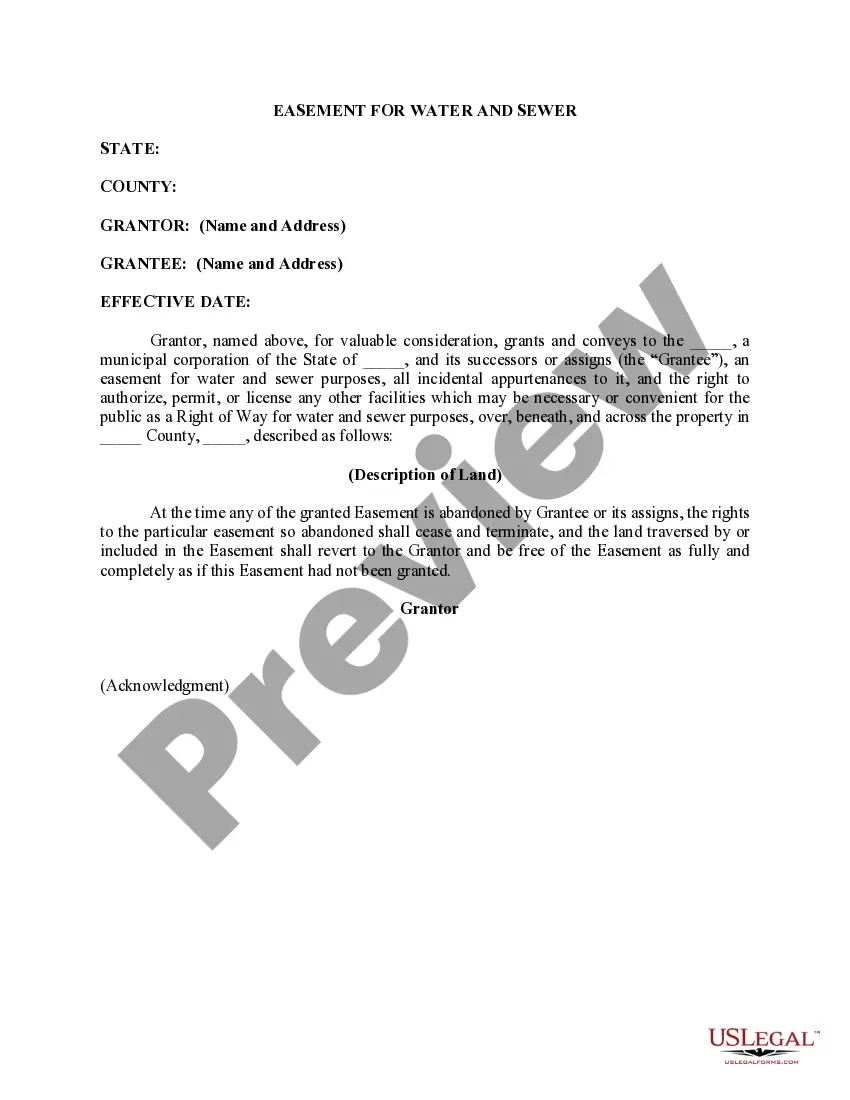
This document is an Easement for Construction, Operation, and Maintenance of Sanitary Sewer Lines and Related Facilities. It grants one party the legal right to access another party's property for the purpose of constructing, operating, and maintaining sanitary sewer lines. This easement is essential for utility companies, ensuring they can perform necessary work while minimizing disruption to property owners. Unlike other easements, this form specifically addresses sewer line access and can include rights for temporary construction activities as well.
Key parts of this document
- Description of the property involved in the easement.
- Rights granted to the Grantee, including ingress and egress.
- Provisions for temporary construction easement.
- Clauses regarding damage claims and restoration of property.
- Legal agreement declaration between parties.
When to use this document
This form should be used when a utility company or another entity needs to access private property to install, repair, or maintain sanitary sewer lines. It is applicable in scenarios where permanent or temporary access to land is required and helps establish clear rights and responsibilities between the property owner and the party performing the work.
Intended users of this form
- Utility companies needing access to properties for sewer line work.
- Property owners who are granting access for such purposes.
- Developers or contractors involved in construction projects requiring sewer line installation.
Completing this form step by step
- Identify the parties involved (Grantor and Grantee) and their roles.
- Specify the property description where the easement will apply.
- Enter details regarding the rights being granted, including construction and maintenance activities.
- Include any specific terms related to restoration and damages.
- Have all parties sign and date the form to validate the agreement.
Does this document require notarization?
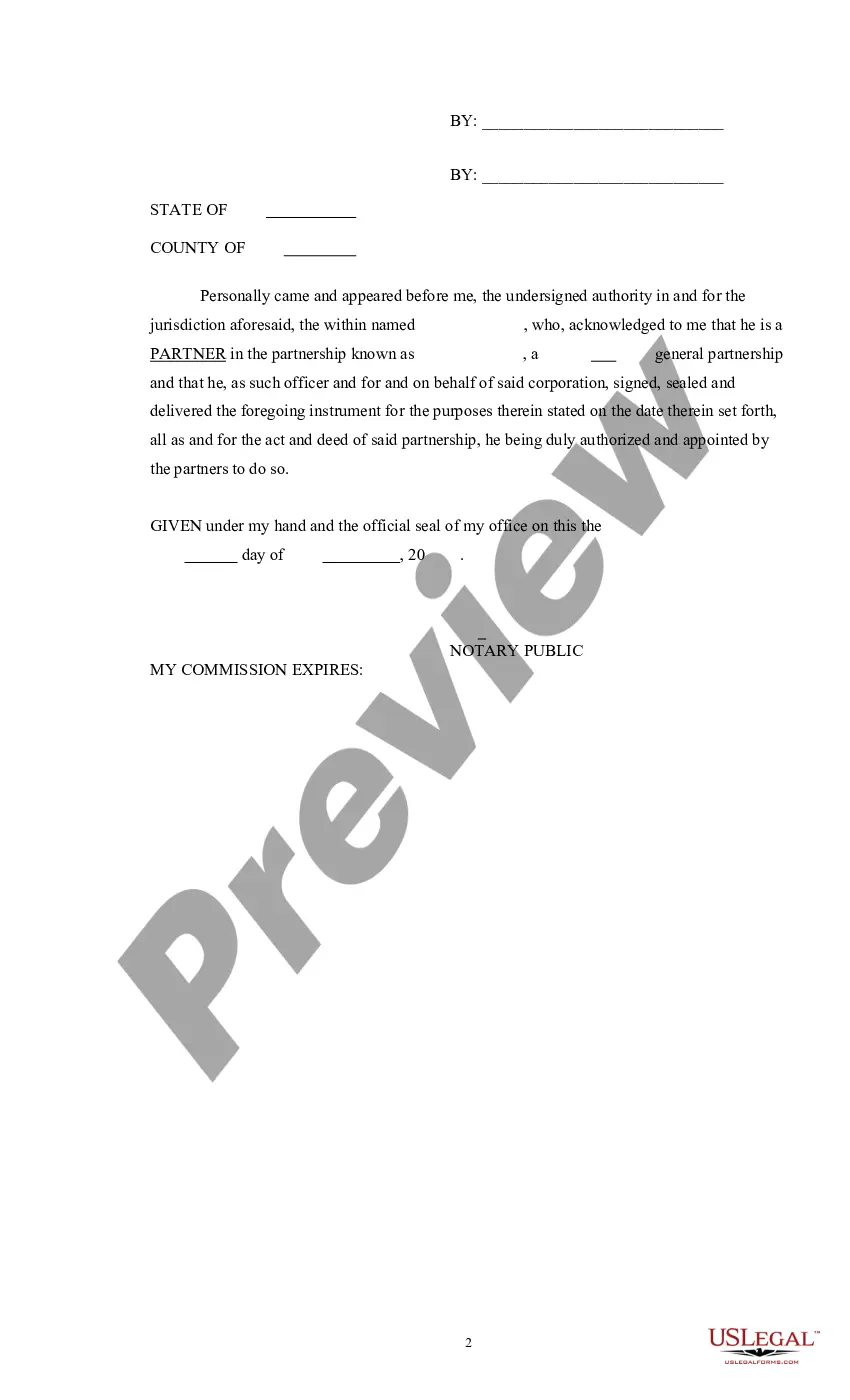
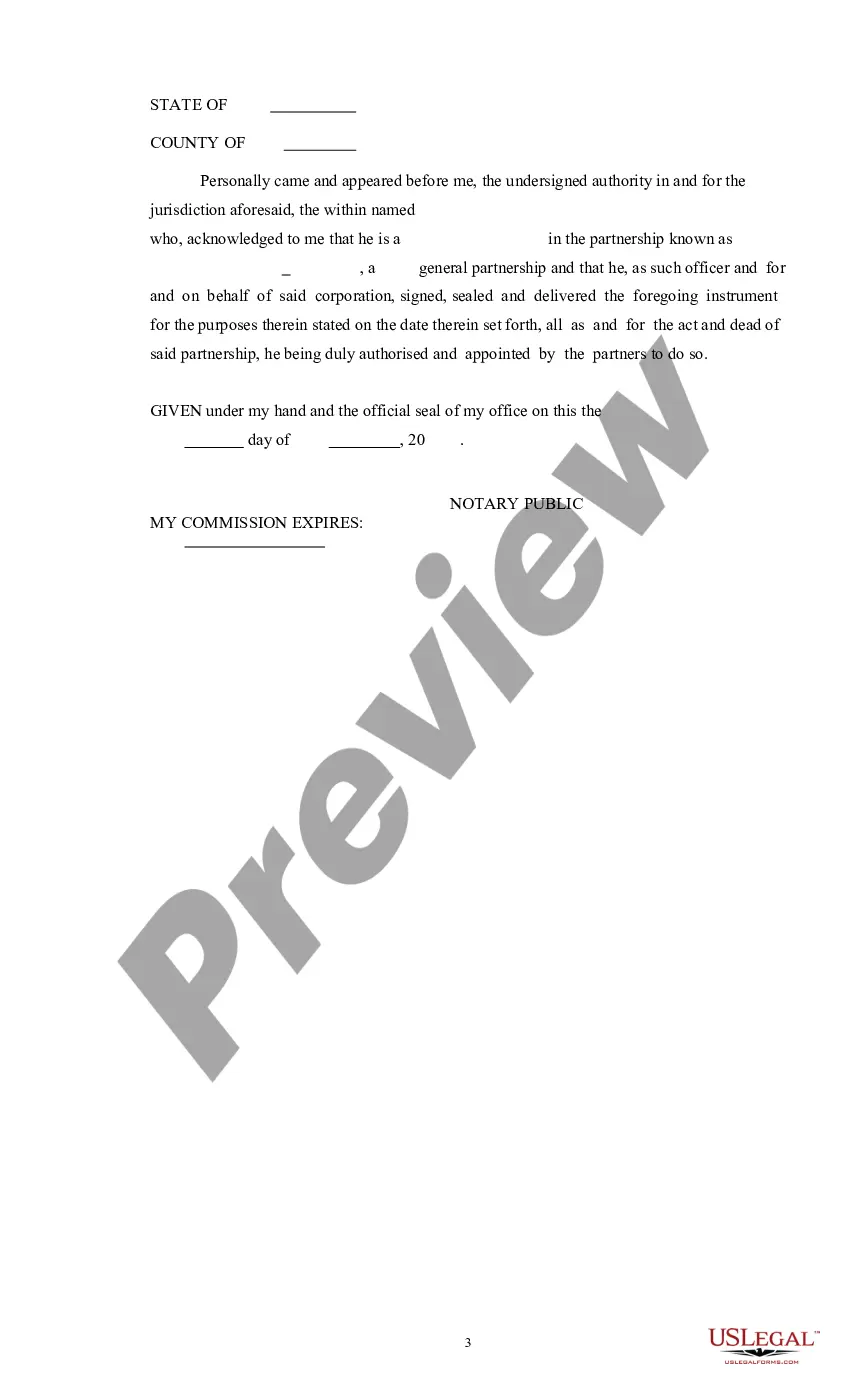
This form must be notarized to be legally valid. US Legal Forms provides secure online notarization powered by Notarize, allowing you to complete the process through a verified video call.
Get your form ready online
Our built-in tools help you complete, sign, share, and store your documents in one place.
Make edits, fill in missing information, and update formatting in US Legal Forms—just like you would in MS Word.
Download a copy, print it, send it by email, or mail it via USPS—whatever works best for your next step.
Sign and collect signatures with our SignNow integration. Send to multiple recipients, set reminders, and more. Go Premium to unlock E-Sign.
If this form requires notarization, complete it online through a secure video call—no need to meet a notary in person or wait for an appointment.
We protect your documents and personal data by following strict security and privacy standards.

Make edits, fill in missing information, and update formatting in US Legal Forms—just like you would in MS Word.

Download a copy, print it, send it by email, or mail it via USPS—whatever works best for your next step.

Sign and collect signatures with our SignNow integration. Send to multiple recipients, set reminders, and more. Go Premium to unlock E-Sign.

If this form requires notarization, complete it online through a secure video call—no need to meet a notary in person or wait for an appointment.

We protect your documents and personal data by following strict security and privacy standards.
Typical mistakes to avoid
- Failing to accurately describe the property involved in the easement.
- Leaving out critical rights or responsibilities of either party.
- Not providing clear terms for restoration of property after construction.
- Neglecting to have the form signed by all necessary parties.
Why use this form online
- Convenience of completing the form at any time without needing to visit a legal office.
- Editability allows users to customize the form to fit their specific needs.
- Access to forms that are drafted by licensed attorneys, ensuring legal compliance.
Looking for another form?

Form popularity
FAQ
Pour a cup of washing soda down the drain and allow it to sit. Washing soda can be found in the laundry sections of large retailers. This will break up clogs and attack grease. Washing soda is more caustic than baking soda and, when used on a monthly basis, it will keep the sewer line running clear.
Tip #1 Limit Food Down the Kitchen Drain Line. Tip #2 Properly Dispose of Non-Food Items. Tip #3 Use One-Ply Toilet Paper. Tip #4 Flush the Plumbing System. Tip #5 Set Toilets to High Volume Flush. Tip #6 Tend to Your Roots. Tip #7 Naturally Clean Your Plumbing System.
A: The sanitary sewer system collects water from inside our homes and businesses and carries it to a treatment plant where the wastewater is cleaned before being released into the Delta. Storm drains are located along streets and in parking lots and flow directly to the Delta without treatment.
Strong sewer odor. Toilet that gurgles. Drains that take long to clear. Regular sewage backup in toilet or tub. Mold or mildew growing on your ceilings or walls. Walls beginning to crack. Invasion of pests in the home. Greener-than-usual patches on your lawn.
Sewer Line Repair Cost The average price homeowners pay for sewer line repair is $2,556. You can expect to spend between $1,073 and $4,054, depending on the kind of damage. Homeowners who get a full replacement spend around $3,000-$25,000.
Sewers and lateral drains connected to the public network used to be the responsibility of the property owner. However, most are now maintained by local water companies. If you have any problems with your sewer or lateral drain, for example if it's blocked, contact your local water company.
Every homeowners insurance policy explicitly states that any damage caused by a sewage back up will not be covered. Whatever the water or raw sewage destroys will not be qualified for replacement from the insurance company.
A good general rule is to have your home's sewer lines cleaned out every 18 to 22 months. That may be difficult to remember, but think of it as a year and a half to slightly less than two years.
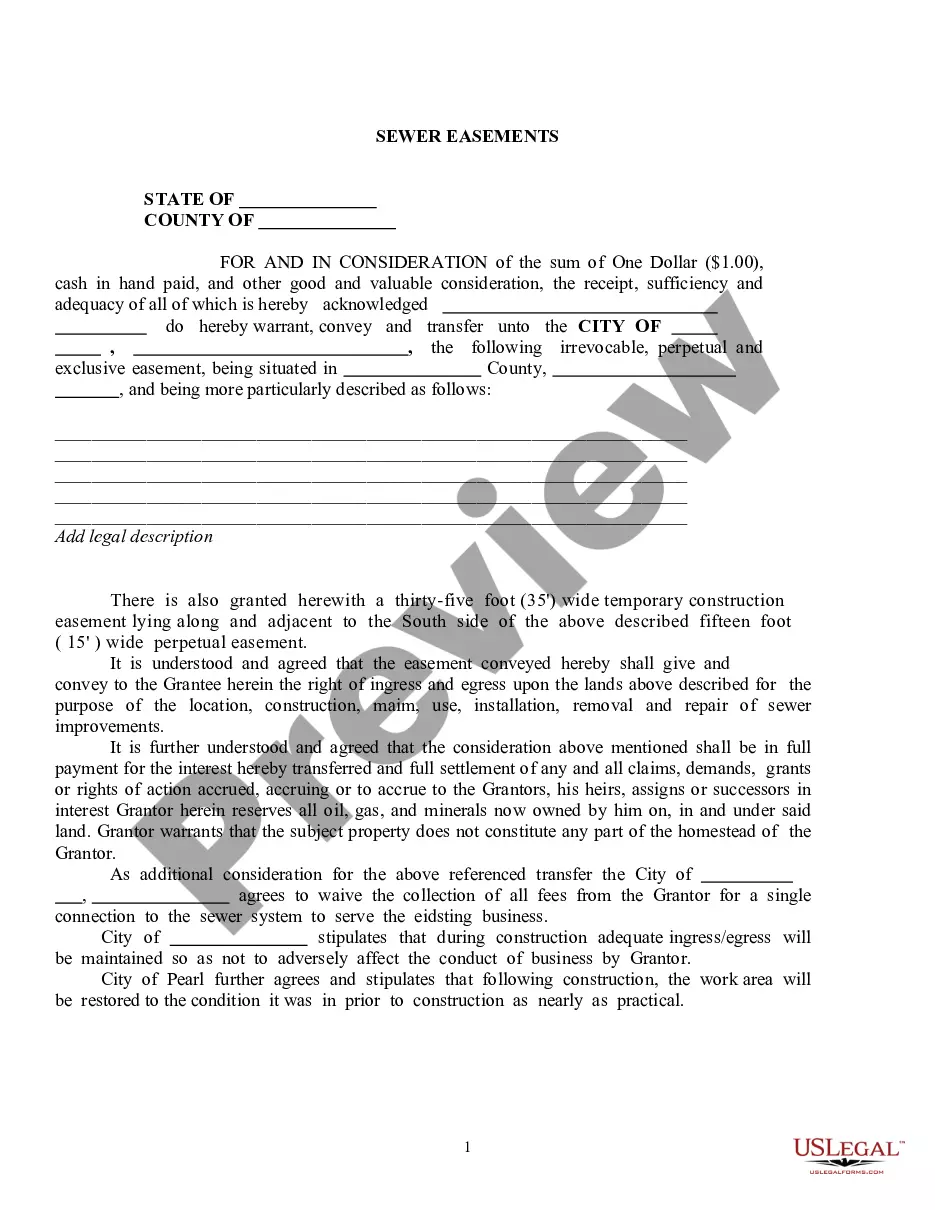
A sewer easement is a special type of property ownership that allows a person the right to place a sewer or sewer line on land owned by someone else.