California Estoppel Affidavit
What this document covers
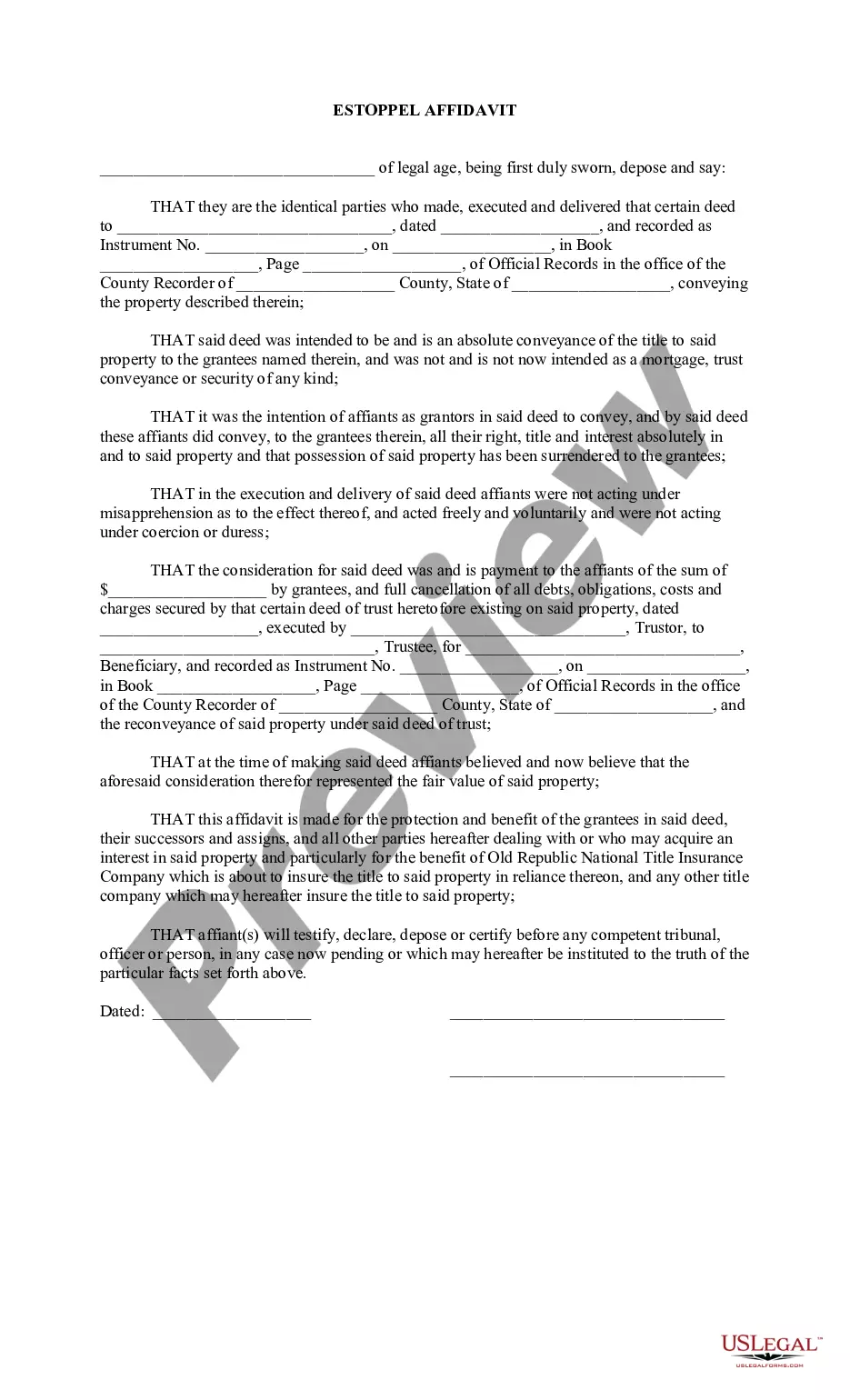
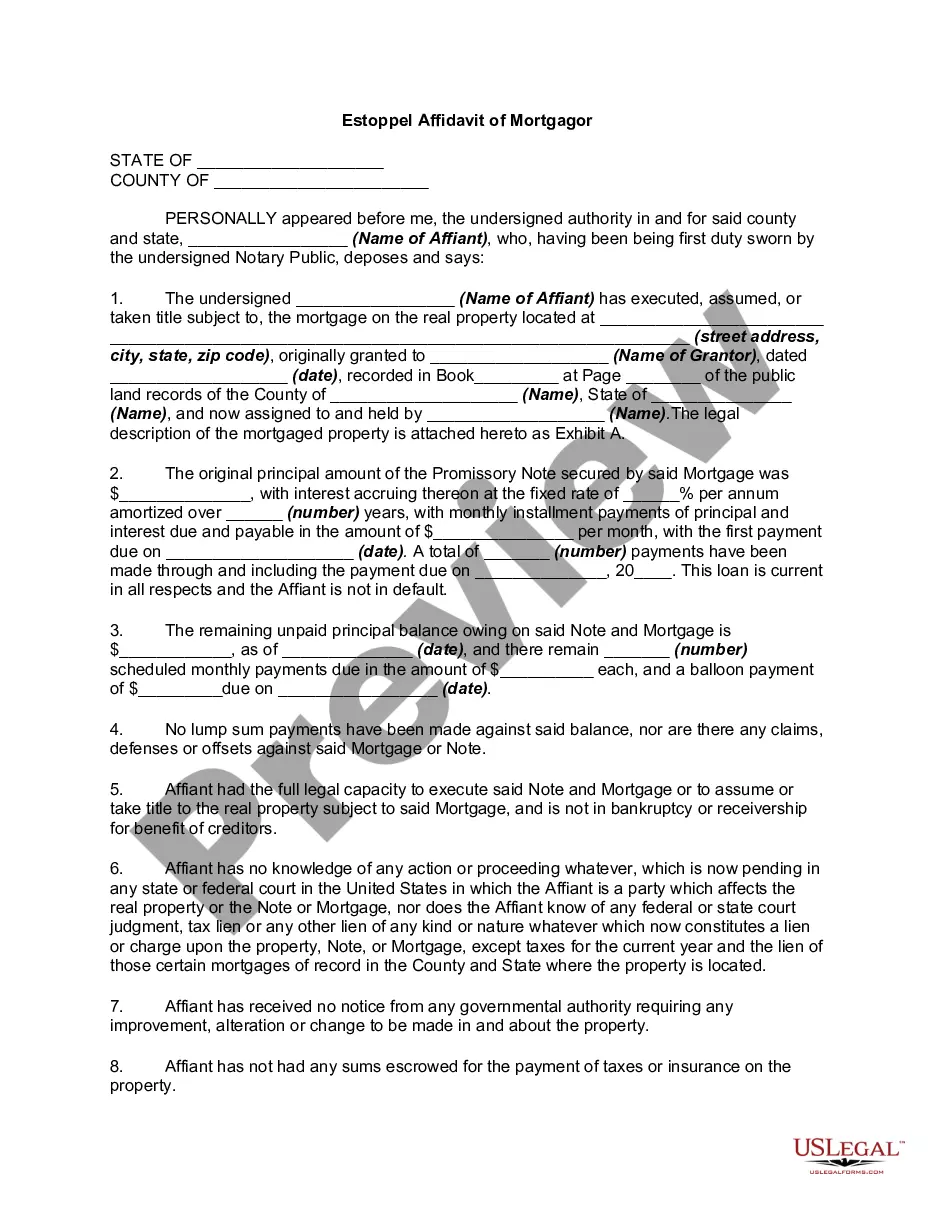
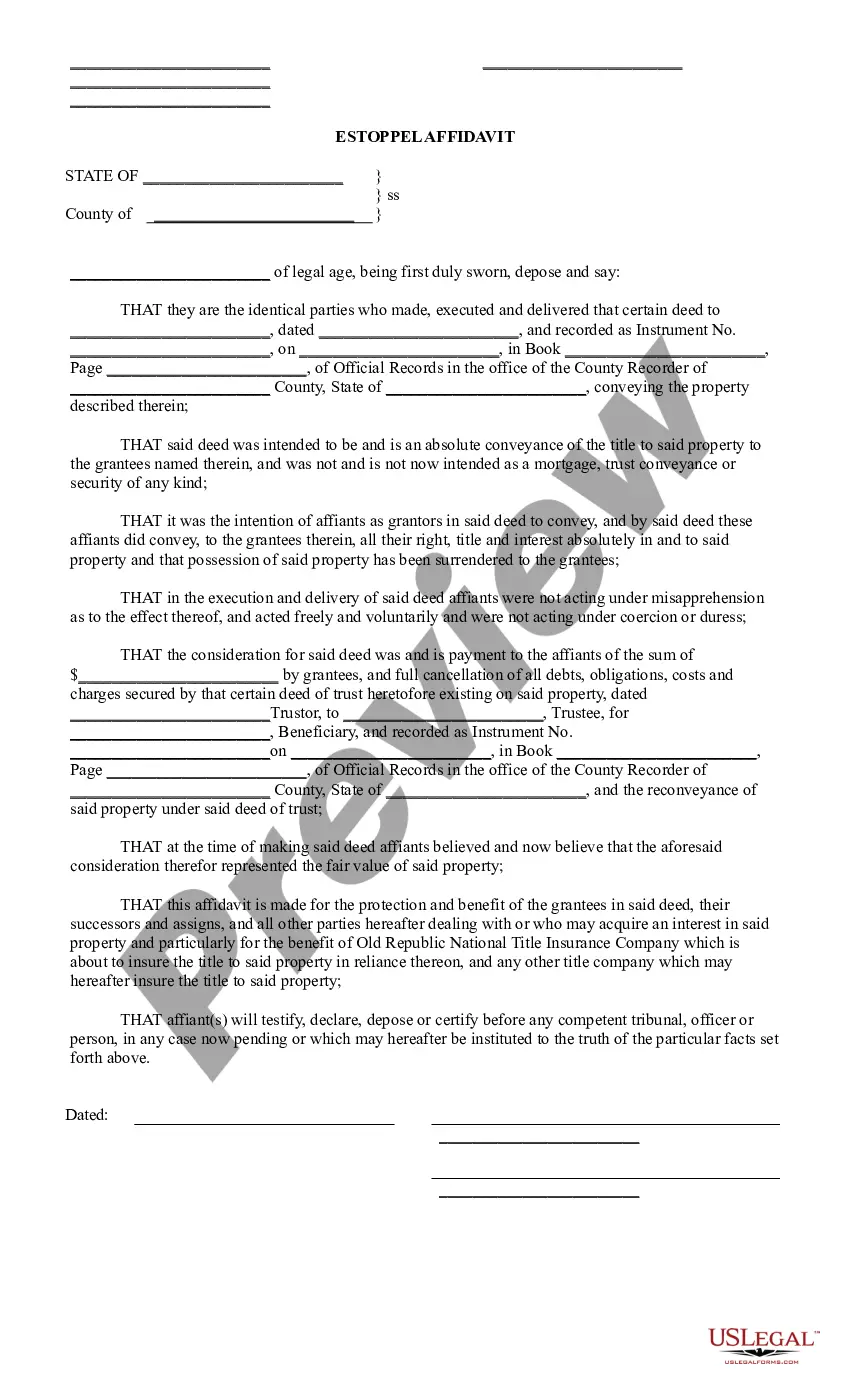
An Estoppel Affidavit is a sworn statement affirming specific facts related to a property's ownership and title. This form is typically used to assure a buyer or lender that there are no undisclosed claims or interests associated with the property. It differs from other affidavits in that it focuses on confirming the intentions behind the deed and the accurate representation of property ownership, ensuring security for future transactions.
Main sections of this form
- Affiant's declaration of legal age and signature under oath.
- Identification of the deed, including parties, dates, and reference numbers.
- Statement of the intention behind the deed as an absolute conveyance.
- Details concerning the consideration for the property transfer.
- Affirmation of voluntary action without coercion.
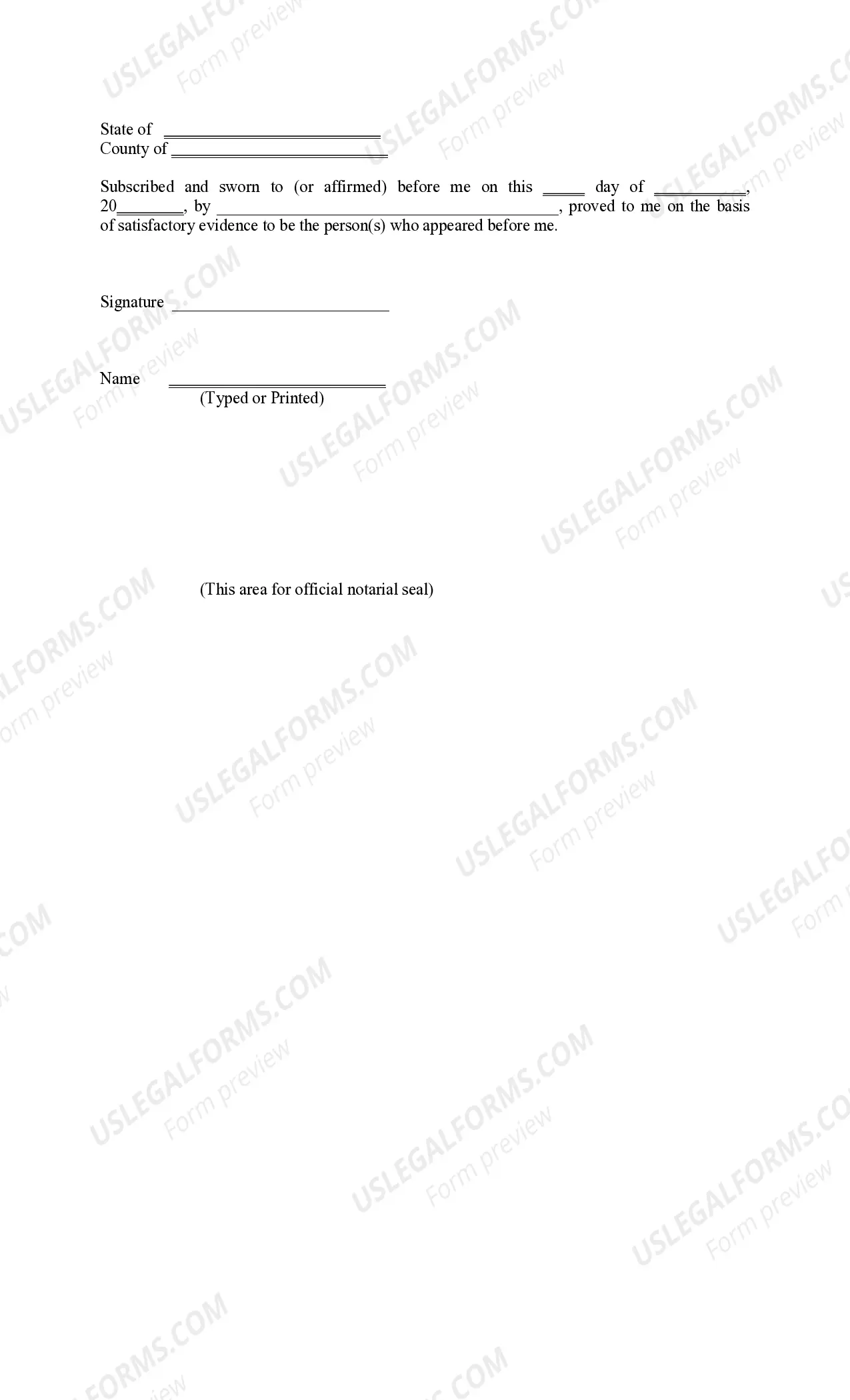
- Notary public acknowledgment and signature requirements.

When this form is needed
This form is useful when a property owner wishes to confirm the fully executed terms of a deed before a sale or refinancing. It can be utilized by buyers, sellers, or title companies to establish clear ownership and to protect against future claims. It is also critical when acquiring title insurance, as it reassures insurers about the legitimacy of the property transfer.
Who should use this form
- Property sellers wanting to provide assurance to buyers.
- Buyers who seek clarity on property title before purchase.
- Title companies verifying ownership and potential claims.
- Real estate agents facilitating property transactions.
- Attorneys representing any of the parties in a property transaction.
How to prepare this document
- Identify and enter the names of the parties involved in the deed.
- Provide the relevant dates and identification numbers of the deed.
- State the intended purpose of the deed and affirm the complete transfer of ownership.
- Specify the consideration received in exchange for the property.
- Sign the form in the presence of a notary public to validate the affidavit.
Is notarization required?
Yes, this form must be notarized to be legally valid. The notarization process involves verifying the identity of the affiant before a notary public. US Legal Forms offers integrated online notarization, allowing you to complete this step securely via video call, available 24/7, ensuring convenience and legal compliance without the need for travel.
Get your form ready online
Our built-in tools help you complete, sign, share, and store your documents in one place.
Make edits, fill in missing information, and update formatting in US Legal Forms—just like you would in MS Word.
Download a copy, print it, send it by email, or mail it via USPS—whatever works best for your next step.
Sign and collect signatures with our SignNow integration. Send to multiple recipients, set reminders, and more. Go Premium to unlock E-Sign.
If this form requires notarization, complete it online through a secure video call—no need to meet a notary in person or wait for an appointment.
We protect your documents and personal data by following strict security and privacy standards.

Make edits, fill in missing information, and update formatting in US Legal Forms—just like you would in MS Word.

Download a copy, print it, send it by email, or mail it via USPS—whatever works best for your next step.

Sign and collect signatures with our SignNow integration. Send to multiple recipients, set reminders, and more. Go Premium to unlock E-Sign.

If this form requires notarization, complete it online through a secure video call—no need to meet a notary in person or wait for an appointment.

We protect your documents and personal data by following strict security and privacy standards.
Common mistakes to avoid
- Failing to include all necessary parties' names and signatures.
- Incorrectly stating the consideration amount or misrepresenting the terms of the deed.
- Not having the affidavit notarized when required.
- Leaving out important details, such as the property's location or the deed reference information.
Benefits of completing this form online
- Convenience of downloading and customizing at your own pace.
- Access to templates prepared by licensed attorneys, ensuring legal accuracy.
- Ability to use the affidavit immediately for urgent property transactions.
- Cost savings compared to hiring an attorney for standard affidavits.
Summary of main points
- An Estoppel Affidavit confirms ownership and protects against undisclosed claims.
- It is vital in real estate transactions for prospective buyers and title companies.
- Proper notarization is required for its legal effectiveness.
- Ensure compliance with state-specific regulations when completing the affidavit.
Looking for another form?


Form popularity
FAQ
An estoppel certificate gives landlords, investors and lenders additional security that the tenant's promises will be kept. They also benefit tenants as the document confirms that the landlord will not change any agreed-upon terms to the lease.
An estoppel certificate is typically requested when the owner of a multifamily property is either selling or refinancing the property. It's an important piece of a buyer or lender's due diligence. A property owner may be required to request an estoppel certificate from their tenants when they're selling the property.
An estoppel certificate verifies the terms of a tenant's lease when selling commercial property. A lender will require the buyer receive an estoppel certificate for each tenant. In addition, the landlord must confirm that the tenant has not breached the lease during its term.
An estoppel certificate is a legally binding document whereby a tenant represents or promises certain things regarding its lease or rental agreement to be true.
?The purpose of an estoppel statement is twofold: (1) to give a prospective purchaser or lender information about the lease and the leased premises and (2) to give assurance to the purchaser or lender that the les- see at a later date will not make claims that are inconsistent with the statements contained in the
For instance, if a landlord agrees not to terminate a tenant's lease as long as the tenant spends money on improving the property, an estoppel certificate could prevent the landlord from going back on their word and terminating the lease, even when the promise may not have been written into a contract.
Estoppel is a legal concept meaning that someone certifies the accuracy of certain facts as of a specified date. A lender or bank requires an estoppel letter or certificate from the homeowners association prior to closing on a property within the HOA.