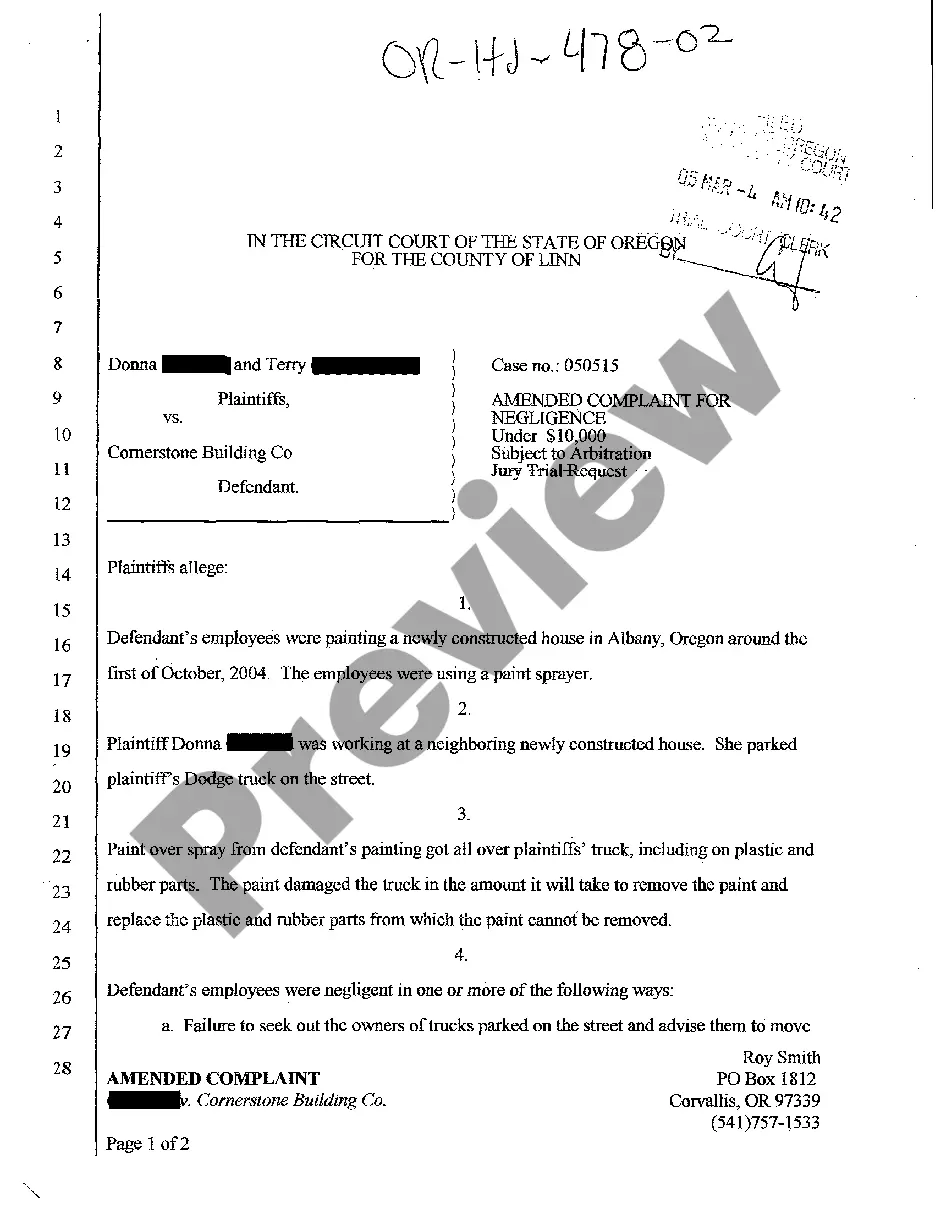
Maine Flooring Contract for Contractor
What is this form?
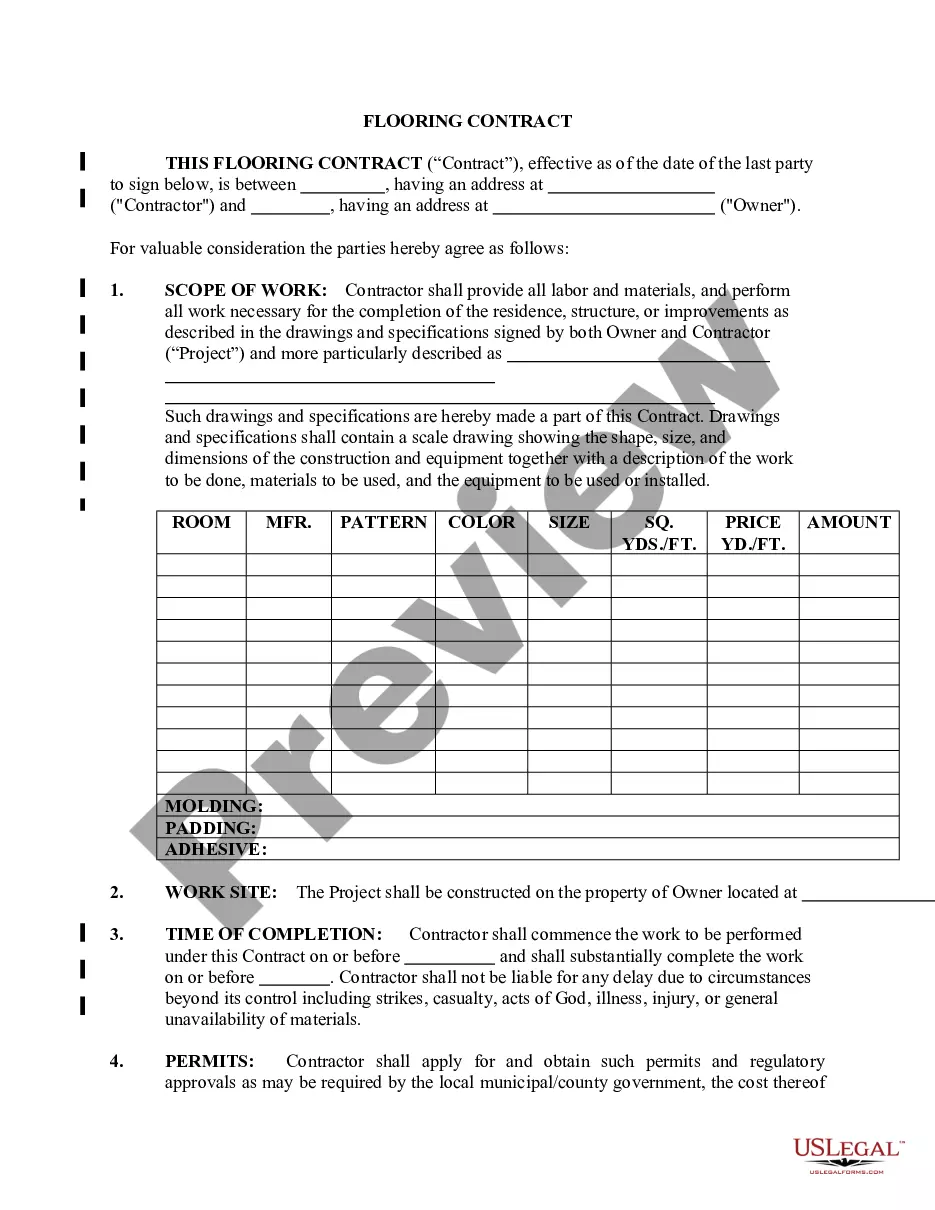
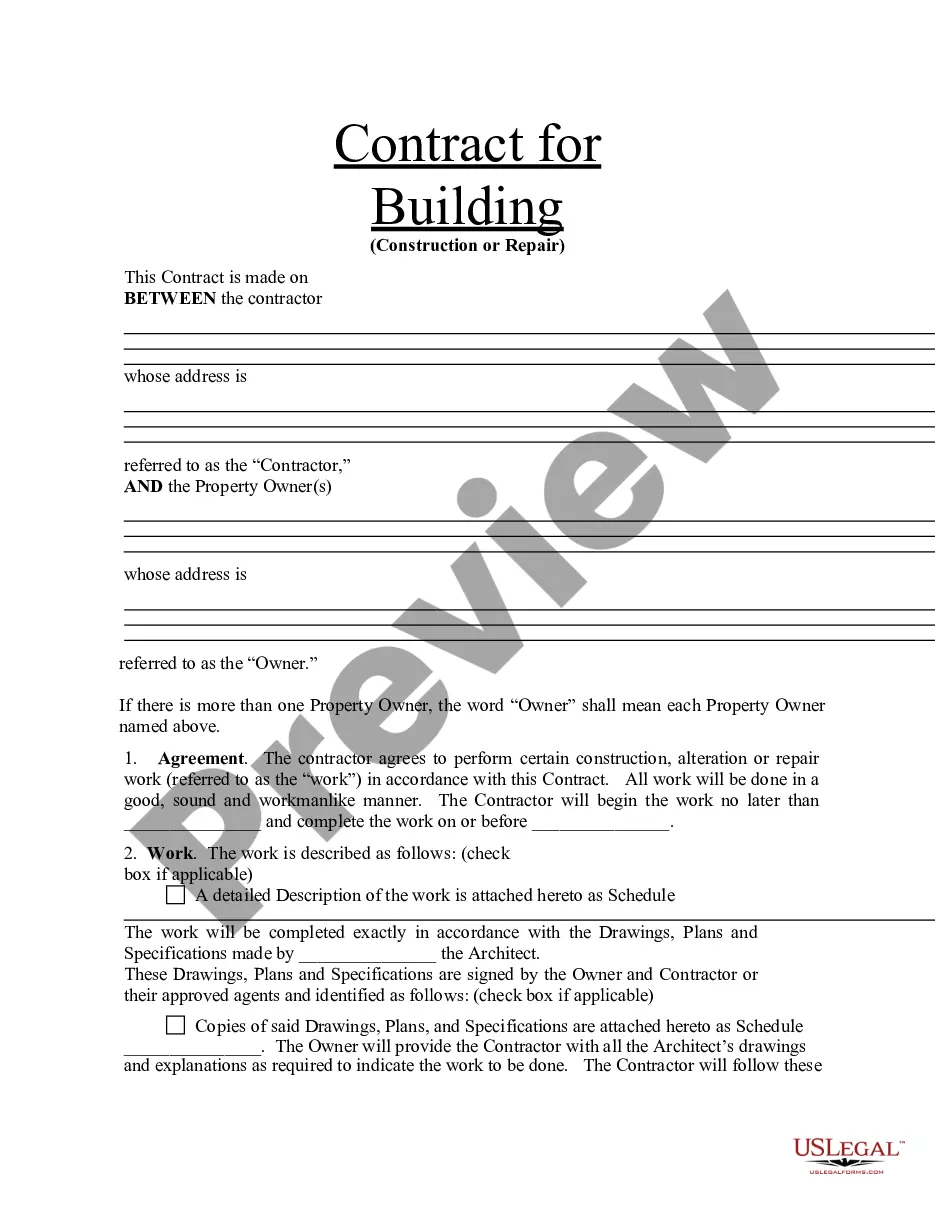
The Flooring Contract for Contractor is a legal document used to formalize agreements between flooring contractors and property owners. It outlines the terms of service, payment arrangements, and responsibilities of both parties. This contract ensures clarity around key issues such as change orders, insurance, and warranties, and is specifically designed to comply with the laws of the State of Maine. Using this form helps protect both parties by creating a clear understanding of the project expectations and legal obligations.
Key components of this form
- Payment arrangements: Details on fixed fee or cost-plus payment structures.
- Permits: Contractor responsibility for obtaining necessary permits and regulatory approvals.
- Soil conditions: Clarification that the contractor is not liable for existing soil conditions.
- Change orders: Process for amending the scope of work and any associated costs.
- Insurance: Requirement for general liability, workers' compensation, and builders risk insurance.
- Dispute resolution: Procedures for resolving disagreements between parties, including attorney fees.




Common use cases
This form should be used whenever a property owner hires a flooring contractor to install or renovate flooring in a property. It is applicable for both residential and commercial projects, particularly when there are large costs involved or multiple changes throughout the project. By entering into this contract, both parties can ensure that their rights and responsibilities are clearly defined, reducing risks of misunderstandings.
Intended users of this form
This form is intended for:
- Property owners looking to hire reliable flooring contractors.
- Contractors who need a structured format to outline their obligations and payment terms.
- Individuals undertaking significant flooring projects that involve potentially changing plans or costs.
Instructions for completing this form
To complete the Flooring Contract for Contractor, follow these steps:
- Identify the parties: Clearly state the names and addresses of both the contractor and the property owner.
- Specify the project details: Describe the scope of work, including specifics on flooring types and installation processes.
- Outline payment terms: Choose whether a fixed fee or cost-plus payment arrangement will be used and document these details.
- Include insurance information: Indicate the types of insurance coverage that the contractor will maintain throughout the project.
- Sign and date the contract: Ensure that both parties sign and date the document to make it legally binding.
Does this form need to be notarized?
This form does not typically require notarization unless specified by local law. However, ensuring that both parties have witnessed the signing may strengthen its legal standing.
Get your form ready online
Our built-in tools help you complete, sign, share, and store your documents in one place.
Make edits, fill in missing information, and update formatting in US Legal Forms—just like you would in MS Word.
Download a copy, print it, send it by email, or mail it via USPS—whatever works best for your next step.
Sign and collect signatures with our SignNow integration. Send to multiple recipients, set reminders, and more. Go Premium to unlock E-Sign.
If this form requires notarization, complete it online through a secure video call—no need to meet a notary in person or wait for an appointment.
We protect your documents and personal data by following strict security and privacy standards.

Make edits, fill in missing information, and update formatting in US Legal Forms—just like you would in MS Word.

Download a copy, print it, send it by email, or mail it via USPS—whatever works best for your next step.

Sign and collect signatures with our SignNow integration. Send to multiple recipients, set reminders, and more. Go Premium to unlock E-Sign.

If this form requires notarization, complete it online through a secure video call—no need to meet a notary in person or wait for an appointment.

We protect your documents and personal data by following strict security and privacy standards.
Common mistakes to avoid
- Failing to specify the full scope of work, leading to confusion about what is included.
- Not discussing or clarifying payment terms in advance, which can lead to disputes later on.
- Neglecting to obtain necessary permits before beginning the work.
- Signing the contract without thoroughly reading and understanding all terms.
Why use this form online
- Convenient download that allows for immediate access and editing.
- Adaptable to specific needs, ensuring all pertinent information can be included.
- Templates drafted by licensed attorneys, providing peace of mind and legal security.
- Streamlined process compared to traditional hiring methods, saving time.
- This contract protects both parties by clearly defining rights and responsibilities.
- Enforceable under Maine law, which establishes guidelines for contractor agreements.
- Contains clauses aimed at preventing common disputes, increasing clarity between the parties.
Main things to remember
Key takeaways:
- The Flooring Contract for Contractor is crucial for clear expectations between property owners and flooring contractors.
- It includes terms for payment, change orders, and warranties.
- Understanding and completing this contract properly protects both parties legally.
Looking for another form?
Form popularity
FAQ
Acquire proper installation skills to start the business by working under a master carpenter. Purchase tools for installing the flooring or make sure equipment can be rented in a given area. Obtain a business license and engage experienced part-time workers to help install flooring.
STEP 1: Plan your business. STEP 2: Form a legal entity. STEP 3: Register for taxes. STEP 4: Open a business bank account & credit card. STEP 5: Set up business accounting. STEP 6: Obtain necessary permits and licenses. STEP 7: Get business insurance.
You can become a floor installer by completing a high school diploma or GED certificate and an apprenticeship program in repair technologies, construction management, or facilities management. The apprenticeship program will enable you to earn income while you complete installer training and work toward licensure.
Acquire 4 years of experience in the trade for which you plan to get the license for. After this, you will have to take two exams: the California Law and Business Exam and the Flooring & Floor Covering C-15 exam.
STEP 1: Plan your business. STEP 2: Form a legal entity. STEP 3: Register for taxes. STEP 4: Open a business bank account & credit card. STEP 5: Set up business accounting. STEP 6: Obtain necessary permits and licenses. STEP 7: Get business insurance.
Expenses and Profits Just starting out, your flooring business can turn a nice profit within a few years, and you could make more than $75,000 as a business owner, which is not bad. As your business grows, you hire additional people, and you continue to make customers happy.
Do quality flooring work. Build a great website. Optimize your website for search engines. Take high-quality photographs of your work. Build a strong brand. Build relationships with local contractors. Purchase flooring job leads. Put an ad in the phonebook.
What are the costs involved in opening a carpet store? Your startup costs will be between $2,000 and $10,000, depending on your location. You can start from home, or you can use a small workshop with a monthly rent of about $1,000. Expect to pay additional money for high-grade insurance.