Solar Installation Agreement
What is this form?
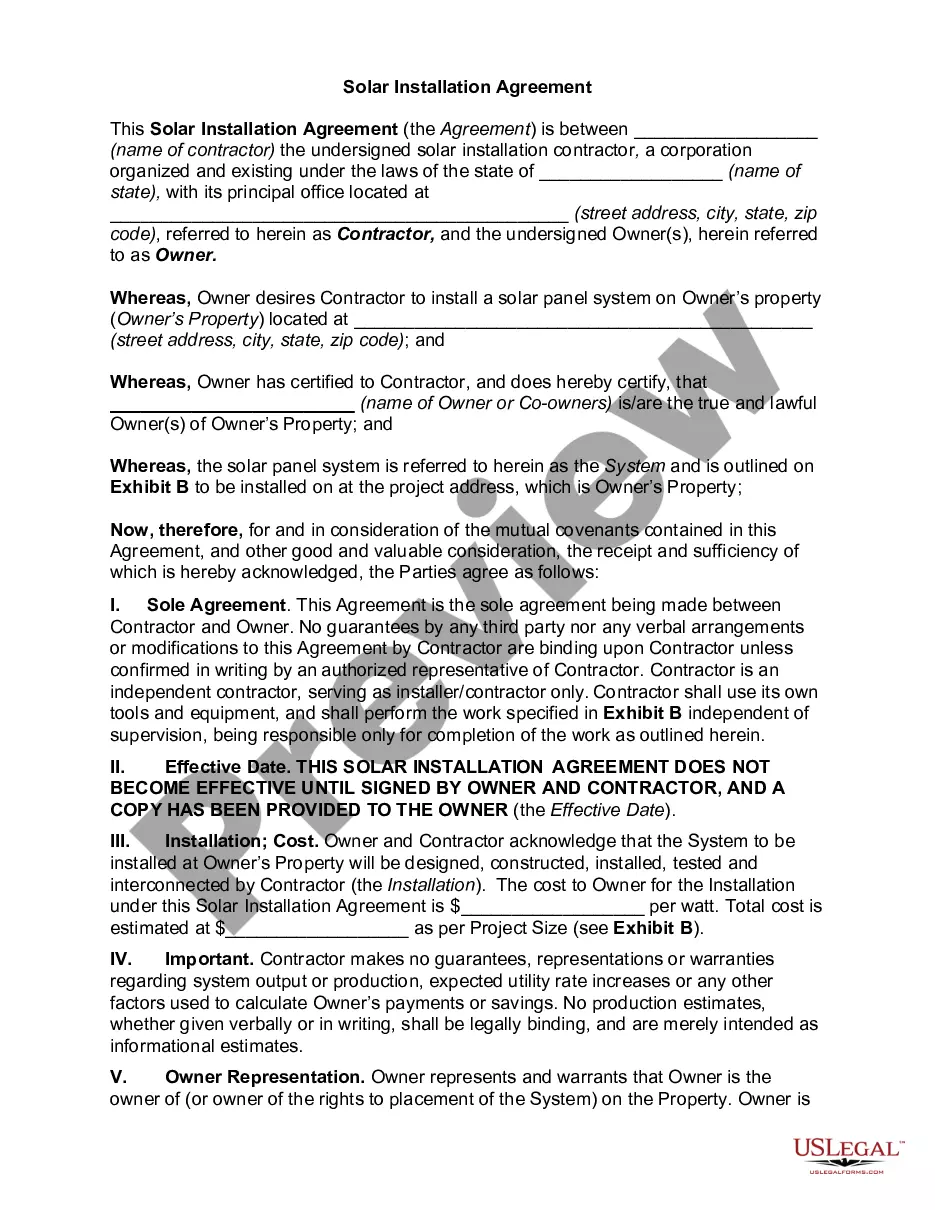
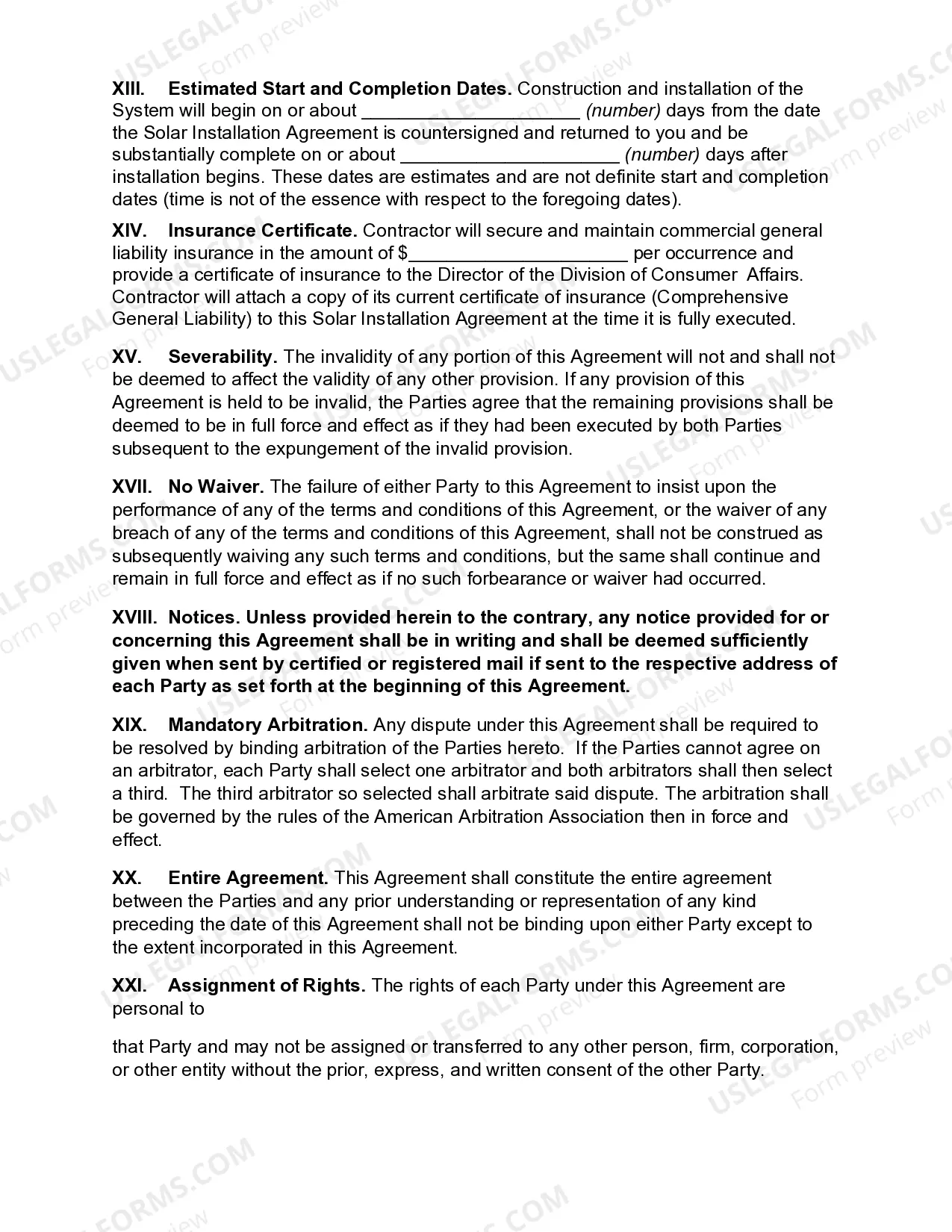
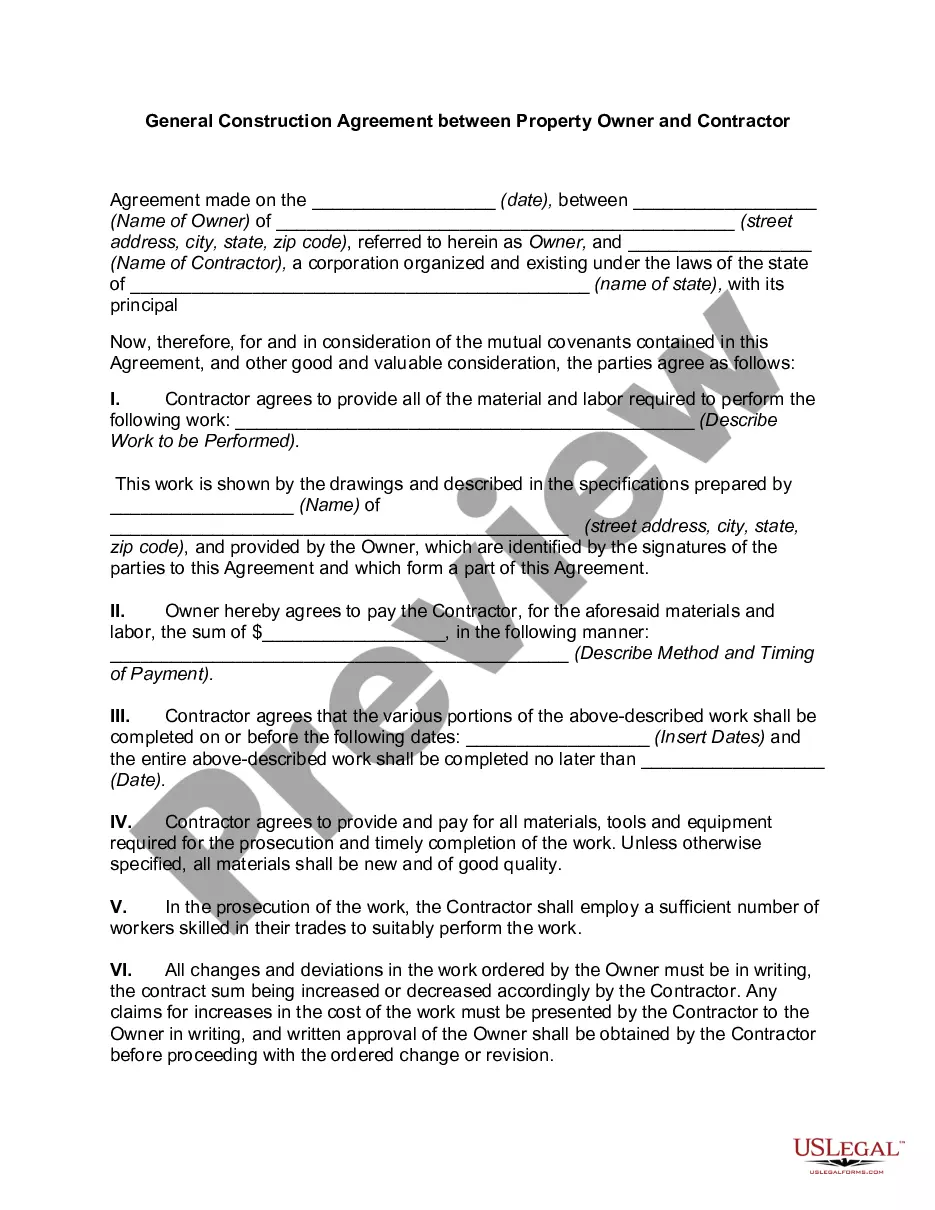
The Solar Installation Agreement is a legally binding contract between a property owner and a solar installation contractor. This agreement outlines the terms for the contractor to install a solar panel system on the owner's property. It is tailored for use in various states and differs from similar forms by specifically addressing solar energy installation, including rights, responsibilities, and financial obligations for both parties.
Main sections of this form
- Parties involved: Identification of the contractor and owner, including their legal statuses.
- Installation details: Description of the solar panel system and the property location.
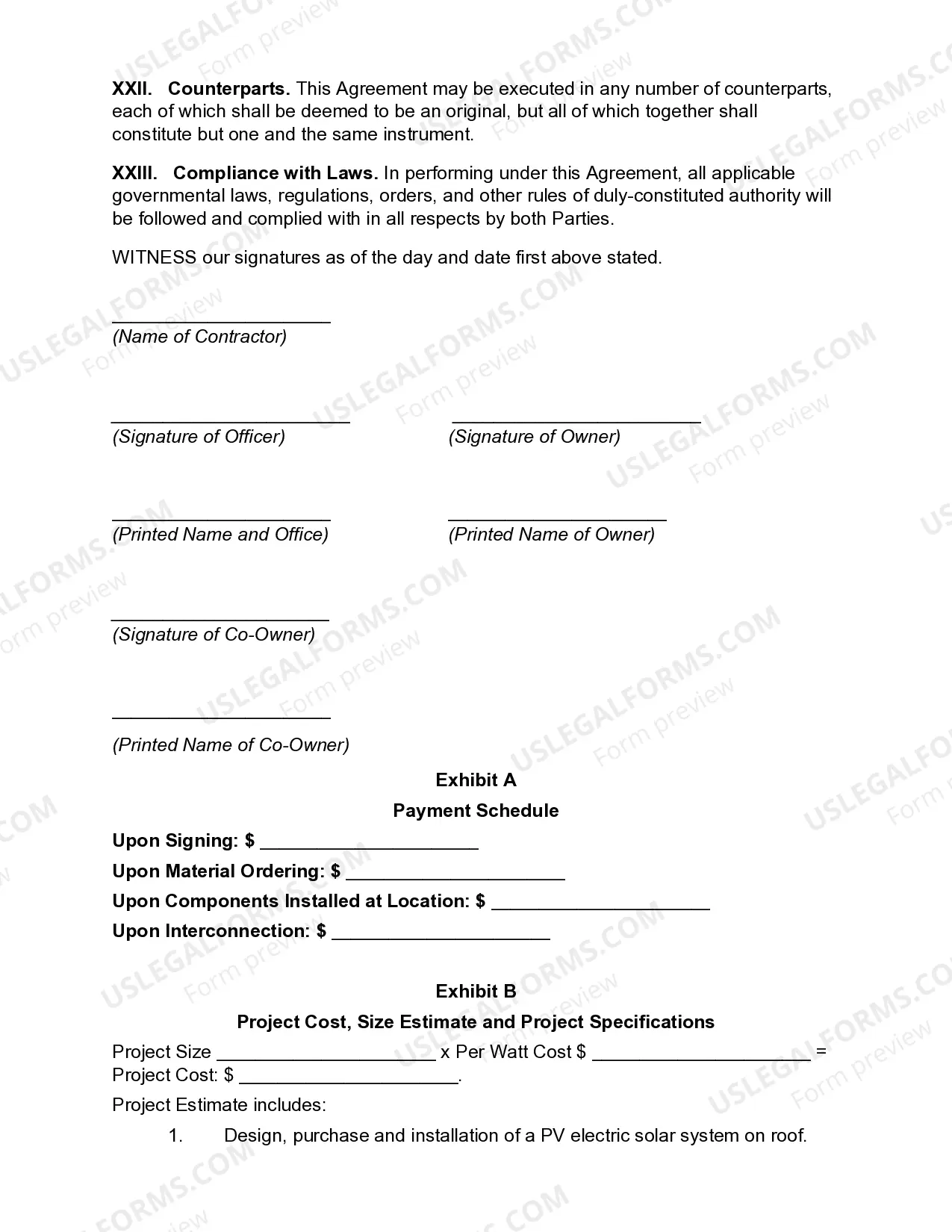
- Payment structure: Clear outline of costs associated with the installation and payment schedule.
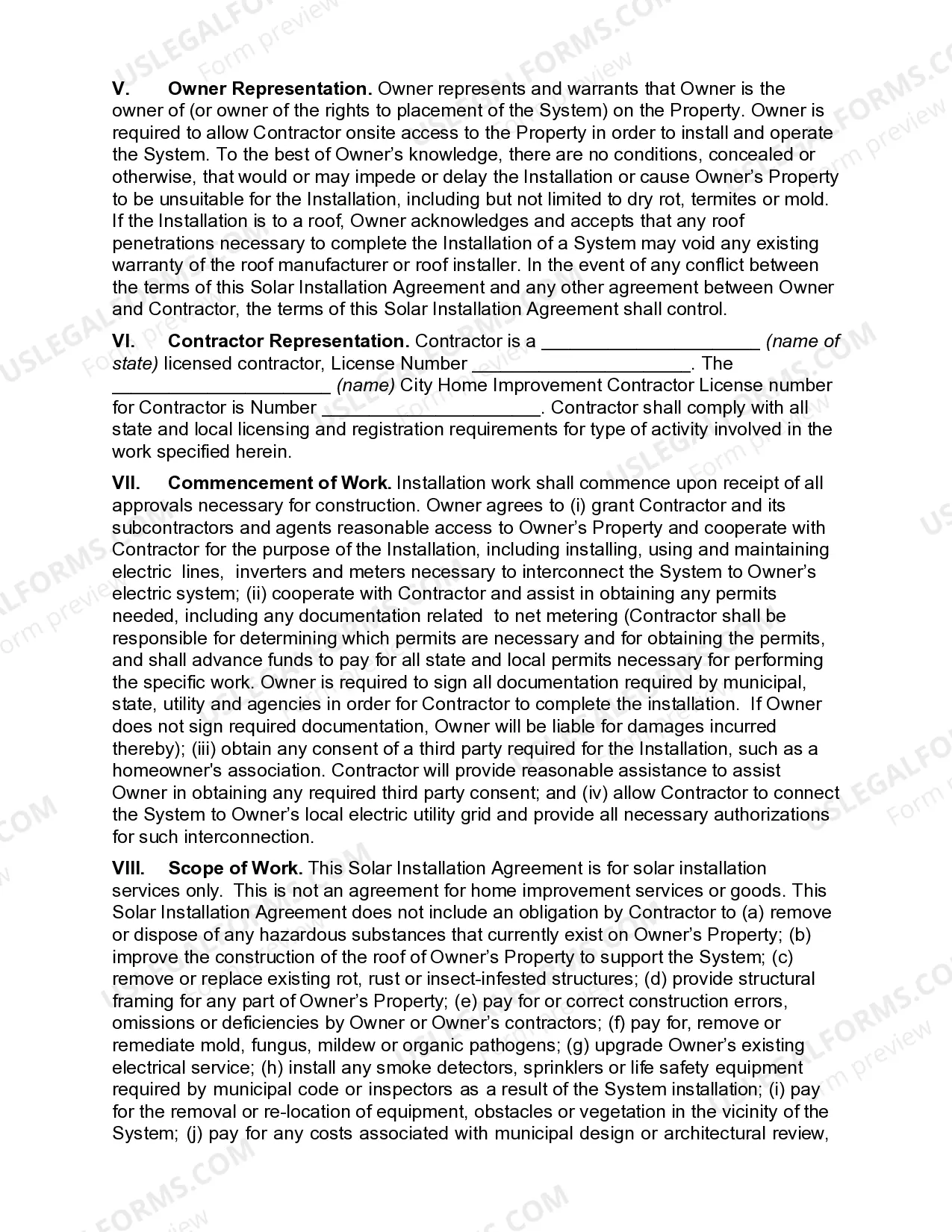
- Owner and contractor representations: Statements regarding ownership, authority, and compliance with laws.
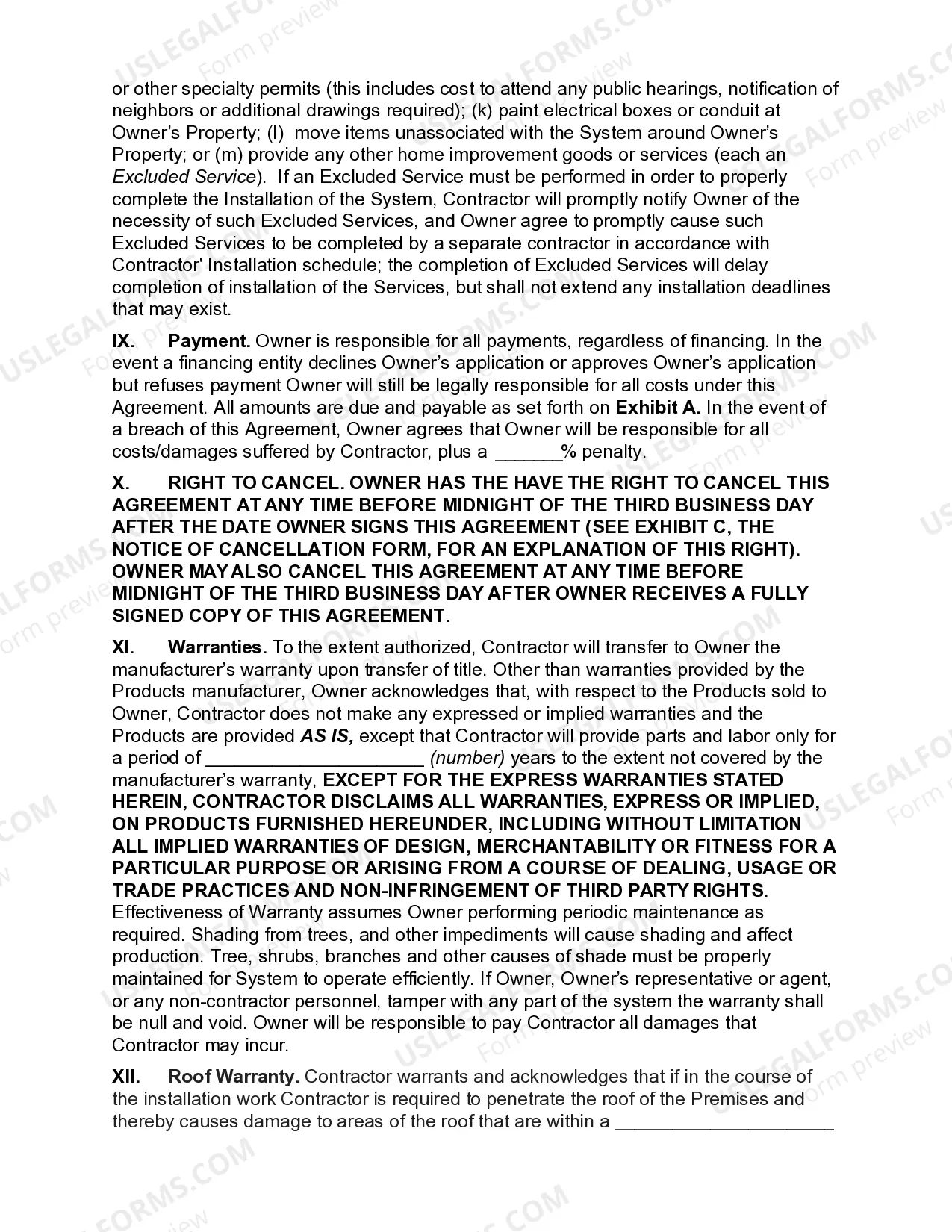
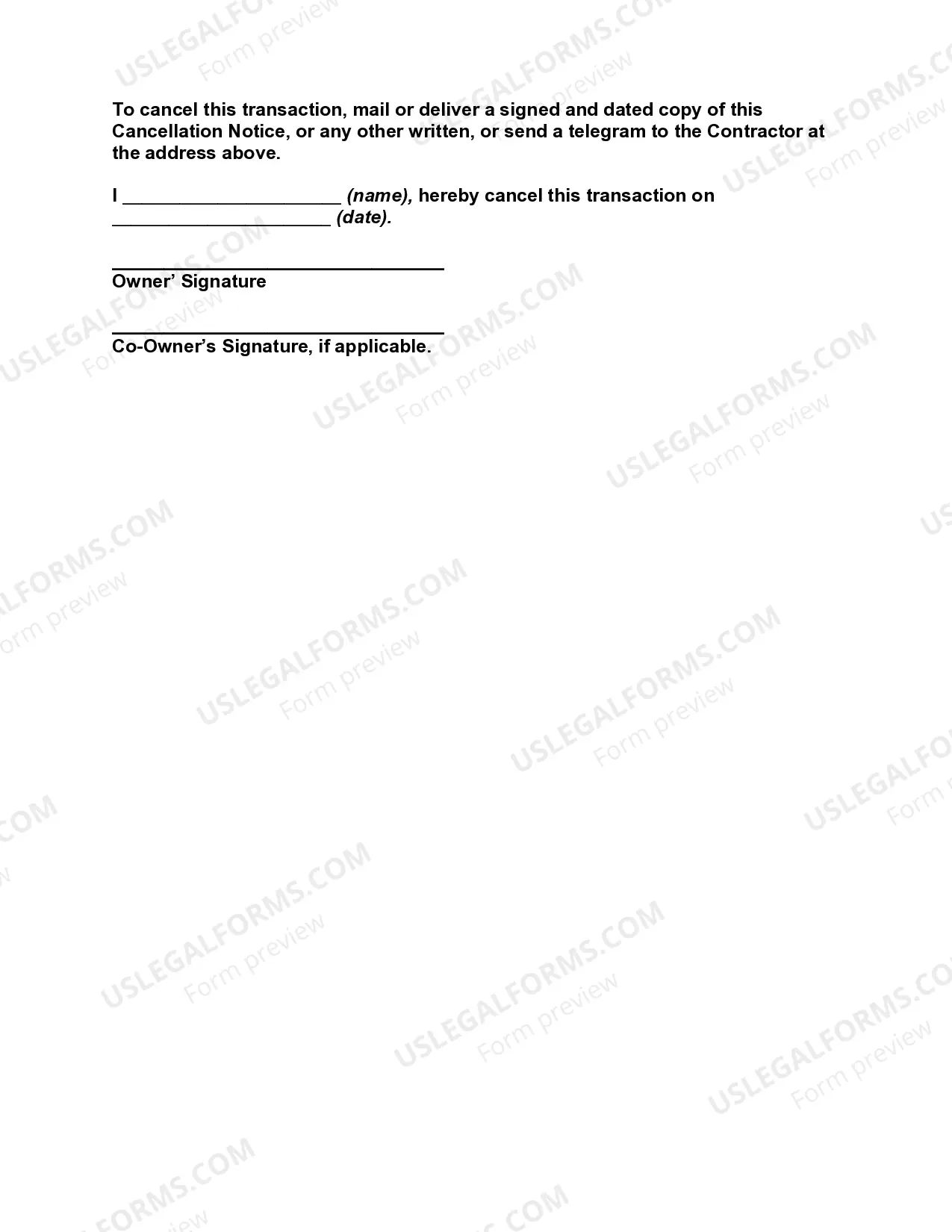
- Cancellation rights: Information about the owner's rights to cancel the agreement within a specified timeframe.
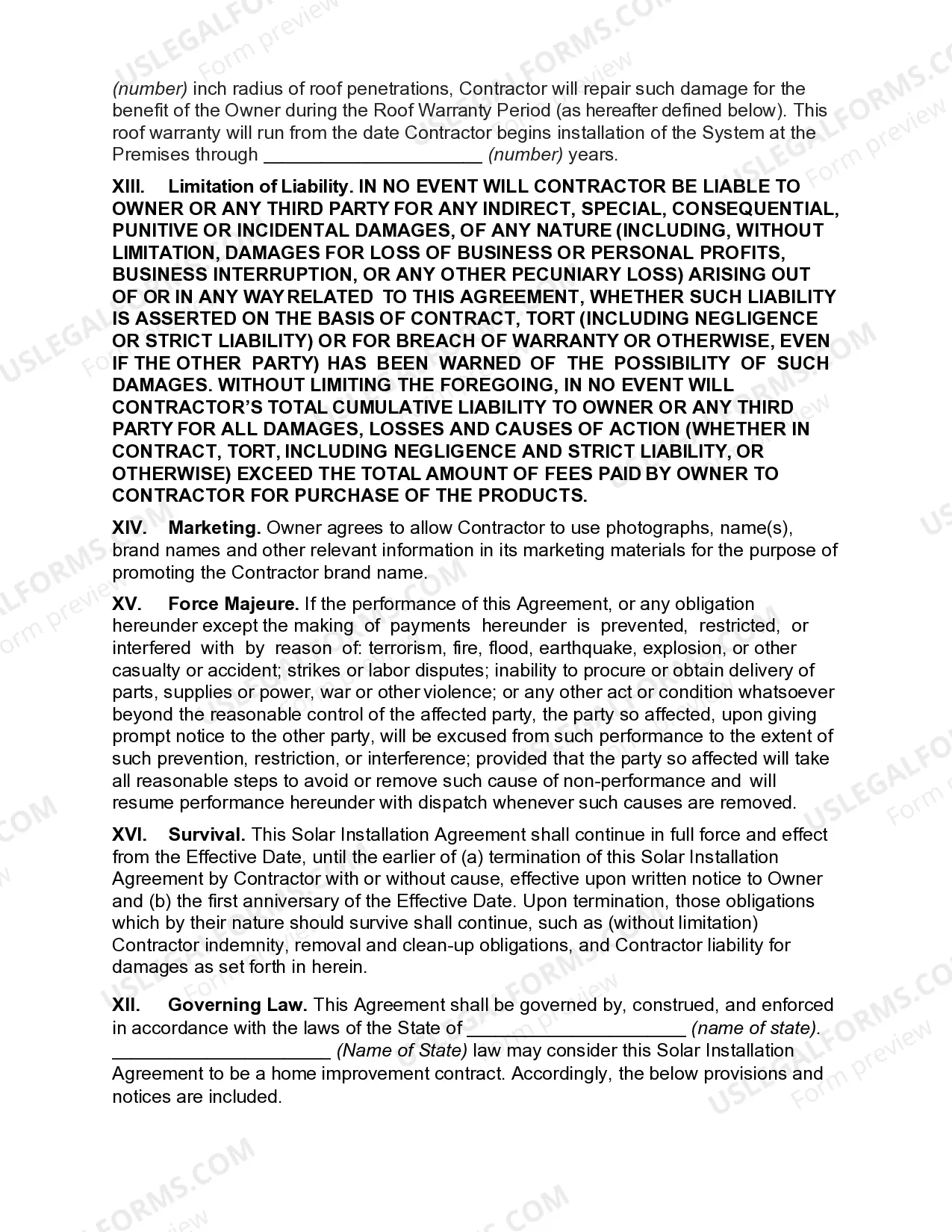
- Warranties and liabilities: Overview of warranties provided and limitations of liability for the contractor.


When to use this document
This form should be used when a property owner wants to hire a contractor for the installation of a solar panel system. It's applicable for both residential and commercial properties and is essential for laying out clear expectations and obligations related to the project, reducing the risk of disputes and misunderstandings.
Who needs this form
- Homeowners seeking to install solar panels on their property.
- Businesses looking to adopt solar energy solutions for their facilities.
- Solar contractors who provide installation services and need a formal agreement template.
Steps to complete this form
- Identify the parties: Enter the names and addresses of both the contractor and the owner.
- Specify the property: Provide the specific location where the solar panel system will be installed.
- Detail the installation project: Fill in the estimated costs, project size, and specifications for the system.
- Attach exhibits: Include necessary schedules, payment terms, and any additional agreements as Exhibits A, B, etc.
- Review cancellation rights: Ensure the owner is aware of their right to cancel the agreement within the specified timeframe.
- Sign the agreement: Both parties must sign and date the document to make it effective.
Does this document require notarization?
This form does not typically require notarization unless specified by local law. However, it is advisable to check specific state requirements concerning notarization of contracts related to solar installations.
Get your form ready online
Our built-in tools help you complete, sign, share, and store your documents in one place.
Make edits, fill in missing information, and update formatting in US Legal Forms—just like you would in MS Word.
Download a copy, print it, send it by email, or mail it via USPS—whatever works best for your next step.
Sign and collect signatures with our SignNow integration. Send to multiple recipients, set reminders, and more. Go Premium to unlock E-Sign.
If this form requires notarization, complete it online through a secure video call—no need to meet a notary in person or wait for an appointment.
We protect your documents and personal data by following strict security and privacy standards.

Make edits, fill in missing information, and update formatting in US Legal Forms—just like you would in MS Word.

Download a copy, print it, send it by email, or mail it via USPS—whatever works best for your next step.

Sign and collect signatures with our SignNow integration. Send to multiple recipients, set reminders, and more. Go Premium to unlock E-Sign.

If this form requires notarization, complete it online through a secure video call—no need to meet a notary in person or wait for an appointment.

We protect your documents and personal data by following strict security and privacy standards.
Common mistakes
- Failing to accurately fill out the property address or specifications of the installation.
- Not reviewing the payment schedule and understanding the total costs involved.
- Omitting to confirm that all local laws and ordinances are adhered to by the contractor.
- Not keeping a signed copy of the agreement for personal records.
Advantages of online completion
- Convenience of accessing and downloading the form from anywhere, at any time.
- Ability to customize the form easily to meet specific needs for various projects.
- Reliability of obtaining a professionally drafted legal form that meets compliance standards.
Legal use & context
- The Solar Installation Agreement serves as a formal record of the agreement between the contractor and the owner.
- Enforceability may depend on adherence to local regulations and the specific terms outlined in the agreement.
- Both parties should keep a copy of the signed agreement for reference in case of disputes or legal actions.
Main things to remember
- The Solar Installation Agreement is crucial for formalizing the installation process and protecting both parties.
- Clear understanding and completion of all sections ensures a smoother installation experience.
- A signed copy of the agreement should always be retained by both parties for future reference.
Looking for another form?
Form popularity
FAQ
The Solar Installation Agreement is a contract used to hire a solar installer to install a solar system on a property, outlining the parties’ relationship and the project’s basic terms. It typically covers who performs the work, the expected schedule, and the general expectations for quality and completion, helping reduce disputes during and after installation.
Termination rights in a Solar Installation Agreement vary, but many contracts allow either party to terminate with proper notice if the project cannot proceed. Returning deposits or paying for work performed and materials ordered are common implications. To avoid disputes, review any termination notice requirements, obligations for work already done, and whether refunds or credits are available before ending the contract.
A Power Purchase Agreement (PPA) is a contract where a third party owns the solar system and sells the electricity to the property owner. Downsides include less ownership control, potential long-term price obligations, and possible impact on resale or financing. The Solar Installation Agreement, by contrast, covers installing a system you own or directly contract for.
Disclosures or active contracts tied to the solar installation can affect a home sale. Buyers often review who owns the system, maintenance responsibilities, and any warranties or guarantees. If the Solar Installation Agreement creates ongoing obligations or restricts transfer, it may complicate financing or closing; consult with a real estate attorney and ensure clear transfer terms.
Even with solar, bills depend on actual production, energy use, and billing arrangements. The Solar Installation Agreement may not guarantee instant savings; if production falls short due to weather, shading, or aging equipment, bills may stay high. Review any performance expectations and ensure monitoring or warranty provisions address underperformance.
The 120% rule is a general electrical guideline used in solar interconnections: the sum of the main panel rating and the solar backfeed cannot exceed 120% of the busbar rating without upgrading service. This affects how the installation is sized and integrated; the Solar Installation Agreement should reflect any needed electrical work and compliance considerations.