Sample Letter for Correction to Deposition
Understanding this form
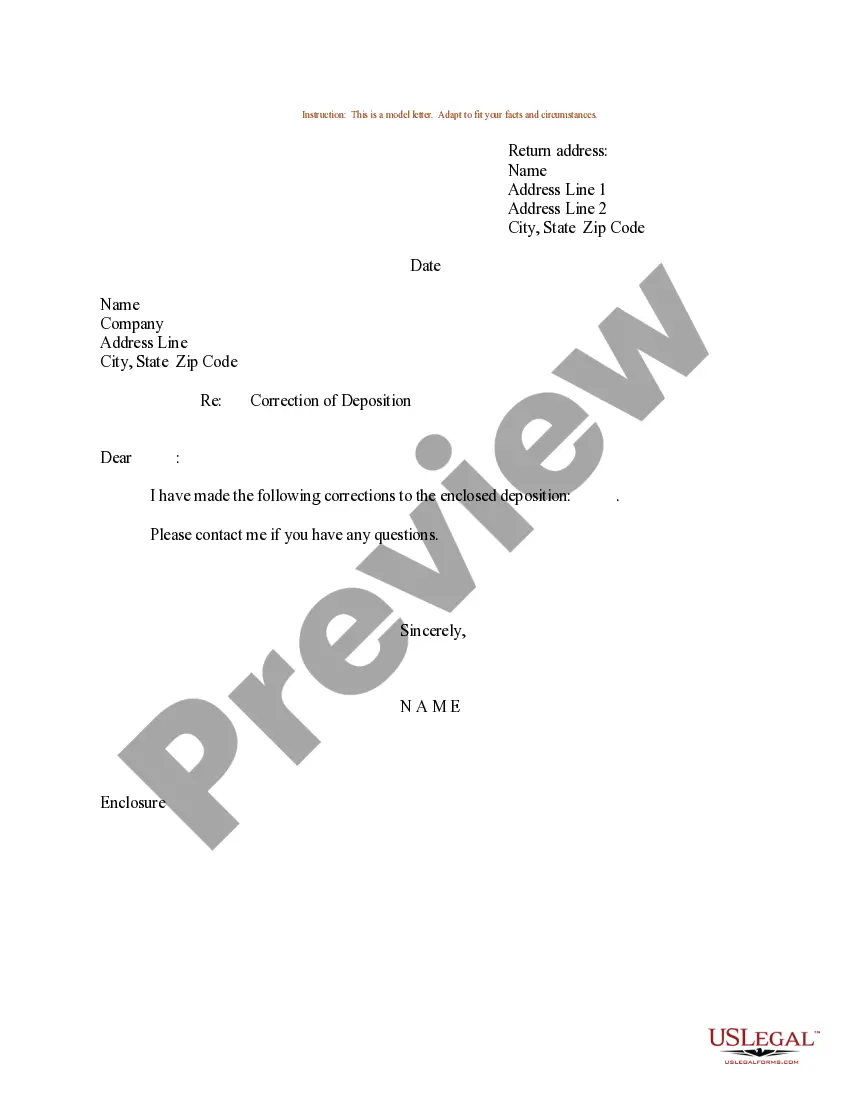
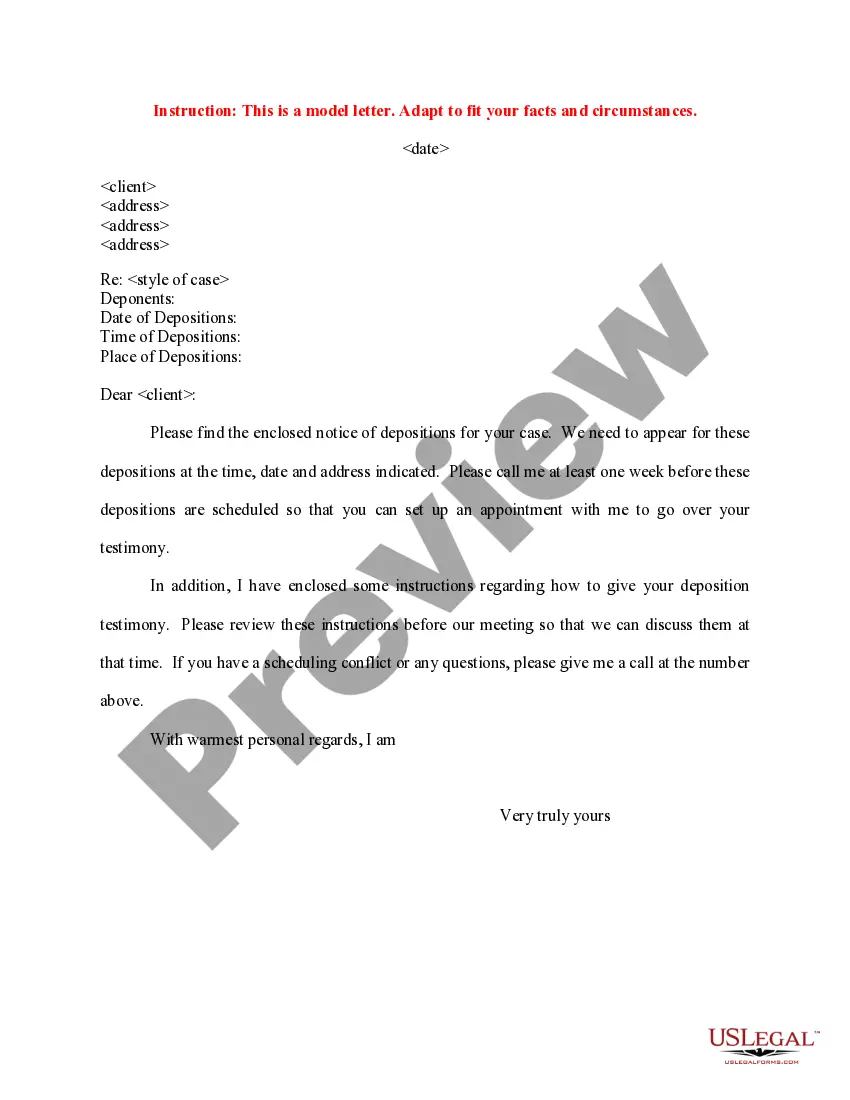
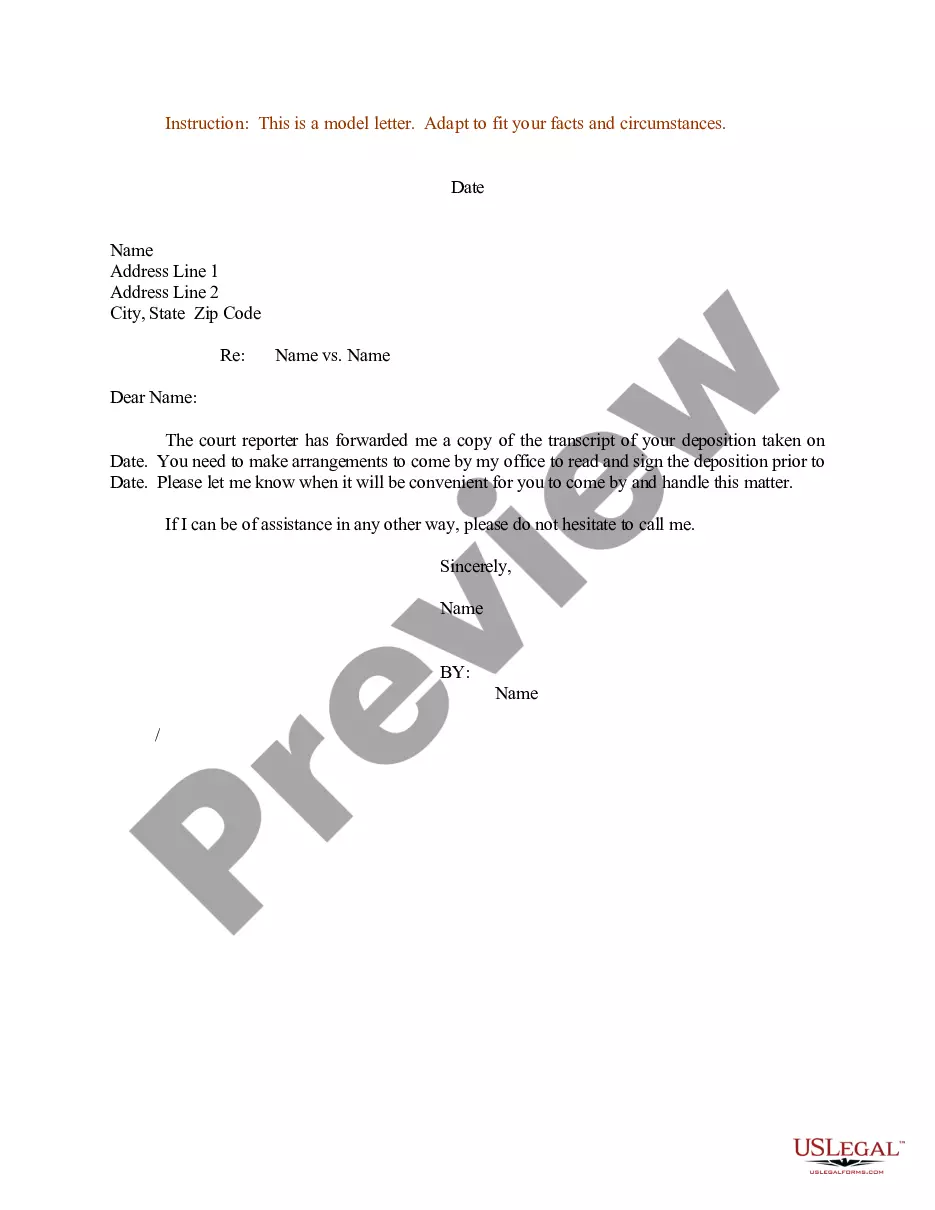
A Sample Letter for Correction to Deposition is a legal document used to formally request corrections to inaccuracies in a deposition transcript. This form provides a structured way to address errors, ensuring that the official record reflects the true testimony given during a deposition. It differs from other correction letters by specifically focusing on depositions, making it essential for individuals seeking to amend their testimonies.
Main sections of this form
- Return address including your name and contact details.
- Date of the letter for documentation purposes.
- Recipient details, specifying the name and company of the individual or entity receiving the letter.
- Subject line clearly stating "Correction of Deposition" to identify the purpose of the letter.
- Body of the letter outlining the specific corrections needed in the deposition.
Situations where this form applies
This form should be used when a party identifies errors in their deposition transcript and needs to formally request corrections. Common scenarios include discovering misspellings, incorrect statements, or omissions that could affect the outcome of a legal matter. Addressing these issues helps maintain the integrity of the official record.
Who can use this document
This form is intended for individuals who have given a deposition in a legal proceeding and need to correct the record. This includes witnesses, plaintiffs, and defendants involved in civil, criminal, or administrative cases.
Steps to complete this form
- Identify the return address, including your full name and contact information.
- Enter the date on which the letter is being drafted.
- Provide the recipient's name and address details to whom you are sending the letter.
- Clearly state the purpose of the letter in the subject line.
- In the body, specify the inaccuracies in the deposition and provide the correct information.
Is notarization required?
This form does not typically require notarization unless specified by local law. However, check jurisdictional requirements to ensure compliance with any specific regulations that may apply to correction requests in your area.
Get your form ready online
Our built-in tools help you complete, sign, share, and store your documents in one place.
Make edits, fill in missing information, and update formatting in US Legal Forms—just like you would in MS Word.
Download a copy, print it, send it by email, or mail it via USPS—whatever works best for your next step.
Sign and collect signatures with our SignNow integration. Send to multiple recipients, set reminders, and more. Go Premium to unlock E-Sign.
If this form requires notarization, complete it online through a secure video call—no need to meet a notary in person or wait for an appointment.
We protect your documents and personal data by following strict security and privacy standards.

Make edits, fill in missing information, and update formatting in US Legal Forms—just like you would in MS Word.

Download a copy, print it, send it by email, or mail it via USPS—whatever works best for your next step.

Sign and collect signatures with our SignNow integration. Send to multiple recipients, set reminders, and more. Go Premium to unlock E-Sign.

If this form requires notarization, complete it online through a secure video call—no need to meet a notary in person or wait for an appointment.

We protect your documents and personal data by following strict security and privacy standards.
Common mistakes to avoid
- Failing to include the correct recipient's information, which can lead to delays.
- Not specifying the errors in detail, making it hard for the court to understand the request.
- Omitting the date, which can cause confusion regarding the timing of the request.
Benefits of using this form online
- Convenience of editing the form to fit your specific needs before downloading it.
- Easy access to legal templates drafted by licensed attorneys.
- Time-saving as the form is readily available for immediate use and customization.
Quick recap
- The Sample Letter for Correction to Deposition is essential for amending deposition records.
- It helps maintain the accuracy of legal documentation, which is critical in legal proceedings.
- Make sure to detail the corrections clearly to avoid confusion in the official record.
Looking for another form?
Form popularity
FAQ
Yes! In most cases, you will be able to make corrections to the deposition transcript within the 30 days following its completion. If you realize your error during the actual deposition, you may be able to correct your mistake before the deposition is even complete.
Never Guess to Answer a Question. Avoid Any Absolute Statements. Do Not Use Profanity. Do Not Provide Additional Information. Avoid Making Light of the Situation. Never Paraphrase a Conversation. Do Not Argue or Act Aggressively. Avoid Providing Privileged Information.
A deposition is a legally binding interview in which a lawyer will ask you a series of questions.Although the deposition does not take place in the courtroom, it is still a very formal meeting. Participants answer their questions under an oath.
Lie. Begin an answer with Well to be honest with you2026. Guess and speculate. Engage in casual conversations with the court reporter and other people present in the depositions. Volunteer information. Don't review documents carefully. Lose your temper. Don't take breaks.
Federal Rule of Civil Procedure 30(e) permits a deponent to make changes to his or her prior sworn testimony through a written statement called an errata sheet.
In most cases, a deponent cannot refuse to answer a question at a deposition unless the answer would reveal privileged or irrelevant private information or the court previously ordered that the information cannot be revealed (source). However, there are certain types of questions that do not have to be answered.
You must answer questions honestly You will be under oath during a deposition. If you lie, you could be charged with the crime of perjury. Lying can also destroy your credibility as a witness.
An errata sheet is the document used in the procedure of reading and signing that transcript. What is the purpose of an Errata Sheet? The errata sheet is an attachment to the transcript that the deponent can use to make corrections to his or her testimony that they find was recorded erroneously.