Sample Letter regarding Deposition
Understanding this form
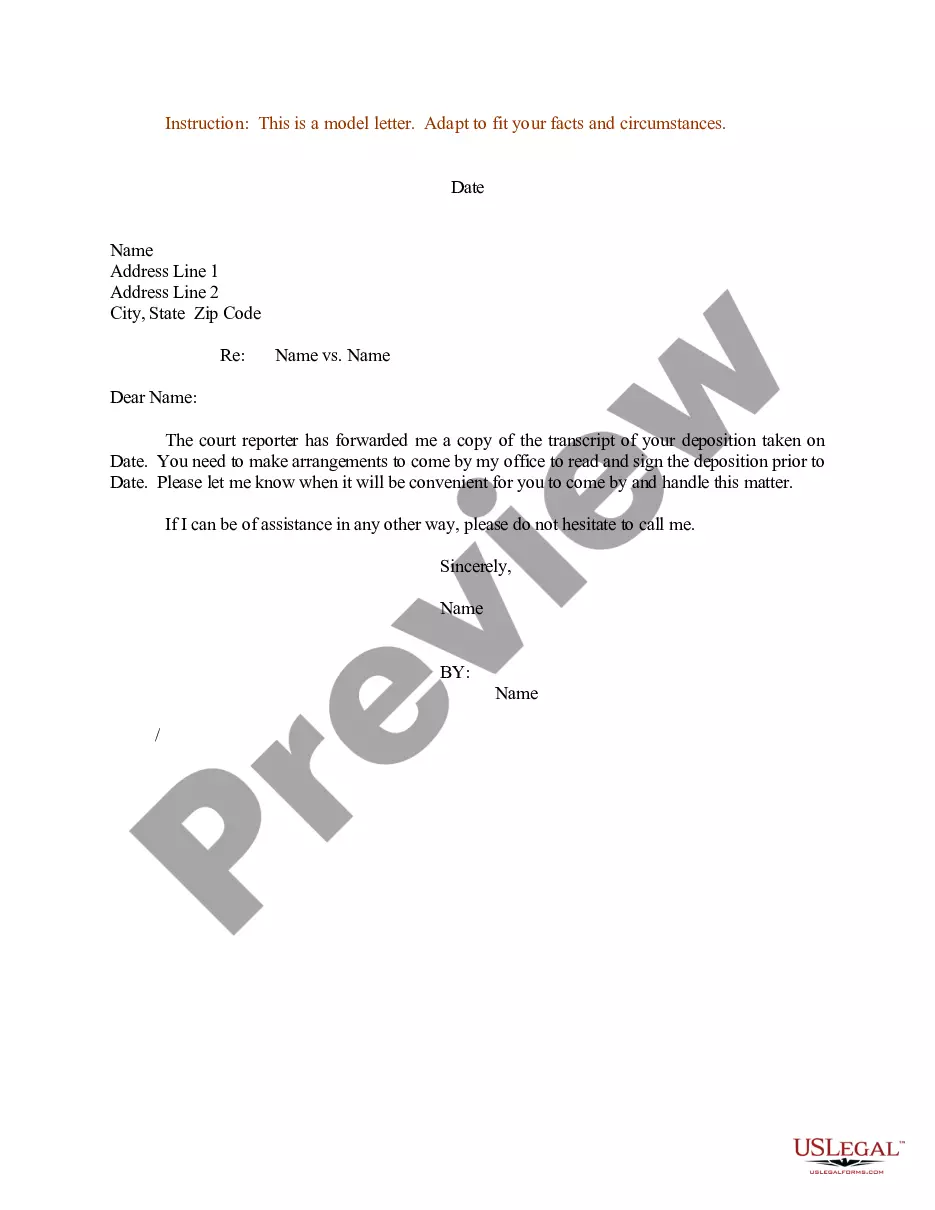
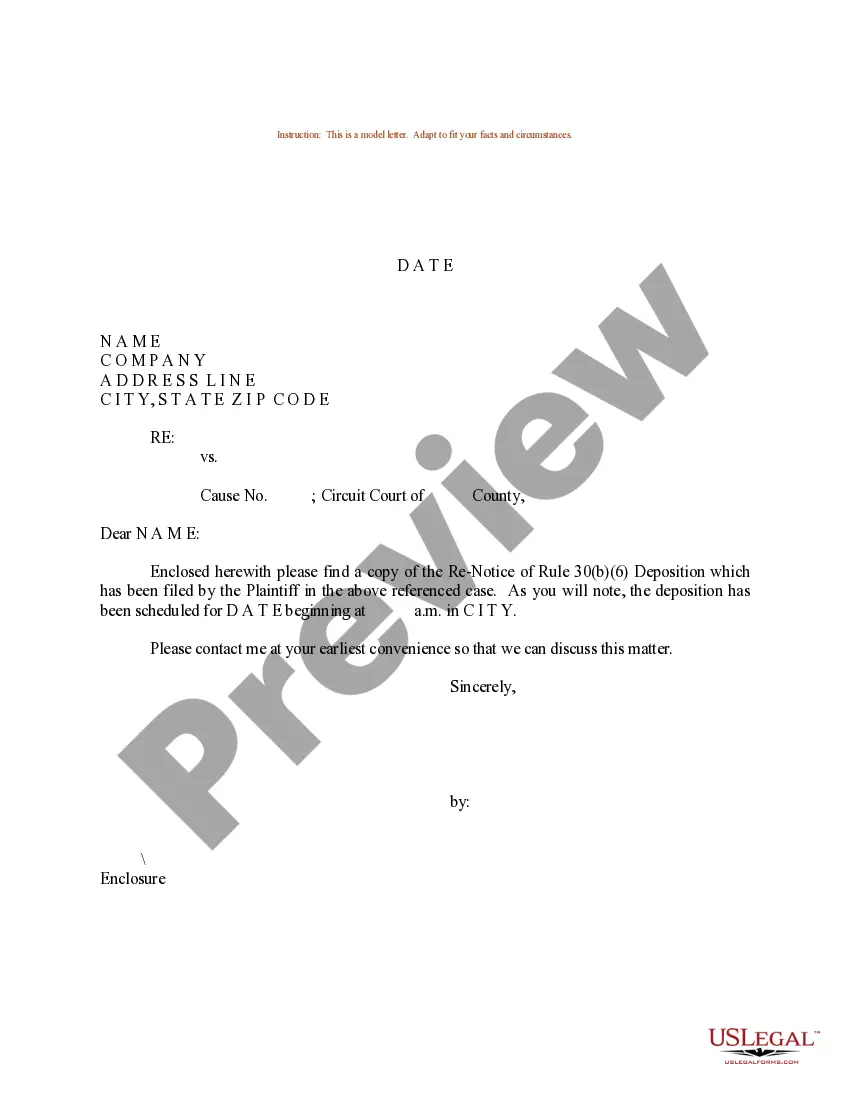
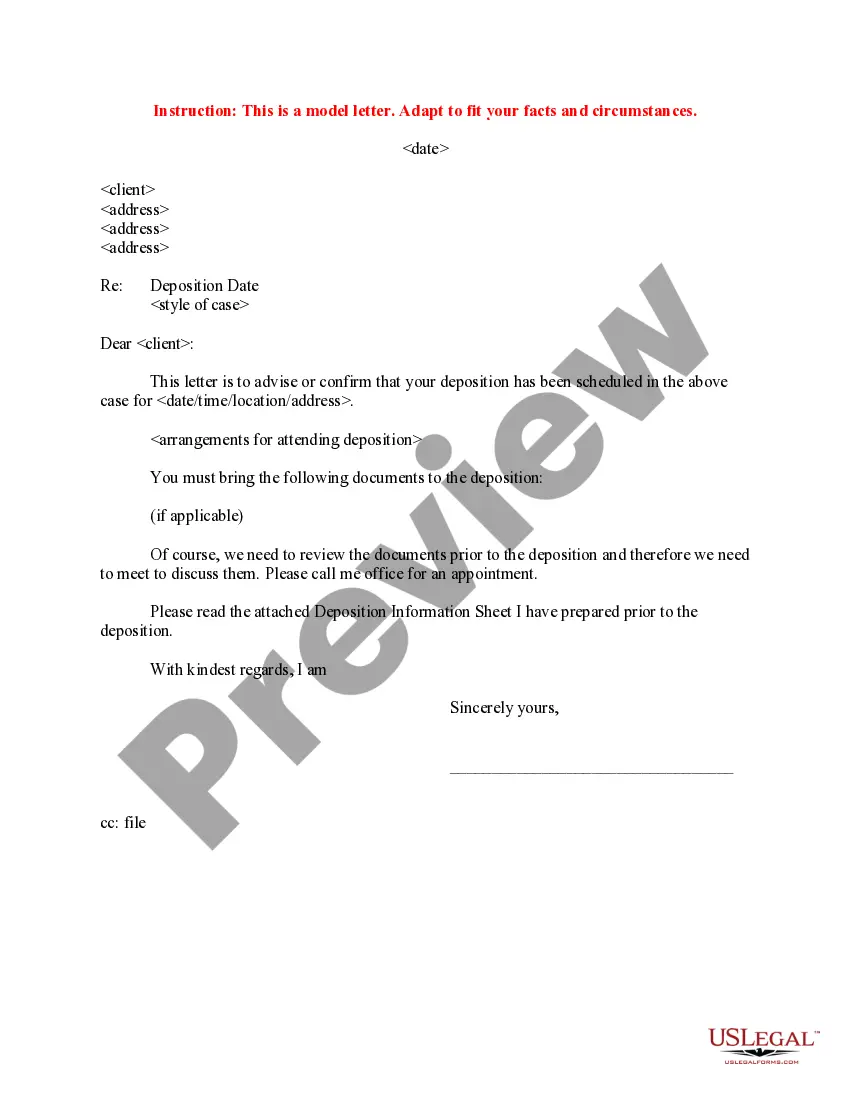
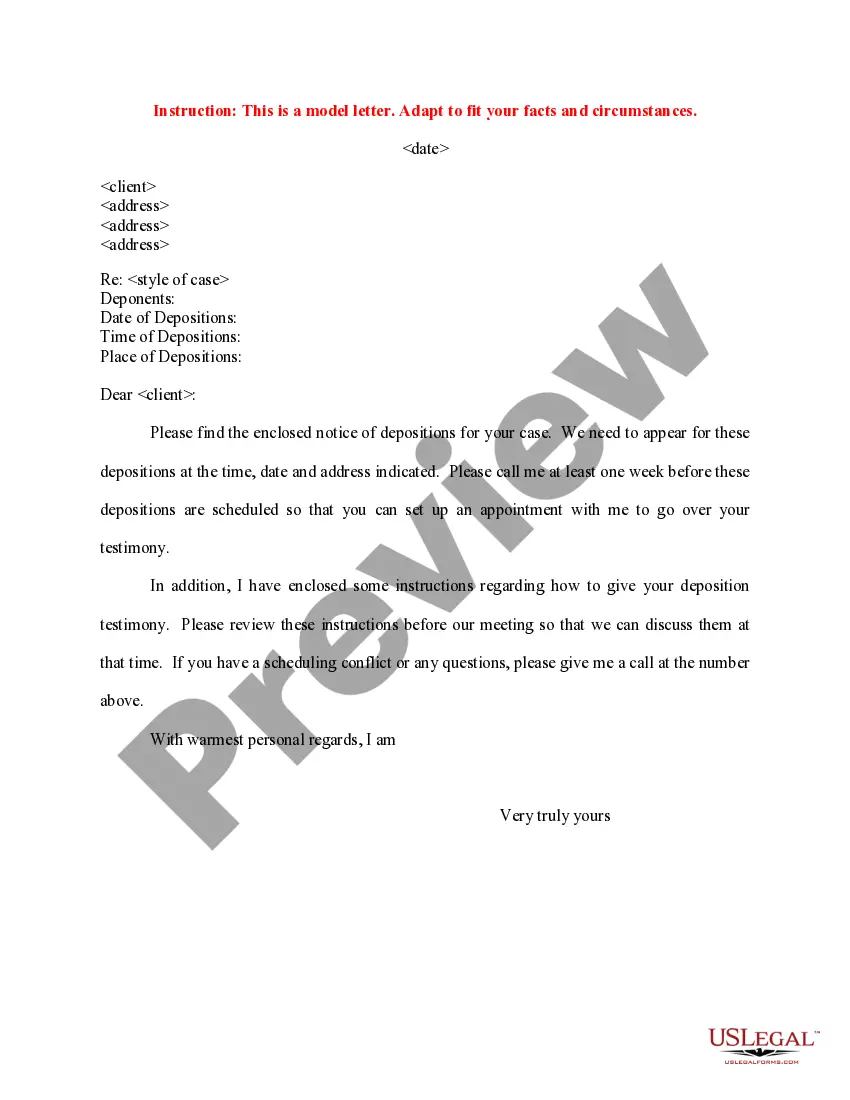
The Sample Letter regarding Deposition is a formal communication template intended to notify a party about the availability of their deposition transcript. This letter is a useful tool for legal professionals to ensure that parties involved in a case are informed about reading and signing their deposition. Unlike other legal correspondence, this sample letter specifically addresses the necessary steps for managing deposition transcripts within the legal process.
What’s included in this form
- Date: The date the letter is prepared.
- Recipient Information: Name and address of the individual receiving the letter.
- Subject Line: Identifies the case reference and parties involved.
- Salutation: A formal greeting to the recipient.
- Body: Details regarding the transcription of the deposition and arrangements for signature.
- Closing: The sign-off and signature of the author, which may include their position or title.

When to use this form
This form should be utilized when a party to a legal case needs to be notified about their deposition transcript and the requirement to read and sign it. It is particularly useful in pre-trial procedures, ensuring compliance with legal requirements and timelines for the deposition process.
Who should use this form
- Attorneys representing clients in legal proceedings.
- Legal assistants tasked with managing case documentation.
- Any party involved in a deposition who needs to confirm arrangements for signing the transcript.
Completing this form step by step
- Enter the date the letter is being prepared at the top of the document.
- Fill in the recipient's name and address details accurately.
- Specify the subject line outlining the case and the parties involved.
- Draft a clear body message indicating the need for the recipient to read and sign their deposition transcript.
- Include your name and title in the closing section of the letter.
Does this document require notarization?
This form does not typically require notarization unless specified by local law. It serves as a formal notification and can be used without notarization in standard legal practices.
Get your form ready online
Our built-in tools help you complete, sign, share, and store your documents in one place.
Make edits, fill in missing information, and update formatting in US Legal Forms—just like you would in MS Word.
Download a copy, print it, send it by email, or mail it via USPS—whatever works best for your next step.
Sign and collect signatures with our SignNow integration. Send to multiple recipients, set reminders, and more. Go Premium to unlock E-Sign.
If this form requires notarization, complete it online through a secure video call—no need to meet a notary in person or wait for an appointment.
We protect your documents and personal data by following strict security and privacy standards.

Make edits, fill in missing information, and update formatting in US Legal Forms—just like you would in MS Word.

Download a copy, print it, send it by email, or mail it via USPS—whatever works best for your next step.

Sign and collect signatures with our SignNow integration. Send to multiple recipients, set reminders, and more. Go Premium to unlock E-Sign.

If this form requires notarization, complete it online through a secure video call—no need to meet a notary in person or wait for an appointment.

We protect your documents and personal data by following strict security and privacy standards.
Common mistakes
- Failing to include the correct date or recipient information.
- Neglecting to specify the required action regarding the transcript.
- Inadequate explanation of deadlines for reading and signing the deposition.
Benefits of using this form online
- Convenience: Download and customize your letter at your convenience.
- Editability: Modify the template to meet specific case needs easily.
- Reliability: Use a legally compliant template drafted by licensed attorneys.
Legal use & context
- The letter serves as a crucial communication tool to meet legal obligations.
- Ensures that the recipient is informed of their rights and duties regarding the deposition.
What to keep in mind
- The Sample Letter regarding Deposition is essential for managing deposition transcript processes.
- It includes specific components necessary for effective legal communication.
- Utilizing this form online can streamline your legal documentation efforts.
Looking for another form?
Form popularity
FAQ
Lie. Begin an answer with Well to be honest with you2026. Guess and speculate. Engage in casual conversations with the court reporter and other people present in the depositions. Volunteer information. Don't review documents carefully. Lose your temper. Don't take breaks.
In most cases, a deponent cannot refuse to answer a question at a deposition unless the answer would reveal privileged or irrelevant private information or the court previously ordered that the information cannot be revealed (source). However, there are certain types of questions that do not have to be answered.
Skip three lines and enter "Deposition of name of person being questioned." Skip one line and enter "Court Reporter:" justified to the left and the name, address and phone number of the court reporter justified to the right. Set up your word processor to number lines and pages beginning on the second page.
How did you prepare for this deposition? Have you spoken to anyone other than your counsel about this case? What, specifically was discussed? What documents pertaining to the case have you reviewed? Did you meet with counsel for the other side prior to this deposition?
Answer Only the Question Presented.No question, no answer. A deposition is not a conversation. In this respect, be on guard when listening to the questions do not let the examiner put words in your mouth and do not answer a question that includes incorrect facts or statements of which you have no knowledge.
A deposition is the taking of an oral statement of a witness under oath, before trial.A deposition does not take place in court. Instead, it usually takes place at an attorney's office. The attorney will ask the witness, or deponent, a series of questions about facts related to the lawsuit.
Don't guess, speculate, or play a hunch. A deposition is sworn testimony; only say what you know to be true. On the other hand, don't use this tip to avoid giving testimony that you know. If you don't understand a question, ask for the questioner to rephrase it.
Private information. You have a right to refuse any questions about a person's health, sexuality, or religious beliefs (including your own). Privileged information. Irrelevant information.
Lie. Begin an answer with Well to be honest with you2026. Guess and speculate. Engage in casual conversations with the court reporter and other people present in the depositions. Volunteer information. Don't review documents carefully. Lose your temper. Don't take breaks.