California Housing Benefit Agreement
Overview of this form
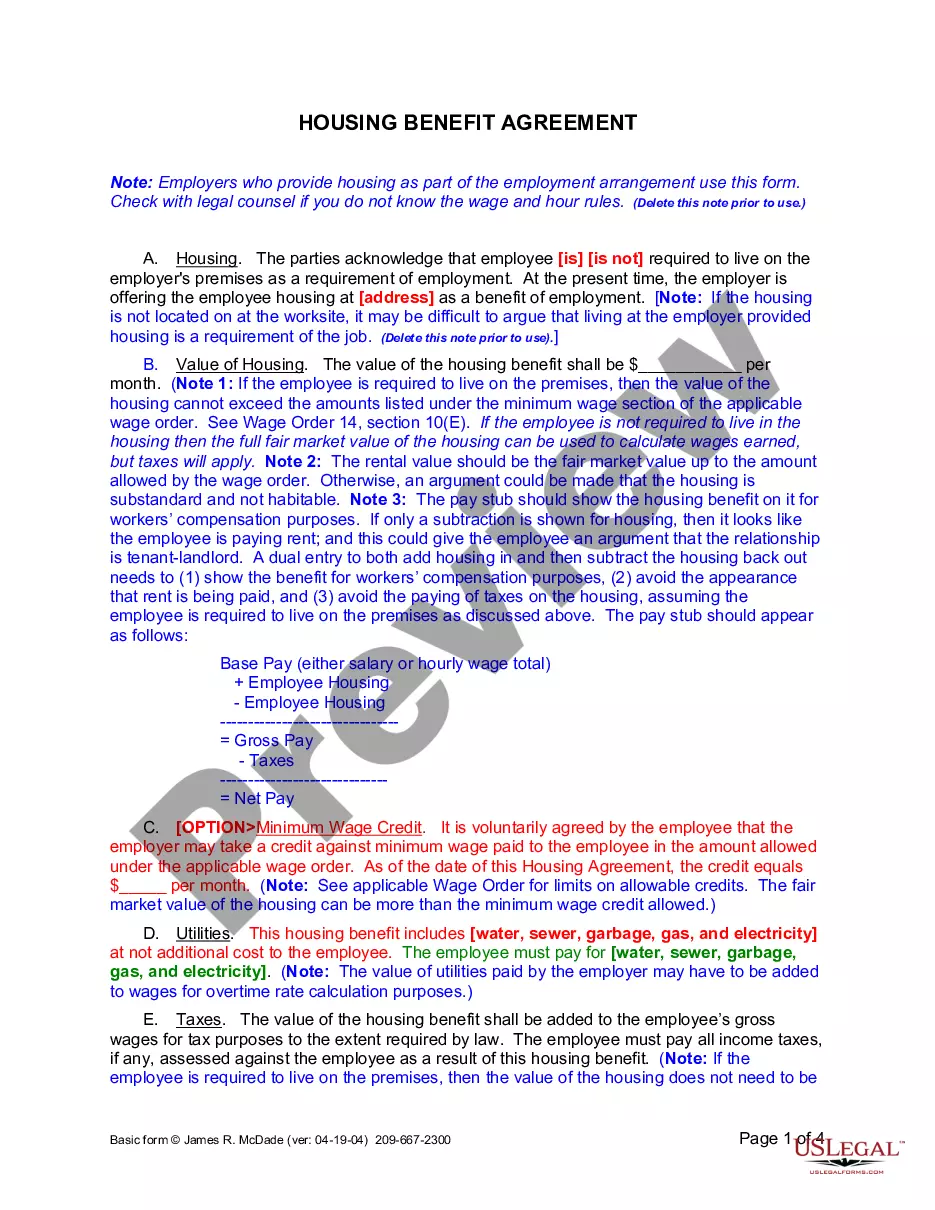
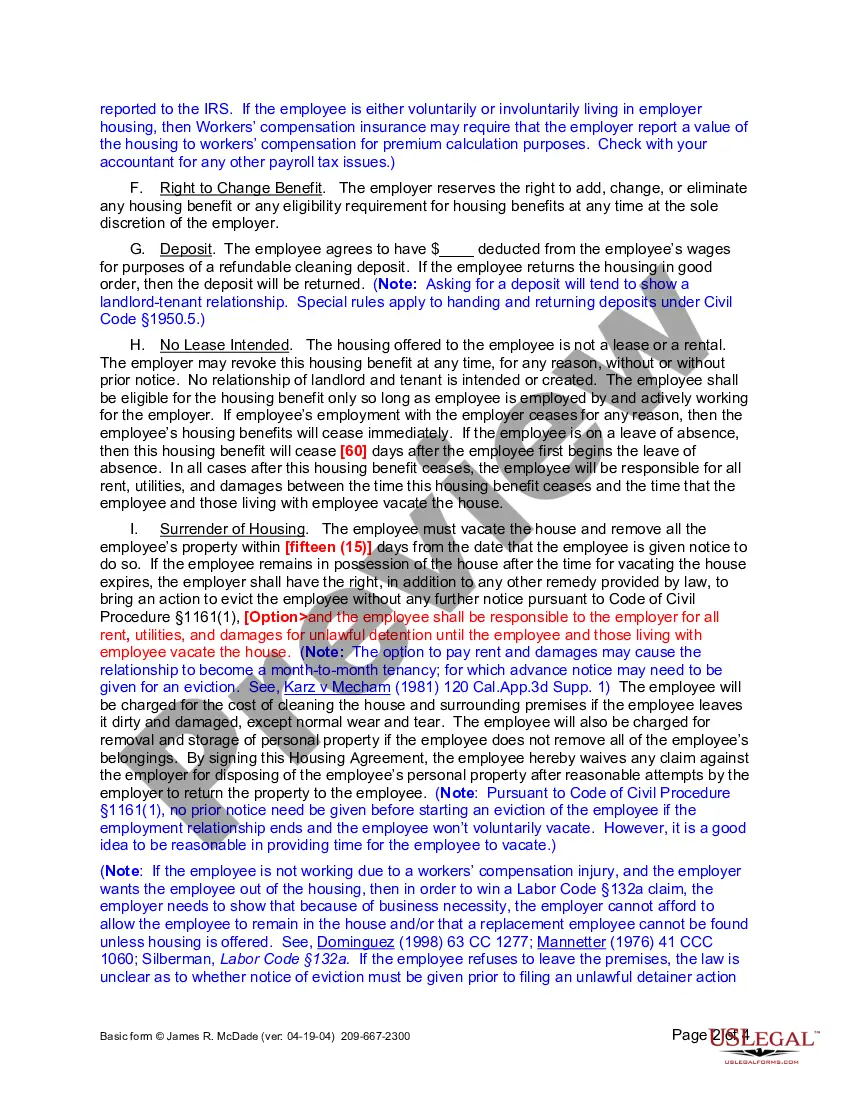
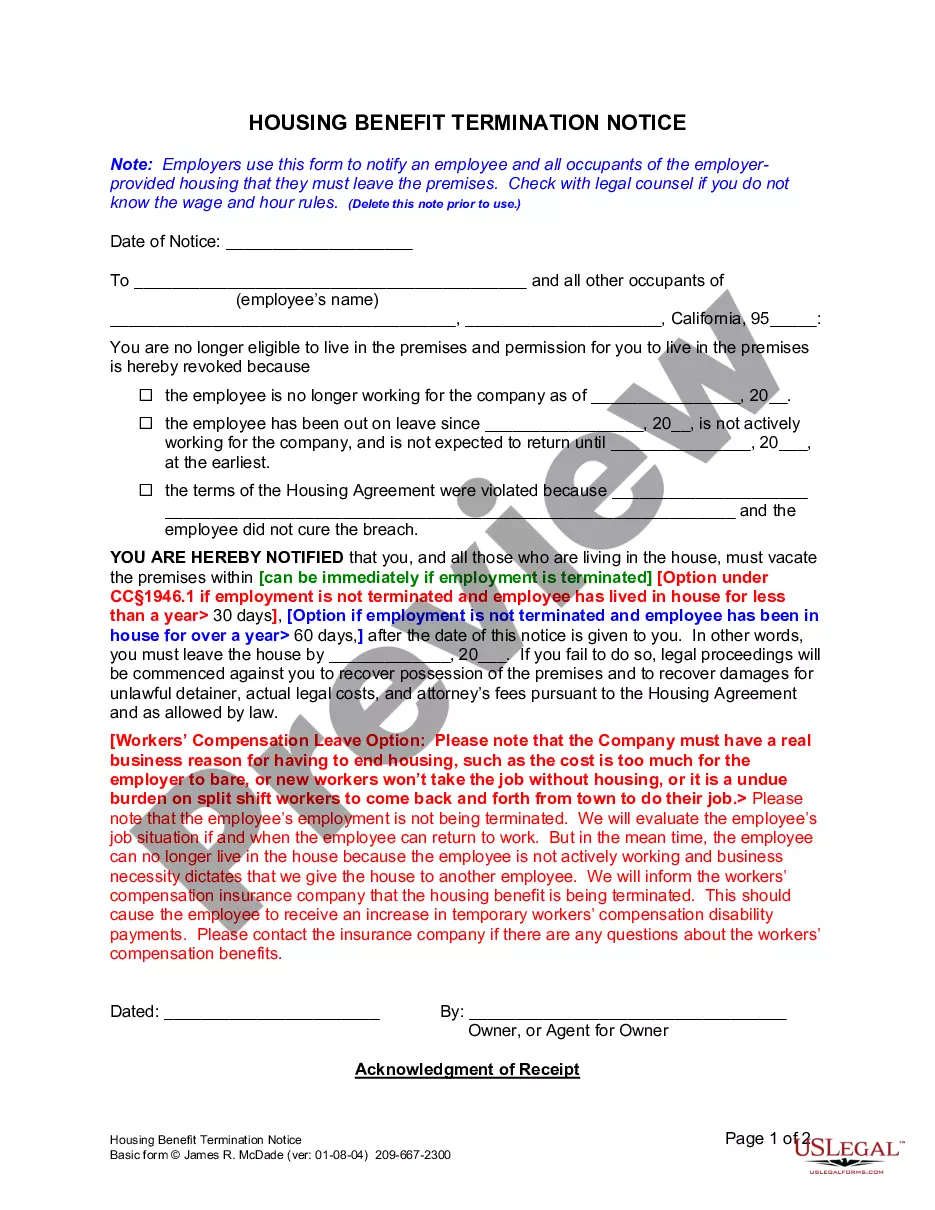
The Housing Benefit Agreement is a legal document used by employers who provide housing as part of an employment arrangement. This form addresses the value of the housing benefit for tax purposes and outlines any utilities that the employee is responsible for. It differs from rental agreements by clarifying that the housing is not a lease and can be revoked by the employer at any time.
What’s included in this form
- Housing acknowledgment: Specifies whether the employee is required to live in employer-provided housing.
- Value of housing: Indicates the monthly value of the housing benefit.
- Utilities details: Outlines which utilities are included and which must be paid by the employee.
- Deposit information: Covers any refundable cleaning deposits required from the employee.
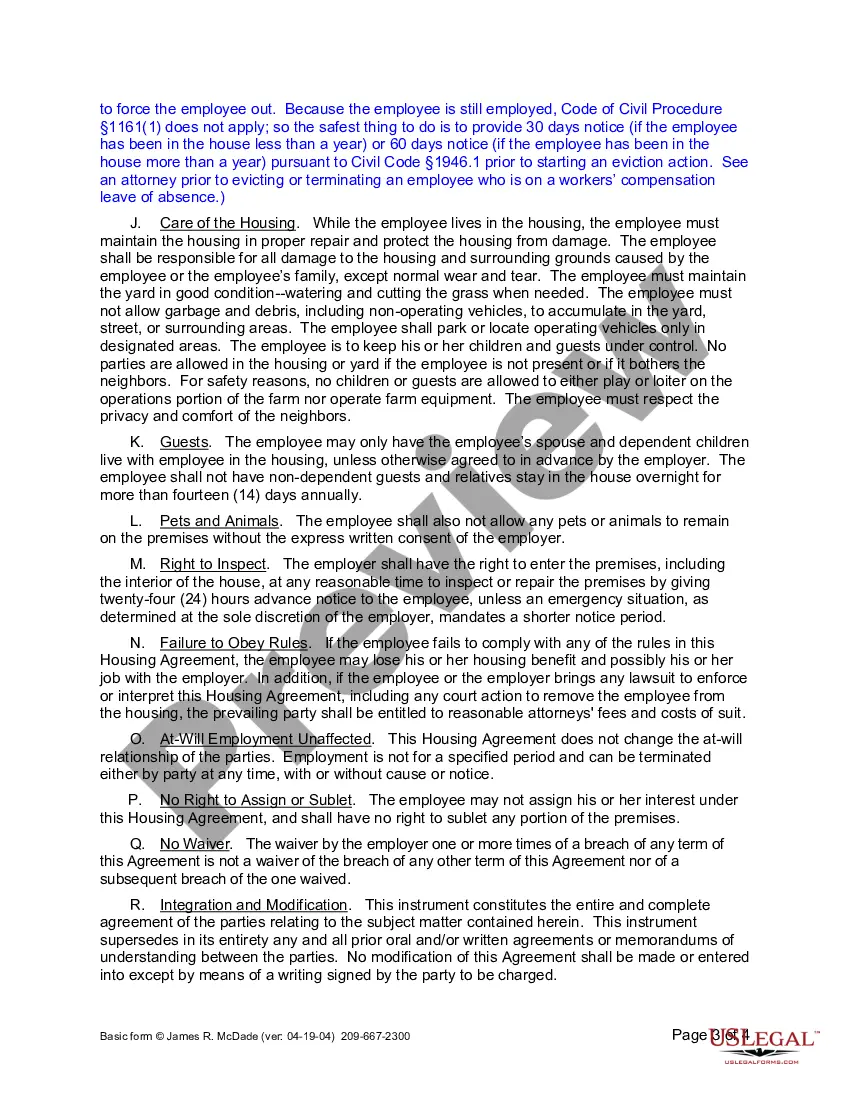
- Rules for occupancy: Details expectations regarding the maintenance of the property and guest allowances.
When to use this document
This form should be used when an employer provides housing as part of the employeeâs compensation package. It is particularly relevant when the housing is intended to serve as a benefit, especially in industries such as agriculture or hospitality where employee housing is common. The agreement helps clarify the terms and conditions to avoid any legal disputes related to employment and housing arrangements.
Who should use this form
This form is intended for:
- Employers who provide housing as a benefit to their employees.
- Employees who receive housing as part of their employment contract.
- Employers needing to clarify tax implications and utility responsibility for housing provided.
Steps to complete this form
- Identify the parties: Enter the names and addresses of both the employer and the employee.
- Specify the housing: Provide the address of the employer-provided housing.
- Enter the value of the housing: Complete the section detailing the monthly value of the housing benefit.
- Detail utilities: Indicate which utilities are included in the housing benefit.
- Sign and date: Ensure both parties sign and date the agreement to make it legally binding.
Does this document require notarization?
In most cases, this form does not require notarization. However, some jurisdictions or signing circumstances might. US Legal Forms offers online notarization powered by Notarize, accessible 24/7 for a quick, remote process.
Get your form ready online
Our built-in tools help you complete, sign, share, and store your documents in one place.
Make edits, fill in missing information, and update formatting in US Legal Forms—just like you would in MS Word.
Download a copy, print it, send it by email, or mail it via USPS—whatever works best for your next step.
Sign and collect signatures with our SignNow integration. Send to multiple recipients, set reminders, and more. Go Premium to unlock E-Sign.
If this form requires notarization, complete it online through a secure video call—no need to meet a notary in person or wait for an appointment.
We protect your documents and personal data by following strict security and privacy standards.

Make edits, fill in missing information, and update formatting in US Legal Forms—just like you would in MS Word.

Download a copy, print it, send it by email, or mail it via USPS—whatever works best for your next step.

Sign and collect signatures with our SignNow integration. Send to multiple recipients, set reminders, and more. Go Premium to unlock E-Sign.

If this form requires notarization, complete it online through a secure video call—no need to meet a notary in person or wait for an appointment.

We protect your documents and personal data by following strict security and privacy standards.
Mistakes to watch out for
- Not specifying the value of the housing accurately.
- Failing to clarify the utilities included in the benefit.
- Forgetting to remove notes or instructions from the template before use.
- Not consulting with legal counsel regarding applicable state wage and hour laws.
Benefits of using this form online
- Convenience: Access and complete the form from anywhere, anytime.
- Editability: Easily customize the form to fit specific employment arrangements.
- Reliability: Use professionally drafted templates created by licensed attorneys.
Legal use & context
- The agreement clarifies the intent that provided housing is not a rental lease.
- It helps avoid misunderstandings about employee responsibilities and rights regarding the housing.
- Employers can reinforce that housing is a benefit tied to employment status.
Main things to remember
- The Housing Benefit Agreement helps define the employer-employee relationship regarding provided housing.
- Clear terms regarding housing value and utility responsibilities are essential to avoid disputes.
- This agreement should be maintained and updated as employment situations change.
Looking for another form?


Form popularity
FAQ
Several factors may disqualify an applicant from receiving Section 8 housing assistance in California. These can include prior evictions, a criminal record, or income that exceeds the specified limits. Being aware of these disqualifying factors can help you navigate the California Housing Benefit Agreement more effectively and increase your eligibility.
Acquiring a housing voucher can be competitive, as many people apply for limited resources. You may face challenges based on your local housing market and the number of applicants. However, understanding the requirements and the application process can increase your chances of success, especially when leveraging the California Housing Benefit Agreement.
The HUD 811 program in California provides housing assistance specifically for individuals with disabilities. This program helps participants live independently by offering rental assistance and supportive services. If you are exploring options under the California Housing Benefit Agreement, the HUD 811 program can be a valuable resource for those who qualify.
The time it takes to receive a housing voucher in California can vary depending on multiple factors, including demand and availability of funding. On average, applicants may wait several months, but in some areas, the process can take over a year. Staying informed about the application process is crucial, and utilizing resources related to the California Housing Benefit Agreement can expedite your journey.
Housing Assistance Payments (HAP) and Section 8 are closely related but not exactly the same. HAP refers to the actual payments made to landlords on behalf of eligible tenants, while Section 8 is the larger program that provides rental assistance. Both aim to make housing more affordable for low-income families in California, thus boosting the effectiveness of the California Housing Benefit Agreement.
Yes, California has standard rental agreements that serve as templates for landlords and tenants. These agreements outline the terms and conditions of the rental, including rent payment, security deposit, and maintenance responsibilities. Utilizing a standard rental agreement can help both parties avoid misunderstandings. For more detailed guidance, consider checking out the California Housing Benefit Agreement on platforms like uslegalforms.
Writing a housing agreement involves clearly defining the rental terms and obligations of both landlords and tenants. Include essential details such as rent amount, payment due dates, and maintenance responsibilities. US Legal Forms offers templates that help streamline this process, ensuring compliance with the California Housing Benefit Agreement.
HAP is significant because it helps create a safety net for both landlords and tenants in California's housing market. By offering financial support amidst rising housing costs, the California Housing Benefit Agreement fosters healthier communities. The availability of HAP encourages landlords to rent to low-income families, thus reducing homelessness.
The purpose of HAP is to provide financial assistance to landlords for renting to low-income tenants while ensuring affordable housing availability. Under the California Housing Benefit Agreement, HAP plays a crucial role in reducing housing costs for families. This assistance fosters community stability and promotes equal access to housing.
Filling out a California residential lease agreement involves allocating key information such as the names of tenants and landlords, property address, and lease duration. Ensure you include terms related to rental payments, security deposits, and maintenance responsibilities. You can utilize the US Legal Forms platform to access compliant templates that simplify this process.