Expert Opinion Testimony
Overview of this form
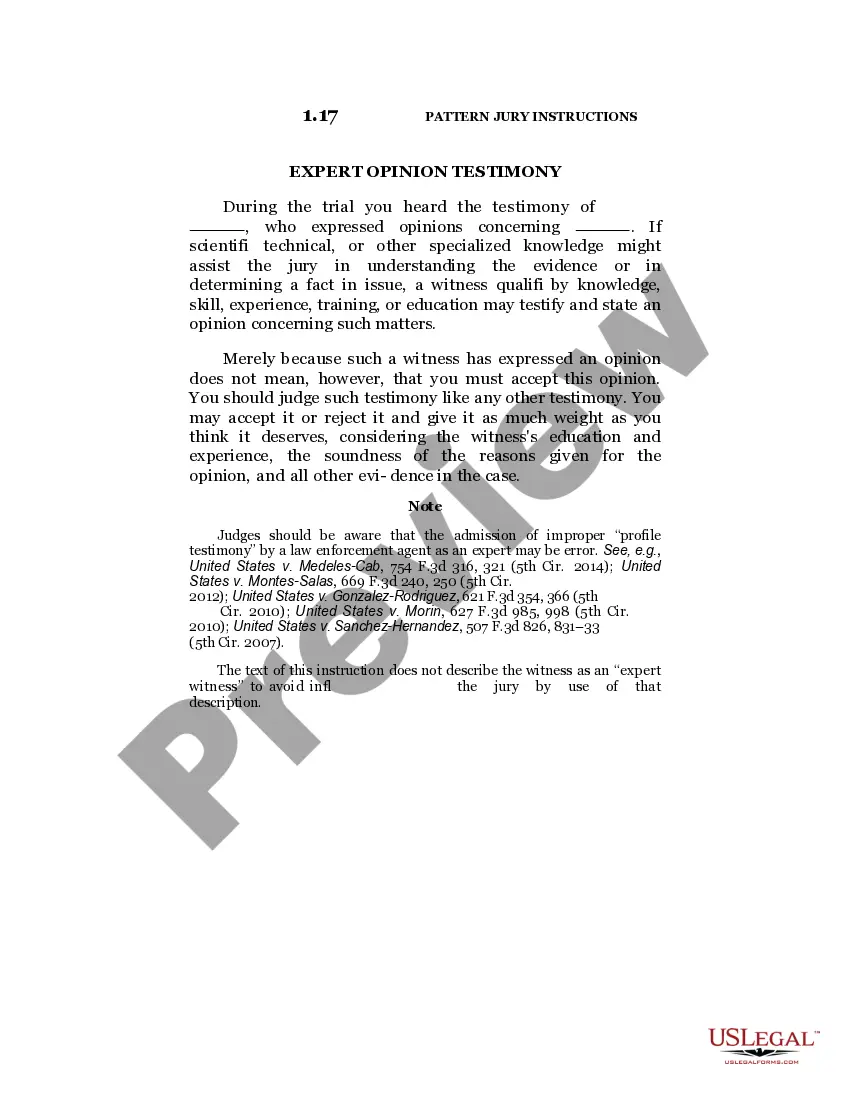
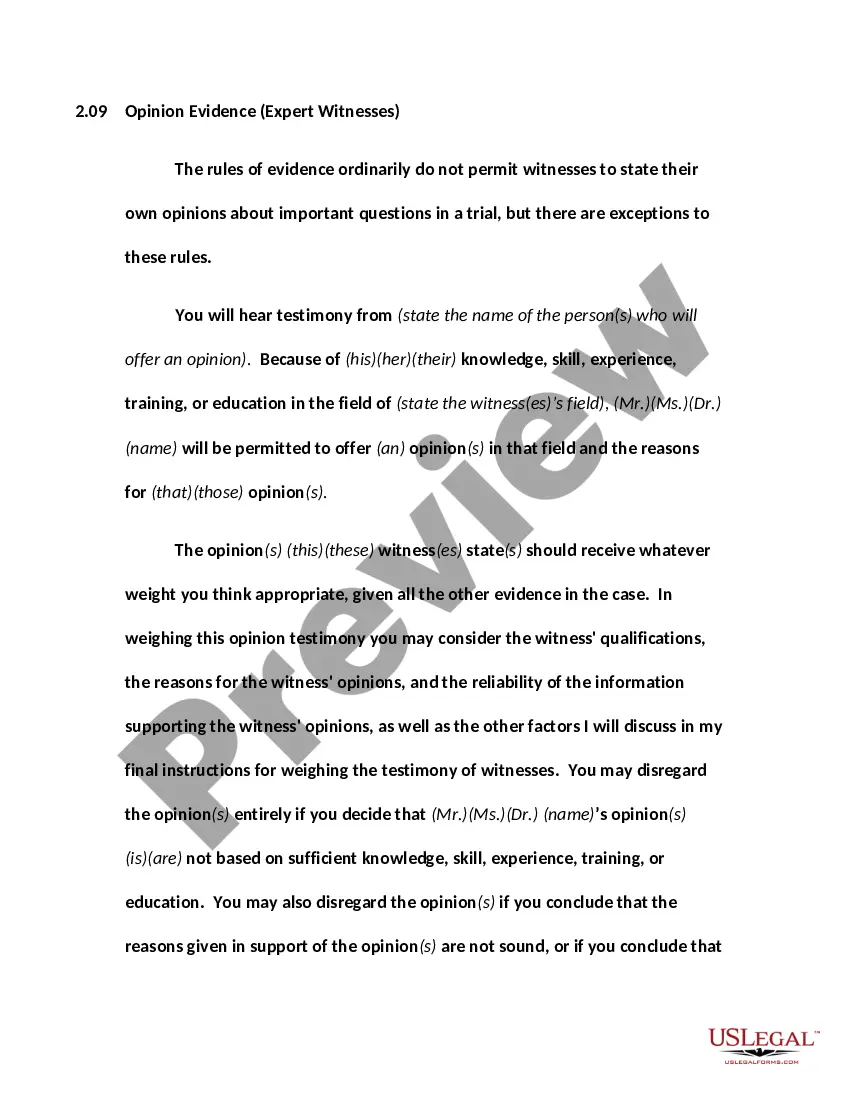
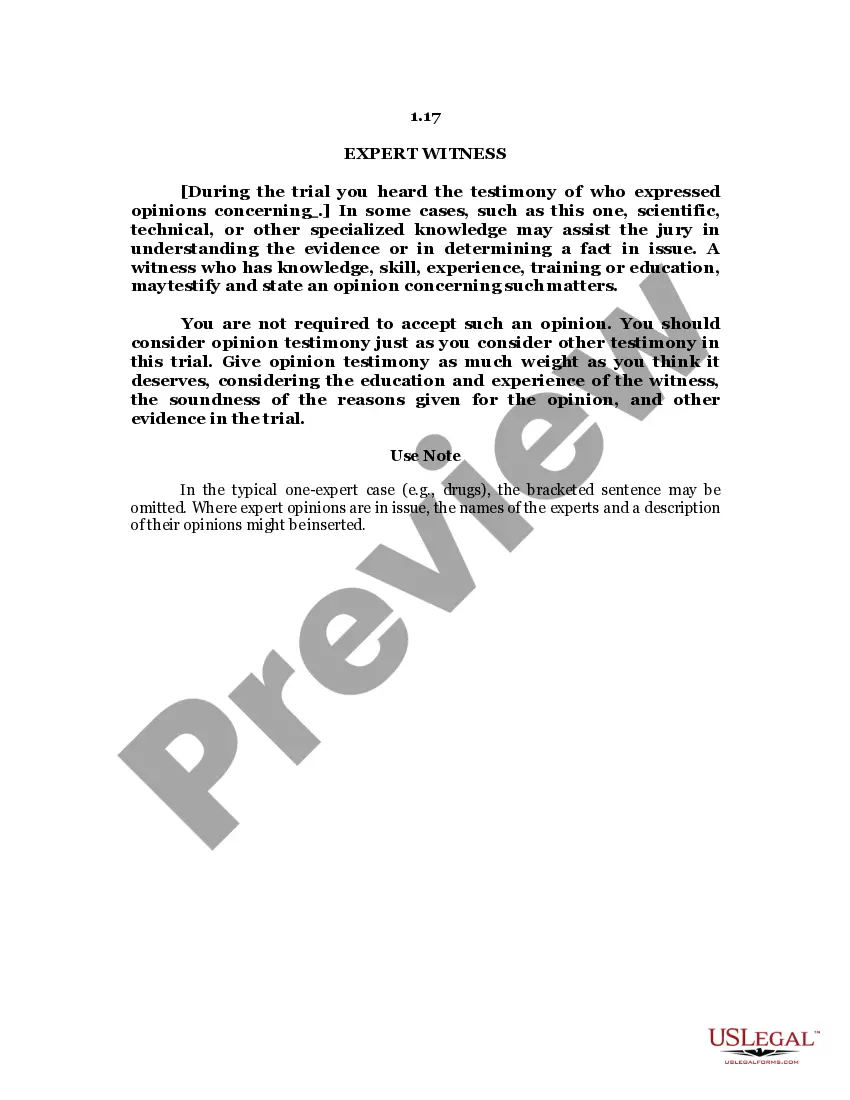
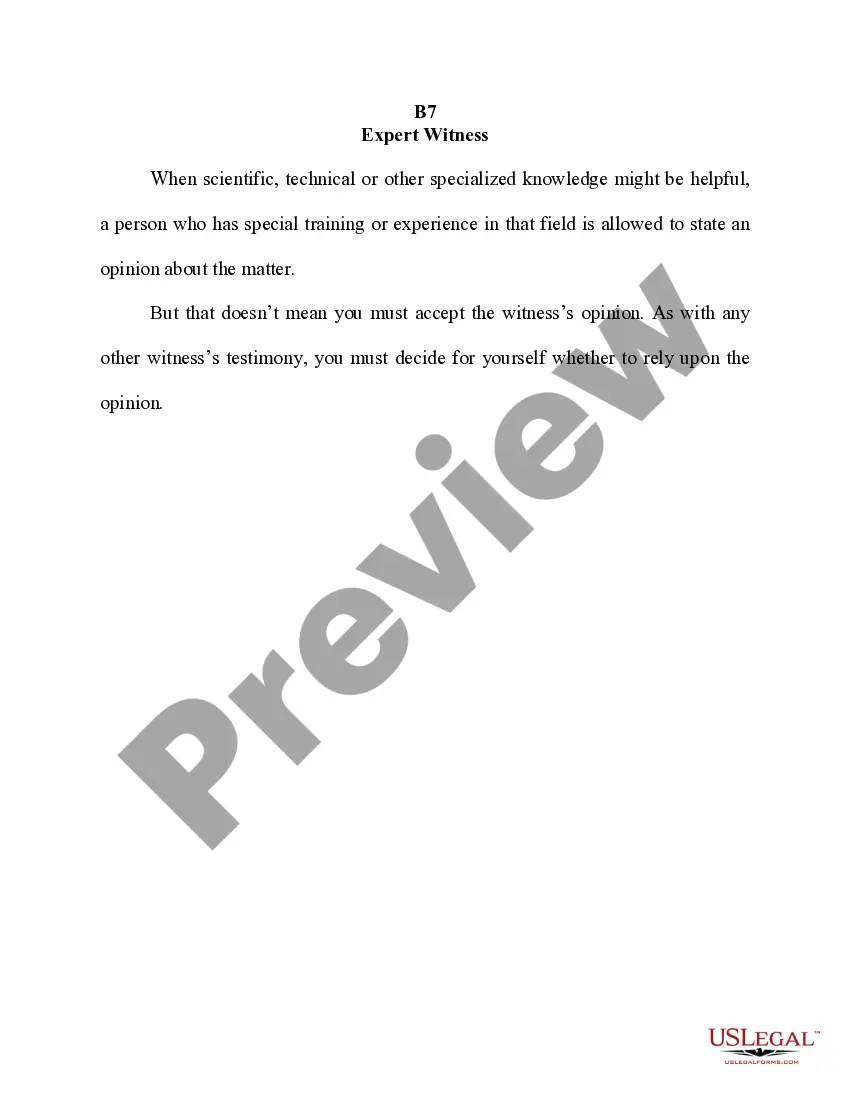
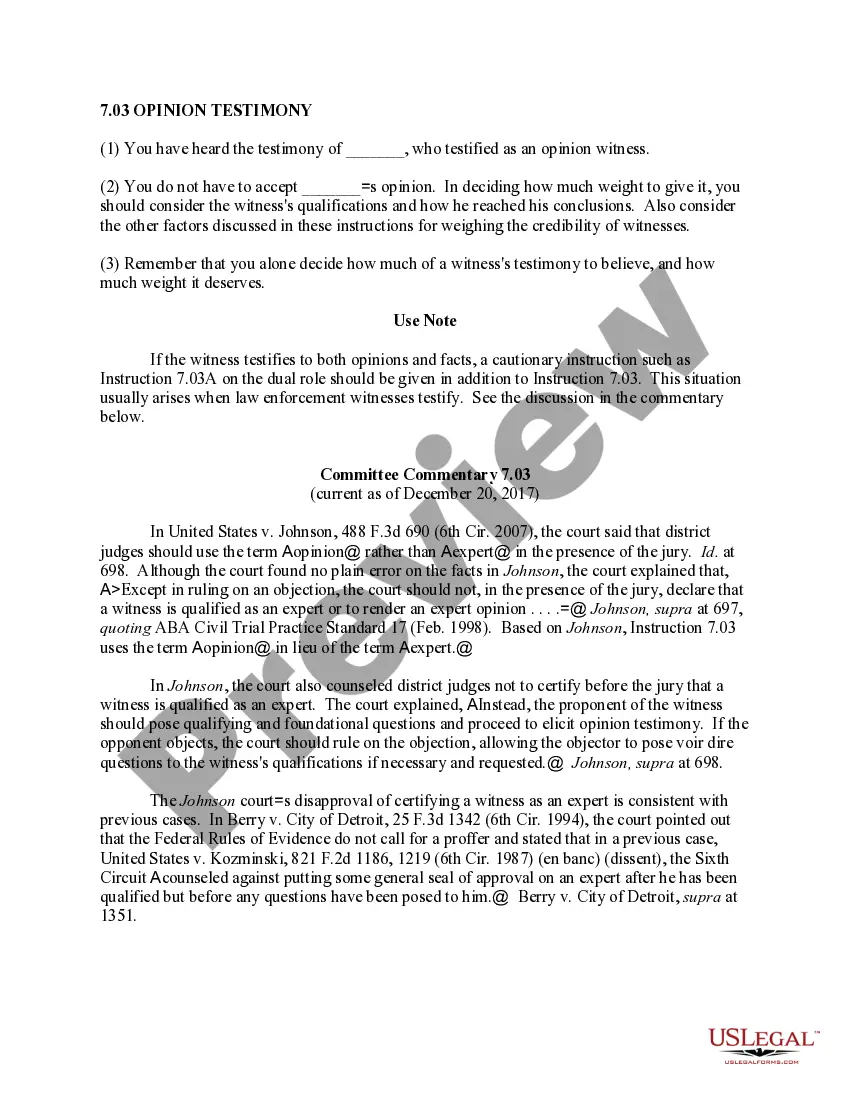
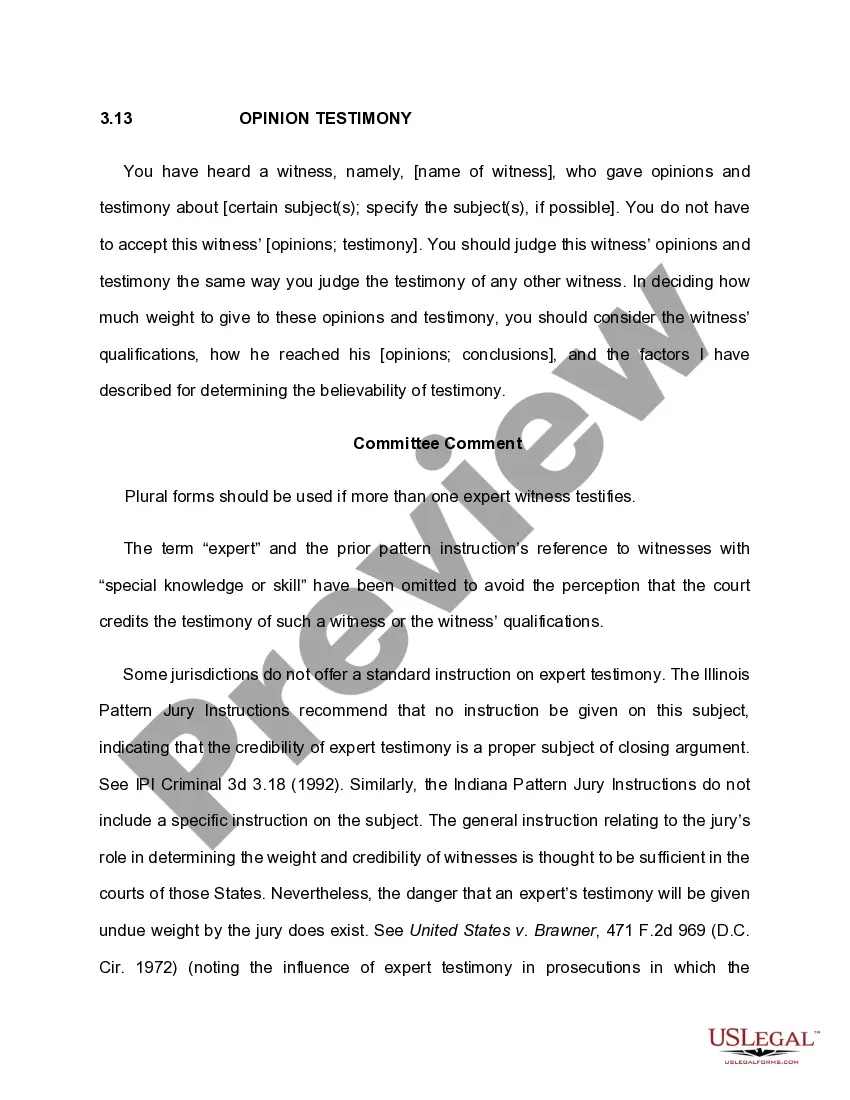
The Expert Opinion Testimony form is a legal document used during trials to present opinions from witnesses who possess specialized knowledge in a particular area. This form clarifies how such expert testimony should be evaluated by the jury, emphasizing that the jurors should weigh the evidence based on the witness's qualifications and the reasoning behind their opinions. It differs from other forms of testimony by specifically focusing on the expertise and background of the witness, which is crucial for assisting the jury in understanding complex information relevant to the case.
Key components of this form
- Identification of the expert witness providing testimony.
- Clear statement of the opinions expressed by the expert.
- Relevant qualifications of the expert, including education and experience.
- Guidance on how the jury should approach the testimony.
- Citations of relevant case law to support the admissibility of the testimony.
When to use this document
This form should be used during legal proceedings when expert testimony is necessary to clarify complex scientific, technical, or specialized knowledge that may aid the jury in making informed decisions. Scenarios may include personal injury cases where medical expertise is required, intellectual property disputes needing technical insight, or criminal cases relying on forensic analysis. It ensures the jury understands the weight and validity of the expert opinions presented.
Who can use this document
- Attorneys representing clients in litigation cases that require expert testimony.
- Legal professionals needing a framework for evaluating expert opinions during trials.
- Witnesses with specialized knowledge who are called to testify.
- Judges and juries seeking to understand the role of expert testimony in case evaluations.
Completing this form step by step
- Identify the expert witness by entering their full name and qualifications.
- Clearly state the opinions that the expert will provide during their testimony.
- Include detailed qualifications that establish the witness's expertise.
- Reference any applicable case law that supports the expert's testimony.
- Ensure that all statements are clear and concise to aid jury understanding.
Does this document require notarization?
Notarization is generally not required for this form. However, certain states or situations might demand it. You can complete notarization online through US Legal Forms, powered by Notarize, using a verified video call available anytime.
Get your form ready online
Our built-in tools help you complete, sign, share, and store your documents in one place.
Make edits, fill in missing information, and update formatting in US Legal Forms—just like you would in MS Word.
Download a copy, print it, send it by email, or mail it via USPS—whatever works best for your next step.
Sign and collect signatures with our SignNow integration. Send to multiple recipients, set reminders, and more. Go Premium to unlock E-Sign.
If this form requires notarization, complete it online through a secure video call—no need to meet a notary in person or wait for an appointment.
We protect your documents and personal data by following strict security and privacy standards.

Make edits, fill in missing information, and update formatting in US Legal Forms—just like you would in MS Word.

Download a copy, print it, send it by email, or mail it via USPS—whatever works best for your next step.

Sign and collect signatures with our SignNow integration. Send to multiple recipients, set reminders, and more. Go Premium to unlock E-Sign.

If this form requires notarization, complete it online through a secure video call—no need to meet a notary in person or wait for an appointment.

We protect your documents and personal data by following strict security and privacy standards.
Typical mistakes to avoid
- Failing to provide sufficient qualifications for the expert witness.
- Omitting key details about the opinions presented.
- Not referencing supporting case law that may bolster the admissibility of the testimony.
- Using overly complex language that may confuse the jury.
Why complete this form online
- Convenient access to professionally drafted templates that ensure compliance with legal standards.
- Easy to fill out and customize according to specific case details and requirements.
- Quick downloads that save time in preparing for legal proceedings.
- Provides reliable guidance on presenting and evaluating expert testimony.
Quick recap
- The Expert Opinion Testimony form facilitates the presentation of specialized knowledge in legal cases.
- It is crucial to evaluate expert witness qualifications to ensure credibility.
- Jurors must weigh expert opinions critically, considering the provided context and evidence.
- This form is flexible and can be adapted for use across different jurisdictions.
Looking for another form?
Form popularity
FAQ
Unlike a lay witness, who cannot give an opinion about the topics that require special knowledge, an expert witness can testify their opinion within their expertise. An expert opinion must be based on sufficient facts or data and reliable principles or methods.
Forensic scientists play an important role in criminal trials by serving as expert witnesses. Expert witnesses not only testify on the findings but also give opinions based upon the results derived from the analysis of evidence that was collected from the crime scene.
Examples of when an expert witness may be needed include: Fitness to stand trial. Diminished responsibility. Causation in personal injury or medical negligence. Assessments of sexual offending, violent behaviour offending, arson, and stalking. Cognitive and psychological assessments. Advice on appeals.
The major difference between these two types of witnesses is personal knowledge. While experts may use their knowledge or skill to draw conclusions, lay witnesses can only base their opinions on information they personally observed.
An expert witness, for example, could be a blood spatter analyst who can testify about the type of weapon used to commit a murder. Using this information, the defense can then demonstrate that the defendant did not commit the crime for which he is being charged.