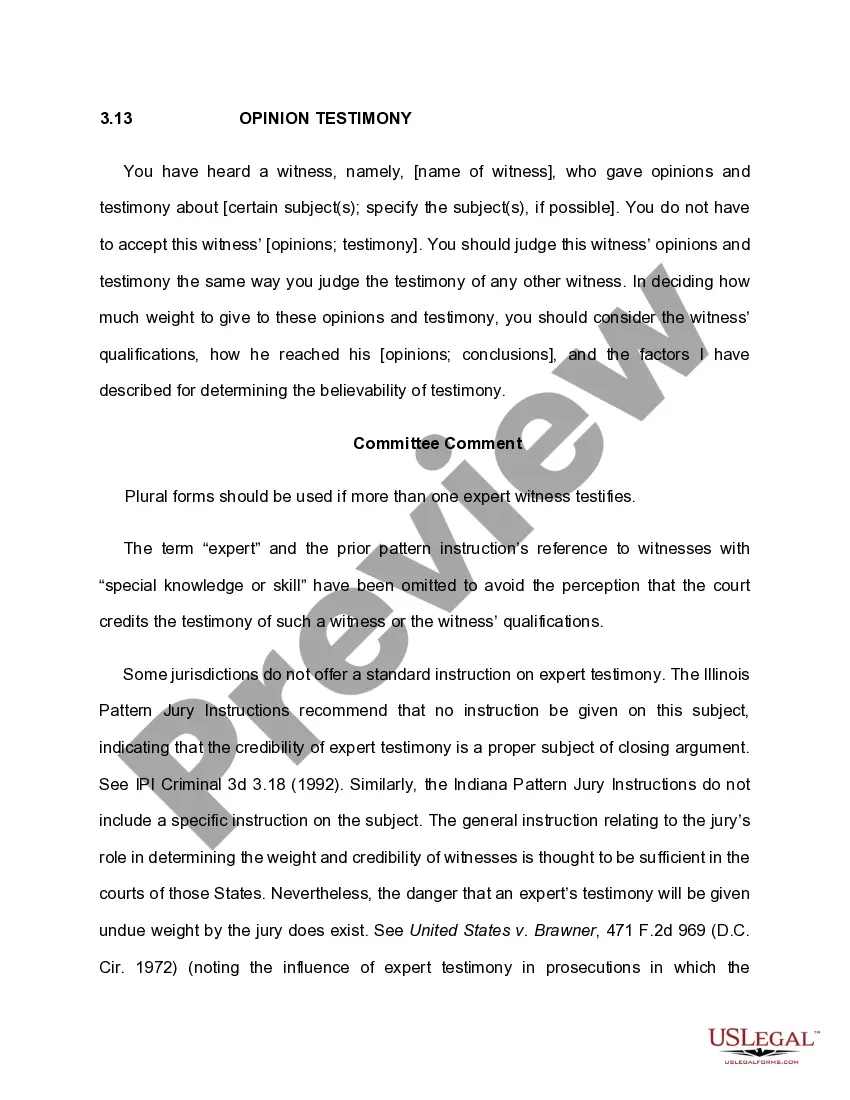
OPINION TESTIMONY
What is this form?
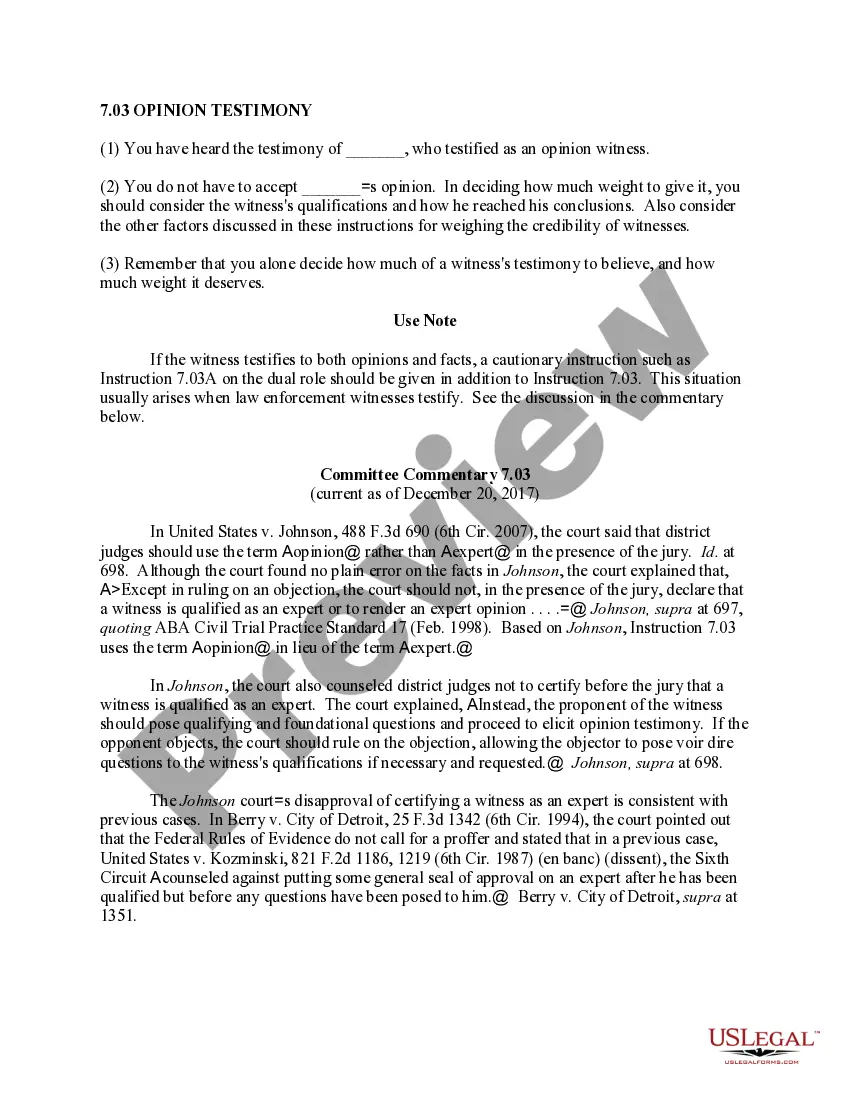
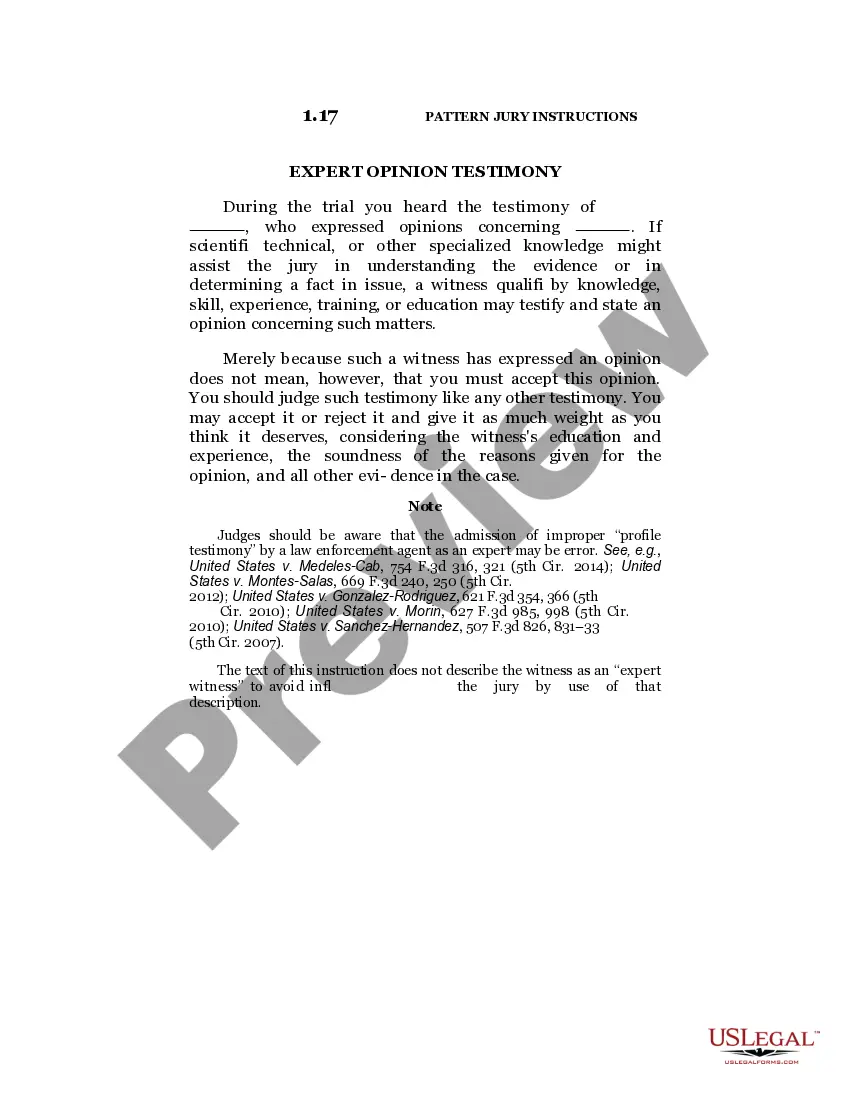
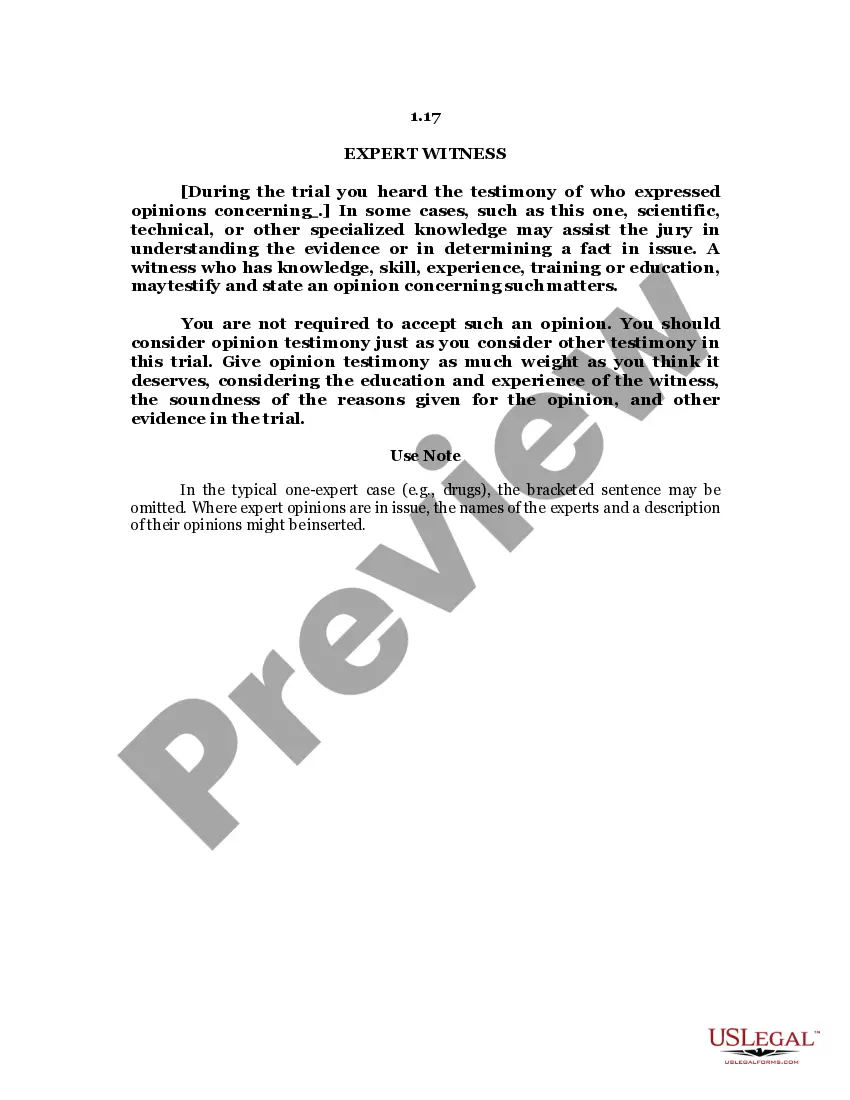
The Opinion Testimony form is a legal document used in court proceedings that allows a witness to provide their professional opinion on a matter related to a case. Unlike factual testimony, opinion testimony offers insights based on the witness's expertise or experience. This form serves to inform the jury about the importance of evaluating the credibility of such opinions and distinguishing them from mere facts.
Key parts of this document
- Introduction identifying the opinion witness.
- Guidance on assessing the weight of the witness's opinion based on their qualifications.
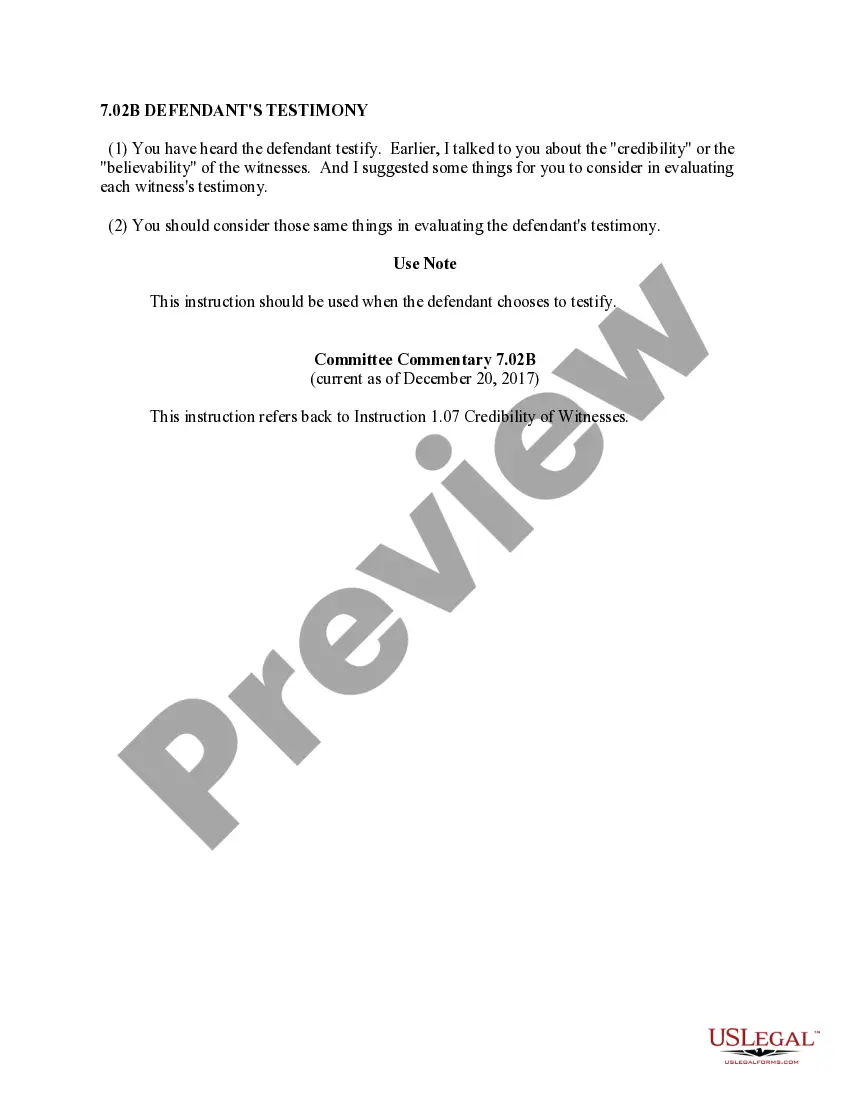
- Instructions on how to consider the credibility of the testimony.
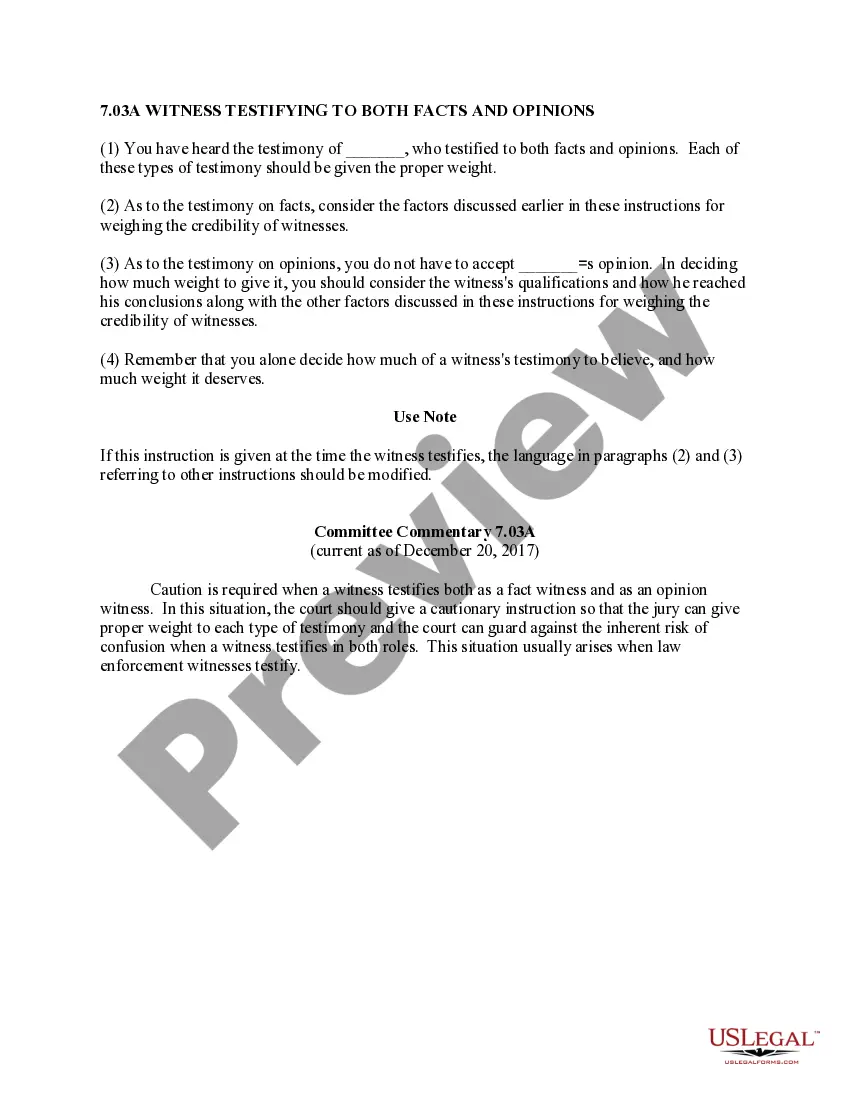
- Caution regarding witnesses who testify on both opinions and facts.
When this form is needed
This form is used in legal cases where an opinion witness is called to testify. Situations may include expert witnesses in fields such as medicine, engineering, or law enforcement, where their specialized knowledge is important for the jury's understanding of the issues at hand.
Who this form is for
- Attorneys presenting opinion testimony in court.
- Witnesses who will provide expert opinions.
- Judges and legal facilitators managing courtroom procedures.
- Legal professionals preparing for trial proceedings.
How to complete this form
- Identify the witness who will provide their opinion.
- Document the witnessâs qualifications that establish their expertise.
- Record the specific opinion or conclusions the witness will testify about.
- Include any relevant facts that support the witnessâs opinion.
- Follow up with instructions for assessing the credibility of the testimony.
Notarization guidance
Notarization is not commonly needed for this form. However, certain documents or local rules may make it necessary. Our notarization service, powered by Notarize, allows you to finalize it securely online anytime, day or night.
Get your form ready online
Our built-in tools help you complete, sign, share, and store your documents in one place.
Make edits, fill in missing information, and update formatting in US Legal Forms—just like you would in MS Word.
Download a copy, print it, send it by email, or mail it via USPS—whatever works best for your next step.
Sign and collect signatures with our SignNow integration. Send to multiple recipients, set reminders, and more. Go Premium to unlock E-Sign.
If this form requires notarization, complete it online through a secure video call—no need to meet a notary in person or wait for an appointment.
We protect your documents and personal data by following strict security and privacy standards.

Make edits, fill in missing information, and update formatting in US Legal Forms—just like you would in MS Word.

Download a copy, print it, send it by email, or mail it via USPS—whatever works best for your next step.

Sign and collect signatures with our SignNow integration. Send to multiple recipients, set reminders, and more. Go Premium to unlock E-Sign.

If this form requires notarization, complete it online through a secure video call—no need to meet a notary in person or wait for an appointment.

We protect your documents and personal data by following strict security and privacy standards.
Mistakes to watch out for
- Failing to adequately establish the witnessâs qualifications.
- Not clarifying the distinction between opinion and factual testimony.
- Overestimating the weight of the opinion without considering other evidence.
- Neglecting to provide a clear context for the opinion given by the witness.
Benefits of completing this form online
- Convenience of immediate access and download.
- Editability allows for customization to meet specific case needs.
- Reliability from professionally drafted templates created by licensed attorneys.
- Easy to file and present during legal proceedings.
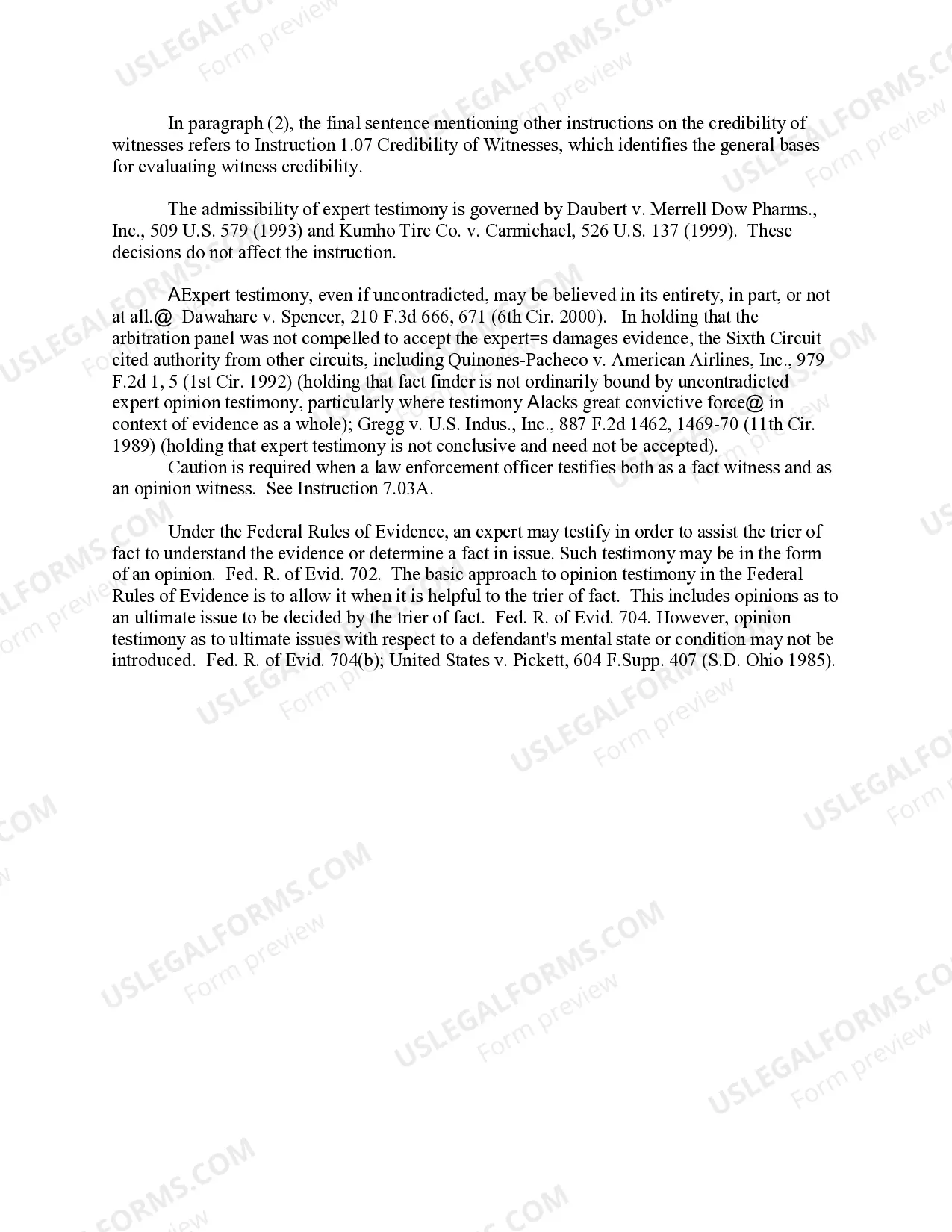
- Opinion testimony is admissible when it assists the trier of fact in understanding evidence or determining an issue.
- The form references legal precedents that clarify how such testimony should be presented and evaluated in court.
- Jurors are reminded they are not obliged to accept the opinion testimony even if it is uncontradicted.
Key takeaways
- The Opinion Testimony form clarifies how jurors should approach the evaluation of witness opinions.
- It is essential for cases involving expert testimony where opinions influence the outcome.
- Understanding the distinction between fact and opinion testimony is key for accurate jury deliberation.
Looking for another form?
Form popularity
FAQ
The general preference is that witnesses tell the judge or jury what they know and let the triers of fact draw conclusions that are warranted. There is therefore a general principle that testimony as to the witness' opinions will not be allowed unless there is a good policy reason to allow it.
For example: a psychologist or psychiatrist giving evidence about the mental health of a person. Or a firearms ballistics expert giving evidence about the bullet trajectory is admissible under the exception of expert witness opinions.
A) Lay witness opinions are the kind of conclusions, generalizations and characterizations that ordinary people make to communicate what they have seen. They are admissible as long as they are rationally based on the witness's perception and the characterization is helpful to a clear understanding of their testimony.
Code, §§ 800, 801.) Opinion testimony may be admitted in circumstances where it will assist the jury to understand the evidence or a concept beyond common experience. Thus, expert opinion is admissible if it is 'related to a subject that is sufficiently beyond common experience and would assist the trier of fact.
Personal Knowledge is Required The major difference between these two types of witnesses is personal knowledge. While experts may use their knowledge or skill to draw conclusions, lay witnesses can only base their opinions on information they personally observed.
Opinion evidence is inadmissible in court proceedings as a general rule, although there are some exceptions. Opinion evidence is generally excluded because it has the potential to mislead the court (i.e. the jury) despite being irrelevant and extraneous material.
Lay witness testimony often begins with the witness testifying to observations that he or she personally perceived. For example, say that a witness states: ?I observed a black truck approach a red light and continue driving through it without stopping.? This is testimony as to a factual observation.
In ance with CPR 35, in order for opinion evidence to be admissible in court, it must be relevant and prepared by someone who would be qualified to give expert evidence. A party cannot rely on expert evidence without the court's permission.