Construction Safety and Health Plan
Understanding this form
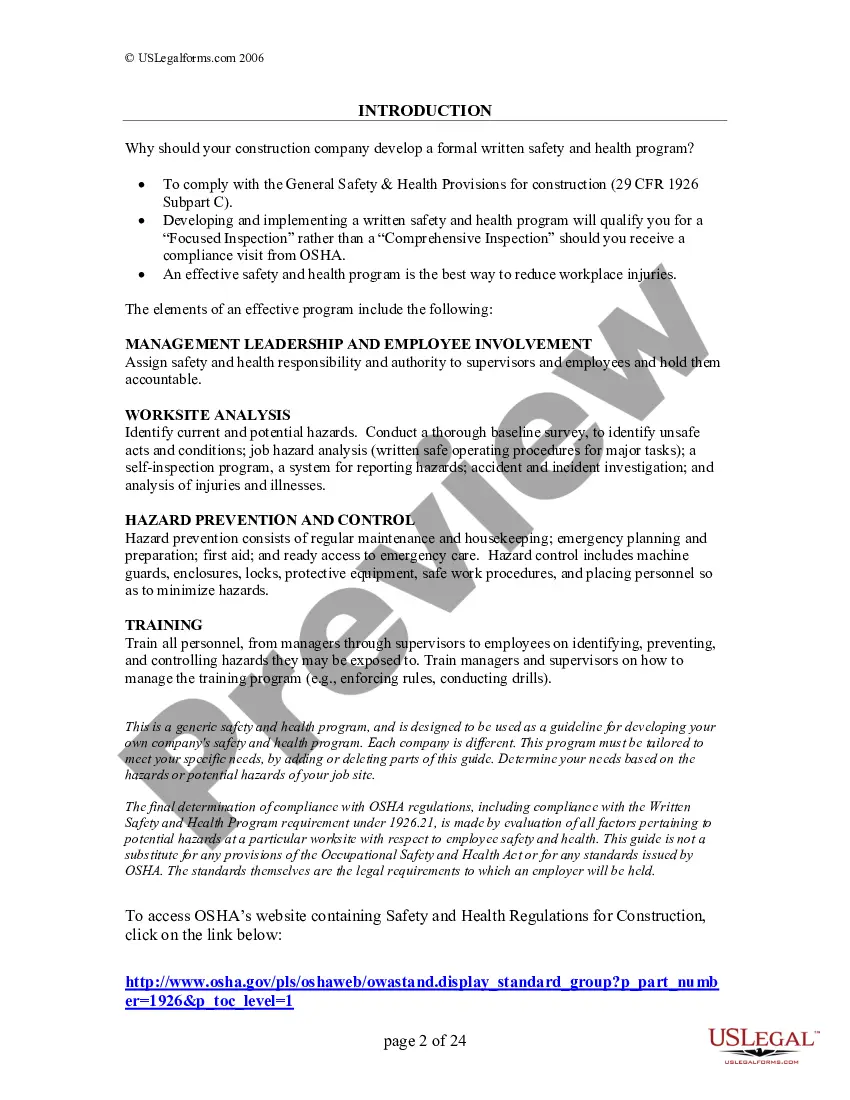
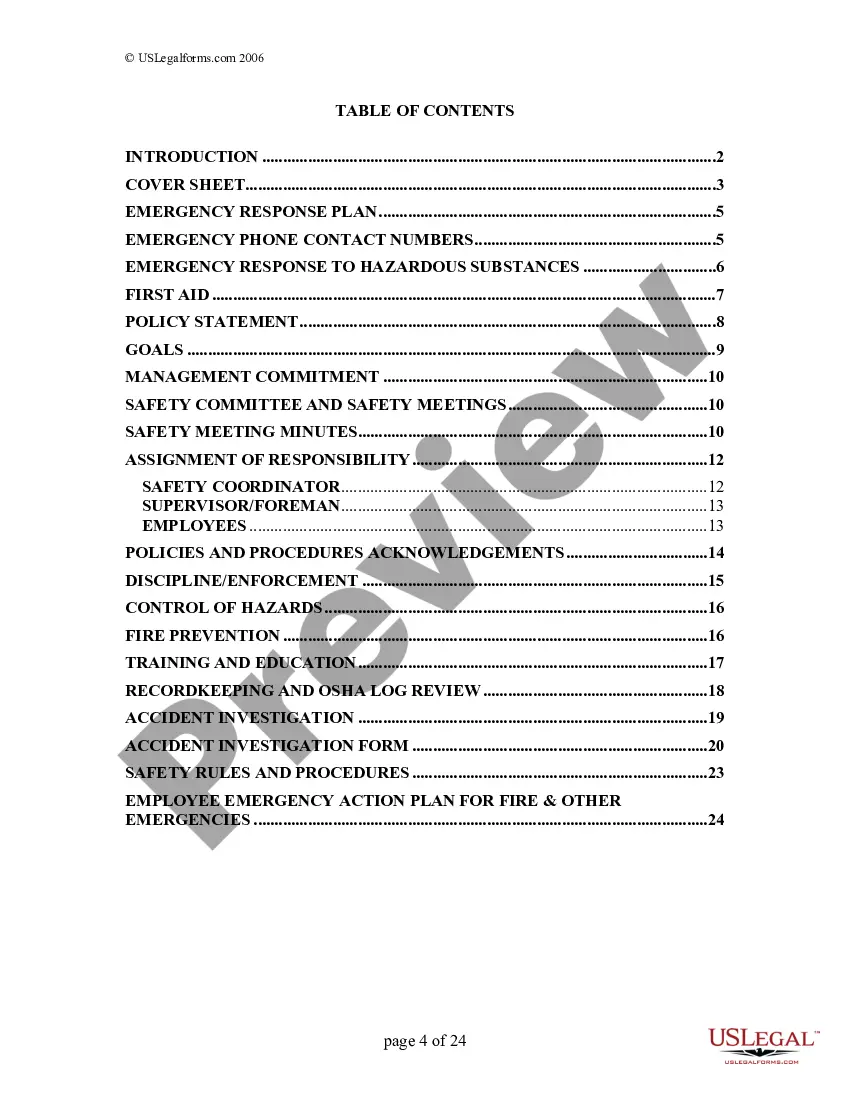
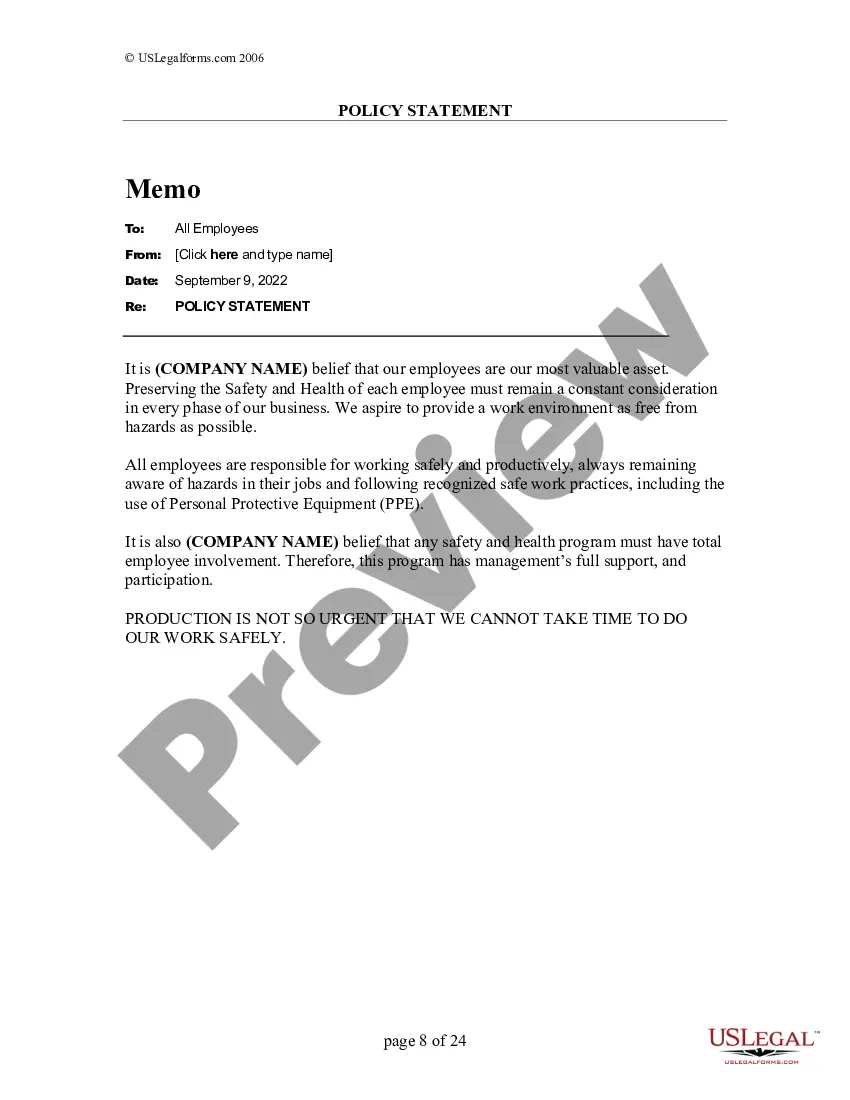
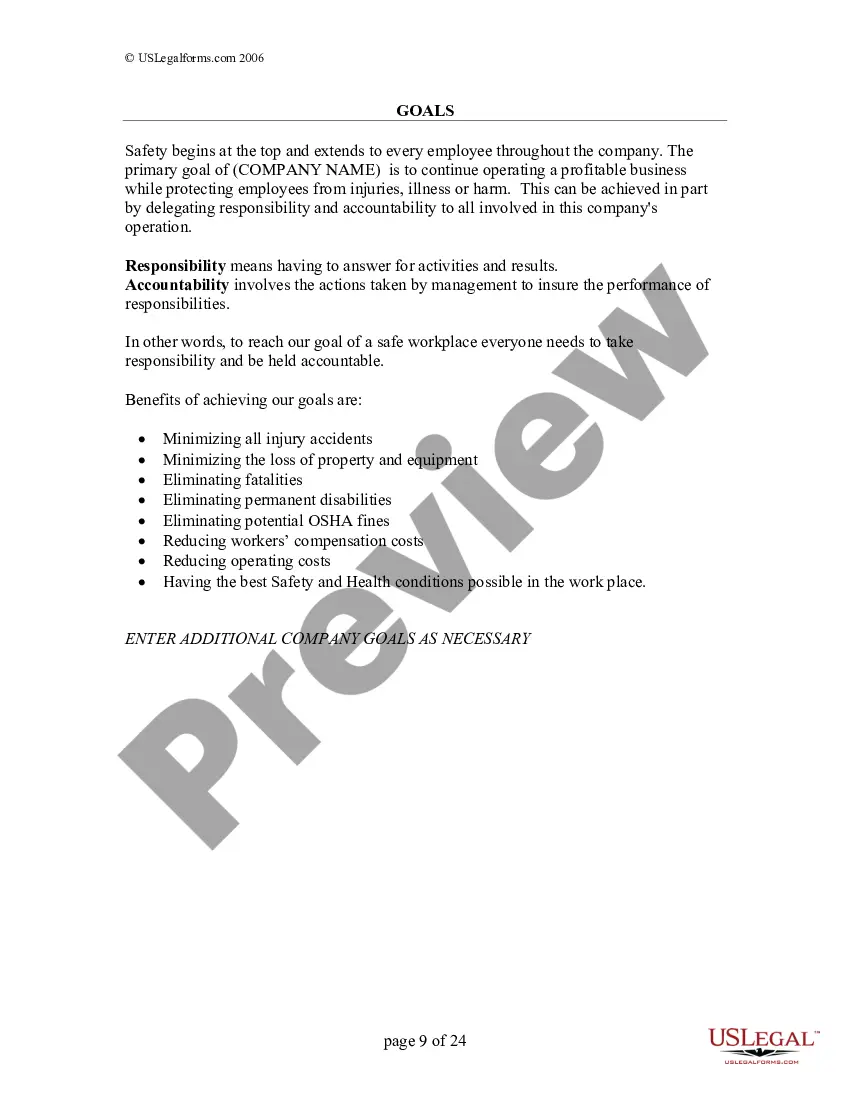
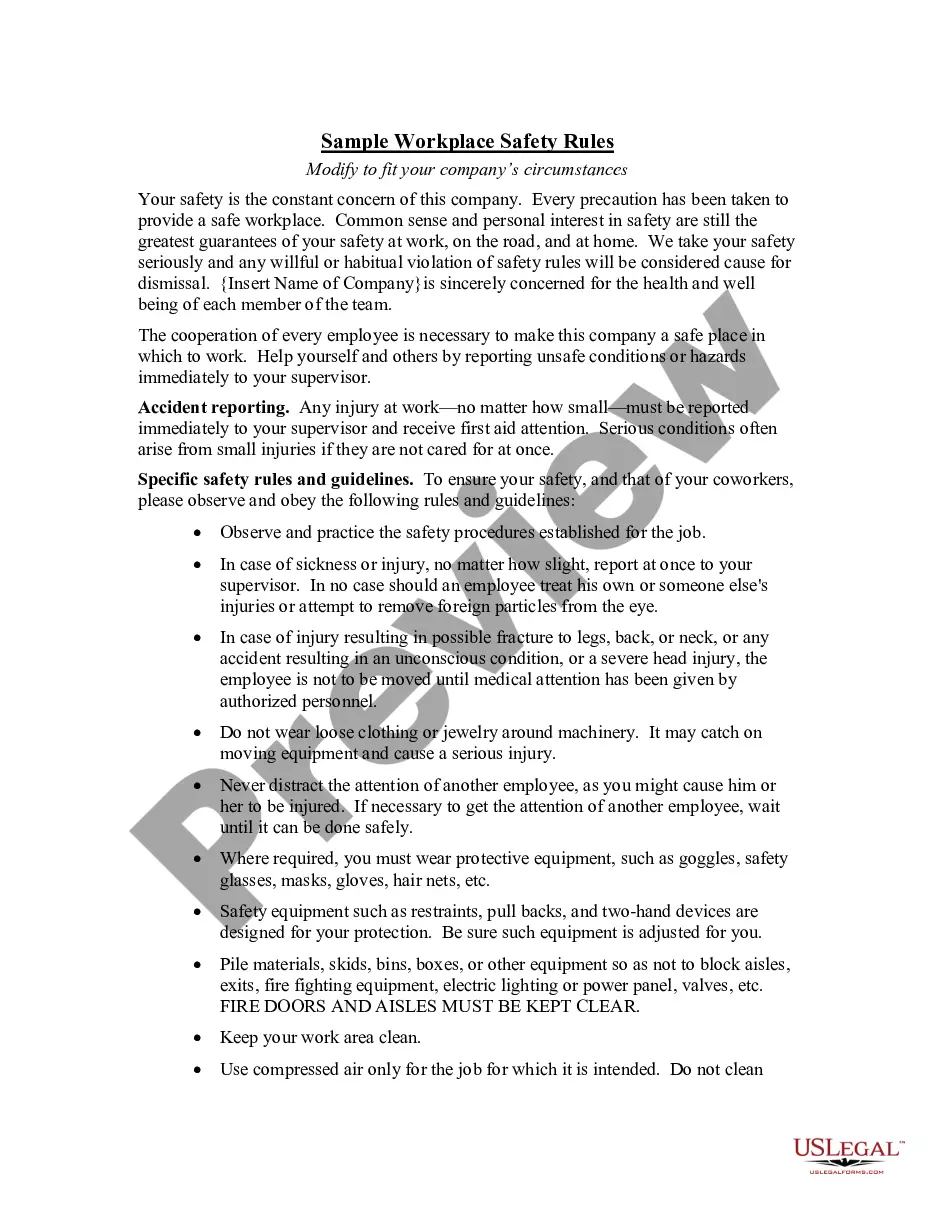
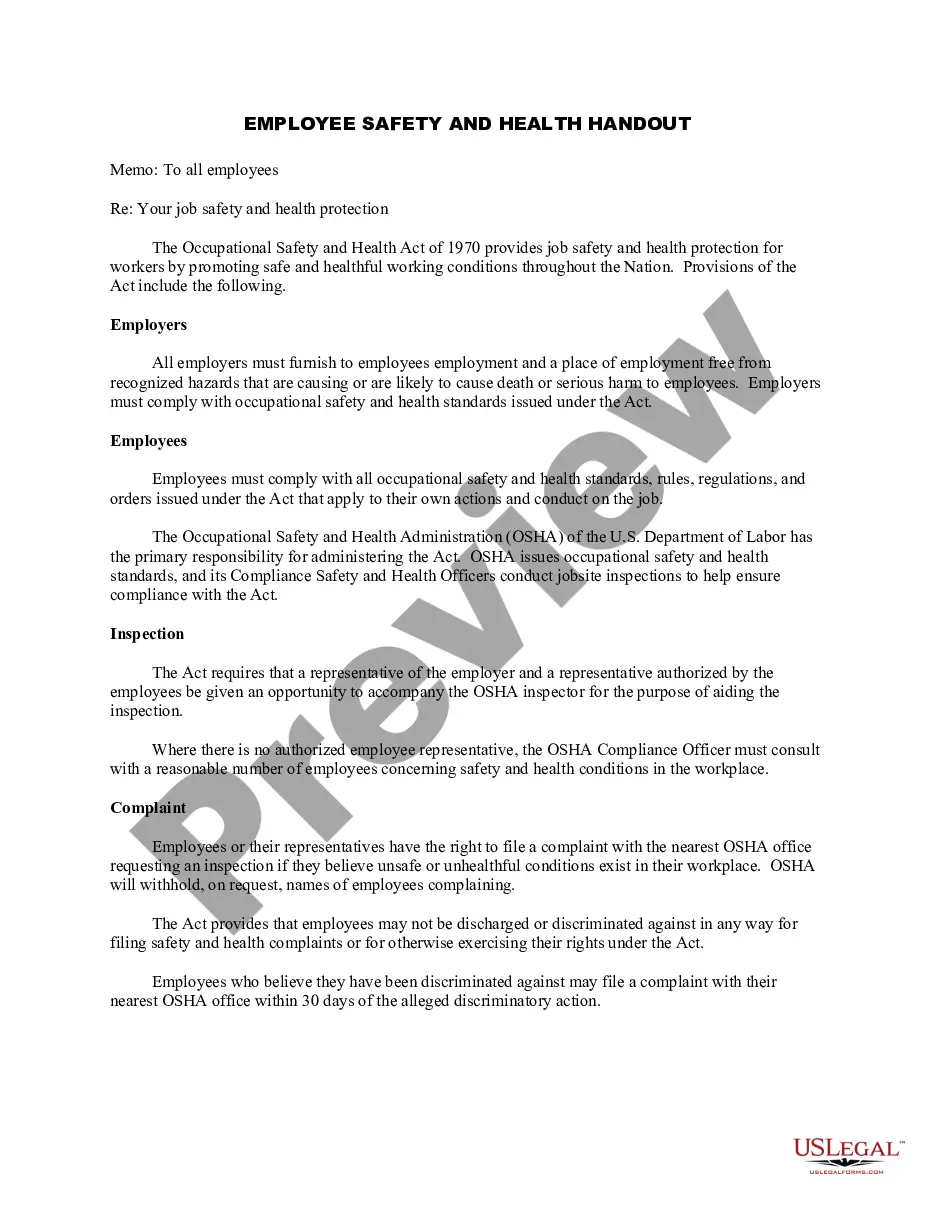
The Construction Safety and Health Plan is a comprehensive document created to guide contractors in meeting OSHA's General Safety and Health Provisions for construction. This form helps ensure compliance during inspections by the Occupational Safety and Health Administration (OSHA) and aims to minimize workplace injuries by outlining essential safety protocols and procedures.
Key components of this form
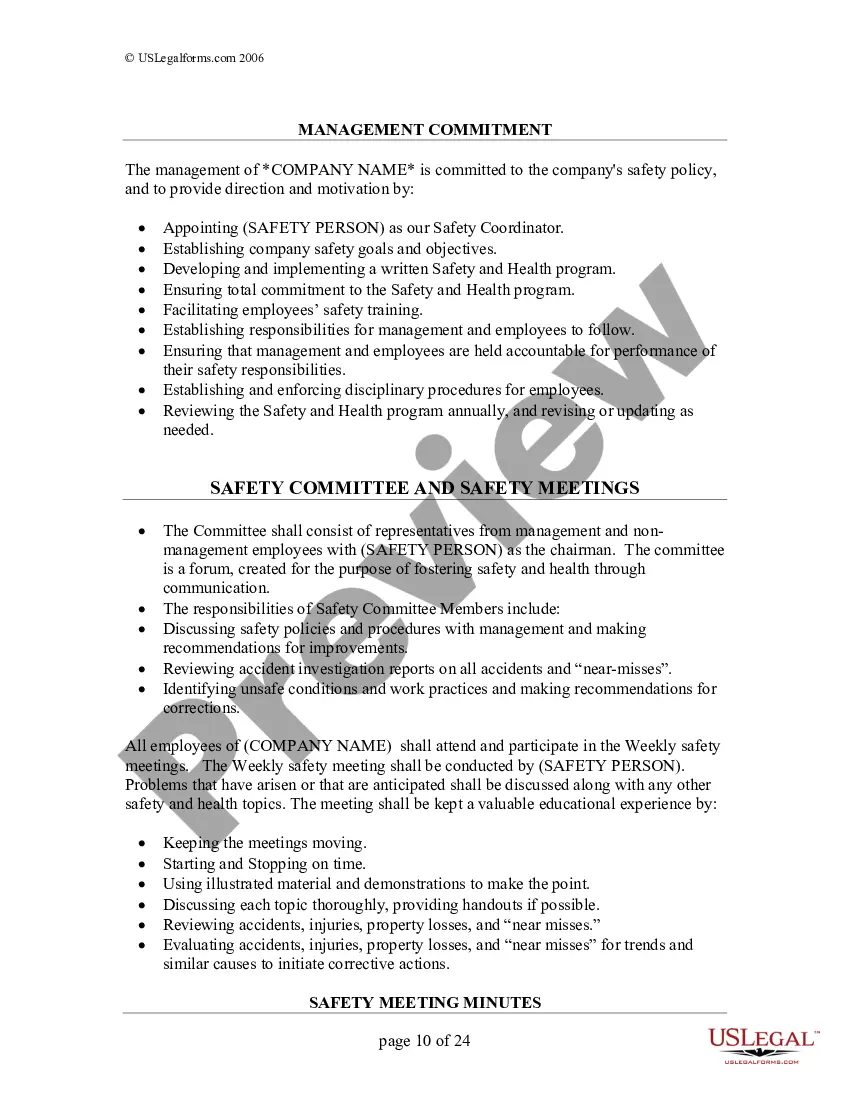
- Management Leadership and Employee Involvement
- Worksite Analysis Procedures
- Hazard Prevention and Control Measures
- Safety Training Programs for Personnel
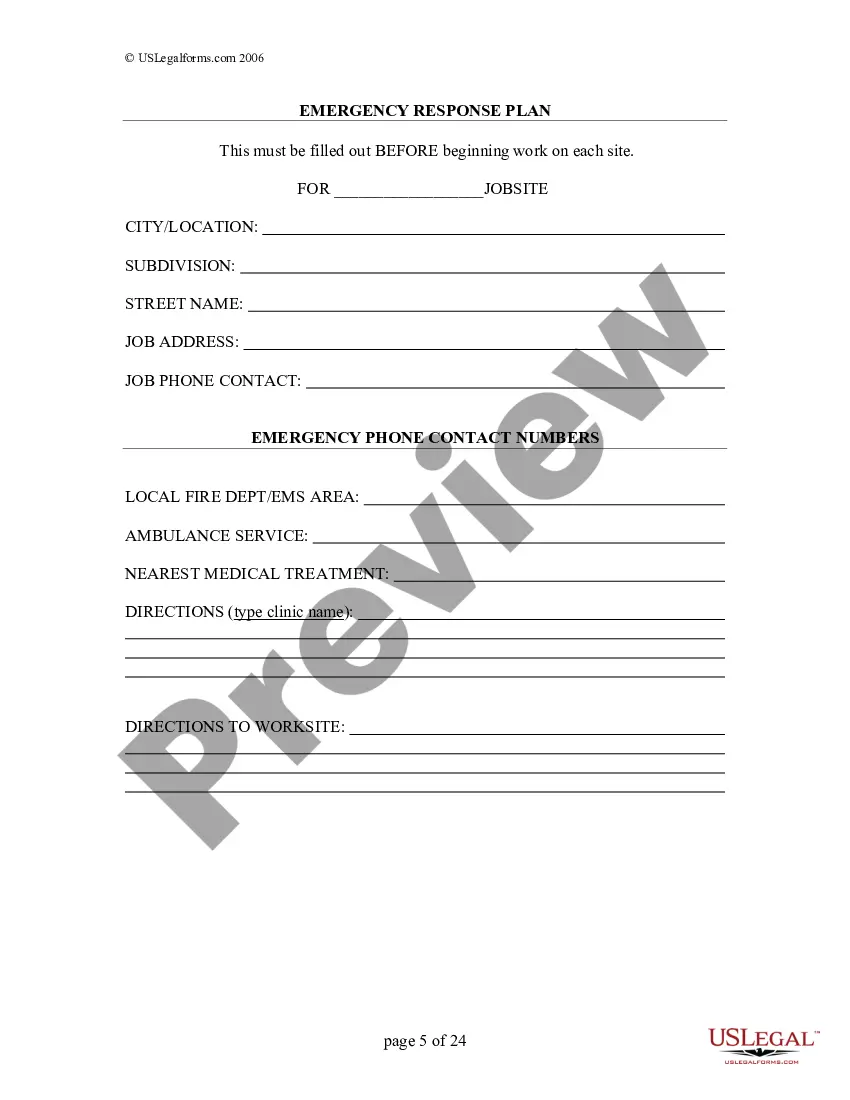
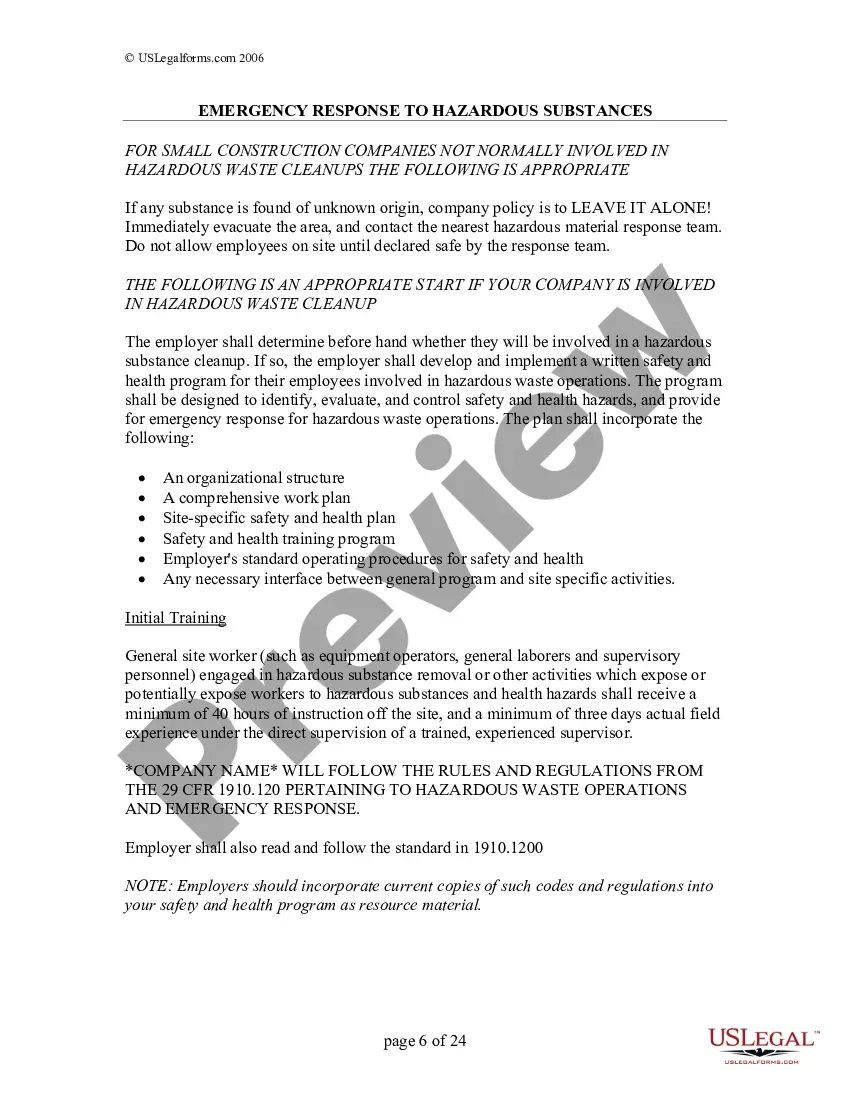
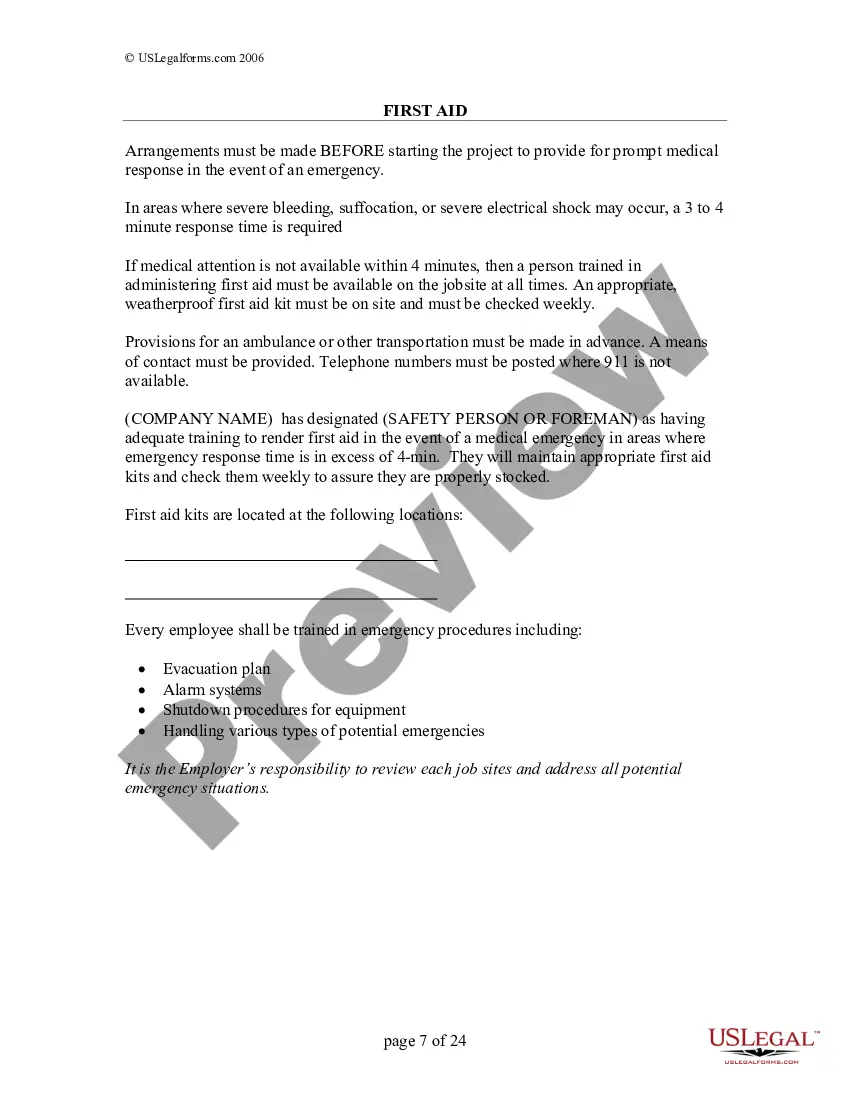
- Emergency Response Plans
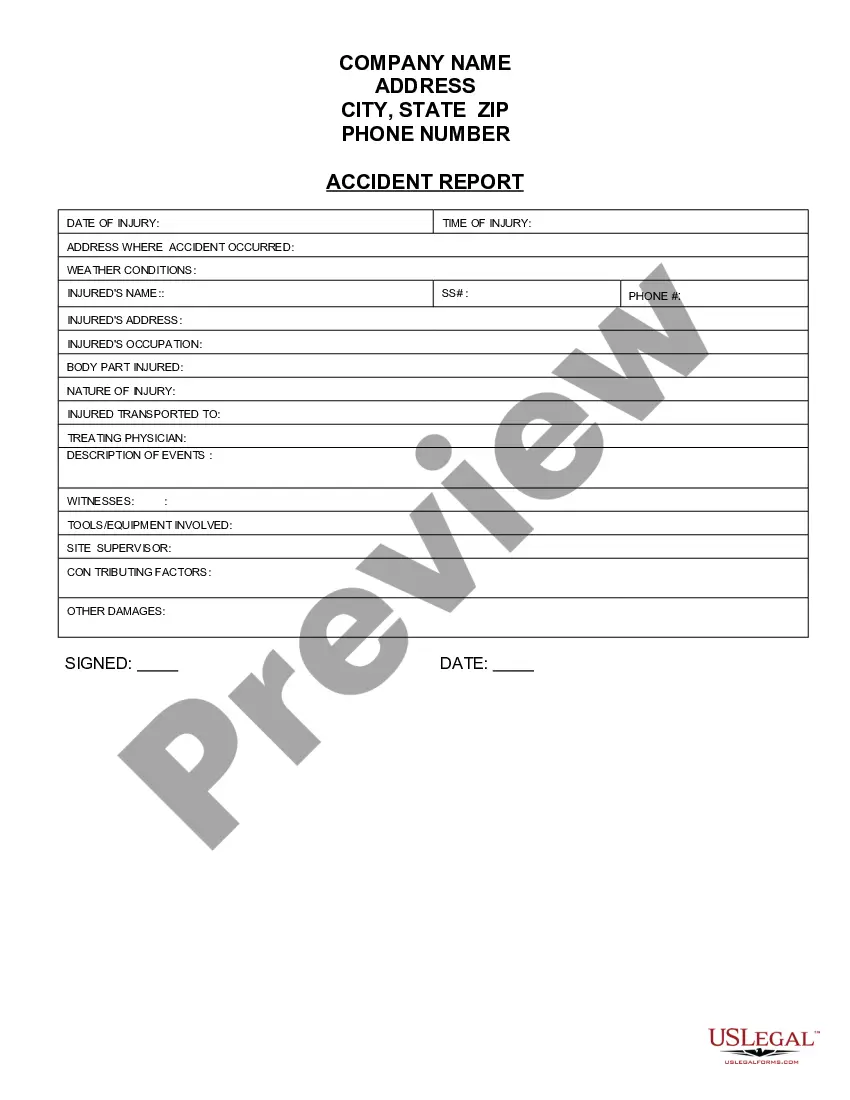
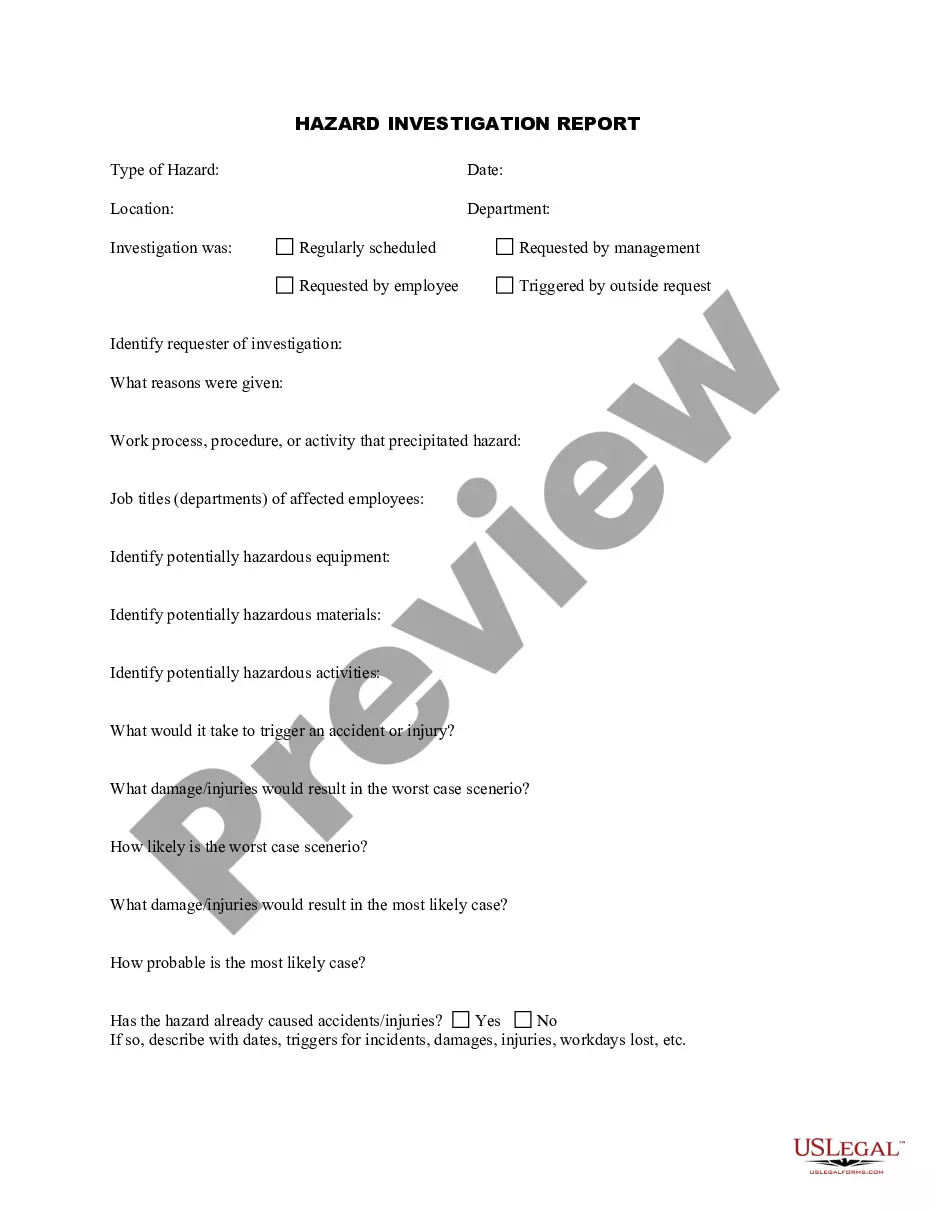
- Accident Investigation and Reporting Guidelines

When to use this document
This Construction Safety and Health Plan should be utilized when preparing for construction projects to ensure that all safety measures are in place before starting work. It is essential for projects that involve potentially hazardous conditions, require compliance with OSHA regulations, or when a contractor anticipates an OSHA inspection.
Who can use this document
- Contractors overseeing construction projects.
- Construction site managers responsible for worker safety.
- Safety officers tasked with implementing health and safety protocols.
- Employee representatives involved in health and safety programs.
Completing this form step by step
- Identify the relevant stakeholders within your organization.
- Conduct a worksite analysis to identify potential hazards specific to your project.
- Develop training programs tailored to the type of work being performed.
- Establish an emergency response plan detailing procedures and contact information.
- Ensure that responsibilities for safety measures and accountability are clearly assigned to management and employees.
Does this form need to be notarized?
This form does not typically require notarization unless specified by local law. It is advisable to check your jurisdiction for any specific requirements regarding notarization for construction safety plans.
Get your form ready online
Our built-in tools help you complete, sign, share, and store your documents in one place.
Make edits, fill in missing information, and update formatting in US Legal Forms—just like you would in MS Word.
Download a copy, print it, send it by email, or mail it via USPS—whatever works best for your next step.
Sign and collect signatures with our SignNow integration. Send to multiple recipients, set reminders, and more. Go Premium to unlock E-Sign.
If this form requires notarization, complete it online through a secure video call—no need to meet a notary in person or wait for an appointment.
We protect your documents and personal data by following strict security and privacy standards.

Make edits, fill in missing information, and update formatting in US Legal Forms—just like you would in MS Word.

Download a copy, print it, send it by email, or mail it via USPS—whatever works best for your next step.

Sign and collect signatures with our SignNow integration. Send to multiple recipients, set reminders, and more. Go Premium to unlock E-Sign.

If this form requires notarization, complete it online through a secure video call—no need to meet a notary in person or wait for an appointment.

We protect your documents and personal data by following strict security and privacy standards.
Common mistakes to avoid
- Failing to regularly update the safety plan based on new project risks.
- Not involving employees in safety meetings and training sessions.
- Ignoring specific OSHA guidelines that may apply to different types of construction.
- Not documenting safety training and emergency response drills for accountability.
Why use this form online
- Easy access to downloadable templates drafted by licensed attorneys.
- Editable sections allow you to customize the plan to suit your company's specific needs.
- Streamlined updates to stay compliant with changing regulations.
- Quickly create and implement plans for various job sites.
- This form establishes a written safety program, which is often a legal requirement for construction companies.
- Compliance with this plan can potentially qualify your company for focused compliance inspections by OSHA.
- Failure to implement a safety program can lead to increased risks of workplace accidents and potential legal consequences.
Summary of main points
- The Construction Safety and Health Plan is essential for compliance with OSHA regulations.
- A well-implemented safety plan significantly reduces workplace injuries and accidents.
- Regular updates and employee involvement are crucial for the effectiveness of the safety plan.
Looking for another form?

Form popularity
FAQ
Define the scope of the work. Identify and analyze risk/potential hazards. Develop and implement controls. Include subcontractors. Ensure all persons involved understand and comply with the plan. Obtain feedback.
The plan must outline the health and safety arrangements, site rules and specific measures concerning any work involving the risks listed in Schedule 3 of the CDM 2015 Regulations.
Immediate action to take. Procedures to secure the area. Important personnel to contact regarding incidents. Method(s) of communication to alert others about incidents. Safe handling instructions and application. Protective gear, such as masks, hard hats, or gloves. Evacuation routes.
An OSHA Safety Plan is a written plan that describes the potential hazards in the workplace, and the company policies, controls, and work practices used to minimize those hazards.HAZWOPER Safety and Health Plan (29 CFR 1910.120(b))
Emergency procedures, including evacuation and first aid. Location of first aid stations. Health and safety responsibilities, including those specified by legislation. Reporting of injuries, unsafe conditions and acts. Use of personal protective equipment.
Write a Unique SSSP for Each Job. Each construction project you perform will require a unique SSSP, so don't recycle SSSPs from past jobs. Assign Roles and Responsibilities. Whether you're the GM or a subcontract on the job site, include the roles and responsibilities in your SSSP. Specify Required Training.
A Site Specific Safety Plan is a document that is written to outline how a general contractor will manage the risk on a specific project site and the health and safety requirements for that project.The Site Specific Safety Plan should: Create a system that connects activities to hazards and hazard control.
A living document. Section 1: The safety representative. Section 2: Medical treatment. Section 3: Safety inspections. Section 4: Safety indoctrination. Section 5: Continuous safety training. Section 6: Housekeeping. Section 7: Protective equipment.