Complaint against Vendor of Computer System by Purchaser for Fraud and Misrepresentation, Breach of Contract, Breach of Implied Warranty of Merchantability, Breach of Implied Warranty of Fitness
About this form
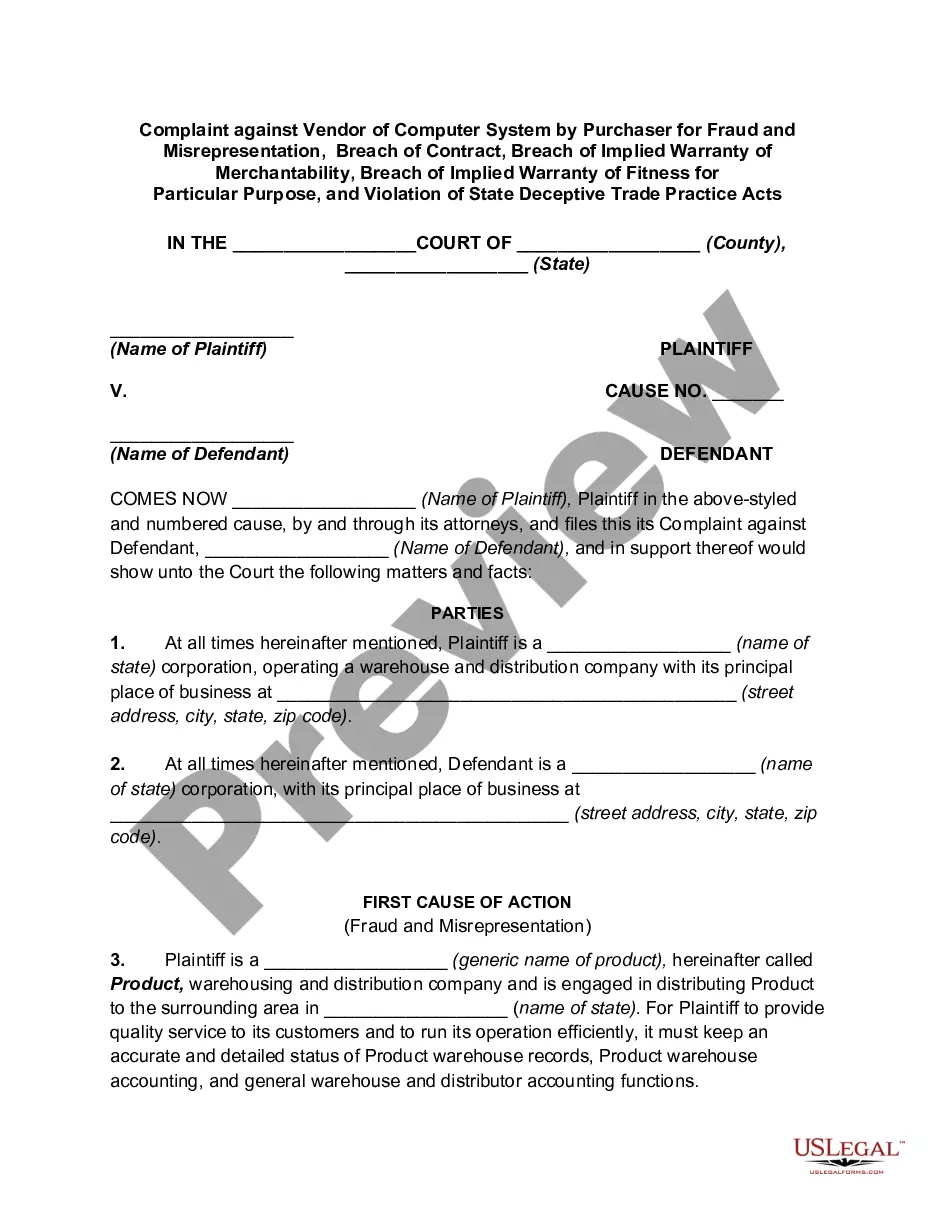
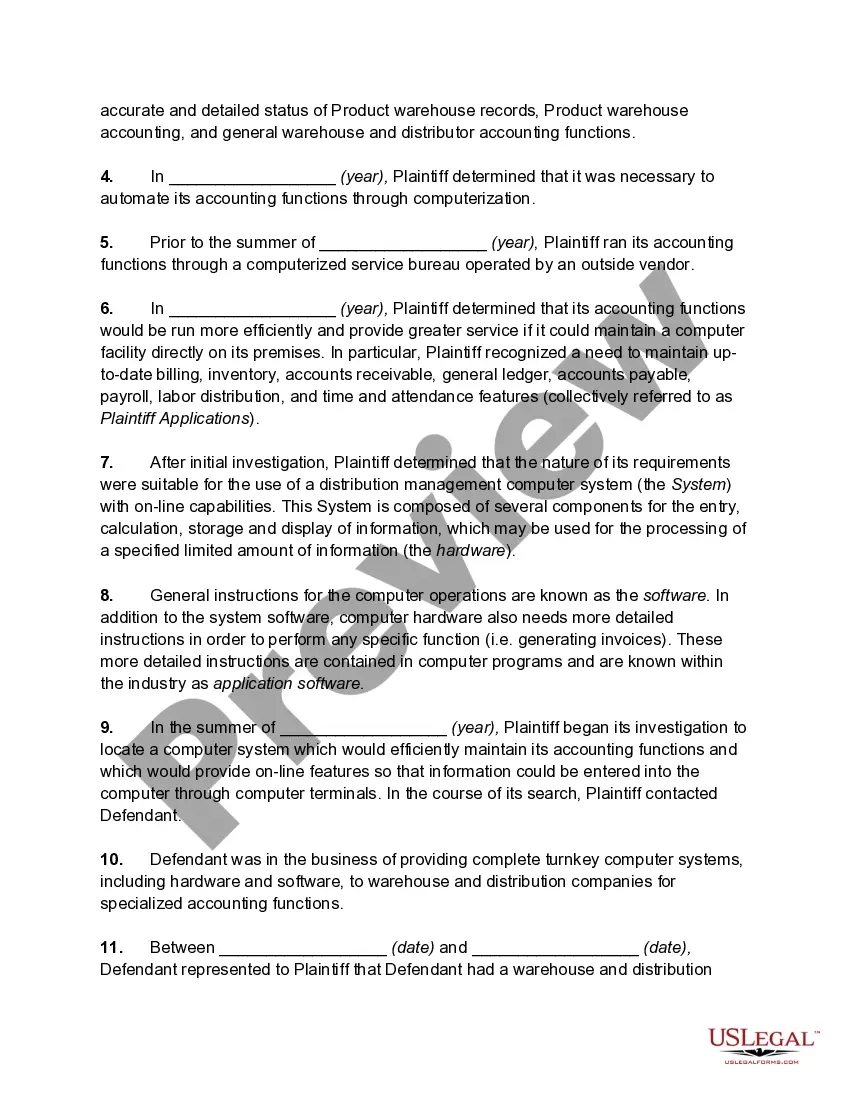
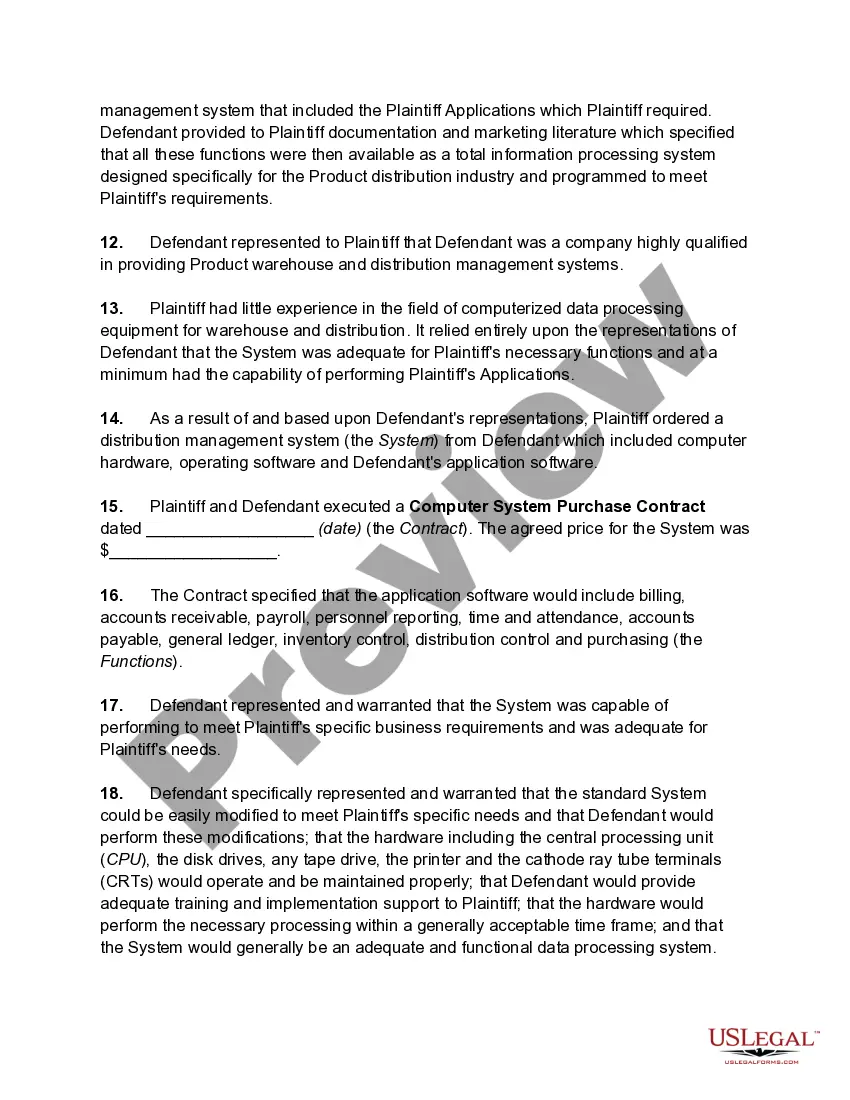
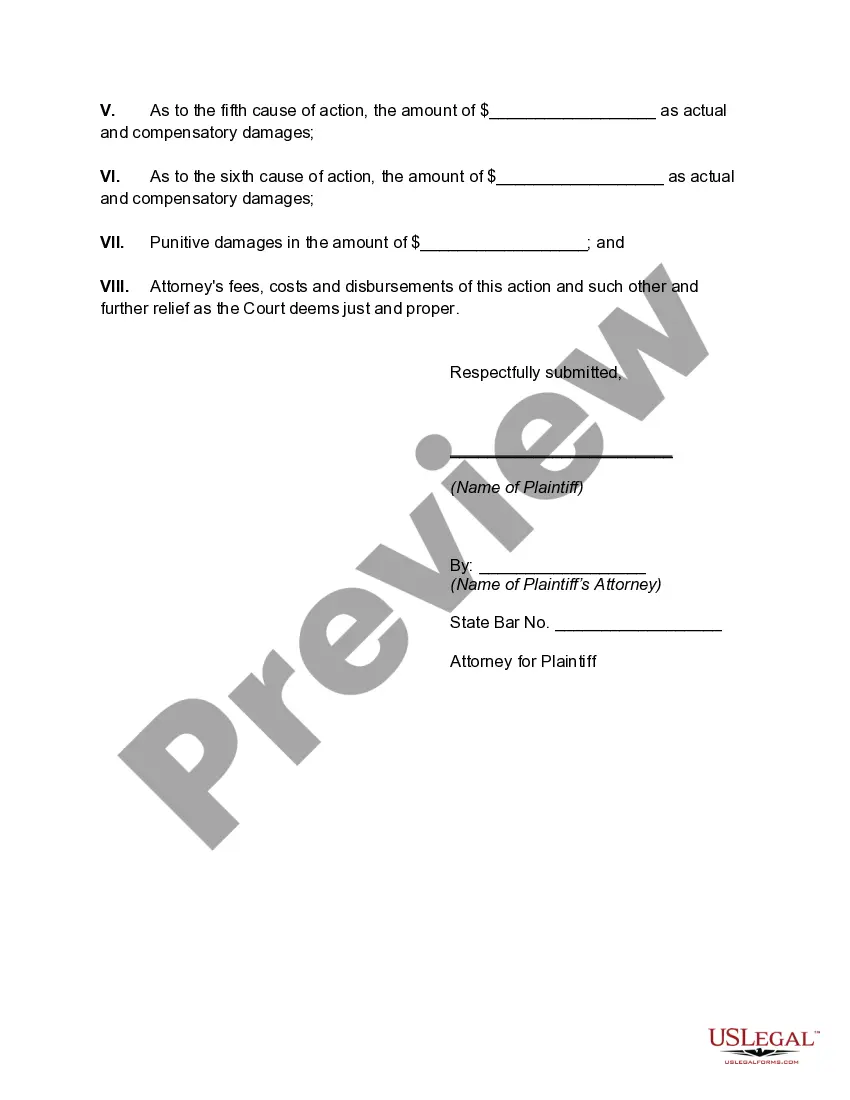
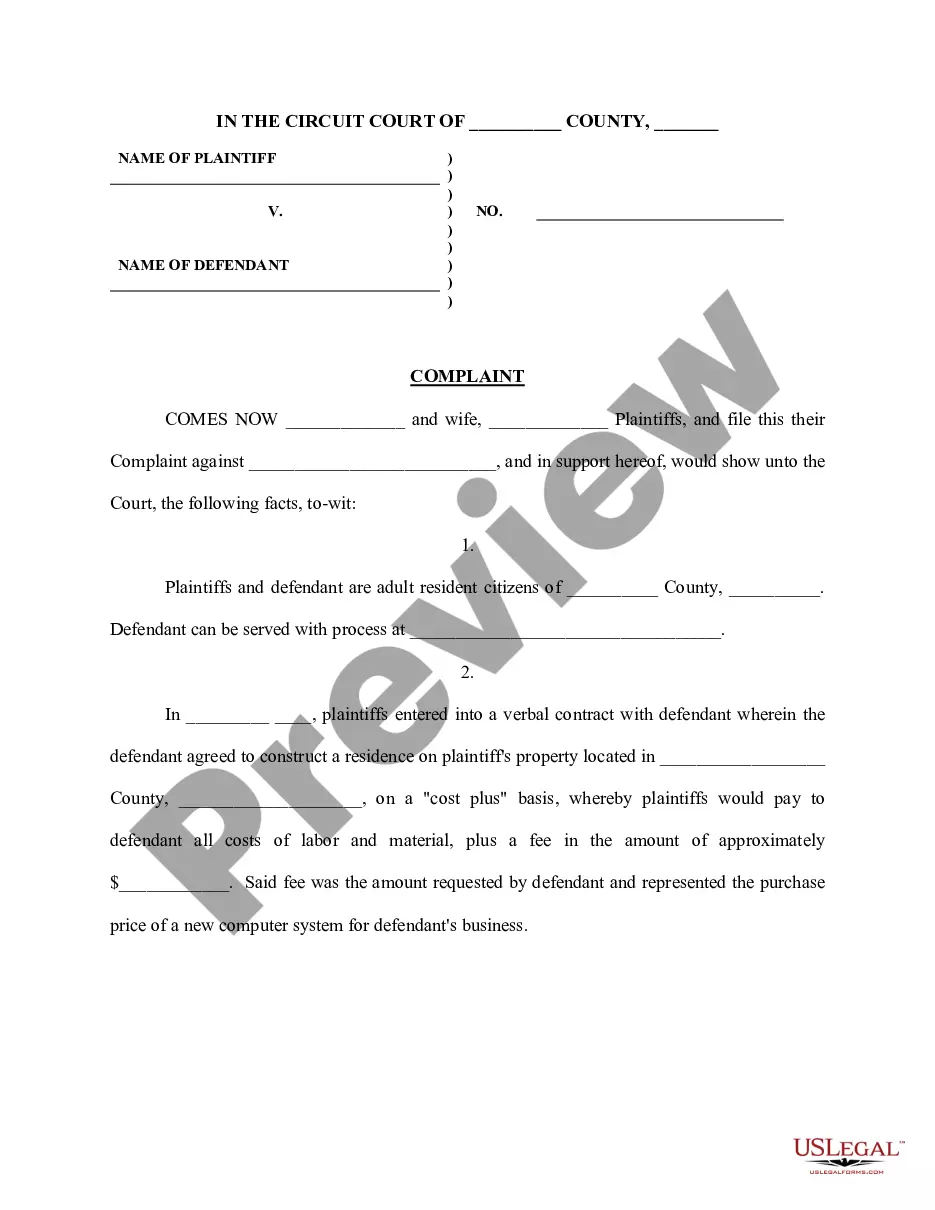
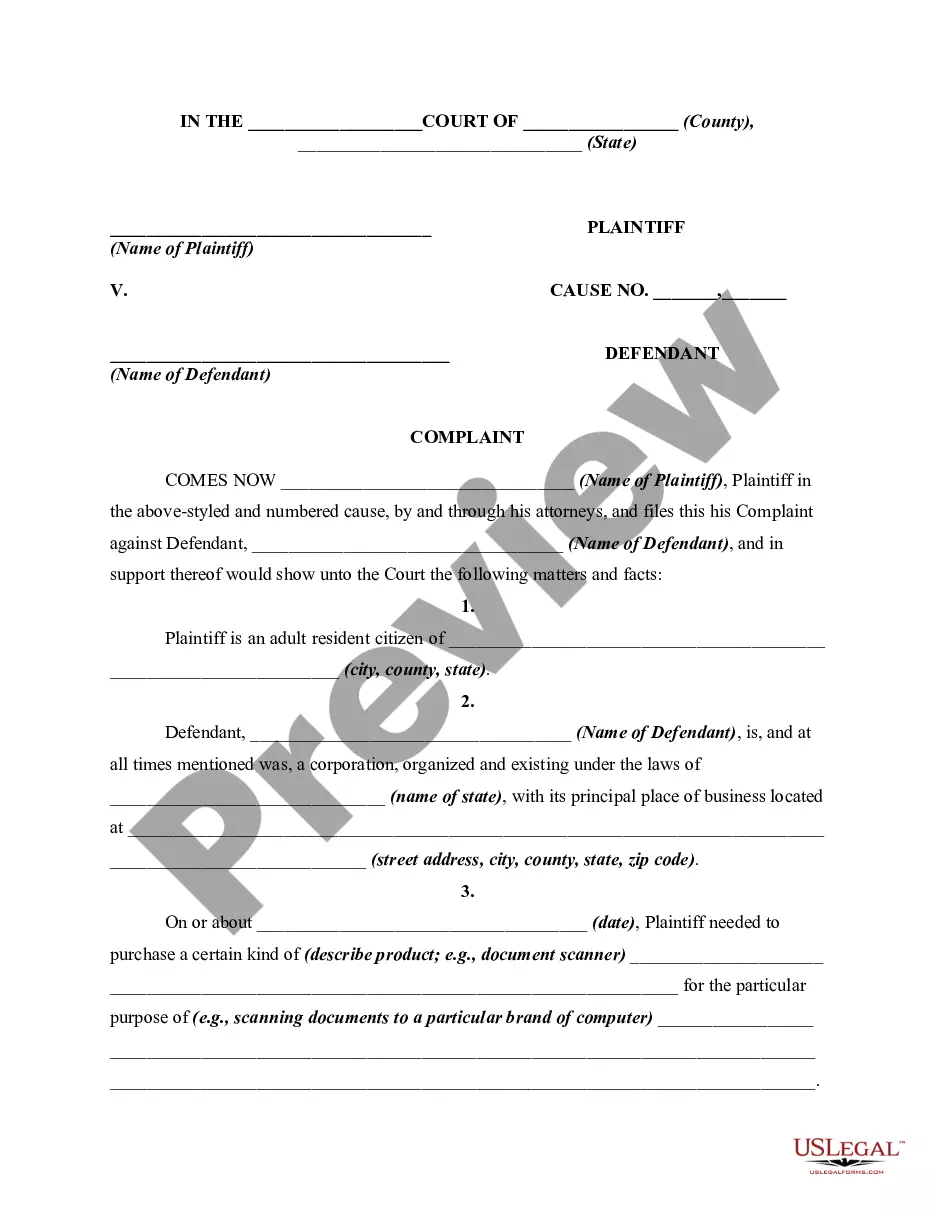
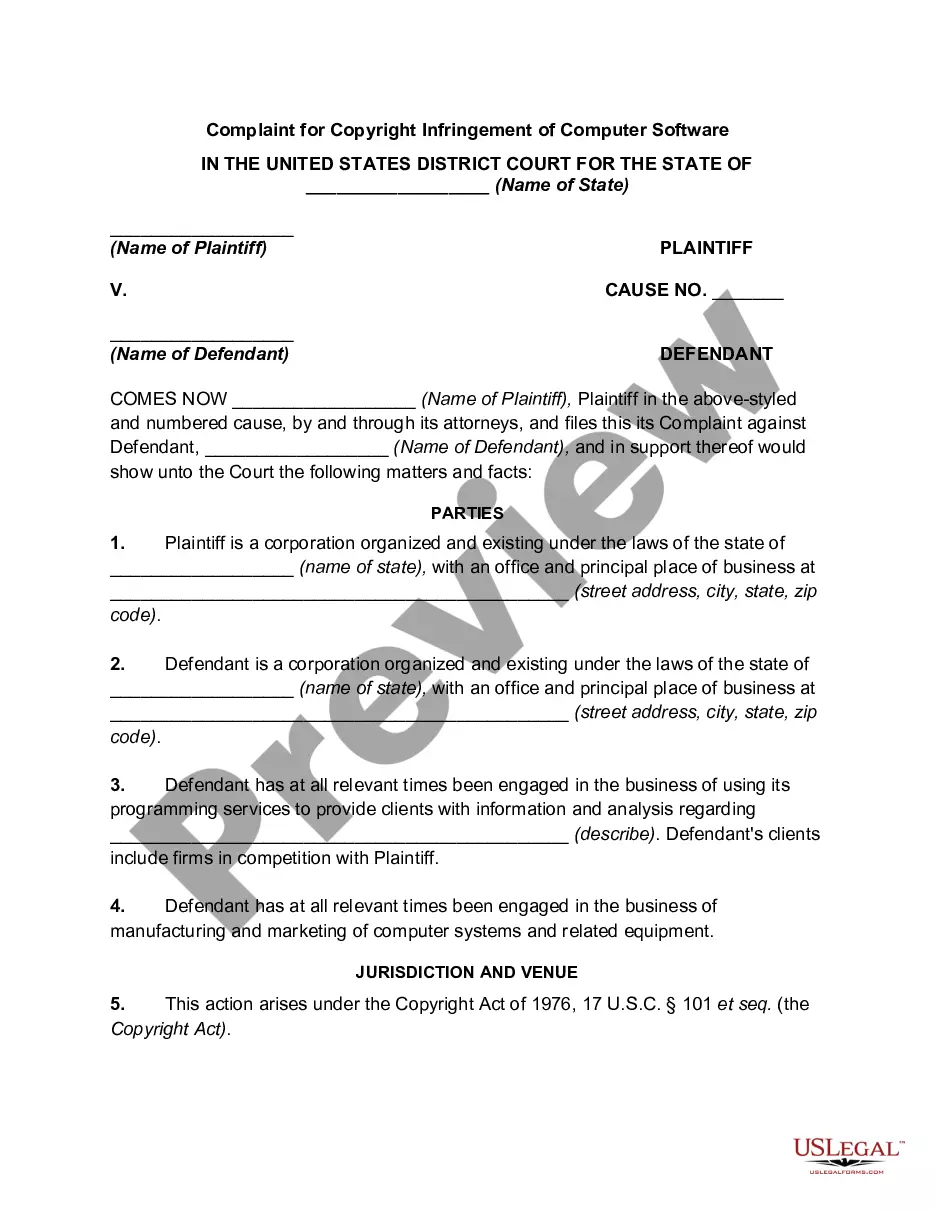
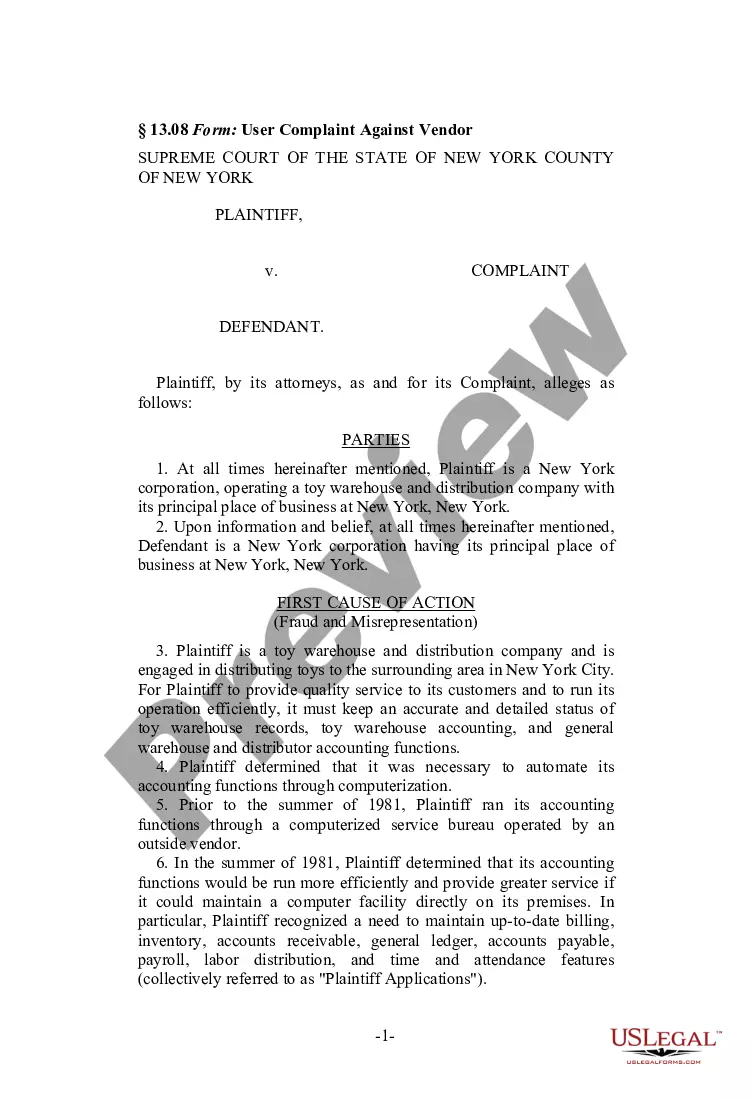
This form is a legal document titled "Complaint against Vendor of Computer System by Purchaser for Fraud and Misrepresentation, Breach of Contract, Breach of Implied Warranty of Merchantability, Breach of Implied Warranty of Fitness." It serves as a formal complaint by a purchaser who believes that a vendor has engaged in fraudulent misrepresentation and broken contractual agreements regarding a computer system's reliability and functionality. This form outlines the specific grievances against the vendor and seeks compensation for the damages incurred. It differs from other legal complaints by emphasizing technology-related contractual issues and misrepresentations specific to computing systems.
Key components of this form
- Parties involved: Identifies the plaintiff (purchaser) and defendant (vendor).
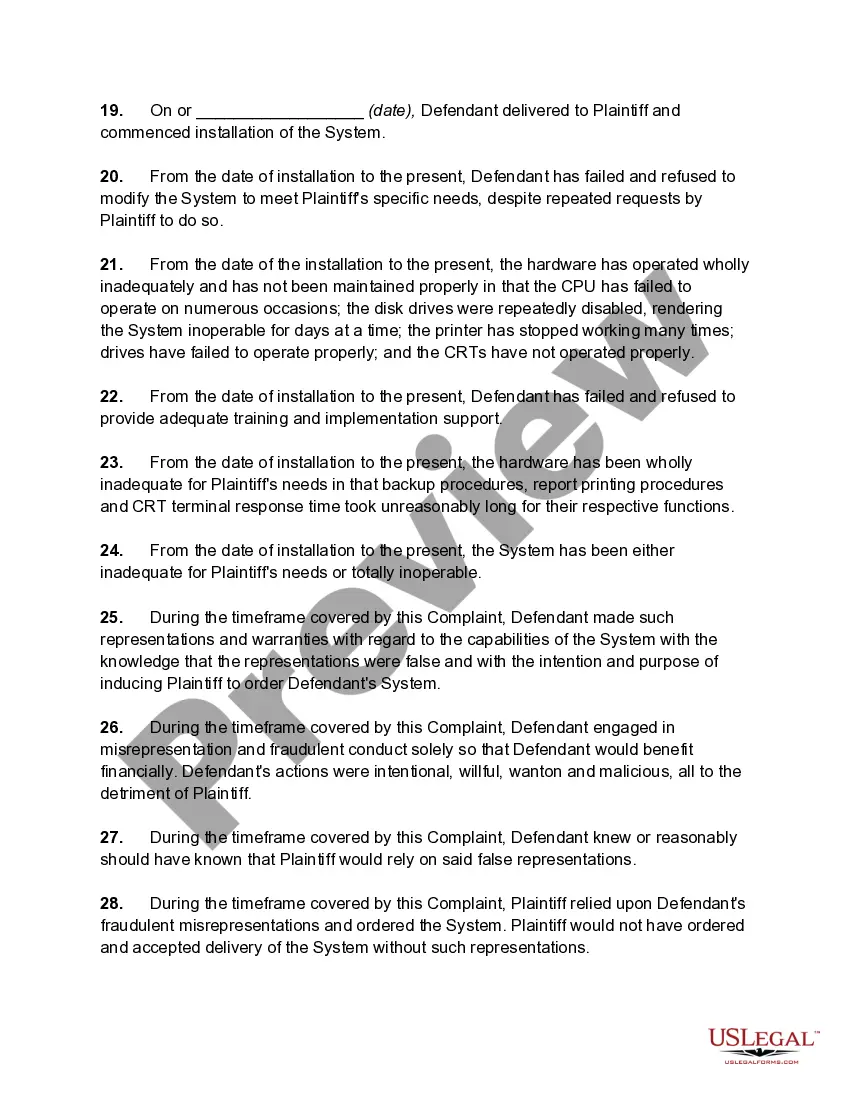
- First cause of action: Details allegations of fraud and misrepresentation regarding the system's capabilities.
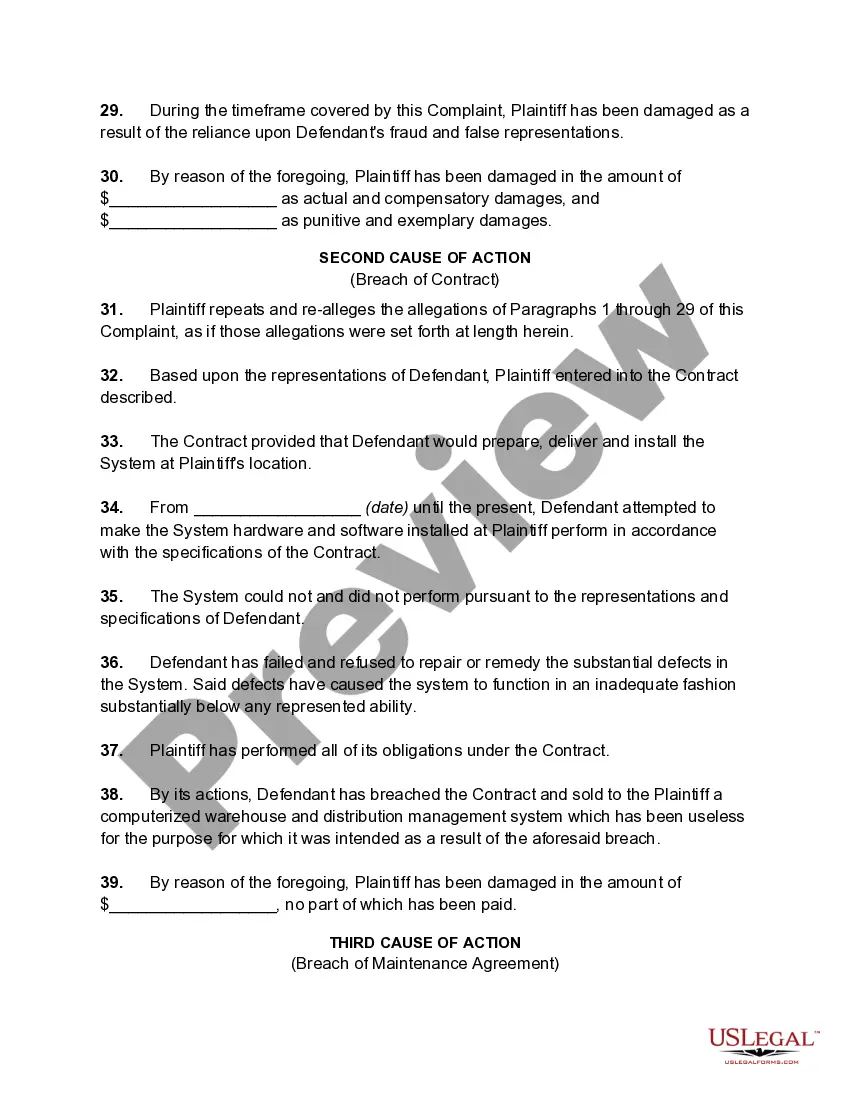
- Second cause of action: Outlines breach of contract allegations related to the non-fulfillment of the agreed provisions.
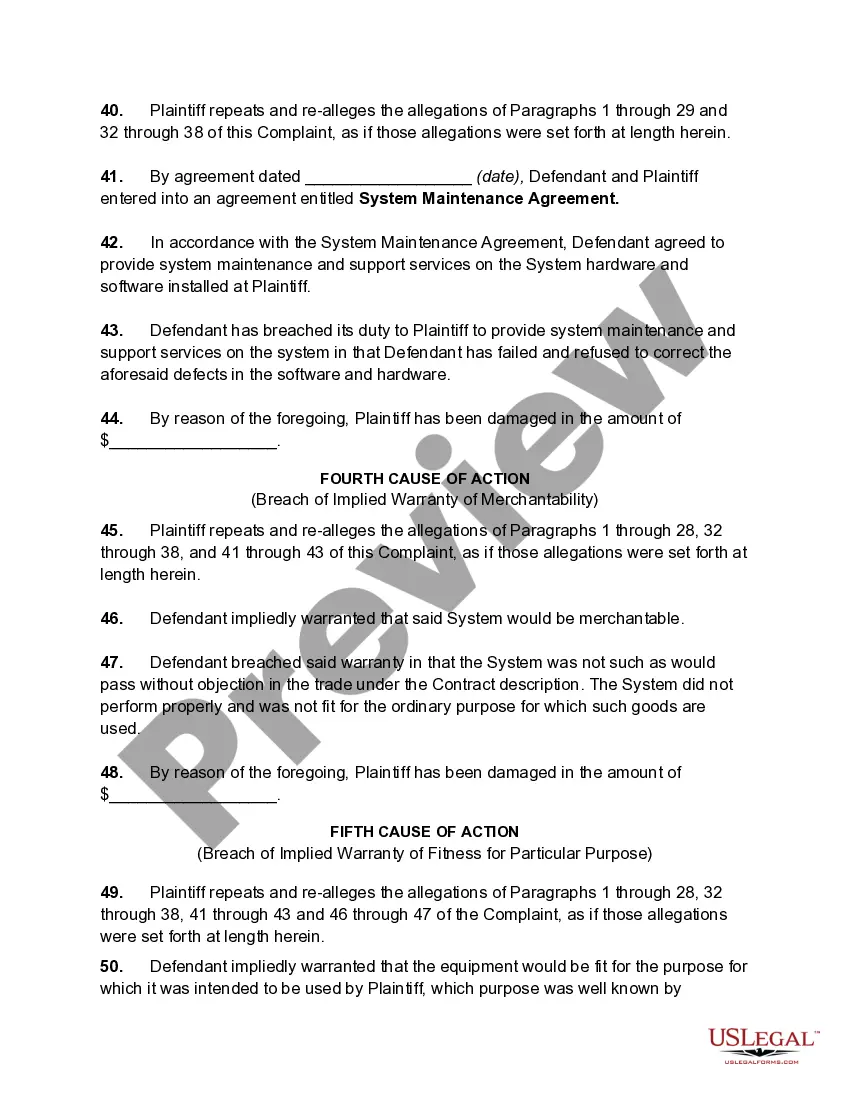
- Third cause of action: Describes breach of maintenance agreement related to services promised for the system.
- Fourth cause of action: Explains breach of the implied warranty of merchantability.
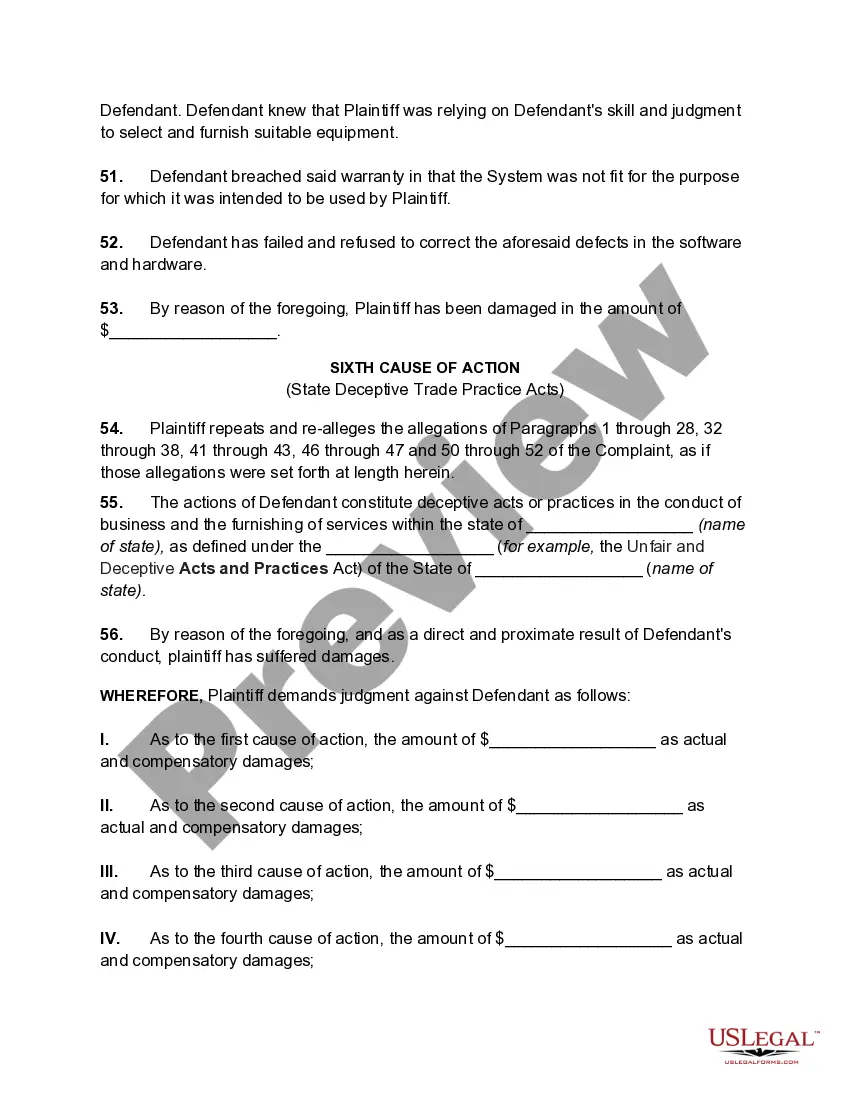
- Fifth cause of action: Focuses on breach of the implied warranty of fitness for a particular purpose.
- Sixth cause of action: Discusses violations of state deceptive trade practice acts.

When to use this document
This form should be used when a purchaser of a computer system believes that the vendor has committed fraud by making false representations about the product, breached a contract, or failed to meet implied warranties. Scenarios may include situations where the system does not perform as promised, when the vendor fails to provide the necessary support or training, or if the product is unsuitable for its intended purpose.
Who needs this form
This form is intended for:
- Businesses or individuals who purchased a computer system and believe they have been misled by the vendor.
- Entities that have suffered damages due to the vendor's failure to deliver a functional product.
- Purchasers seeking to assert legal claims for fraud, breach of contract, or violations of warranty against vendors.
How to prepare this document
- Identify the parties by filling in the names of the plaintiff and defendant along with their addresses.
- State the specific grievances and causes of action including details of fraud and misrepresentation.
- Provide the timeline of events, specifying dates of purchase and installation of the system.
- Calculate and enter the damages claimed for each cause of action clearly.
- Sign the form and have it filed in the appropriate court.
Notarization guidance
This form does not typically require notarization unless specified by local law. However, having it notarized may provide additional legal validation in some jurisdictions.
Get your form ready online
Our built-in tools help you complete, sign, share, and store your documents in one place.
Make edits, fill in missing information, and update formatting in US Legal Forms—just like you would in MS Word.
Download a copy, print it, send it by email, or mail it via USPS—whatever works best for your next step.
Sign and collect signatures with our SignNow integration. Send to multiple recipients, set reminders, and more. Go Premium to unlock E-Sign.
If this form requires notarization, complete it online through a secure video call—no need to meet a notary in person or wait for an appointment.
We protect your documents and personal data by following strict security and privacy standards.

Make edits, fill in missing information, and update formatting in US Legal Forms—just like you would in MS Word.

Download a copy, print it, send it by email, or mail it via USPS—whatever works best for your next step.

Sign and collect signatures with our SignNow integration. Send to multiple recipients, set reminders, and more. Go Premium to unlock E-Sign.

If this form requires notarization, complete it online through a secure video call—no need to meet a notary in person or wait for an appointment.

We protect your documents and personal data by following strict security and privacy standards.
Common mistakes
- Failing to thoroughly document all communications with the vendor.
- Neglecting to specify all causes of action clearly in the complaint.
- Not including dates or precise details of the alleged fraud or breach of contract.
- Overlooking jurisdictional requirements for filing the complaint.
Benefits of using this form online
- Immediate access to a legally drafted complaint form tailored to specific grievances.
- Efficient editing capabilities to customize the form to fit individual circumstances.
- Easy downloading and filing options for quick initiation of the legal process.
Looking for another form?
Form popularity
FAQ
The section 73 of the Act states that When a contract has been broken, the party who suffers by such breach is entitled to receive, from the party who has broken the contract, compensation for any loss or damage caused to him thereby, which naturally arose in the usual course of things from such breach, or which the
Merchantable is equivalent to marketable or sellable. Goods are merchantable when they are of reasonable quality within expected variations and are fit for sale in usual course of trade, at usual selling price.
Article 2 of the Uniform Commercial Code ("UCC") governs the sale of goods.For goods to be merchantable, they must be at least such as: (a) pass without objection in the trade under the contract description; and. (b) in the case of fungible goods, are of fair average quality within the description; and.
A term of a contract which is of such vital importance that it goes to the root of the transaction; essentially it is a major term of the contract. Breach of a condition gives rise to the claimant's right to terminate the contract (treat the contract as discharged) and claim damages for any loss.
The effect of a breach of a warranty is that the aggrieved party cannot repudiate the whole contract however, can claim for the damages. Unlike in the case of breach of condition, in the breach of warranty, the buyer cannot treat the goods as repudiated.
When a breach of contract occurs or is alleged, one or both of the parties may wish to have the contract enforced on its terms, or may try to recover for any financial harm caused by the alleged breach. If a dispute over a contract arises and informal attempts at resolution fail, the most common next step is a lawsuit.
The UCC states that remedies for a breach of contract are to be administered to the end that the aggrieved party may be put in as good a position as if the other party had fully performed. The aggrieved party is not entitled to a financial windfall. cancel the contract.
Breach of a condition entitles the innocent (nondefaulting) party to terminate the contract and claim damages for any loss it suffers. A warranty is a minor term in the contract, usually an assurance or promise in a contract, the breach of which may give rise to a claim for damages only.
Different consequences can follow from a breach of contract: a breach of warranty limits the innocent party to claim damages, that is a legal obligation to pay money for the loss caused by the breach. the contract itself may set out the potential consequences for any breach, or a particular type or class of breach.