1.01 EXPLANATORY: BEFORE VOIR DIRE
What this document covers
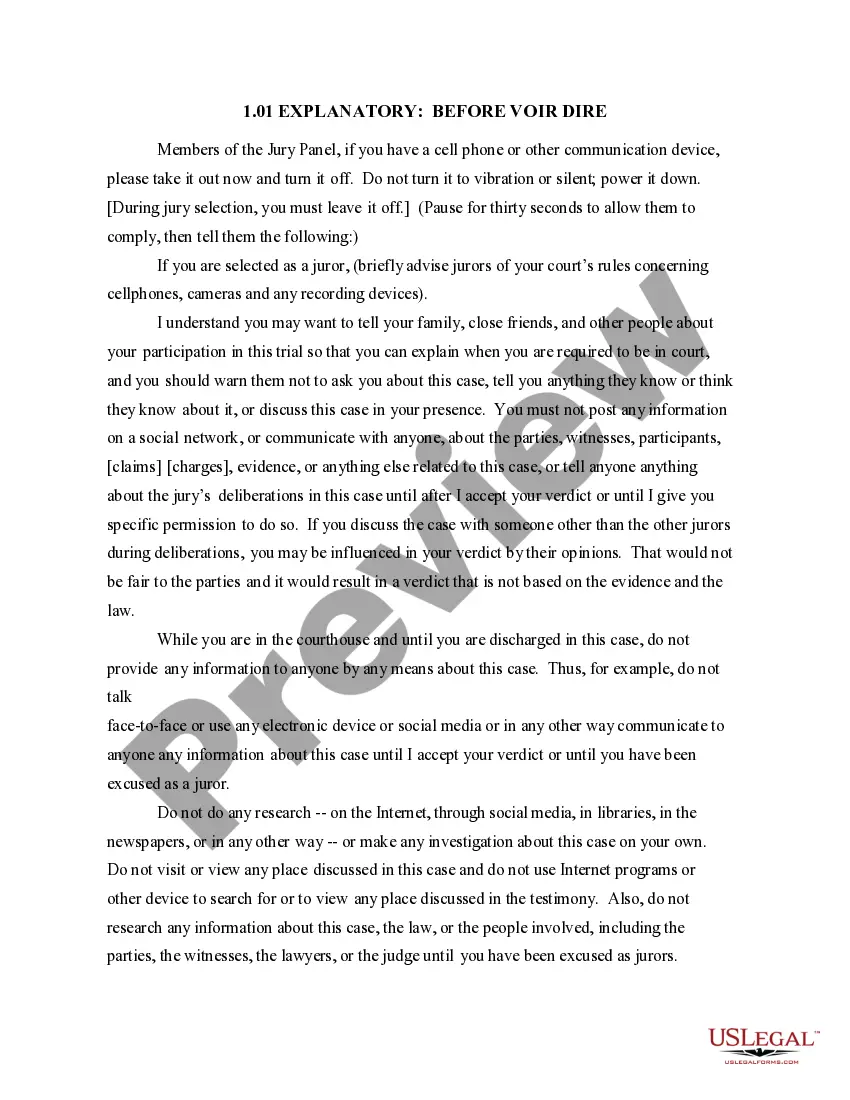
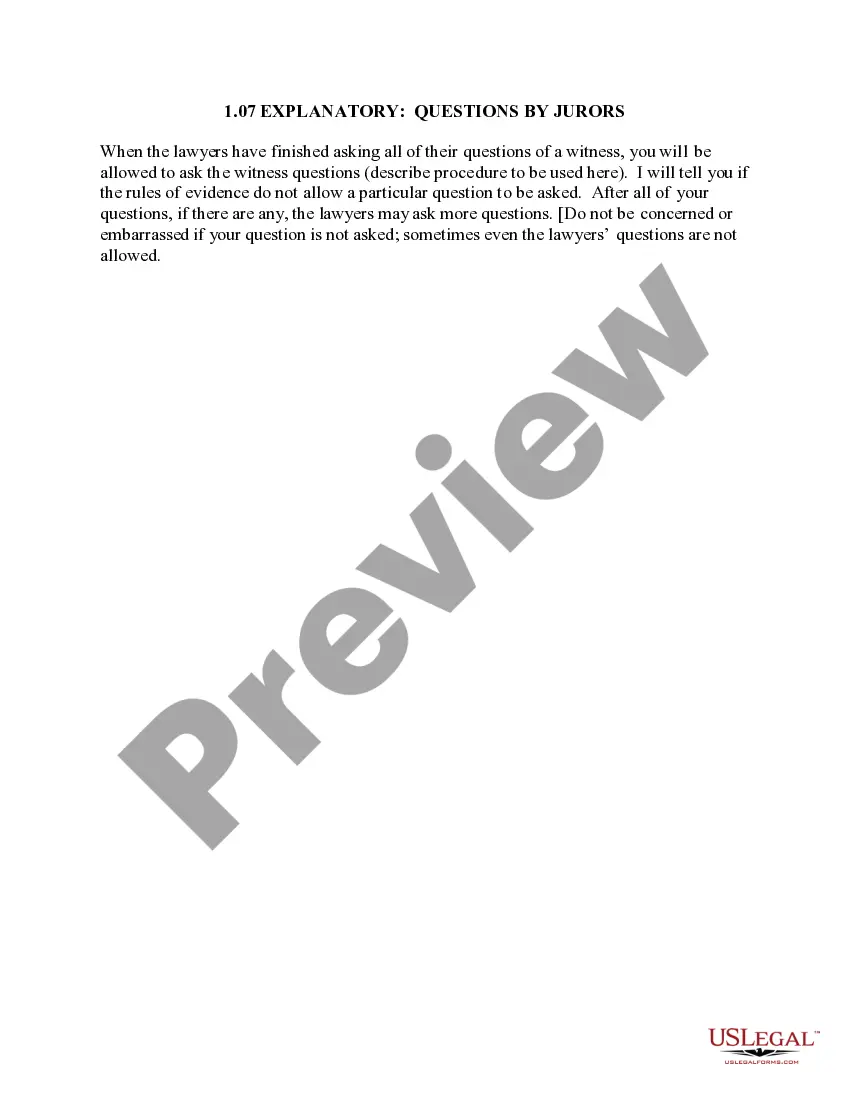
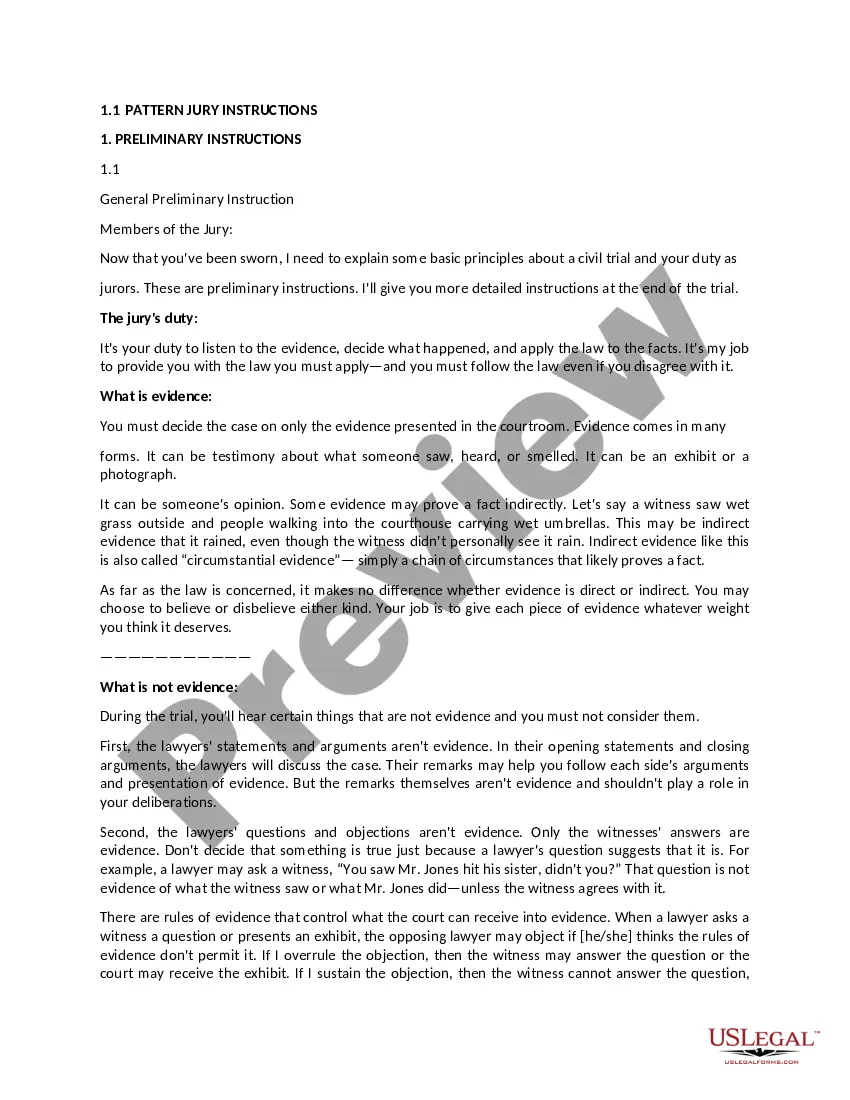
The "1.01 Explanatory: Before Voir Dire" is a legal guideline used during jury selection in court. It provides essential instructions to jury panel members on how to conduct themselves prior to the voir dire process. Unlike other legal forms that pertain to evidence or testimony, this form specifically addresses communication and conduct expectations for jurors, ensuring an impartial and fair jury process.
Key components of this form
- Instructions for jurors to turn off communication devices.
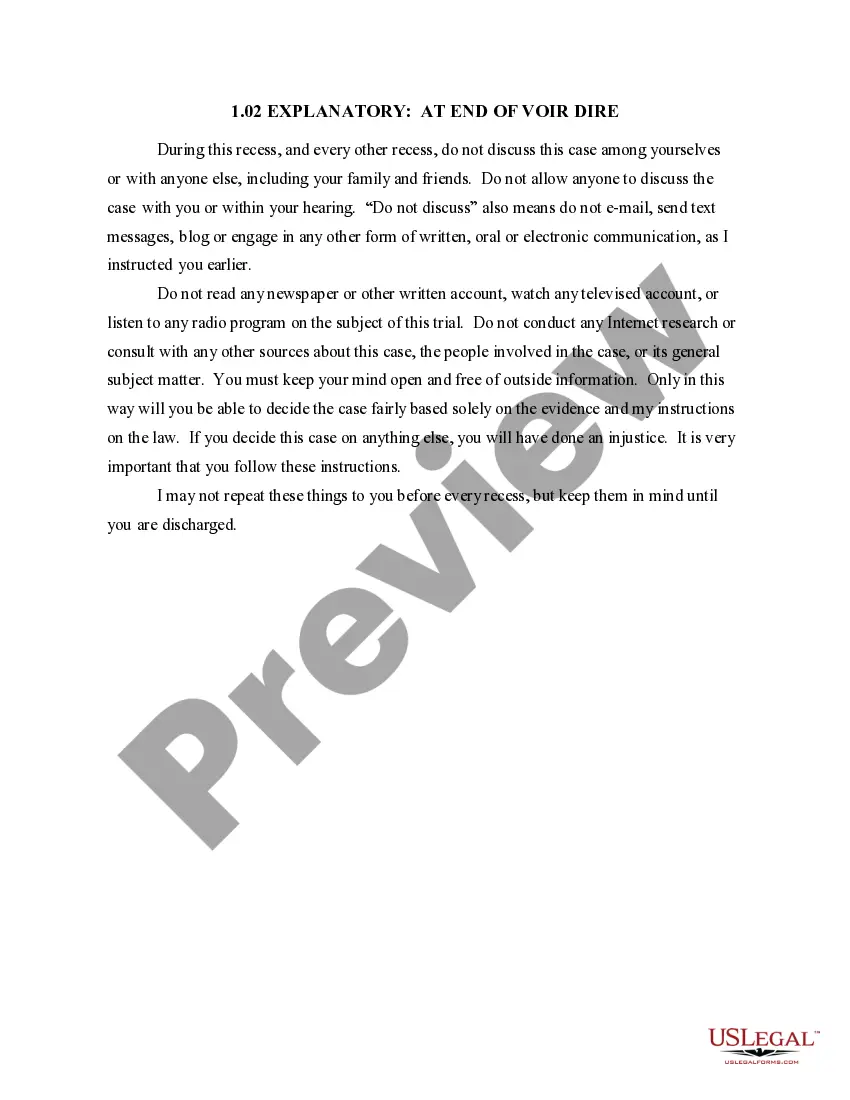
- Guidelines on discussing the case with family and friends.
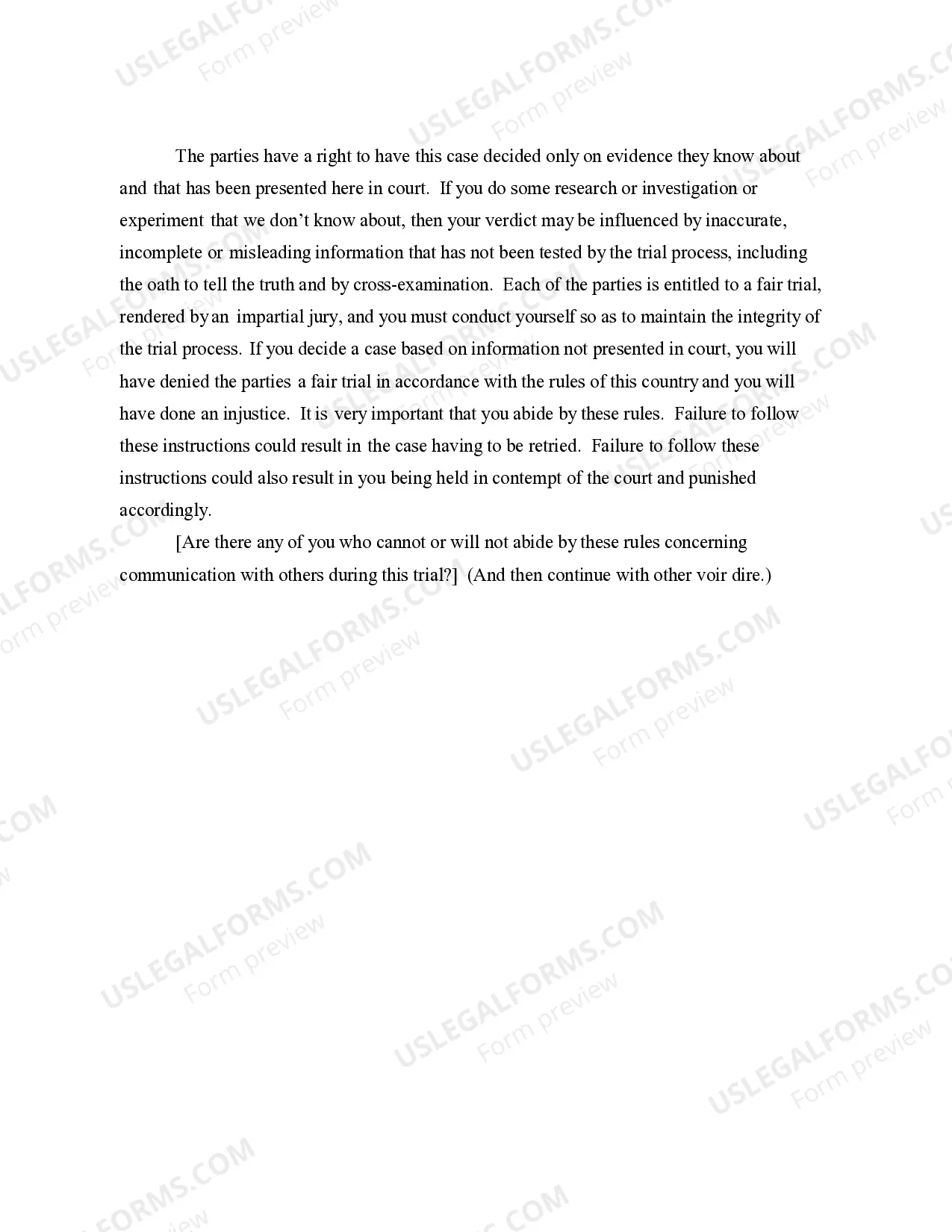
- Prohibitions against independent research or investigations related to the case.
- Consequences of not adhering to the communication rules.
- Affirmation of the parties' rights to a fair trial based on the presented evidence.

When to use this document
This form is used during the jury selection phase in court proceedings, specifically before the voir dire. Judges typically present this information to jurors to set clear expectations before they begin to assess the case. It is critical to ensure that jurors understand their obligations not to discuss the case or seek outside information until it concludes.
Who needs this form
- Judges presiding over civil jury trials.
- Legal practitioners involved in jury selection processes.
- Court administrators managing jury panel orientations.
- Jurors selected to serve on a trial jury.
How to complete this form
- Prepare a script or verbal presentation based on the form's content.
- Instruct jurors to turn off all communication devices before the selection starts.
- Explain the importance of confidentiality about the case and jury deliberation.
- Clarify the details regarding independent research and the importance of deciding the case based solely on evidence presented in court.
- Ensure jurors understand the serious consequences of not adhering to these instructions.
Does this document require notarization?
This form does not typically require notarization to be legally valid. However, some jurisdictions or document types may still require it. US Legal Forms provides secure online notarization powered by Notarize, available 24/7 for added convenience.
Get your form ready online
Our built-in tools help you complete, sign, share, and store your documents in one place.
Make edits, fill in missing information, and update formatting in US Legal Forms—just like you would in MS Word.
Download a copy, print it, send it by email, or mail it via USPS—whatever works best for your next step.
Sign and collect signatures with our SignNow integration. Send to multiple recipients, set reminders, and more. Go Premium to unlock E-Sign.
If this form requires notarization, complete it online through a secure video call—no need to meet a notary in person or wait for an appointment.
We protect your documents and personal data by following strict security and privacy standards.

Make edits, fill in missing information, and update formatting in US Legal Forms—just like you would in MS Word.

Download a copy, print it, send it by email, or mail it via USPS—whatever works best for your next step.

Sign and collect signatures with our SignNow integration. Send to multiple recipients, set reminders, and more. Go Premium to unlock E-Sign.

If this form requires notarization, complete it online through a secure video call—no need to meet a notary in person or wait for an appointment.

We protect your documents and personal data by following strict security and privacy standards.
Common mistakes
- Jurors may forget to turn off their devices, leading to interruptions.
- Failing to emphasize the prohibition against discussing the case with non-jurors.
- Not clearly communicating the potential consequences of violating these rules.
- Overlooking the need for jurors to refrain from research or investigations.
Legal use & context
The instructions provided in this form are legally significant as they establish the framework for jurors' conduct during trial proceedings. Adherence to these guidelines helps preserve the integrity of the judicial process and ensures that verdicts are based solely on evidence presented in court. Violating these instructions can lead to mistrials or contempt of court charges.
Key takeaways
- This form provides crucial guidelines for jurors before voir dire.
- Emphasizing confidentiality is essential for a fair trial process.
- Jurors must not engage in outside research or discussions about the case.
- Non-compliance with these rules can result in serious legal consequences.
Looking for another form?
Form popularity
FAQ
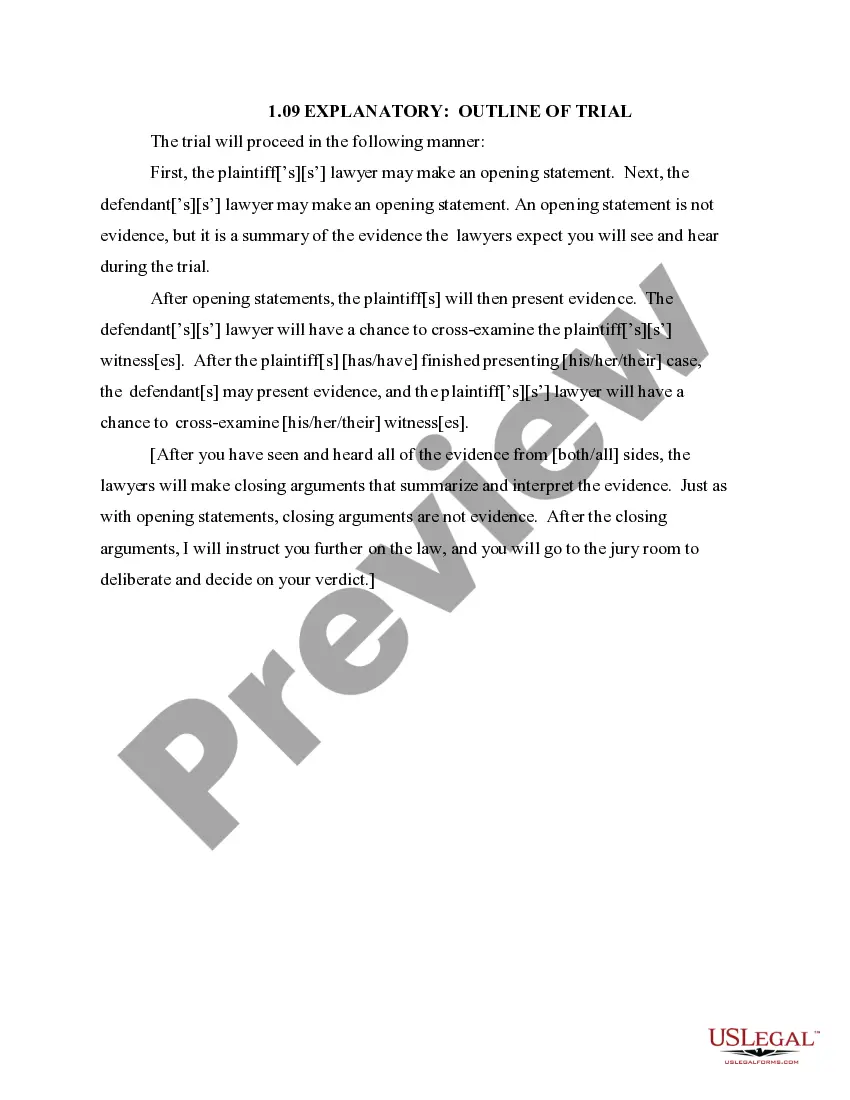
An opening statement is made by the attorney for the plaintiff. The attorney for the defendant may then make an opening statement. The purpose of opening statements is to outline to the jury what each side contends the evidence will establish. A general idea of what the case is about is thus presented to the jury.
The judge and attorneys in turn will voir dire (question) the venire to determine the jurors' biases and prejudices. After voir dire, the attorneys will ?strike? a venire in order to get the 12 jurors.
For example, a juror who is related to or employed by one of the parties in the case may be excused for cause. There is no limit to the number of for cause challenges that may be used. b. peremptory - Each side in a case has a certain number of challenges that can be used without giving a reason.
Voir dire is the process used by the parties to select a fair and impartial jury. During voir dire, the jury panel is questioned by both parties' lawyers. The questions are intended to help the lawyers in the jury selection process. After voir dire, the jury is selected from the panel.
French for "to speak the truth." The process through which potential jurors from the venire are questioned by either the judge or a lawyer to determine their suitability for jury service. Also the preliminary questioning of witnesses (especially experts) to determine their competence to testify.