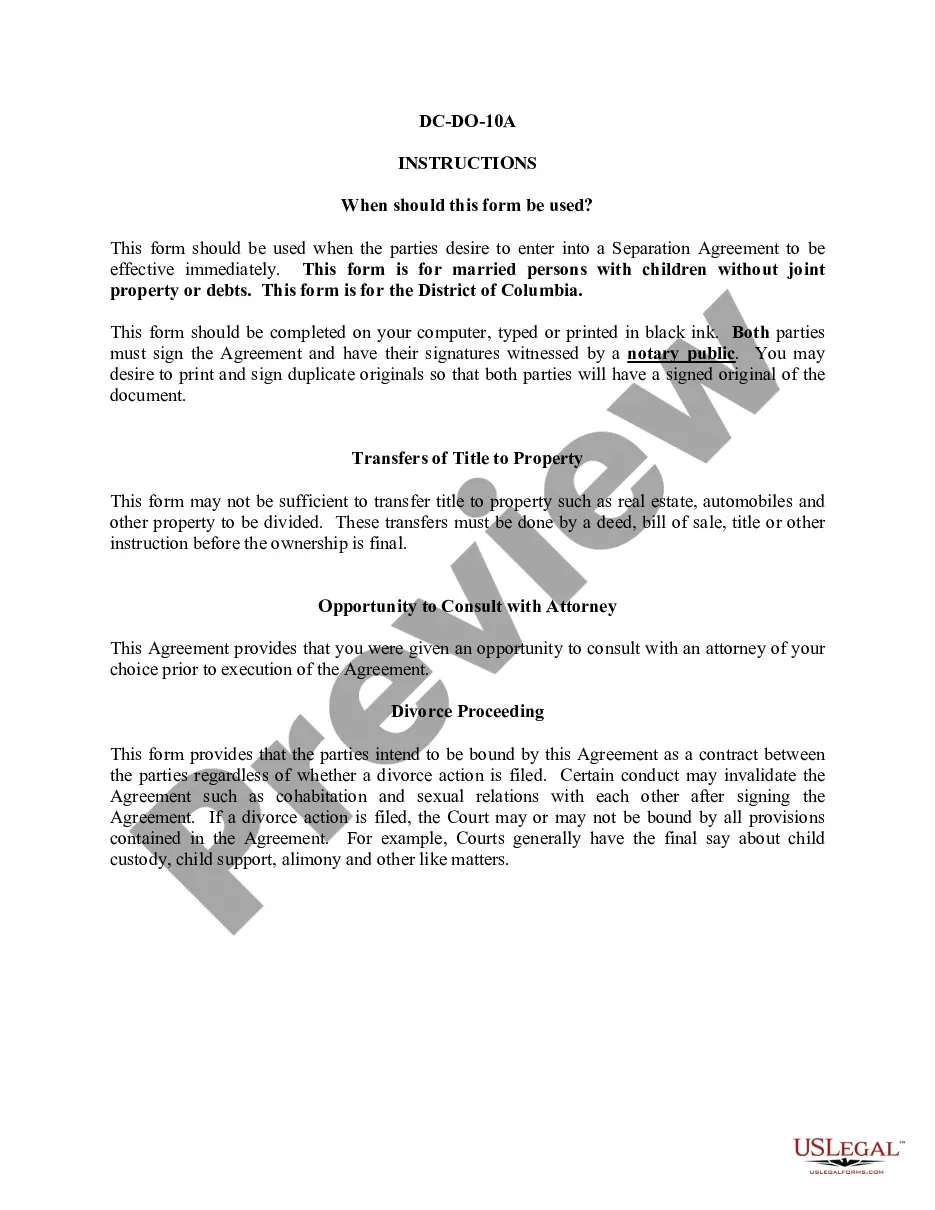
Motion to Reopen Petition for Post Conviction Relief
About this form
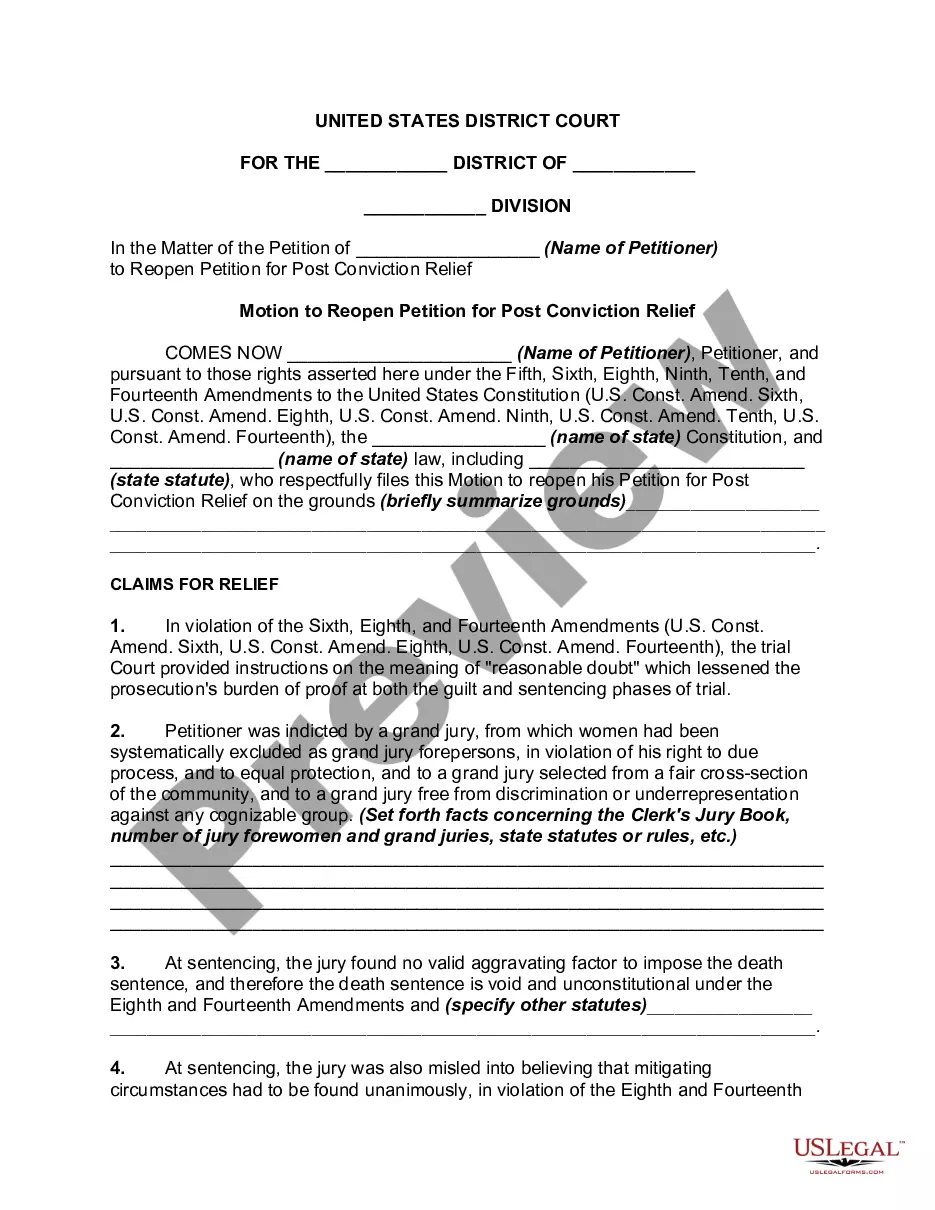
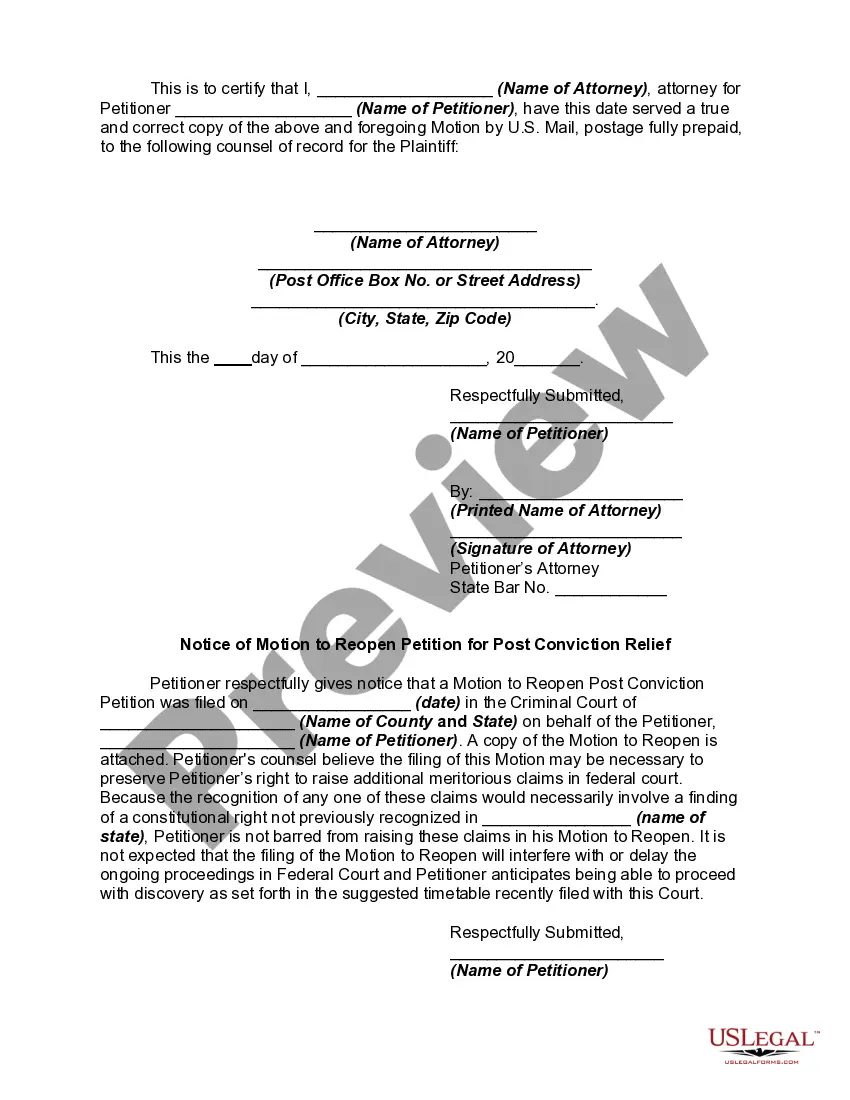
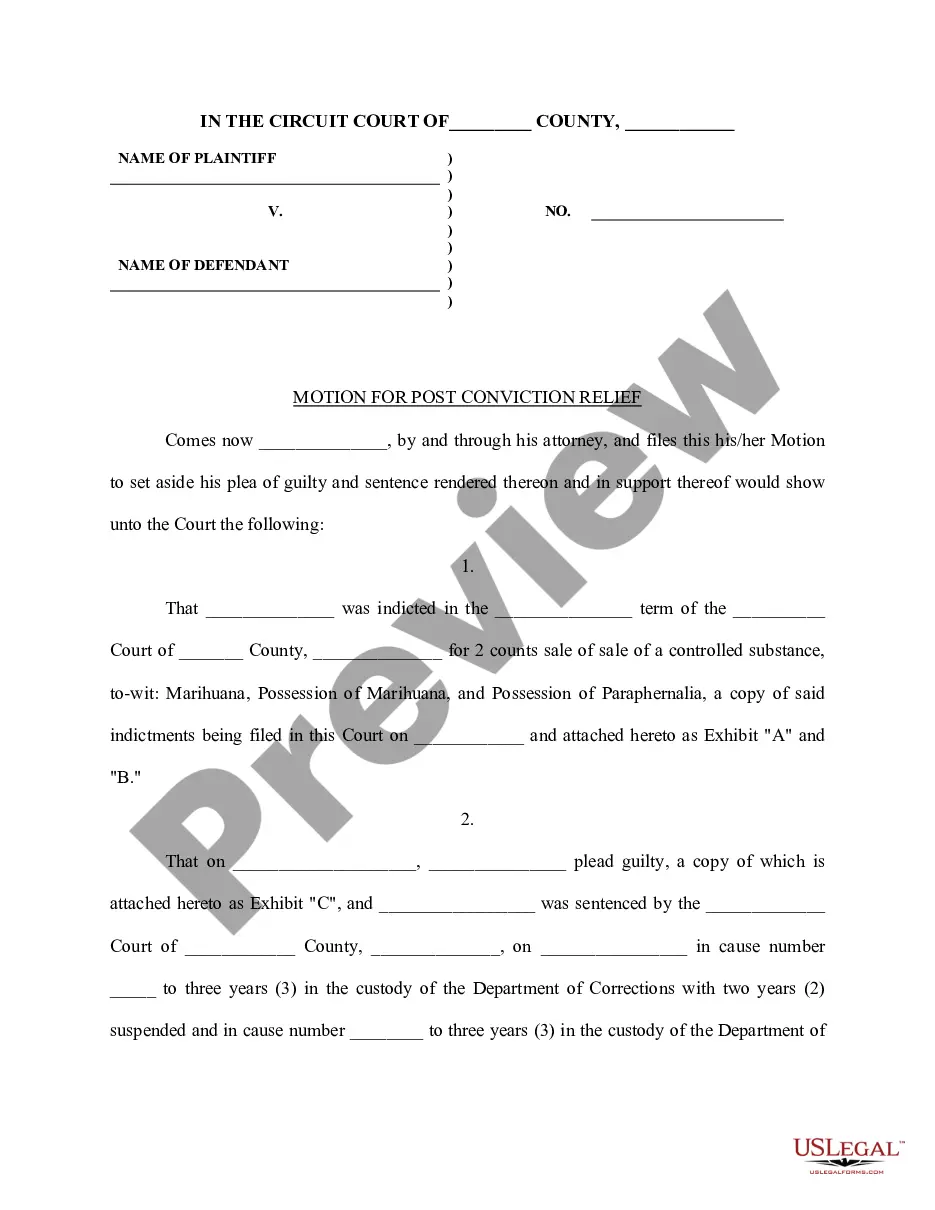
The Motion to Reopen Petition for Post Conviction Relief is a legal document that allows a person convicted of a crime to request the court to reconsider their previous post-conviction relief petition. This form is specifically designed for individuals seeking to assert new grounds for relief based on constitutional violations that may not have been recognized at the time of their original trial. Unlike standard applications for post-conviction relief, this motion focuses on reopening a case due to newly recognized legal standards or facts arising after the initial petition was denied.
Key parts of this document
- Case caption identifying the court and parties involved.
- Introduction stating the basis for reopening the petition, including constitutional references.
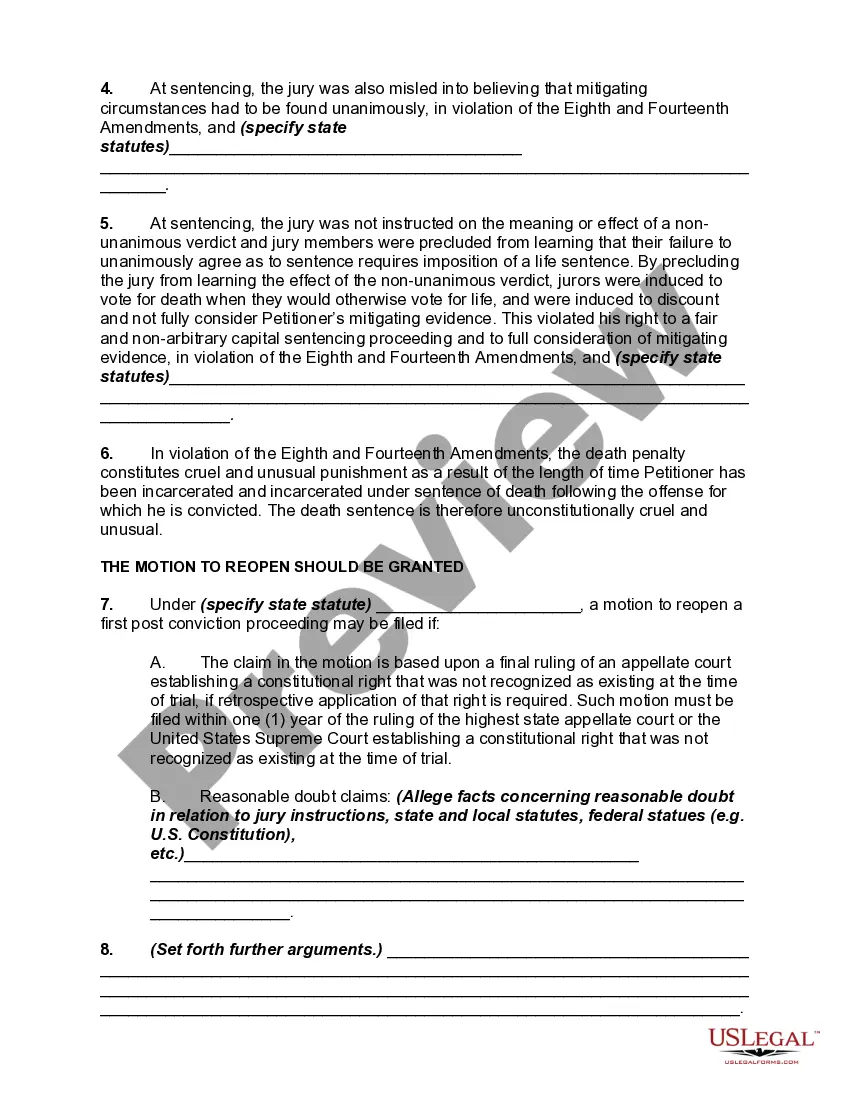
- Claims for relief outlining specific grounds for reopening, including alleged constitutional violations.
- Arguments supporting each claim, detailing factual background and applicable statutes.
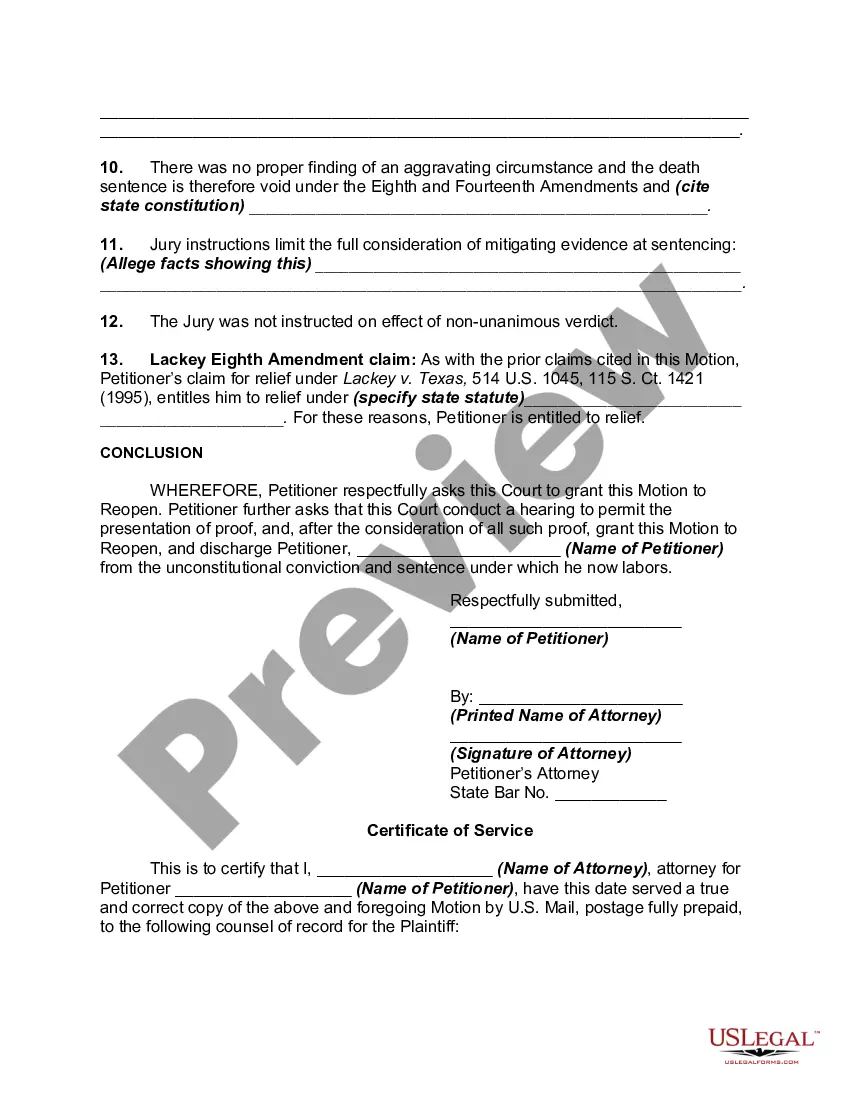
- Conclusion requesting the court to grant the motion to reopen and hold a hearing.
- Signature section for the petitioner and attorney, if applicable.

Common use cases
This form should be used when a petitioner wants to challenge the outcome of a previous post-conviction relief petition. Situations that may warrant the use of this motion include discovering new evidence, changes in applicable law, or if a higher court has ruled on a constitutional issue that affects the petitionerâs original conviction. If a petitioner believes their rights have been violated in a manner that has not yet been considered by the court, this form provides the necessary framework to put those issues before a judge.
Who should use this form
- Individuals who have been convicted of a crime and have previously sought post-conviction relief.
- Petitioners who believe they have new grounds for relief based on legal developments since their last petition.
- Defendants whose constitutional rights may have been violated during their trial or sentencing.
Instructions for completing this form
- Begin by filling out the case caption with the correct district and division.
- Clearly state your name as the petitioner and provide the legal basis for reopening the petition.
- Detail each claim for relief, including references to specific constitutional amendments and relevant facts.
- Conclude with a formal request to the court for a hearing and relief from the conviction.
- Sign and date the form, and ensure any attorney's information is added if represented.
Notarization guidance
This form does not typically require notarization unless specified by local law. It is advisable to check with the applicable court rules, as some jurisdictions may require notarized documents for certain filings.
Get your form ready online
Our built-in tools help you complete, sign, share, and store your documents in one place.
Make edits, fill in missing information, and update formatting in US Legal Forms—just like you would in MS Word.
Download a copy, print it, send it by email, or mail it via USPS—whatever works best for your next step.
Sign and collect signatures with our SignNow integration. Send to multiple recipients, set reminders, and more. Go Premium to unlock E-Sign.
If this form requires notarization, complete it online through a secure video call—no need to meet a notary in person or wait for an appointment.
We protect your documents and personal data by following strict security and privacy standards.

Make edits, fill in missing information, and update formatting in US Legal Forms—just like you would in MS Word.

Download a copy, print it, send it by email, or mail it via USPS—whatever works best for your next step.

Sign and collect signatures with our SignNow integration. Send to multiple recipients, set reminders, and more. Go Premium to unlock E-Sign.

If this form requires notarization, complete it online through a secure video call—no need to meet a notary in person or wait for an appointment.

We protect your documents and personal data by following strict security and privacy standards.
Common mistakes
- Failing to cite specific constitutional amendments that support the claims.
- Not providing sufficient factual evidence to substantiate claims for relief.
- Missing deadlines for filing the motion based on state statutes.
- Neglecting to include all necessary signatures, including that of the attorney if applicable.
Why complete this form online
- Accessibility: Download and fill out the form at your convenience.
- Customization: Easily adjust the form to fit your unique circumstances and legal requirements.
- Peace of mind: Ensure you are using a document reviewed by licensed attorneys, reducing legal uncertainties.
Legal use & context
- This motion is an essential tool for individuals seeking to assert their rights post-conviction.
- The effectiveness of this motion depends on the validity of new evidence or legal precedents.
- Engaging legal representation is recommended for navigating the complexities of post-conviction relief.
Quick recap
- The Motion to Reopen Petition for Post Conviction Relief allows for challenging a conviction based on new evidence or legal standards.
- Clear and thorough documentation of claims is essential for the success of the motion.
- Understanding state-specific requirements can significantly impact the outcome of your case.
Looking for another form?



Form popularity
FAQ
1introduction, a statement of events, a section outlining the standard for reopening, legal arguments, and a conclusion stating the relief requested.2state whether the order has been or is the subject of any judicial proceeding.
Immigrants with cases in immigration court can generally file one motion to reopen and one motion to reconsider (or both at the same time). A motion to reopen must generally be filed within 90 days following entry of a final administrative order of removal, deportation, or exclusion.
Introduction, a statement of events, a section outlining the standard for reopening, legal arguments, and a conclusion stating the relief requested. state whether the order has been or is the subject of any judicial proceeding.
A motion to reopen is based on documentary evidence of new facts. Alternatively, a motion to reconsider is based on a claim of incorrect application of law or policy to the prior decision. The regulations for motions to reopen and motions to reconsider are located at 8 C.F.R.
Just as with your motion to stay, begin your motion for reconsideration by stating who you are, what you are asking of the judge, and which rule gives you permission to ask. From there on out, use the rule itself as a general outline for your motion.
A motion to reopen asks the court to reexamine the case. To successfully do this, there has to be new evidence that was discovered after the conclusion of the case. In a reopened case, the new evidence will be heard by the exact same judge, who will then render an updated verdict.