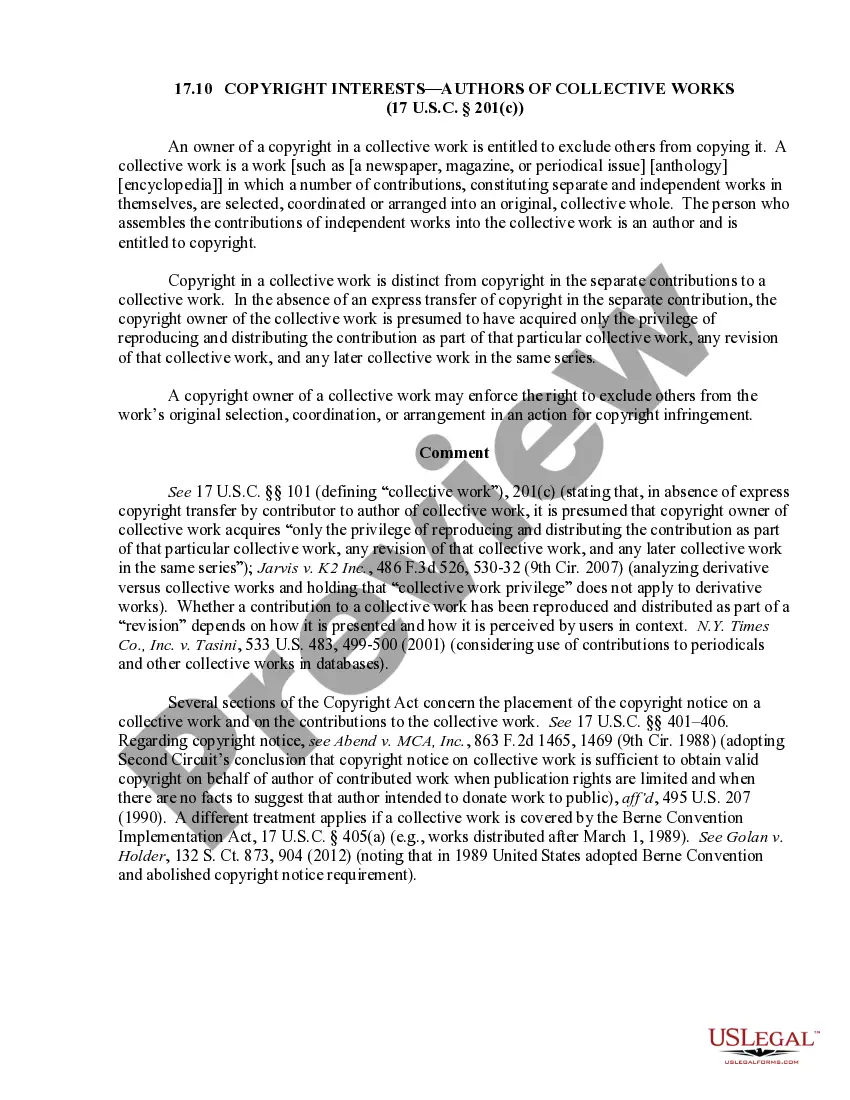
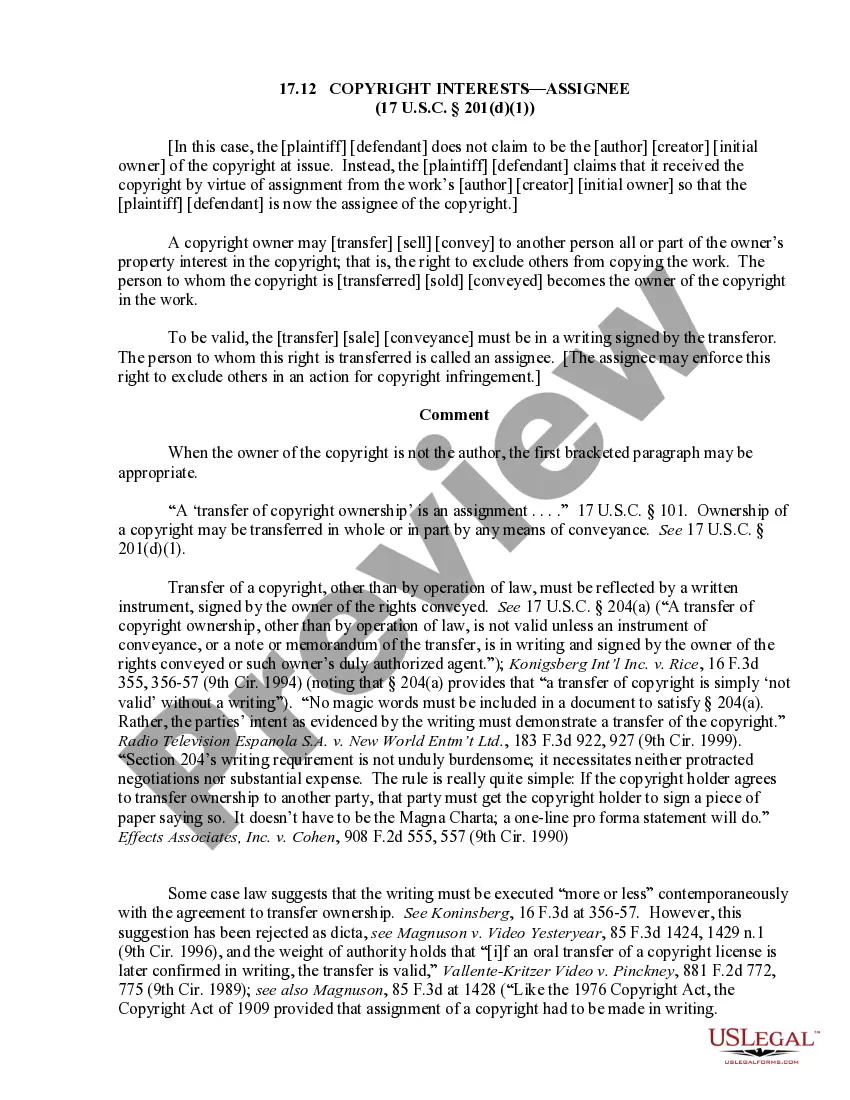
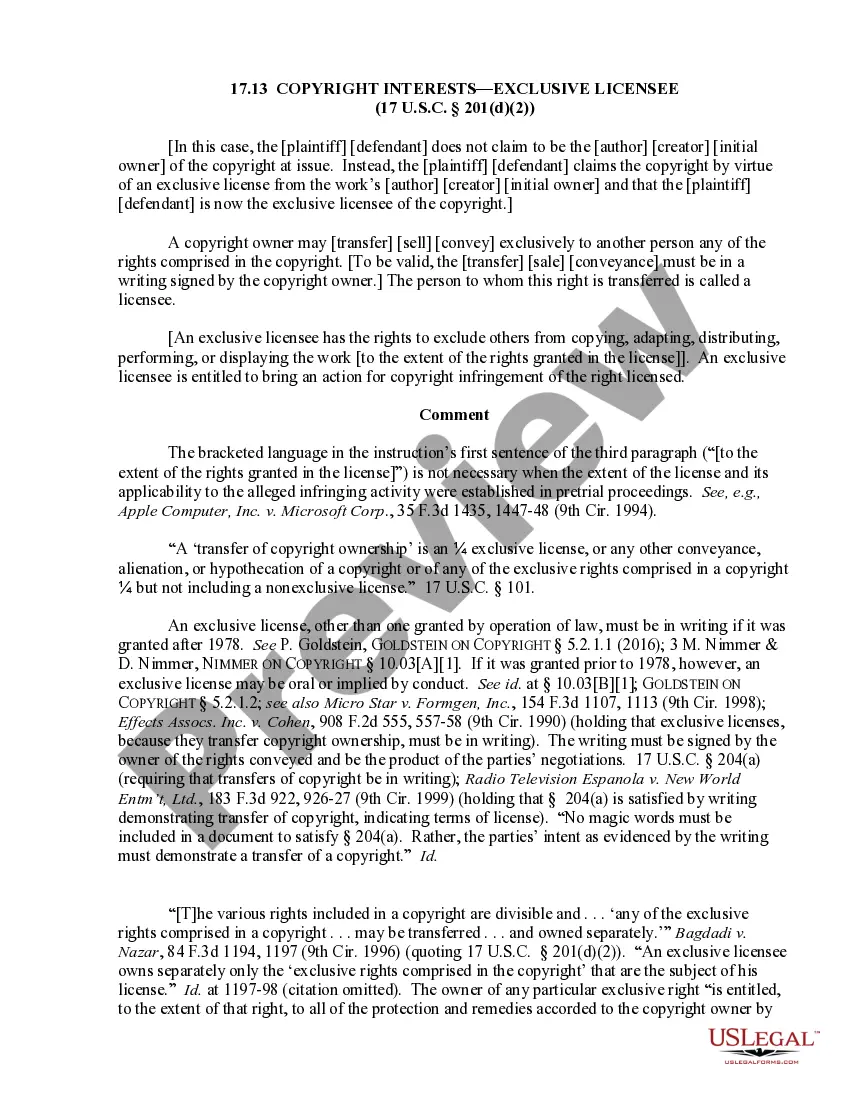
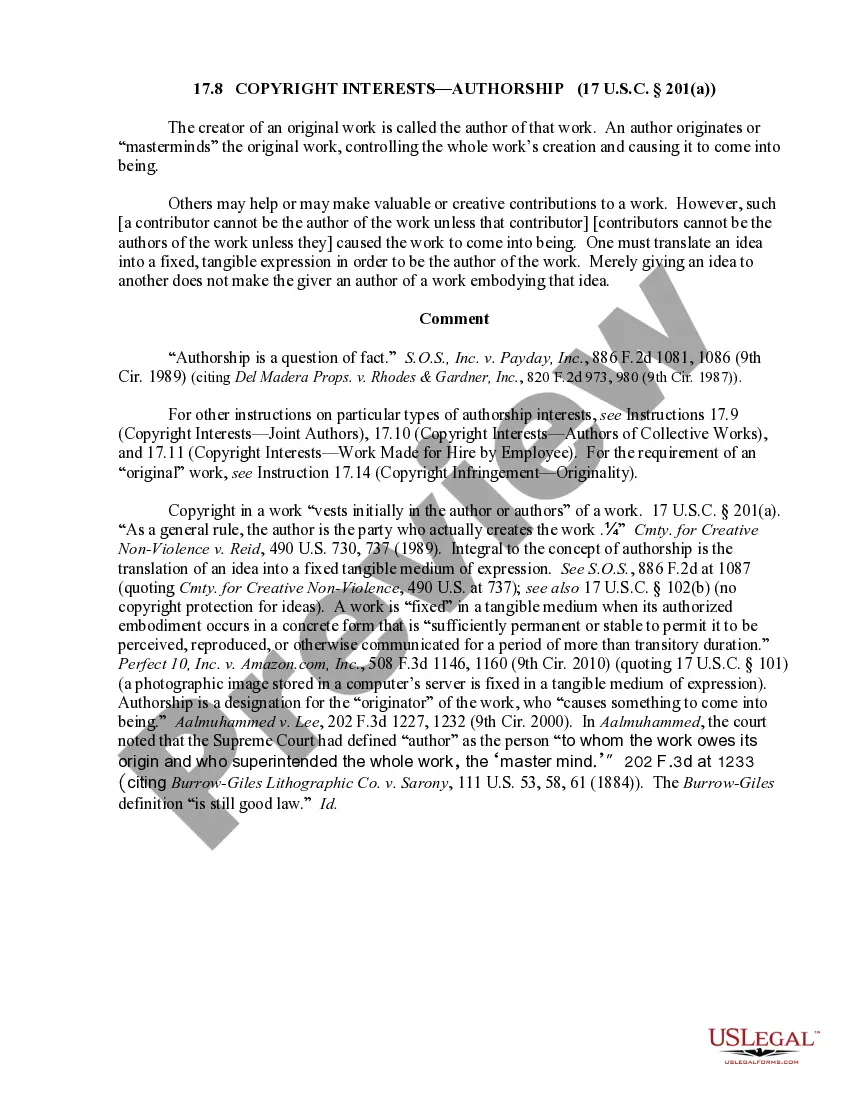
17.9 Copyright Interests-Joint Authors
Does this form need to be notarized?
Notarization is generally not required for this form. However, certain states or situations might demand it. You can complete notarization online through US Legal Forms, powered by Notarize, using a verified video call available anytime.
Get your form ready online
Our built-in tools help you complete, sign, share, and store your documents in one place.
Make edits, fill in missing information, and update formatting in US Legal Forms—just like you would in MS Word.
Download a copy, print it, send it by email, or mail it via USPS—whatever works best for your next step.
Sign and collect signatures with our SignNow integration. Send to multiple recipients, set reminders, and more. Go Premium to unlock E-Sign.
If this form requires notarization, complete it online through a secure video call—no need to meet a notary in person or wait for an appointment.
We protect your documents and personal data by following strict security and privacy standards.

Make edits, fill in missing information, and update formatting in US Legal Forms—just like you would in MS Word.

Download a copy, print it, send it by email, or mail it via USPS—whatever works best for your next step.

Sign and collect signatures with our SignNow integration. Send to multiple recipients, set reminders, and more. Go Premium to unlock E-Sign.

If this form requires notarization, complete it online through a secure video call—no need to meet a notary in person or wait for an appointment.

We protect your documents and personal data by following strict security and privacy standards.
Looking for another form?
Form popularity
FAQ
For example, individuals may be joint authors if one individual devises the plot of a novel or play and the other writes the words, or if they share the labour of working out the plot, scenes and characters, or if they share the labour of writing.
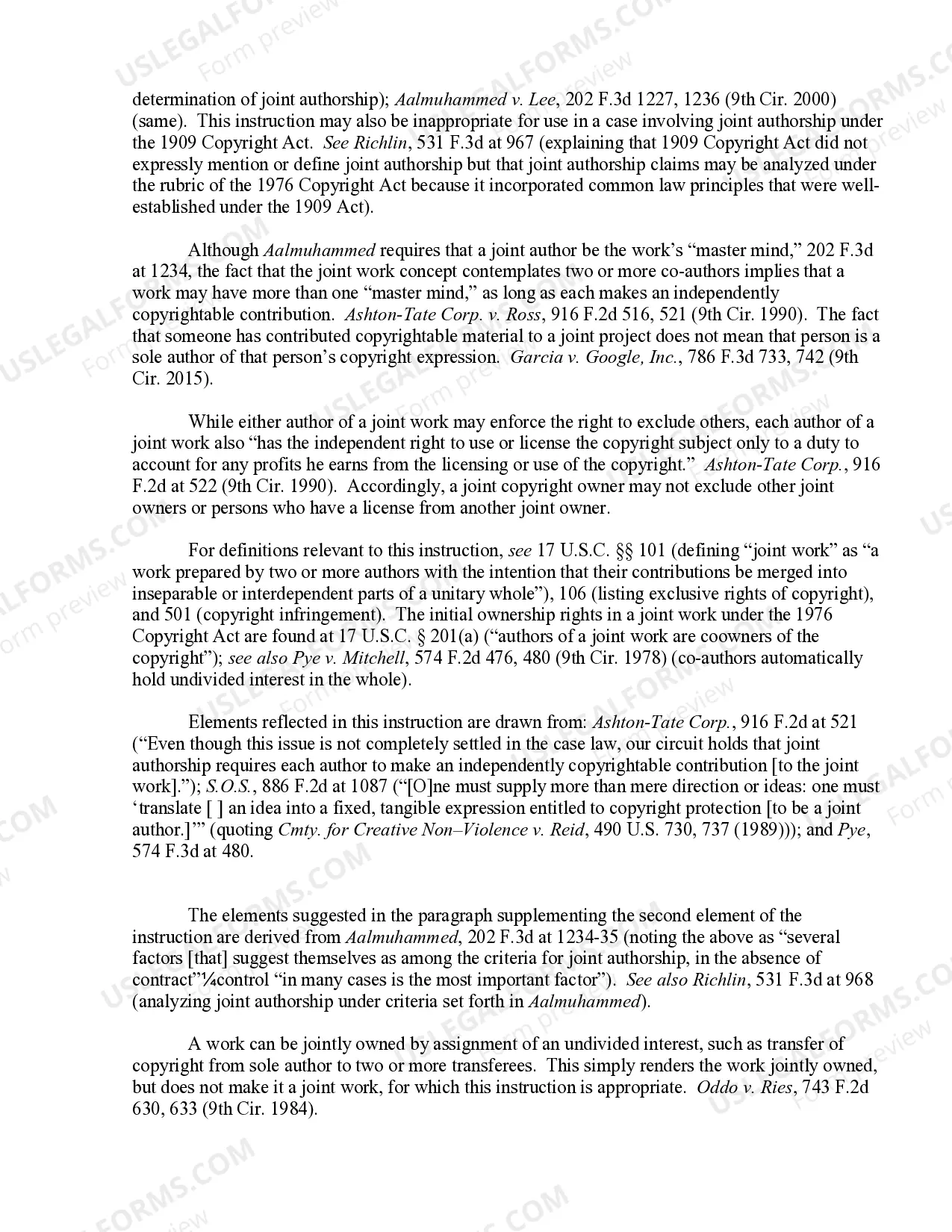
A copyright co-owner can unilaterally issue a non-exclusive license which prevents a co-owner from suing the licensee for any future use. However, a co-owner cannot issue a retroactive license that would prevent a co-owner from suing for infringements that have already occurred.
Co-authors own the work's copyright jointly and equally, unless the authors make an agreement otherwise. Each joint author has the right to exercise any or all of the exclusive rights inherent in the joint work.
The authors of a joint work are co-owners of copyright in the work. Joint copyright owners share an equal interest in the copyright regardless of how much they contribute to the work. This gives all joint copyright owners the right to register as well as enforce the copyright.
Each co-author has a duty to account to the other co-authors for any profits obtained from the exploitation of the work. A co-author has the right to assign his/her ownership share in the work to a third party or to bequeath his/her ownership share to his/her heirs.
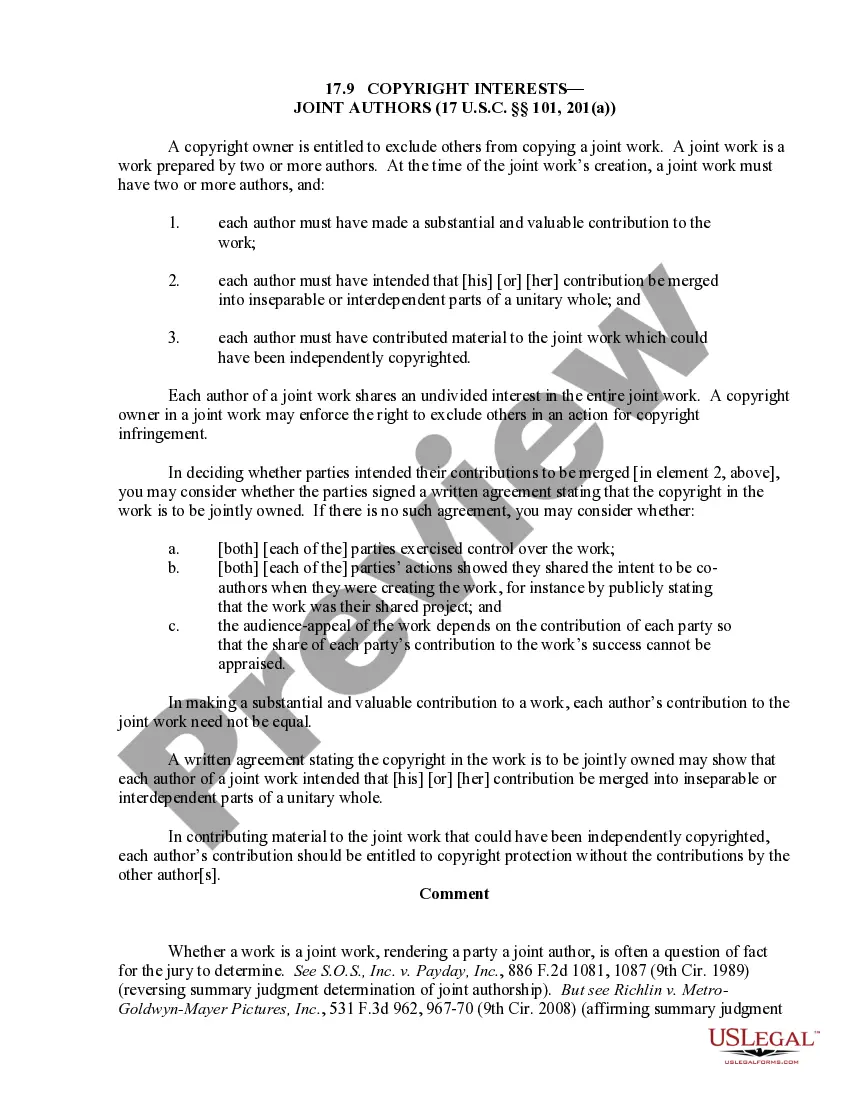
When two or more authors prepare a work with the intent to combine their contributions into inseparable or interdependent parts, the work is considered joint work and the authors are considered joint copyright owners. The most common example of a joint work is when a book or article has two or more authors.
Basically, any intentional collaboration between two or more people who aim to combine their contributions into a unified work are considered joint copyright owners. A co-authored book or musical would be two of the most common examples of joint authorship resulting in a joint copyright.