Oregon Quitclaim Deed by Two Individuals to Corporation
What this document covers
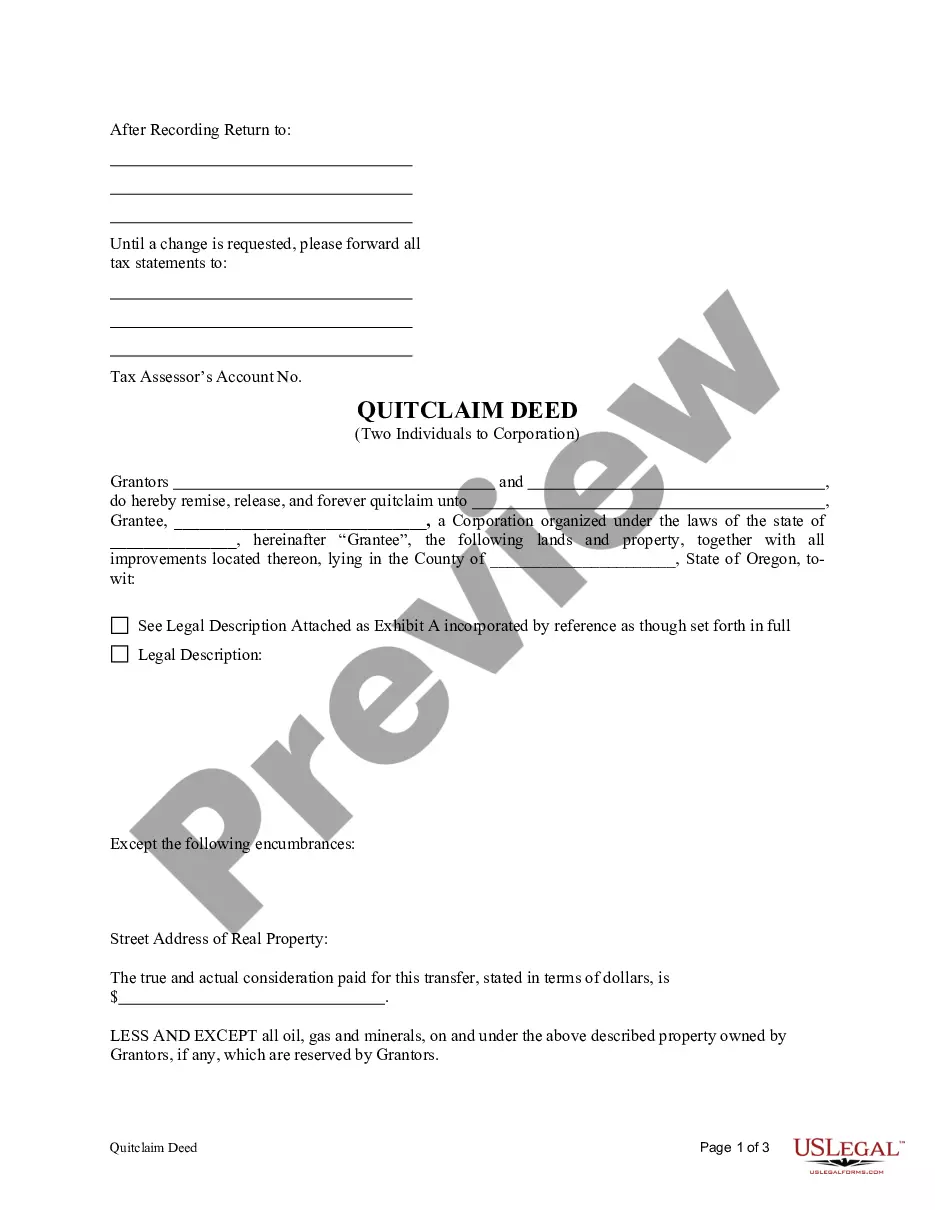
The Quitclaim Deed by Two Individuals to Corporation is a legal document that enables two individuals (the grantors) to transfer their rights to a specific property to a corporation (the grantee). This form allows the grantors to convey their interest in the property without making any warranties about its title. Unlike Warranty Deeds, which provide guarantees about the propertyâs title, a Quitclaim Deed simply transfers whatever interest the grantors have, if any, in the property. It is often used in transactions where the parties involved have a certain level of trust, such as transfers between family or friends, or when transferring property into a corporation.
Main sections of this form
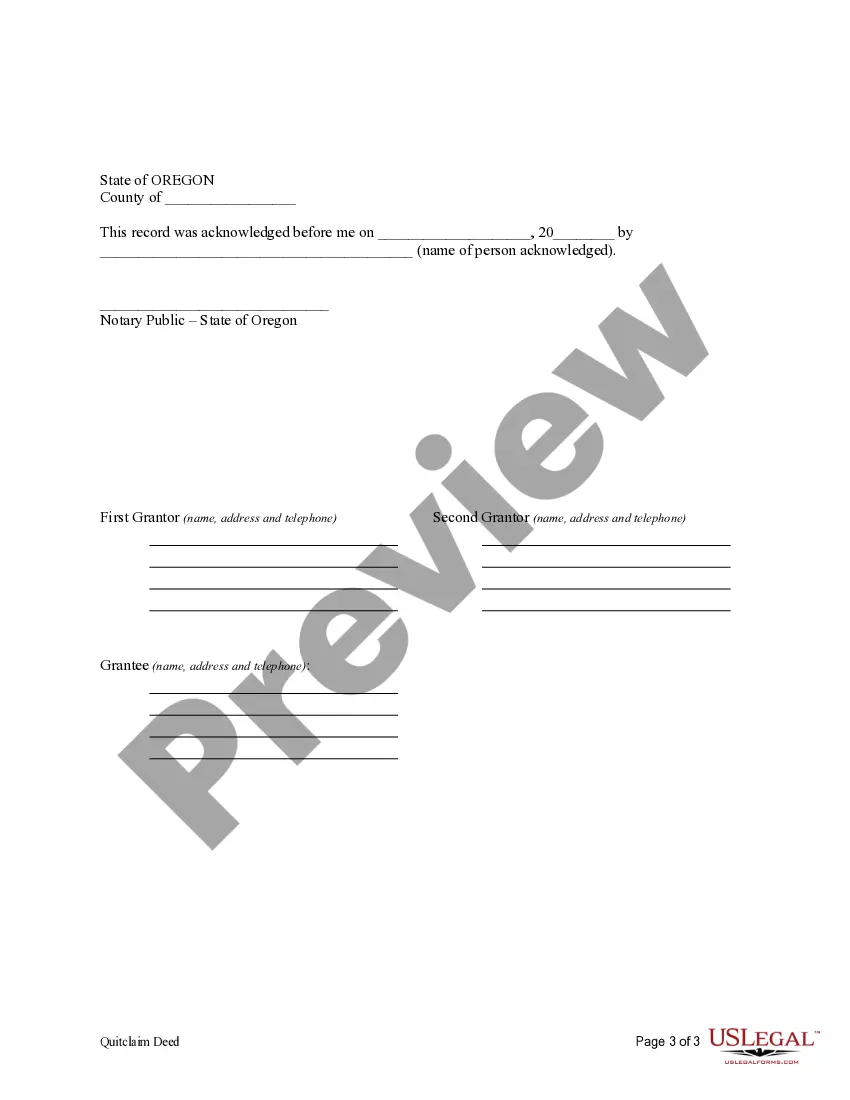
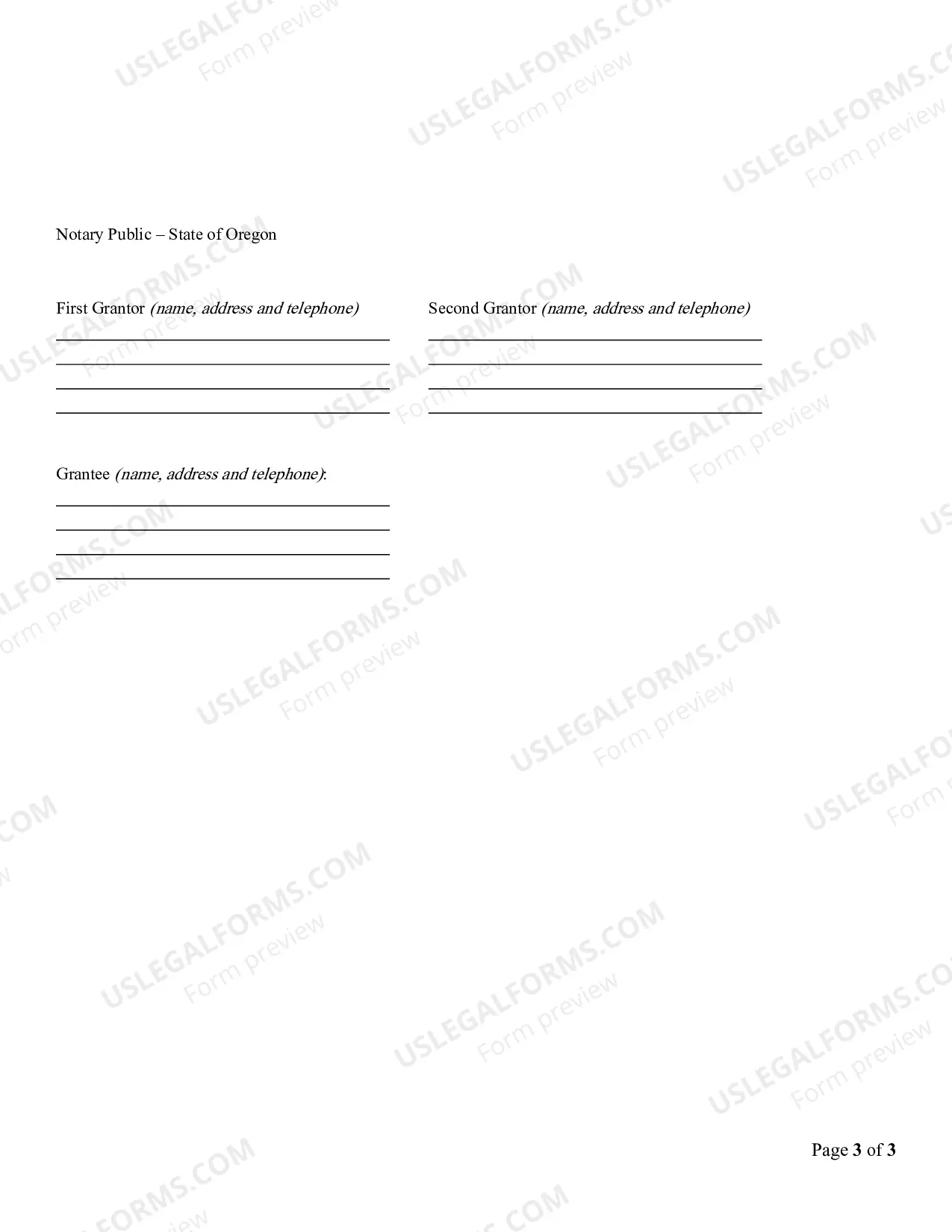
- Identification of the grantors (two individuals) and the grantee (a corporation).
- Legal description of the property being transferred.
- Reservation of oil, gas, and minerals under the property, if applicable.
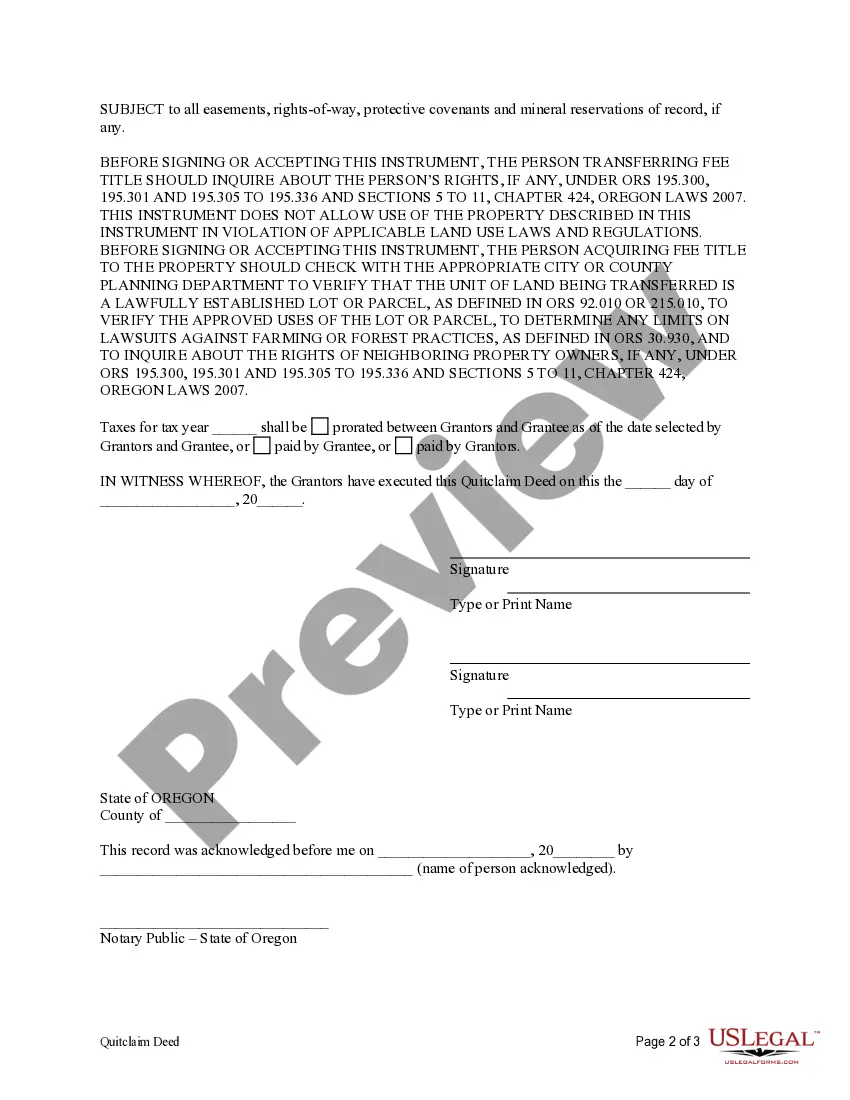
- Details about easements and rights-of-way affecting the property.
- Provisions for the prorating of property taxes for the current tax year.
- Signatures of the grantors to finalize the deed.





When this form is needed
This form is needed when two individuals wish to transfer their ownership interest in a piece of property to a corporation. Common scenarios include when property is being placed into a corporate structure for liability or management reasons, or when individuals decide to donate or sell property to a corporation they are associated with. It is also useful in estate planning situations where ownership needs to be streamlined.
Who needs this form
- Two individuals looking to transfer their property to a corporation.
- Business owners establishing corporate ownership of their personal property.
- Individuals in estate planning needing to place property into a corporate entity.
- Family members wishing to transfer property as a gift or part of a trust arrangement.
Instructions for completing this form
- Identify the grantors by entering their full names and contact information.
- Clearly state the name of the corporation receiving the property as the grantee.
- Provide a detailed legal description of the property, ensuring all required information is included.
- Include any reservations of rights, such as oil, gas, and minerals, if appropriate.
- Specify the arrangement for prorating the property taxes among the parties involved.
- Ensure both grantors sign the deed in the designated areas to validate the transfer.
Notarization guidance
This form does not typically require notarization unless specified by local law. However, it is often recommended to have the deed notarized to ensure its acceptance by governmental entities and to protect against any disputes regarding the transfer.
Get your form ready online
Our built-in tools help you complete, sign, share, and store your documents in one place.
Make edits, fill in missing information, and update formatting in US Legal Forms—just like you would in MS Word.
Download a copy, print it, send it by email, or mail it via USPS—whatever works best for your next step.
Sign and collect signatures with our SignNow integration. Send to multiple recipients, set reminders, and more. Go Premium to unlock E-Sign.
If this form requires notarization, complete it online through a secure video call—no need to meet a notary in person or wait for an appointment.
We protect your documents and personal data by following strict security and privacy standards.

Make edits, fill in missing information, and update formatting in US Legal Forms—just like you would in MS Word.

Download a copy, print it, send it by email, or mail it via USPS—whatever works best for your next step.

Sign and collect signatures with our SignNow integration. Send to multiple recipients, set reminders, and more. Go Premium to unlock E-Sign.

If this form requires notarization, complete it online through a secure video call—no need to meet a notary in person or wait for an appointment.

We protect your documents and personal data by following strict security and privacy standards.
Typical mistakes to avoid
- Failing to include a complete legal description of the property.
- Not verifying the status of existing easements or reservations before completing the deed.
- Omitting signatures or not having them notarized when required.
- Wrongfully assuming the quitclaim will transfer absolute ownership without any issues.
Advantages of online completion
- Convenient access to a properly drafted form that saves time.
- Editability allows for customization to fit specific transaction details.
- Reliability of templates drafted by licensed attorneys ensures legal compliance.
Key takeaways
- The Quitclaim Deed allows for the transfer of property from individuals to a corporation without title warranties.
- It's crucial to understand local land use laws before using this form.
- Clearly defining rights and responsibilities can avoid future legal issues.
Looking for another form?

Form popularity
FAQ
The Quit Claim Deed form uses the terms of Grantor (Seller or Owner of said property) and Grantee (Buyer of said property) for the two parties involved. First, the parties must fill in the date. Then, write in the name of the county and state in which the property is located.
To use a Quitclaim Deed to add someone to a property deed or title, you would need to create a Quitclaim Deed and list all of the current owners in the grantor section. In the grantee section, you would list all of the current owners as well as the person you would like to add.
A person who signs a quitclaim deed to transfer property they do not own results in no title at all being transferred since there is no actual ownership interest. The quitclaim deed only transfers the type of title you own.
How to Quitclaim Deed to LLC. A quitclaim deed to LLC is actually a very simple process. You will need a deed form and a copy of the existing deed to make sure you identify titles properly and get the legal description of the property.
Fill out the quit claim deed form, which can be obtained online, or write your own using the form as a guide. The person giving up the interest in the property is the grantor, and the person receiving the interest is the grantee.
There will be a $30 recording fee. If you prepare a quitclaim deed using the Do-It-Yourself Quitclaim Deed (after Divorce) tool, detailed instructions on what to do next will print out along with the deed.
But you might be wondering if an owner can transfer a deed to another person without a real estate lawyer. The answer is yes. Parties to a transaction are always free to prepare their own deeds.A quitclaim deed, for example, is far simpler than a warranty deed.