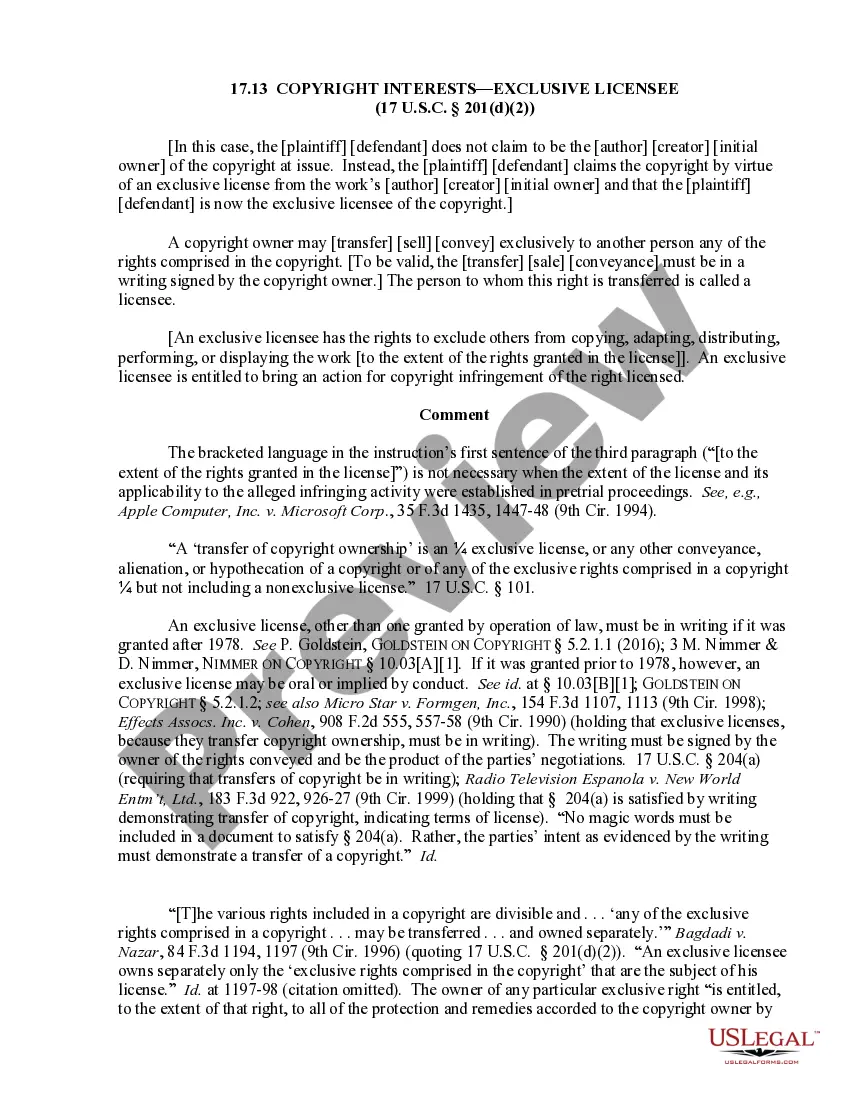
17.13 Copyright Interests-Exclusive Licensee
Notarization guidance
Notarization is generally not required for this form. However, certain states or situations might demand it. You can complete notarization online through US Legal Forms, powered by Notarize, using a verified video call available anytime.
Get your form ready online
Our built-in tools help you complete, sign, share, and store your documents in one place.
Make edits, fill in missing information, and update formatting in US Legal Forms—just like you would in MS Word.
Download a copy, print it, send it by email, or mail it via USPS—whatever works best for your next step.
Sign and collect signatures with our SignNow integration. Send to multiple recipients, set reminders, and more. Go Premium to unlock E-Sign.
If this form requires notarization, complete it online through a secure video call—no need to meet a notary in person or wait for an appointment.
We protect your documents and personal data by following strict security and privacy standards.

Make edits, fill in missing information, and update formatting in US Legal Forms—just like you would in MS Word.

Download a copy, print it, send it by email, or mail it via USPS—whatever works best for your next step.

Sign and collect signatures with our SignNow integration. Send to multiple recipients, set reminders, and more. Go Premium to unlock E-Sign.

If this form requires notarization, complete it online through a secure video call—no need to meet a notary in person or wait for an appointment.

We protect your documents and personal data by following strict security and privacy standards.
Looking for another form?
Form popularity
FAQ
Exclusive license allows a licensor to share intellectual property with a licensee for a specific period of time that usually binds the licensor to not share the property with anyone else.
An exclusive licensee has the rights to exclude others from copying, adapting, distributing, performing, or displaying the work to the extent of the rights granted in the license. An exclusive licensee is entitled to bring an action for copyright infringement of the right licensed.
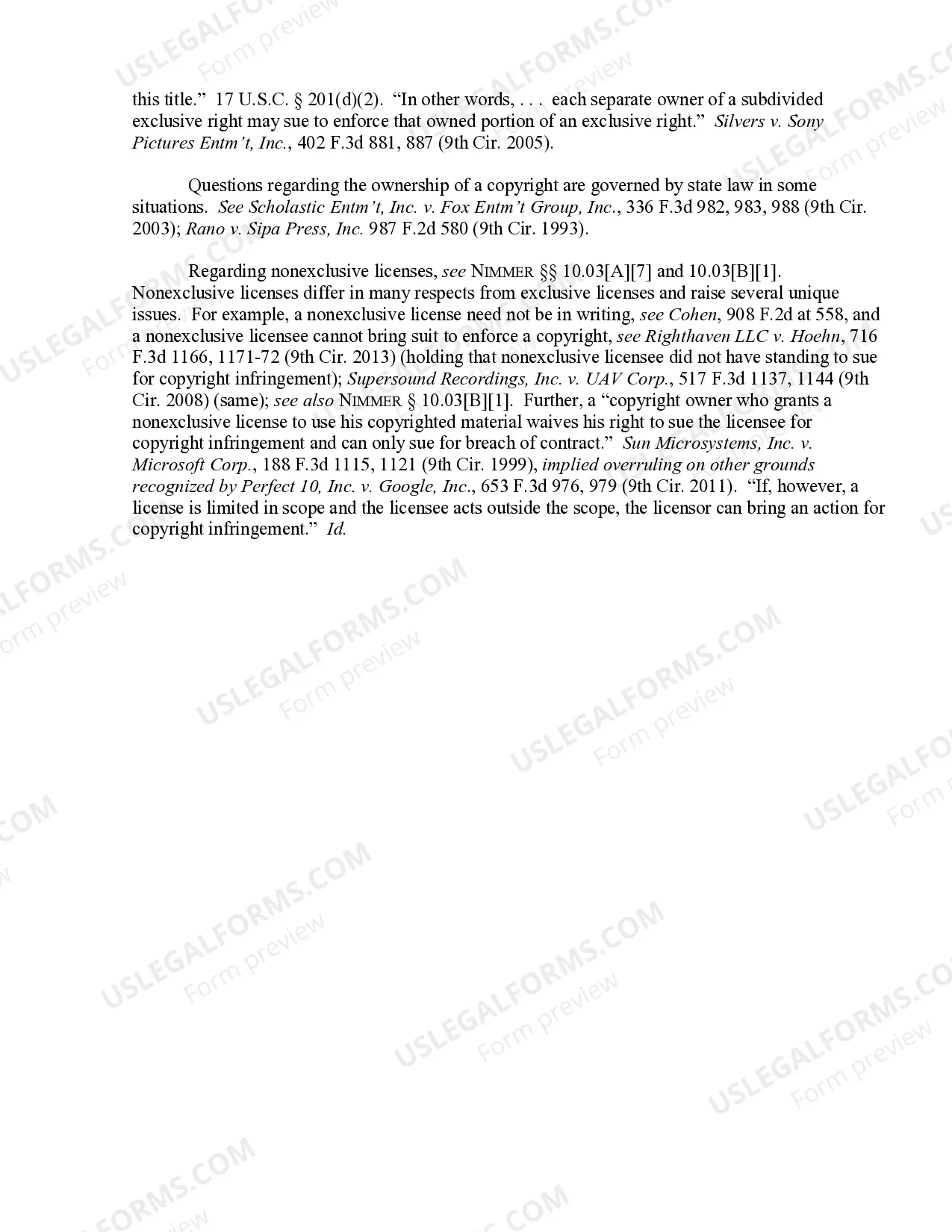
A copyright exclusive license is one in which ownership in one or more rights is transferred by the copyright owner. A copyright nonexclusive license occurs when the owner retains ownership of the copyright and/or may license the same right to others.
?Sole? and ?Exclusive? in Licensing In an exclusive license, only the licensee has the right to make use of the intellectual property. By contrast, in a sole license, the licensor agrees not to grant any additional licenses but retains the right to make use of the intellectual property.
?Sole? and ?Exclusive? in Licensing In an exclusive license, only the licensee has the right to make use of the intellectual property. By contrast, in a sole license, the licensor agrees not to grant any additional licenses but retains the right to make use of the intellectual property.
Generally, the difference between the two is that licenses allow a copyright owner to retain the rights while giving someone else a right to exercise some of them, whereas an assignment results in a copyright owner losing control over the work.
Updated October 21, 2020: The difference between exclusive and non-exclusive agreement refers to how vendors and partners work with each other. Exclusive agreements exclude competitors for a set period of time, while non-exclusive agreements allow for competitors, often as motivating tools.