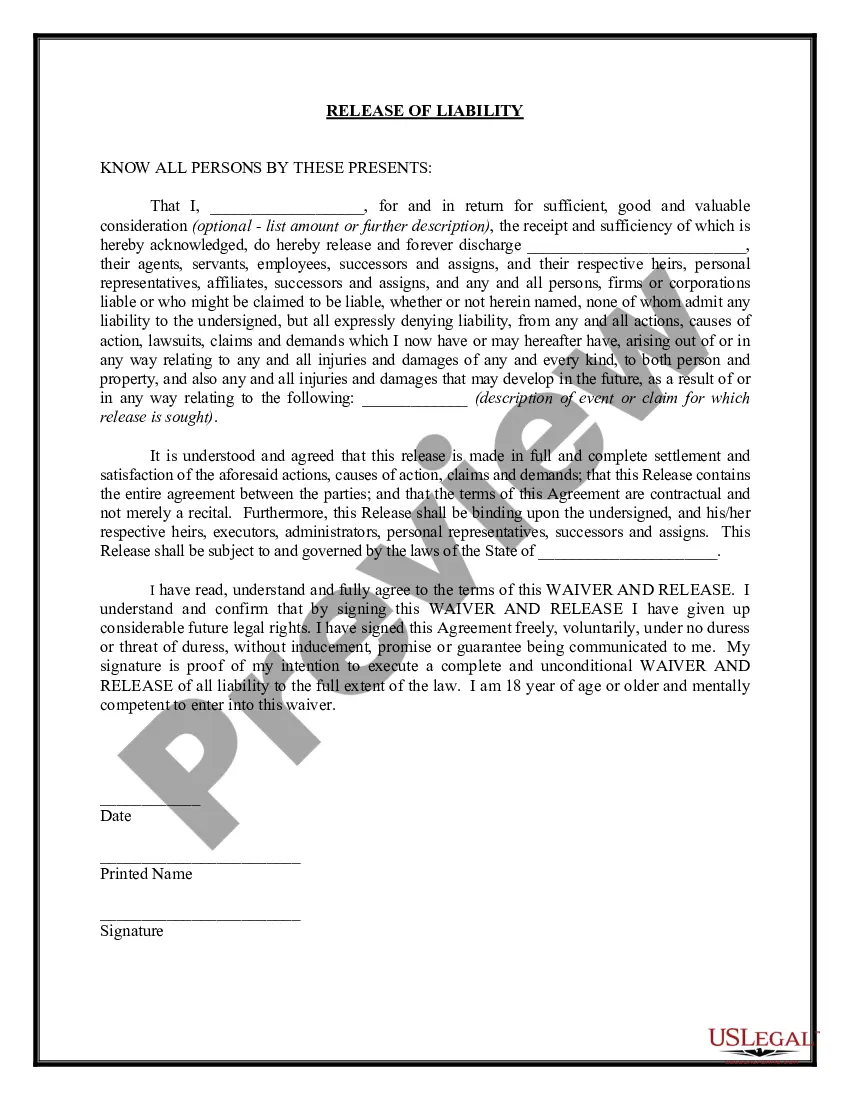
Release of Liability Form for Homeowner
What this document covers
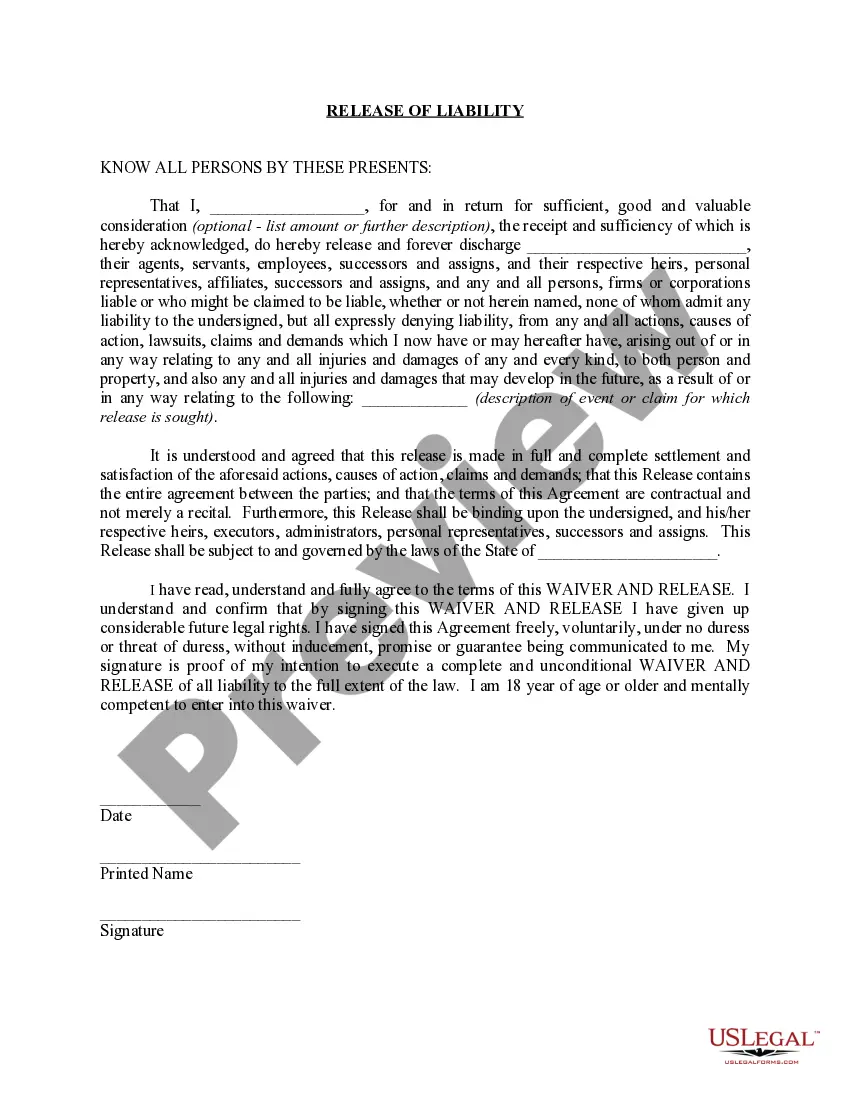
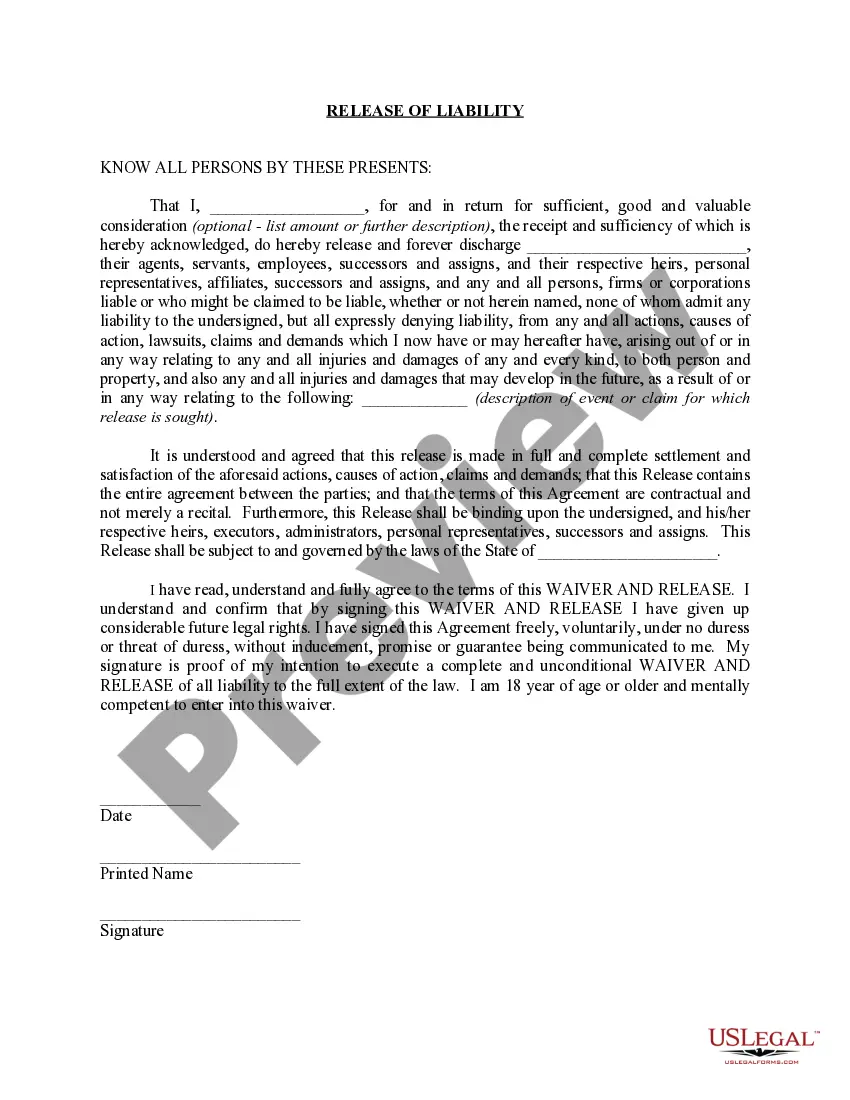
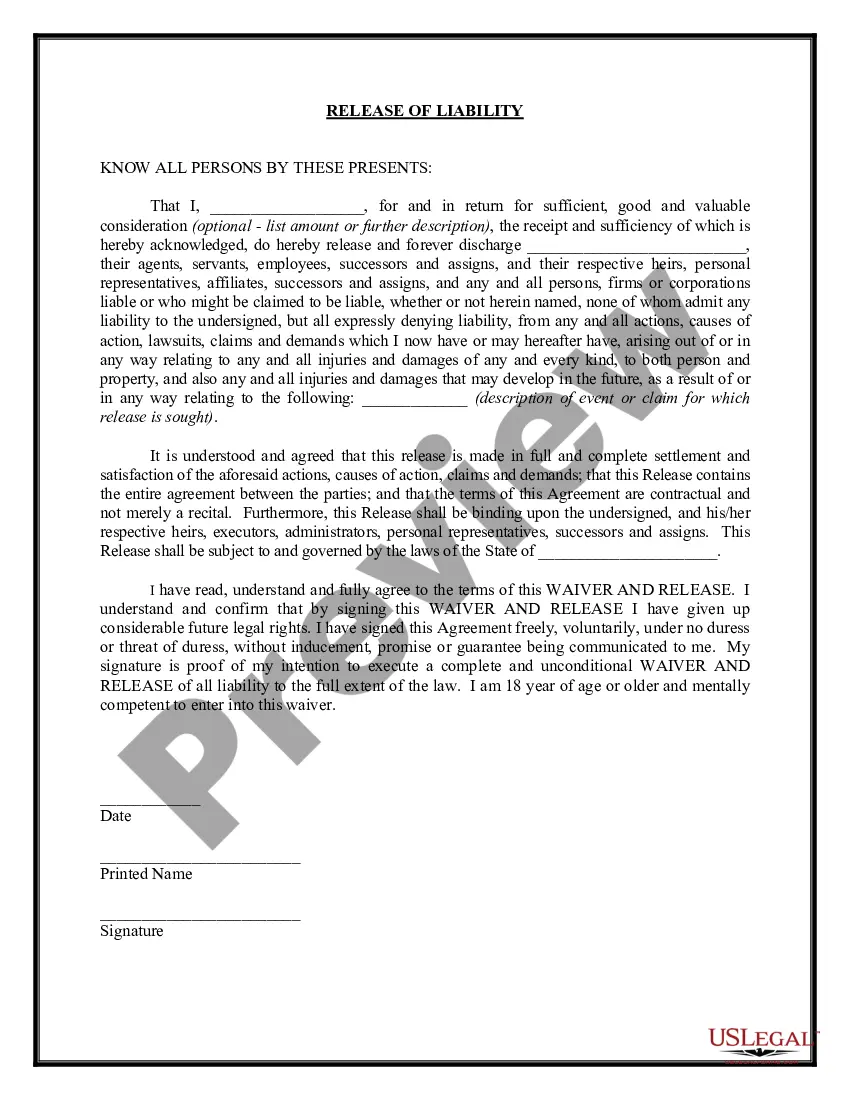
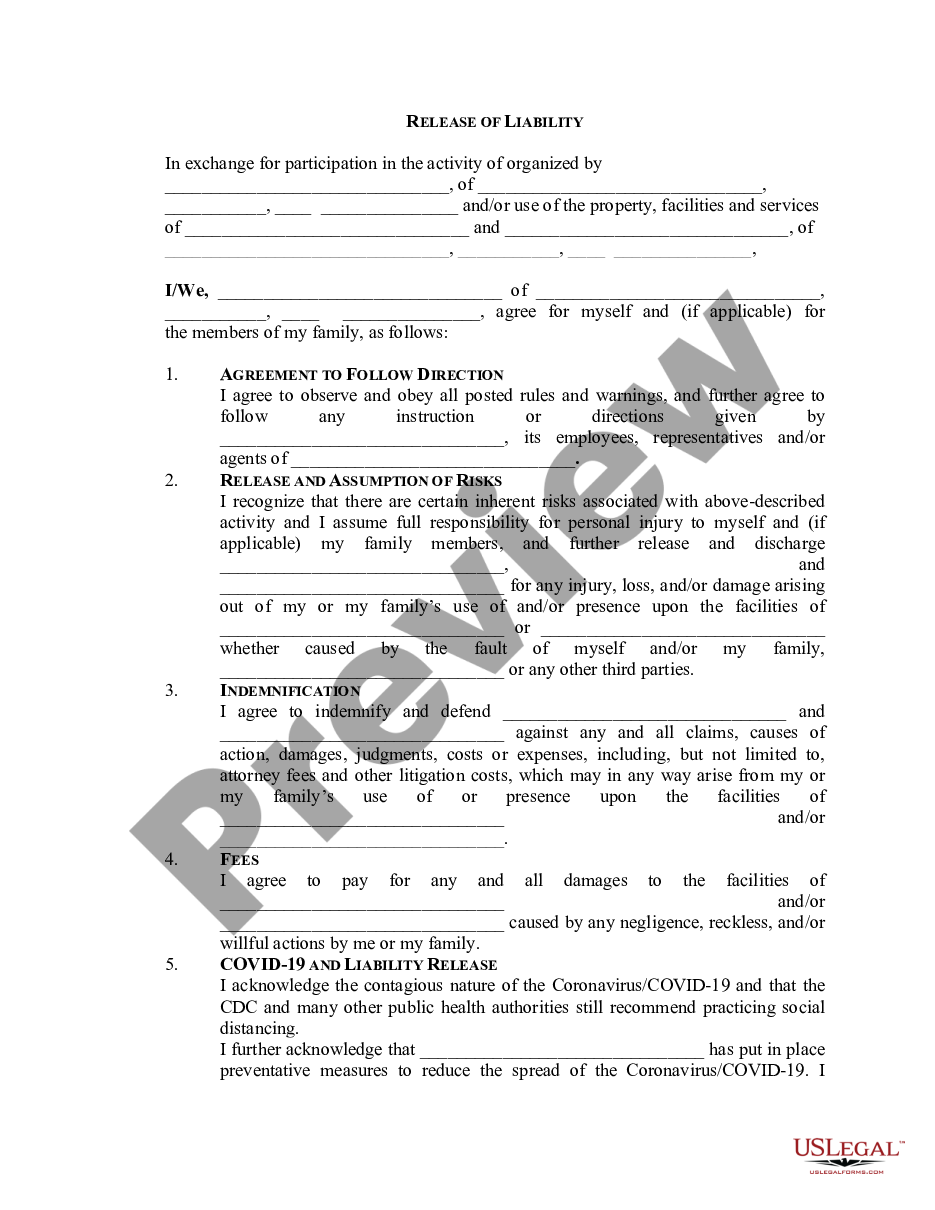
The Release of Liability Form for Homeowner is a legal document that allows a homeowner to release another party from liability for any injuries or damages that may occur during a specific event or at their property. This form is designed to protect the releasee from potential claims, distinguishing it from other liability waivers that may not be tailored for residential scenarios or specific events.
Key components of this form
- Releasor's name and signature: Identifies the person waiving their rights.
- Releasee information: Details the individual or entity being released from liability.
- Description of the event: Specifies the event or activity related to the release.
- Acknowledgment of consideration: Confirms the compensation or benefit received in exchange for the waiver.
- Contractual agreement: States that the waiver is binding and complete.
- Governing law: Indicates the state law that applies to the form.
Common use cases
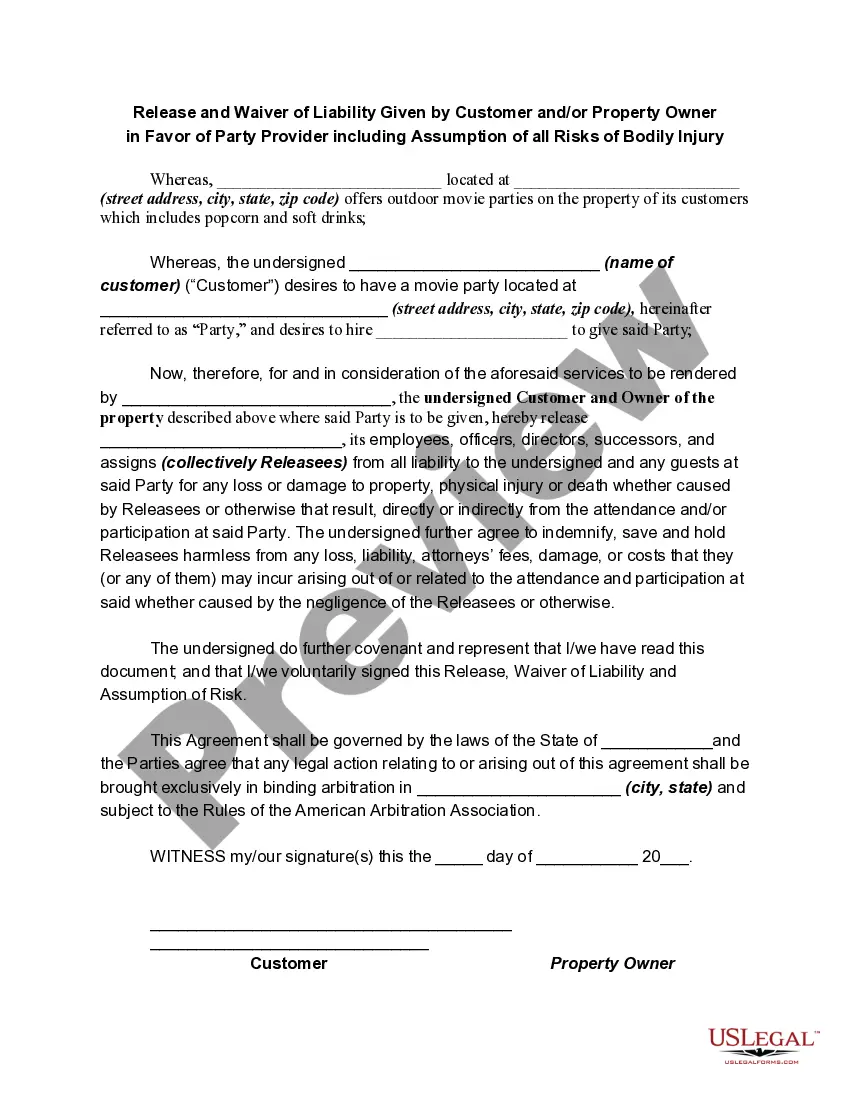
This form should be used when a homeowner hosts an event or allows others to use their property, such as parties, gatherings, or recreational activities. It is also applicable in situations where the homeowner wants to protect themselves from claims that may arise from accidents or injuries occurring on their property.
Who can use this document
- Homeowners who are hosting events on their property.
- Property owners allowing access to their premises for activities.
- Individuals needing to protect themselves from liability during events.
Steps to complete this form
- Identify the parties involved: Fill in the releasor's and releasee's names.
- Describe the event: Clearly state the event or activity for which liability is being waived.
- Specify compensation: If applicable, list any consideration received in return for the waiver.
- Sign and date the form: Ensure that the releasor signs the document and includes the date.
- Check state laws: Confirm that the form meets any specific legal requirements for your state.
Does this document require notarization?
This form does not typically require notarization unless specified by local law. However, adding notarization can enhance its legal strength in certain jurisdictions.
Get your form ready online
Our built-in tools help you complete, sign, share, and store your documents in one place.
Make edits, fill in missing information, and update formatting in US Legal Forms—just like you would in MS Word.
Download a copy, print it, send it by email, or mail it via USPS—whatever works best for your next step.
Sign and collect signatures with our SignNow integration. Send to multiple recipients, set reminders, and more. Go Premium to unlock E-Sign.
If this form requires notarization, complete it online through a secure video call—no need to meet a notary in person or wait for an appointment.
We protect your documents and personal data by following strict security and privacy standards.

Make edits, fill in missing information, and update formatting in US Legal Forms—just like you would in MS Word.

Download a copy, print it, send it by email, or mail it via USPS—whatever works best for your next step.

Sign and collect signatures with our SignNow integration. Send to multiple recipients, set reminders, and more. Go Premium to unlock E-Sign.

If this form requires notarization, complete it online through a secure video call—no need to meet a notary in person or wait for an appointment.

We protect your documents and personal data by following strict security and privacy standards.
Avoid these common issues
- Failing to clearly describe the event or activity.
- Not including all necessary parties in the release.
- Omitting the signature of the releasor or the date.
Benefits of using this form online
- Convenient access to legally sound templates.
- Editable forms that allow customization for specific situations.
- Reliable resources drafted by licensed attorneys.
Legal use & context
- The Release of Liability Form is effective in preventing legal claims from participants.
- This form should be used with caution, as certain legal rights may be forfeited.
Quick recap
- This form protects homeowners from liability for injuries that may occur on their property.
- It is important to clearly articulate the event and ensure all parties are identified.
- Always confirm specific state requirements to ensure legality and enforceability.
Looking for another form?
Form popularity
FAQ
The Release of Liability Form for Homeowner is a standard liability waiver used to document that a person agrees not to sue the homeowner for injuries or damages arising from activities on the homeowner’s property. It’s typically used when hosting visitors, volunteers, or contractors and when events or work on-site could involve risk.
To create a Release of Liability Form for Homeowner, start with this standard template and customize it for your situation. Fill in the parties and the date, note the property and activity involved, and then have the participant sign and date the form. This keeps a written record of a liability waiver for on‑site activities.
Yes, you can draft your own waiver, but it should clearly identify the releasing party and the person waiving claims, describe the activity and risks, and include a signature date. Using the Release of Liability Form for Homeowner as a baseline helps ensure consistency with common expectations.
Free templates vary in quality and specificity. This Release of Liability Form for Homeowner provides a ready-to-use option tailored for on-property activities. When choosing a free template, ensure it captures the same releasing party, the activity, and the waiver scope, and consider having it reviewed by a legal professional.
Any liability waiver form for homeowners should be downloadable as a template and then customized with the relevant parties, the property, and the event. This Release of Liability Form for Homeowner serves as a targeted option designed for on‑property activities and visitor safety.
This form is specifically labeled for a homeowner and addresses on-property activities and visitor safety, whereas a generic liability waiver is not tailored to a homeowner’s property or the particular risks involved in home-based visits or work. The wording focuses on the homeowner's property and the specific activities conducted there, helping to clarify scope and reduce ambiguity.