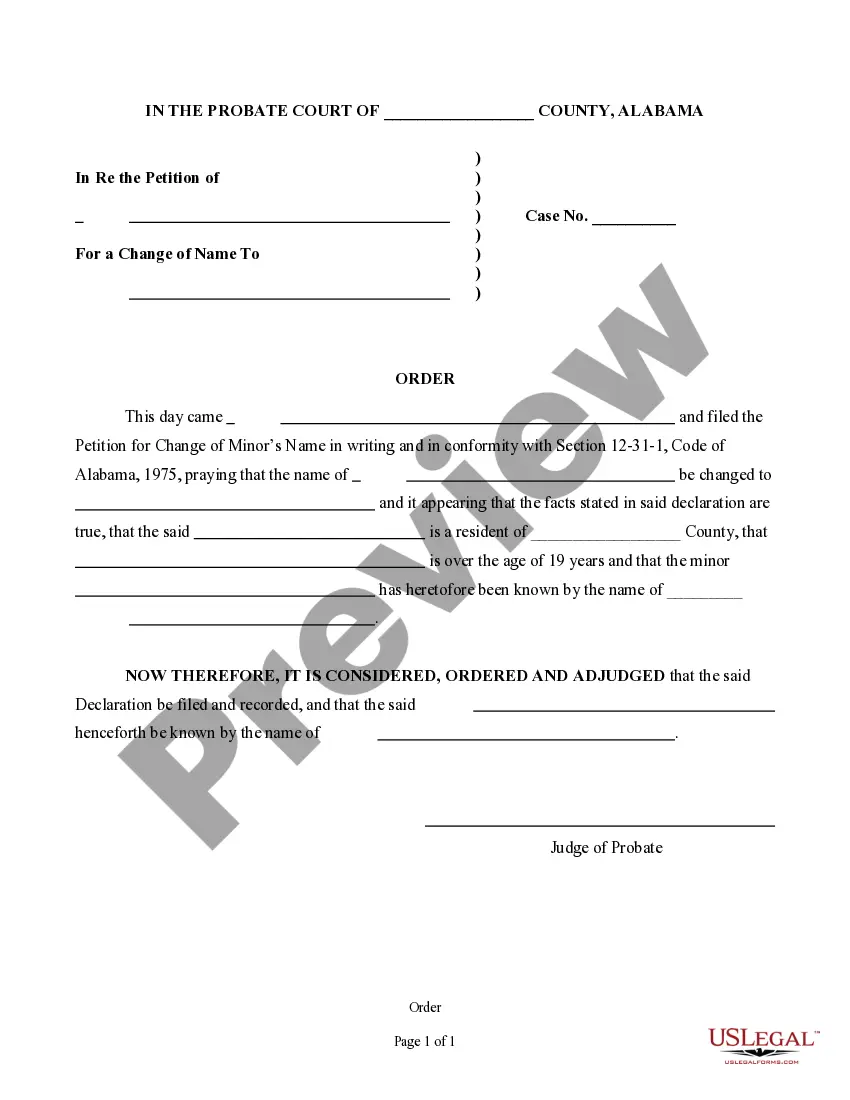
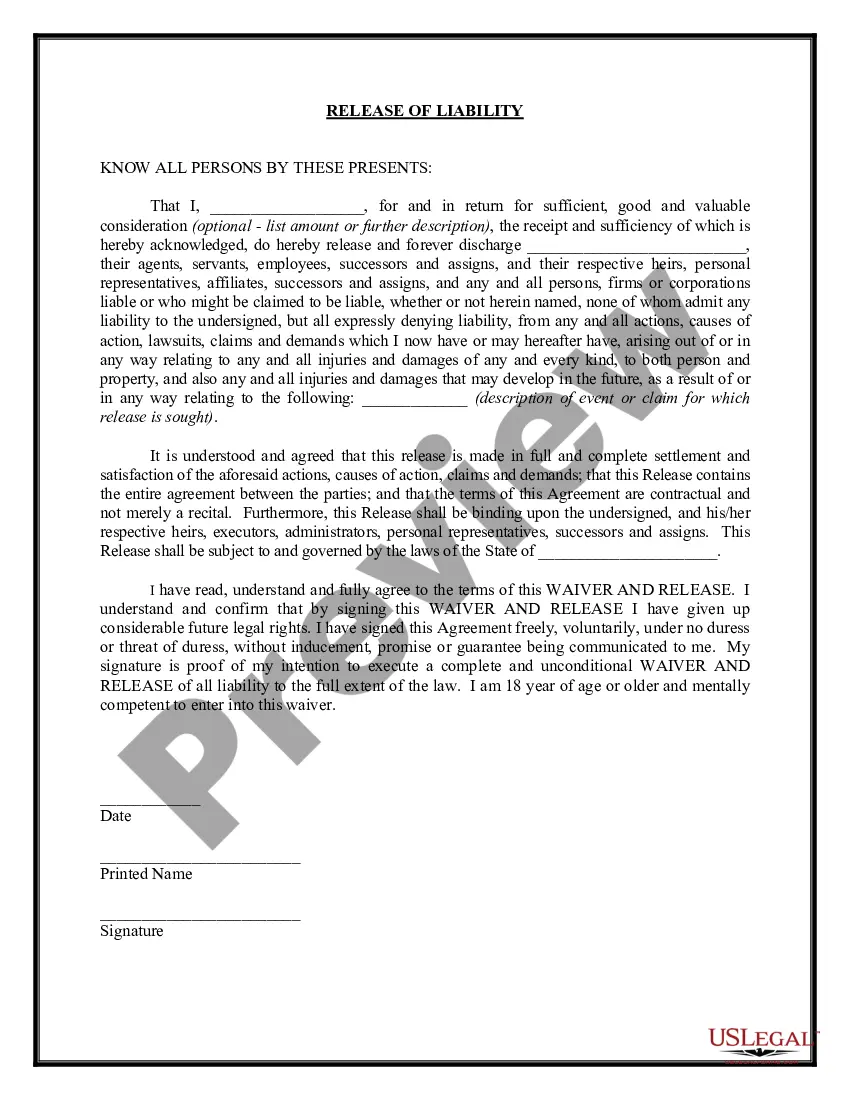
Liability Waiver for Homeowner
What is this form?
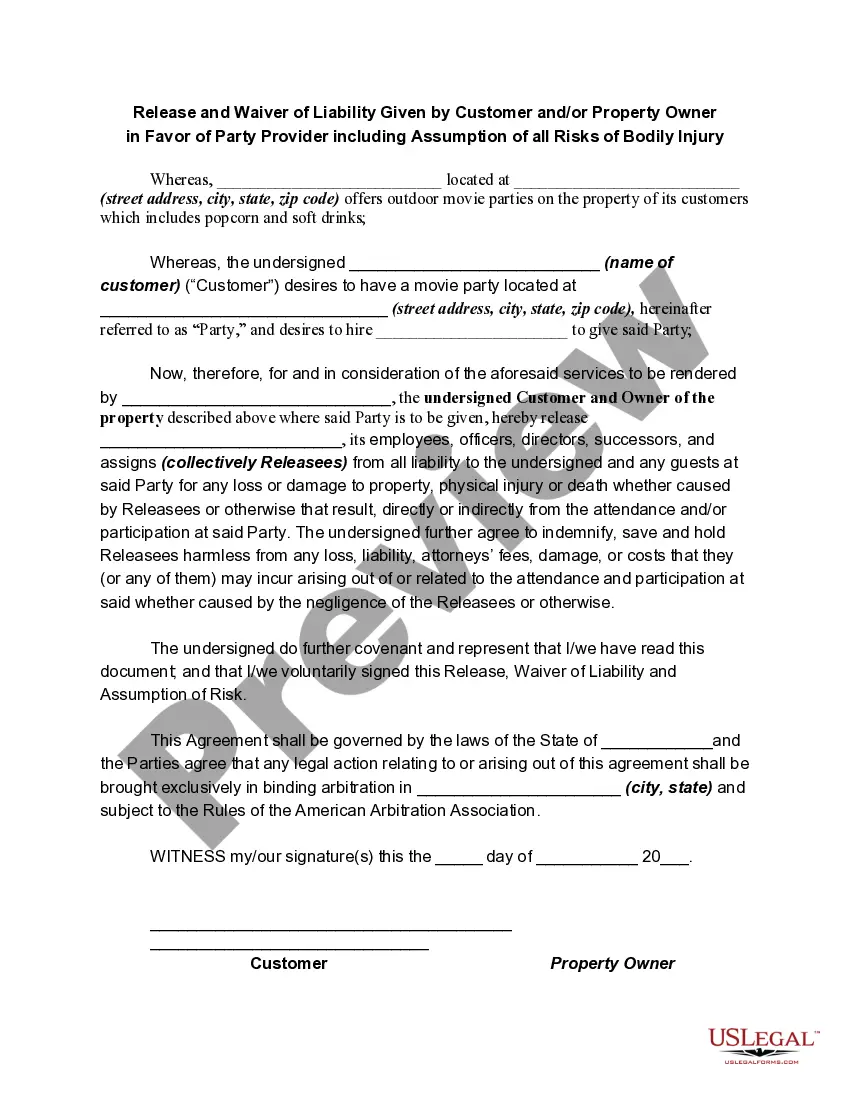
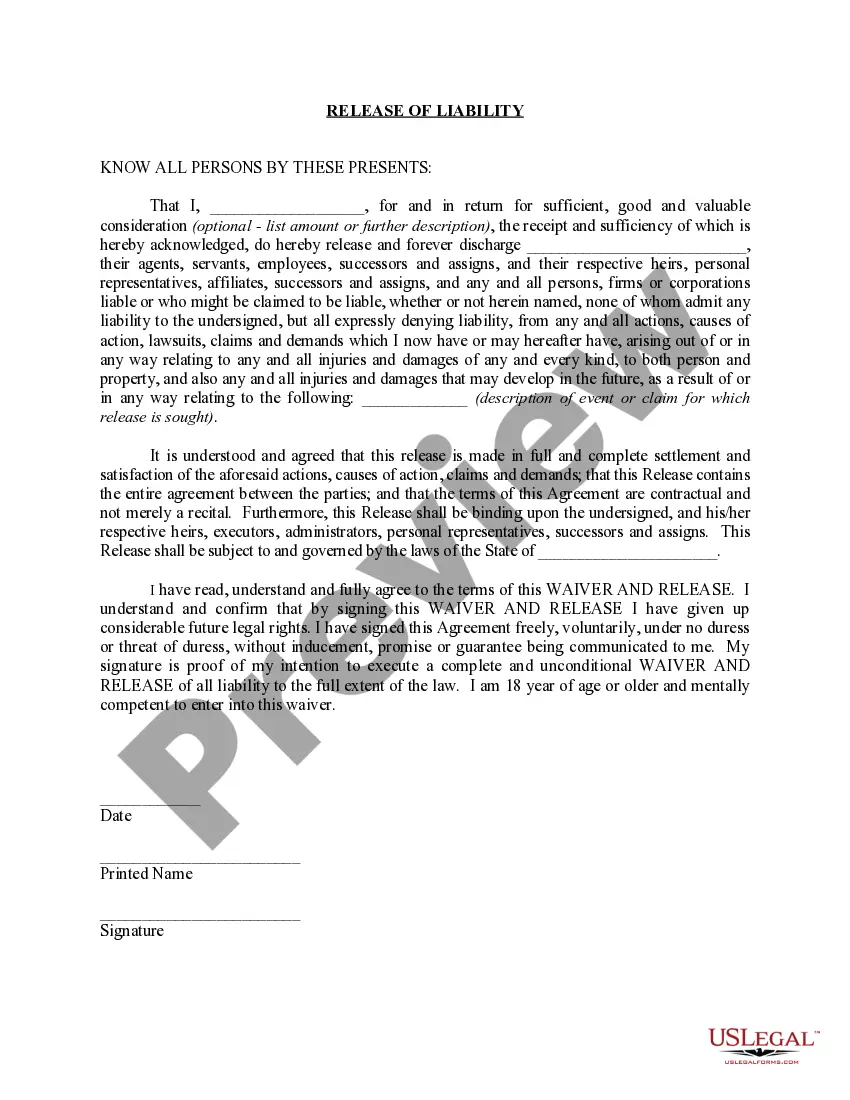
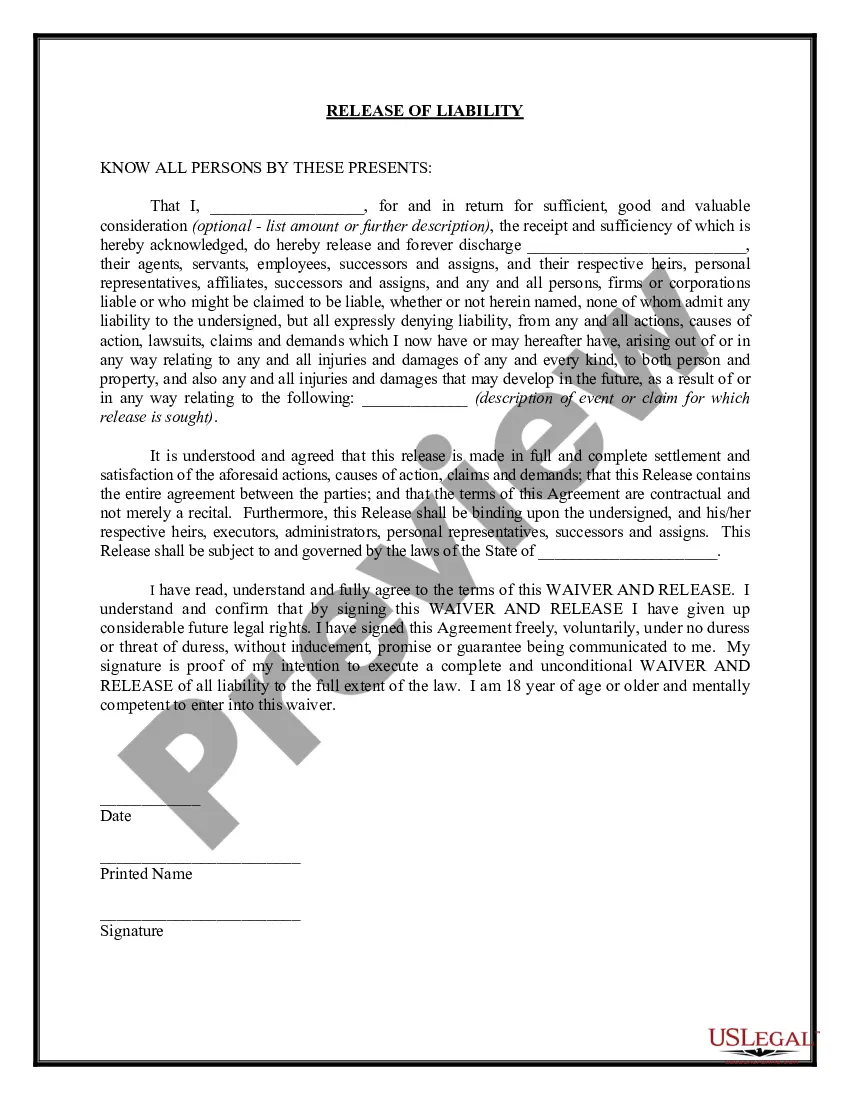
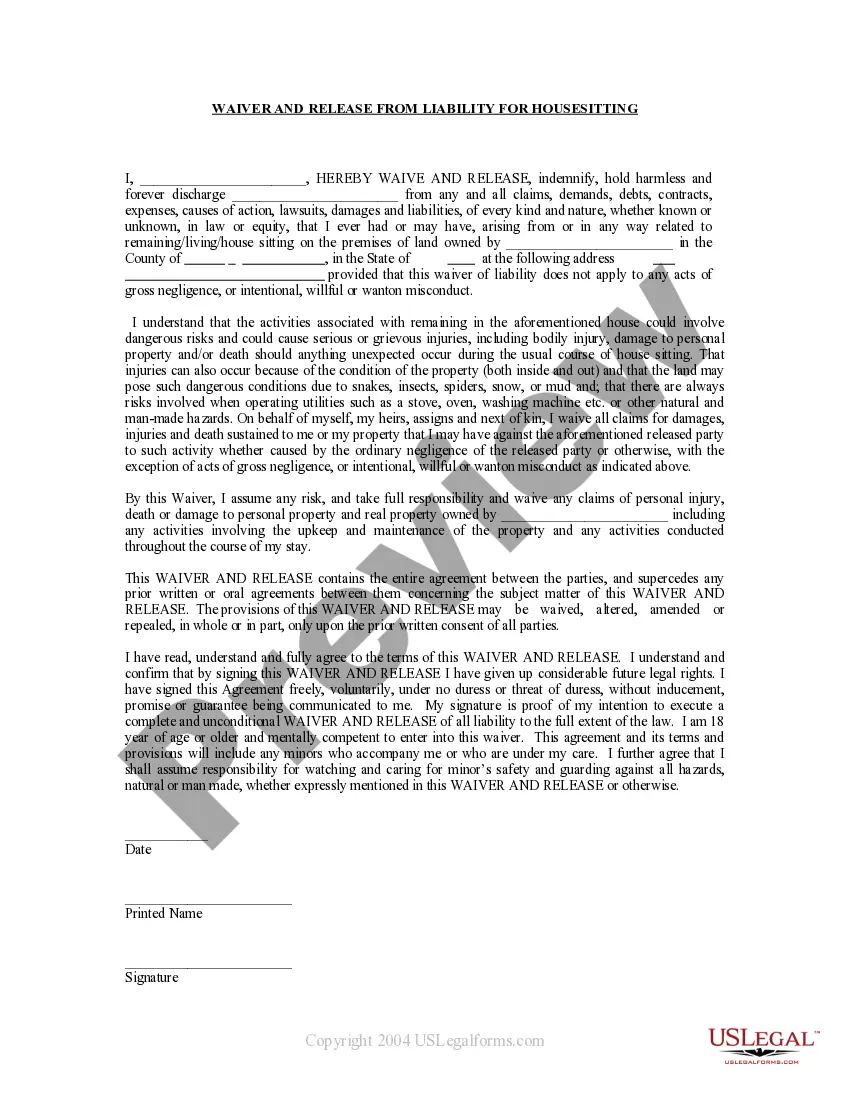
The Liability Waiver for Homeowner is a legal document that releases a homeowner or property owner from liability associated with hosting events, specifically movie parties for children. This form helps clarify the responsibilities of both parties and significantly differs from other liability waivers, as it is tailored for events conducted at a private residence.
Form components explained
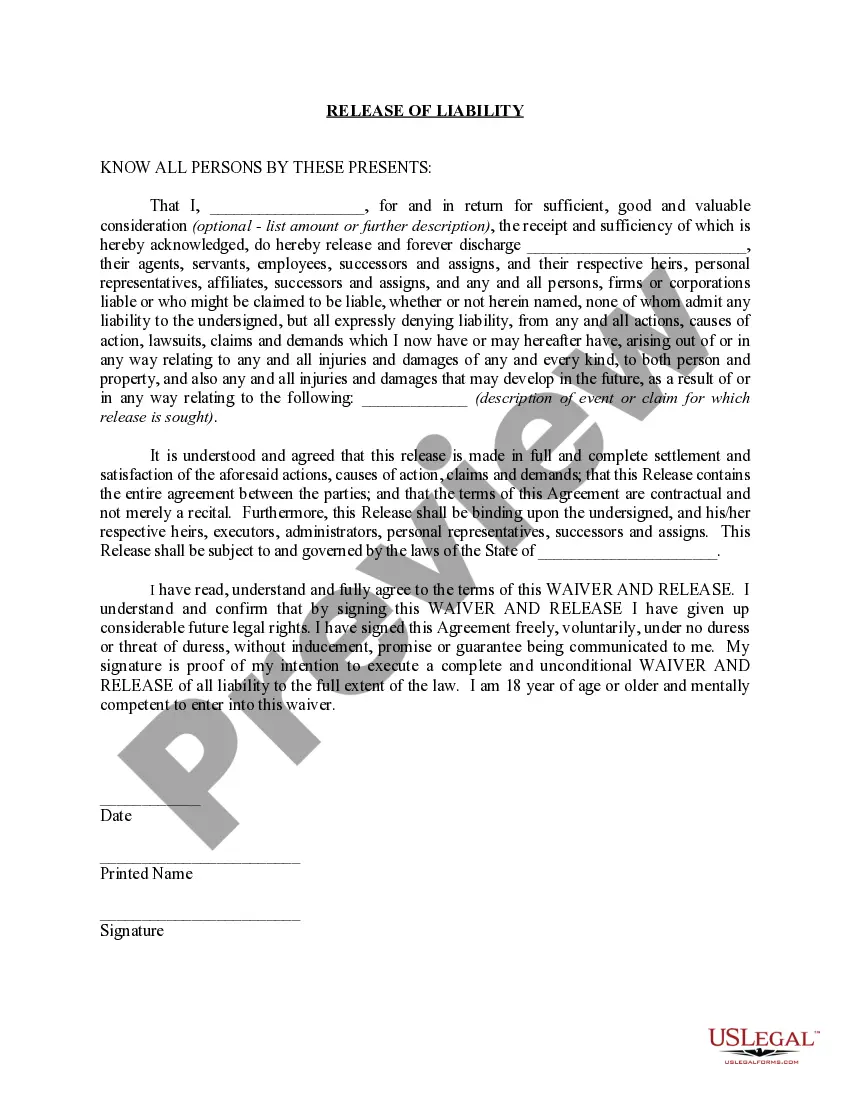
- Release Statement: A clause where the homeowner releases liability for any injuries or damages occurring during the event.
- Identification of Parties: Sections for the names of the homeowner and the individuals or businesses hosting the event.
- Description of Event: A field to specify the details of the event for which the waiver is provided, such as the nature of the movie party.
- Binding Agreement Clause: Indicates that the waiver is binding upon the signer's heirs and successors.
- Acknowledgement of Rights: A statement confirming that the signer understands the legal implications of releasing liability.
- Signature and Date: Space for the homeowner's signature and the date of signing, which validates the waiver.
Situations where this form applies
This form should be used when a homeowner is organizing a movie party for children and wants to ensure they are not held liable for any potential injuries or accidents that may occur during the event. It protects the homeowner from legal claims related to event-related injuries by having participants acknowledge and accept the risks involved.
Who this form is for
- Homeowners hosting movie parties or similar events on their property.
- Businesses or individuals providing movie event services at private residences.
- Parents or guardians organizing gatherings for children in a private setting.
Instructions for completing this form
- Identify the parties involved by entering the names of both the homeowner and the event host.
- Provide a description of the event, including details about the movie party being organized.
- Fill in the date of signing to establish the timeline of the waiver.
- Have the homeowner sign the waiver to acknowledge their understanding and acceptance of the release.
- Ensure that the homeowner is over eighteen years of age and mentally competent to enter into the waiver.
Notarization requirements for this form
This form does not typically require notarization unless specified by local law. However, having it notarized can provide additional legal protection and ensure its validity in case of disputes.
Get your form ready online
Our built-in tools help you complete, sign, share, and store your documents in one place.
Make edits, fill in missing information, and update formatting in US Legal Forms—just like you would in MS Word.
Download a copy, print it, send it by email, or mail it via USPS—whatever works best for your next step.
Sign and collect signatures with our SignNow integration. Send to multiple recipients, set reminders, and more. Go Premium to unlock E-Sign.
If this form requires notarization, complete it online through a secure video call—no need to meet a notary in person or wait for an appointment.
We protect your documents and personal data by following strict security and privacy standards.

Make edits, fill in missing information, and update formatting in US Legal Forms—just like you would in MS Word.

Download a copy, print it, send it by email, or mail it via USPS—whatever works best for your next step.

Sign and collect signatures with our SignNow integration. Send to multiple recipients, set reminders, and more. Go Premium to unlock E-Sign.

If this form requires notarization, complete it online through a secure video call—no need to meet a notary in person or wait for an appointment.

We protect your documents and personal data by following strict security and privacy standards.
Avoid these common issues
- Failing to specify the event details accurately, which can lead to enforcement issues.
- Not having the homeowner sign the form, which invalidates the waiver.
- Overlooking to date the waiver, which is essential for legal standing.
Advantages of online completion
- Immediate access: Download the form instantly without waiting for mail delivery.
- Editability: Easily customize the document to fit the specific details of your event.
- Cost-efficient: Avoid expensive attorney fees by using ready-made legal templates drafted by professionals.
Looking for another form?


Form popularity
FAQ
In California, a liability waiver must be clear, unambiguous, and explicit. In other words, waivers cannot be printed in faded ink, in small font, on the back of a paper, or in an otherwise ambiguous form. If the waiver that you sign is not represented clearly, it may not hold up in the event of a lawsuit.
A property damage loss waiver (PDLW ) program is a damage liability option that provides multifamily property owners and managers financial protection if a participating resident negligently causes damages or losses to the community or building.
In many cases, the waiver is not enforceable.If you've been injured due to negligent actions, you can sue even if you signed a waiver. Winning a lawsuit concerning negligence is not uncommon. Many celebrities have sued for negligence even though they signed documents stating they understood the risks.
In California, a liability waiver must be clear, unambiguous, and explicit. In other words, waivers cannot be printed in faded ink, in small font, on the back of a paper, or in an otherwise ambiguous form. If the waiver that you sign is not represented clearly, it may not hold up in the event of a lawsuit.
Get help. Writing a waiver should not be complicated. Use the correct structure. Proper formatting. Include a subject line. Include a caution! Talk about the activity risks. Do not forget an assumption of risk. Hold harmless.
A waiver is a legal agreement the primary purpose of which is to let you or another party modify or relinquish a right, privilege, or claim. The agreement can be a separate document on its own, such as if you sign a waiver form, or added to a contract as a waiver clause.
Simply put, waivers don't always protect against a lawsuit. Different states have different laws regarding waivers and their ability to completely protect against litigation. Whether a waiver is sufficient to provide protection against a trainer's liability varies from state to state and, often, case to case.