Liability Waiver for Contractor
Overview of this form
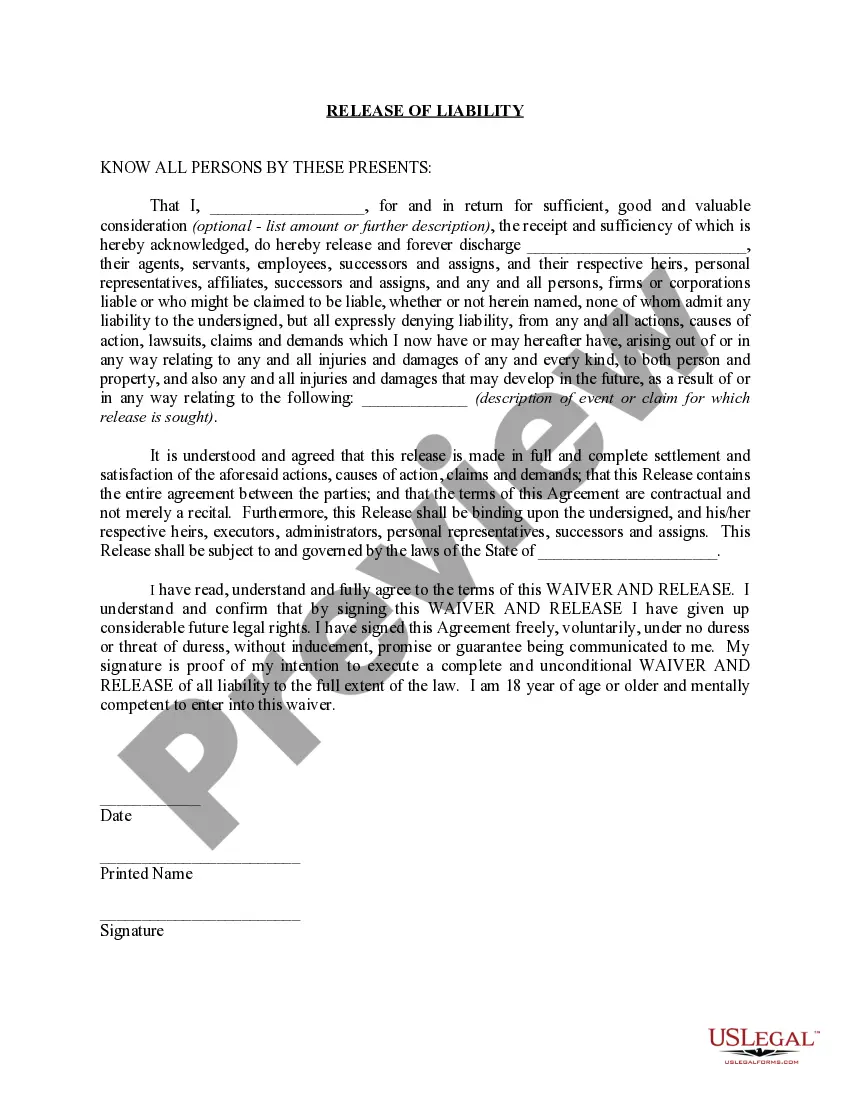
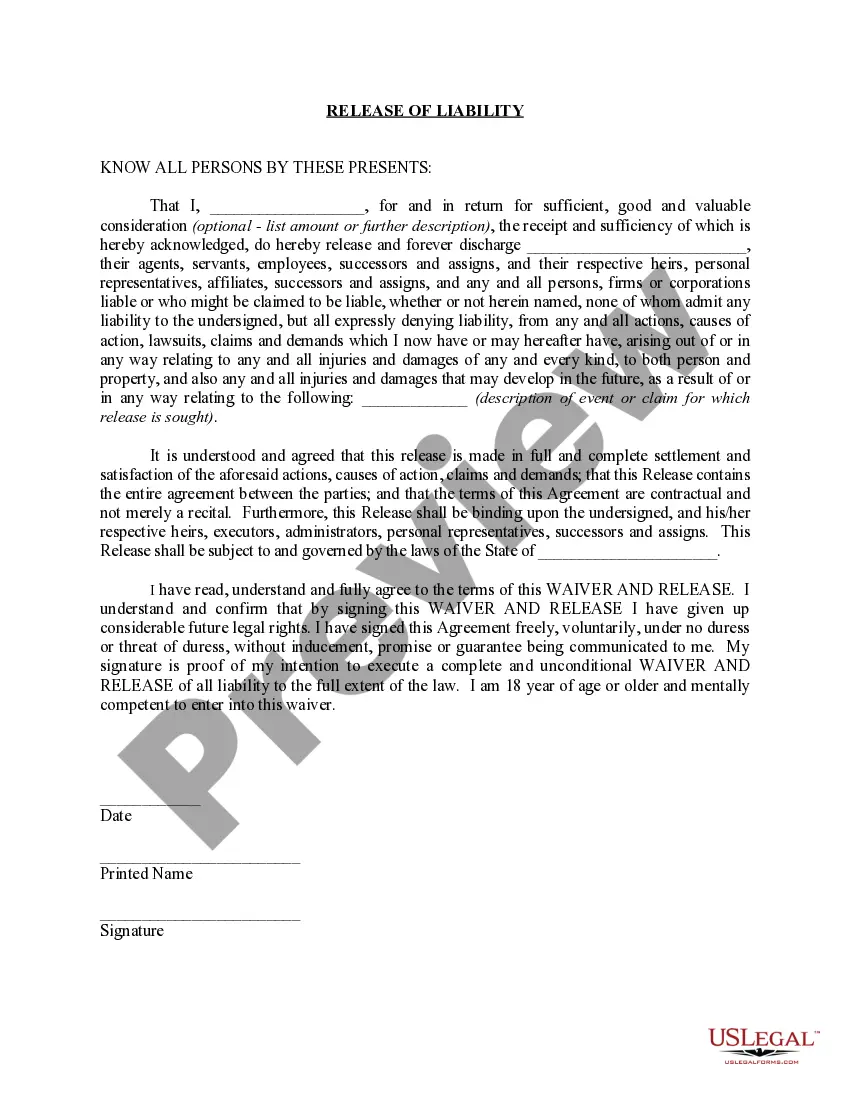
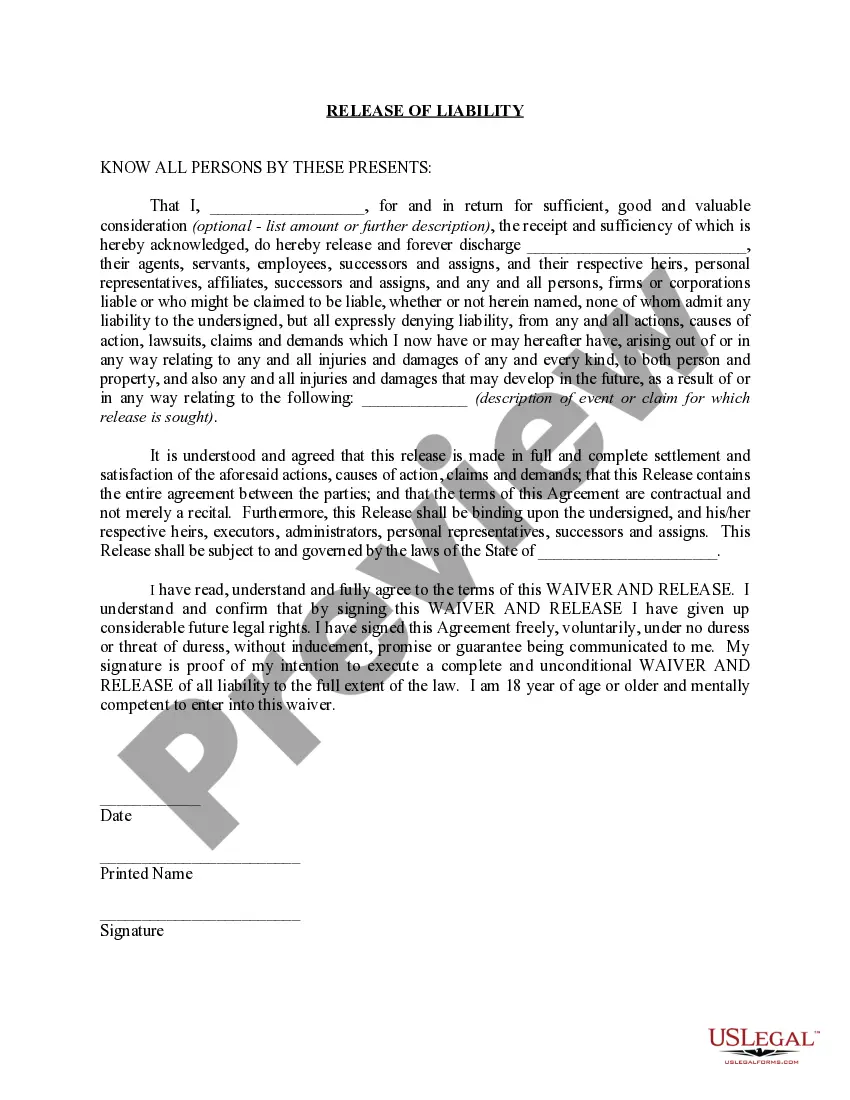
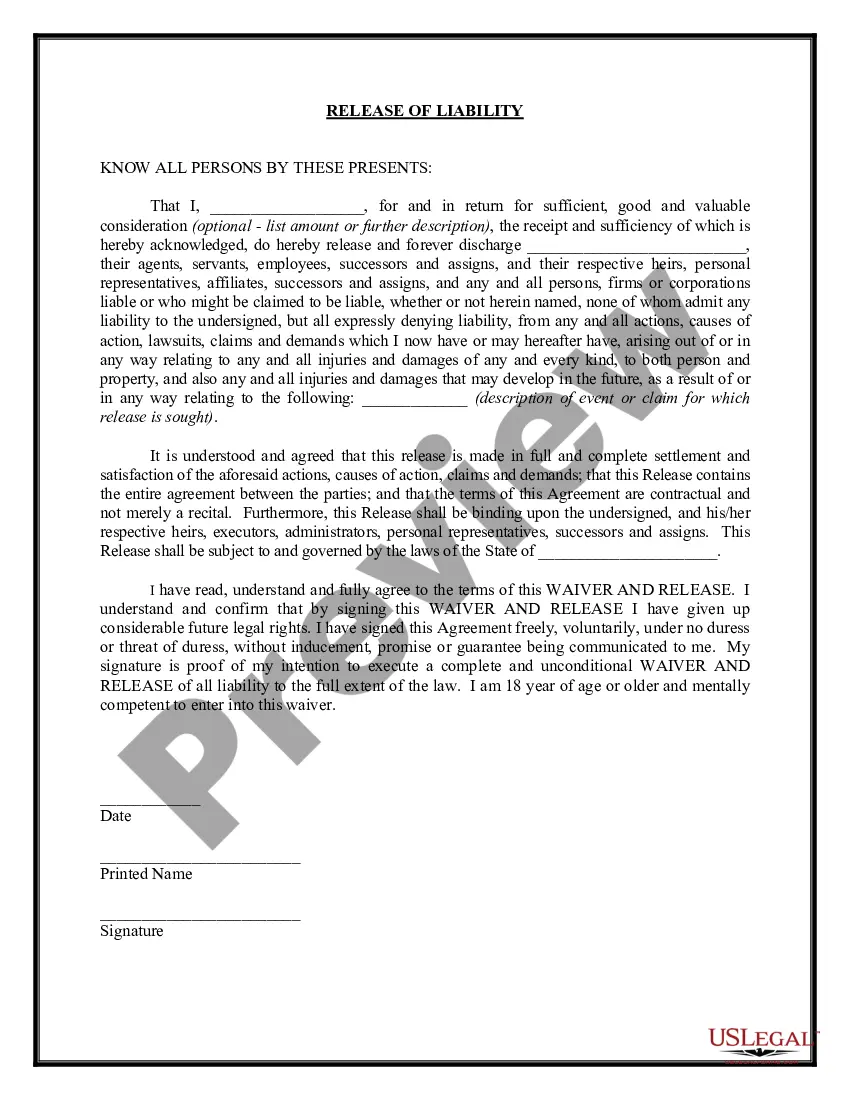
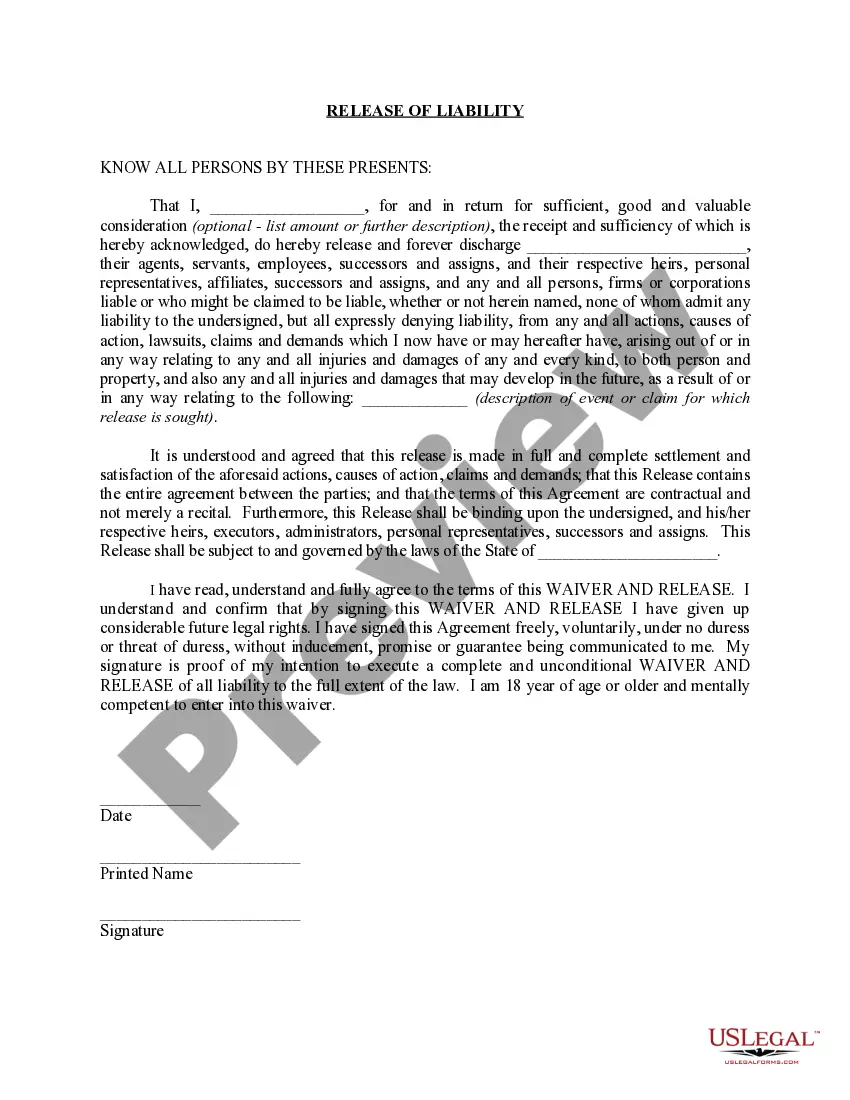
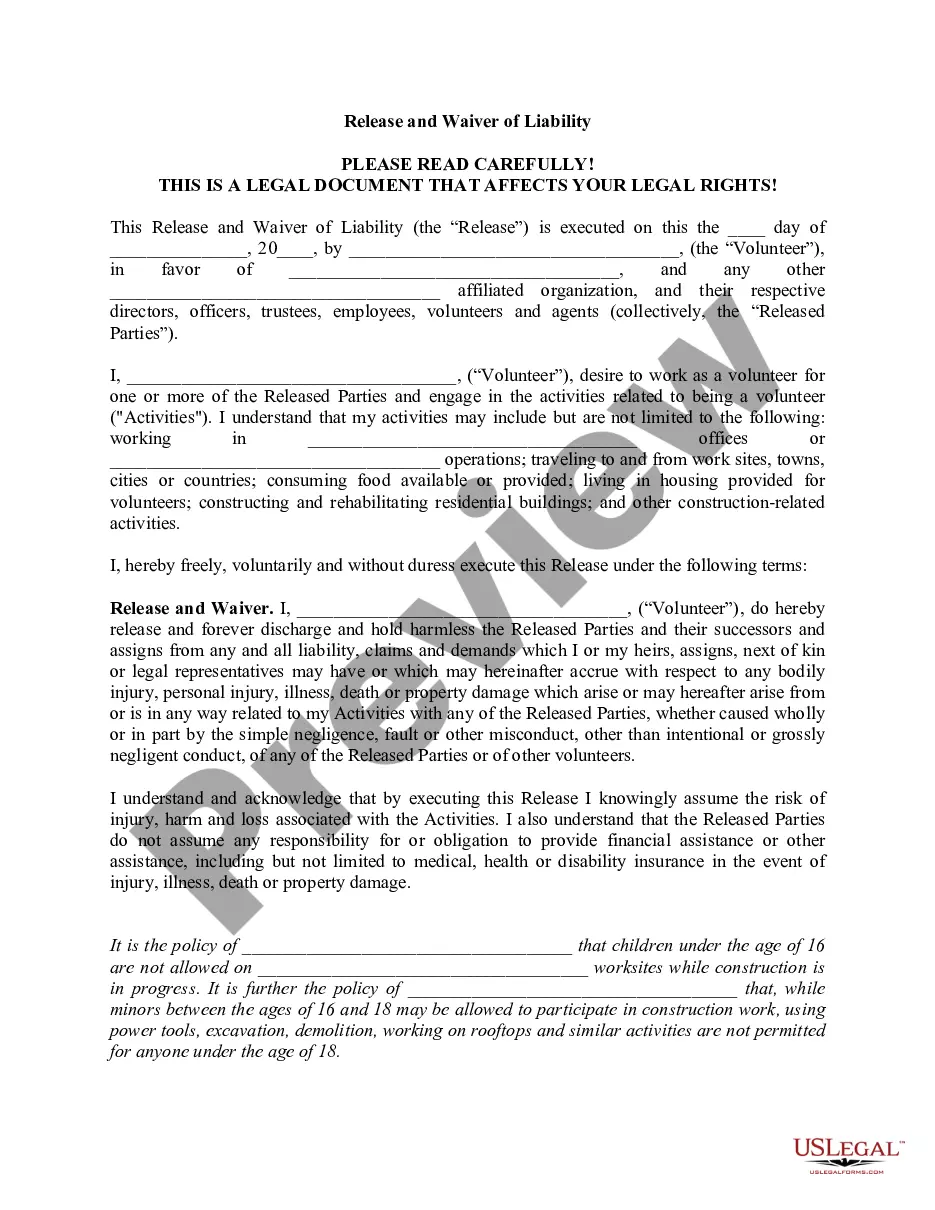
The Liability Waiver for Contractor is a legal document that releases a contractor from liability for injuries or damages that may occur during a specified event. Unlike other forms that may address general waivers, this form is tailored for contractors, ensuring protection against potential claims arising from their work. This waiver is essential for establishing clear boundaries and expectations between the contractor and the client.
What’s included in this form
- Releasor information: Identifies the person or entity waiving their rights.
- Releasee information: Details the contractor and related parties from whom liability is waived.
- Event description: Clearly states the event or activity related to the waiver.
- Legal acknowledgment: Confirms understanding of the waiverâs implications, including potential loss of future claims.
- Signatures: Requires the signature of the releasor, along with the date and printed name.
Situations where this form applies
This form is necessary when a contractor will perform work that involves potential risks of injury or damage. Common scenarios include construction projects, landscaping services, or any physical labor where accidents could happen. It serves as a proactive step in protecting both parties by outlining the extent of liability that the contractor is waiving.
Who this form is for
This waiver is suitable for:
- Contractors providing services in high-risk environments.
- Clients hiring contractors for specific projects.
- Event organizers engaging contractors for activities that may involve physical risks.
- Individuals or businesses seeking to limit liability exposure related to contractor services.
Steps to complete this form
- Identify the parties involved: Fill in the releasor's information and the contractor's details.
- Describe the event: Clearly state the activity or project for which the waiver applies.
- Specify consideration: If needed, indicate the amount or description of what is being exchanged for this waiver.
- Acknowledge terms and conditions: Read through the entire waiver to ensure understanding and agreement.
- Sign and date: The releasor should sign and date the document, providing their printed name as well.
Does this form need to be notarized?
This form does not typically require notarization unless specified by local law. However, some jurisdictions may have specific requirements, so it is advisable to review local regulations to confirm.
Get your form ready online
Our built-in tools help you complete, sign, share, and store your documents in one place.
Make edits, fill in missing information, and update formatting in US Legal Forms—just like you would in MS Word.
Download a copy, print it, send it by email, or mail it via USPS—whatever works best for your next step.
Sign and collect signatures with our SignNow integration. Send to multiple recipients, set reminders, and more. Go Premium to unlock E-Sign.
If this form requires notarization, complete it online through a secure video call—no need to meet a notary in person or wait for an appointment.
We protect your documents and personal data by following strict security and privacy standards.

Make edits, fill in missing information, and update formatting in US Legal Forms—just like you would in MS Word.

Download a copy, print it, send it by email, or mail it via USPS—whatever works best for your next step.

Sign and collect signatures with our SignNow integration. Send to multiple recipients, set reminders, and more. Go Premium to unlock E-Sign.

If this form requires notarization, complete it online through a secure video call—no need to meet a notary in person or wait for an appointment.

We protect your documents and personal data by following strict security and privacy standards.
Avoid these common issues
- Failing to include a clear description of the event can lead to confusion.
- Not ensuring all parties understand the waiver's terms may result in disputes.
- Leaving out signatures or dates may invalidate the waiver.
- Neglecting to consult state-specific laws could render the waiver unenforceable.
Benefits of completing this form online
- Convenience: Access and complete the form at your own pace from anywhere.
- Editability: Modify the form easily to suit your specific needs.
- Reliability: Obtain a document that is drafted by licensed attorneys, ensuring legal validity.
Looking for another form?

Form popularity
FAQ
A waiver of liability for construction work is a document that releases one party from certain legal claims related to risks or injuries that may occur during a construction project. It helps allocate responsibility for hazards and is typically used when a contractor or client wants to clarify risk before work begins. Enforceability varies by state and context; consult a licensed attorney.
A simple liability waiver generally identifies the parties, describes the work or activity covered, states that the signer releases claims arising from the work, and provides spaces for the signer’s name, signature, and date. Use plain language, clearly specify the project scope, and ensure both parties understand the risks involved before starting work.
A liability waiver should be considered at the outset of a contracting arrangement for construction work, especially when tasks involve physical risk, equipment use, or potential property damage. Address risk allocation early, have all parties sign before site activity begins, and keep the document with project records.
Liability waivers can reduce exposure by clarifying risk and releasing certain claims to the extent allowed by law, but they are not absolute protections. They may not bar claims for intentional misconduct, gross negligence, or statutory violations, and their enforceability depends on facts and state law. Always verify with a licensed attorney before relying on one.
For the Liability Waiver for Contractor, the purpose is to allocate risk by having the signer acknowledge typical project hazards and release the other party from specified claims arising from those risks. It helps set expectations and prevent disputes related to injuries or property damage during contracting work, while remaining subject to applicable laws.
Unlike a generic liability waiver, this form is tailored to contractor engagements and construction projects. It focuses on the contractor-client relationship, site activities, equipment use, and project-specific risks, ensuring language reflects this context and supports risk allocation for typical contracting work.