Liability Waiver for Employee
About this form
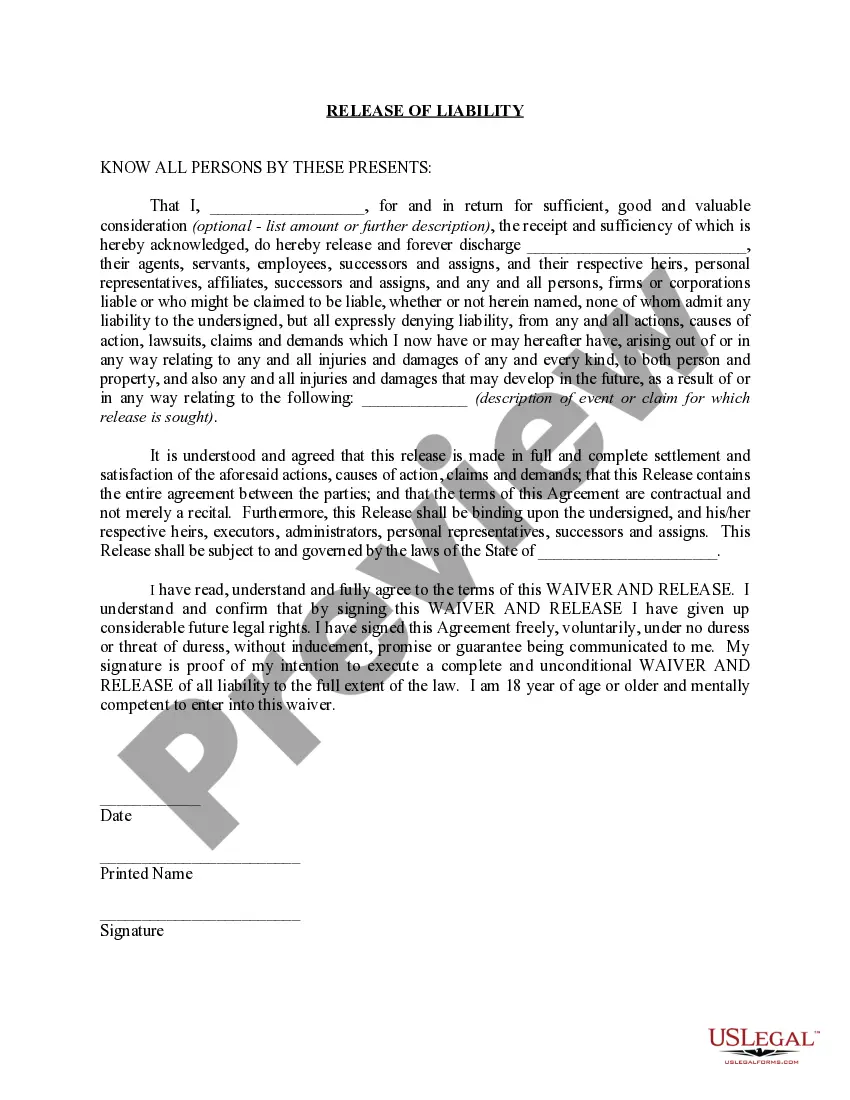
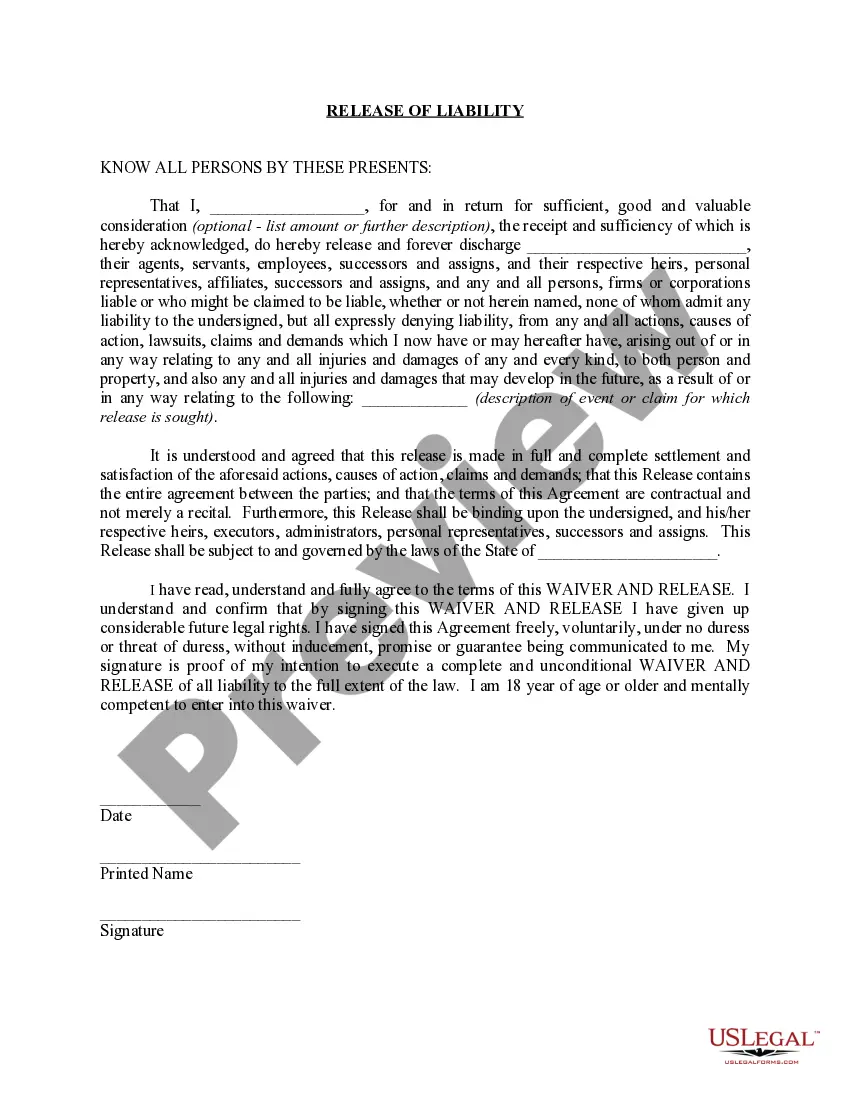
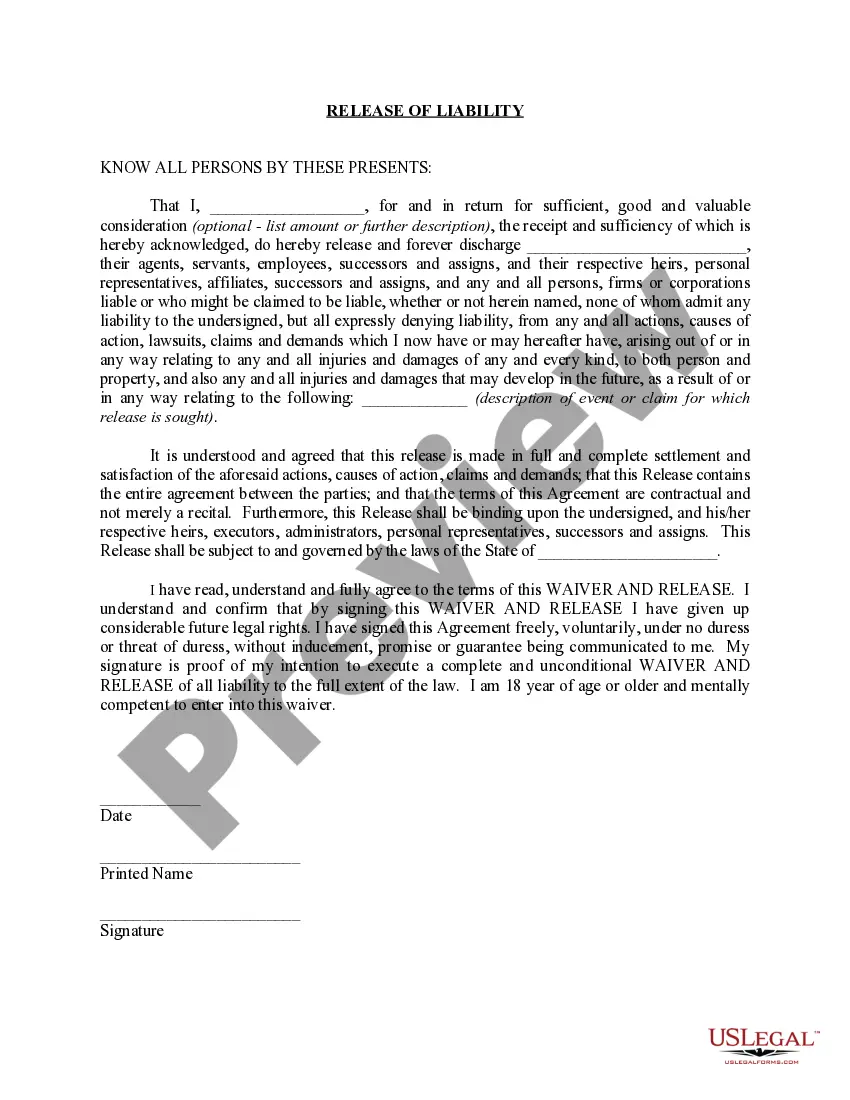
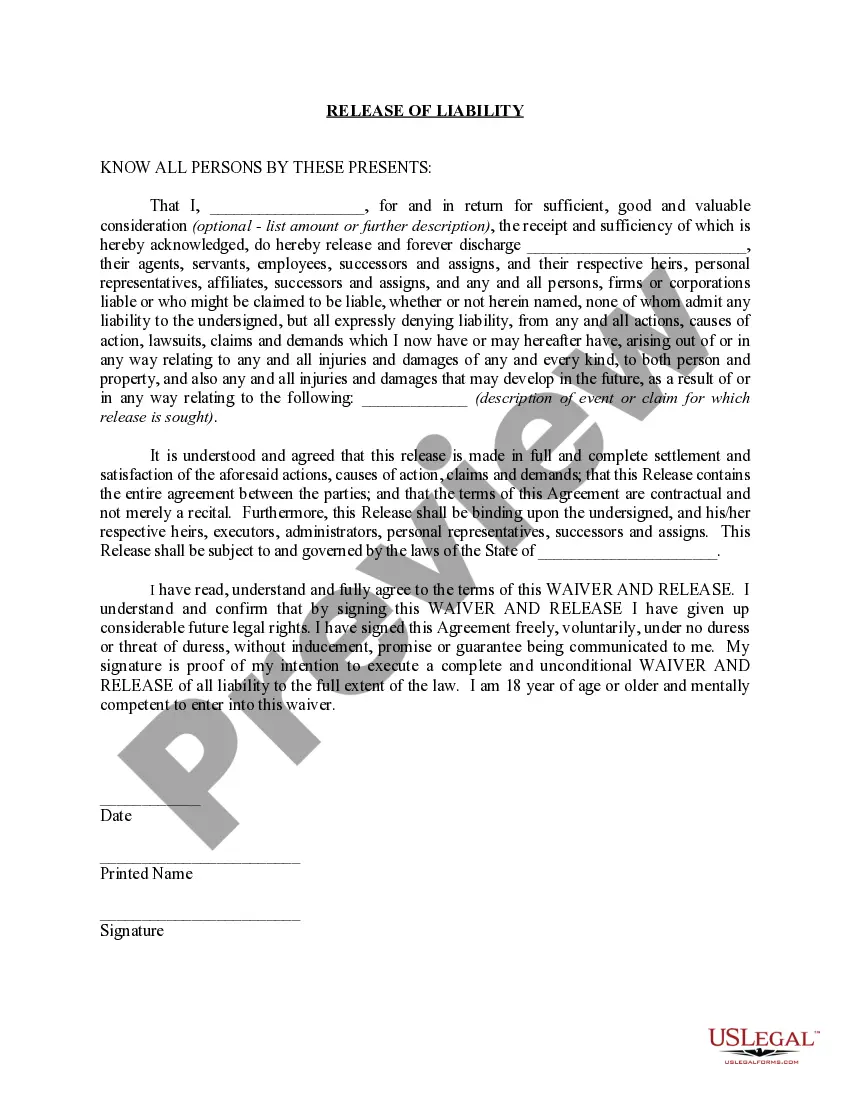
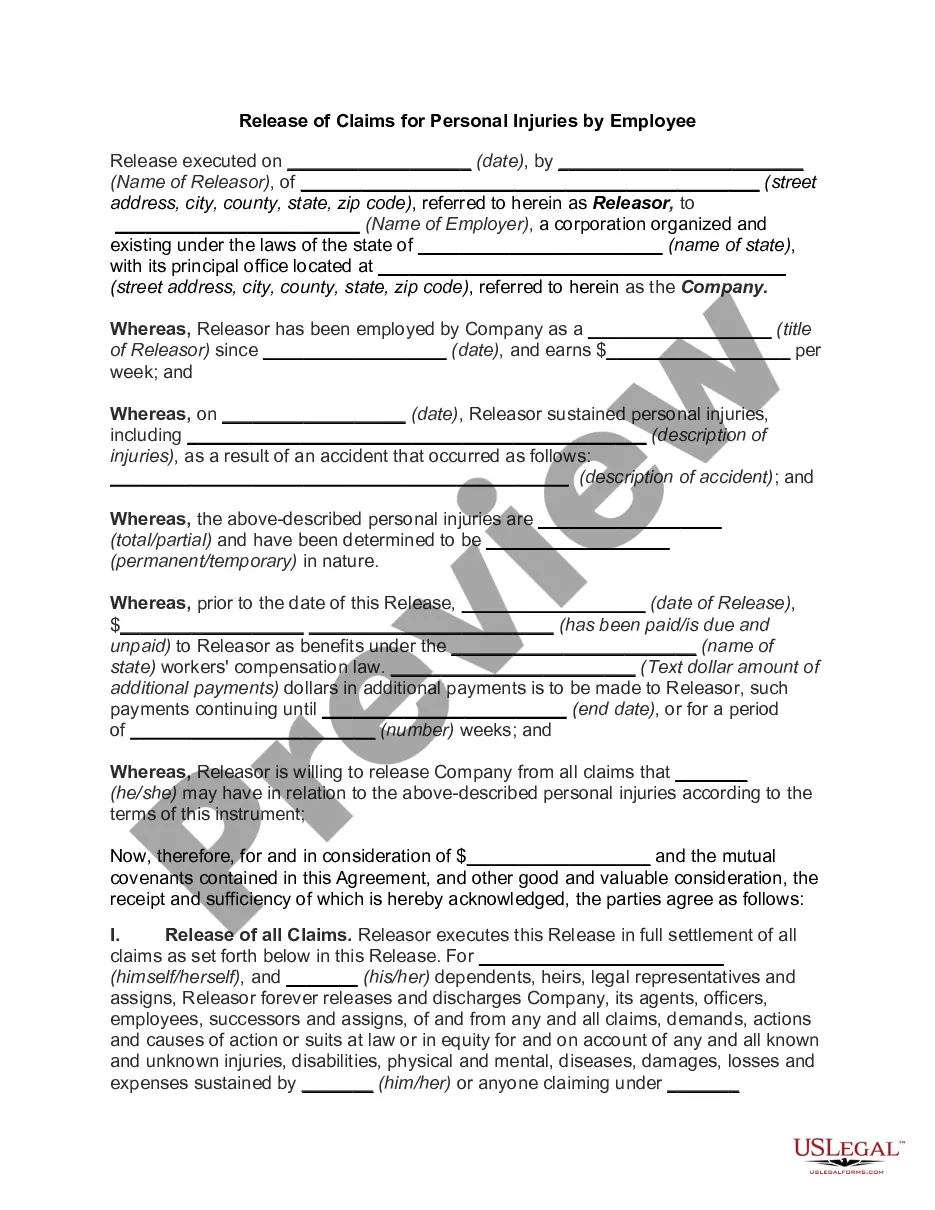
The Liability Waiver for Employee is a legal document that releases an employer from liability for any injuries or damages incurred by an employee during a specific event. This form differs from other waivers as it specifically focuses on employee-employer relationships, ensuring both parties are aware of their rights and responsibilities regarding any potential claims.
Key parts of this document
- Identifying information of the releasor (the employee) and releasee (the employer).
- Clear description of the event or circumstance for which liability is being waived.
- Language that indicates the releasor discharges the releasee from any present or future claims.
- Confirmation of the releasorâs understanding and voluntary agreement to the terms.
- Signature and date to validate the waiver, ensuring it is legally binding.
When this form is needed
This form should be used in scenarios where an employee participates in activities organized by the employer that may carry inherent risks, such as training sessions, team-building exercises, or company-sponsored events. It serves to protect the employer from potential claims related to accidents or injuries occurring during these activities.
Who this form is for
- Employers who organize events or activities that involve potential risks to employees.
- Employees who are required to sign a waiver before participating in work-related activities.
- Companies looking to clarify liability terms and ensure mutual understanding of risks involved.
How to prepare this document
- Identify the releasor (the employee) and their written name at the designated space.
- Clearly describe the event or activity for which the liability waiver is being issued.
- Insert the name of the employer or organization being released from liability.
- Ensure the releasor understands the terms before signing and provide the date of signing.
- Collect the printed name and signature of the releasor, confirming their understanding and acceptance.
Does this form need to be notarized?
This form does not typically require notarization unless specified by local law. However, having it notarized can provide additional legal validation and authenticity to the waiver.
Get your form ready online
Our built-in tools help you complete, sign, share, and store your documents in one place.
Make edits, fill in missing information, and update formatting in US Legal Forms—just like you would in MS Word.
Download a copy, print it, send it by email, or mail it via USPS—whatever works best for your next step.
Sign and collect signatures with our SignNow integration. Send to multiple recipients, set reminders, and more. Go Premium to unlock E-Sign.
If this form requires notarization, complete it online through a secure video call—no need to meet a notary in person or wait for an appointment.
We protect your documents and personal data by following strict security and privacy standards.

Make edits, fill in missing information, and update formatting in US Legal Forms—just like you would in MS Word.

Download a copy, print it, send it by email, or mail it via USPS—whatever works best for your next step.

Sign and collect signatures with our SignNow integration. Send to multiple recipients, set reminders, and more. Go Premium to unlock E-Sign.

If this form requires notarization, complete it online through a secure video call—no need to meet a notary in person or wait for an appointment.

We protect your documents and personal data by following strict security and privacy standards.
Common mistakes
- Failing to clearly describe the event leading to the waiver.
- Not providing signatures or dates, which render the form invalid.
- Allowing individuals under 18 to sign without appropriate consent.
- Using unclear or ambiguous language that may cause confusion over the scope of the waiver.
Why use this form online
- Convenient access from anywhere, allowing quick completion and storage.
- Editability before finalizing, ensuring accuracy and clarity in all sections.
- Reliability, with professionally drafted legal language tailored to protect your interests.
Looking for another form?
Form popularity
FAQ
Many people believe the myth that if you sign a waiver, you're not allowed to sue. However, that is simply not true. Waivers are intended to inform the participant of possible harm. Upon signing, the participant is surrendering a known right or acknowledging that harm may occur.
The Basic Law: In California, an employer is vicariously liable for the negligent and wrongful acts of his employees that are committed within the scope of employment.Whether an employee is acting within the scope of his employment is viewed broadly.
A waiver explained A release form or a waiver is simply a legal document containing an agreement between two parties.A waiver is an essential document that informs participants of the risks involved in certain activities and also protects you from liability.
When you sign a service provider's liability waiver, you are agreeing not to hold the service provider responsible for any injury you may sustain as a result of ordinary negligence. Ordinary negligence and gross negligence are the two types that factor into these types of cases.
Employees owe a duty to their employers to carry out their work with reasonable care so as to avoid accident and injury. Employers are vicariously liable for the negligence of their employees but are entitled to claim a contribution or indemnity from their negligent employee in appropriate circumstances.
In many cases, the waiver is not enforceable.If you've been injured due to negligent actions, you can sue even if you signed a waiver. Winning a lawsuit concerning negligence is not uncommon. Many celebrities have sued for negligence even though they signed documents stating they understood the risks.
A waiver is a legally binding provision where either party in a contract agrees to voluntarily forfeit a claim without the other party being liable. Waivers can either be in written form or some form of action.
Under Title VII of the Civil Rights Act of 1964, the Age Discrimination in Employment Act, and the Americans with Disabilities Act, only the employer has liability. The perceived individual wrongdoer cannot be sued and is not liable for any damages under these laws, even if he or she behaved with intentional malice.
Breach of contract: An employer can sue if an employee fails to perform his or her obligations under a contractfor example, by breaching a non-compete or non-solicit agreement.