PA Action Plan - How to Create an Audit Checklist
Overview of this form
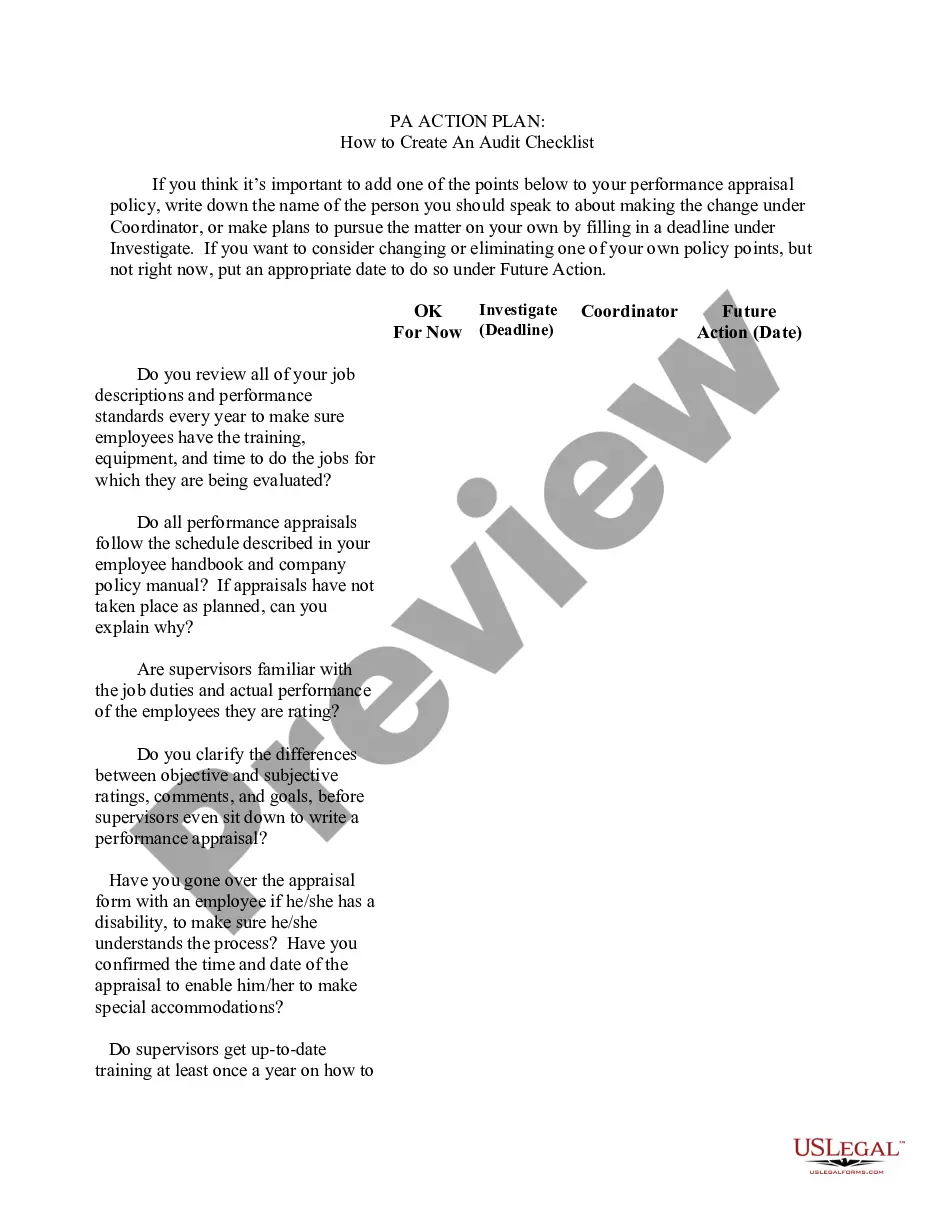
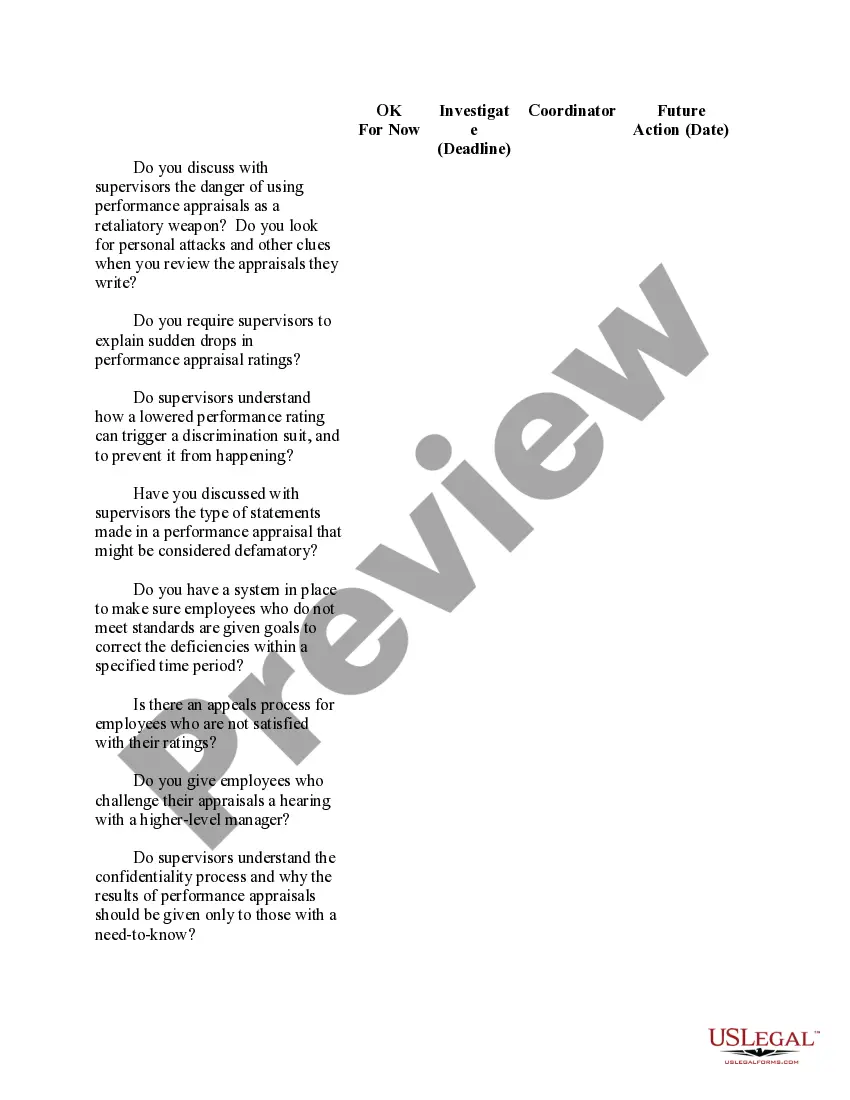
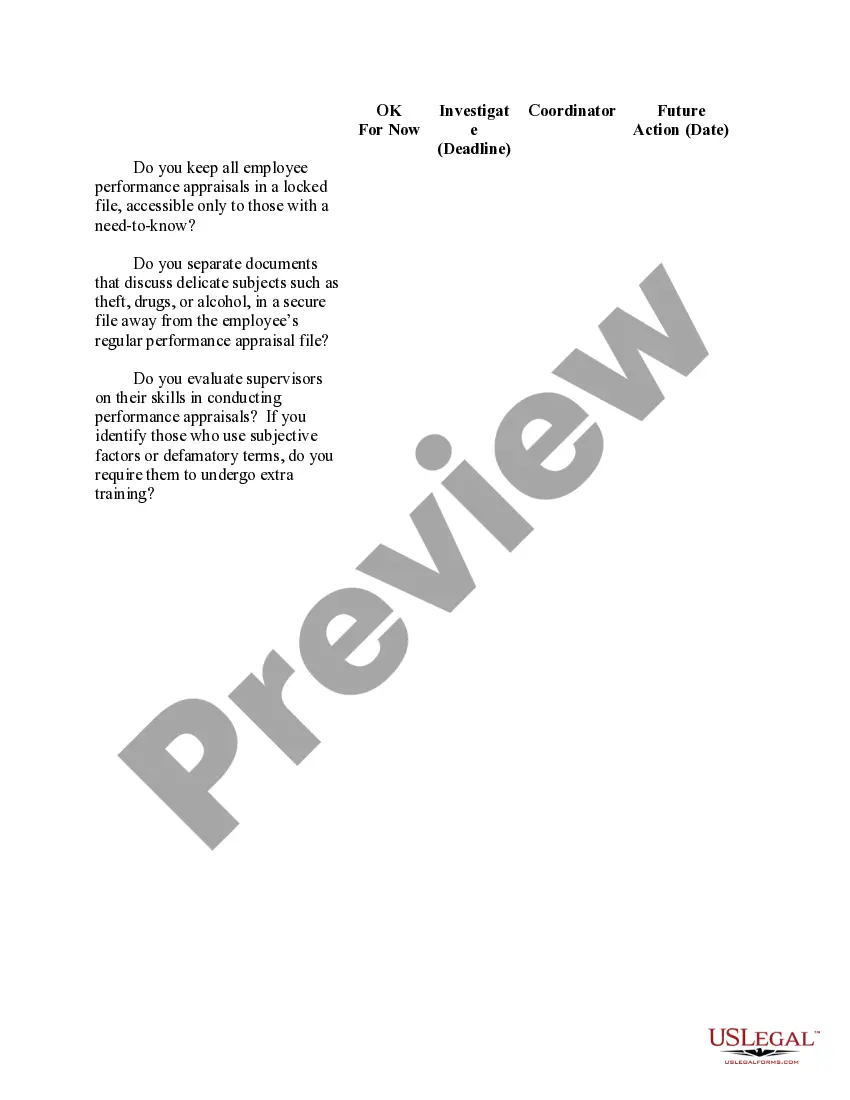
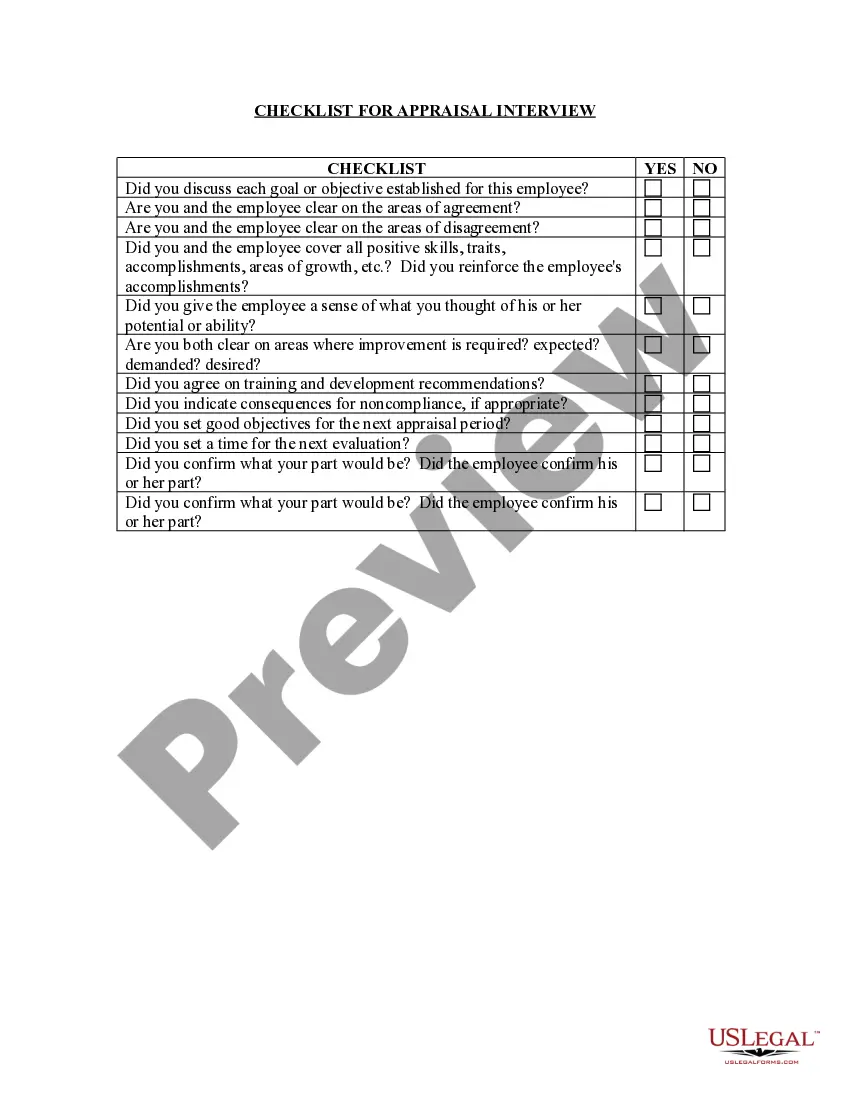
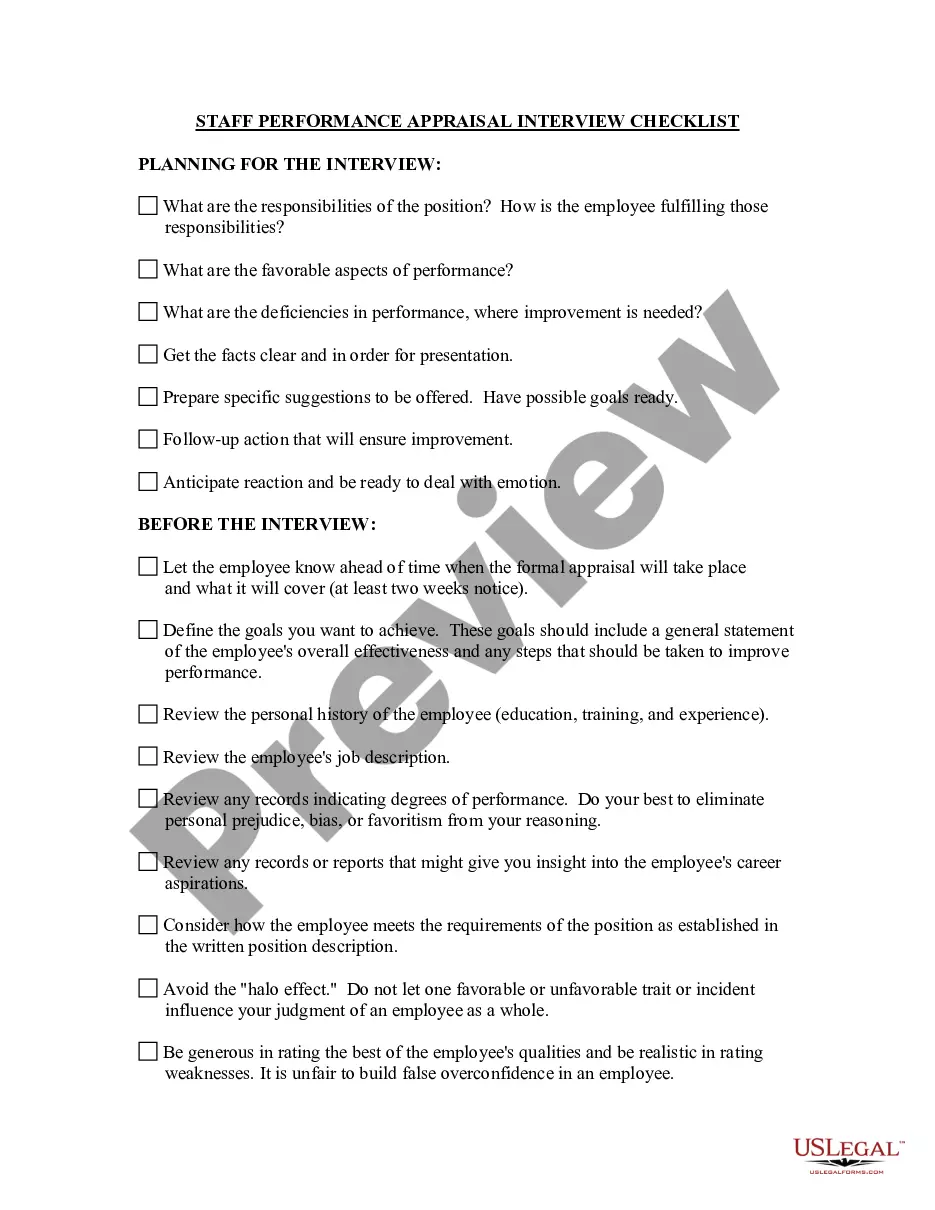
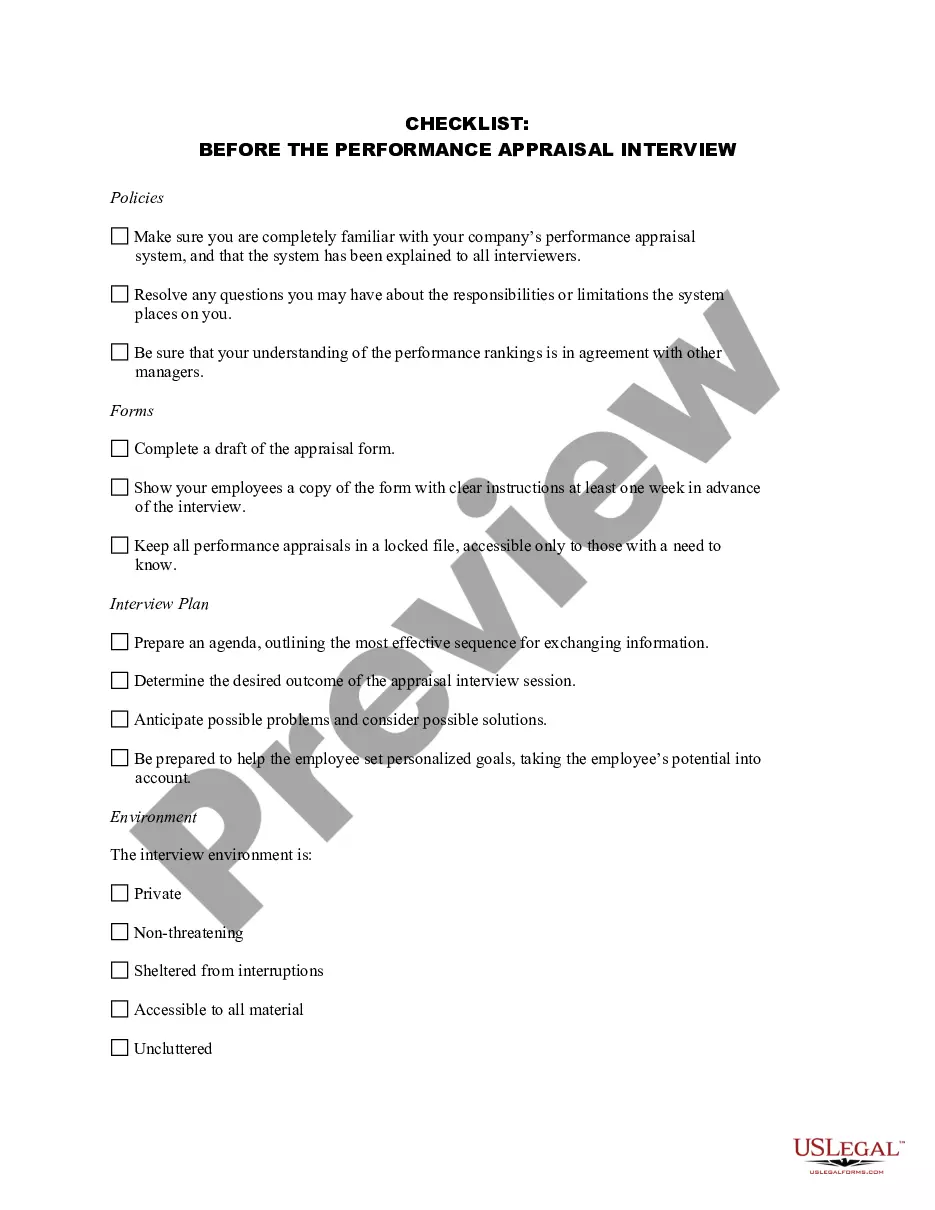
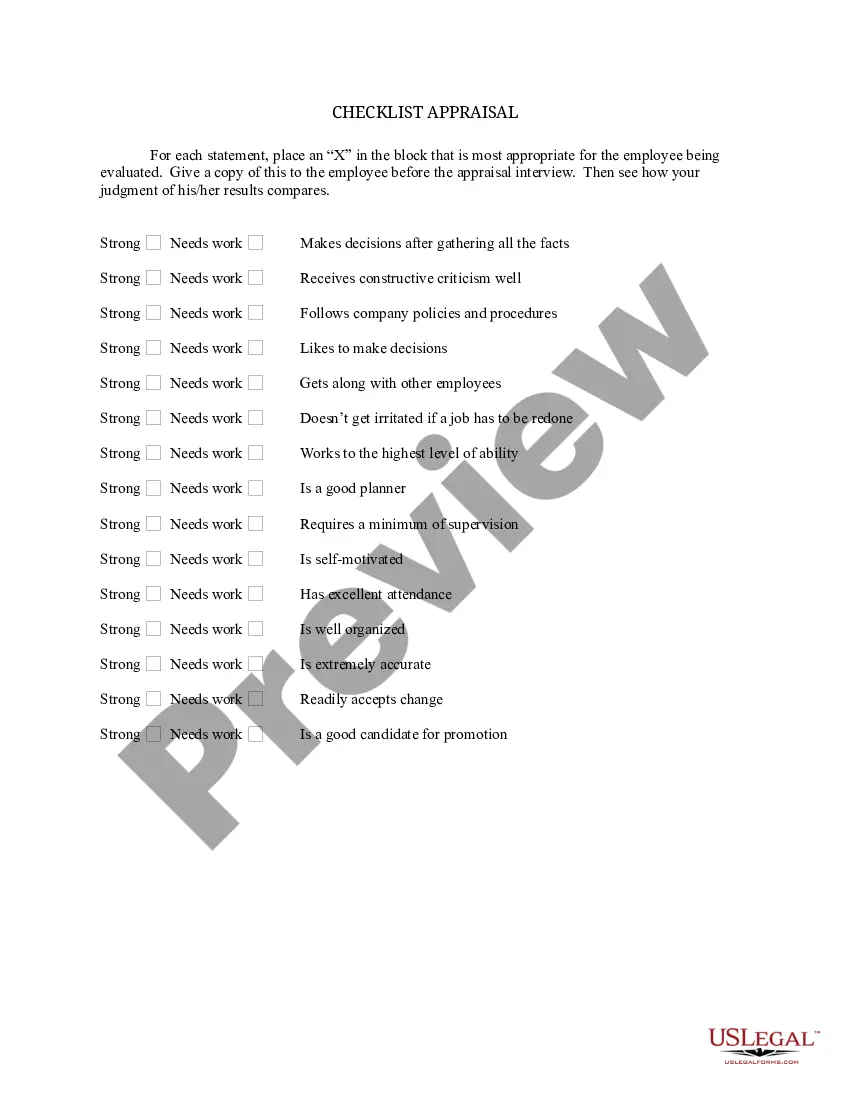
The PA Action Plan - How to Create an Audit Checklist is a structured template designed to help organizations develop effective audit checklists. This form assists users in identifying necessary actions and coordinating tasks related to performance appraisals and policy reviews, making it a vital tool for those wanting to enhance their evaluation processes and ensure compliance with established standards.
Key components of this form
- Coordinator: Space to designate the person responsible for implementing changes.
- Investigate: A section where users can set deadlines for reviewing specific policy points.
- Future Action: A field for planning potential future modifications to policies.
- Job Description Review: A prompt to consider the annual evaluation of job descriptions and performance standards.
Common use cases
This form is beneficial when an organization wants to review or implement changes to its performance appraisal policies. It is useful during annual evaluations or when there are changes in job roles or responsibilities. If there are new training requirements or a need for updated standards, this form can help streamline those changes effectively.
Who should use this form
- Human resources personnel looking to enhance performance appraisal systems.
- Team leaders responsible for monitoring compliance and standards.
- Hiring managers who need to revise or review job descriptions.
- Organizational leaders aiming to ensure effective training and resources are in place.
How to complete this form
- Identify key issues that need addressing in your performance appraisal policy.
- Designate a Coordinator responsible for overseeing the implementation.
- Set a deadline in the Investigate section for when changes should be completed.
- Document potential Future Actions with appropriate dates for review or implementation.
- Review job descriptions and performance standards annually to ensure relevance and accuracy.
Is notarization required?
This form does not typically require notarization unless specified by local law. Always check your jurisdiction's requirements to ensure compliance.
Get your form ready online
Our built-in tools help you complete, sign, share, and store your documents in one place.
Make edits, fill in missing information, and update formatting in US Legal Forms—just like you would in MS Word.
Download a copy, print it, send it by email, or mail it via USPS—whatever works best for your next step.
Sign and collect signatures with our SignNow integration. Send to multiple recipients, set reminders, and more. Go Premium to unlock E-Sign.
If this form requires notarization, complete it online through a secure video call—no need to meet a notary in person or wait for an appointment.
We protect your documents and personal data by following strict security and privacy standards.

Make edits, fill in missing information, and update formatting in US Legal Forms—just like you would in MS Word.

Download a copy, print it, send it by email, or mail it via USPS—whatever works best for your next step.

Sign and collect signatures with our SignNow integration. Send to multiple recipients, set reminders, and more. Go Premium to unlock E-Sign.

If this form requires notarization, complete it online through a secure video call—no need to meet a notary in person or wait for an appointment.

We protect your documents and personal data by following strict security and privacy standards.
Typical mistakes to avoid
- Neglecting to set deadlines, which may lead to inaction on necessary changes.
- Failing to review job descriptions and performance standards regularly.
- Not involving key personnel in the review process, which can result in oversight of critical issues.
- Overlooking the necessity for training updates that align with performance evaluation policies.
Why complete this form online
- Convenience of downloading and editing the template to suit organizational needs.
- Accessible anywhere with internet, making it easy to update as policies change.
- Reliability of receiving legally vetted forms created by licensed attorneys.
Quick recap
- The PA Action Plan helps organizations create a structured audit checklist for performance appraisals.
- Regular reviews and updates to job descriptions are crucial for effective employment practices.
- The form is flexible and can be adapted to meet different organizational policies across various states.
Looking for another form?

Form popularity
FAQ
The term audit checklist is used to describe a document that is created during the audit planning stage. This document is essentially a list of the tasks that must be completed as part of the audit.
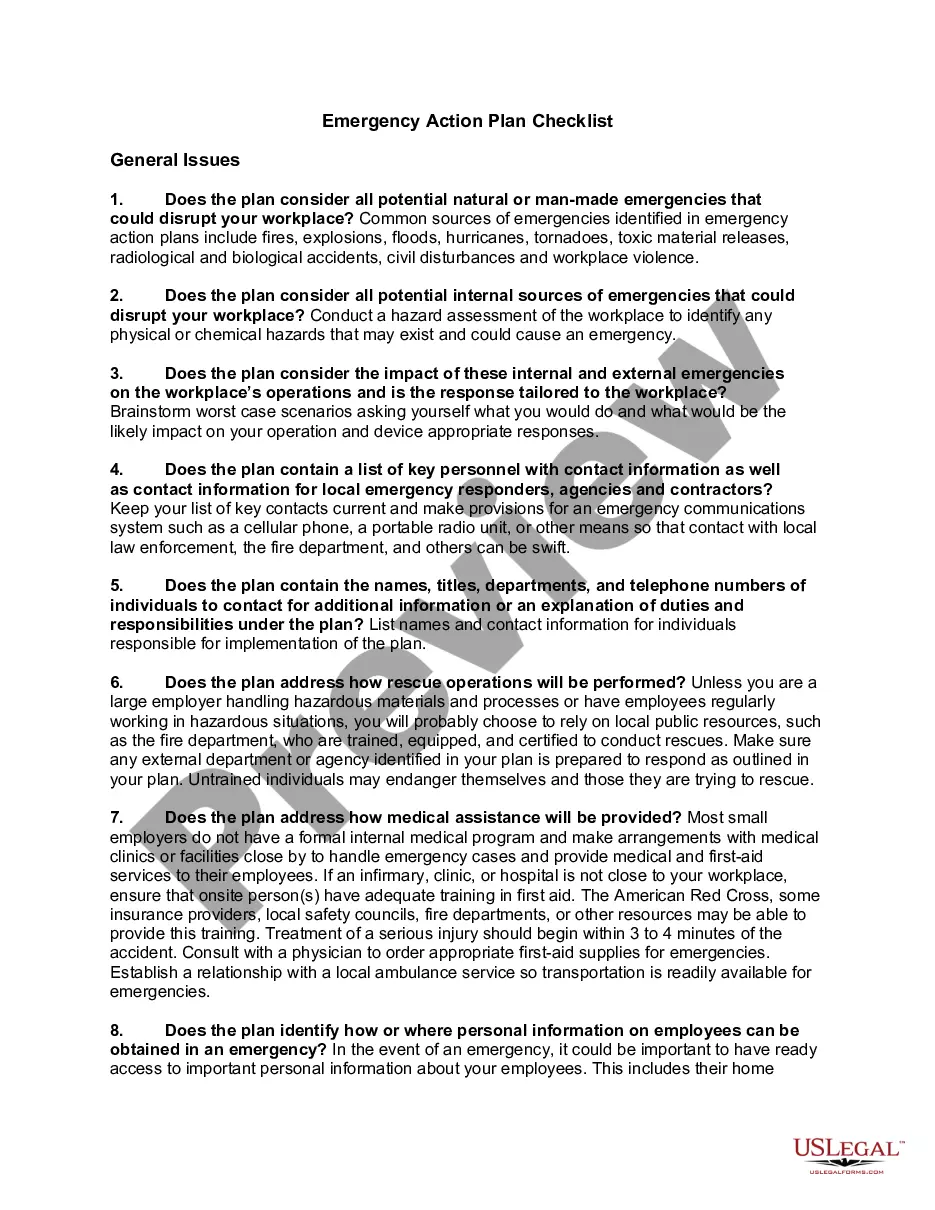
Identify non-compliance on employee practices. Capture photo evidence or take note of irregularities in the process being done. Assign action plans to appropriate team member. Document observations and provide clear recommendations.
Assess business risks. Verify the appropriateness of accounting policies and procedures. Identify areas where special audit consideration may be necessary.
Define the audit universe (by division, location, department, product etc.) Conduct a risk assessment. Prioritize audits based on risk assessment. Determine available resources to conduct the audits.
There are four main phases to an internal audit: Preparation, Performance, Reporting, and Follow Up. The first two of these phases can be broken down into a series of smaller steps.
Step 1: Separate the Checklist into Three Different Categories. Step 2: Know Where You Should be Getting Your Sources of Information. Step 3: Know What You Have to Look for Under Management Step 4: Look Into the Financial Aspect. Step 5: Assess the Business's Operations.
What is an Internal Audit Checklist? An internal audit checklist is an invaluable tool for comparing a business's practices and processes to the requirements set out by ISO standards. The internal audit checklist contains everything needed to complete an internal audit accurately and efficiently.
Initial Audit Planning. Risk and Process Subject Matter Expertise. COSO'S 2013 Internal Control Integrated Framework. Initial Document Request List. Preparing for a Planning Meeting with Business Stakeholders. Preparing the Audit Program. Audit Program and Planning Review.
Identify Areas that Need Auditing. Determine How Often Auditing Needs to be Done. Create An Audit Calendar. Alert Departments of Scheduled Audits. Be Prepared. Interview Users. Document Results. Report Findings.