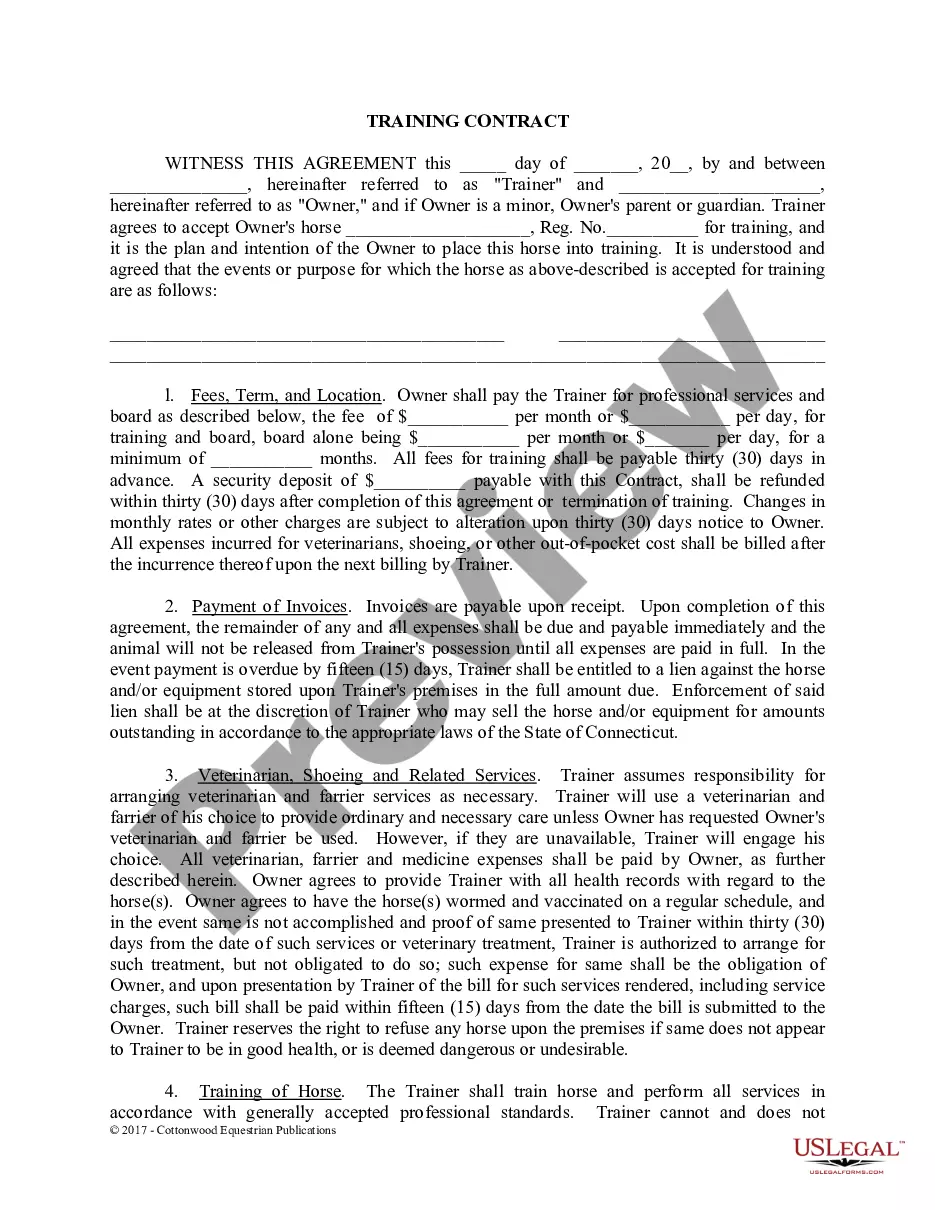
Emergency Action Plan Checklist - EAP
Overview of this form
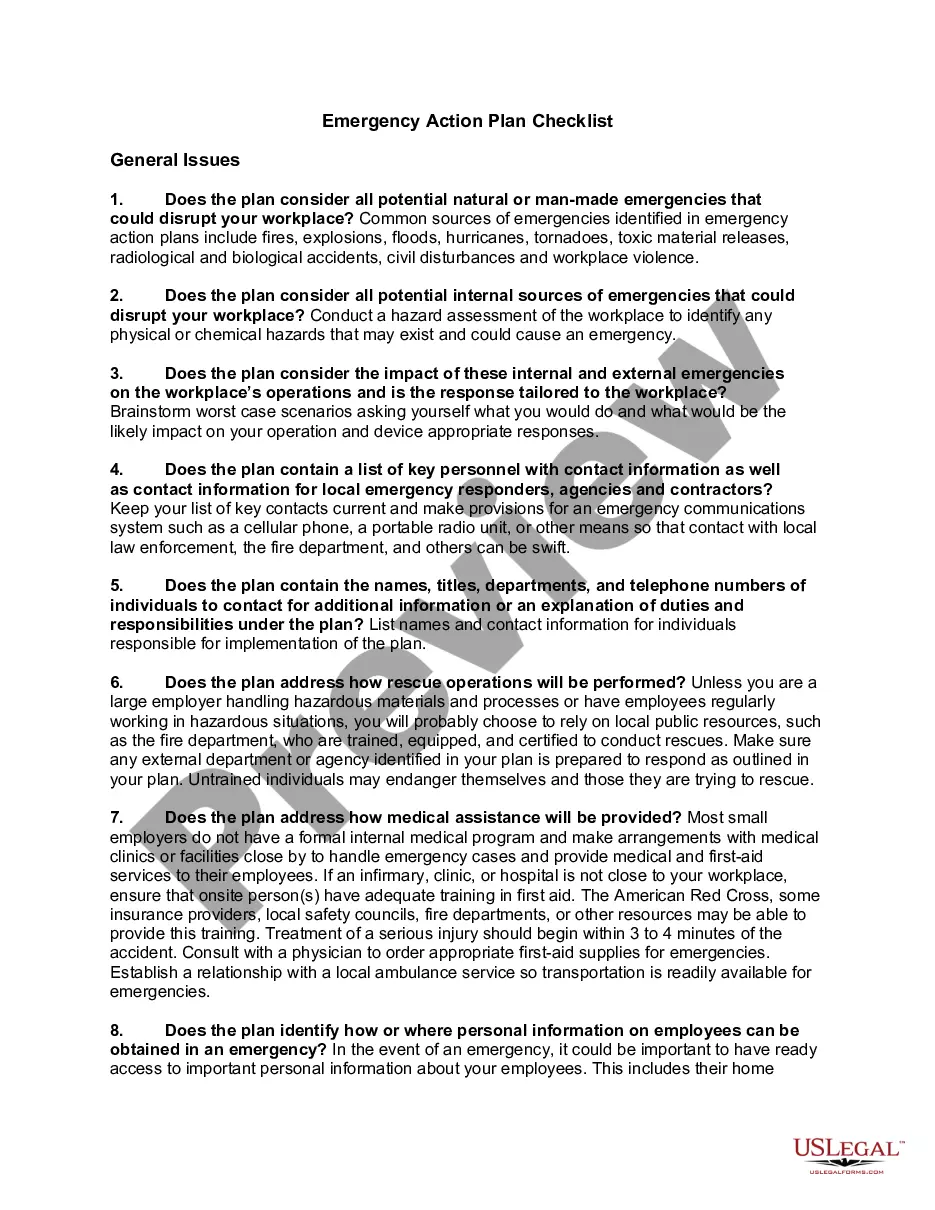
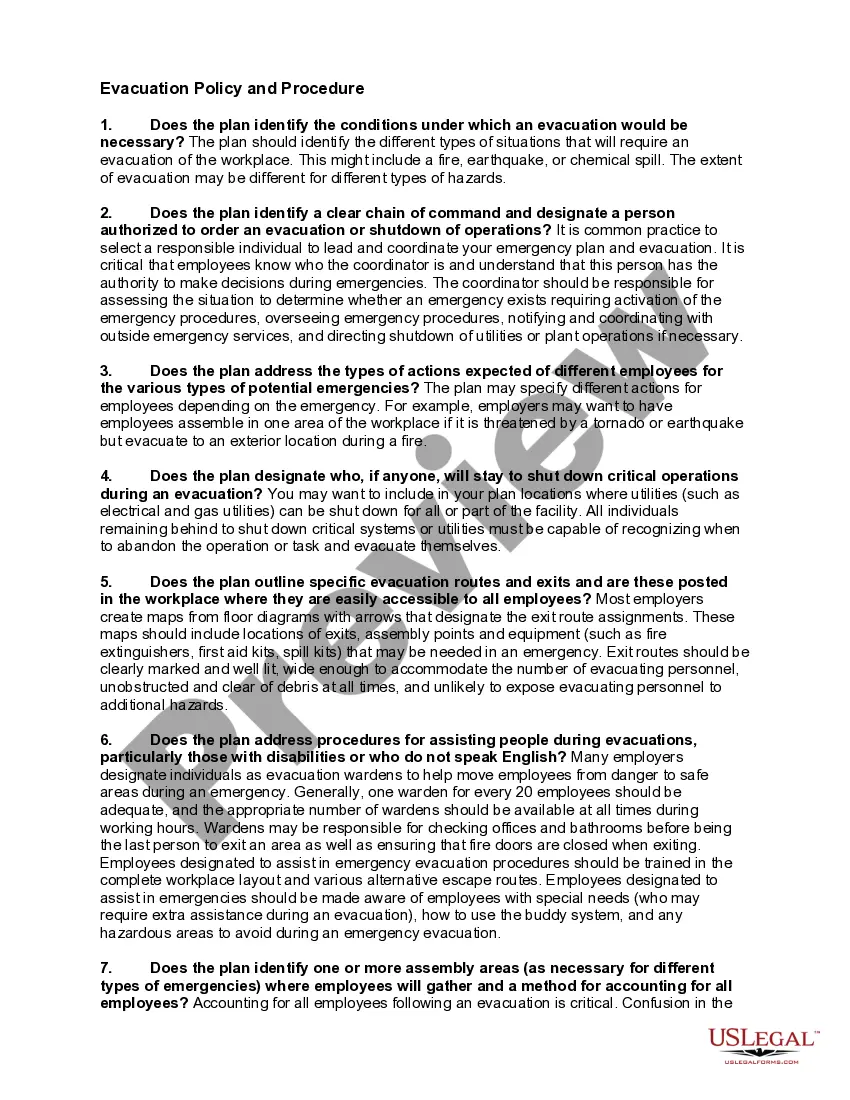
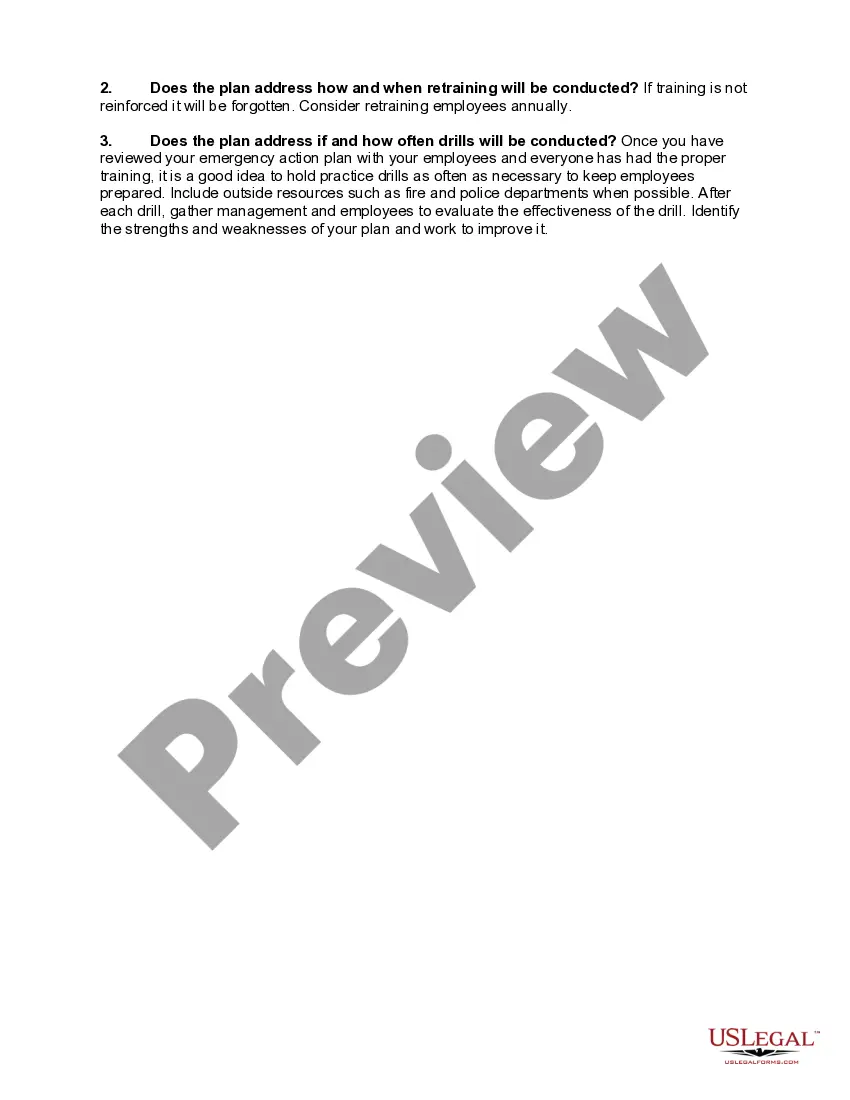
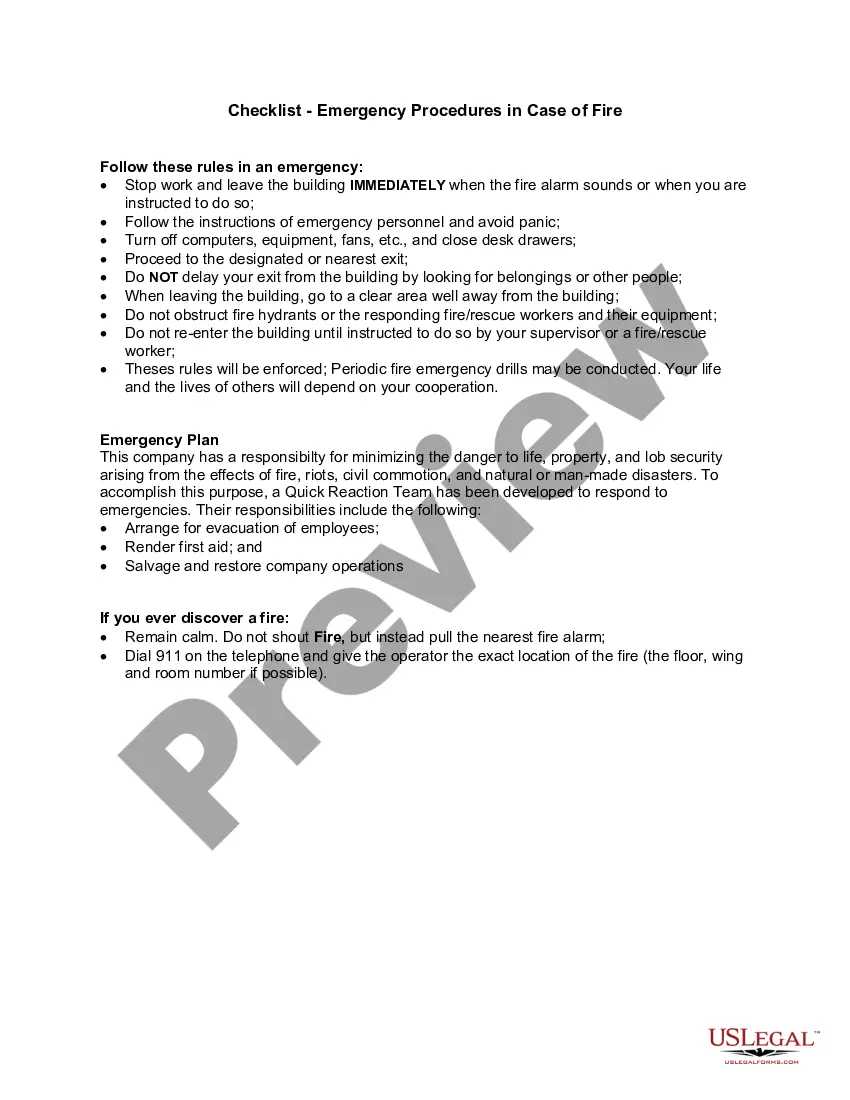
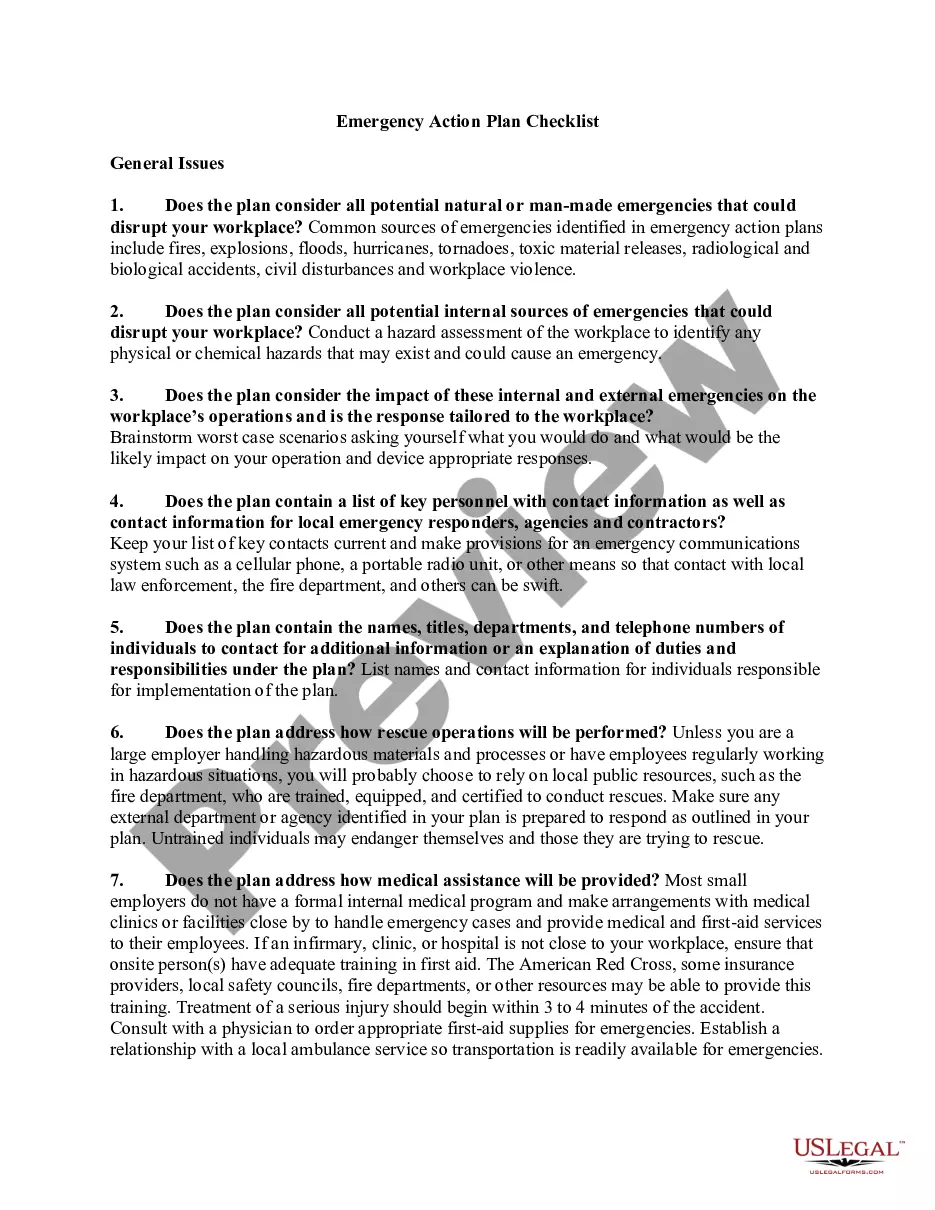
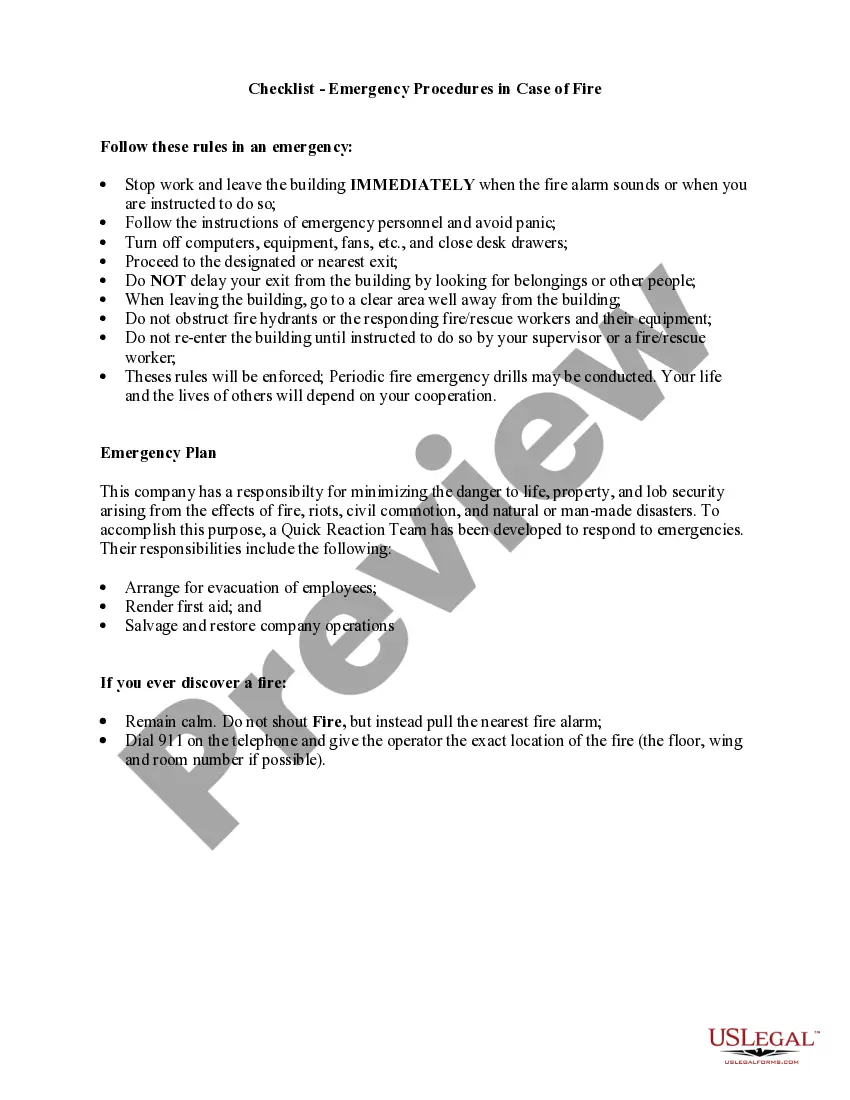
The Emergency Action Plan Checklist (EAP) is a structured document designed to help organizations prepare for potential workplace emergencies. It outlines specific procedures to follow during various emergency situations, ensuring both employer and employee actions are organized and effective. Unlike other forms, the EAP is a proactive tool that focuses on preventing confusion and mitigating harm during emergencies by detailing roles, responsibilities, and communication strategies tailored to your specific work environment.
Form components explained
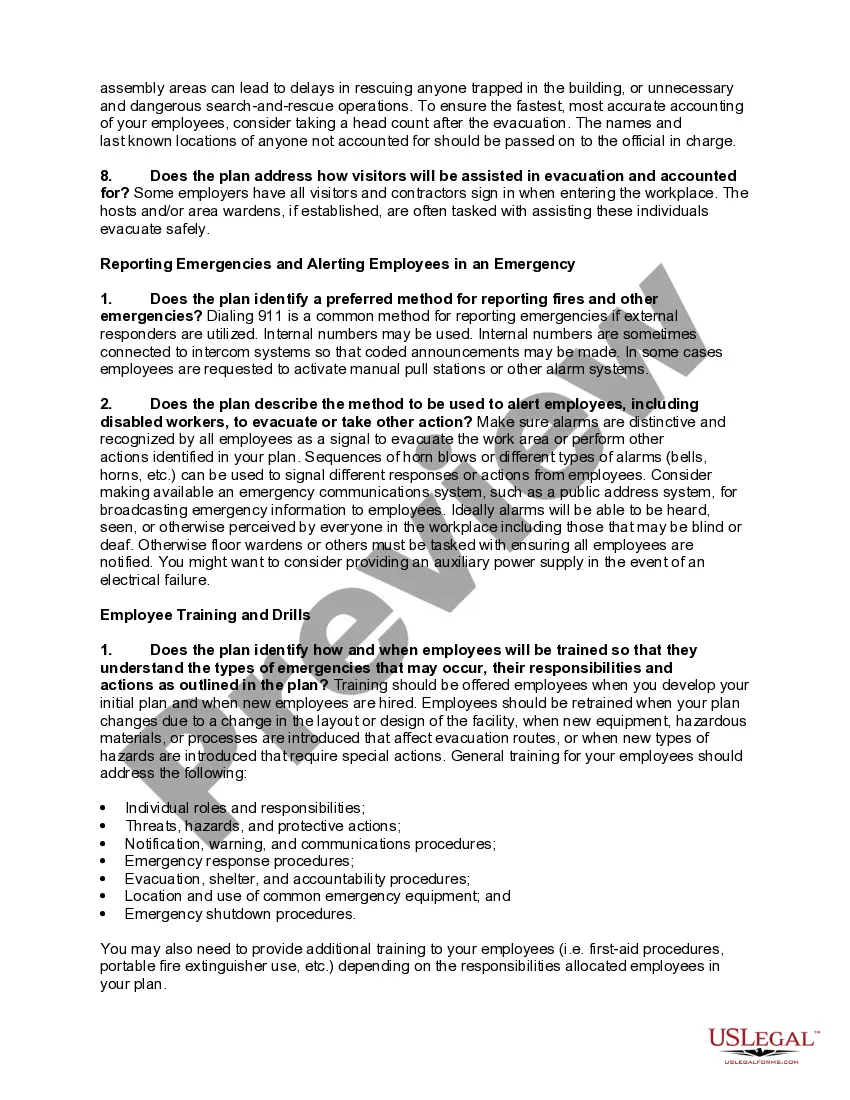
- Means of reporting emergencies.
- Evacuation procedures and assignments.
- Responsibilities of employees who stay behind.
- Accounting for all employees post-evacuation.
- Rescue and medical responsibilities.
- Contact information for key personnel and emergency responders.
When to use this document
This form is essential for organizations looking to establish a proactive approach to workplace safety. Use the Emergency Action Plan Checklist when initiating or updating your emergency response procedures, conducting training for employees, or when mandated by safety regulations such as OSHA standards. It should also be consulted during regular safety audits and drills to ensure preparedness for situations like fires, natural disasters, or workplace violence.
Who can use this document
- Employers responsible for workplace safety.
- Safety officers and compliance managers.
- Organizations with 10 or more employees.
- Businesses operating in environments with inherent risks.
How to prepare this document
- Review potential internal and external emergencies related to your workplace.
- Identify key personnel and establish a clear communication system.
- Outline specific evacuation procedures, including routes and assembly areas.
- Designate training schedules for employees on their roles during emergencies.
- Regularly update the EAP based on drills and changing workplace conditions.
Does this form need to be notarized?
In most cases, this form does not require notarization. However, some jurisdictions or signing circumstances might. US Legal Forms offers online notarization powered by Notarize, accessible 24/7 for a quick, remote process.
Get your form ready online
Our built-in tools help you complete, sign, share, and store your documents in one place.
Make edits, fill in missing information, and update formatting in US Legal Forms—just like you would in MS Word.
Download a copy, print it, send it by email, or mail it via USPS—whatever works best for your next step.
Sign and collect signatures with our SignNow integration. Send to multiple recipients, set reminders, and more. Go Premium to unlock E-Sign.
If this form requires notarization, complete it online through a secure video call—no need to meet a notary in person or wait for an appointment.
We protect your documents and personal data by following strict security and privacy standards.

Make edits, fill in missing information, and update formatting in US Legal Forms—just like you would in MS Word.

Download a copy, print it, send it by email, or mail it via USPS—whatever works best for your next step.

Sign and collect signatures with our SignNow integration. Send to multiple recipients, set reminders, and more. Go Premium to unlock E-Sign.

If this form requires notarization, complete it online through a secure video call—no need to meet a notary in person or wait for an appointment.

We protect your documents and personal data by following strict security and privacy standards.
Mistakes to watch out for
- Failing to involve employees in the planning process.
- Neglecting to update the EAP after significant workplace changes.
- Not providing adequate training to all employees.
- Overlooking the needs of individuals with disabilities during evacuations.
Benefits of using this form online
- Easy access to customized and editable templates.
- Convenient downloading and sharing options for team collaboration.
- Reliability of forms drafted by licensed attorneys.
- Secure storage of your emergency action plans with clear records of revisions.
- The EAP is legally required under OSHA regulations for certain workplaces to ensure compliance and employee safety.
- An effective EAP can help mitigate liability in case of workplace accidents during emergencies.
Key takeaways
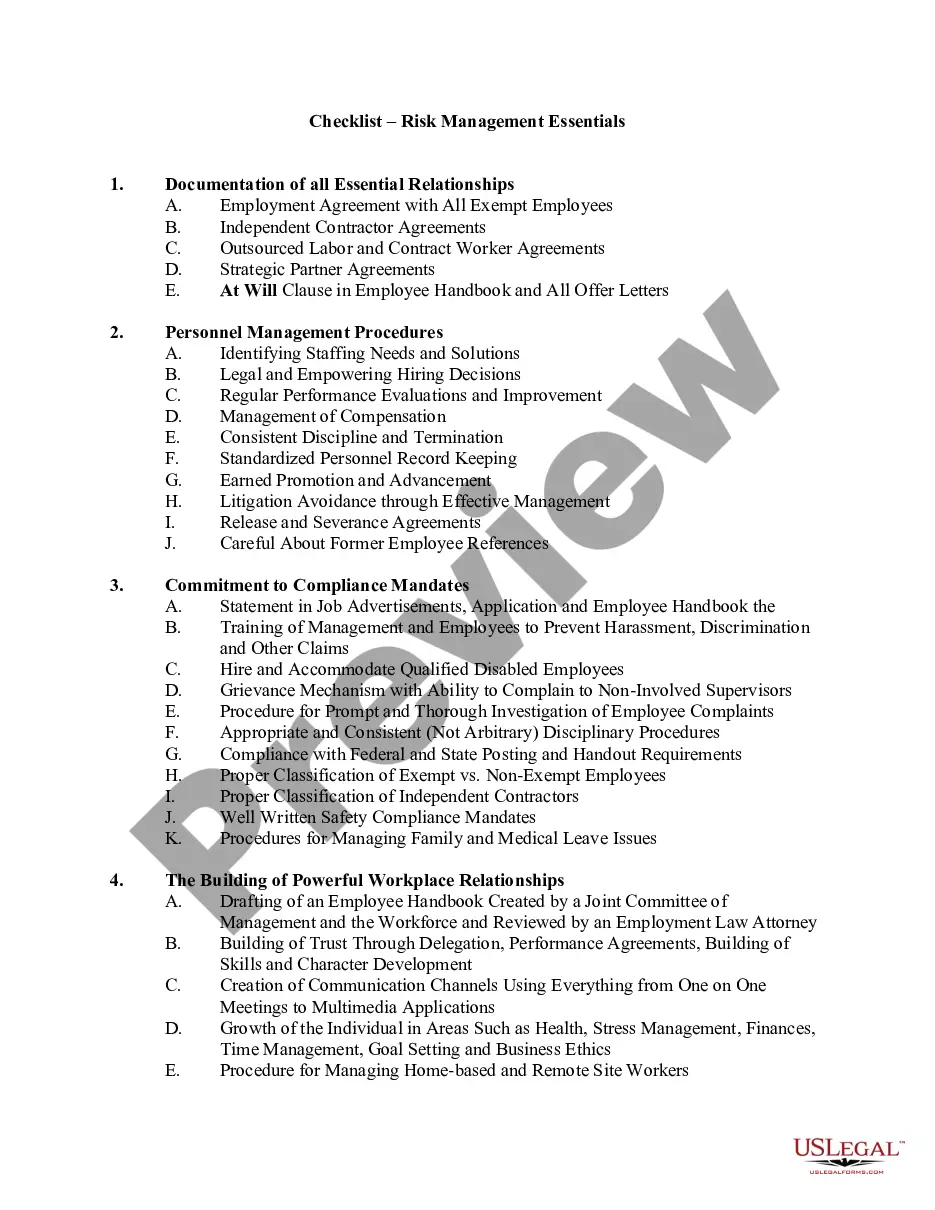
- The Emergency Action Plan Checklist is crucial for workplace safety preparedness.
- Engaging employees and maintaining clear communication are essential for effective emergency management.
- Regular training and updates to the EAP are necessary to ensure compliance and effectiveness.
- The form can be adapted to meet specific state requirements and should reflect individual organizational needs.
Looking for another form?
Form popularity
FAQ
Identify internal resources and capabilities. Identify external resources. Conduct an insurance review. List potential emergencies.
Notification, warning, and communications procedures. Emergency response procedures. Evacuation, shelter, and accountability procedures. Location and use of common emergency equipment.
Planning Work through many emergency scenarios. Training Drills Education Technology Coordination Communication
An emergency action plan template is used by designated responsible officials or emergency coordinators to develop procedures for workplace emergencies and test its effectiveness during emergency drills.
Step 1: Understand the importance of emergency response planning. Step 2: Brainstorm a list of potential risks, hazards, and threat scenarios. Step 3: Collect contact information from local emergency personnel. Step 4: Assess your organization's resources. Step 5: Create accurate egress plans and evacuation routes.
Follow these basic guidelines to develop an effective emergency response plan for your workplace: Determine the conditions under which an evacuation would be necessary. Designate primary and secondary evacuation routes and emergency exits. Make sure they are clearly marked and well lit.
WHERE DO YOU STAND RIGHT NOW? Review Internal Plans and Policies.Meet with Outside Groups. Meet with government agencies, community organizations and utilities.Identify Codes and Regulations.Identify Critical Products, Services and Operations.Identify Internal Resources and Capabilities.
Evacuation procedures, escape routes and floor plans. Reporting and alerting authorities. Alerting staff and visitors of an emergency. Accounting for people after implementing an EAP. Notifying parents, guardians or next of kin. Identifying a media contact person. Training new staff.