Exempt Survey
About this form
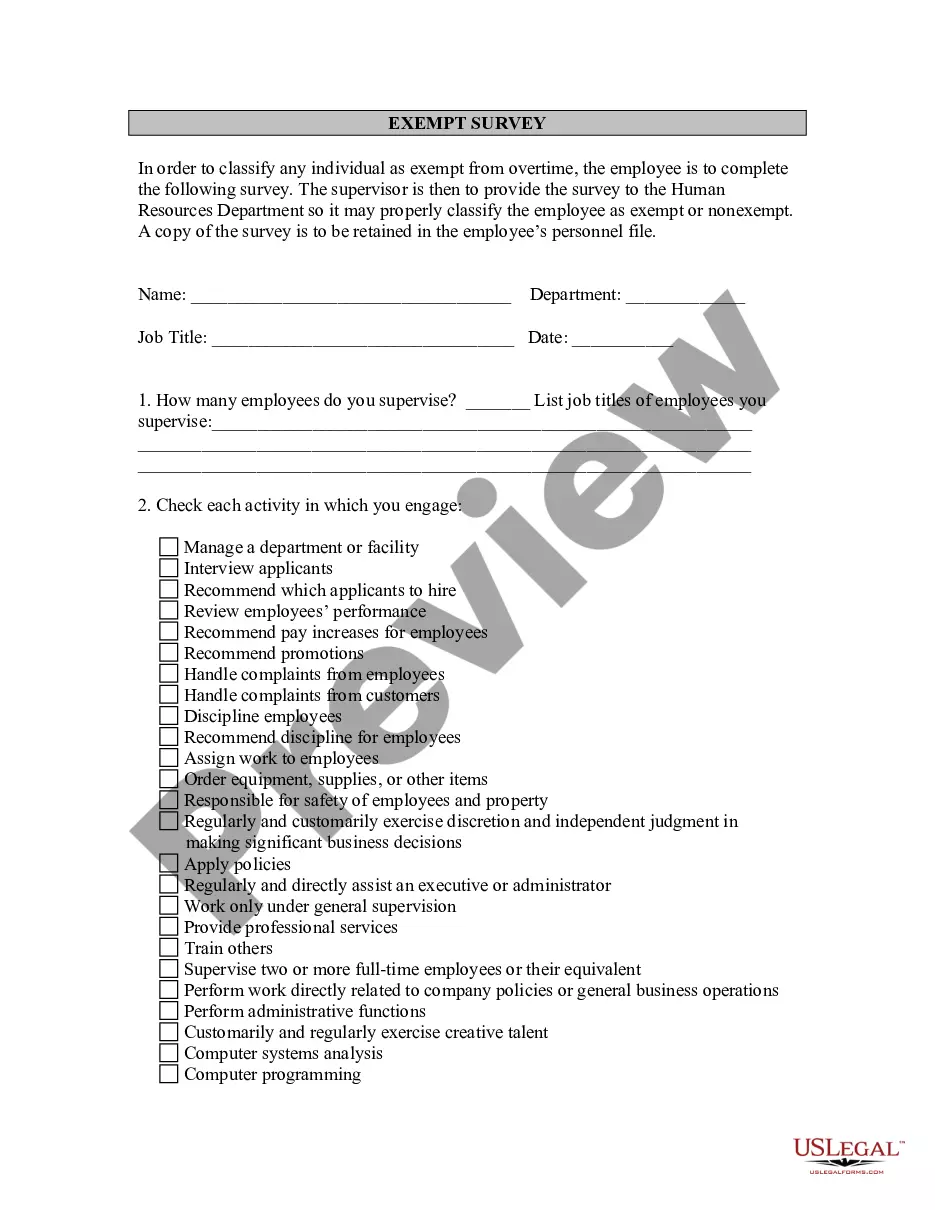
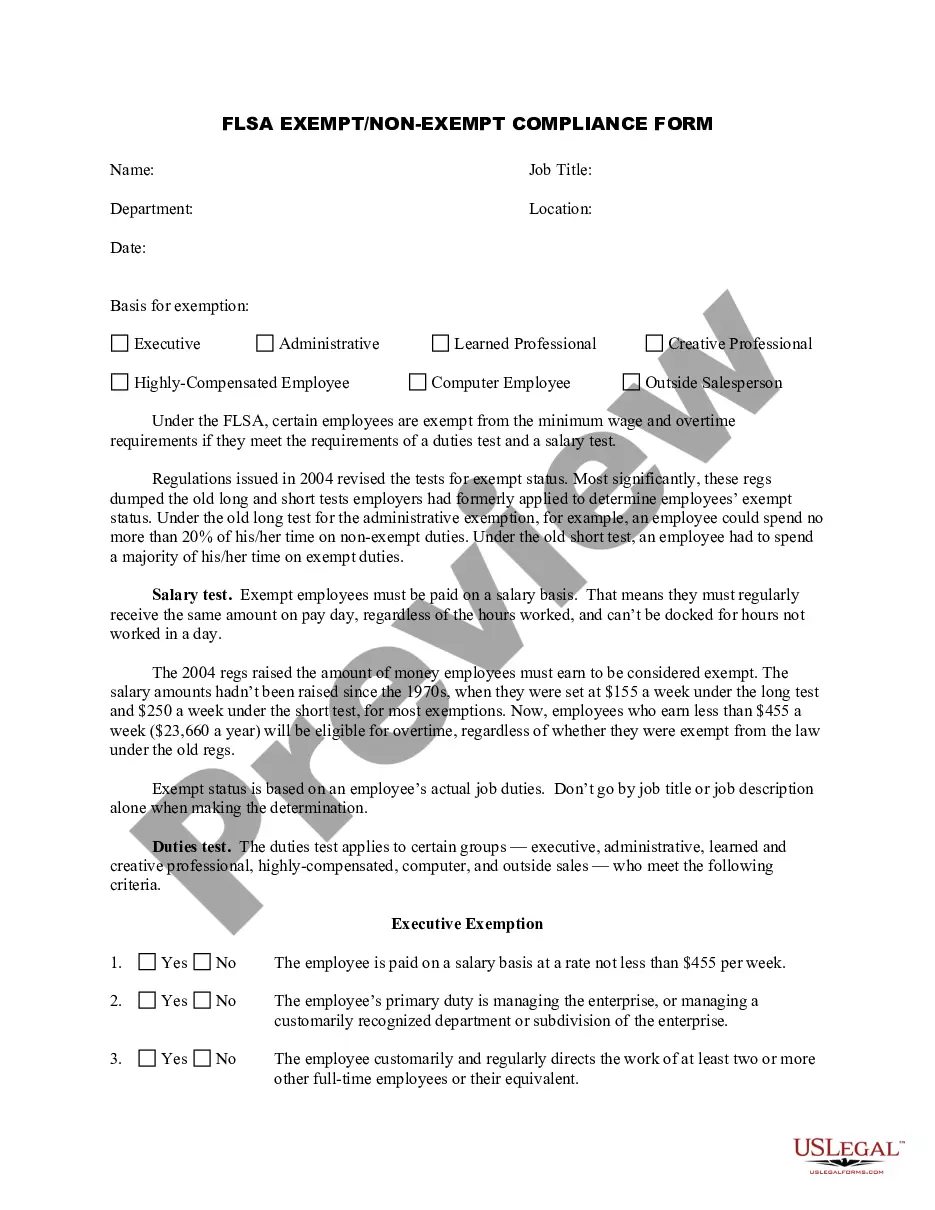
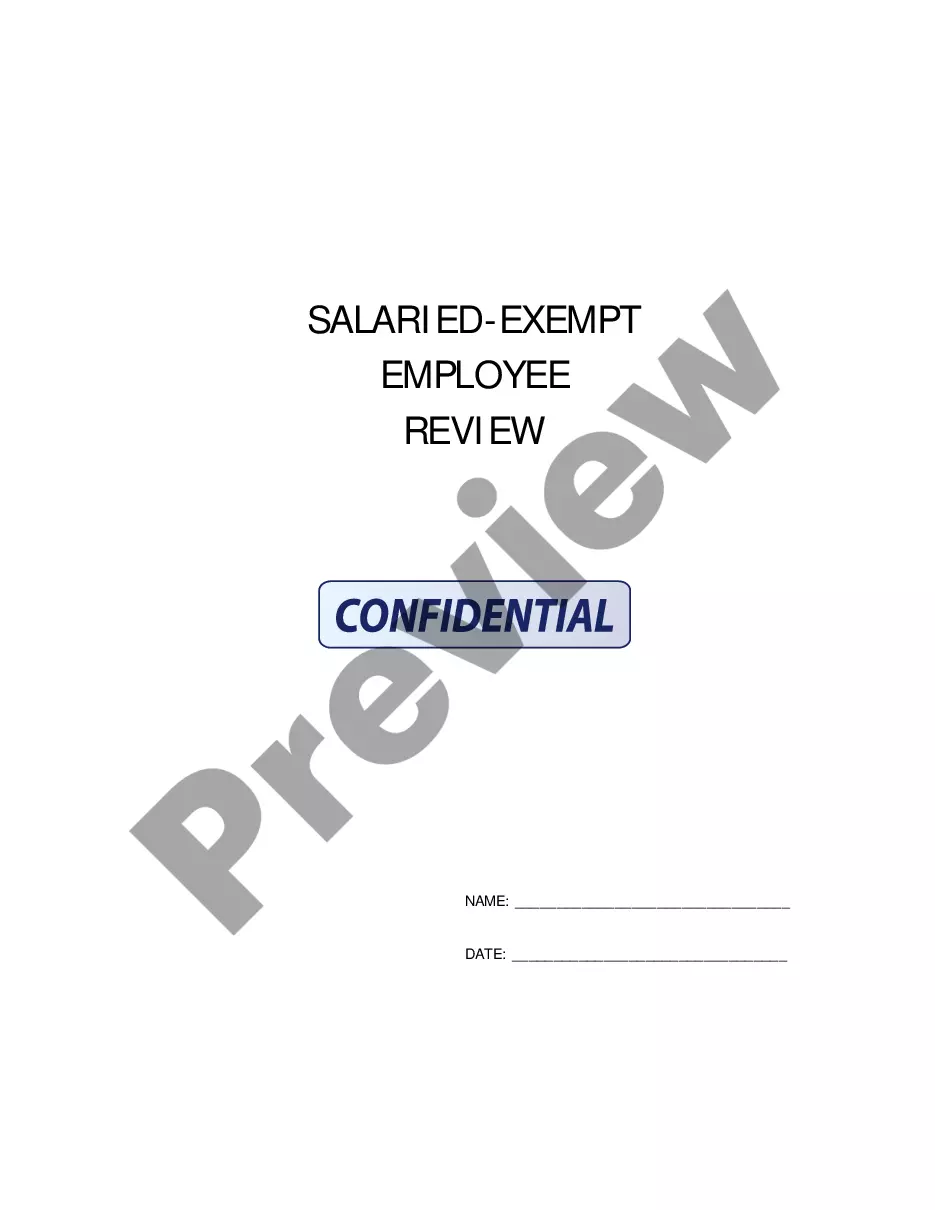
The Exempt Survey is a specialized legal form designed to assist human resources departments in determining whether an employee qualifies as exempt from overtime pay. This survey serves a unique purpose by gathering specific information about the employee's job duties, decision-making authority, and supervisory responsibilities, which are essential factors in classifying employees appropriately. Unlike general employee forms, this survey focuses solely on the criteria used to establish exemption status under labor laws.
Key parts of this document
- Employee identification fields: Name, department, job title, and date.
- Supervision details: Questions about the number of employees supervised and their job titles.
- Activity checklist: Sections where employees indicate their involvement in specific managerial and administrative duties.
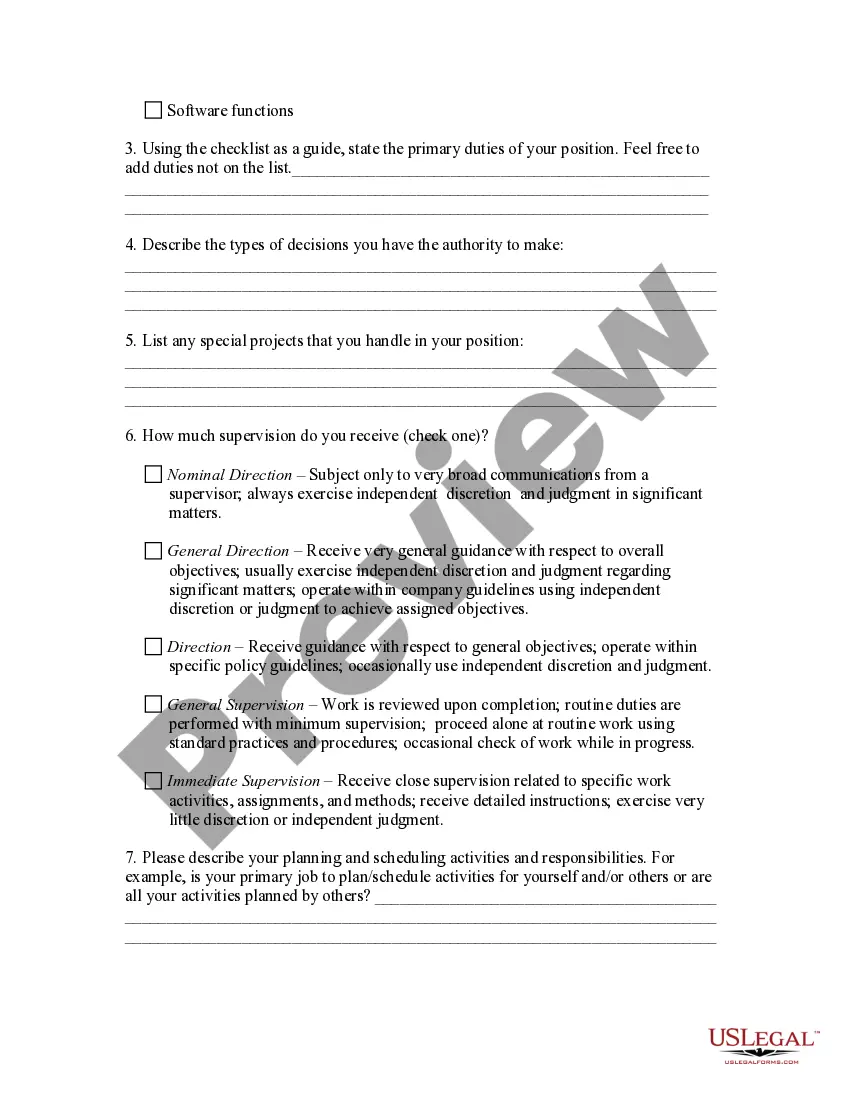
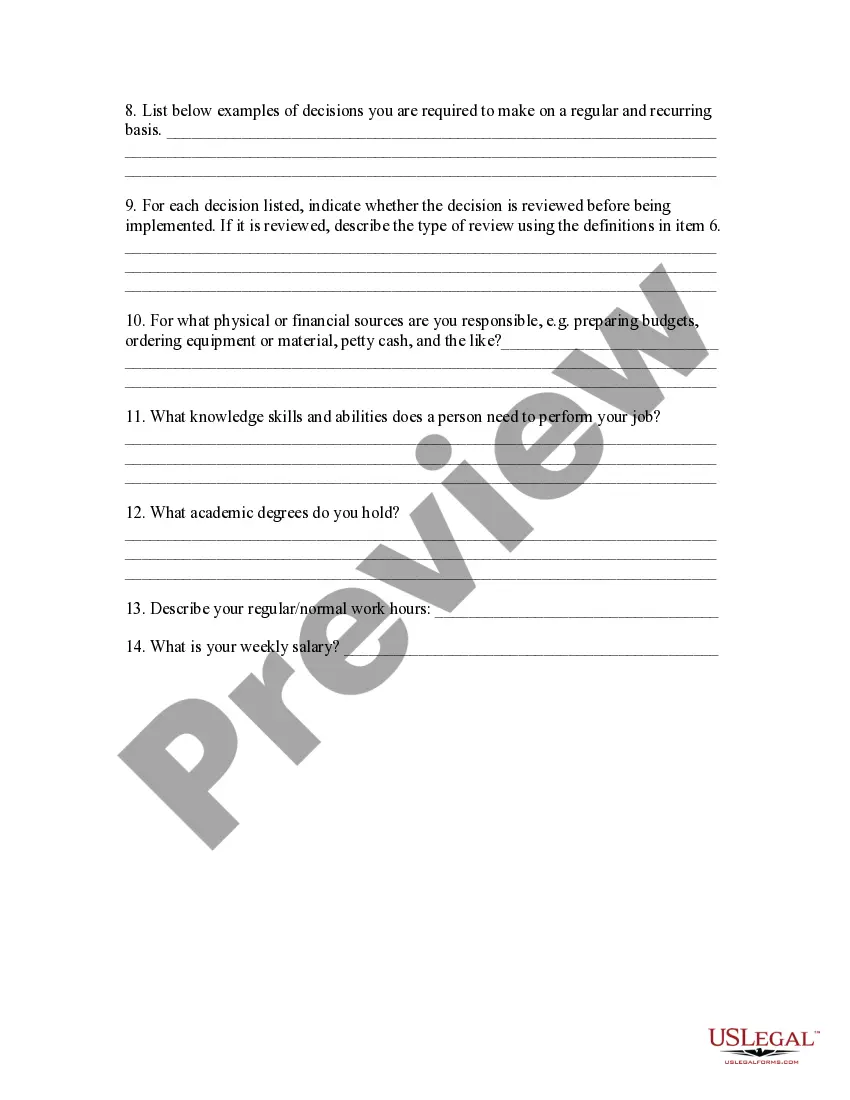
- Decision-making authority: Questions related to the types of decisions the employee can make independently.
- Supervision type: Options for stating the level of guidance the employee receives.
- Duties and special projects: Areas to describe primary job responsibilities and any projects handled.
When to use this document
This survey should be utilized when an employee's exemption status under labor laws is in question. It is particularly useful during hiring processes, employee reviews, or when changes in job roles occur that may affect overtime eligibility. Human resources departments can rely on this form to gather necessary information that aids in properly classifying employees as exempt or nonexempt.
Who needs this form
This form is intended for:
- Human Resources professionals responsible for employee classification.
- Supervisors or managers who oversee employees and need to assess their exemption status.
- Employees who are asked to provide details about their job duties and responsibilities in relation to overtime eligibility.
How to prepare this document
Follow these steps to successfully complete the Exempt Survey:
- Start by filling in your name, department, job title, and date at the top of the form.
- Answer the questions about the number of employees you supervise and list those titles.
- Check all applicable activities that describe your job functions in the provided checklist.
- Detail your primary duties and describe the decisions you are authorized to make.
- Indicate the level of supervision you receive from your manager or supervisor.
- Summarize your typical work hours and provide your weekly salary at the end of the survey.
Does this document require notarization?
This form usually doesn’t need to be notarized. However, local laws or specific transactions may require it. Our online notarization service, powered by Notarize, lets you complete it remotely through a secure video session, available 24/7.
Get your form ready online
Our built-in tools help you complete, sign, share, and store your documents in one place.
Make edits, fill in missing information, and update formatting in US Legal Forms—just like you would in MS Word.
Download a copy, print it, send it by email, or mail it via USPS—whatever works best for your next step.
Sign and collect signatures with our SignNow integration. Send to multiple recipients, set reminders, and more. Go Premium to unlock E-Sign.
If this form requires notarization, complete it online through a secure video call—no need to meet a notary in person or wait for an appointment.
We protect your documents and personal data by following strict security and privacy standards.

Make edits, fill in missing information, and update formatting in US Legal Forms—just like you would in MS Word.

Download a copy, print it, send it by email, or mail it via USPS—whatever works best for your next step.

Sign and collect signatures with our SignNow integration. Send to multiple recipients, set reminders, and more. Go Premium to unlock E-Sign.

If this form requires notarization, complete it online through a secure video call—no need to meet a notary in person or wait for an appointment.

We protect your documents and personal data by following strict security and privacy standards.
Common mistakes to avoid
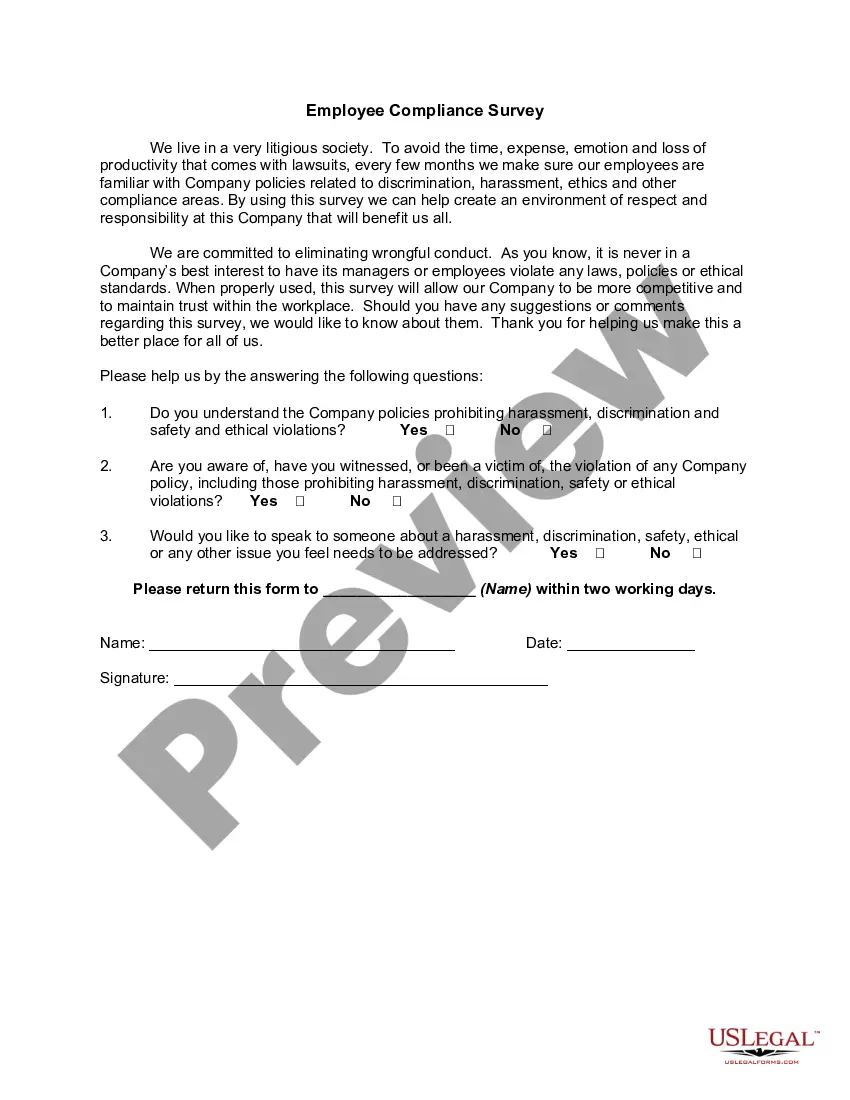
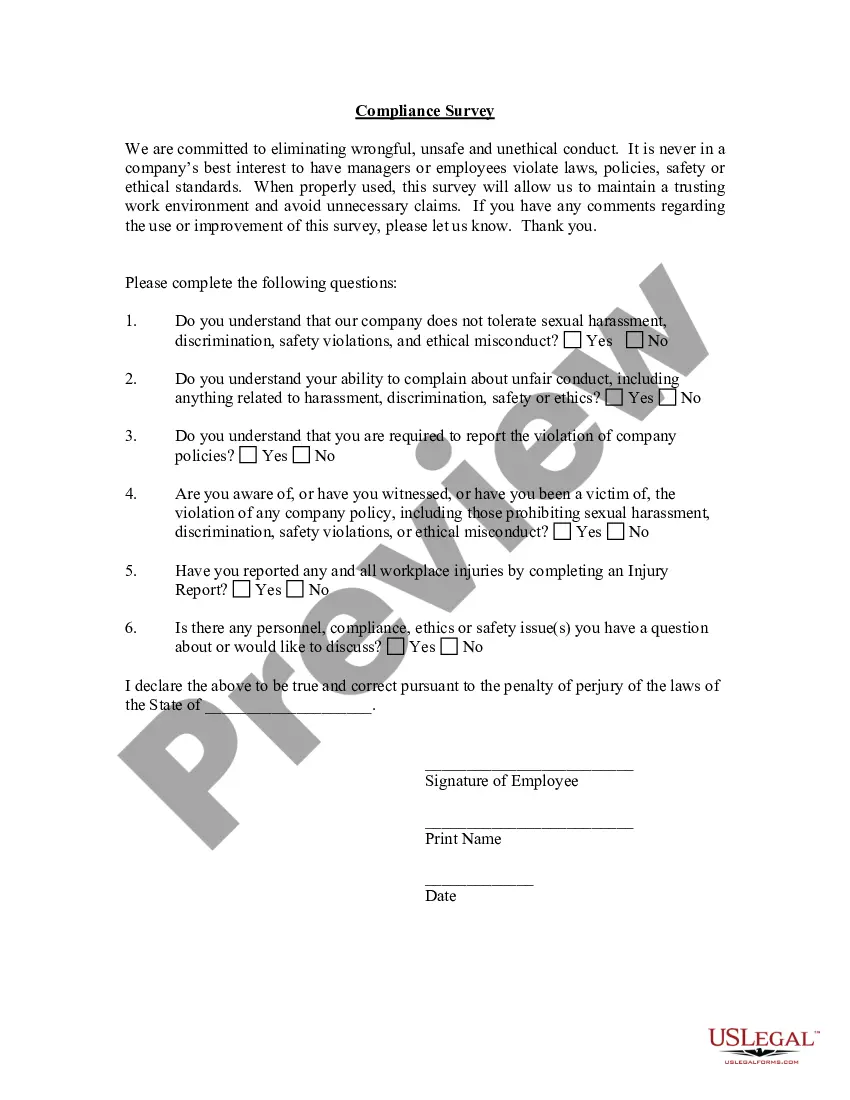
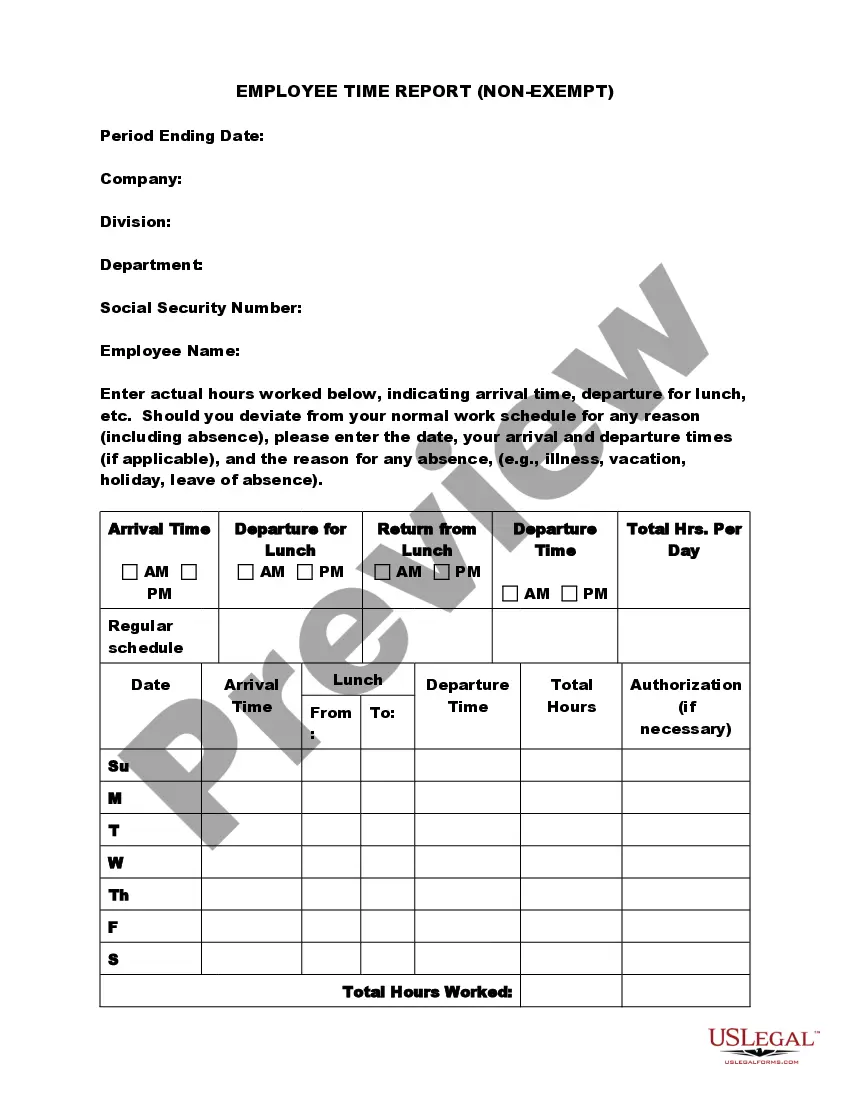
- Leaving sections blank or incomplete, which can result in misclassification.
- Failing to accurately describe primary duties, leading to an inappropriate exemption status.
- Not providing the required details about supervisory responsibilities.
Benefits of completing this form online
- Convenience of downloading and completing the form at your own pace.
- Editability allows for easy updates or corrections as needed.
- Reliability with forms drafted by licensed attorneys ensuring compliance with legal standards.
What to keep in mind
- The Exempt Survey is essential for assessing employee eligibility for overtime exemption.
- Accurate and detailed completion is crucial for proper classification.
- This form is adaptable to various jurisdictions, making it versatile for different organizations.
Looking for another form?

Form popularity
FAQ
Some examples of Exempt research are: anonymous or identifiable surveys or interviews. passive observation of public behavior with or without the collection of identifiers. retrospective and prospective medical chart reviews (allowable under specific criteria for UCI Healthcare Workforce)
Exempt research are human subjects studies that present no greater than minimal risk to subjects and fit into one or more exempt categories (as described below).
Exempt studies involve human subjects research: research involving a living individual about whom data. or biospecimens are obtained/used/studied/analyzed through interaction/intervention, or identifiable, private information is used/studied/analyzed/generated.
To be classified as exempt, the research:Cannot involve any of the exceptions for the exempt categories for research that involves children ; For studies subject to pre-2018 Common Rule requirements: The study cannot involve prisoners as research subjects. Cannot be greater than minimal risk.
Non-Exempt Research (Needs IRB Approval): Any research, inclusive of surveys that involves minors, prisoners, clinical populations; inclusive of any clients in any therapeutic setting/relationship with a potential researcher; and any other vulnerable populations, such as older adults, should undergo IRB review.
Research can be approved as exempt if it is no more than minimal risk and fits one of the exempt review categories as defined by federal regulation 45 CFR 46. Studies that may qualify for Exempt must be submitted to the IRB for review. Exempt reviews are conducted by a member of IRB staff.
In order to establish an individual research project as exempt, an investigator must complete an IRB application. On the IRB application the investigator should indicate the number of the category under which an exemption is claimed. Final determination as to whether a project is exempt rests with the IRB.
No full board review: An exempt protocol does not need full board review; modifications do not need to be reviewed at a full board meeting unless the protocol modifications change the exemption status.