Salary - Exempt Employee Review and Evaluation Form
What this document covers
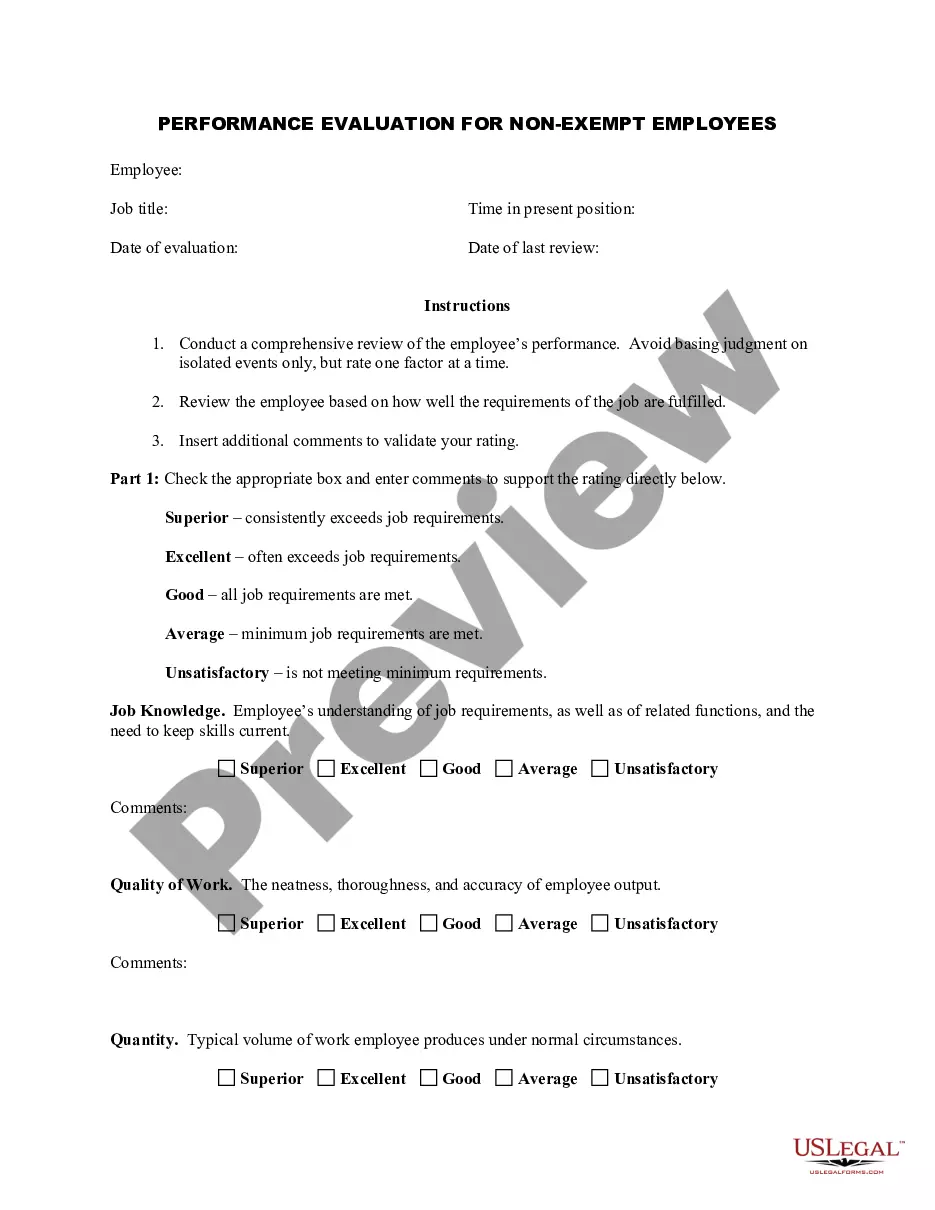
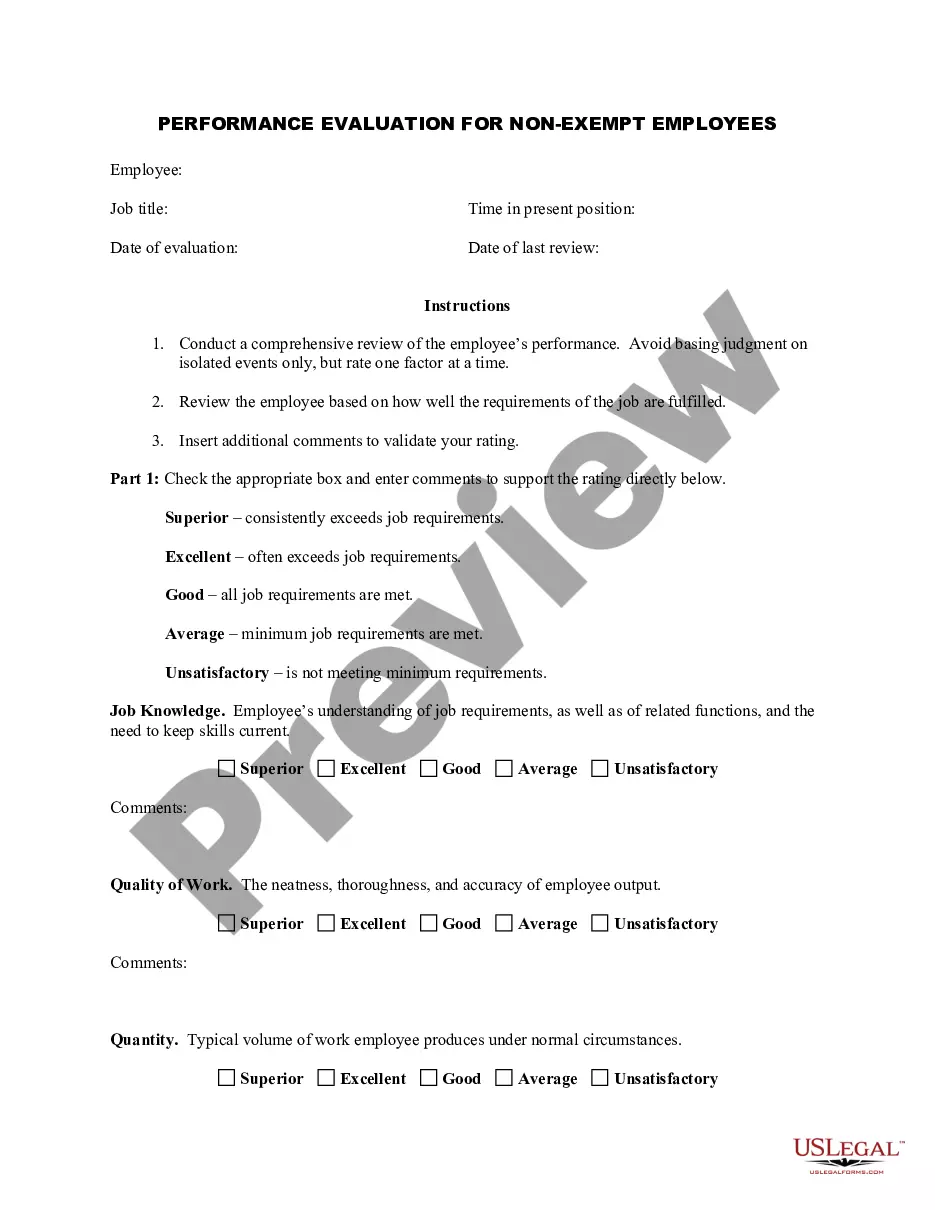
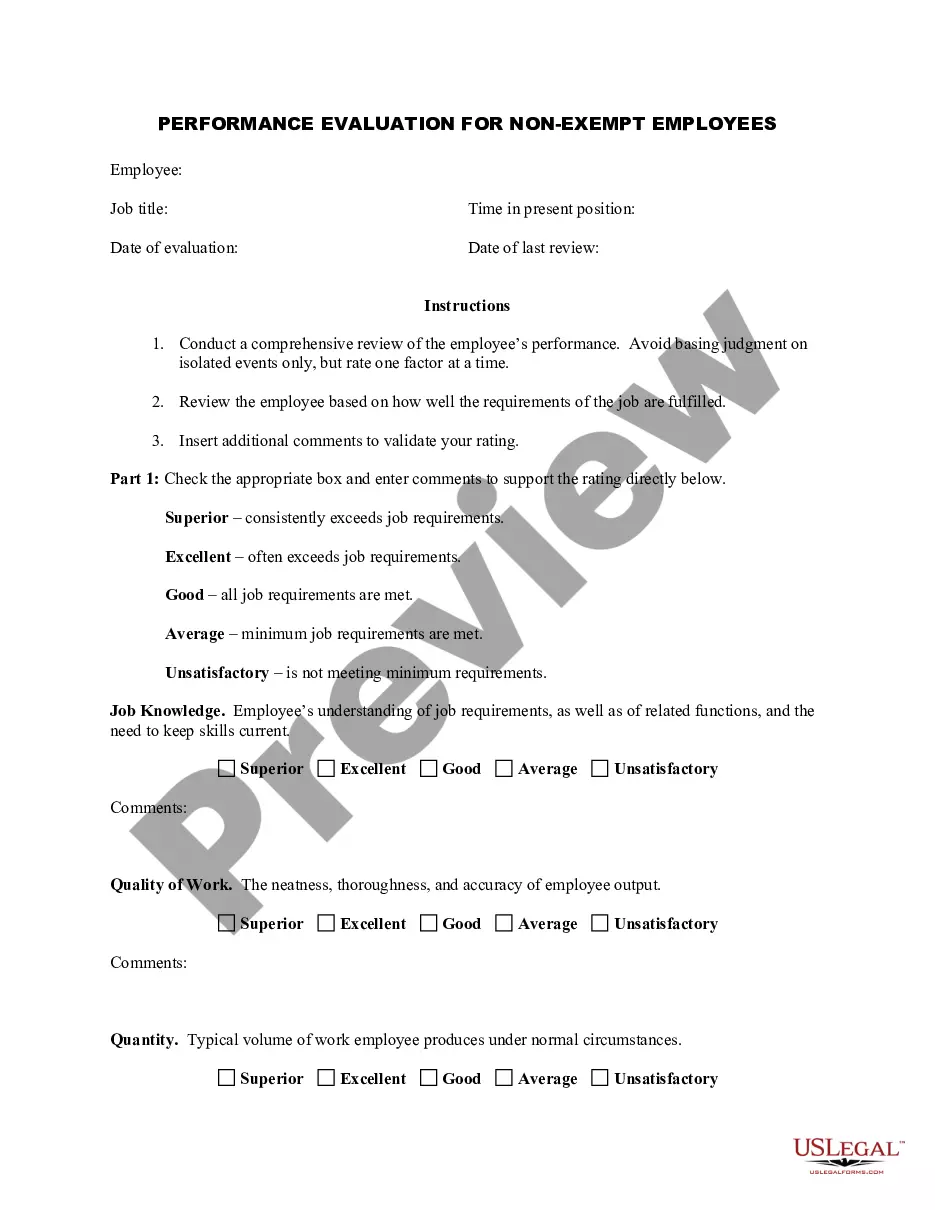
The Salary - Exempt Employee Review and Evaluation Form is a structured tool used to appraise the progress and performance of salaried-exempt employees. It helps employers assess the capabilities, contributions, and areas for improvement of their staff, thereby facilitating effective employee management. This form differs from standard employee evaluations by focusing specifically on exempt status employees who are paid a salary rather than an hourly wage.
Main sections of this form
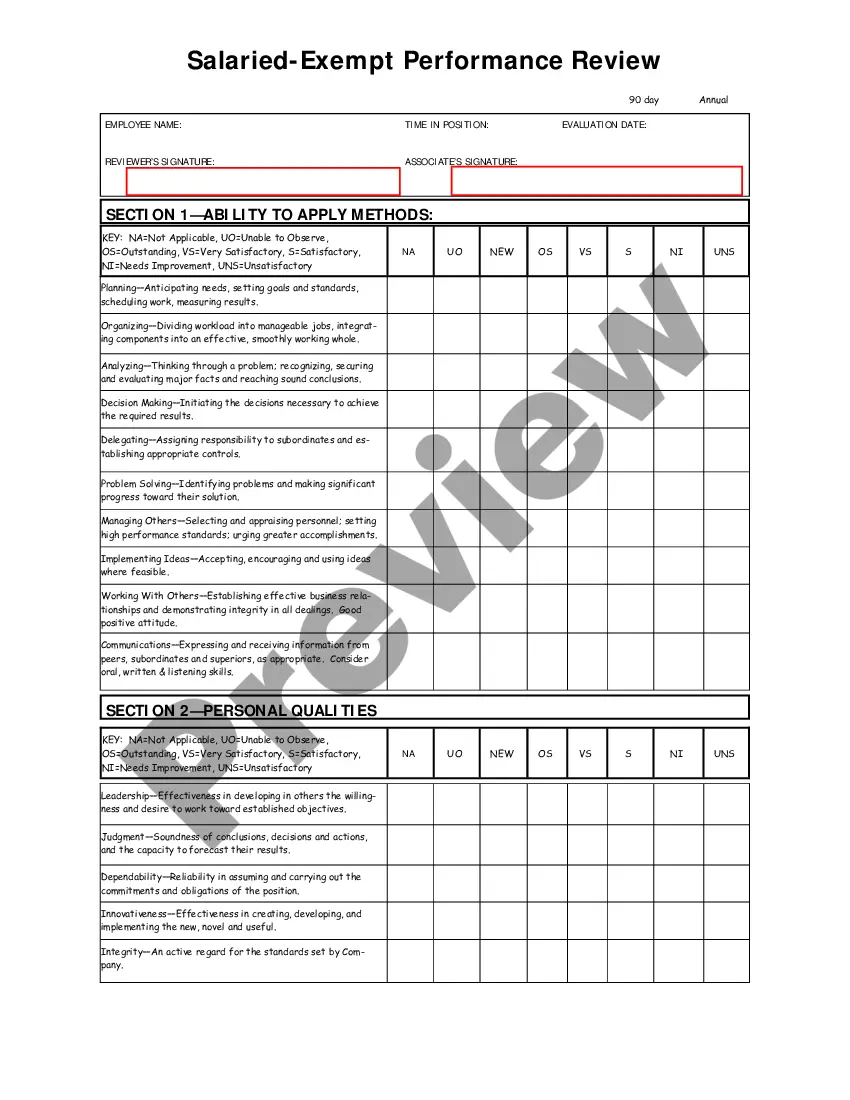
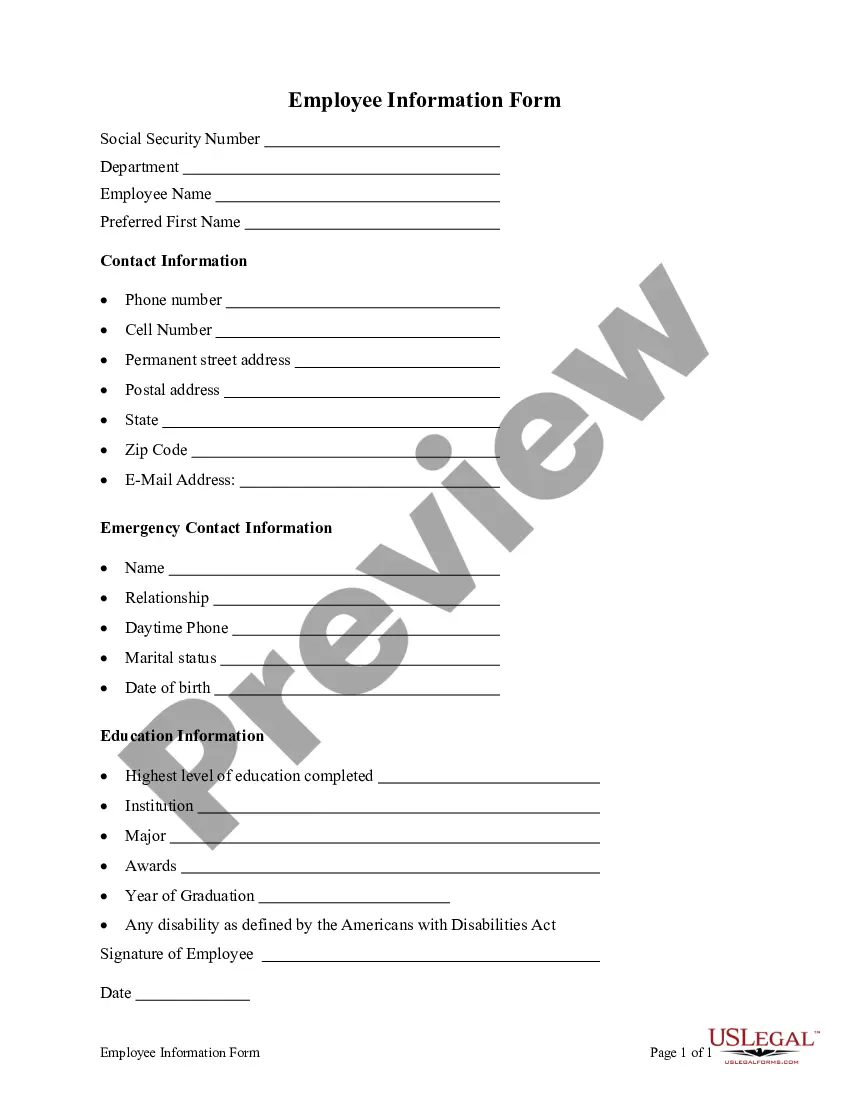
- Employee identification: Name, review date, and time in position are recorded.
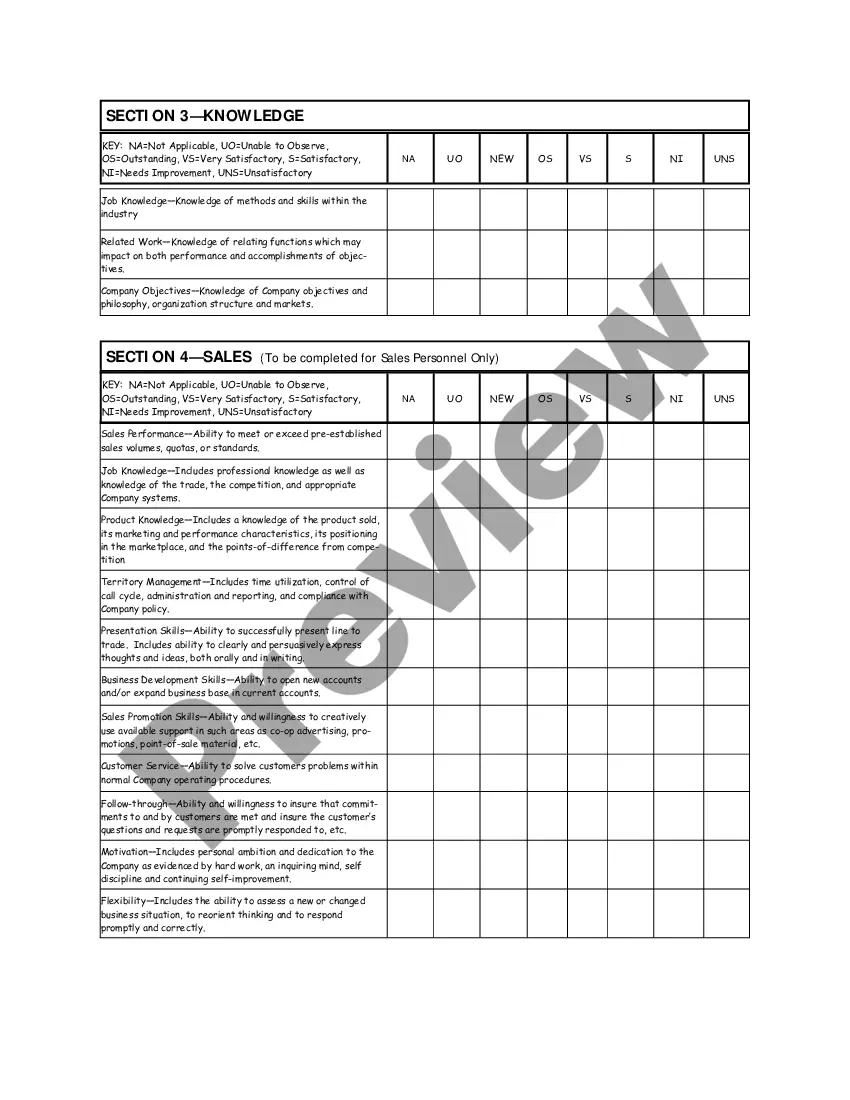
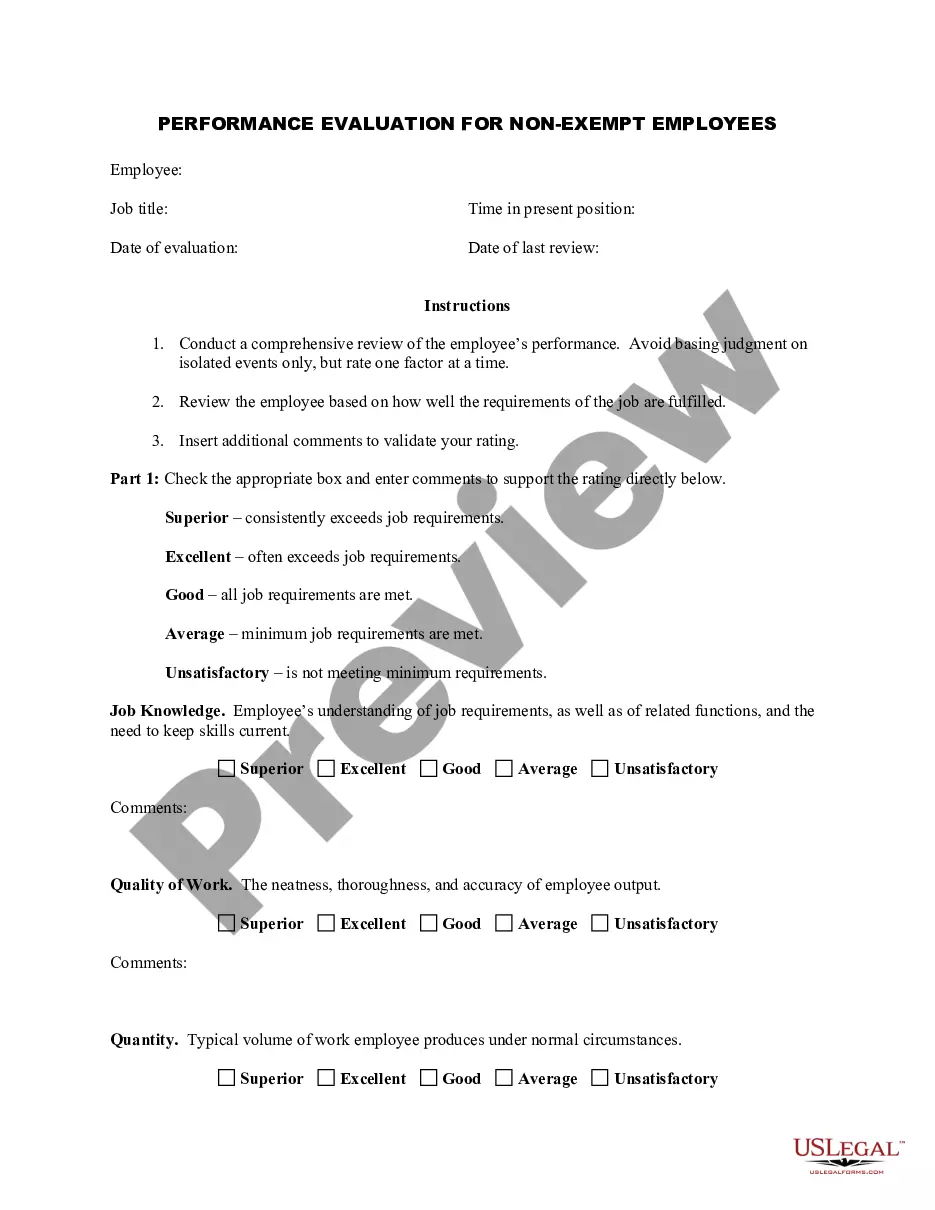
- Performance sections: Detailed assessments across multiple criteria such as planning, organizing, and decision making.
- Personal qualities: Evaluation of leadership, judgment, dependability, and integrity.
- Sales performance metrics: Included for specific sales personnel assessments.
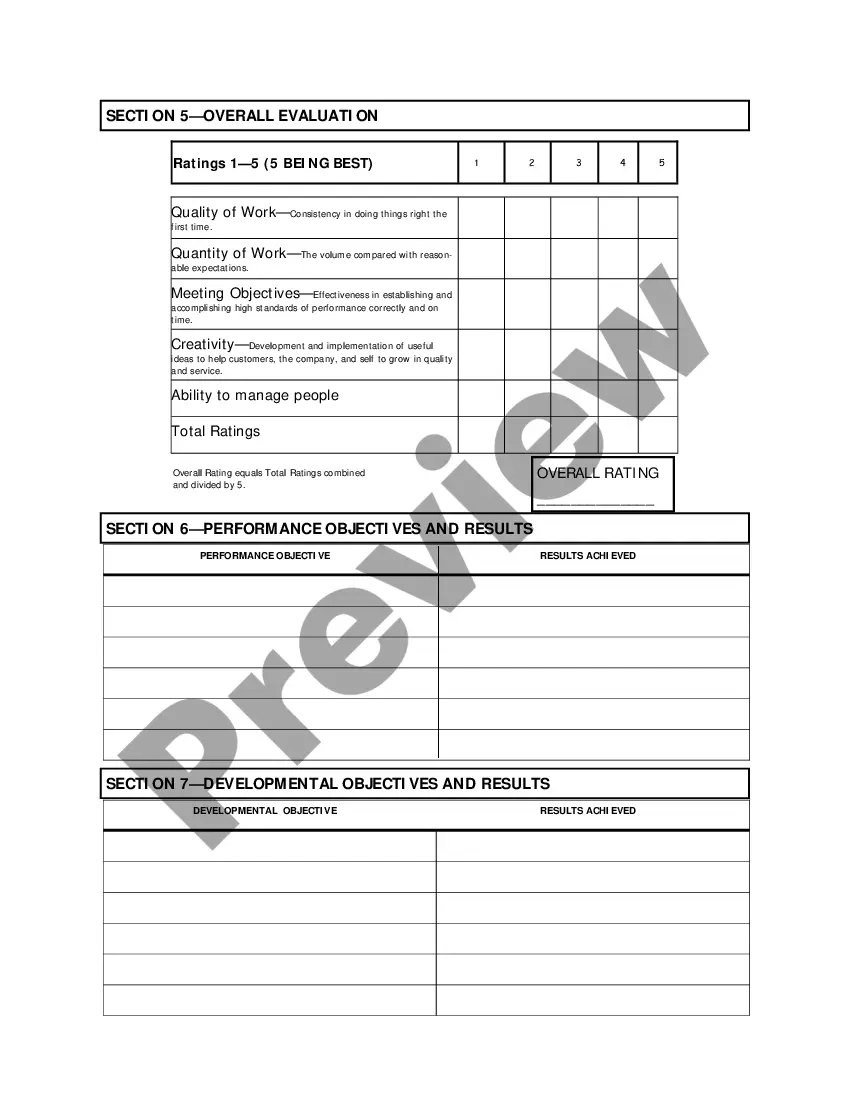
- Overall evaluation: Highlights quality and quantity of work along with creativity in performance.
- Developmental objectives: Areas identified for improvement and results achieved.
When to use this form
This form should be used during scheduled performance reviews, typically 90 days and annually, for exempt salaried employees. It is useful in scenarios where management seeks to evaluate an employeeâs job performance, address concerns, clarify expectations, or set future performance objectives. Additionally, this form can serve as a reference for promotions, raises, or other employment decisions.
Intended users of this form
Employers, managers, and human resource personnel who oversee exempt salaried employees should utilize this form. It is intended for those responsible for conducting performance evaluations and ensuring employee development within an organization.
Completing this form step by step
- Fill in the employeeâs name, date of the evaluation, and the duration in their current position.
- Evaluate the employee's performance by rating various skills using the provided scale.
- Document specific achievements and the results of performance objectives.
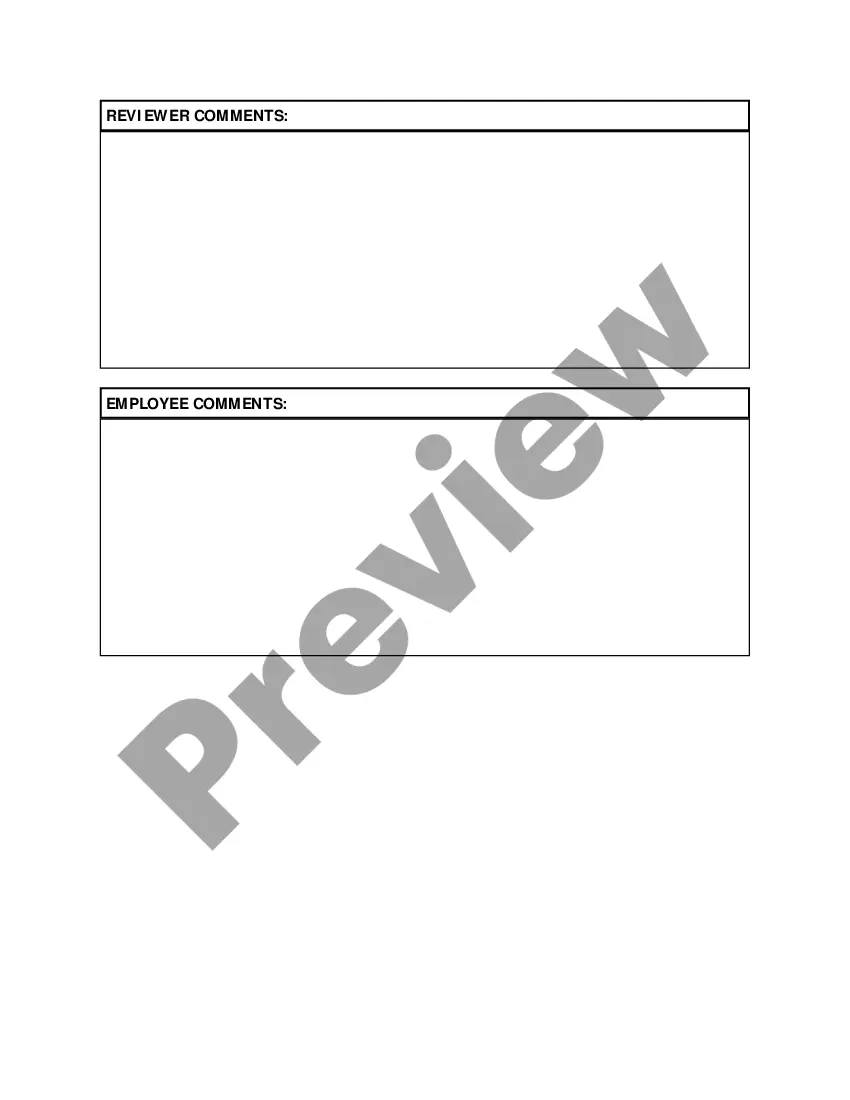
- Include comments from both the reviewer and the employee to add context to the evaluation.
- Ensure all necessary signatures are gathered before finalizing the review.
Notarization guidance
This form does not typically require notarization unless specified by local law.
Get your form ready online
Our built-in tools help you complete, sign, share, and store your documents in one place.
Make edits, fill in missing information, and update formatting in US Legal Forms—just like you would in MS Word.
Download a copy, print it, send it by email, or mail it via USPS—whatever works best for your next step.
Sign and collect signatures with our SignNow integration. Send to multiple recipients, set reminders, and more. Go Premium to unlock E-Sign.
If this form requires notarization, complete it online through a secure video call—no need to meet a notary in person or wait for an appointment.
We protect your documents and personal data by following strict security and privacy standards.

Make edits, fill in missing information, and update formatting in US Legal Forms—just like you would in MS Word.

Download a copy, print it, send it by email, or mail it via USPS—whatever works best for your next step.

Sign and collect signatures with our SignNow integration. Send to multiple recipients, set reminders, and more. Go Premium to unlock E-Sign.

If this form requires notarization, complete it online through a secure video call—no need to meet a notary in person or wait for an appointment.

We protect your documents and personal data by following strict security and privacy standards.
Common mistakes
- Not providing specific examples to support ratings.
- Failing to conduct the evaluation on time.
- Overlooking the opportunity for employee input in the comments section.
- Inconsistent use of the rating scale across different evaluations.
Benefits of completing this form online
- Convenience: Easily accessible and editable, allowing for quick updates.
- Efficiency: Streamlines the review process with a clear structure for evaluation.
- Reliability: Ensures that all required evaluation criteria are covered systematically.
Legal use & context
- This form serves as a record of employee performance, which may be used for legal reference in disputes.
- Accurate documentation can support decisions related to promotions, salary adjustments, or terminations.
Summary of main points
- The Salary - Exempt Employee Review and Evaluation Form is essential for performance appraisals of exempt employees.
- Completing the form thoroughly can improve employee communication and development.
- Regular use of this form helps promote accountability and track employee progress effectively.
Looking for another form?
Form popularity
FAQ
An exempt employee is an employee who does not receive overtime pay or qualify for the minimum wage. Exempt employees are paid a salary rather than by the hour, and their work is executive or professional in nature.
You owed no federal income tax in the prior tax year, and. You expect to owe no federal income tax in the current tax year.
The most common roles considered exempt include professional, executive, outside sales, and administrative. On the flip side, non-exempt employees must be paid overtime -- one-and-a-half times their hourly rate, for any hours worked beyond 40 each week.
An exempt employee is an employee who does not receive overtime pay or qualify for the minimum wage.Exempt employees stand in contrast to nonexempt employees, who must be paid at least the minimum wage and overtime when they work more than the standard 40-hour workweek.
With few exceptions, to be exempt an employee must (a) be paid at least $23,600 per year ($455 per week), and (b) be paid on a salary basis, and also (c) perform exempt job duties. These requirements are outlined in the FLSA Regulations (promulgated by the U.S. Department of Labor).
In order to be classified as exempt, an employee must be paid a minimum of $23,000 per year, or $455 per week. However, that isn't the only test. There are many people who earn more than this amount and are still classified as non-exempt.
While they may cost a bit more, exempt employees can bring a lot of advantages to your business. Exempt employees are not regulated under the Fair Labor and Standards Act, which sets the federal requirements for overtime pay and minimum wage.