Consent to Assignment
About this form
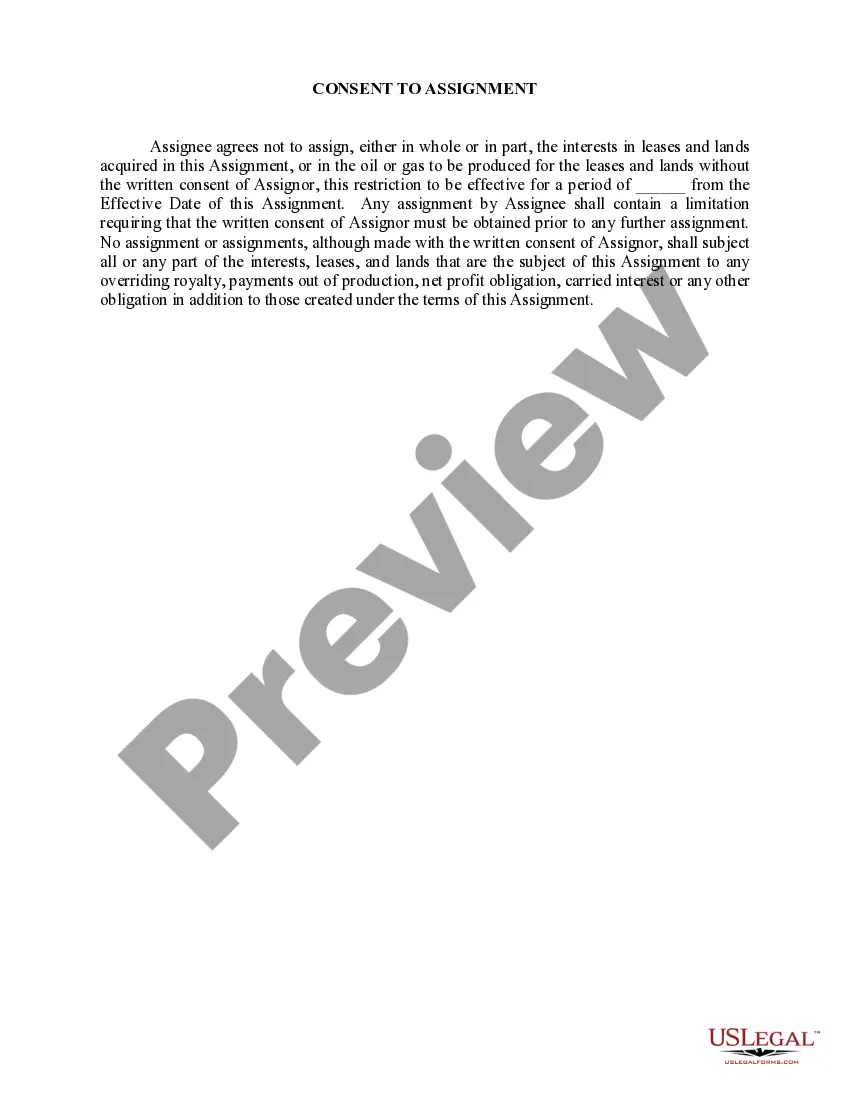
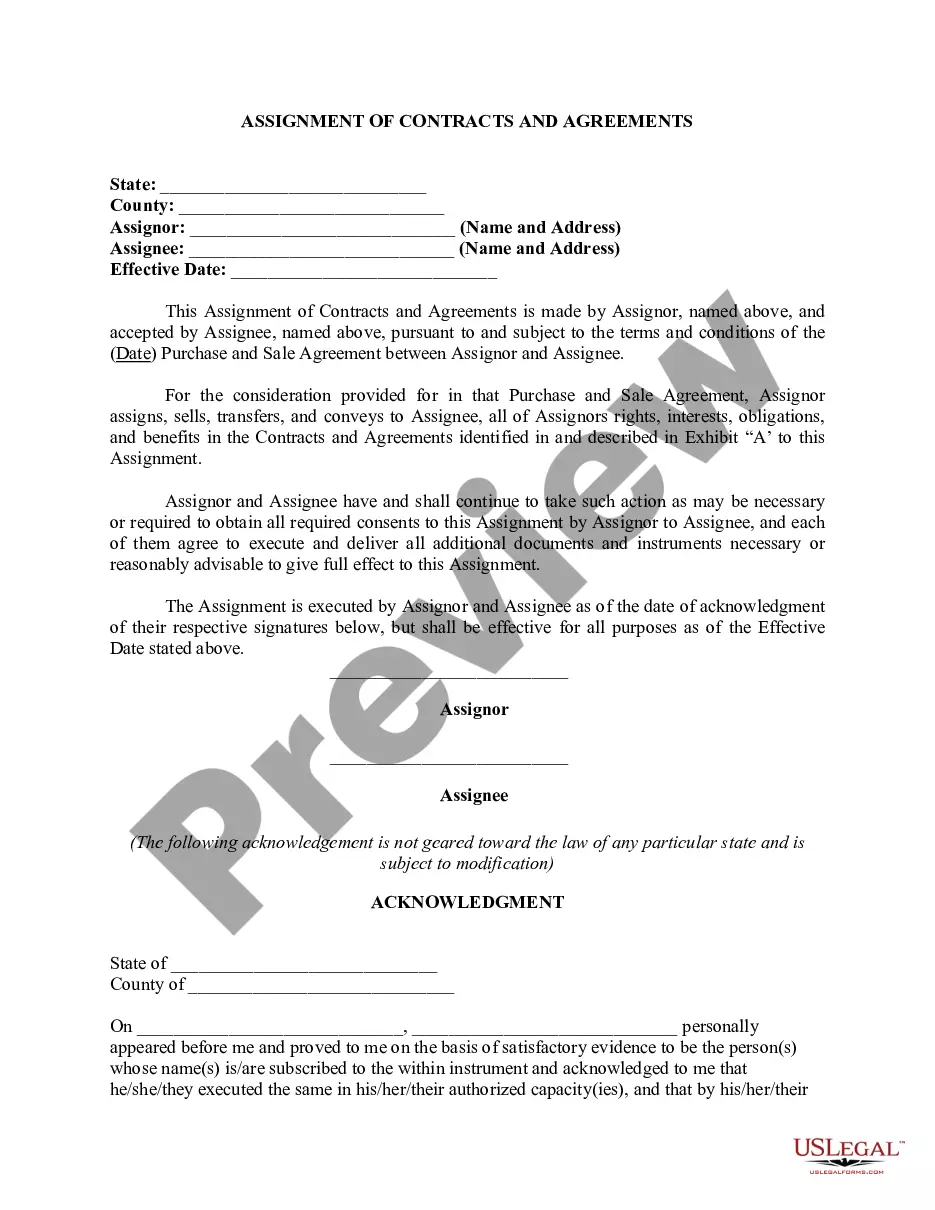
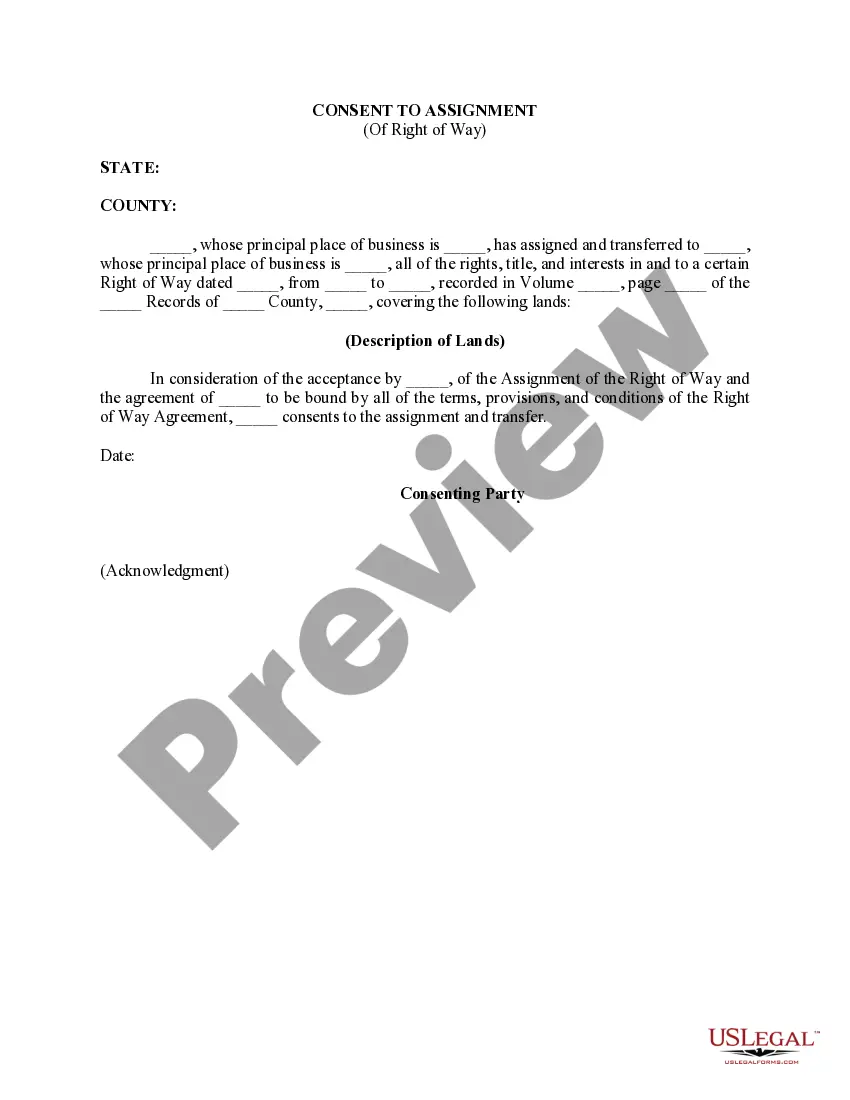
The Consent to Assignment form is a legal document that outlines an agreement between an assignor and an assignee regarding the assignment of interests in leases and lands. This form specifically states that the assignee cannot further assign these interests without the prior written consent of the assignor. It is essential for ensuring that the rights associated with the leases and lands remain controlled and properly managed, differing from general assignment forms by including specific restrictions on future assignments.
Form components explained
- Assignee's agreement not to assign interests without consent.
- Effective period during which the restriction applies.
- A requirement for any further assignments to include consent clauses.
- Limits on the obligations arising from any assignment or sub-assignment.
Common use cases
This form is useful when an individual or entity (the assignee) is acquiring rights to leases and lands and the assignor wants to maintain control over future assignments. It helps prevent unauthorized transfer of interests which can affect royalties, production rights, and management of the property. Use this form when entering into an assignment agreement where clear communication of consent requirements is necessary.
Who needs this form
- Individuals or businesses entering into an assignment of leases and lands.
- Landowners or lessors wanting to restrict the transfer of their interests.
- Assignees who need to understand their obligations regarding consent for further assignments.
Steps to complete this form
- Identify the parties involved, including the assignor and assignee.
- Specify the interests in the leases and lands being assigned.
- Enter the effective period during which the restriction is applicable.
- Include clauses that require consent for any future assignments.
- Obtain signatures from both parties to finalize the agreement.
Notarization requirements for this form
This form does not typically require notarization unless specified by local law. Ensure to check your jurisdiction for any specific requirements regarding notarization of assignments.
Get your form ready online
Our built-in tools help you complete, sign, share, and store your documents in one place.
Make edits, fill in missing information, and update formatting in US Legal Forms—just like you would in MS Word.
Download a copy, print it, send it by email, or mail it via USPS—whatever works best for your next step.
Sign and collect signatures with our SignNow integration. Send to multiple recipients, set reminders, and more. Go Premium to unlock E-Sign.
If this form requires notarization, complete it online through a secure video call—no need to meet a notary in person or wait for an appointment.
We protect your documents and personal data by following strict security and privacy standards.

Make edits, fill in missing information, and update formatting in US Legal Forms—just like you would in MS Word.

Download a copy, print it, send it by email, or mail it via USPS—whatever works best for your next step.

Sign and collect signatures with our SignNow integration. Send to multiple recipients, set reminders, and more. Go Premium to unlock E-Sign.

If this form requires notarization, complete it online through a secure video call—no need to meet a notary in person or wait for an appointment.

We protect your documents and personal data by following strict security and privacy standards.
Mistakes to watch out for
- Failing to specify the effective period for consent restrictions.
- Not including all parties involved in the assignment.
- Ignoring local laws that may require additional stipulations.
Benefits of completing this form online
- Convenience of instant download and access to legal forms.
- Editability of templates to fit specific needs and situations.
- Reliability, ensuring that forms are prepared by licensed attorneys.
Key takeaways
- The Consent to Assignment form protects the rights of the assignor.
- Clear communication of consent requirements prevents future disputes.
- Use the form when assigning interests in leases and lands to maintain control.
Looking for another form?


Form popularity
FAQ
There is an agreement about who is liable for the costs of the deed of assignment. The landlord's lawyer usually prepares the agreement. However, the outgoing tenant or the incoming tenant pays these costs, not the landlord.
An assignment is the transfer of the a party's entire interest in a lease. When a tenant assigns its lease, the assignee takes over the tenant's obligations under the lease and deals directly with the landlord.A sublease is the transfer of all or a portion of the premises for less than the entire term of the lease.
Definition of "Assignment of Rent" An Assignment of Rent is a document needed when a mortgaged property is being rented. It enables the lender to collect the rent if the mortgage is defaulted upon.
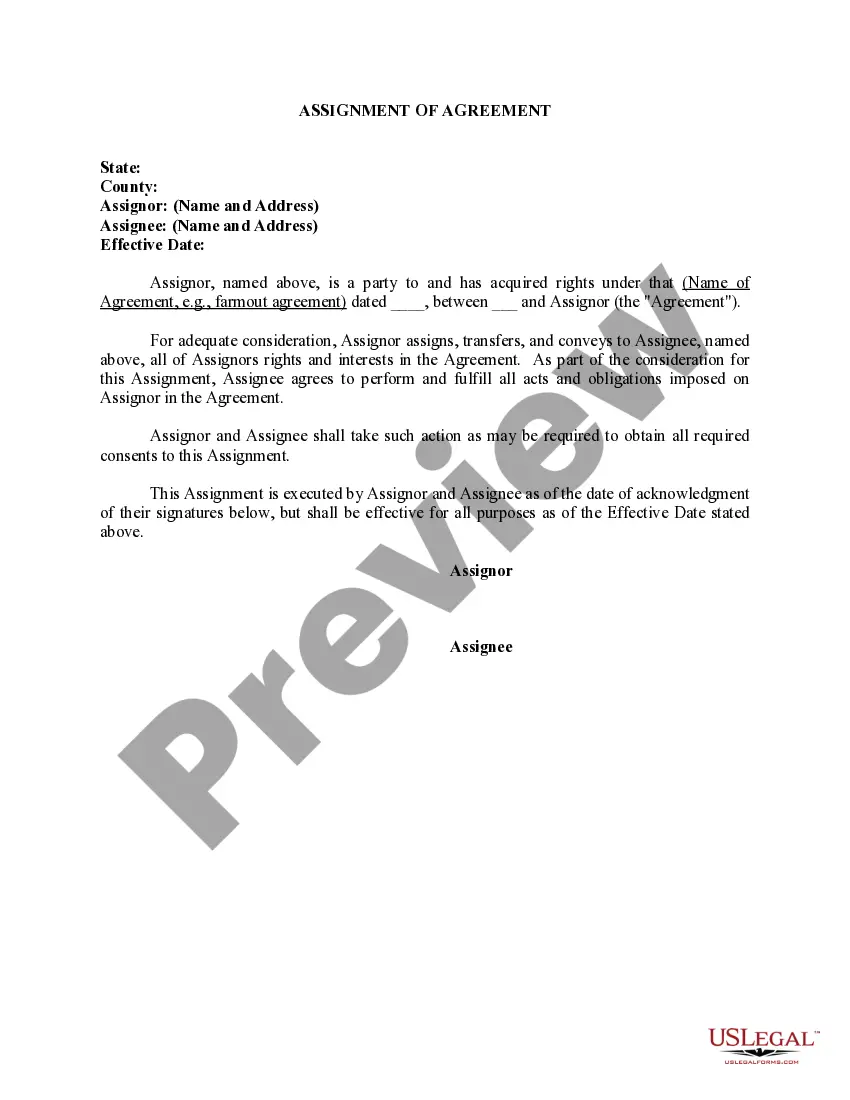
An assignment of contract occurs when one party to an existing contract (the "assignor") hands off the contract's obligations and benefits to another party (the "assignee"). Ideally, the assignor wants the assignee to step into his shoes and assume all of his contractual obligations and rights.
An assignment of a lease is a complete transfer of the right to be the tenant under the lease. The third-party assignee becomes the "tenant" under the lease, taking over all of the leased premises, substituting for the old tenant.
In both instances, assignment is the process whereby a person, the assignor, transfers rights or benefits to another, the assignee.While novation requires the consent of all parties, assignment needs no consent from other non-assigning parties.
An assignment is when the tenant transfers their lease interest to a new tenant using a Lease Assignment. The assignee takes the assignor's place in the landlord-tenant relationship, although the assignor may remain liable for damages, missed rent payments, and other lease violations.
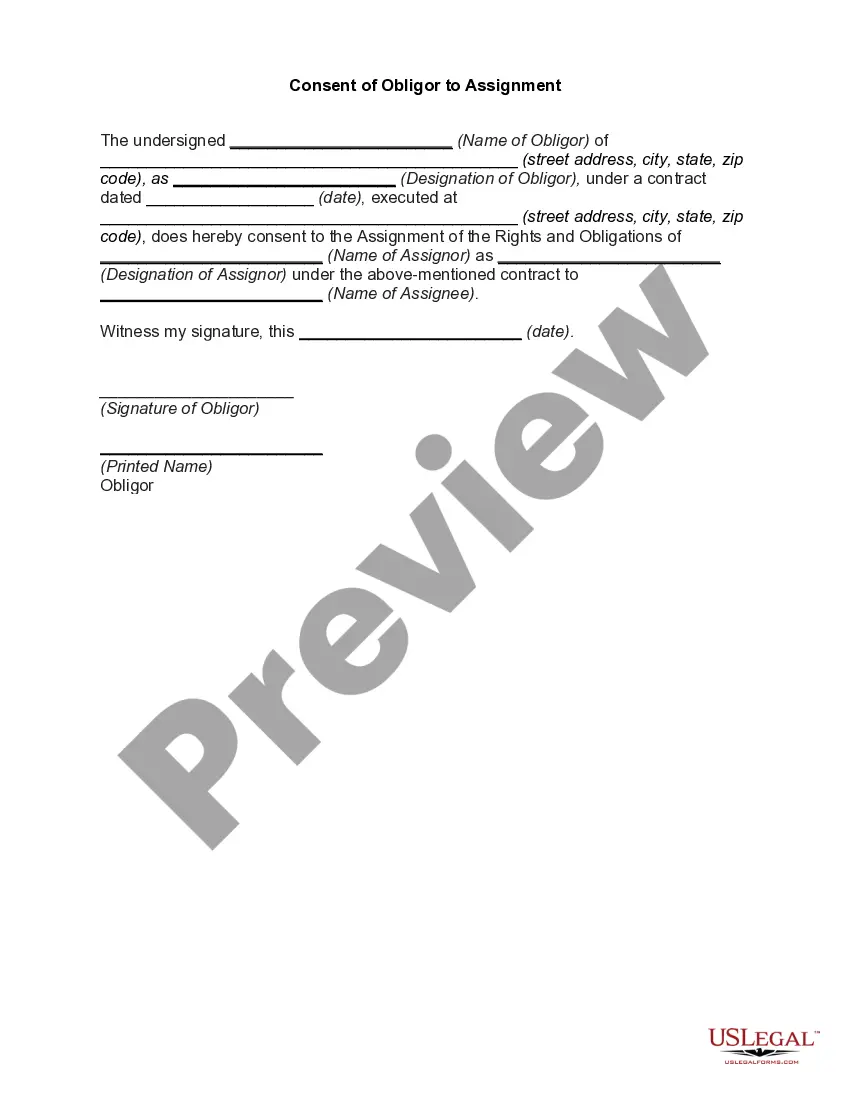
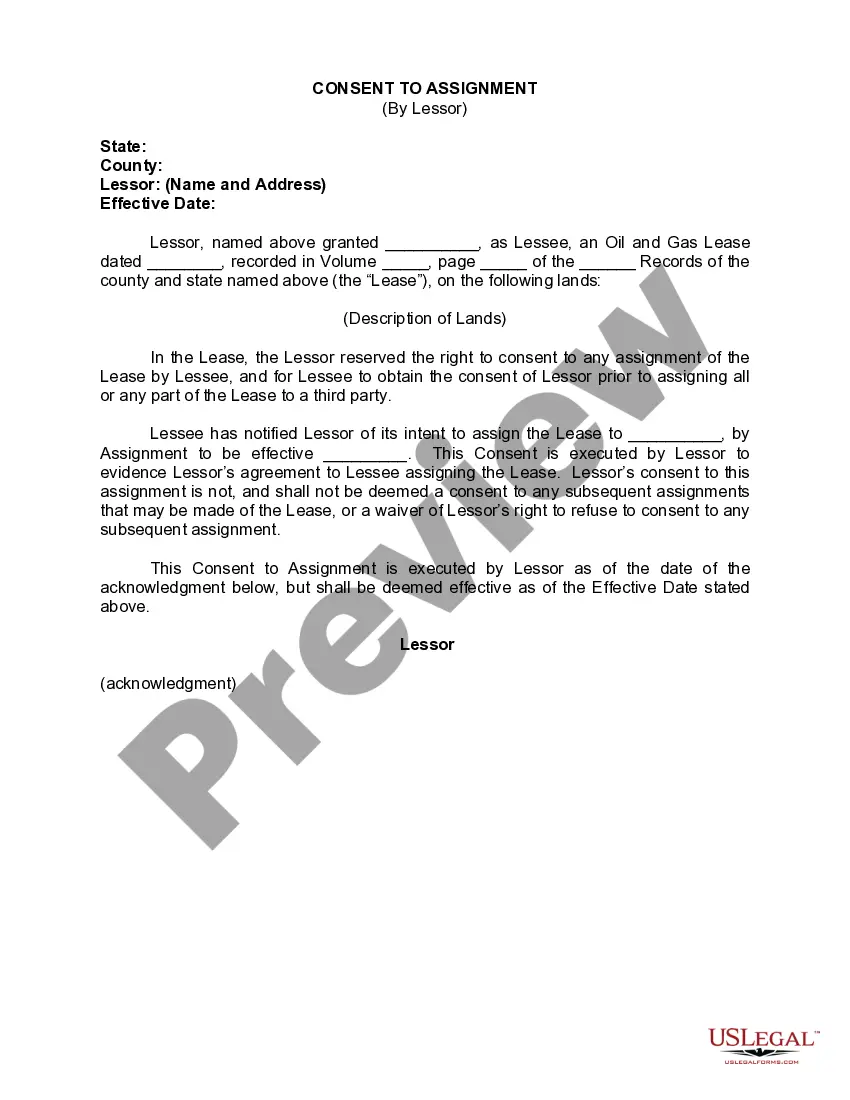
Consent to assignment refers to allowing a party of a contract (the assignor) to assign a contract and move the obligations to another party (the assignee).