Consent to Assignment by Lessor
What this document covers
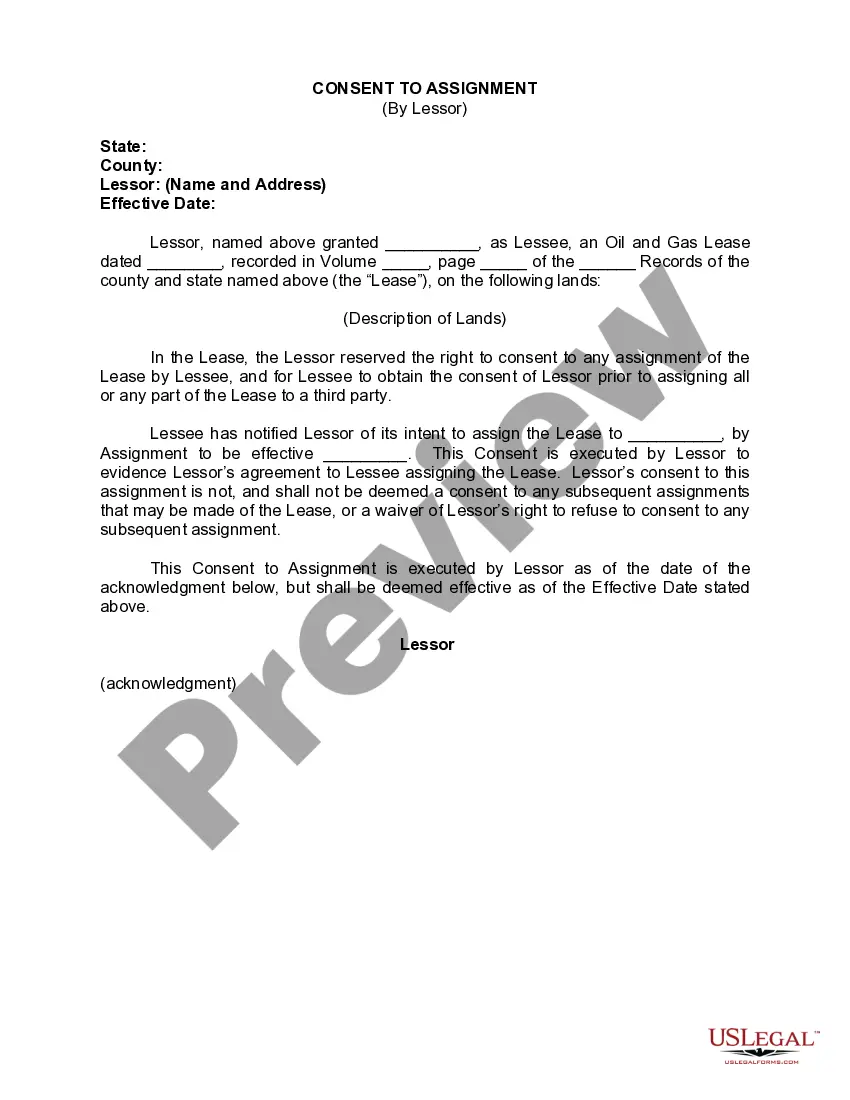
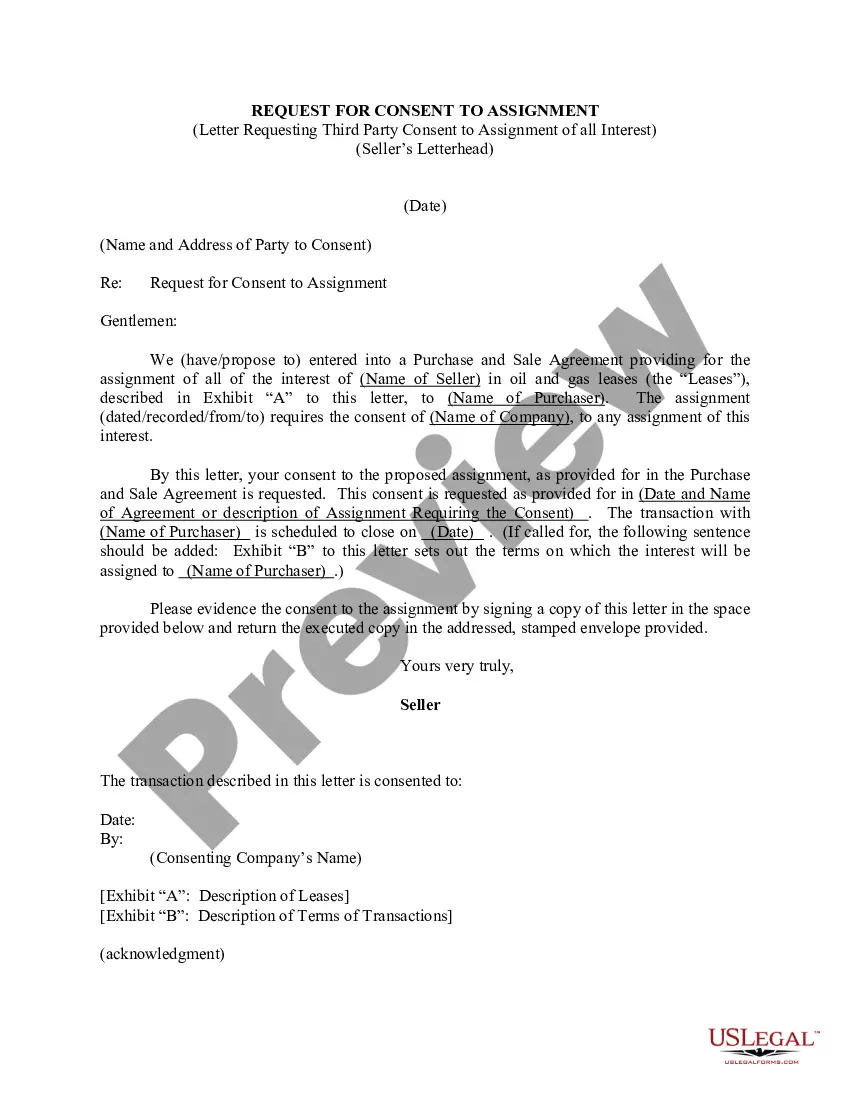
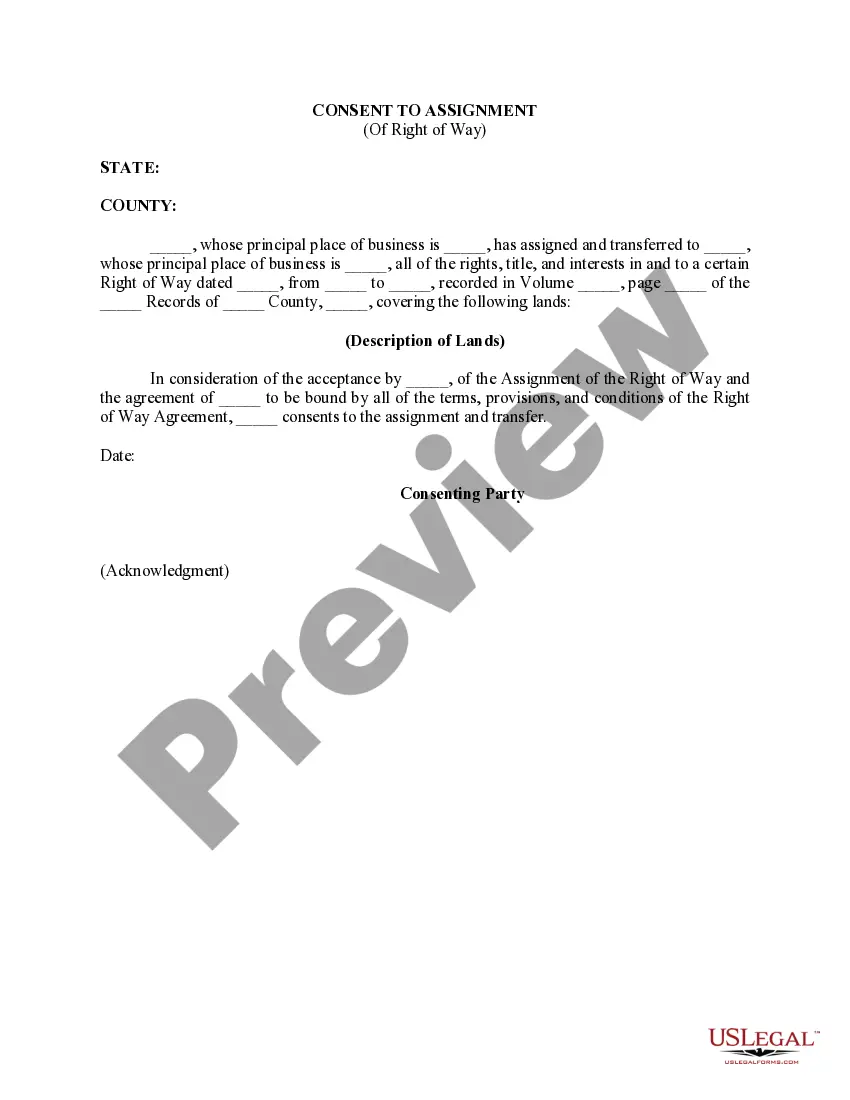
The Consent to Assignment by Lessor is a legal document that grants permission for a lessee to assign their lease rights to another party, known as the assignee. This form specifically protects the interests of the lessor by ensuring that their consent only applies to the specified assignment and does not extend to any future assignments. Unlike a general assignment agreement, this document emphasizes the necessity of obtaining consent for each new assignment, safeguarding the lessorâs rights in the lease agreement.
Main sections of this form
- Lessor Details: Includes the name and address of the lessor.
- Effective Date: States the date when the lessor's consent takes effect.
- Lessee Information: Identifies the lessee who is assigning their lease.
- Description of Lease: Provides details about the original lease, including the date and recording information.
- Specific Assignment: Clarifies the assignee to whom the lessee intends to assign the lease.
- No Further Consent Clause: States that the lessor's consent to this assignment does not extend to any subsequent assignments without further approval.
When this form is needed
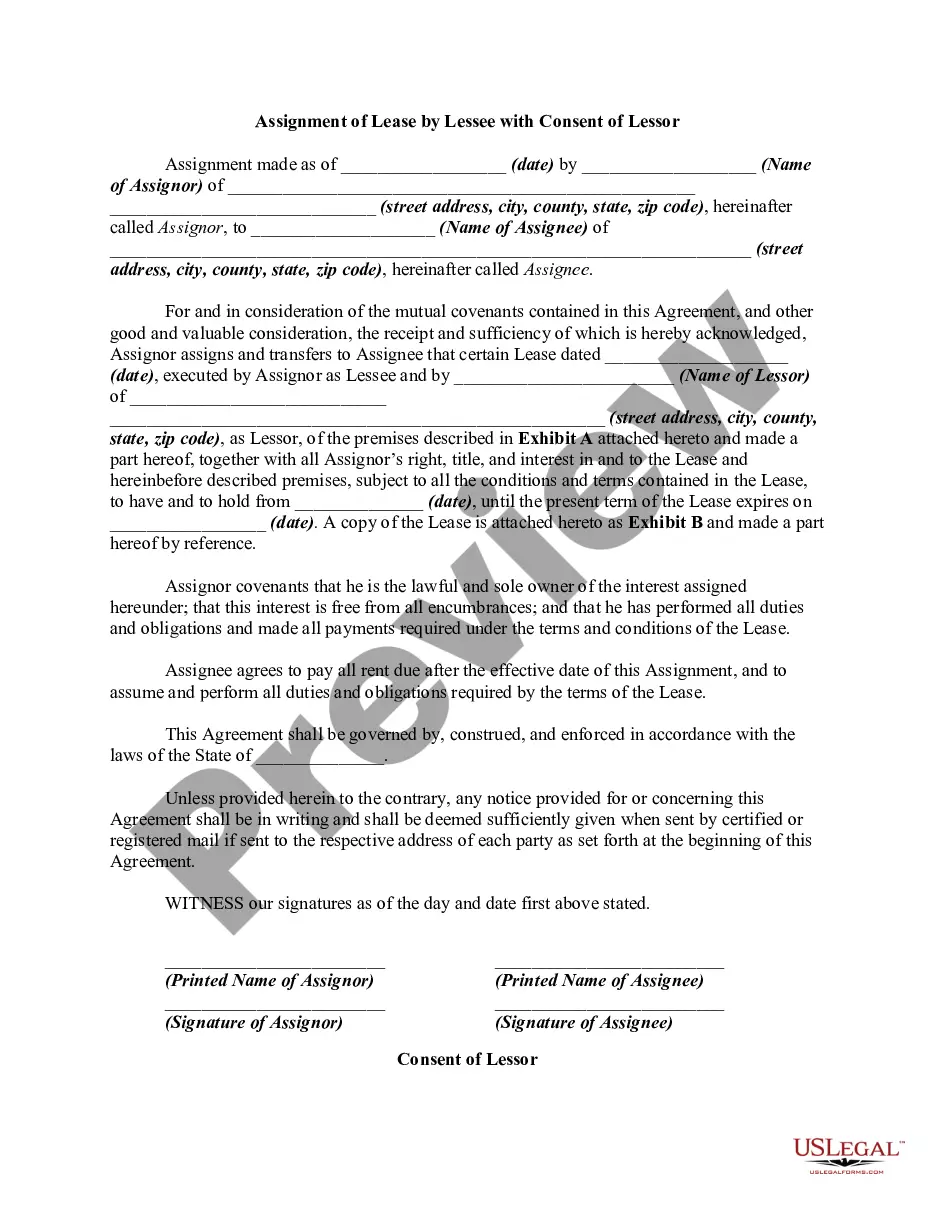
This form should be used when a lessee wishes to transfer their leasing rights to another individual or entity, and the lease agreement requires prior approval from the lessor. It's essential in scenarios where maintaining the lessor's control over future lease assignments is necessary, such as when the lessor wants to ensure the assignee meets specific qualifications or terms of the original lease.
Who needs this form
- Lessors who want to grant approval for a lessee's transfer of lease rights.
- Lessee who need to assign their lease but must first obtain consent from the lessor.
- Legal professionals assisting clients in lease management or real estate transactions.
Completing this form step by step
- Identify the parties by entering the name and address of the lessor and lessee.
- Specify the details of the original lease, including the effective date and recording information.
- Enter the name of the assignee receiving the lease rights.
- Fill in the effective date for this consent to take place.
- Include the lessor's signature and acknowledgment to complete the document.
Does this document require notarization?
This form does not typically require notarization unless specified by local law. Users should check their state's requirements to confirm whether notarization is necessary for legal validity.
Get your form ready online
Our built-in tools help you complete, sign, share, and store your documents in one place.
Make edits, fill in missing information, and update formatting in US Legal Forms—just like you would in MS Word.
Download a copy, print it, send it by email, or mail it via USPS—whatever works best for your next step.
Sign and collect signatures with our SignNow integration. Send to multiple recipients, set reminders, and more. Go Premium to unlock E-Sign.
If this form requires notarization, complete it online through a secure video call—no need to meet a notary in person or wait for an appointment.
We protect your documents and personal data by following strict security and privacy standards.

Make edits, fill in missing information, and update formatting in US Legal Forms—just like you would in MS Word.

Download a copy, print it, send it by email, or mail it via USPS—whatever works best for your next step.

Sign and collect signatures with our SignNow integration. Send to multiple recipients, set reminders, and more. Go Premium to unlock E-Sign.

If this form requires notarization, complete it online through a secure video call—no need to meet a notary in person or wait for an appointment.

We protect your documents and personal data by following strict security and privacy standards.
Common mistakes
- Failing to include all necessary details about the lease agreement.
- Not specifying the assignee name clearly.
- Neglecting to sign or date the consent form appropriately.
- Assuming consent extends to future assignments without proper wording.
Advantages of online completion
- Convenient access to a legally compliant template that can be downloaded and filled out at your own pace.
- Editable format allows for easy customization to fit specific requirements or circumstances.
- Reliable source as the forms are drafted by licensed attorneys, ensuring legal validity.
Legal use & context
- This form is enforceable as part of the lease agreement, provided it meets the local legal requirements.
- It ensures that any assignment of the lease is conducted with the lessorâs consent, protecting both parties' interests.
- Failure to use this form may result in unauthorized lease assignments, leading to potential legal disputes.
Looking for another form?
Form popularity
FAQ
Consent to assignment refers to allowing a party of a contract (the assignor) to assign a contract and move the obligations to another party (the assignee).
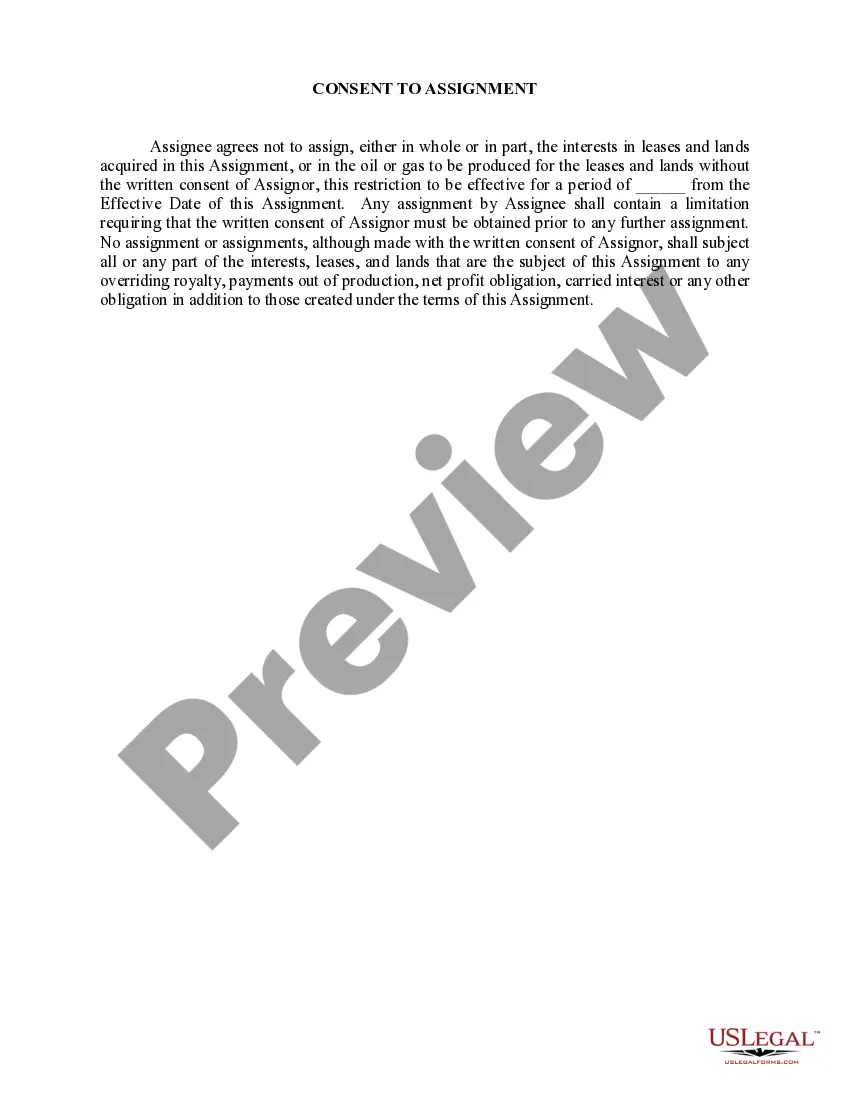
In both instances, assignment is the process whereby a person, the assignor, transfers rights or benefits to another, the assignee.While novation requires the consent of all parties, assignment needs no consent from other non-assigning parties.
What is a Landlord's Consent to Lease Assignment? With a Landlord's Consent to Lease Assignment, landlords and property managers can give formal approval to tenants who wish to exit their lease agreement and transfer it to a new tenant before the rental term is complete.
A lease that can be transferred to another person without getting the landlord's permission.
There is an agreement about who is liable for the costs of the deed of assignment. The landlord's lawyer usually prepares the agreement. However, the outgoing tenant or the incoming tenant pays these costs, not the landlord.
Most often, the lease won't permit assignment without the landlord's approval, but leases often state that the landlord cannot unreasonably withhold consent. As long as you produce a tenant who's shown a history of payment under prior leases and has been a model tenant, a landlord should consent to assignment.
An assignment of a lease is a complete transfer of the right to be the tenant under the lease. The third-party assignee becomes the "tenant" under the lease, taking over all of the leased premises, substituting for the old tenant.