Cover Sample Letter to Client regarding Answering Interrogatories
What is this form?
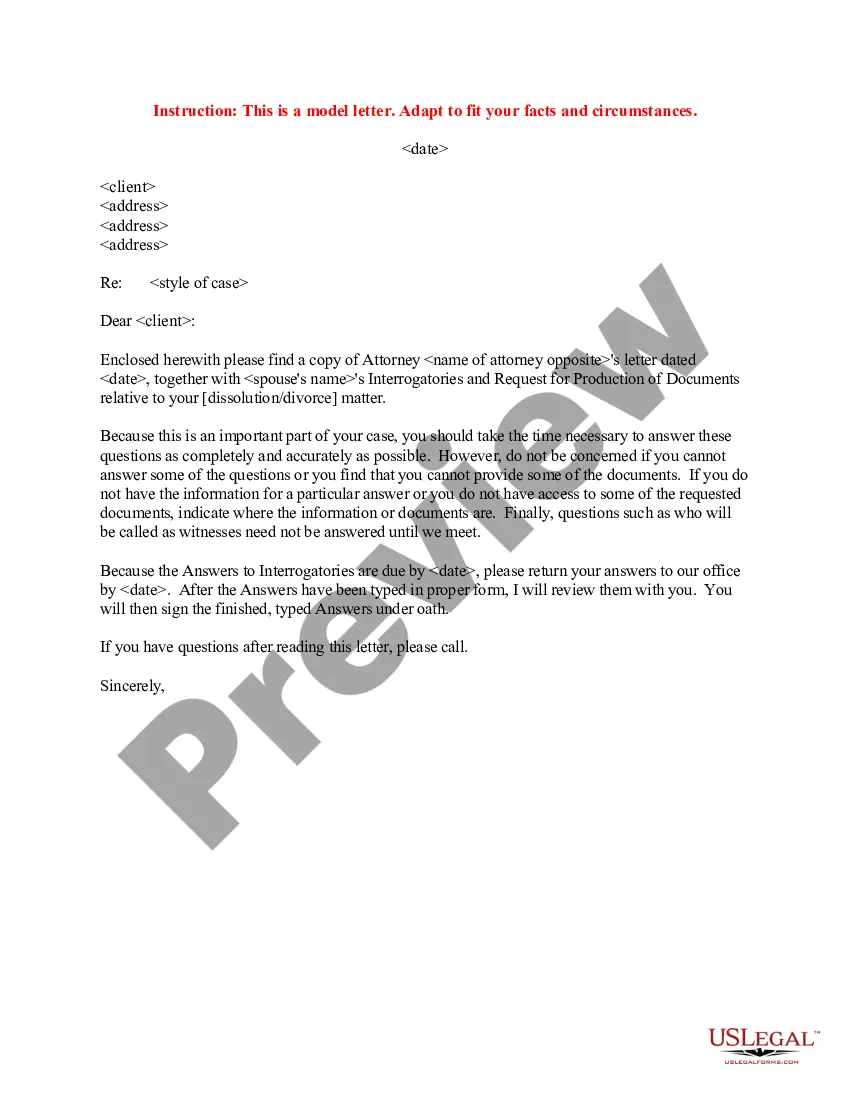
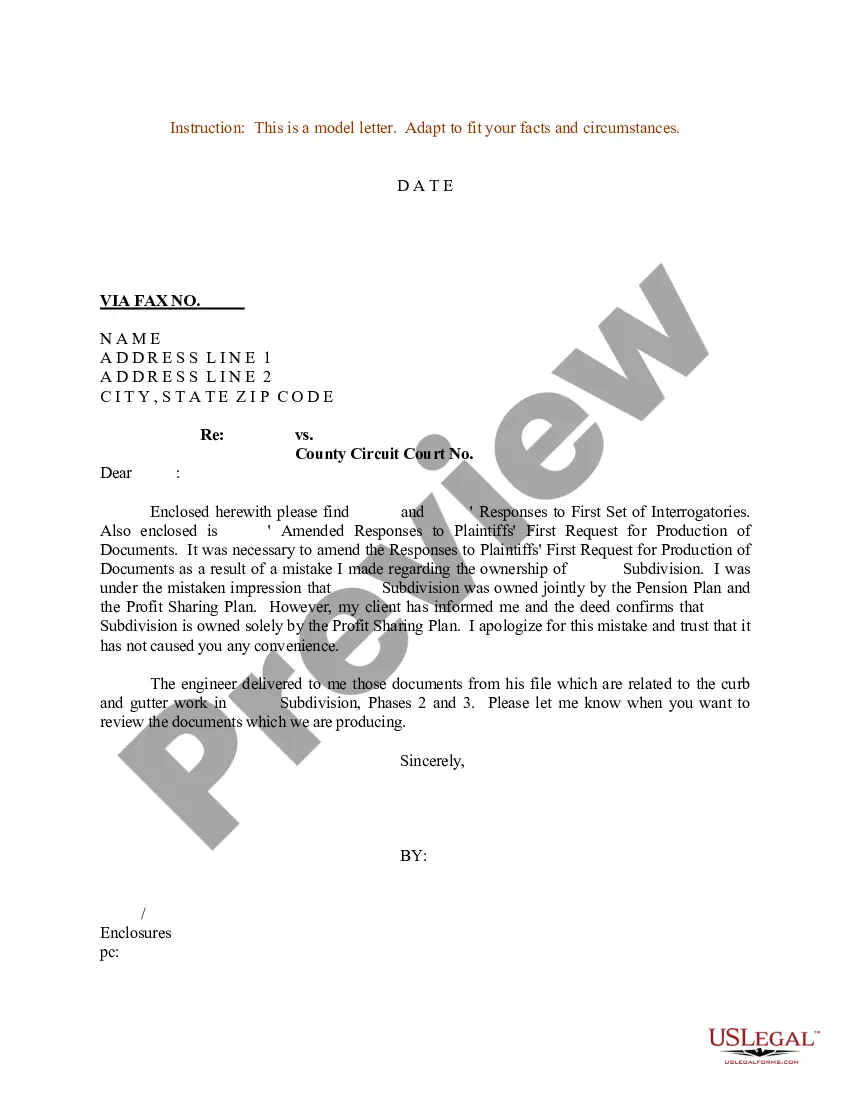
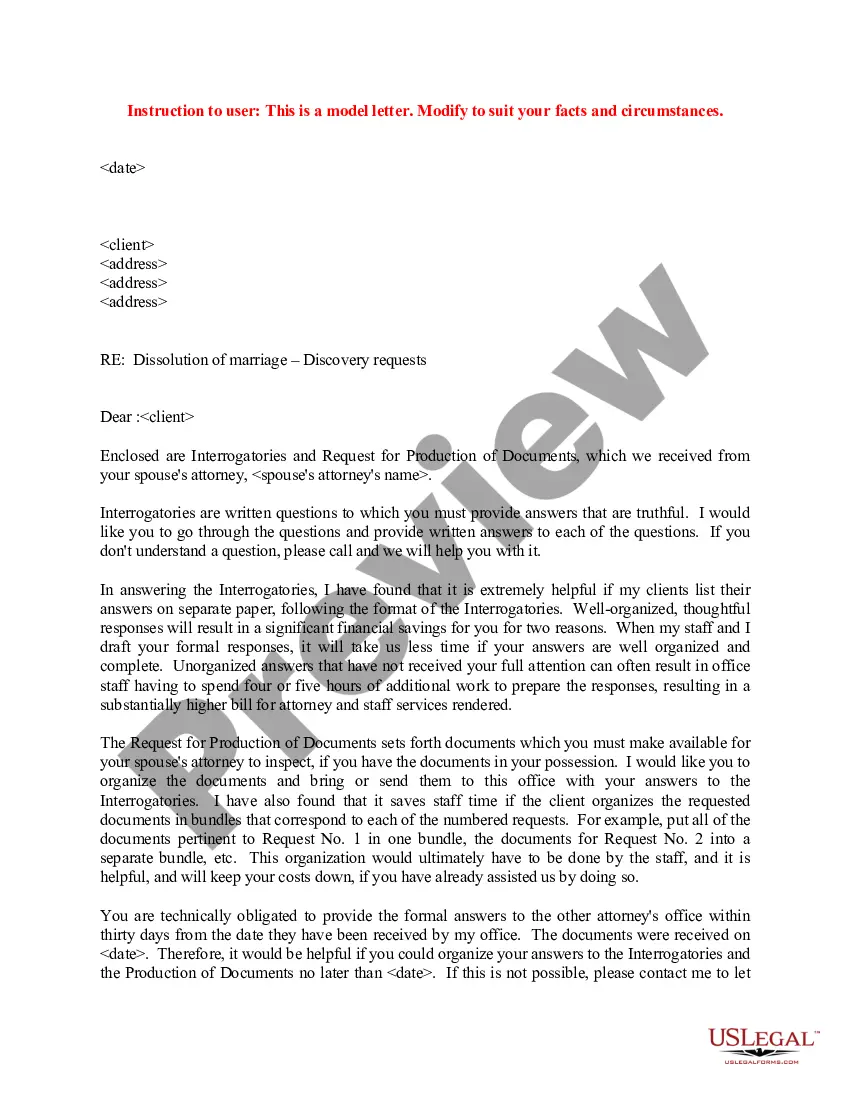
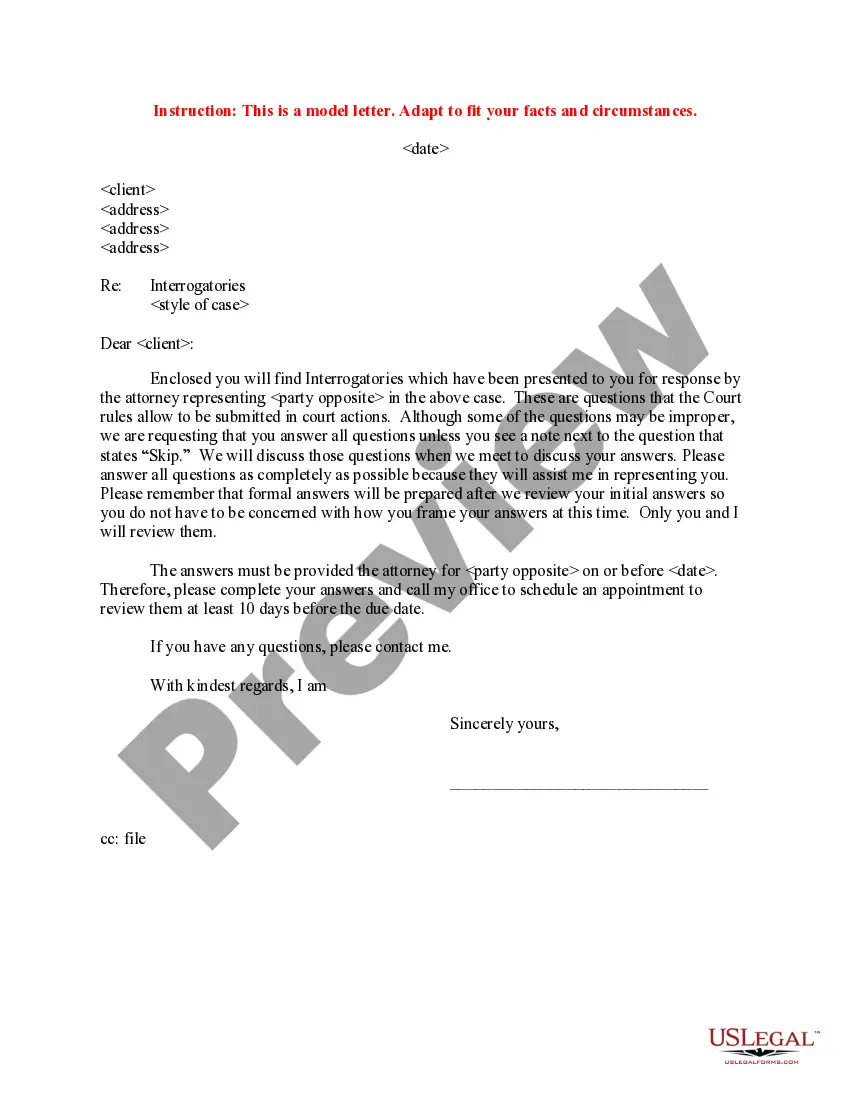
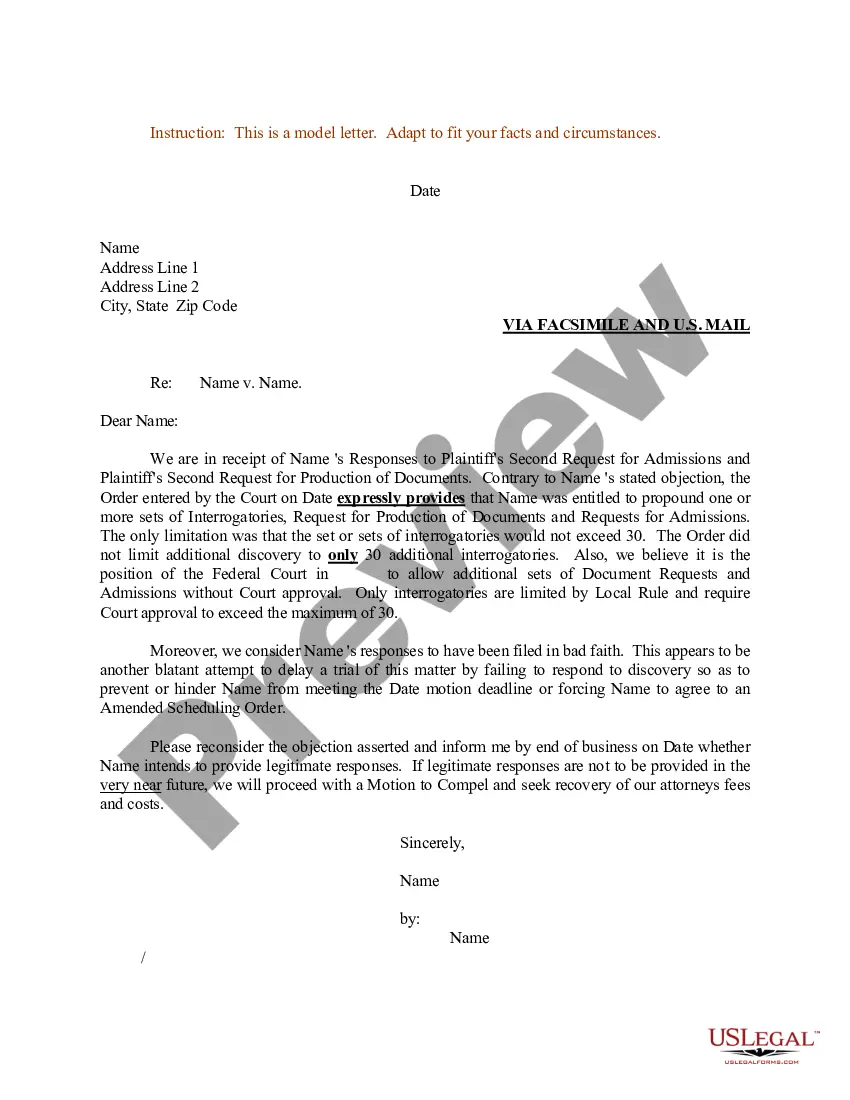
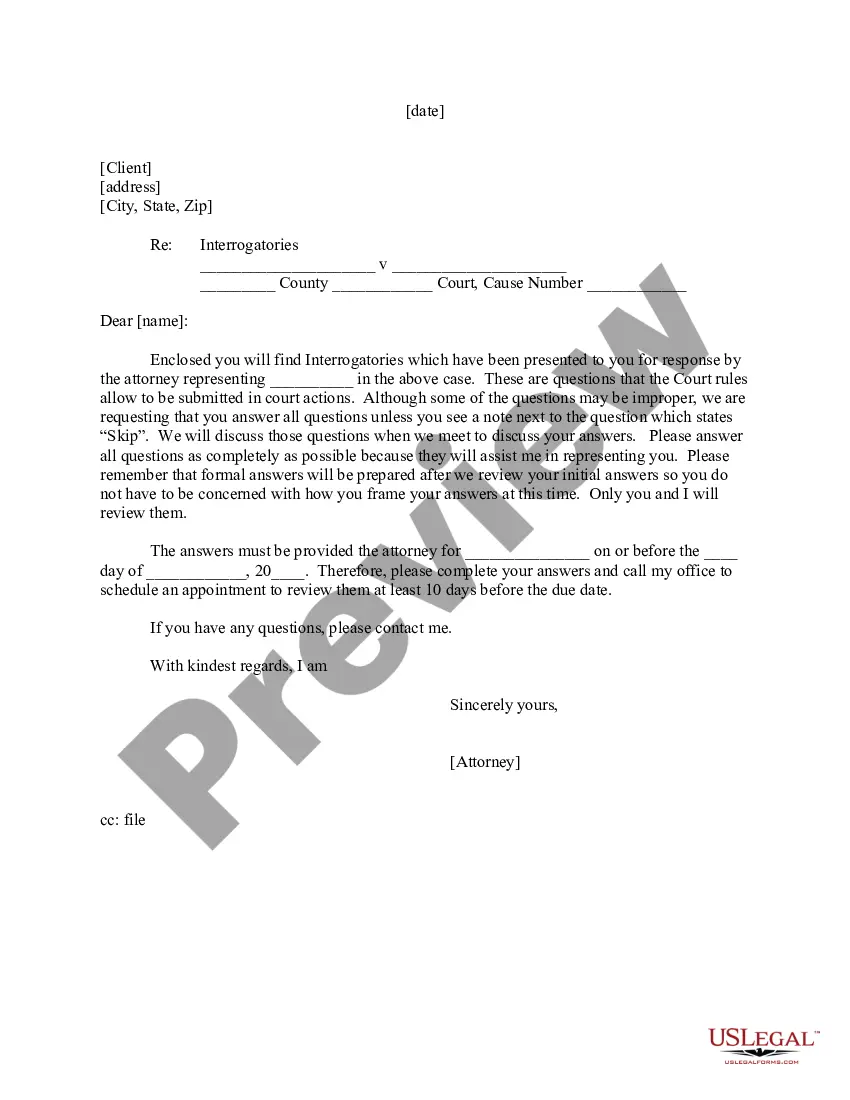
The Cover Sample Letter to Client regarding Answering Interrogatories is a formal communication template that an attorney uses to guide clients through the process of responding to interrogatories in a legal case. This form serves to ensure that clients understand the importance of providing accurate and complete answers, and it outlines how to approach any difficulties they might encounter in providing requested information. Unlike generic letters, this sample letter is structured specifically for legal contexts involving interrogatories, making it a crucial tool for both attorneys and their clients.
What’s included in this form
- Date of the letter.
- Client's name and address.
- Reference to the style of case involved.
- Instructions regarding the completion of interrogatories.
- Deadline for submission of answers.
- Contact information for follow-up questions.
When to use this form
This form is used when an attorney needs to communicate with a client about the requirements of answering interrogatories during a legal proceeding, such as a divorce or other litigation. Clients should receive this letter when they are formally served with interrogatories and need guidance on how to respond appropriately.
Who should use this form
- Attorneys who represent clients involved in litigation.
- Clients who have been served with interrogatories and need assistance in answering them.
- Legal professionals looking for a standardized format for client communication.
How to complete this form
- Insert the date at the top of the letter.
- Fill in the client's name and address in the appropriate fields.
- Clearly reference the style of case for context.
- Detail the instructions on how to answer interrogatories accurately.
- Specify the deadline for submitting answers to the attorney's office.
- Include a closing line inviting the client to ask questions, then sign the letter.
Notarization requirements for this form
This form does not typically require notarization unless specified by local law. It is, however, advisable to check with legal counsel to ensure compliance with jurisdiction-specific requirements.
Get your form ready online
Our built-in tools help you complete, sign, share, and store your documents in one place.
Make edits, fill in missing information, and update formatting in US Legal Forms—just like you would in MS Word.
Download a copy, print it, send it by email, or mail it via USPS—whatever works best for your next step.
Sign and collect signatures with our SignNow integration. Send to multiple recipients, set reminders, and more. Go Premium to unlock E-Sign.
If this form requires notarization, complete it online through a secure video call—no need to meet a notary in person or wait for an appointment.
We protect your documents and personal data by following strict security and privacy standards.

Make edits, fill in missing information, and update formatting in US Legal Forms—just like you would in MS Word.

Download a copy, print it, send it by email, or mail it via USPS—whatever works best for your next step.

Sign and collect signatures with our SignNow integration. Send to multiple recipients, set reminders, and more. Go Premium to unlock E-Sign.

If this form requires notarization, complete it online through a secure video call—no need to meet a notary in person or wait for an appointment.

We protect your documents and personal data by following strict security and privacy standards.
Common mistakes to avoid
- Failing to include the client's complete address.
- Neglecting to specify the deadline for response to interrogatories.
- Using overly complex legal language that confuses the client.
- Forgetting to follow up with the client after sending the letter.
Advantages of online completion
- Convenient access to a legal communication template that can be easily customized.
- Edit and update the letter quickly to reflect specific client details and case information.
- Downloadable format allows for quick printing and distribution.
What to keep in mind
- This letter serves as a critical tool for guiding clients through the interrogatory process.
- Providing clear instructions and deadlines helps ensure compliance with legal requirements.
- Using a standardized template promotes professionalism and accountability in legal communications.
Looking for another form?


Form popularity
FAQ
Responding to Form InterrogatoriesAnswer each question, being careful to answer each subpart, if one exists. Read the question carefully, and answer only what it asks. You may attach exhibits, if necessary. The response must be verified, meaning you must swear that the responses given are true.
Motions to Compel If a party doesn't respond to interrogatories or requests for production, then the party seeking those answers must file a motion to compel with the court. If the court grants the motion to compel, then the party who objected or failed to answer must then do so.
You must answer each interrogatory separately and fully in writing under oath, unless you object to it. You must explain why you object. You must sign your answers and objections.
Discovery, in the law of common law jurisdictions, is a pre-trial procedure in a lawsuit in which each party, through the law of civil procedure, can obtain evidence from the other party or parties by means of discovery devices such as interrogatories, requests for production of documents, requests for admissions and
The plaintiff must give you responses to the request for interrogatories within 45 days of when you mailed the request. If they do not give you a response you can send a final request to the plaintiff. In the final request tell the plaintiff they have another 30 days to give you answers to your interrogatory requests.
Your answers to the interrogatories should usually be short, clear, and direct and should answer only the question that is being asked. This is not the time to set out your entire case or defense to the other side. Take the time to make sure your answers are correct and truthful.
So, can you refuse to answer interrogatories? The answer is, no, you may not.That answer must either permit inspection of the requested information or object to the production of the information for a specific reason.
You must answer each interrogatory separately and fully in writing under oath, unless you object to it. You must explain why you object. You must sign your answers and objections.