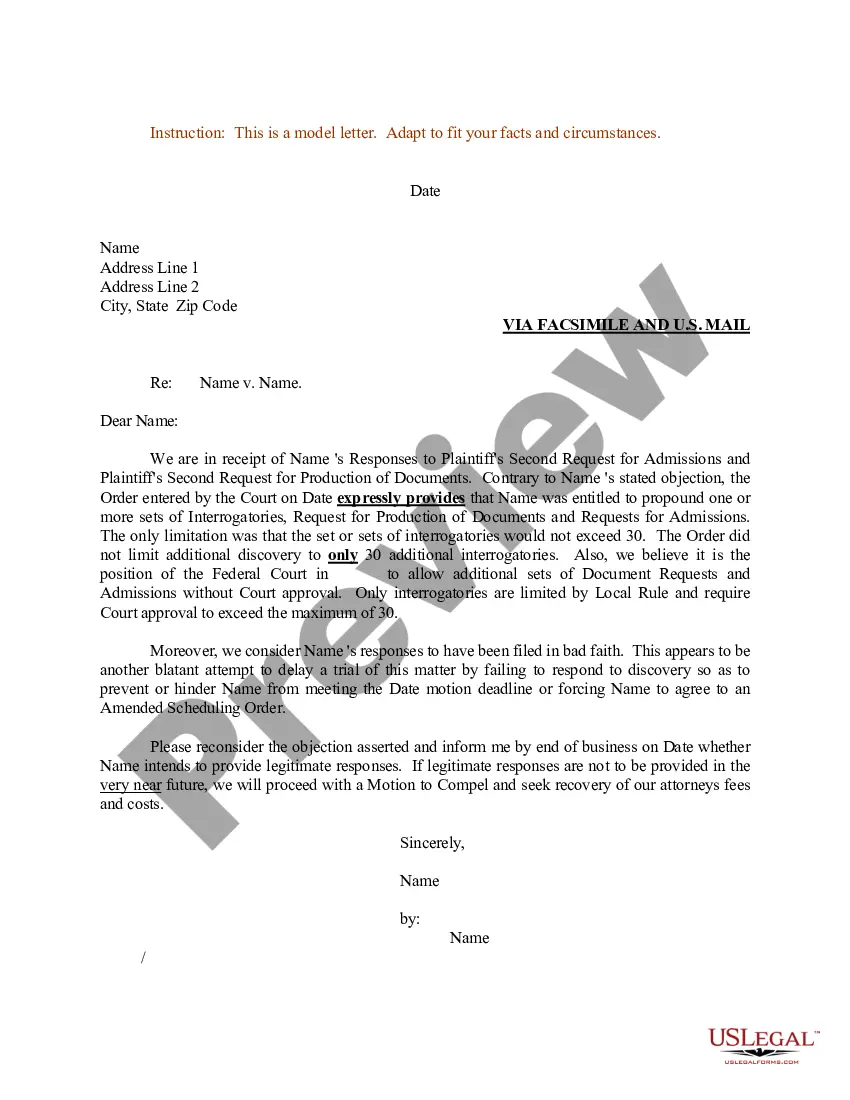
Sample Letter for Interrogatories Number
About this form
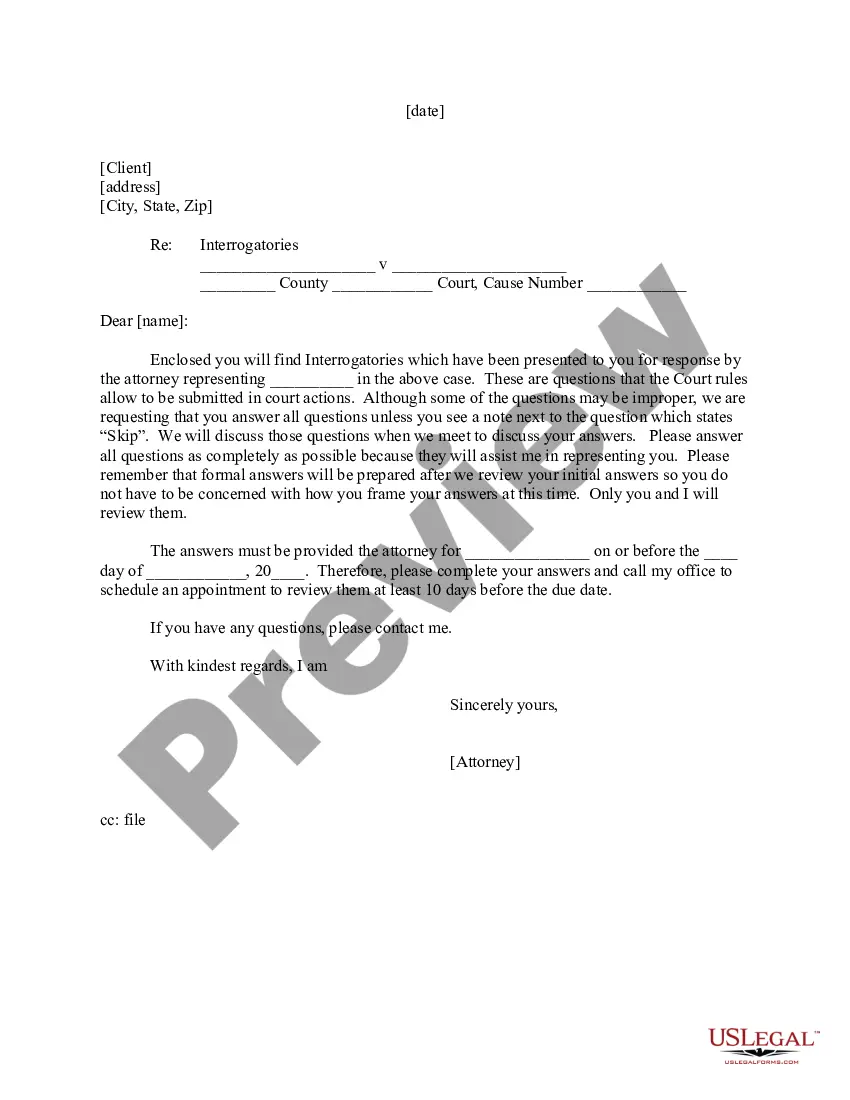
The Sample Letter for Interrogatories is a template used to create a formal request for written questions aimed at gathering information in a legal case. Unlike other legal documents, this letter serves specifically to initiate the discovery process, allowing parties to obtain essential details from each other before trial. It is an important tool to ensure clarity and transparency in legal proceedings.
Key parts of this document
- Date and contact information for the sender.
- Recipient's name and address for proper delivery.
- Formal greeting and introduction to the request.
- Specific interrogatories or questions to be answered.
- Closing signature block with the sender's name.

When to use this form
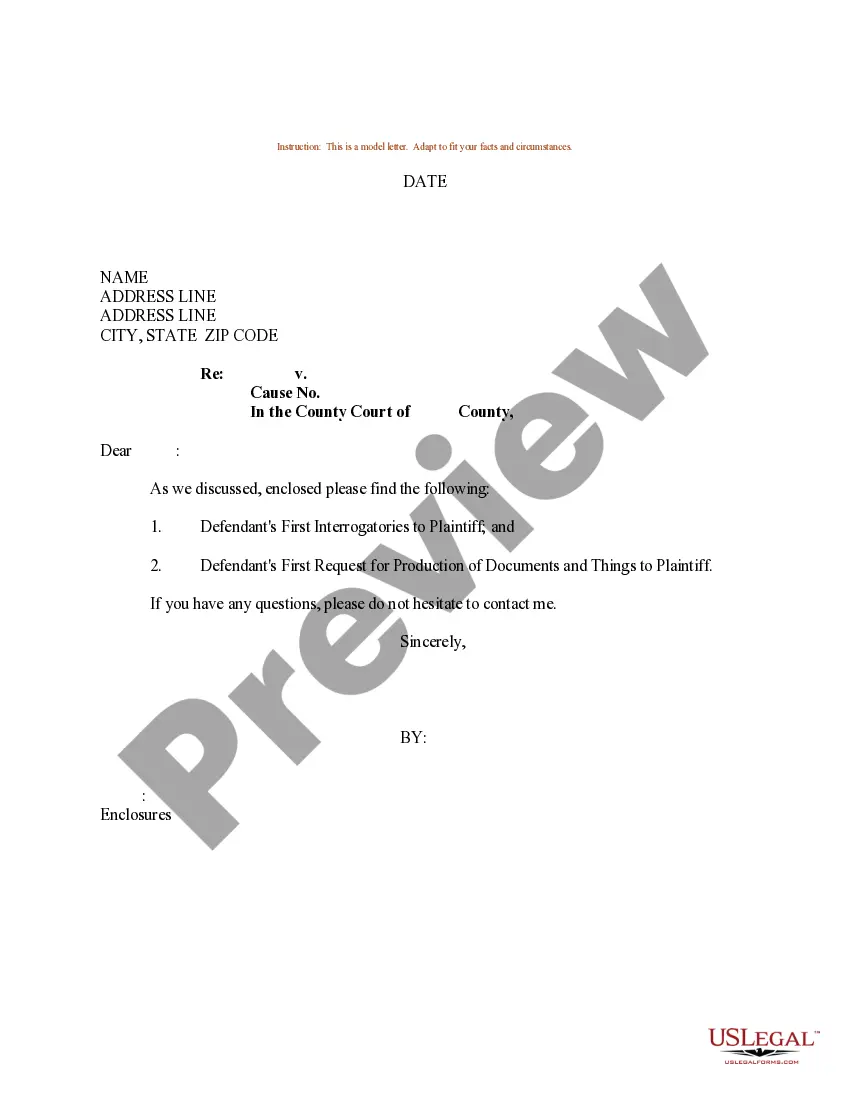
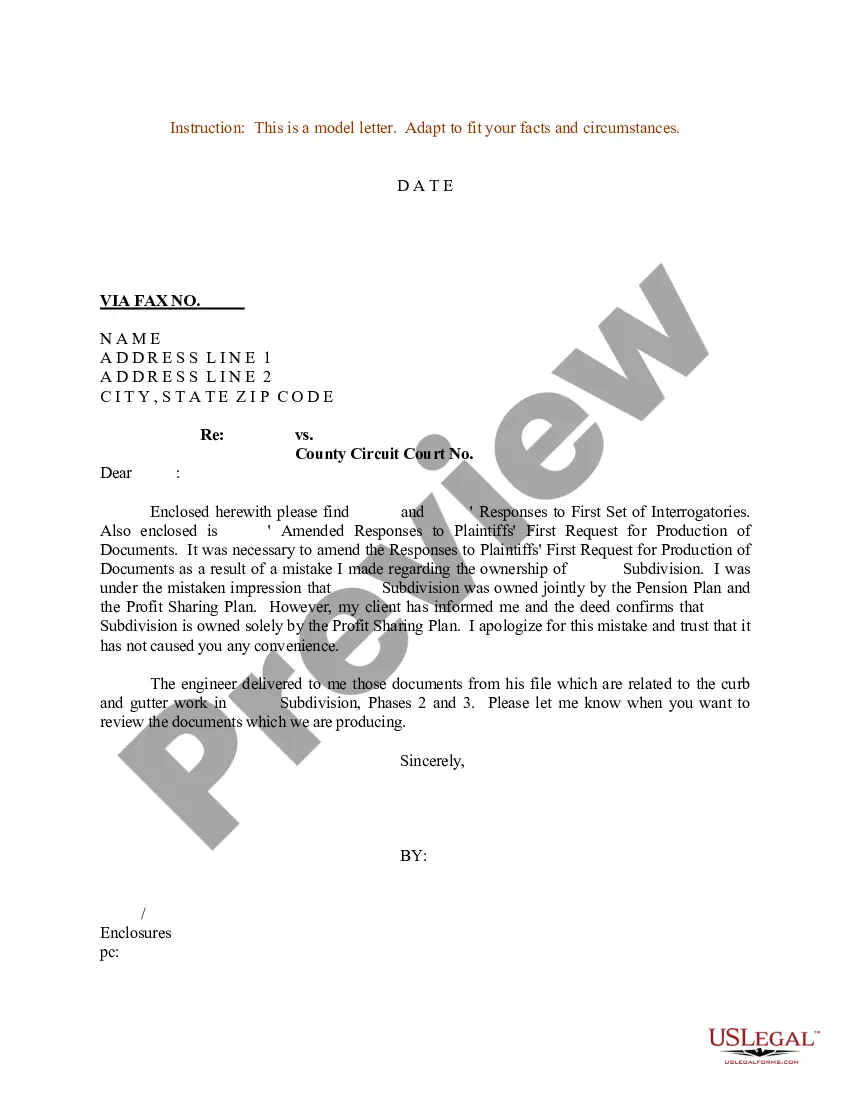
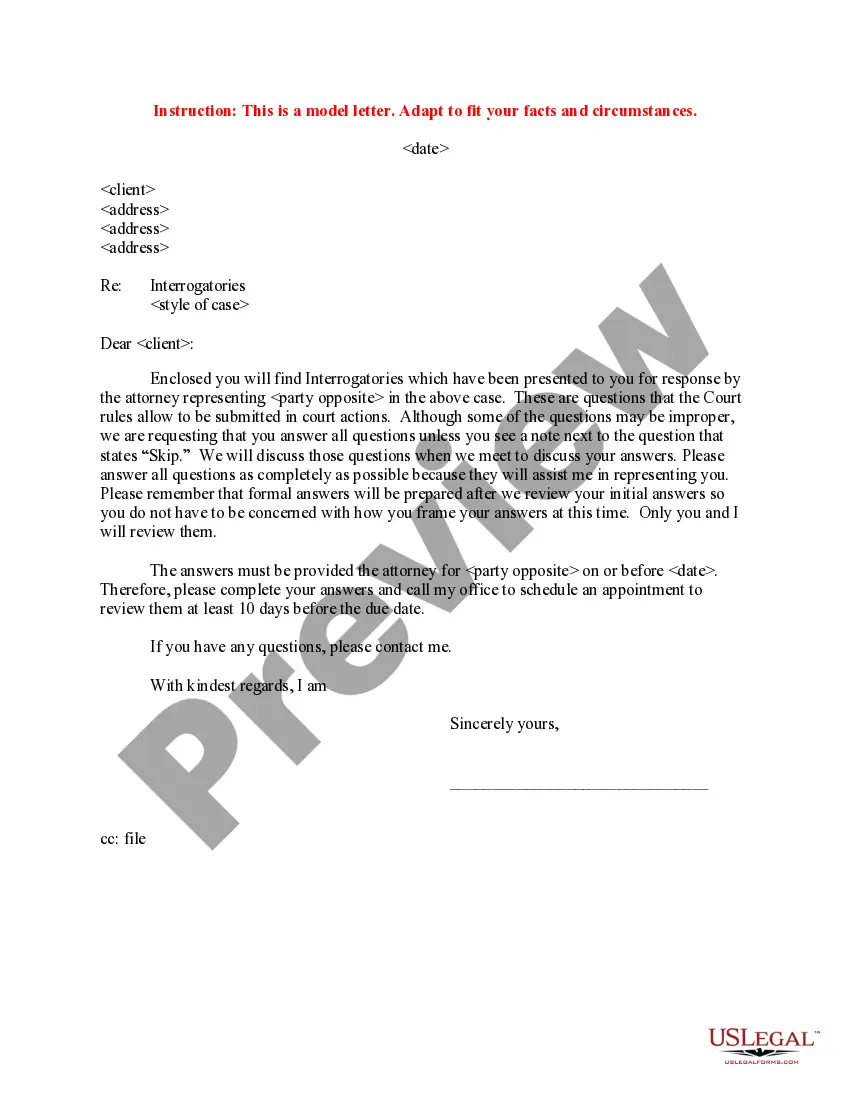
This form should be used when a party in a legal dispute needs to request specific information or clarification from the opposing party. It is typically employed in civil litigation cases where understanding certain facts or circumstances is crucial for building a solid case. By sending this letter, you formally engage the other party in the discovery process.
Who should use this form
- Individuals involved in civil lawsuits seeking information from the opposing party.
- Attorneys representing clients in legal proceedings.
- Any party in a legal dispute that requires clarity on specific issues before trial.
How to complete this form
- Start by entering the date at the top of the letter.
- Add your name and address in the designated fields.
- List the name and address of the recipient accurately.
- Write a formal greeting and describe the purpose of the letter.
- Include your specific interrogatories, clearly numbered or bulleted.
- Finish with your name and any necessary signatures.
Does this document require notarization?
This form does not typically require notarization unless specified by local law. Ensure you check jurisdiction-specific guidelines to confirm.
Get your form ready online
Our built-in tools help you complete, sign, share, and store your documents in one place.
Make edits, fill in missing information, and update formatting in US Legal Forms—just like you would in MS Word.
Download a copy, print it, send it by email, or mail it via USPS—whatever works best for your next step.
Sign and collect signatures with our SignNow integration. Send to multiple recipients, set reminders, and more. Go Premium to unlock E-Sign.
If this form requires notarization, complete it online through a secure video call—no need to meet a notary in person or wait for an appointment.
We protect your documents and personal data by following strict security and privacy standards.

Make edits, fill in missing information, and update formatting in US Legal Forms—just like you would in MS Word.

Download a copy, print it, send it by email, or mail it via USPS—whatever works best for your next step.

Sign and collect signatures with our SignNow integration. Send to multiple recipients, set reminders, and more. Go Premium to unlock E-Sign.

If this form requires notarization, complete it online through a secure video call—no need to meet a notary in person or wait for an appointment.

We protect your documents and personal data by following strict security and privacy standards.
Avoid these common issues
- Failing to include all necessary contact information.
- Not clearly stating the purpose of the interrogatories.
- Overcomplicating the language of the questions.
- Neglecting to specify deadlines for responses.
Why complete this form online
- Easy access to a professionally drafted template.
- Convenient editing options to tailor the document to your needs.
- Reliable formatting that meets standard legal requirements.
- Instant download for immediate use.
Looking for another form?




Form popularity
FAQ
The number of questions included in an interrogatory is usually limited by court rule. For example, under the Federal Rules of Civil Procedure, each party may only ask each other party 25 questions via interrogatory unless the court gives permission to ask more.
(1) Number. Unless otherwise stipulated or ordered by the court, a party may serve on any other party no more than 25 written interrogatories, including all discrete subparts. Leave to serve additional interrogatories may be granted to the extent consistent with Rule 26(b)(1) and (2).
Your answers to the interrogatories should usually be short, clear, and direct and should answer only the question that is being asked. This is not the time to set out your entire case or defense to the other side. Take the time to make sure your answers are correct and truthful.
You must answer each interrogatory separately and fully in writing under oath, unless you object to it. You must explain why you object. You must sign your answers and objections.
Interrogatories are a discovery tool that the parties can use to have specific questions about a case answered before trial. Interrogatories are lists of questions sent to the other party that s/he must respond to in writing.
Personal/Corporate information of opposing party. Identifying information of witnesses. Contact information & background of expert witnesses. Insurance information.
(1) Number. Unless otherwise stipulated or ordered by the court, a party may serve on any other party no more than 25 written interrogatories, including all discrete subparts. Leave to serve additional interrogatories may be granted to the extent consistent with Rule 26(b)(1) and (2).
Interrogatory subparts are counted as one interrogatory if they are logically or factually subsumed within and necessarily related to the primary question. Safeco of America v. Rawstron, 181 F.R.D. 441, 445 (C.D. Cal.