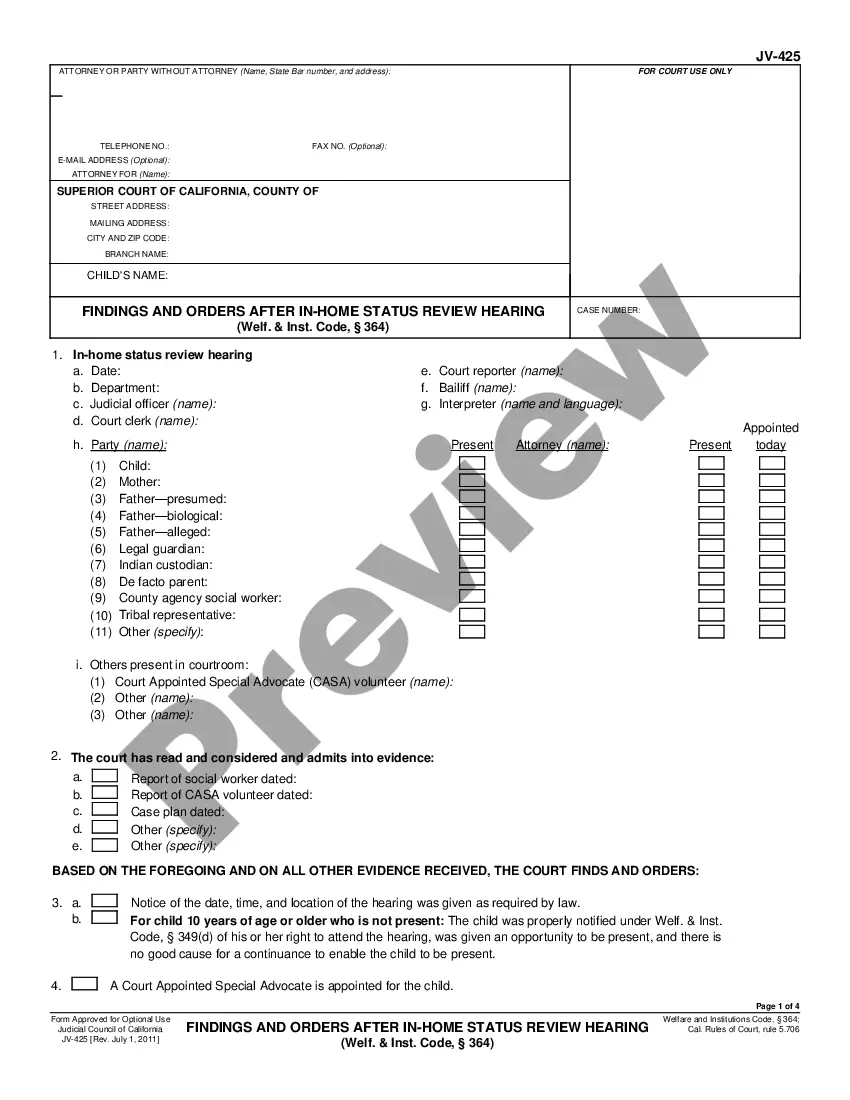
Sample Letter for First Set of Interrogatories - Production of Documents
Understanding this form
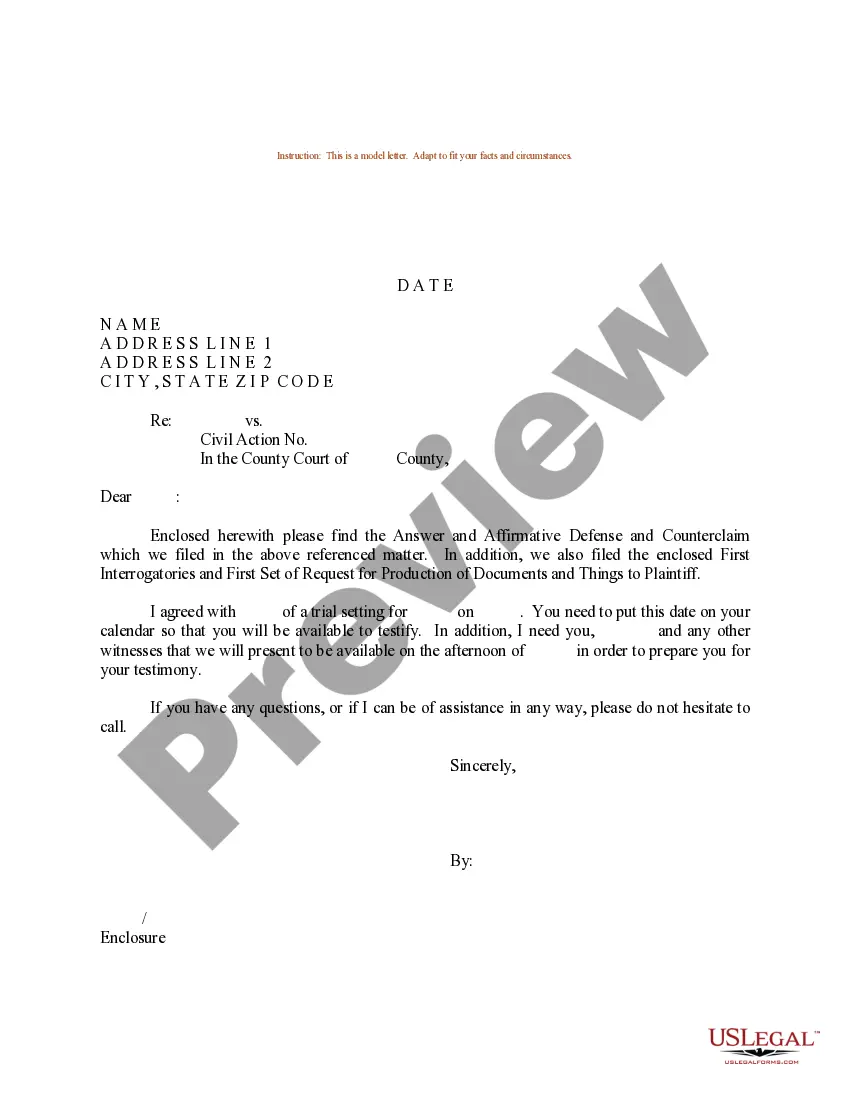
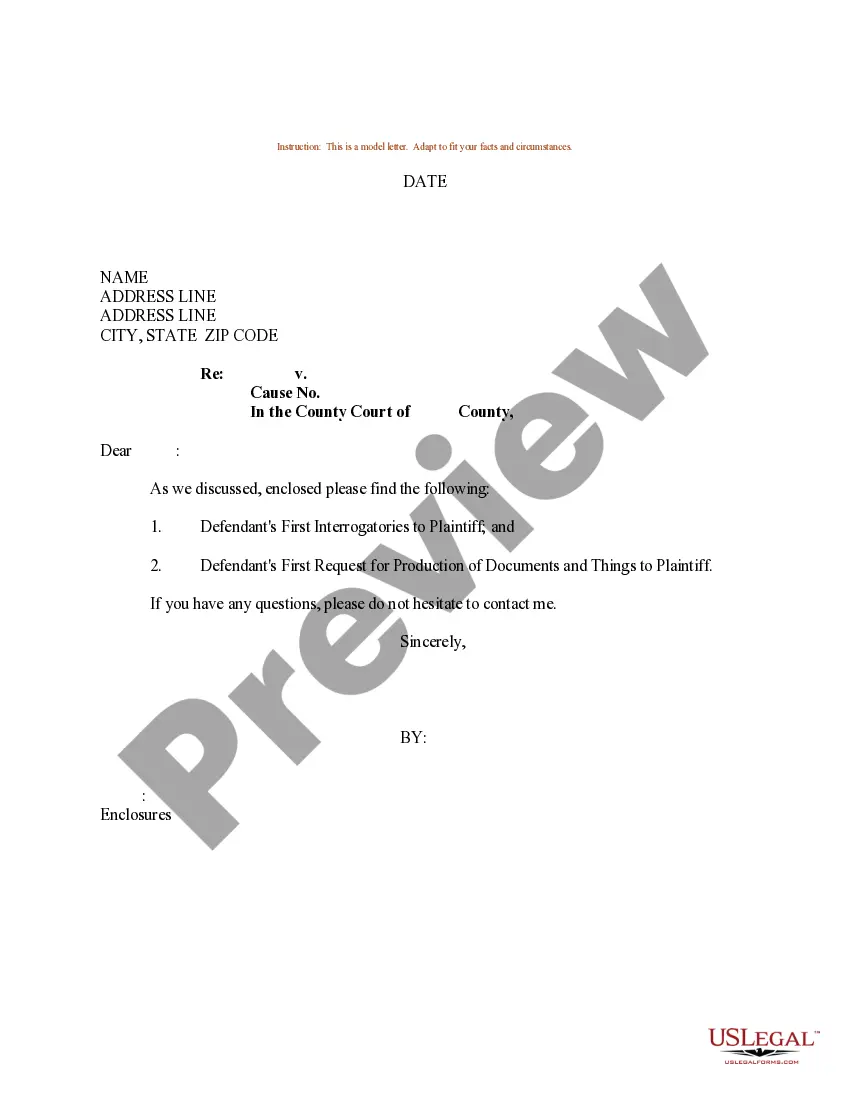
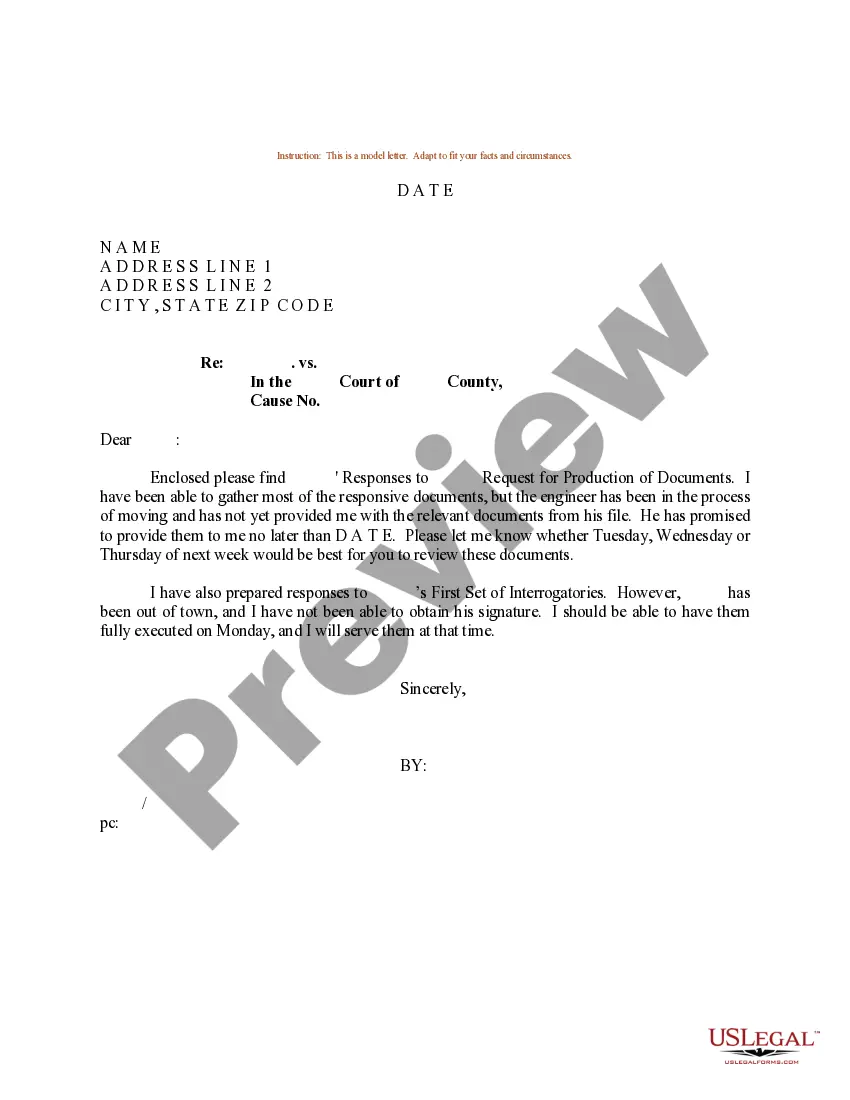
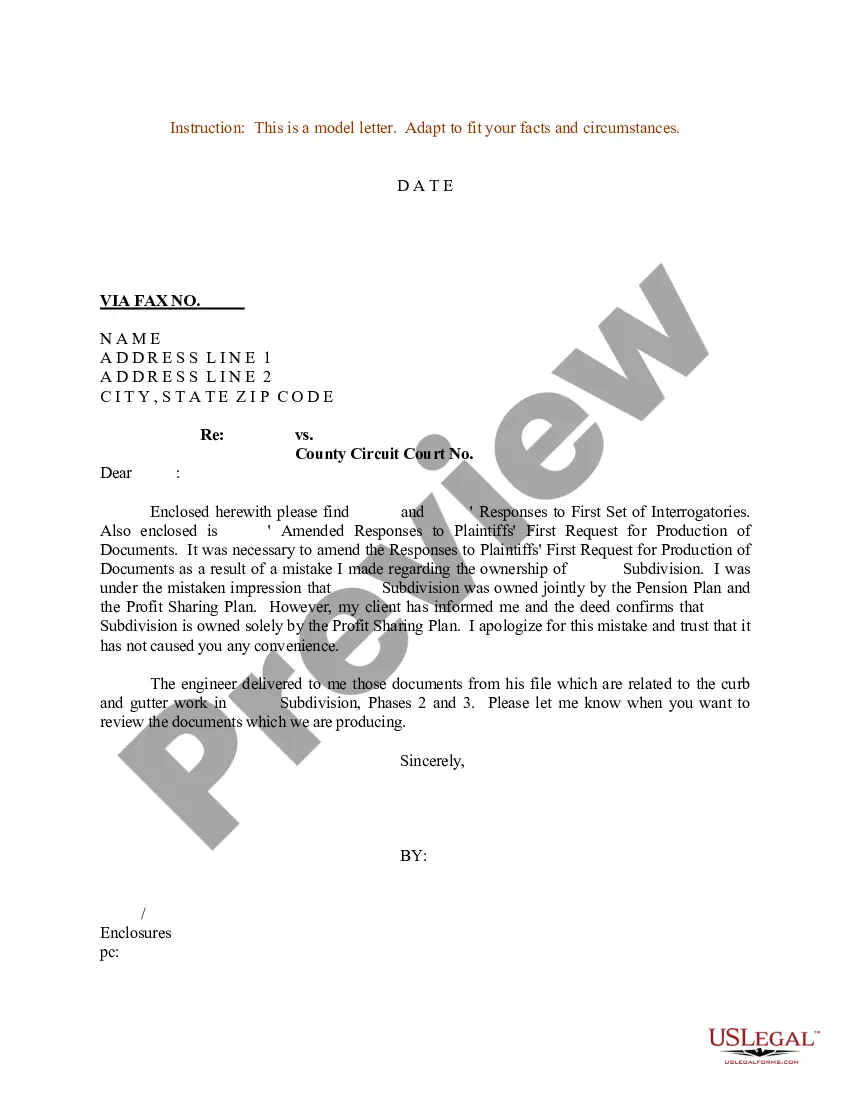
The Sample Letter for First Set of Interrogatories - Production of Documents is a model letter used to formally request the production of documents in a legal context. This letter plays a crucial role in the discovery process, allowing parties involved in a lawsuit to obtain necessary documents from each other, which is essential for building a case. Unlike other legal forms, this sample letter specifically focuses on document production, making it a unique tool for attorneys and legal practitioners.
Main sections of this form
- Letterhead: Includes the sender's name and address.
- Date: Date when the letter is drafted.
- Recipient Information: Detailed information about the recipient, including their name and address.
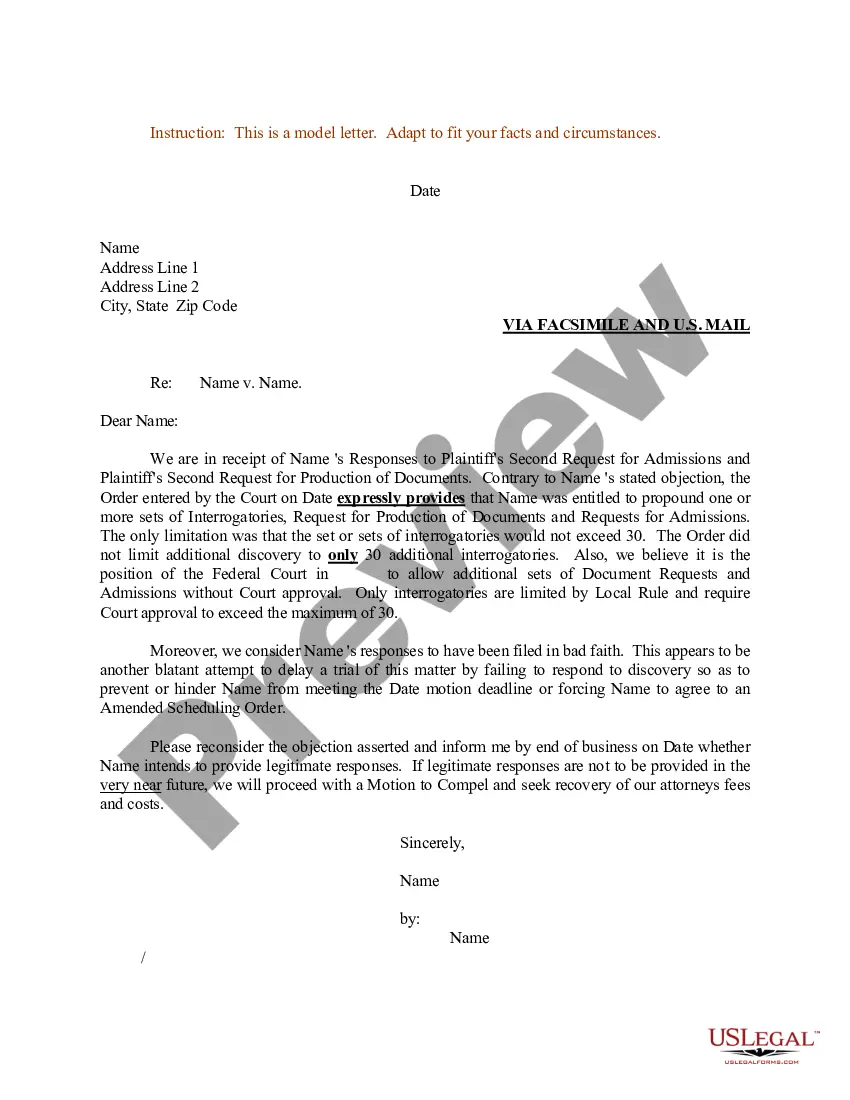
- Body of the Letter: A clear and concise request for the specific documents needed for the case.
- Signature: Space for the sender's signature at the end of the letter.
Situations where this form applies
This form should be used during the discovery phase of a legal proceeding when a party needs to gather evidence to support their case. It is particularly useful when you know specific documents that are in possession of another party, and you wish to formally request those documents for review or use in court. Scenarios include preparing for trial, negotiating settlements, or ensuring compliance with legal obligations.
Intended users of this form
- Attorneys representing clients in legal proceedings.
- Parties involved in a dispute requiring evidence collection.
- Individuals seeking to understand the discovery process without extensive legal knowledge.
How to complete this form
- Identify the parties involved: Clearly state who is sending and receiving the letter.
- Enter the date: Fill in the date when the letter is being sent.
- Specify the documents needed: Clearly outline what documents you are requesting.
- Add a polite closing: Include a courteous sign-off to maintain professionalism.
- Sign the letter: Provide your signature to validate the request.
Notarization requirements for this form
In most cases, this form does not require notarization. However, some jurisdictions or signing circumstances might. US Legal Forms offers online notarization powered by Notarize, accessible 24/7 for a quick, remote process.
Get your form ready online
Our built-in tools help you complete, sign, share, and store your documents in one place.
Make edits, fill in missing information, and update formatting in US Legal Forms—just like you would in MS Word.
Download a copy, print it, send it by email, or mail it via USPS—whatever works best for your next step.
Sign and collect signatures with our SignNow integration. Send to multiple recipients, set reminders, and more. Go Premium to unlock E-Sign.
If this form requires notarization, complete it online through a secure video call—no need to meet a notary in person or wait for an appointment.
We protect your documents and personal data by following strict security and privacy standards.

Make edits, fill in missing information, and update formatting in US Legal Forms—just like you would in MS Word.

Download a copy, print it, send it by email, or mail it via USPS—whatever works best for your next step.

Sign and collect signatures with our SignNow integration. Send to multiple recipients, set reminders, and more. Go Premium to unlock E-Sign.

If this form requires notarization, complete it online through a secure video call—no need to meet a notary in person or wait for an appointment.

We protect your documents and personal data by following strict security and privacy standards.
Typical mistakes to avoid
- Not specifying the exact documents needed, which may lead to delays.
- Failing to include complete recipient information, which may result in miscommunication.
- Using unclear language, which can cause confusion about the request.
Benefits of using this form online
- Convenient access to a professionally drafted model letter.
- Easily customizable to fit individual legal circumstances.
- Quick download for immediate use in legal proceedings.
Looking for another form?

Form popularity
FAQ
This form is a model letter used during discovery to request the production of documents from another party. It provides a complete structure, including letterhead, date, recipient information, a body with the clear request, and a signature line. It’s designed for situations where specific documents are believed to be in the other party’s possession and are needed for review or trial.
To write a request using this form, start with the letterhead and date, add the recipient’s information, and then use the body to clearly state the specific documents needed for the case. The template emphasizes a concise, targeted request for production of documents and ends with a signature line for execution.
In this form, you should specify the particular documents you need in the body of the letter, ensuring the request is clear and concise. The template centers on 'the specific documents needed for the case' and uses the standard letter sections—letterhead, date, recipient, and signature—to present it in a formal discovery context.
A Rule 37 letter is a distinct discovery device that is typically used to address failures to comply with discovery or sanctions motions. This form, by contrast, is a standard template for requesting production of documents during discovery and does not operate as a Rule 37 tool.
Responses to interrogatories are the formal answers a party provides to written questions served in discovery. This form, however, is a template for requesting the production of documents and does not contain interrogation responses; it is used to obtain documents rather than to answer questions.
This form is tailored for the first set of interrogatories and focuses on production of documents within that context. It differs from generic production letters by explicitly signaling its connection to the First Set of Interrogatories and by using the standard letter sections to request specific documents.