Authorization for Use and / or Disclosure of Protected Health Information
About this form
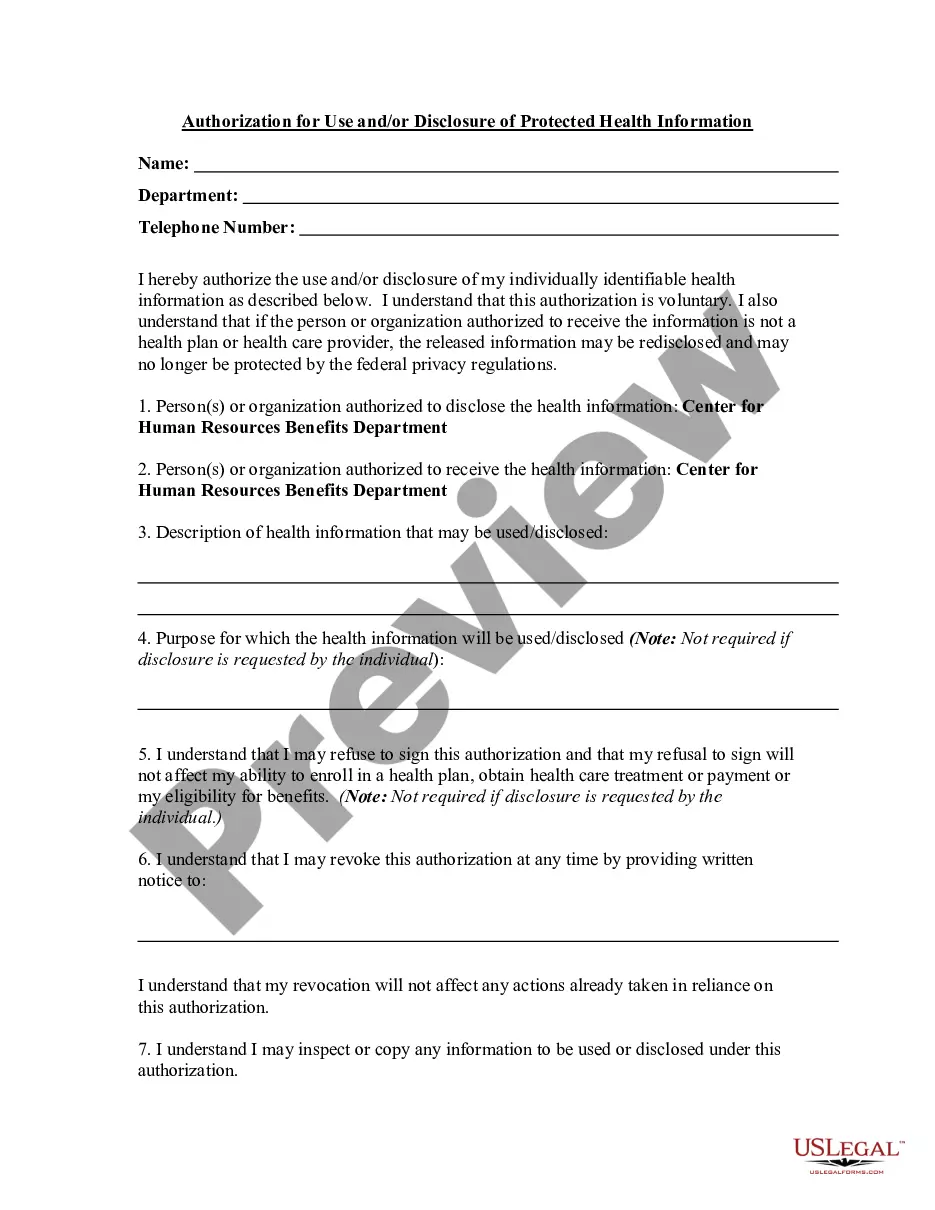
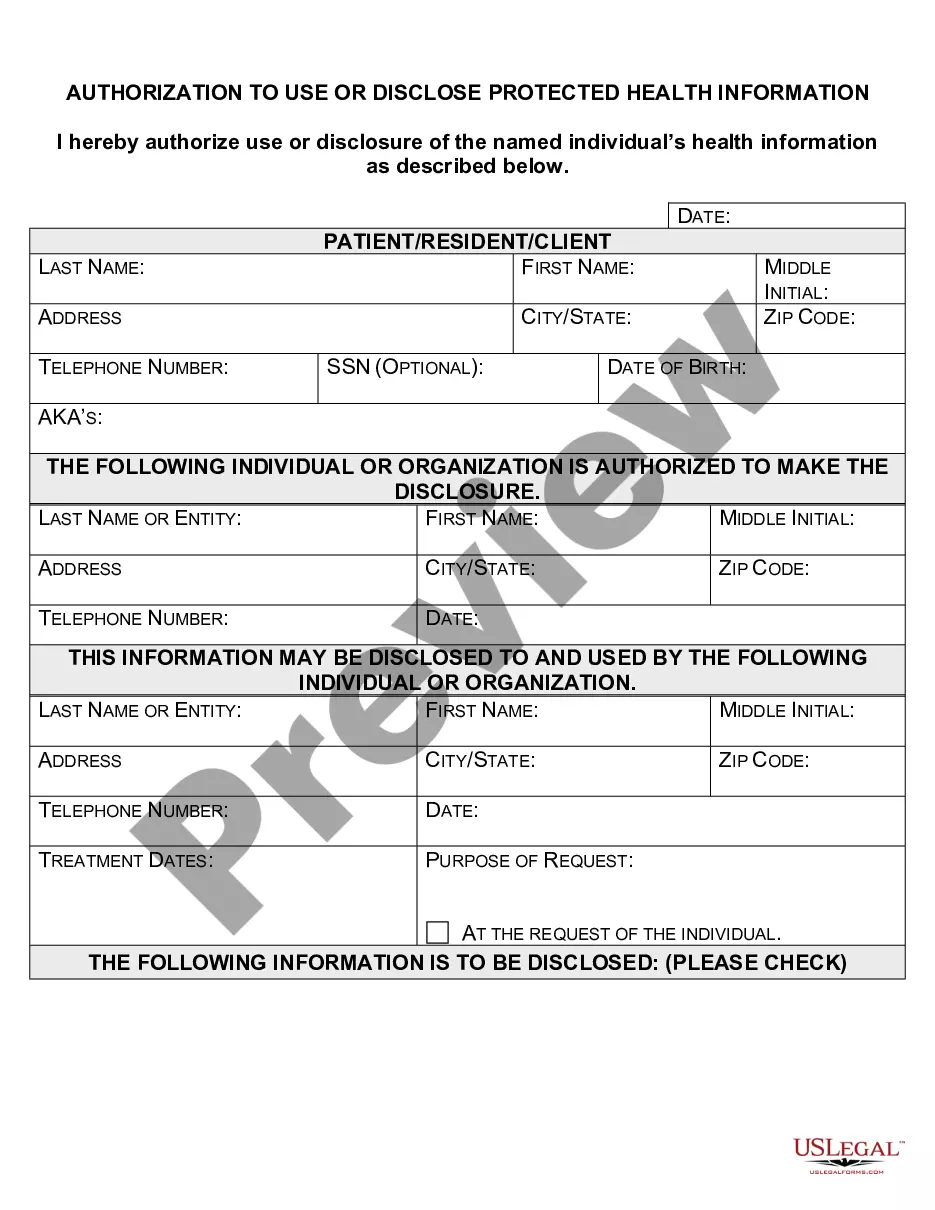
The Authorization for Use and/or Disclosure of Protected Health Information is a legal document that enables an employee to permit the disclosure of specific medical information by their employer's human resources department. This form is essential for ensuring that your protected health information is shared only with authorized individuals or entities, differing from general medical release forms by focusing specifically on employee authorization within a workplace context.
Form components explained
- Person(s) or organization authorized to disclose the health information, e.g., Center for Human Resources Benefits Department.
- A statement confirming the employee's right to inspect or copy the disclosed information.
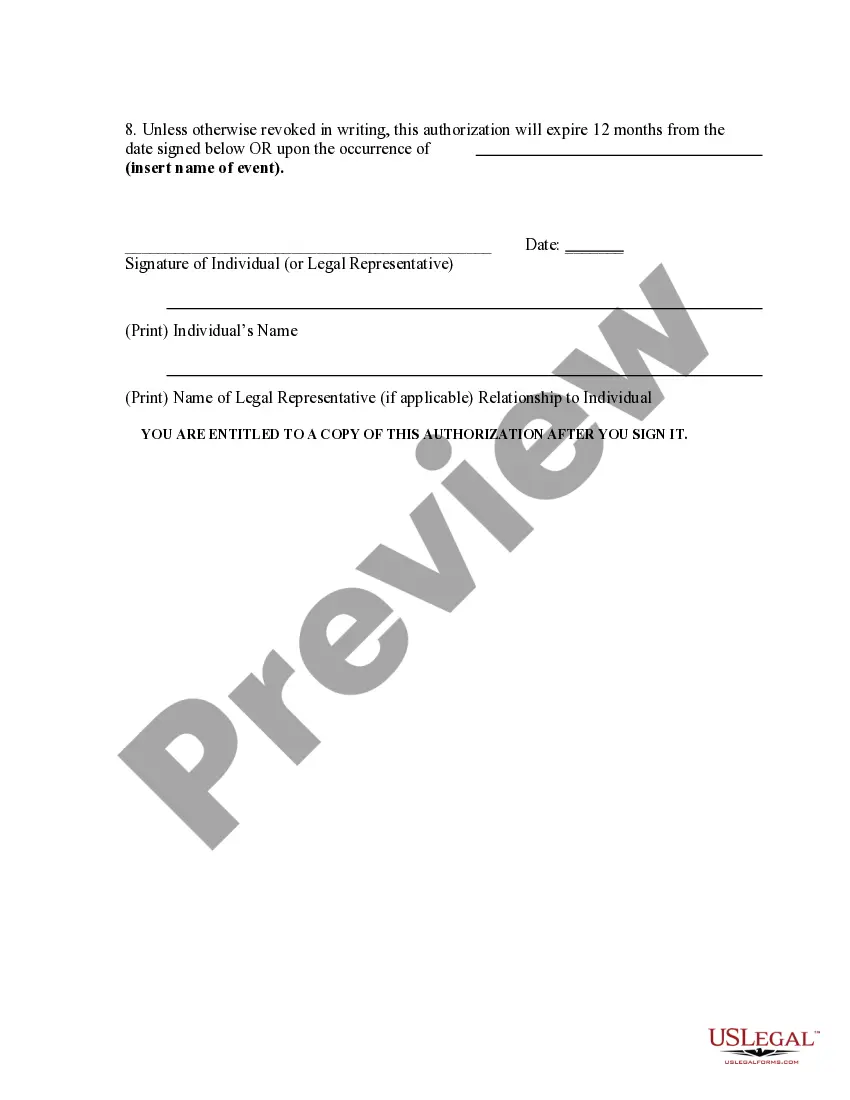
- A declaration that the employee will receive a copy of the authorization after signing.
Common use cases
This form is used when an employee needs to authorize their employer to release certain medical information, such as for benefits administration or when applying for leave. It is typically required during processes that involve health benefits or accommodations based on the employee's medical condition.
Who needs this form
This form is intended for:
- Employees who wish to disclose their medical information to their employer.
- Human resources personnel responsible for administering employee benefits.
- Legal representatives handling health-related employee matters.
How to prepare this document
To complete this form, follow these steps:
- Identify the person(s) or organization authorized to disclose your health information.
- Provide your full name and any identifying information required.
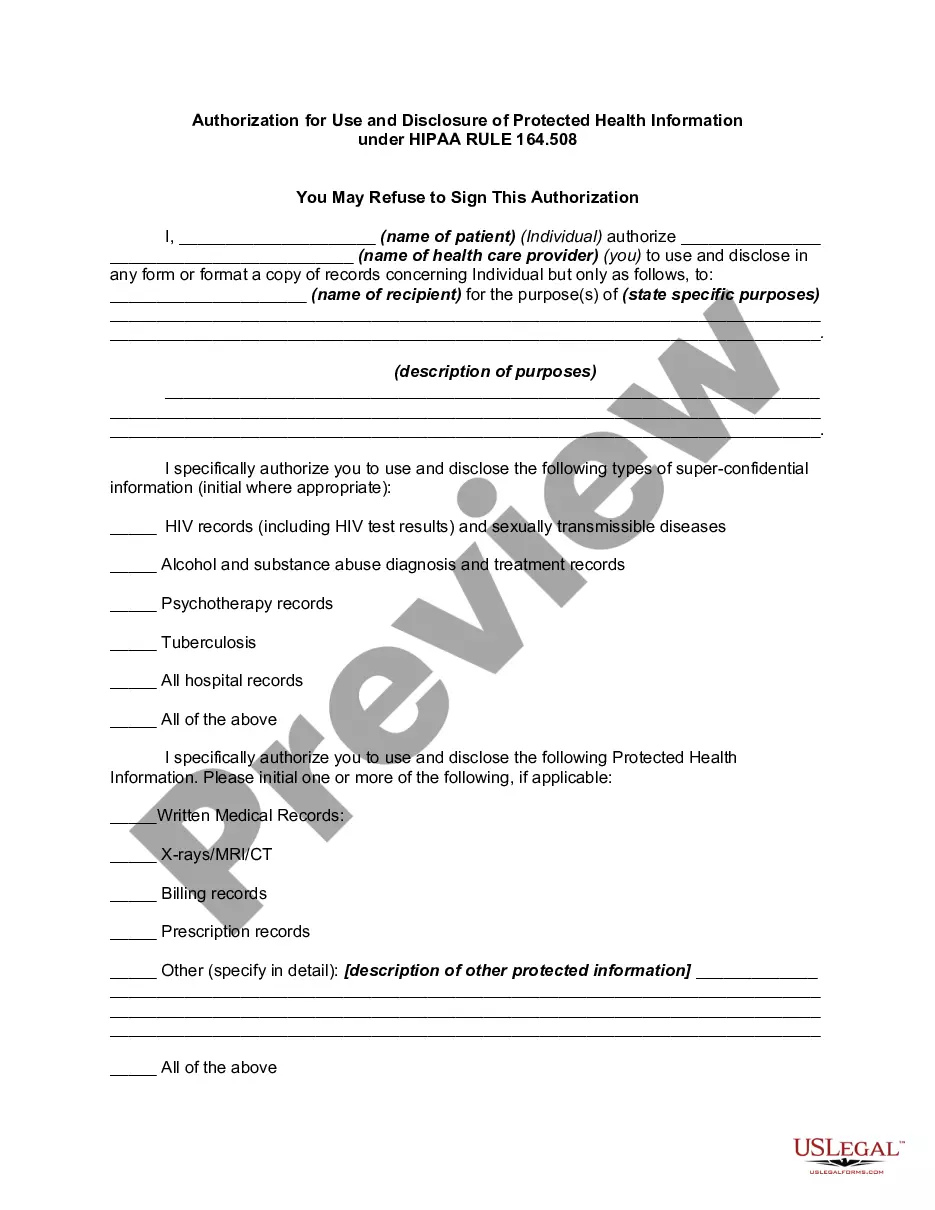
- Clearly specify the types of medical information you authorize to be disclosed.
- Sign and date the form to make it valid.
- Keep a copy of the signed authorization for your records.
Notarization guidance
This form does not typically require notarization unless specified by local law.
Get your form ready online
Our built-in tools help you complete, sign, share, and store your documents in one place.
Make edits, fill in missing information, and update formatting in US Legal Forms—just like you would in MS Word.
Download a copy, print it, send it by email, or mail it via USPS—whatever works best for your next step.
Sign and collect signatures with our SignNow integration. Send to multiple recipients, set reminders, and more. Go Premium to unlock E-Sign.
If this form requires notarization, complete it online through a secure video call—no need to meet a notary in person or wait for an appointment.
We protect your documents and personal data by following strict security and privacy standards.

Make edits, fill in missing information, and update formatting in US Legal Forms—just like you would in MS Word.

Download a copy, print it, send it by email, or mail it via USPS—whatever works best for your next step.

Sign and collect signatures with our SignNow integration. Send to multiple recipients, set reminders, and more. Go Premium to unlock E-Sign.

If this form requires notarization, complete it online through a secure video call—no need to meet a notary in person or wait for an appointment.

We protect your documents and personal data by following strict security and privacy standards.
Avoid these common issues
- Failing to specify the types of medical information to be disclosed.
- Not providing complete identification information, such as your full name or contact details.
- Neglecting to sign and date the authorization form properly.
Benefits of using this form online
- Easy access: Download and fill out the form at your convenience.
- Editable: Customize the template to fit your specific needs.
- Reliable: The form is drafted by licensed attorneys to meet legal standards.
- The form must comply with the Health Insurance Portability and Accountability Act (HIPAA) regulations regarding medical information.
- If an authorization is not obtained, the employer may not disclose health information, protecting employee privacy.
What to keep in mind
- The Authorization for Use and/or Disclosure of Protected Health Information allows employees to control their medical information shared with employers.
- Completing the form accurately is crucial to ensure compliance with legal requirements.
- Utilizing this form helps facilitate necessary communication between employees and human resources.
Looking for another form?
Form popularity
FAQ
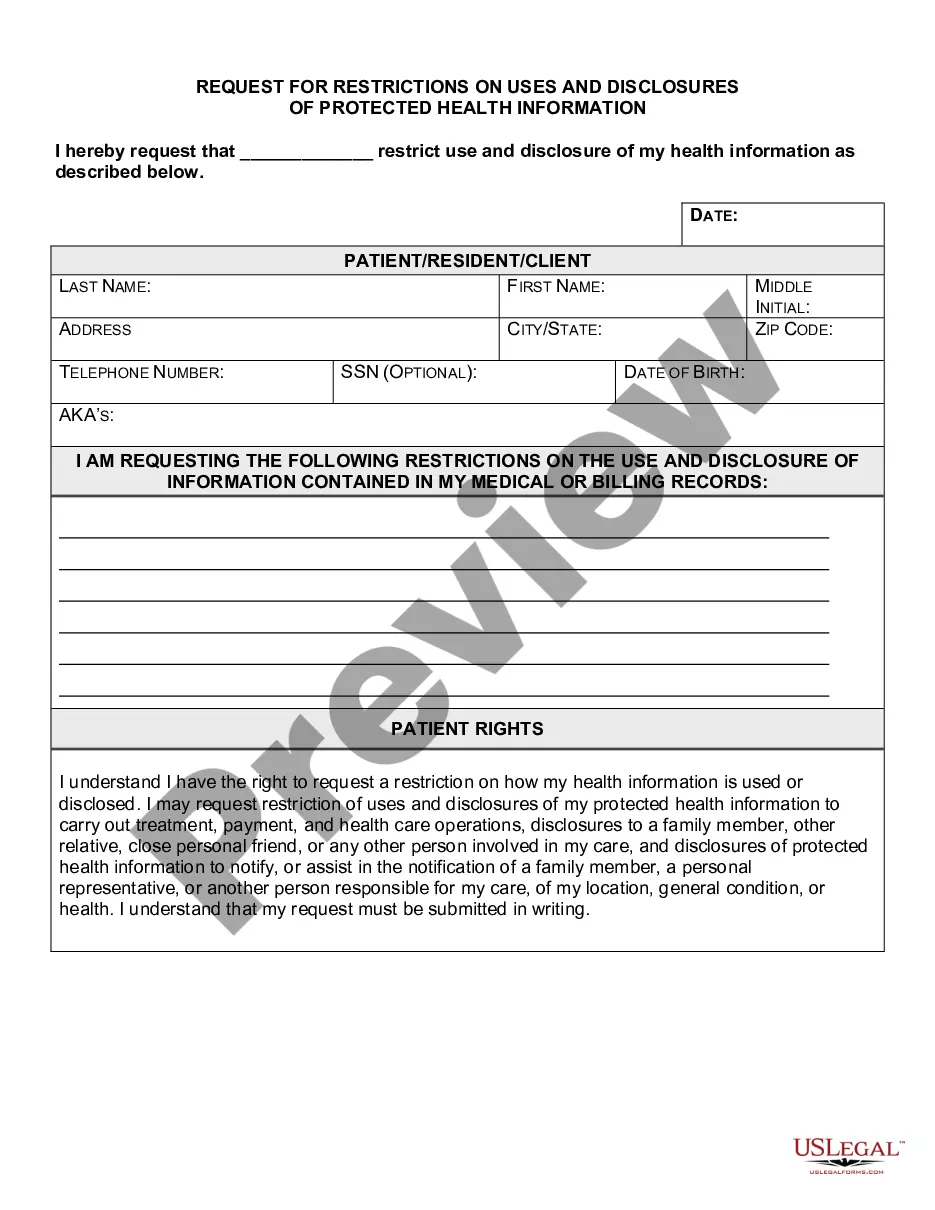
Your authorization allows the Health Plan (your health insurance carrier or HMO) to release your protected health information to a person or organization that you choose.Revoking this authorization will not affect any action taken prior to receipt of your written request.
The law requires that a HIPAA authorization form contain specific core elements to be valid. These elements include: A description of the specific information to be used or disclosed. The name or other specific identification of the person(s), or class of persons, authorized to make the requested use or disclosure.
This authorization or release is commonly called a Medical Authorization Release.We do not recommend that you sign anything, especially the Medical Authorization Release, from the insurance company until after you speak with an experienced and knowledgeable personal injury attorney.
Authorized Disclosure means the disclosure of Protected Information strictly in accordance with the Confidentiality Control Procedures applicable thereto: (i) as to all Protected Information, only to a Related Party that has a need to know such Protected Information strictly for Project Purposes and that has agreed in
It is important to emphasize the difference between a use and a disclosure of PHI. In general, the use of PHI means communicating that information within the covered entity.Disclosure - The release, transfer, access to, or divulging of information in any other manner outside the entity holding the information.
No, you should not sign the HIPAA authorization for the release of your medical records. Often, the insurance company will act as though they cannot begin to decide how much money to offer you until they have all of your medical records.
One fact sheet addresses Permitted Uses and Disclosures for Health Care Operations, and clarifies that an entity covered by HIPAA (covered entity), such as a physician or hospital, can disclose identifiable health information (referred to in HIPAA as protected health information or PHI) to another covered entity (or
An authorization is a detailed document that gives covered entities permission to use protected health information for specified purposes, which are generally other than treatment, payment, or health care operations, or to disclose protected health information to a third party specified by the individual.
In general, a covered entity may only use or disclose PHI if either: (1) the HIPAA Privacy Rule specifically permits or requires it; or (2) the individual who is the subject of the information gives authorization in writing. We note that this blog only discusses HIPAA; other federal or state privacy laws may apply.