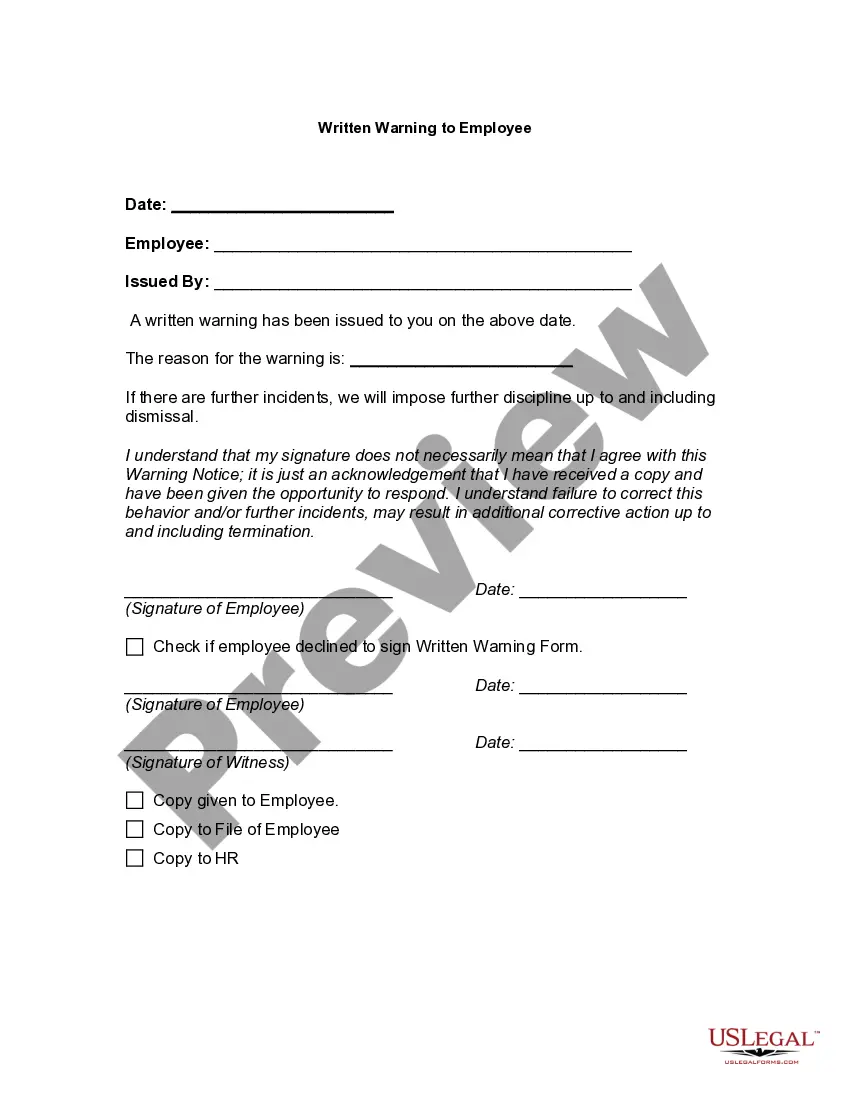
Written Warning to Employee
Understanding this form
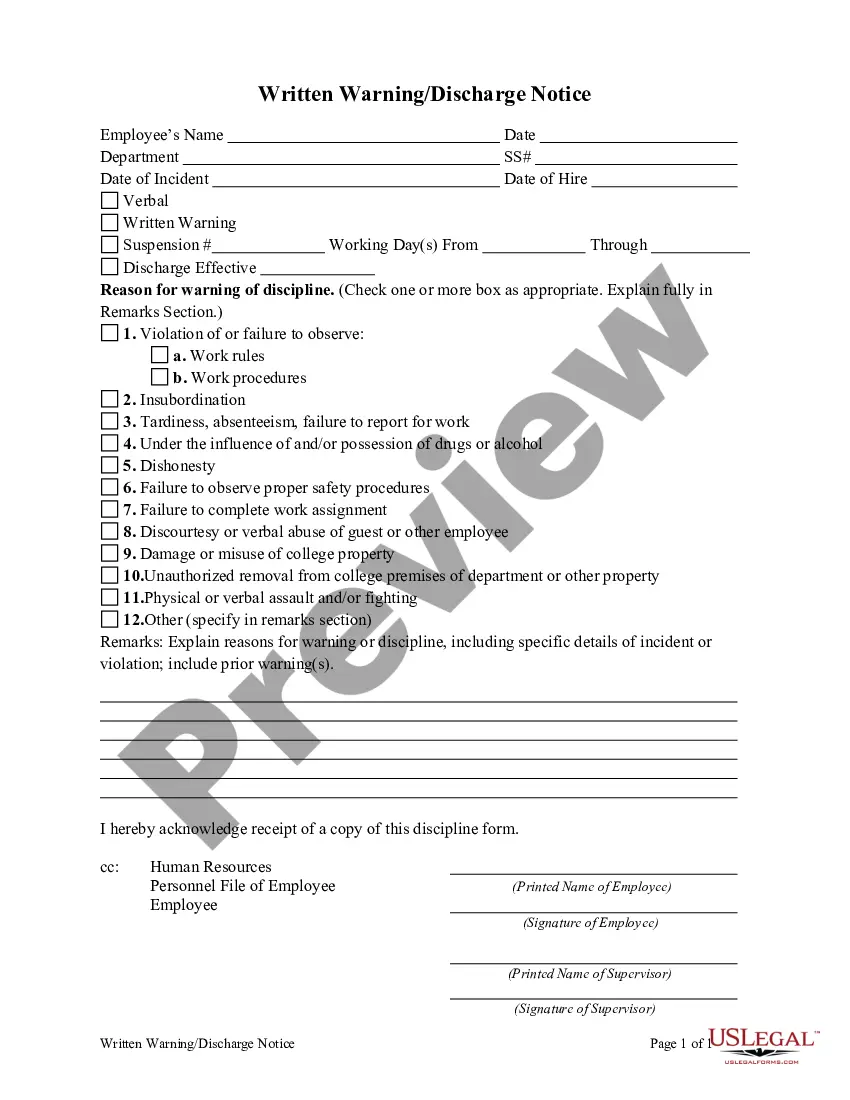
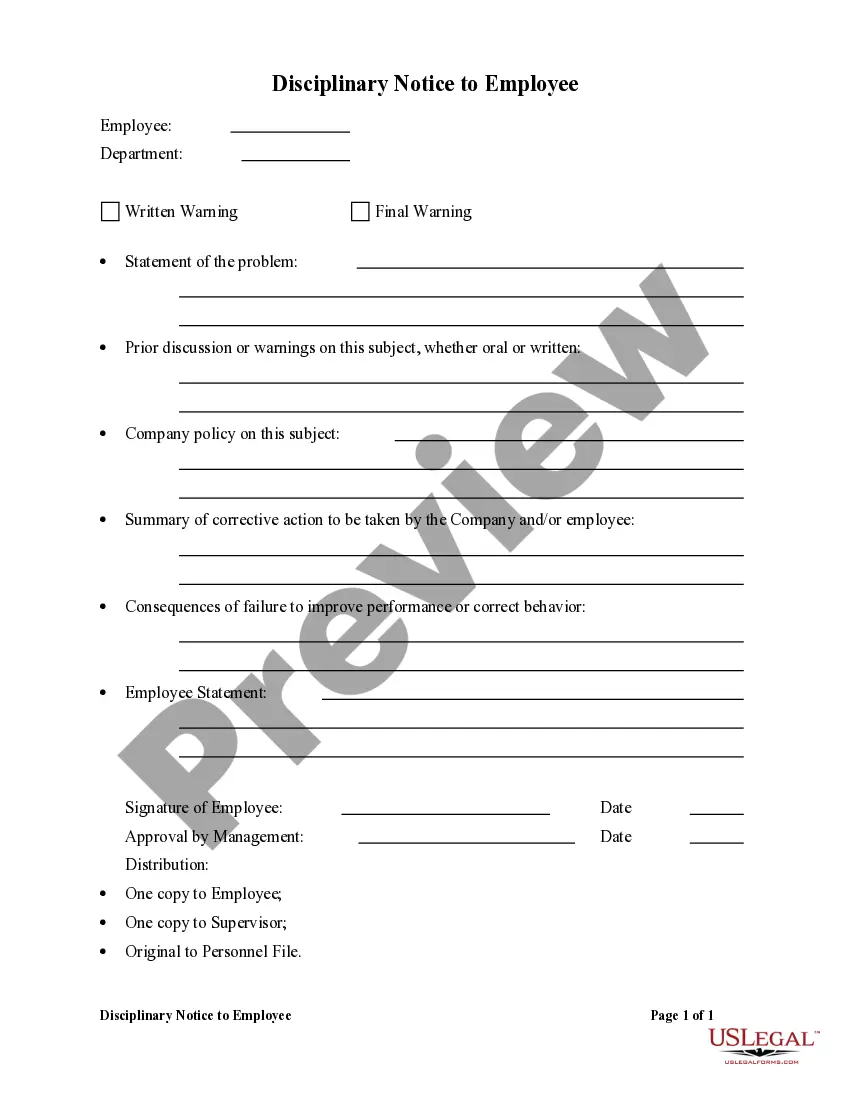
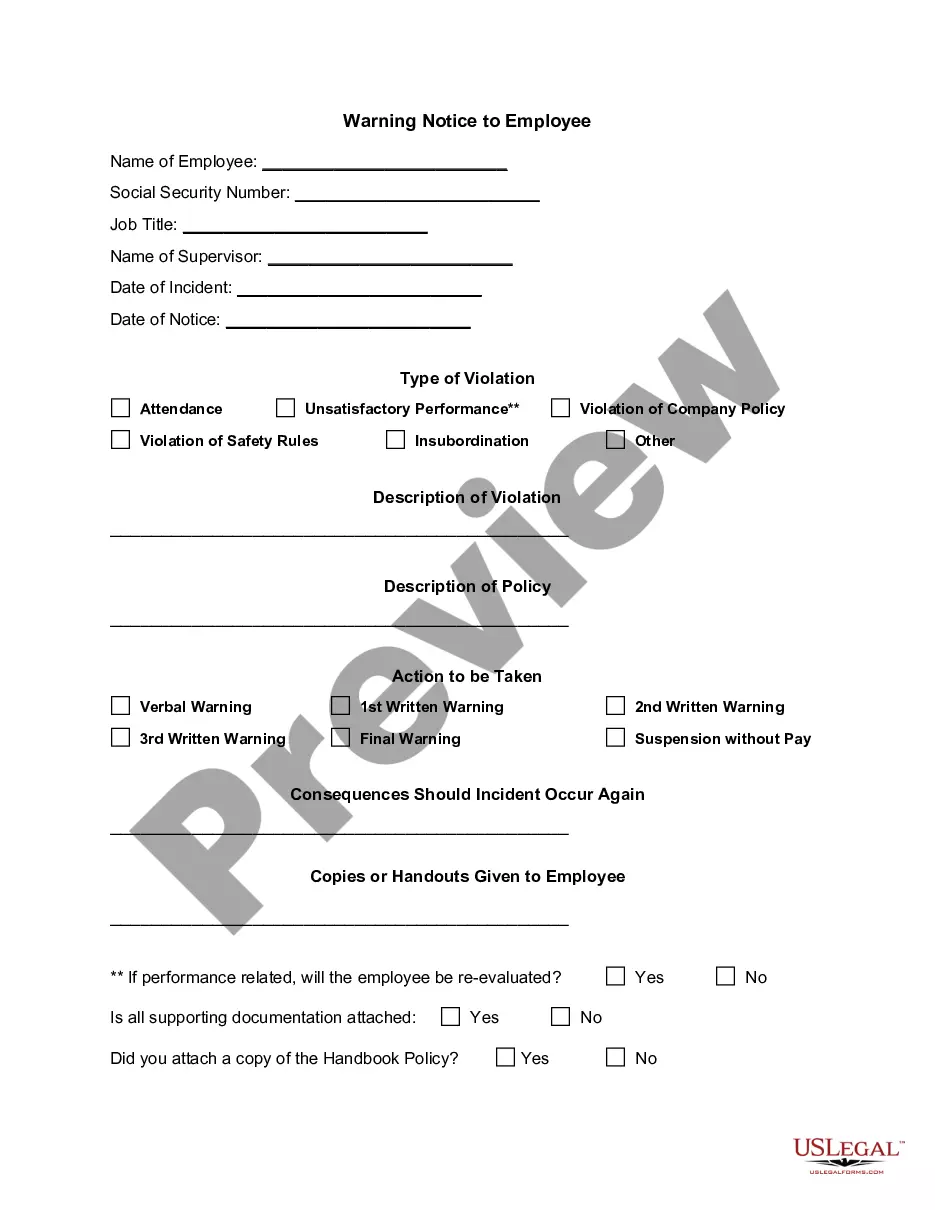
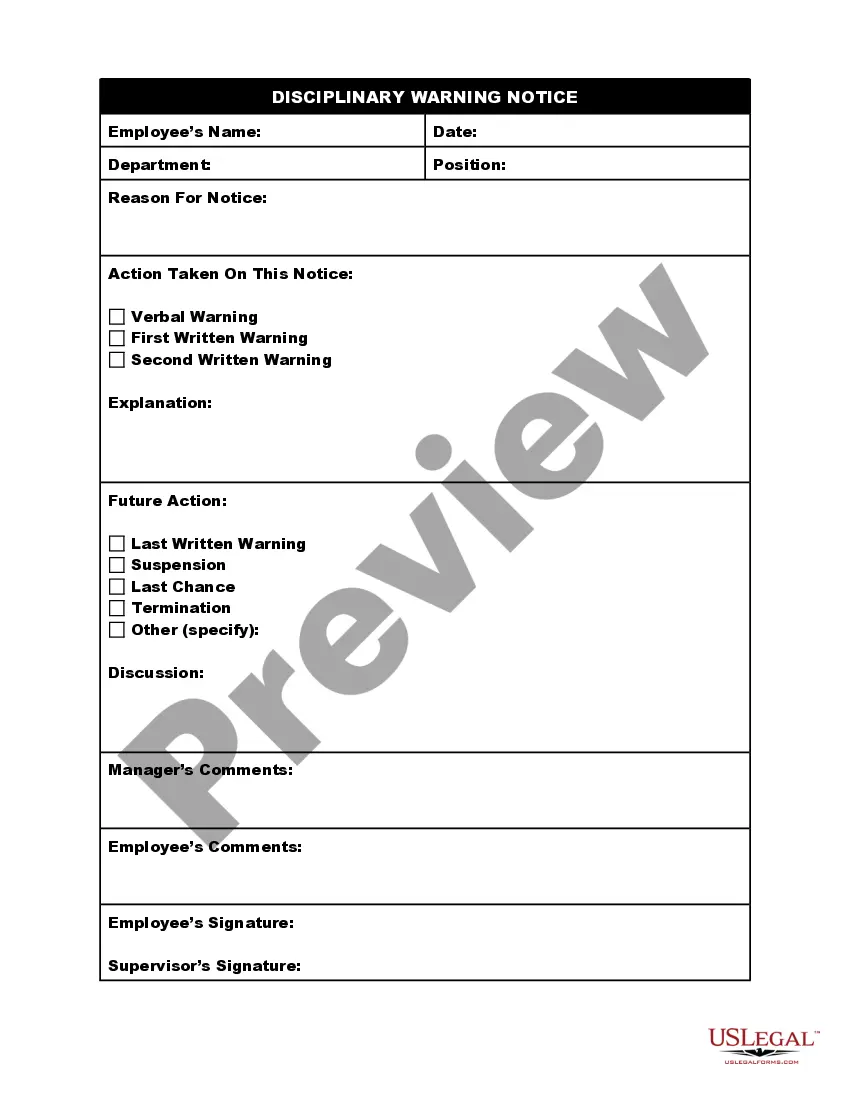
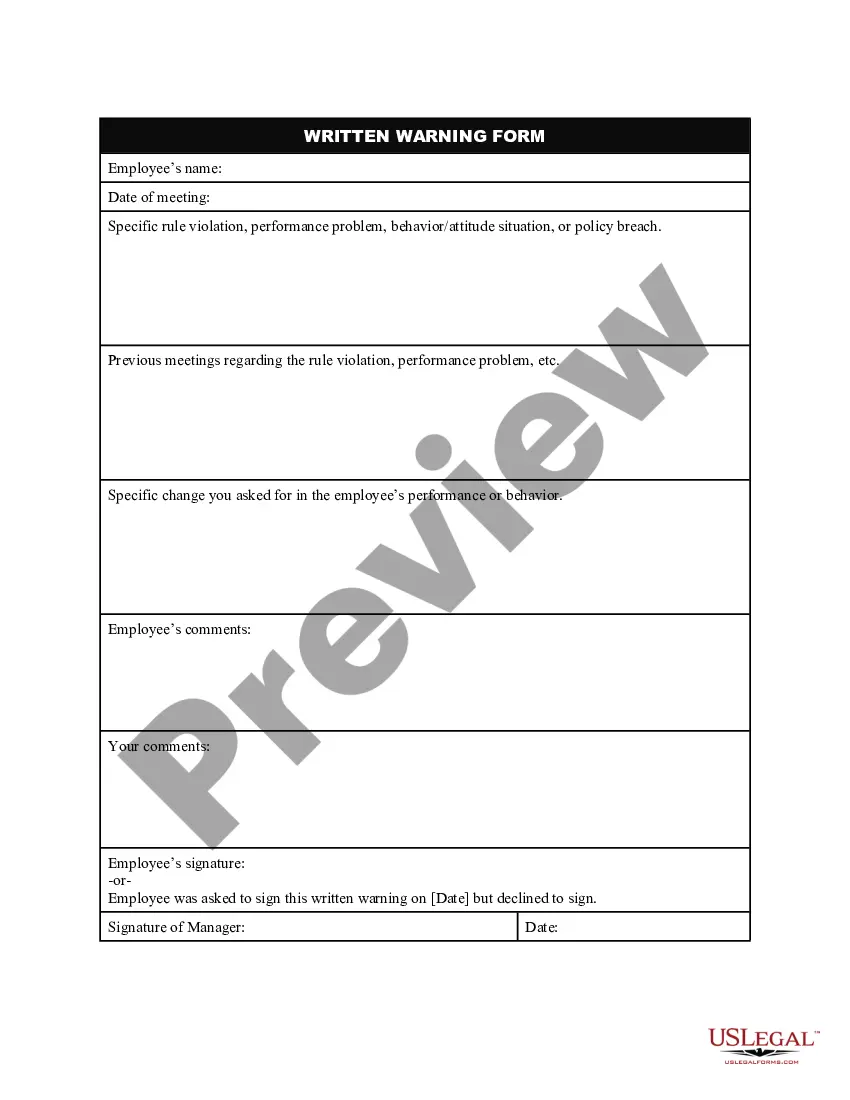
The Written Warning to Employee is a legal document issued by an employer to formally address an employee's misconduct or performance issues. This form serves as an official notice outlining the specific reasons for the warning and the consequences of continued infractions. Unlike informal reprimands, a written warning is documented and can be used in future disciplinary actions or performance evaluations, ensuring a clear record of the issues presented.
Form components explained
- Date of issuance
- Name of the employee receiving the warning
- Name of the person issuing the warning
- Reason for the warning
- Employee's acknowledgment of receipt and opportunity to respond
- Signature lines for the employee and a witness
When to use this document
This form should be used when an employee has exhibited behavior or performance issues that require formal documentation. Common scenarios include repeated tardiness, failing to meet performance expectations, unprofessional conduct, or violation of company policies. Utilizing a written warning helps ensure that the employee is aware of the issues and the potential for further consequences if the behavior does not improve.
Who this form is for
- HR professionals managing employee conduct
- Supervisors and managers who need to document employee performance issues
- Business owners looking to maintain compliance in their disciplinary processes
How to complete this form
- Fill in the date of issuance at the top of the form.
- Write the full name of the employee receiving the warning.
- Enter the name of the person issuing the warning.
- Clearly specify the reason for the warning in the designated area.
- Have the employee sign and date the form to acknowledge receipt.
- Complete signature lines for any witnesses to the warning process.
Notarization requirements for this form
This form does not typically require notarization unless specified by local law. It is primarily an internal document meant to address employee conduct and does not need a notary for validity.
Get your form ready online
Our built-in tools help you complete, sign, share, and store your documents in one place.
Make edits, fill in missing information, and update formatting in US Legal Forms—just like you would in MS Word.
Download a copy, print it, send it by email, or mail it via USPS—whatever works best for your next step.
Sign and collect signatures with our SignNow integration. Send to multiple recipients, set reminders, and more. Go Premium to unlock E-Sign.
If this form requires notarization, complete it online through a secure video call—no need to meet a notary in person or wait for an appointment.
We protect your documents and personal data by following strict security and privacy standards.

Make edits, fill in missing information, and update formatting in US Legal Forms—just like you would in MS Word.

Download a copy, print it, send it by email, or mail it via USPS—whatever works best for your next step.

Sign and collect signatures with our SignNow integration. Send to multiple recipients, set reminders, and more. Go Premium to unlock E-Sign.

If this form requires notarization, complete it online through a secure video call—no need to meet a notary in person or wait for an appointment.

We protect your documents and personal data by following strict security and privacy standards.
Typical mistakes to avoid
- Failing to provide clear and specific reasons for the warning.
- Not documenting the warning in the employee's file.
- Skipping the signature process, which can lead to disputes.
Why use this form online
- Convenient access and immediate download from any location.
- Editability to customize the form for different situations easily.
- Reliable templates drafted by licensed attorneys, ensuring legal compliance.
Looking for another form?


Form popularity
FAQ
Document verbal warnings first. Track all verbal warnings and disciplinary measures in writing at the time they are given. Determine tone. Determine your reasons for writing the warning. Consult with manager. Formalities. State company policy. Describe what happened. State expectations. Outline consequences.
Your employer is allowed to give any type of warning that they think is appropriate. For example, in a case of theft or violence they might decide to go straight to a final warning - or even dismissal.This might happen if your employer has treated a simple telling off as an official verbal warning.
Whether it's a counseling, warning, written reprimand, or suspension, anything before you're terminated is something you should sign.
In cases of serious misconduct or poor performance, the employer does not have to give a first written warning and can instead go straight to a final written warning. For example, where the employee's actions have, or could, cause serious harm to the business.
An employee can appeal against a final return warning and the employer can hold an enquiry if the employer believes that it is only through hearing evidence that the outcome can be determined. Written warnings will remain valid for 3 to 6 months. Final written warnings will remain valid for 12 months.
Appeal Unfair Warning Letter If an informal resolution is not reached, you may wish to consider submitting a rebuttal letter as part of a formal appeal or grievance process. The impact of an unfair warning letter can be far-reaching.
If the warning is fair, do not discard or ignore it. Seek an immediate explanation from your employer if you do not understand the warning. You are entitled to seek your employer's support in addressing their concerns about your job performance.
New evidence has come to light that should be investigated; the sanction imposed was too severe or disproportionate to the misconduct; the sanction was inconsistent with one imposed for similar misconduct committed by another employee; there was unfairness or bias among the original decision-makers; or.
Employees have to sign disciplinary documents. While it is a good policy to have some system that proves the employee was presented with the write-up, it is not required that the employee sign the document. Many times the employee will refuse to sign such documents because they do not agree with them.