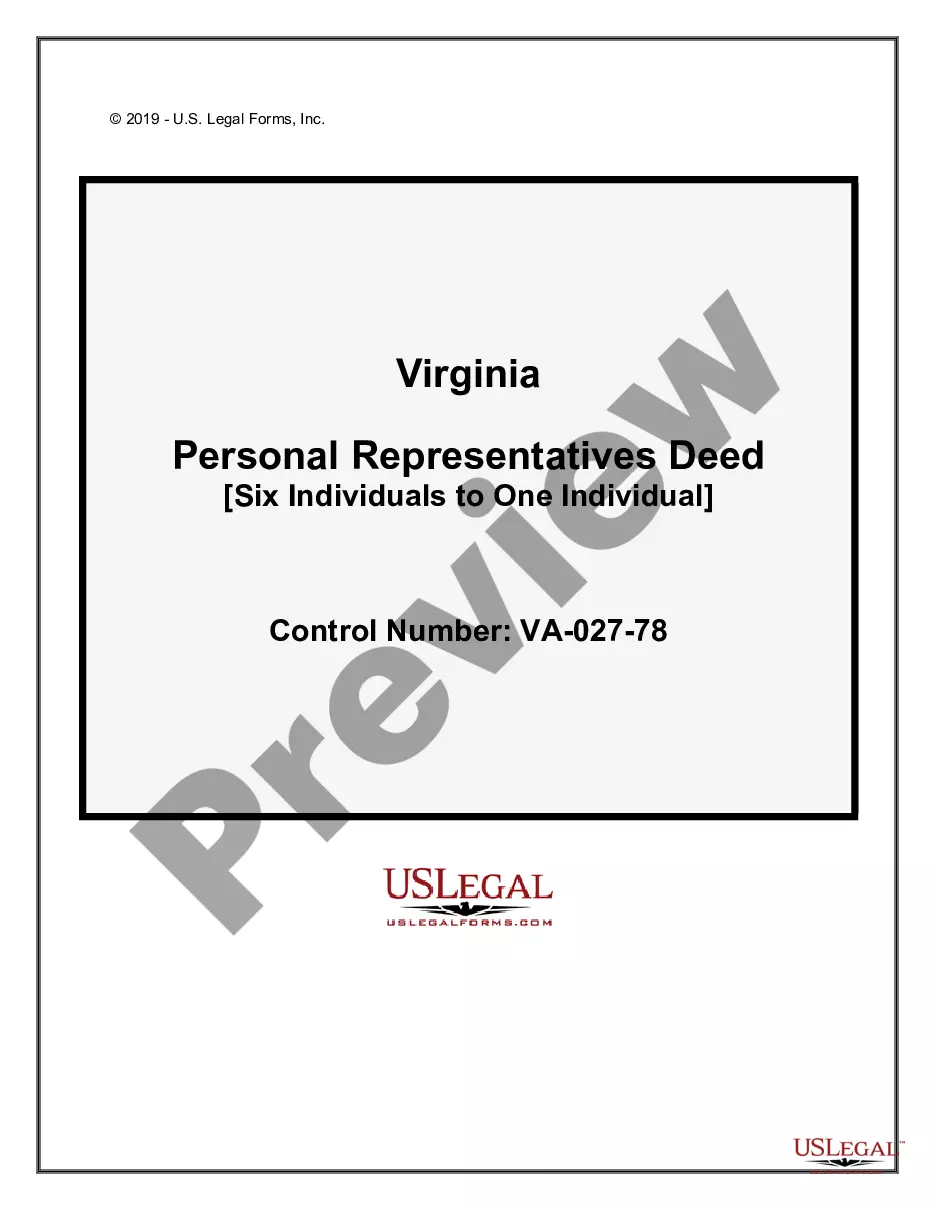
Written Warning/Discharge Notice
What is this form?
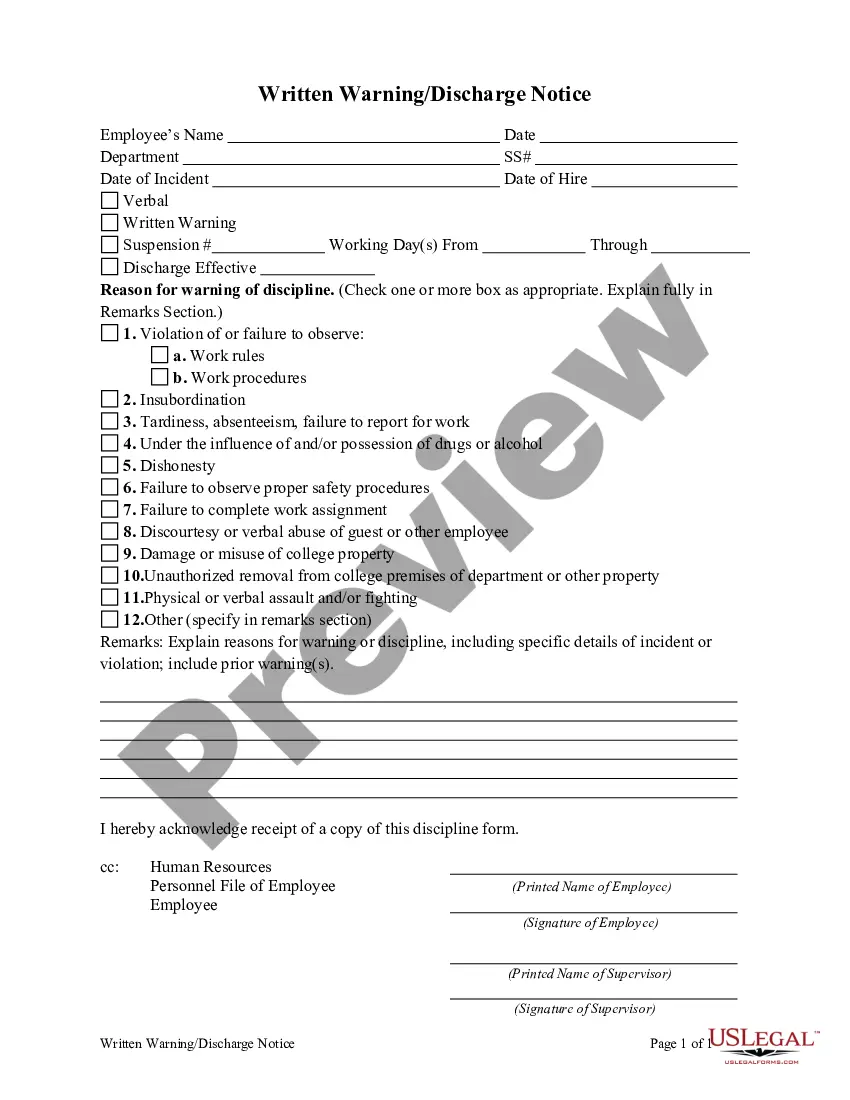
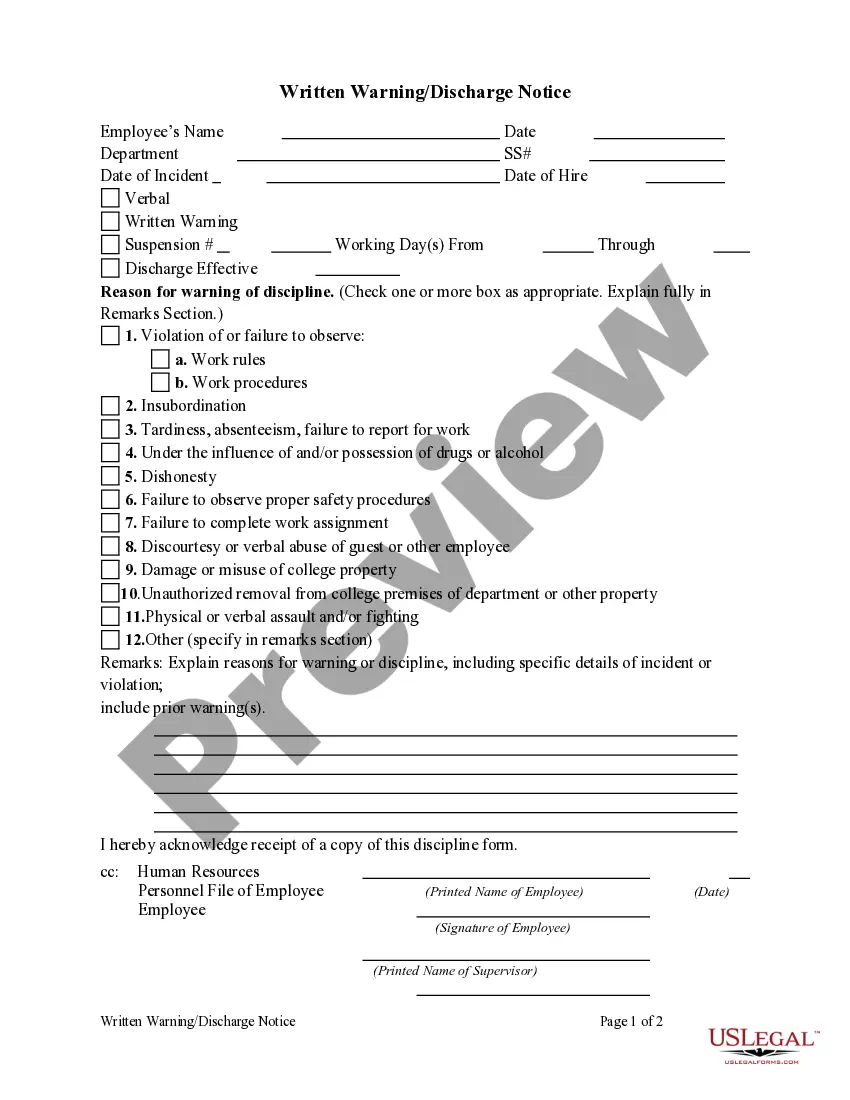
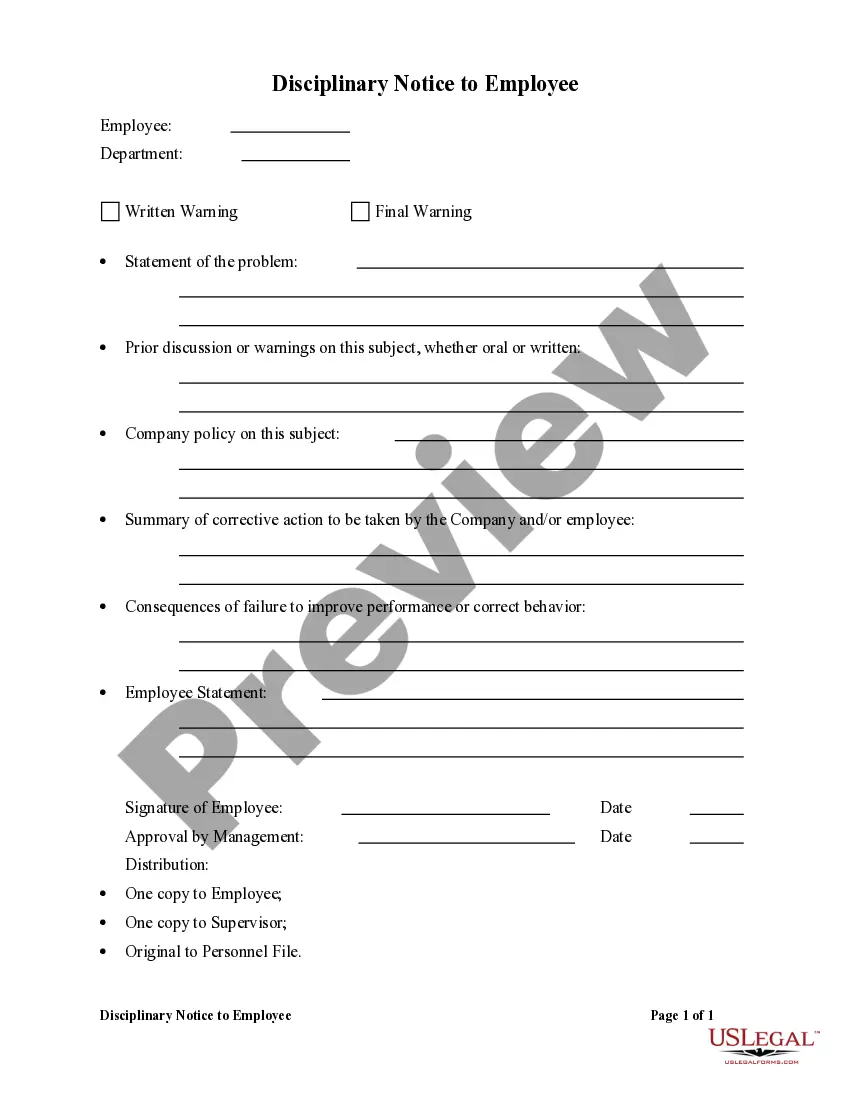
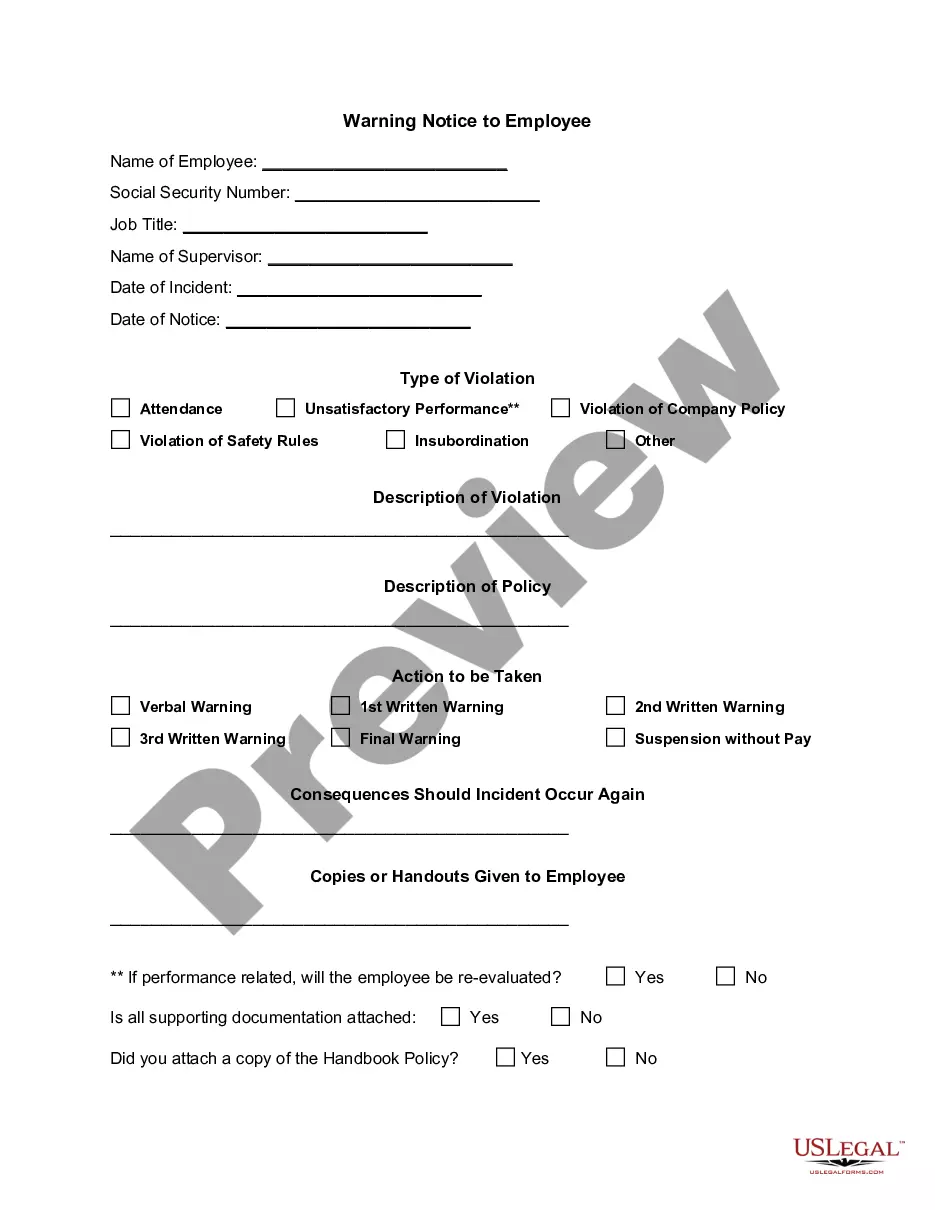
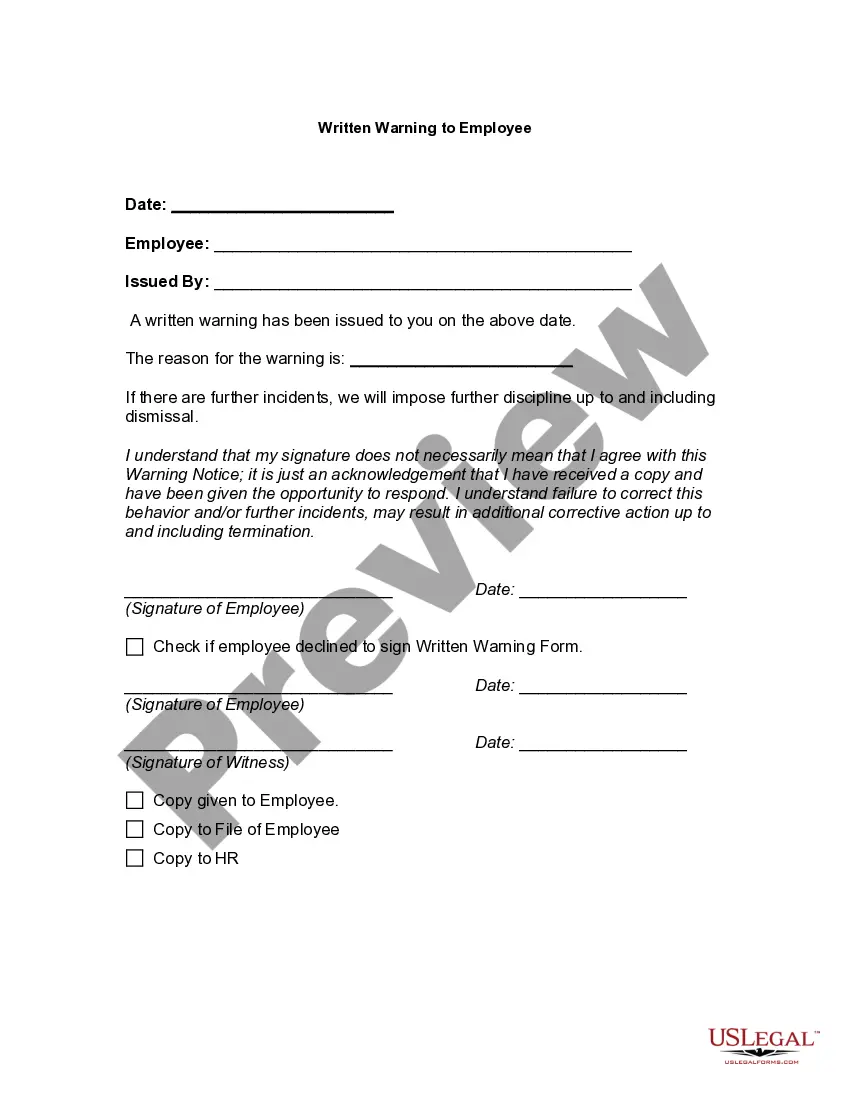
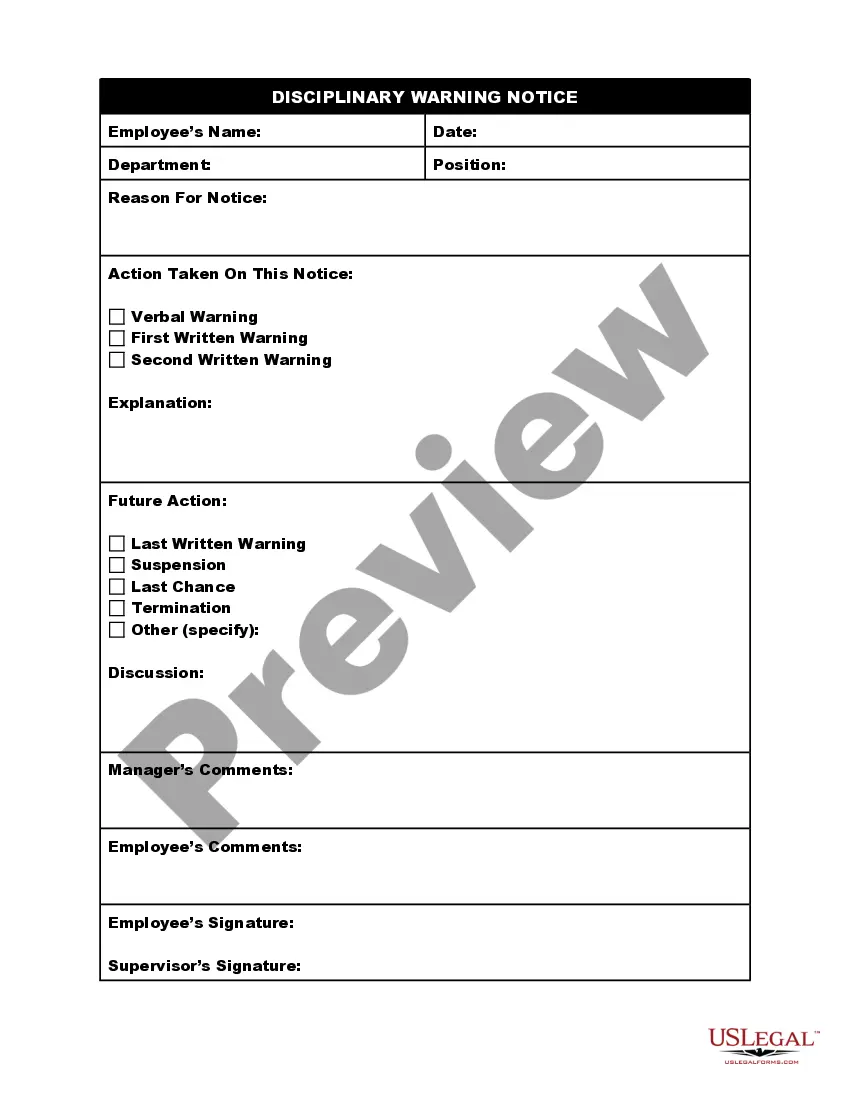
The Written Warning/Discharge Notice is a formal document used to communicate that an employee's performance has not met organizational standards. Unlike an informal verbal warning, this written notice provides detailed accounts of the violations, such as specific incidents, dates, and names involved. Its purpose is to clearly outline the issues, the expected improvements, and the potential consequences if the problems persist, making it an essential tool for effective employee management.
Main sections of this form
- Details of the performance issues, including specific violations
- Dates and examples of infractions
- Consequences for failing to improve
- Signature lines for both the employer and employee
- Space for additional remarks or clarifications
Situations where this form applies
This form should be used when an employee's behavior or performance is unsatisfactory and requires formal documentation. Common scenarios include consistent tardiness, insubordination, safety violations, or dishonesty. By issuing a written warning, employers can clearly communicate their concerns and establish a record of issues that may lead to further disciplinary actions if not addressed.
Who needs this form
- Human resources professionals
- Managers overseeing employee performance
- Small business owners
- Any supervisor needing to document employee conduct issues
Steps to complete this form
- Identify the employee receiving the warning by entering their name and position.
- State the specific violations or issues regarding their performance.
- Provide details such as dates, examples, and any witnesses to the incidents.
- Explain the expected improvements and the consequences of not addressing these issues.
- Both the employer and employee should sign the document to acknowledge receipt.
Notarization guidance
Notarization is generally not required for this form. However, certain states or situations might demand it. You can complete notarization online through US Legal Forms, powered by Notarize, using a verified video call available anytime.
Get your form ready online
Our built-in tools help you complete, sign, share, and store your documents in one place.
Make edits, fill in missing information, and update formatting in US Legal Forms—just like you would in MS Word.
Download a copy, print it, send it by email, or mail it via USPS—whatever works best for your next step.
Sign and collect signatures with our SignNow integration. Send to multiple recipients, set reminders, and more. Go Premium to unlock E-Sign.
If this form requires notarization, complete it online through a secure video call—no need to meet a notary in person or wait for an appointment.
We protect your documents and personal data by following strict security and privacy standards.

Make edits, fill in missing information, and update formatting in US Legal Forms—just like you would in MS Word.

Download a copy, print it, send it by email, or mail it via USPS—whatever works best for your next step.

Sign and collect signatures with our SignNow integration. Send to multiple recipients, set reminders, and more. Go Premium to unlock E-Sign.

If this form requires notarization, complete it online through a secure video call—no need to meet a notary in person or wait for an appointment.

We protect your documents and personal data by following strict security and privacy standards.
Common mistakes
- Failing to provide specific examples of the performance issues.
- Not including dates or details which can support the claims.
- Neglecting to inform the employee about the potential consequences.
- Not keeping a signed copy for the employee's personnel file.
Benefits of completing this form online
- Easy access to download and fill out at your convenience.
- Editable templates that allow customization to fit specific situations.
- Ensures compliance with legal standards by using professionally drafted forms.
Legal use & context
- Establishes a formal record of employee performance issues.
- Provides legal protection for employers in cases of wrongful termination.
- Demonstrates an employer's attempts to address issues prior to disciplinary action.
Key takeaways
- The Written Warning/Discharge Notice is a vital tool for managing employee performance.
- Specificity and clarity are crucial for effective documentation.
- This form helps protect both the employer and employee during disciplinary procedures.
Looking for another form?
Form popularity
FAQ
Step 1: Identify and consider the problem. Clearly identify the performance or conduct issue. Step 2: Meet with the employee. Generally, meeting with the employee is important for: Step 3: Create your letter of warning. Step 4: Provide the employee with the letter of warning.
Identify the Concern. Begin by looking carefully at your employee warning letter. Gather Supporting Evidence. Refer to your records for evidence that disputes the concern outlined in the employee warning letter. Submit Compelling Documentation.
The date of the warning; the name of the employee; the name and position of the person issuing the discipline; the level/type of discipline (e.g., written warning or written warning with three-day suspension);
The non-statutory Acas guide: discipline and grievances at work, which accompanies the code, states that warnings should normally be live only for a set period, for example six months for a first written warning and 12 months for a final written warning.
What the misconduct or performance issue is. the changes needed, with a timescale. what could happen if the changes are not made. what could happen if there is further misconduct or no improvement to performance. how long the warning will stay in place.
When writing an email to respond to your boss's warning simply use; Dear Sir/Ma or Sir/Ma. Avoid mentioning his name or position. That is, do not say Dear Mr Pekins or Dear Branch Manager. It is important you show the utmost respect for him.
Identify the problem. Meet with the employee and clarify the issue. Create your warning letter and include all the performance issues you've considered. Give the employee the warning notice and make sure you receive a signature to confirm receipt.
When writing the warning you should endeavour to be as specific as possible. Specify the issue in detail, including dates, people involved, and the nature of the offence. Also, include details of what will happen if the employee's behaviour doesn't alter their behaviour.
In cases of serious misconduct or poor performance, the employer does not have to give a first written warning and can instead go straight to a final written warning. For example, where the employee's actions have, or could, cause serious harm to the business.