Disciplinary Warning Notice
What this document covers
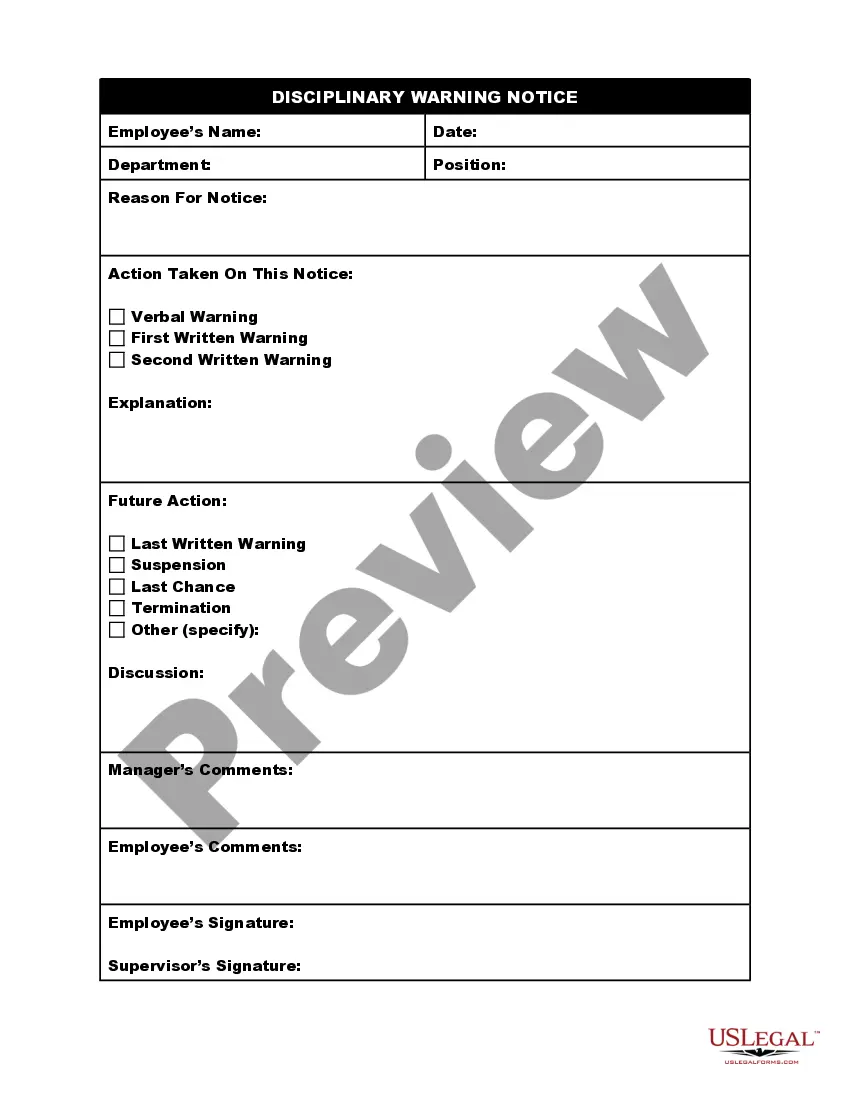
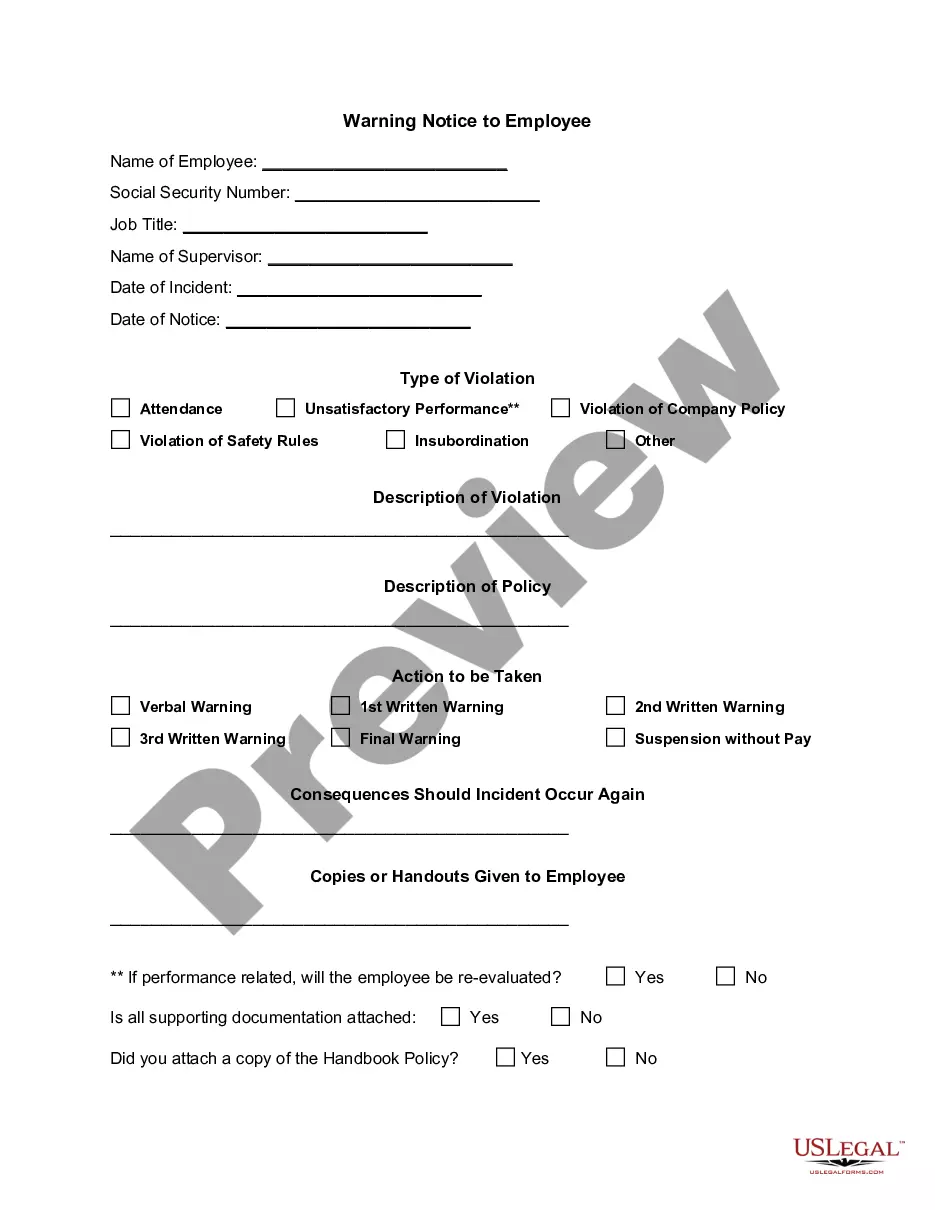
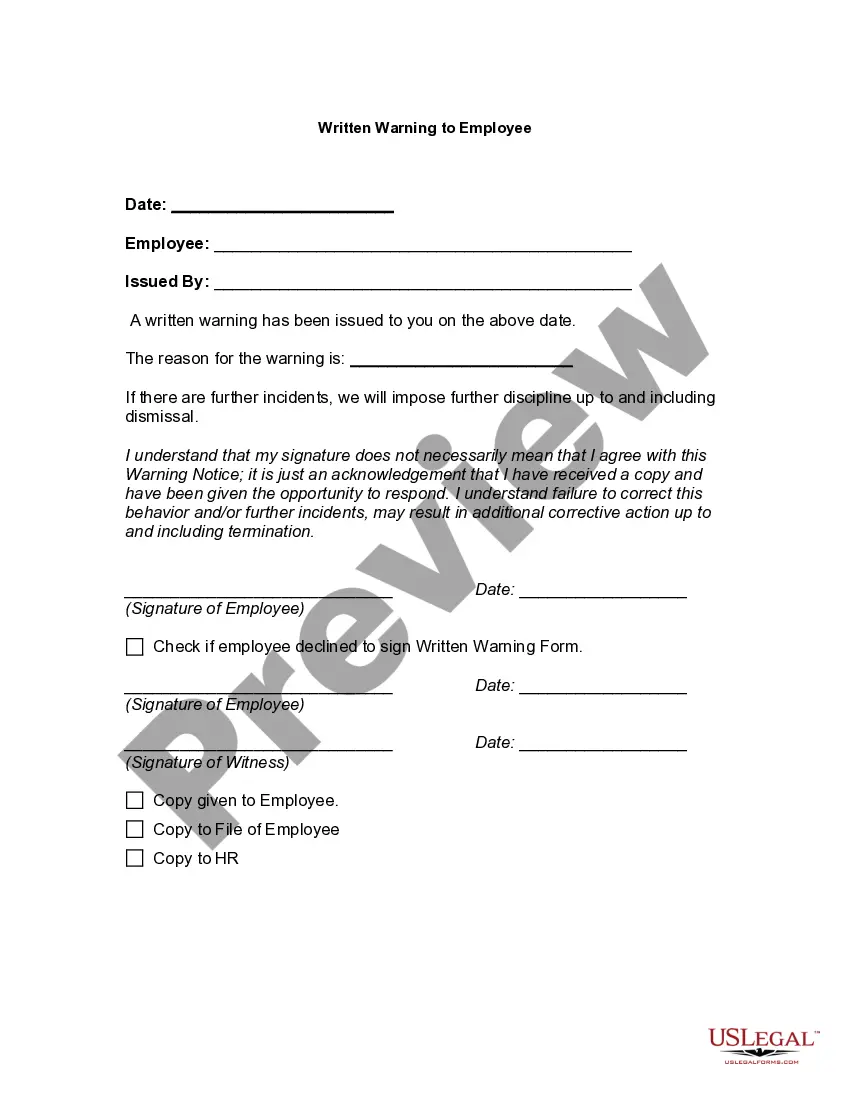
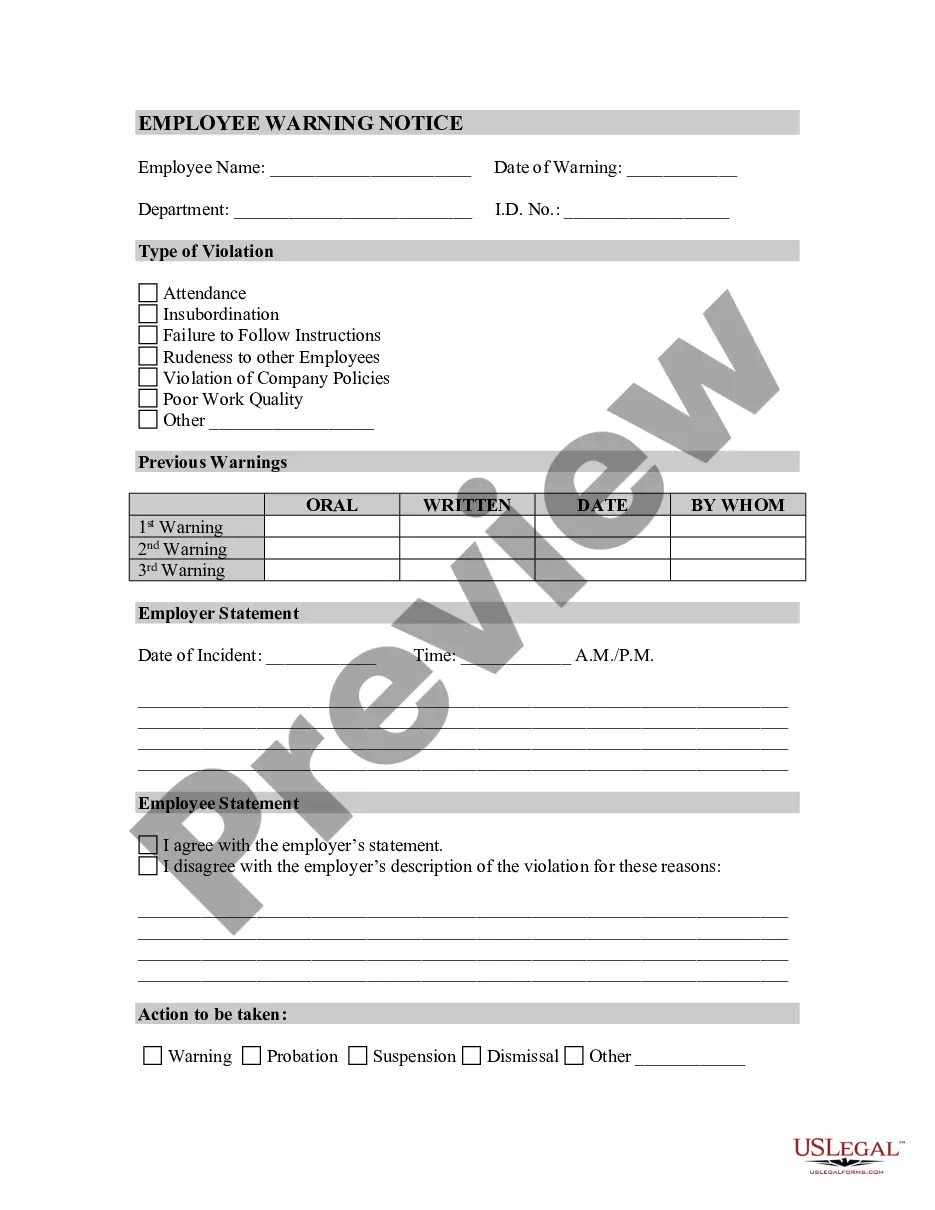
The Disciplinary Warning Notice is an official document used by employers to communicate disciplinary actions taken against an employee. This form serves to clearly outline the nature of the infraction and the consequences for the employee, which can include further action if behavior does not improve. Unlike informal comments or verbal warnings, this formal notice is documented to maintain a clear record of the disciplinary process.
Main sections of this form
- Employee Information: Captures the name, position, and department of the employee receiving the notice.
- Date of Notice: Indicates when the notice is issued.
- Reason for Notice: Provides a detailed explanation of the behavior or action that prompted the warning.
- Action Taken: Lists the steps taken in response to the employee's behavior, such as verbal or written warnings.
- Future Action: Specifies potential future disciplinary actions if the behavior continues.
- Signatures: Includes spaces for signatures of management and the employee, acknowledging receipt of the notice.
When to use this document
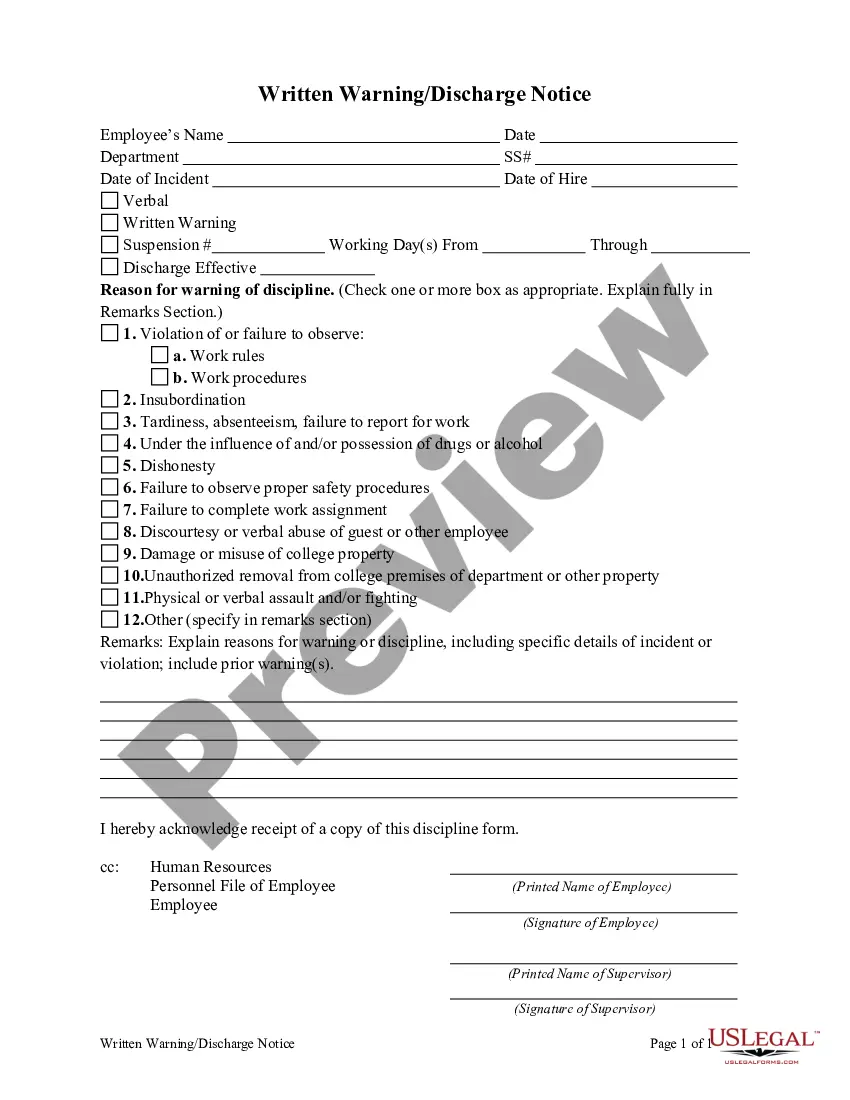
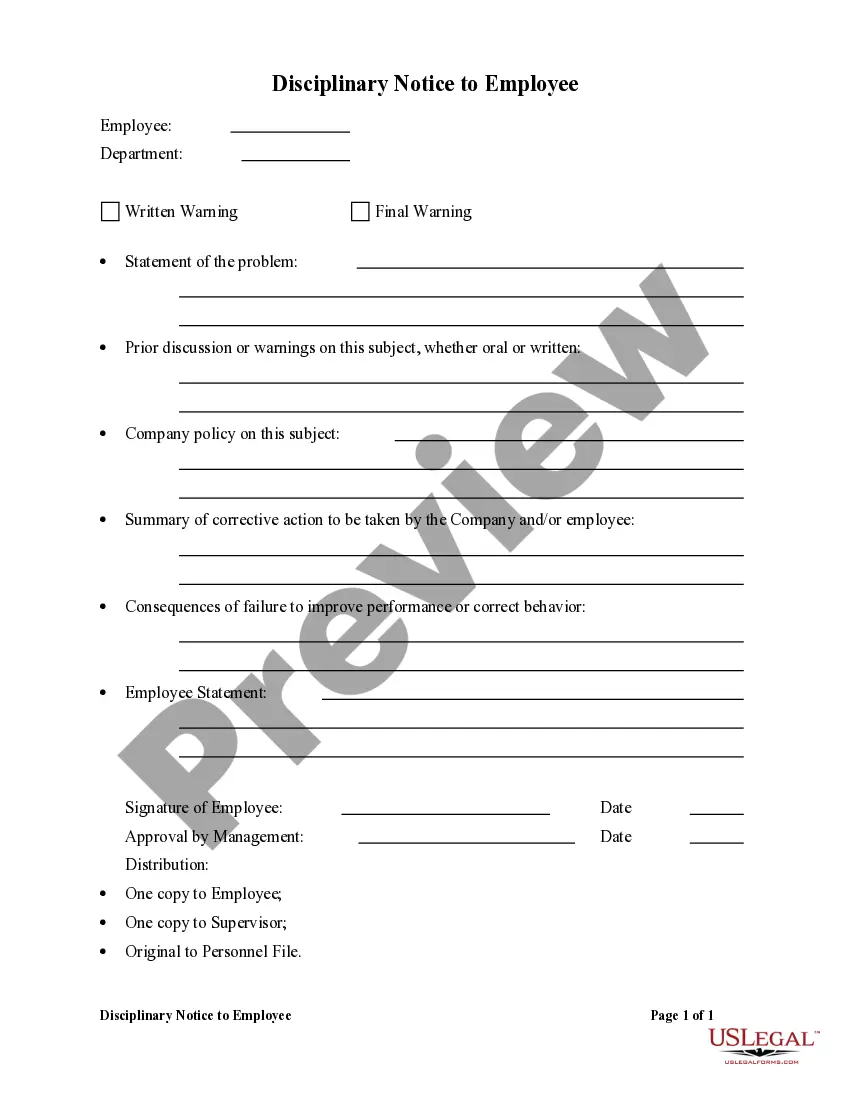
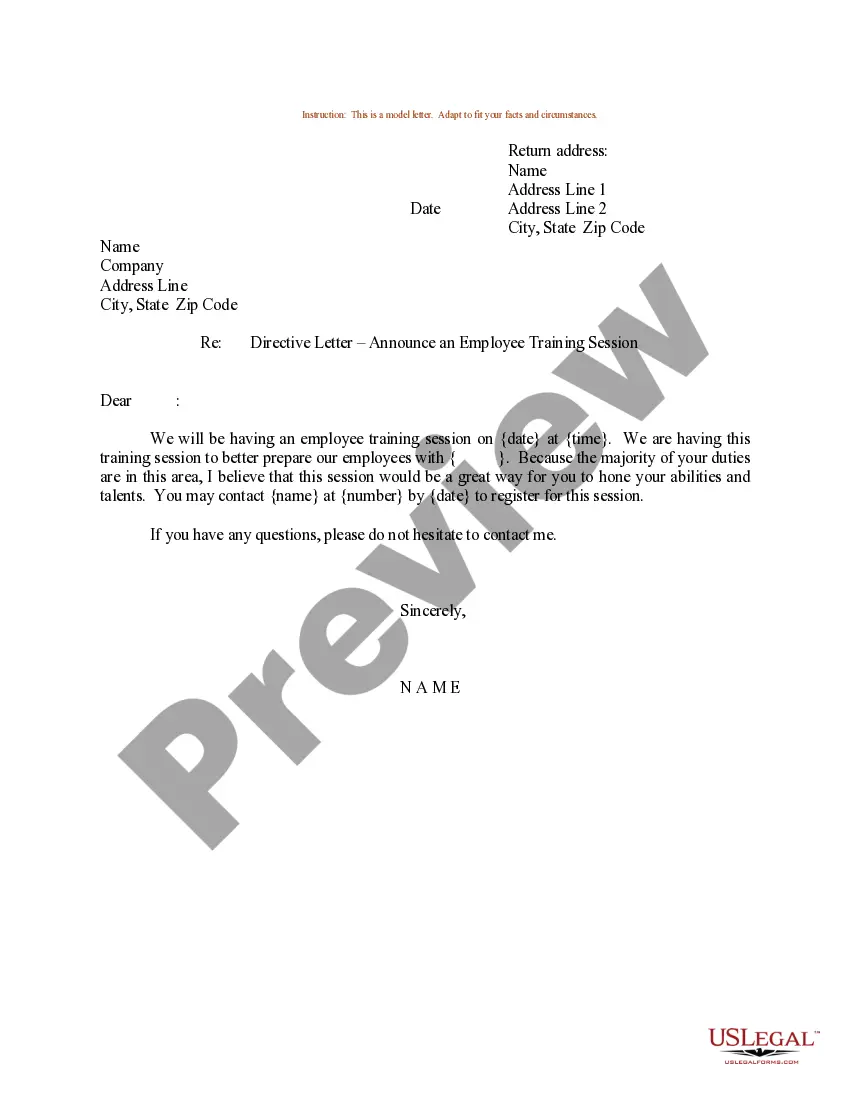
This form should be used when an employee's conduct violates company policies or performance expectations. Common scenarios for issuing a disciplinary warning may include repeated tardiness, failure to meet job responsibilities, or inappropriate workplace behavior. It serves as a formal means to address issues before escalating to further disciplinary measures.
Who should use this form
- Employers and managers who oversee staff performance.
- Human resources personnel responsible for employee relations.
- Business owners managing a team and ensuring compliance with workplace policies.
How to prepare this document
- Identify the employee by entering their name, position, and department at the top of the form.
- Date the notice to indicate when it is issued.
- Clearly state the reason for the disciplinary action in the designated section.
- Select the action that has been taken, such as a verbal or written warning, by checking the appropriate box.
- Detail any future actions that may be taken if the behavior does not improve.
- Both the manager and the employee should sign the form to acknowledge receipt and understanding of the notice.
Does this form need to be notarized?
Notarization is generally not required for this form. However, certain states or situations might demand it. You can complete notarization online through US Legal Forms, powered by Notarize, using a verified video call available anytime.
Get your form ready online
Our built-in tools help you complete, sign, share, and store your documents in one place.
Make edits, fill in missing information, and update formatting in US Legal Forms—just like you would in MS Word.
Download a copy, print it, send it by email, or mail it via USPS—whatever works best for your next step.
Sign and collect signatures with our SignNow integration. Send to multiple recipients, set reminders, and more. Go Premium to unlock E-Sign.
If this form requires notarization, complete it online through a secure video call—no need to meet a notary in person or wait for an appointment.
We protect your documents and personal data by following strict security and privacy standards.

Make edits, fill in missing information, and update formatting in US Legal Forms—just like you would in MS Word.

Download a copy, print it, send it by email, or mail it via USPS—whatever works best for your next step.

Sign and collect signatures with our SignNow integration. Send to multiple recipients, set reminders, and more. Go Premium to unlock E-Sign.

If this form requires notarization, complete it online through a secure video call—no need to meet a notary in person or wait for an appointment.

We protect your documents and personal data by following strict security and privacy standards.
Mistakes to watch out for
- Failing to provide a clear reason for the disciplinary action.
- Not documenting the incident properly prior to completing the notice.
- Neglecting to have both parties sign the notice, which can lead to disputes later.
Benefits of completing this form online
- Convenience of accessing and filling out the form from any device.
- Editability allows for quick updates and modifications as needed.
- Reliability ensures compliance with legal standards and formalizes the disciplinary process.
Looking for another form?
Form popularity
FAQ
The employee's name and the date of the write-up. Clearly state why they are being written up. How many times this employee has been written up. Clearly state details about the problem. Give the employee a deadline to fix the problem. Always have them sign and date the write-up.
Date: Include the official date of the letter a few lines below the recipient's address. Subject line: The subject of your letter should be clear and to the point. For example, it should say something like 'Warning Letter for Employee Name', followed by the reason for the reprimand.
Document verbal warnings first. Track all verbal warnings and disciplinary measures in writing at the time they are given. Determine tone. Consult with manager. Formalities. State company policy. Describe what happened. State expectations. Outline consequences.
Employee warning notices are used to address and confirm an employee's performance or inappropriate conduct at work. A company usually issues an employee warning form after a meeting with him/her to discuss the issue.
The non-statutory Acas guide: discipline and grievances at work, which accompanies the code, states that warnings should normally be live only for a set period, for example six months for a first written warning and 12 months for a final written warning.