Florida Personal Representative's Deed of Distribution
About this form
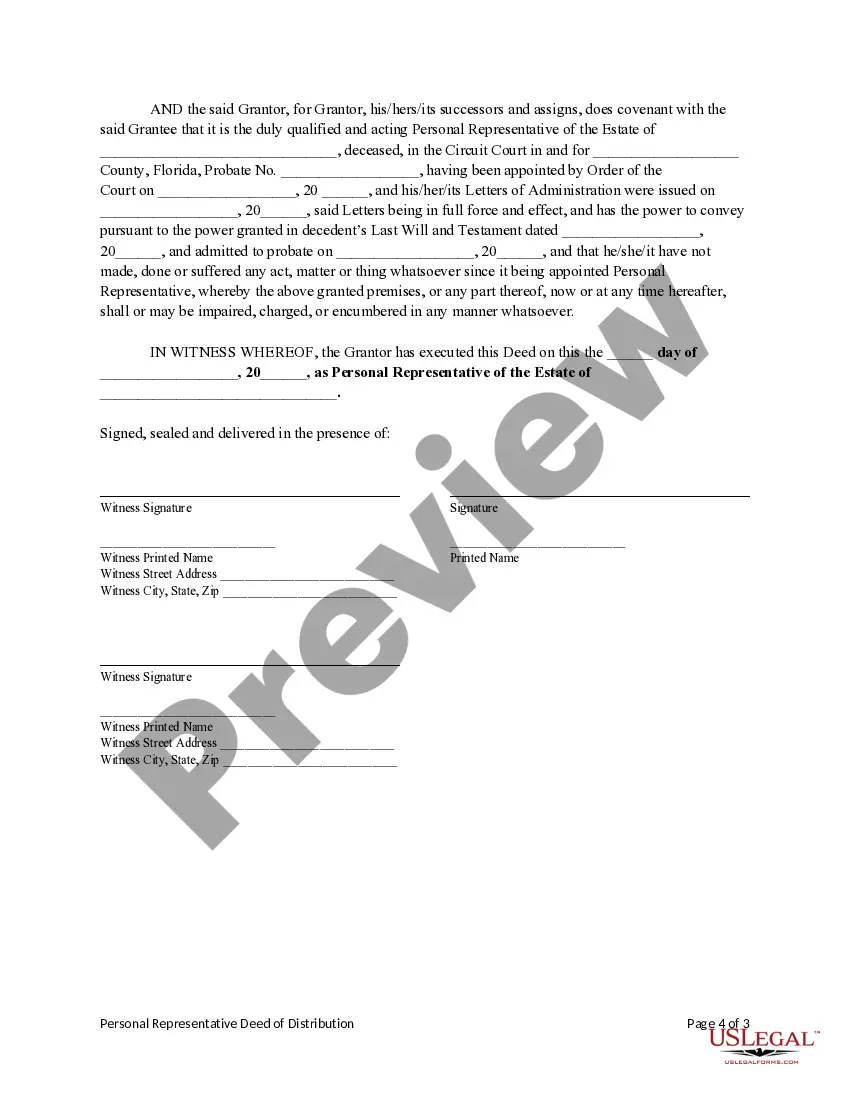
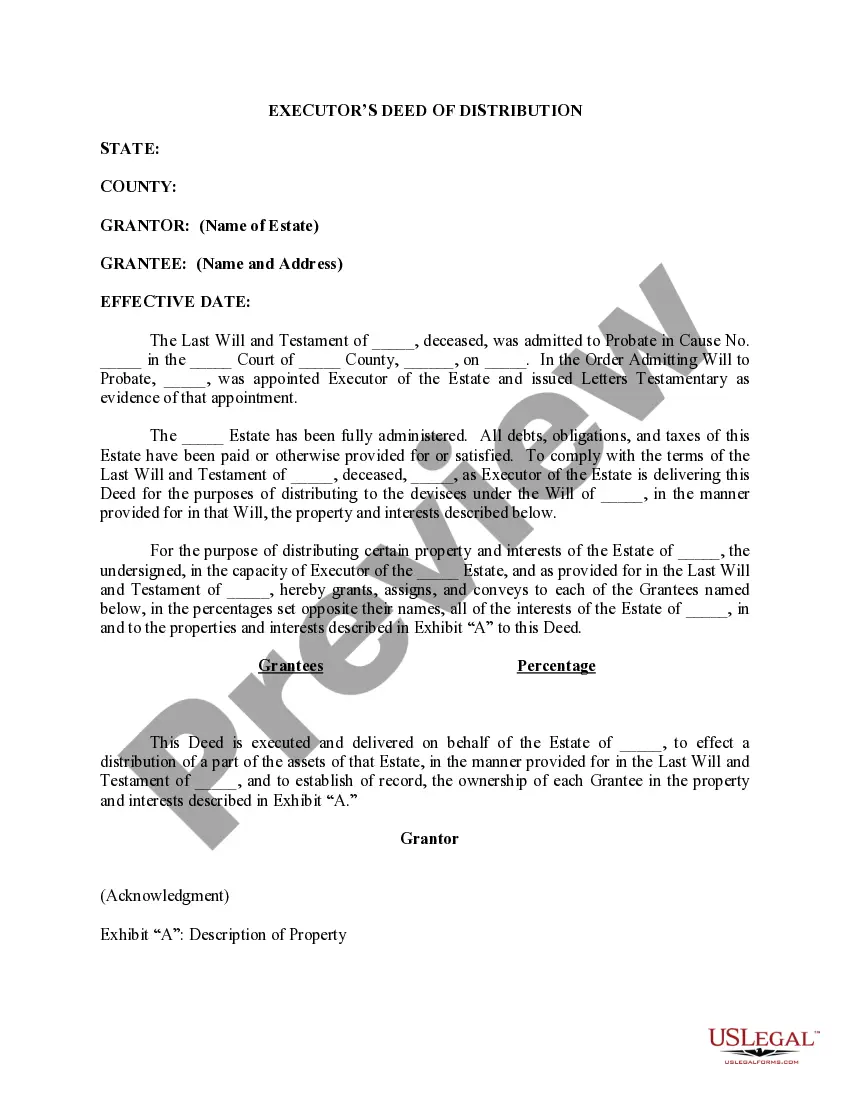
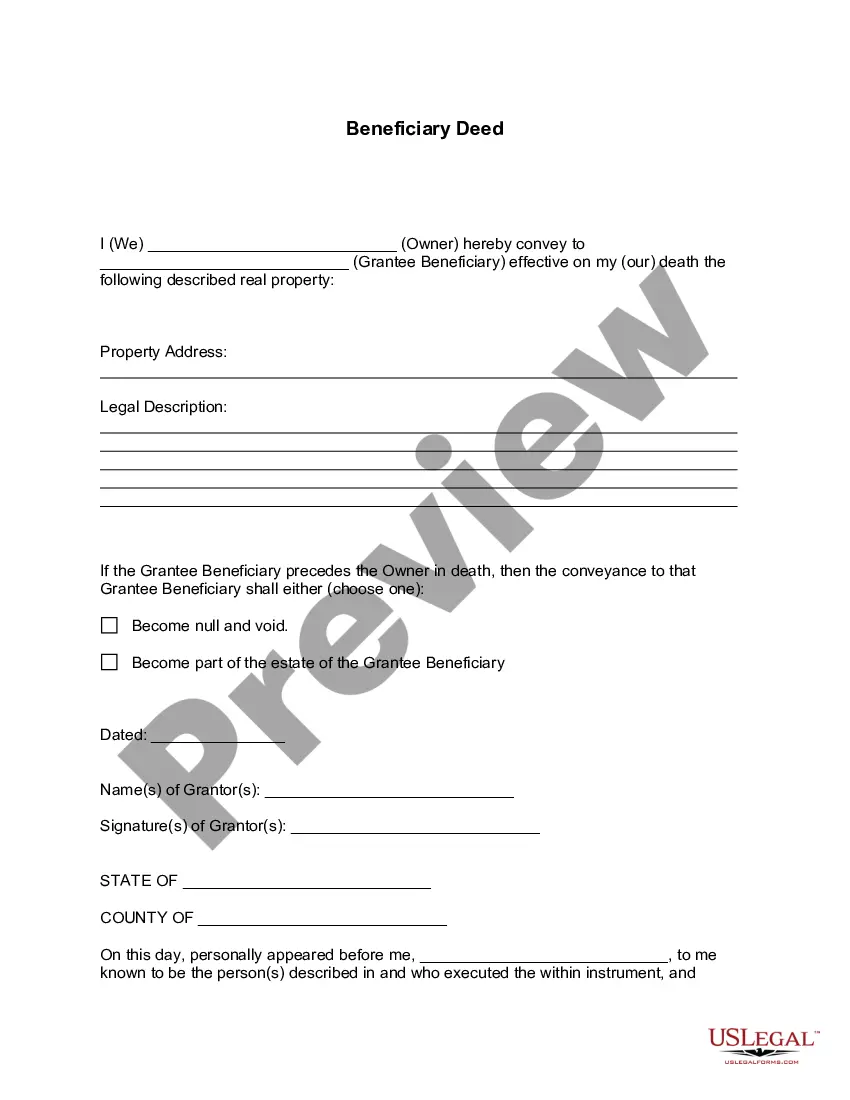
The Personal Representative's Deed of Distribution is a legal document used to transfer property from an estate to its beneficiaries. It is executed by the personal representative, who is appointed by the court, confirming that the transfer of property is authorized. This deed ensures that the beneficiary, known as the grantee, receives the property without any encumbrances created by the grantor during their tenure as the personal representative. Unlike other forms of deeds, this specific deed focuses solely on the distribution of property following the death of an individual, ensuring compliance with state laws.
Key parts of this document
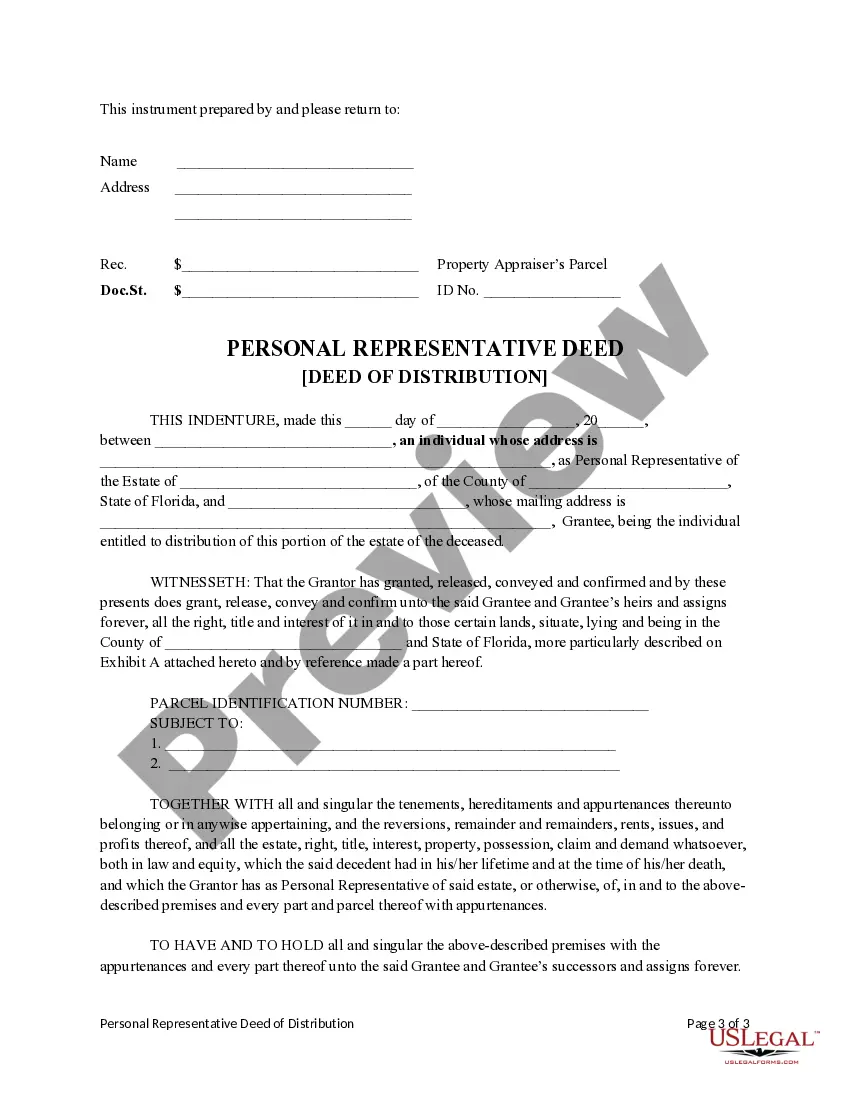
- Identifies the grantor (personal representative) and grantee (beneficiary).
- Describes the property being transferred.
- Confirms that the transfer is authorized by the court.
- Includes covenants regarding the absence of prior encumbrances on the property.
- States the legal effect of the deed upon execution.


When to use this form
This form should be used when a personal representative needs to distribute property from an estate to a beneficiary following the passing of the estate owner. It is typically applicable after the probate process has concluded and the personal representative is ready to transfer the specified assets to rightful heirs or beneficiaries as designated in the deceased's will or according to state laws.
Who this form is for
- Personal representatives appointed by the court to manage an estate.
- Beneficiaries who are entitled to receive property from the estate.
- Individuals involved in the probate process where property distribution is required.
Completing this form step by step
- Identify and enter the names of the grantor (personal representative) and grantee (beneficiary).
- Describe the property being conveyed, including legal descriptions if necessary.
- Affirm that the transfer is authorized by the probate court.
- Include any necessary dates related to the transfer process.
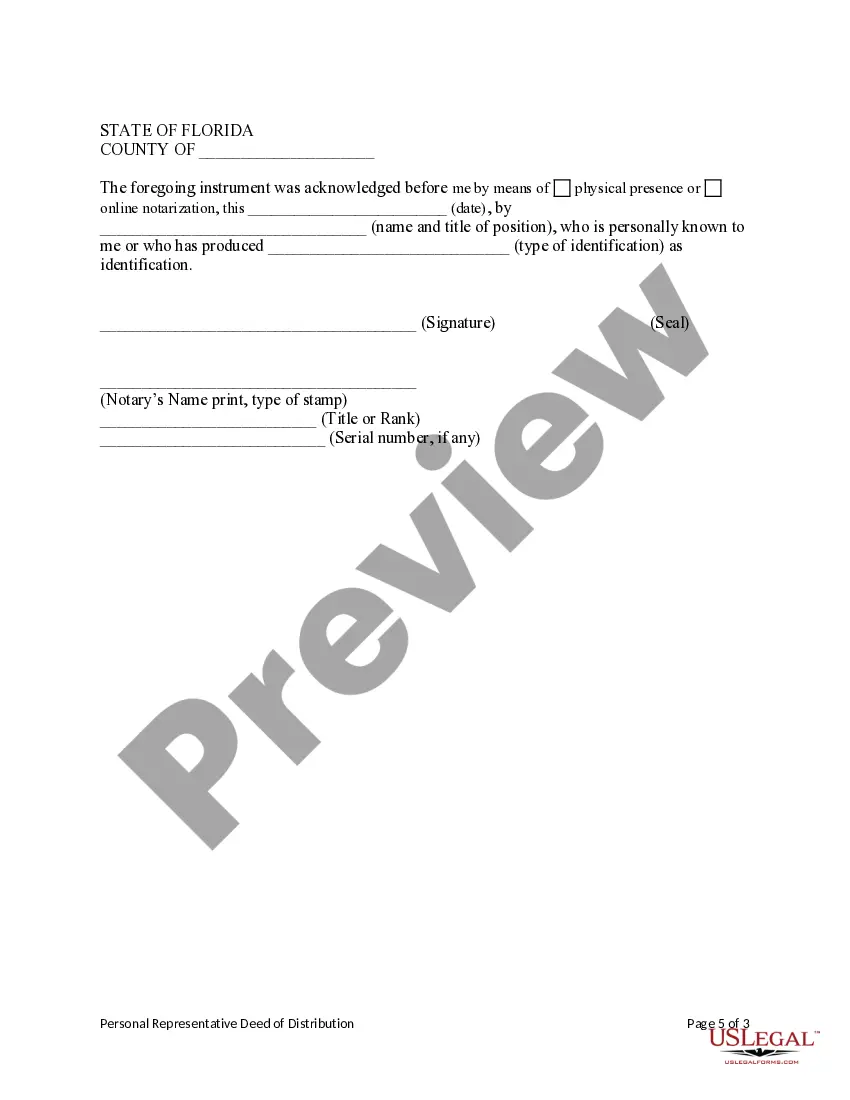
- Sign the deed as required by your state laws, ensuring proper execution.
Notarization requirements for this form
This form does not typically require notarization unless specified by local law. However, it is advisable to check your stateâs requirements to ensure compliance.
Get your form ready online
Our built-in tools help you complete, sign, share, and store your documents in one place.
Make edits, fill in missing information, and update formatting in US Legal Forms—just like you would in MS Word.
Download a copy, print it, send it by email, or mail it via USPS—whatever works best for your next step.
Sign and collect signatures with our SignNow integration. Send to multiple recipients, set reminders, and more. Go Premium to unlock E-Sign.
If this form requires notarization, complete it online through a secure video call—no need to meet a notary in person or wait for an appointment.
We protect your documents and personal data by following strict security and privacy standards.

Make edits, fill in missing information, and update formatting in US Legal Forms—just like you would in MS Word.

Download a copy, print it, send it by email, or mail it via USPS—whatever works best for your next step.

Sign and collect signatures with our SignNow integration. Send to multiple recipients, set reminders, and more. Go Premium to unlock E-Sign.

If this form requires notarization, complete it online through a secure video call—no need to meet a notary in person or wait for an appointment.

We protect your documents and personal data by following strict security and privacy standards.
Avoid these common issues
- Failing to accurately describe the property being transferred.
- Not including the required signatures or dates in the deed.
- Ignoring local legal requirements regarding notarization or witnesses.
- Not confirming the grantorâs authority to transfer the designated property.
Why use this form online
- Convenient access to legal forms that can be completed at your own pace.
- Editable templates that can easily be tailored to your specific situation.
- Reliability in using forms drafted by licensed attorneys to ensure compliance with legal standards.
Looking for another form?


Form popularity
FAQ
A distribution deed is a way to legally transfer real property when the party who is supposed to receive the property cannot be determined from the decedent's will. In most cases, the distribution of a deceased person's estate will be done in accordance with the directions contained in the terms of their will.
Typically, a personal representative does not have authority to sell homestead property in probate. Homestead property, whether devised or not, passes outside the probate estate.However, a decedent can direct the sale of homestead property in his or her will.
Personal representative's distributive deeds are used to transfer ownership of real property from a testate estate.Each situation is unique, however, so contact an attorney with specific questions or for complex cases.
The personal representative, in most cases, has not owned the property and does not have sufficient personal knowledge of the property to enable them to warrant the title to the property. Thus, the personal representative will sign a personal representative's deed which does not contain any warranties.
A personal representative deed and warranty deed are the same only in that they both convey ownership of land. The types of title assurance that the different deeds provide to the new owner are very different.
The personal representative can be an individual or a bank or trust company, subject to certain restrictions. To qualify to serve as a personal representative, an individual must be either a Florida resident or, regardless of residence, a spouse, sibling, parent, child, or other close relative of the decedent.