Contract for Right of Way Services
Overview of this form
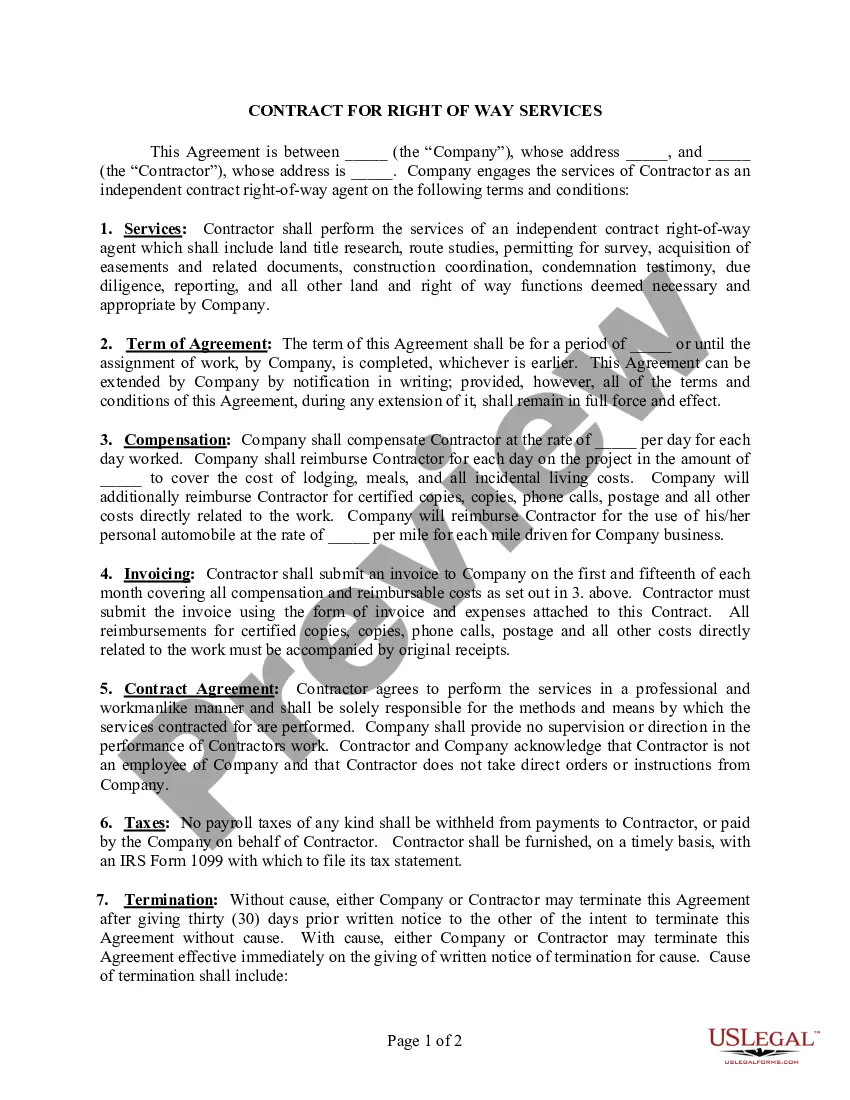
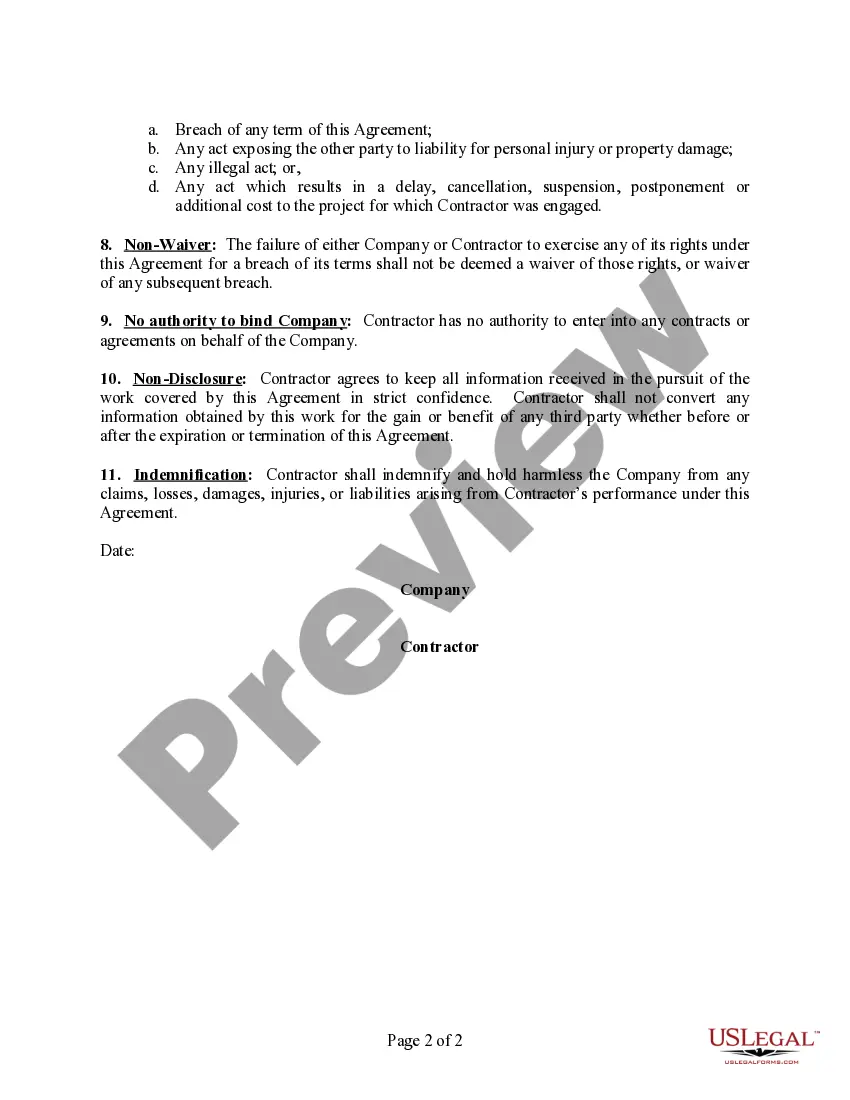
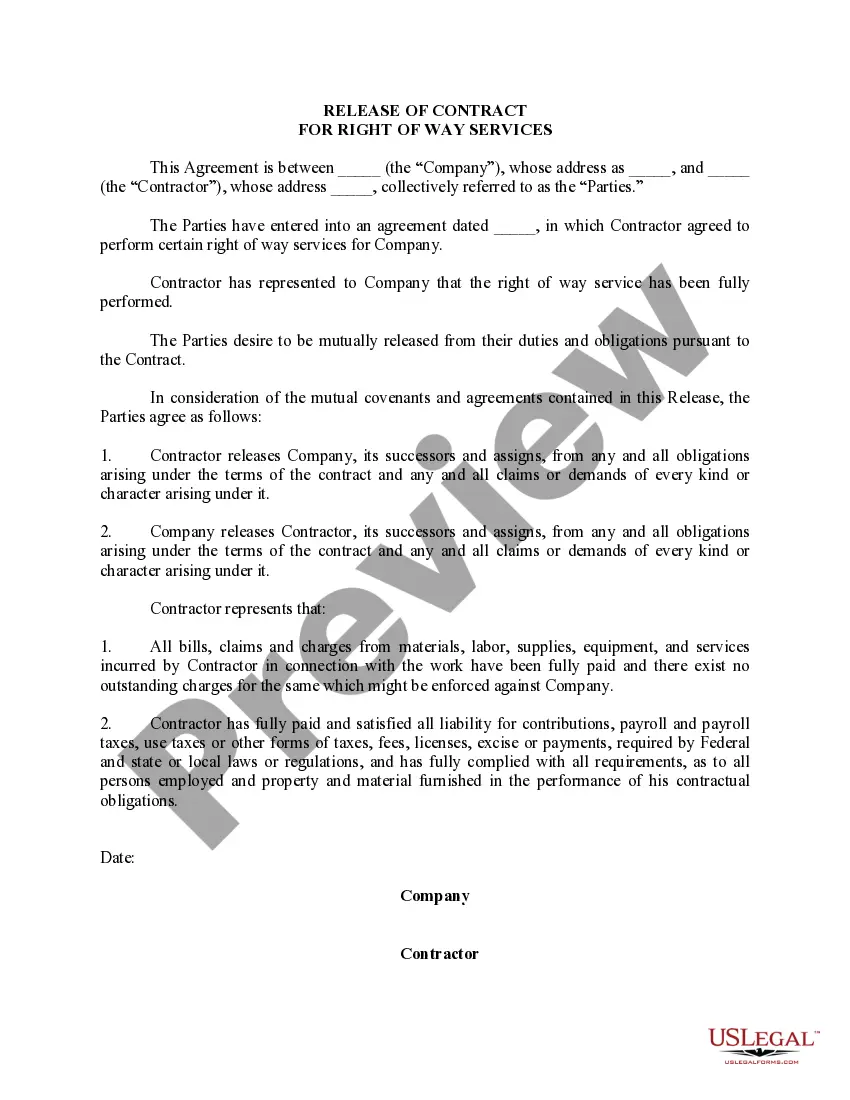
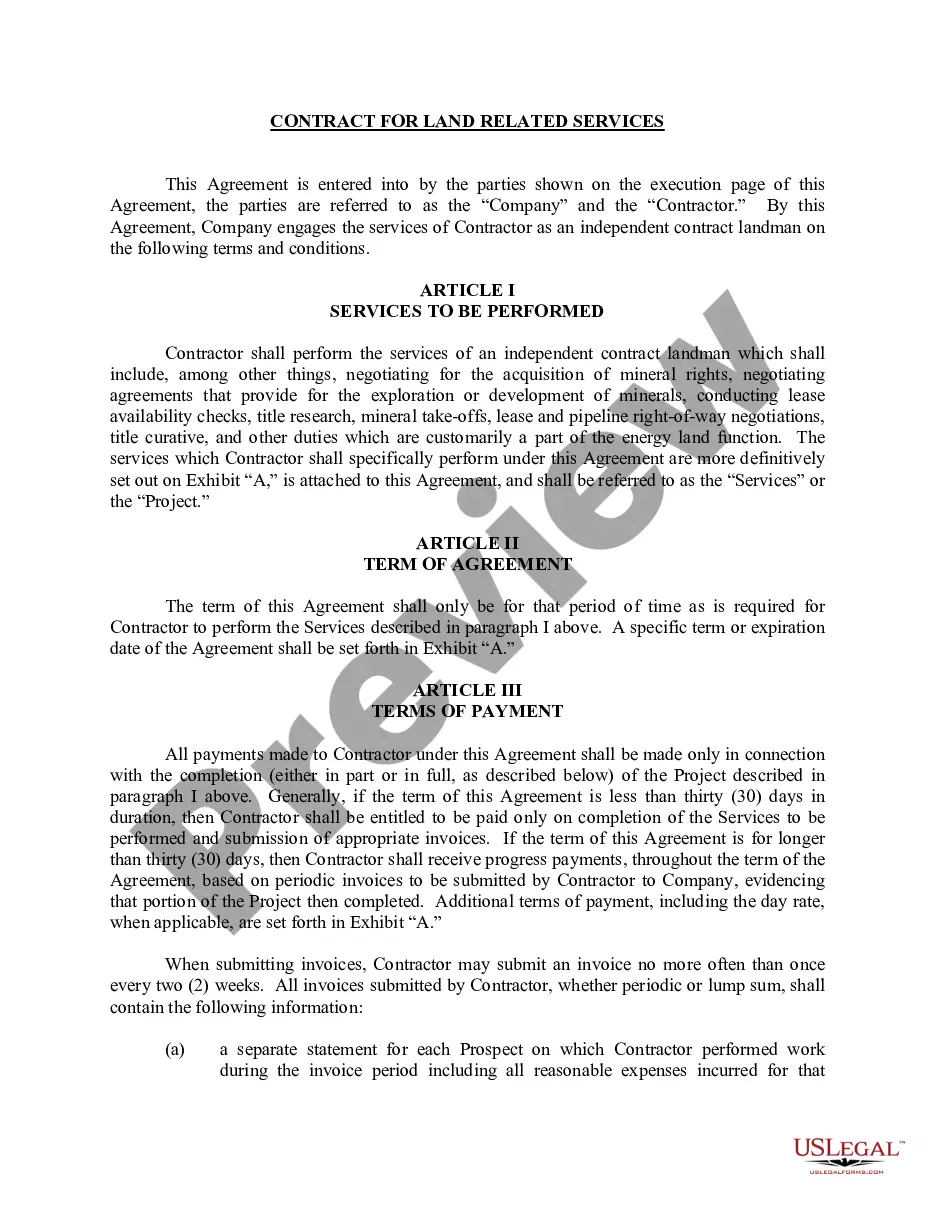
The Contract for Right of Way Services is a legal agreement between a company and a contractor where the contractor is hired as an independent agent for right-of-way services. This form outlines the responsibilities, compensation, and terms of the engagement, distinguishing it from other construction or service contracts by its specific focus on right-of-way activities, which include land title research, easement acquisition, and project coordination.
Main sections of this form
- Services: Outlines the specific right-of-way services the contractor will perform.
- Term of Agreement: Indicates the duration of the contract and provisions for extension.
- Compensation: Details the payment structure and reimbursement for expenses.
- Invoicing: Specifies how and when invoices are to be submitted by the contractor.
- Termination Clause: Explains how either party can terminate the contract with or without cause.
When to use this form
This form is necessary when a company requires a contractor to manage right-of-way activities for projects, such as land development or infrastructure projects. Situations include the need for land title research, obtaining easements, and coordinating construction efforts where land access is essential to project completion.
Who needs this form
- Companies engaged in construction, utilities, or land development requiring right-of-way services.
- Independent contractors specializing in land management and right-of-way acquisitions.
- Legal representatives managing contracts for right-of-way services.
How to complete this form
- Identify the parties involved: Clearly fill in the names and addresses of both the company and the contractor.
- Specify the services to be performed: Detail the specific right-of-way tasks to be carried out by the contractor.
- Enter the agreed compensation rate and reimbursement amounts: Provide details on pay rates and expenses.
- Set the term of the agreement: Indicate the duration for which the contract is valid.
- Include terms for termination and non-disclosure: Ensure both parties understand how the agreement can be ended and confidentiality maintained.
Does this document require notarization?
Notarization is generally not required for this form. However, certain states or situations might demand it. You can complete notarization online through US Legal Forms, powered by Notarize, using a verified video call available anytime.
Get your form ready online
Our built-in tools help you complete, sign, share, and store your documents in one place.
Make edits, fill in missing information, and update formatting in US Legal Forms—just like you would in MS Word.
Download a copy, print it, send it by email, or mail it via USPS—whatever works best for your next step.
Sign and collect signatures with our SignNow integration. Send to multiple recipients, set reminders, and more. Go Premium to unlock E-Sign.
If this form requires notarization, complete it online through a secure video call—no need to meet a notary in person or wait for an appointment.
We protect your documents and personal data by following strict security and privacy standards.

Make edits, fill in missing information, and update formatting in US Legal Forms—just like you would in MS Word.

Download a copy, print it, send it by email, or mail it via USPS—whatever works best for your next step.

Sign and collect signatures with our SignNow integration. Send to multiple recipients, set reminders, and more. Go Premium to unlock E-Sign.

If this form requires notarization, complete it online through a secure video call—no need to meet a notary in person or wait for an appointment.

We protect your documents and personal data by following strict security and privacy standards.
Common mistakes to avoid
- Failing to clearly define the services to be performed by the contractor.
- Omitting to enter specific compensation rates and reimbursement amounts.
- Not specifying the duration of the contract or potential for extensions.
- Inadequate description of termination terms, leading to confusion later.
Advantages of online completion
- Easy download and instant access to the form for immediate use.
- Customizable fields make it simple to tailor the agreement to specific needs.
- Reliability of documents drafted by licensed attorneys, ensuring legal compliance.
Legal use & context
This contract serves as a binding agreement that enforces the responsibilities and rights of both the company and the contractor. It is crucial to understand the legal implications of the terms outlined within, especially concerning the compensation, termination, and indemnification clauses, which are designed to protect both parties in contractual obligations.
Key takeaways
- The Contract for Right of Way Services formalizes the agreement between a company and a contractor.
- It outlines specific duties, compensation, and procedures for invoicing and termination.
- Users should understand their rights and responsibilities as defined in the contract.
- Adjustments might be necessary based on state-specific legal requirements.
Looking for another form?

Form popularity
FAQ
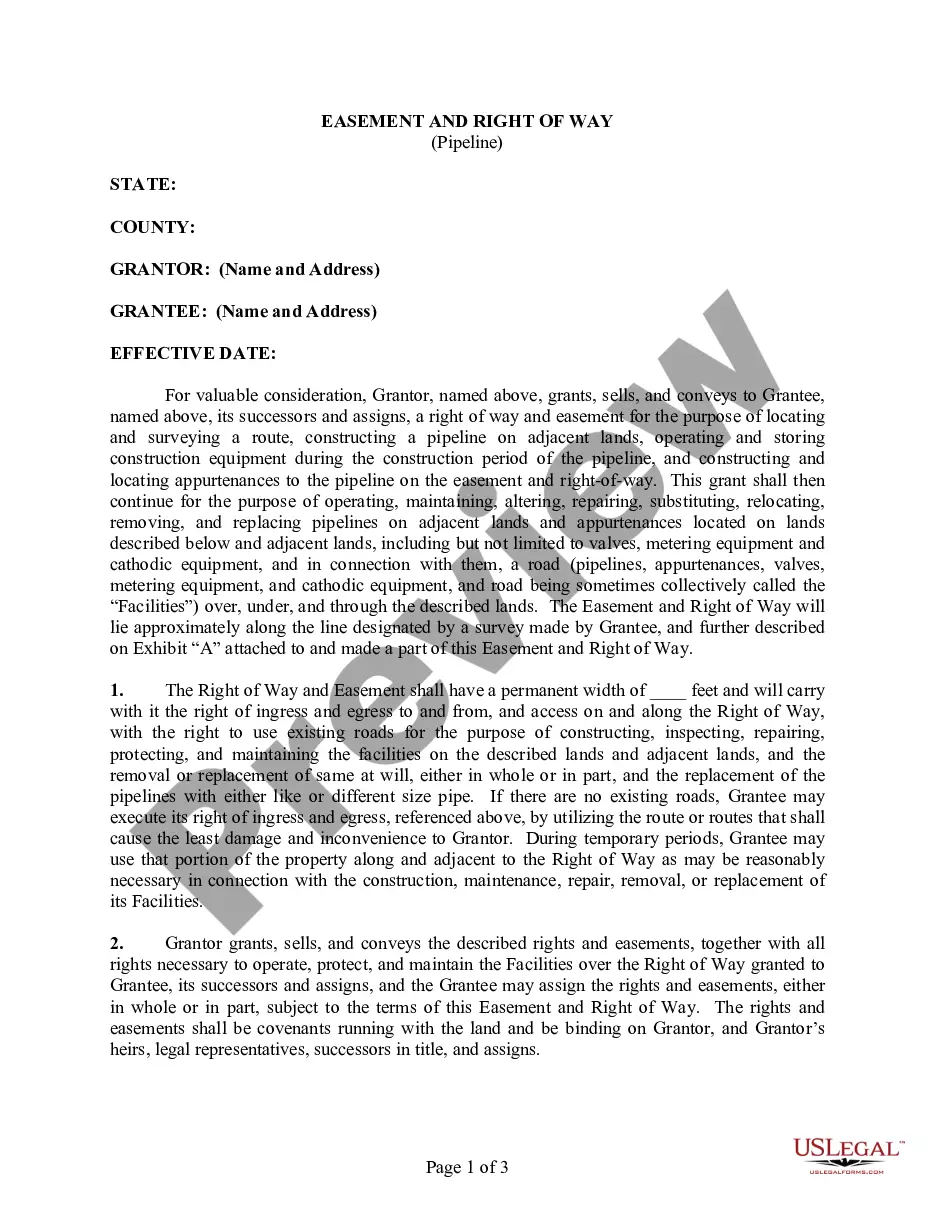
A Right of Way Easement is a form of Easement annexed to land which grants a right to travel over a part of the landowner's property. This right of way is usually granted to neighbouring landowners. The legal rights of the attached landowners to use and maintain the right of way may not always be clear.
Once an easement or right of way is extinguished then it cannot be revived at a later date should both plots be separated and sold off to different purchasers. An easement, right of way or profit can be expressly released by deed. Once this has been done then it is extinguished and cannot be revived.
An easement is a nonpossessory right to use and/or enter onto the real property of another without possessing it. It is "best typified in the right of way which one landowner, A, may enjoy over the land of another, B".
An easement is a limited right to use another person's land for a stated purpose. Examples of easements include the use of private roads and paths, or the use of a landowner's property to lay railroad tracks or electrical wires.
An easement deed allows a party that is not the owner to use a portion of the land. It is a written agreement between two parties that spells out what part of the property is available for access and how it may be used. Since you are granting an easement to your land, you can set any terms and conditions you like.
A right of way is an easement that allows someone to travel through your property to get to another location.If property ownership is transferred through sale or other legal methods, a new easement agreement must be made. Appurtenant easements are attached to the property, not the individual.
Give the document a simple title: Grant of Easement is sufficient. Identify the parties. You need to explain who the parties are to the agreement. The person granting the easement to his property is the Grantor and the person gaining access to the property is the Grantee.
Generally speaking, an easement is a more serious property right; it is the legal right to use someone else's land for a particular purpose. Easements are often recorded at the county clerk's office and encumber your property's title.Here, however, you probably do not need to take the step of granting an easement.