Arizona Covenant Not to Sue, Short Form
What is this form?
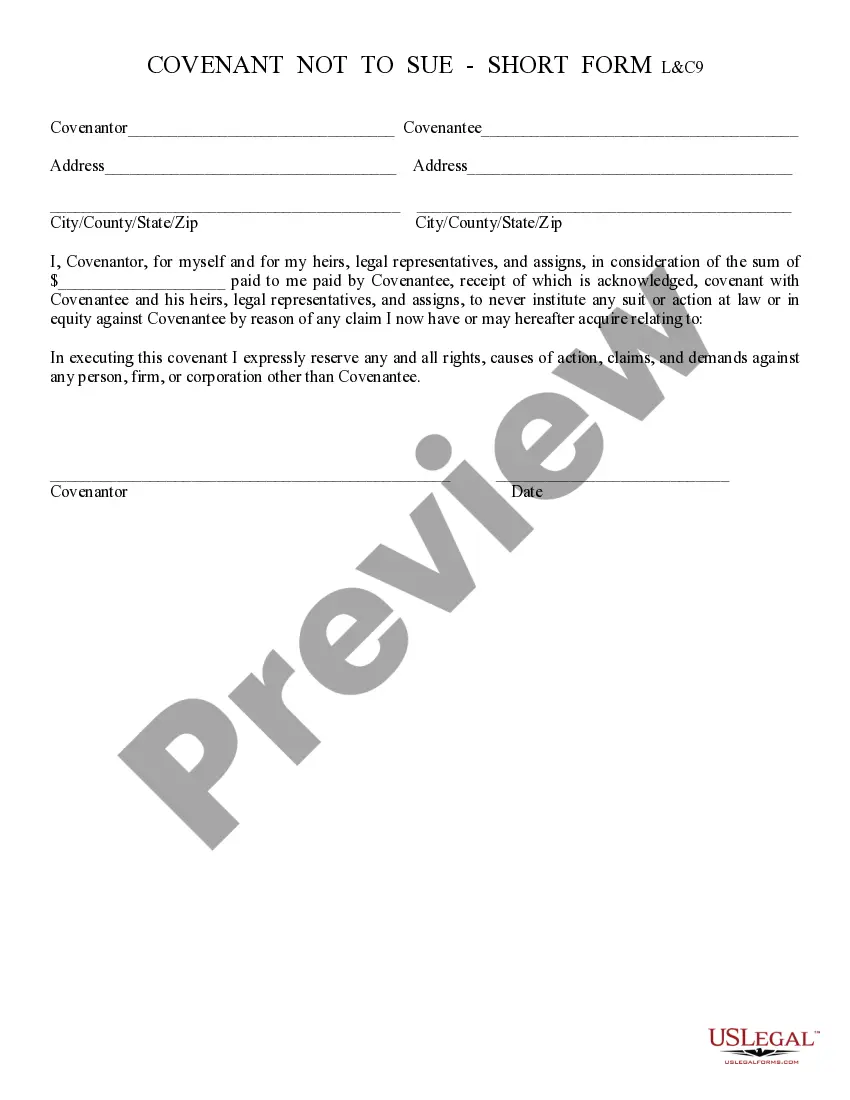
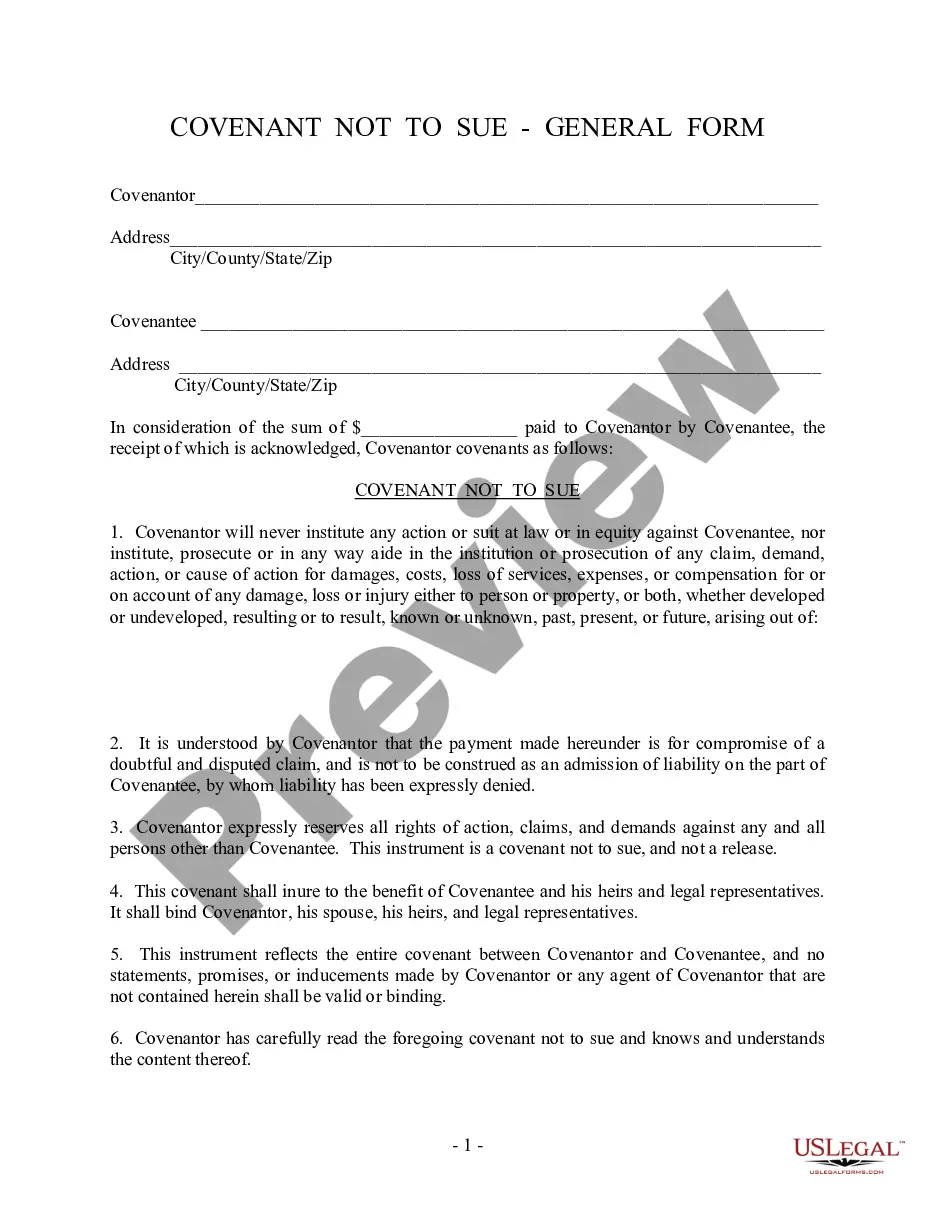
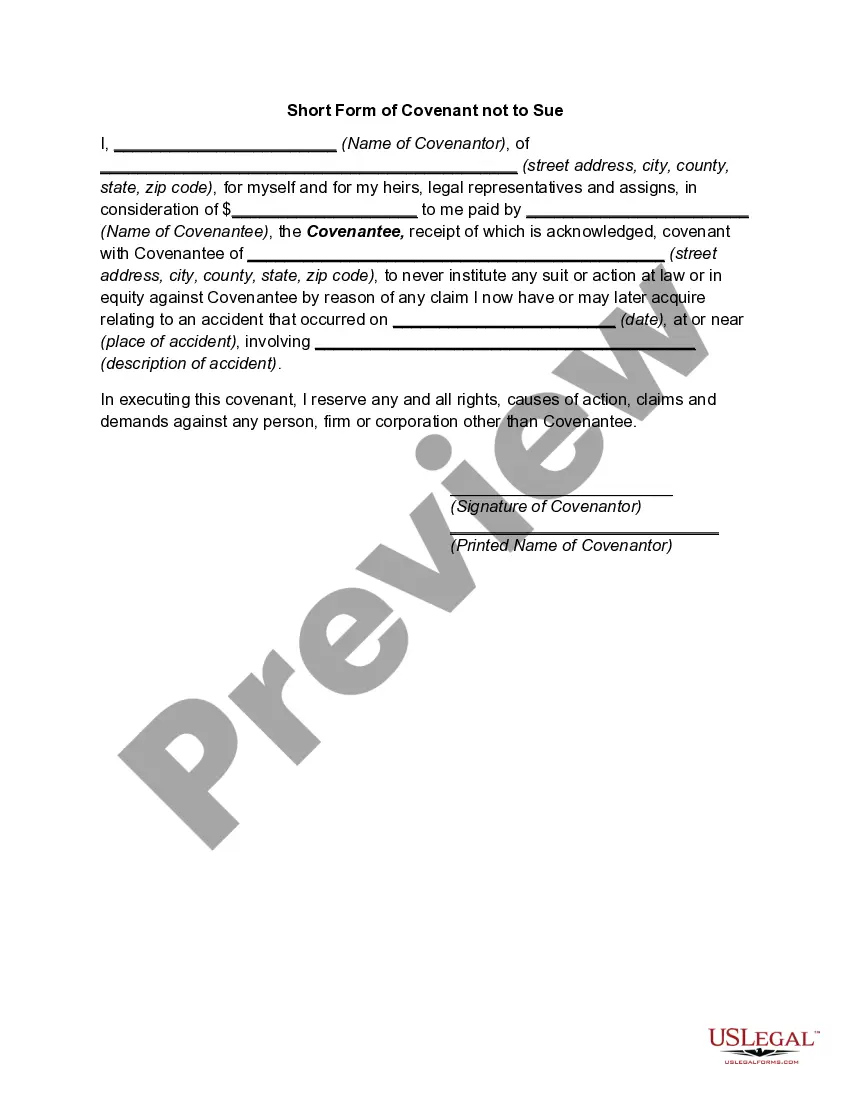
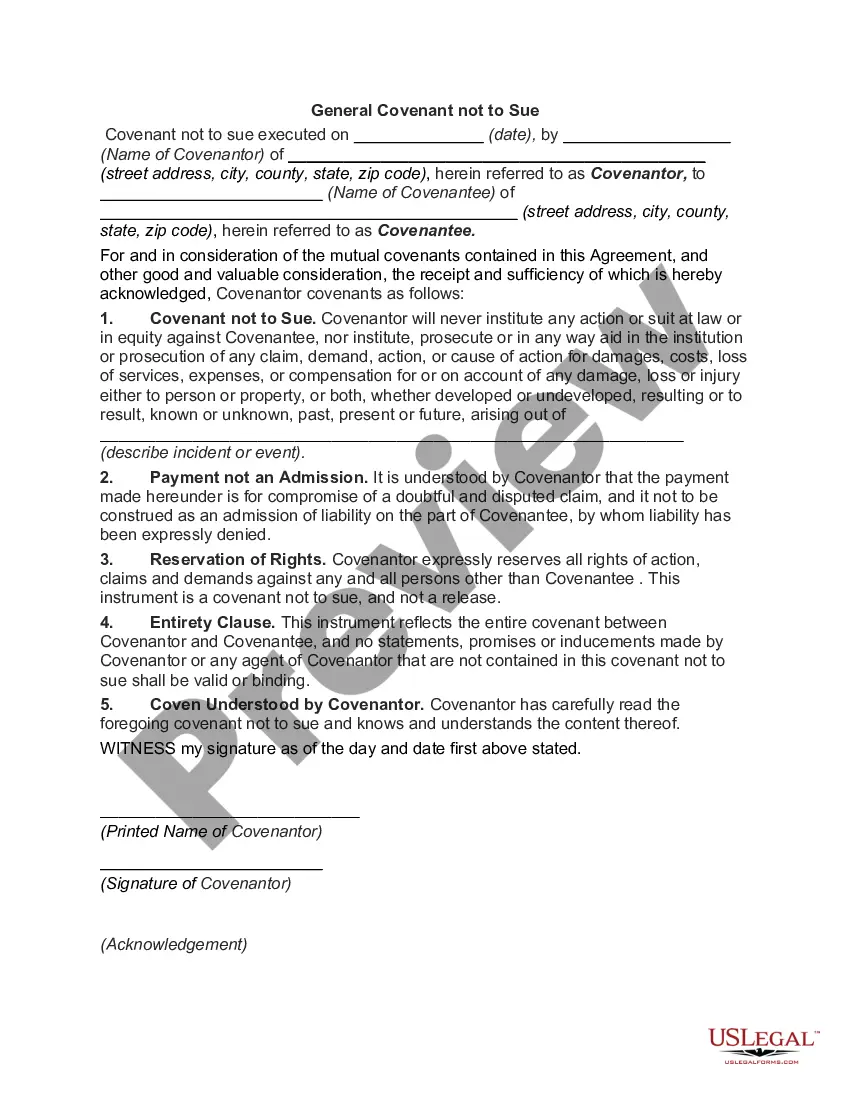
The Covenant Not to Sue, Short Form is a legally binding agreement between two parties. It stipulates that the Debtor agrees not to initiate a lawsuit against the Creditor regarding the terms of the contract, once a specified sum has been received. This form is particularly useful in resolving disputes without resorting to litigation, thereby protecting both parties involved.
Key parts of this document
- Covenantor and Covenantee: The individuals or entities entering into the agreement, identified by their names and addresses.
- Consideration Clause: This section confirms the payment amount received by the Covenantor from the Covenantee.
- No Suit Clause: The main provision where the Covenantor agrees not to sue the Covenantee for any related claims.
- Reservation of Rights: A clause that allows the Covenantor to retain the right to pursue claims against others, excluding the Covenantee.
- Signatures and Date: Required to validate the agreement, confirming the Covenantor's acknowledgment of the terms.
When this form is needed
This form is appropriate in situations where one party wishes to resolve a dispute or claim against another party without filing a lawsuit. It can be used in cases such as settling a debt, resolving contractual disagreements, or when parties agree to avoid litigation in exchange for monetary compensation.
Who needs this form
- Individuals or businesses involved in a dispute who wish to formalize an agreement to avoid legal action.
- Parties who have negotiated a settlement and need a written document to enforce their agreement.
- Debtors who want to safeguard their interests after resolving a financial obligation.
Completing this form step by step
- Identify the parties involved by entering the names and addresses of both the Covenantor and the Covenantee.
- Specify the amount of money being paid to the Covenantor in the consideration clause.
- Clearly outline the claims that are being waived in the no suit clause.
- Reserve any rights or claims against others in the reservation clause if applicable.
- Have the Covenantor sign and date the form to finalize the agreement.
Is notarization required?
This form does not typically require notarization unless specified by local law. However, having the document notarized can provide additional assurance of its validity.
Get your form ready online
Our built-in tools help you complete, sign, share, and store your documents in one place.
Make edits, fill in missing information, and update formatting in US Legal Forms—just like you would in MS Word.
Download a copy, print it, send it by email, or mail it via USPS—whatever works best for your next step.
Sign and collect signatures with our SignNow integration. Send to multiple recipients, set reminders, and more. Go Premium to unlock E-Sign.
If this form requires notarization, complete it online through a secure video call—no need to meet a notary in person or wait for an appointment.
We protect your documents and personal data by following strict security and privacy standards.

Make edits, fill in missing information, and update formatting in US Legal Forms—just like you would in MS Word.

Download a copy, print it, send it by email, or mail it via USPS—whatever works best for your next step.

Sign and collect signatures with our SignNow integration. Send to multiple recipients, set reminders, and more. Go Premium to unlock E-Sign.

If this form requires notarization, complete it online through a secure video call—no need to meet a notary in person or wait for an appointment.

We protect your documents and personal data by following strict security and privacy standards.
Common mistakes
- Failing to specify the claims being waived, which can lead to confusion.
- Not including all relevant parties in the agreement, such as heirs or representatives.
- Missing signatures or date, rendering the agreement unenforceable.
Benefits of completing this form online
- Convenience of downloading and completing the form at your own pace.
- Editability allows you to customize the agreement to fit your specific situation.
- Reliable legal templates drafted by licensed attorneys ensure compliance with legal standards.
Legal use & context
- Establishes a clear contract between parties, minimizing the potential for disputes.
- May be used as evidence in court to demonstrate that one party has relinquished the right to sue.
- Helps in managing legal liabilities by formalizing the settlement agreement.
Main things to remember
- The Covenant Not to Sue, Short Form, is designed to prevent future lawsuits regarding specific claims.
- Accurate completion and understanding of this form can facilitate smoother resolutions and settlements.
- It's a practical tool for both debtors and creditors to formalize their agreements amicably.
Looking for another form?

Form popularity
FAQ
A covenant not to assert indicates an agreement where one party commits not to claim certain rights or defenses against another party. This type of covenant can help simplify legal interactions and clarify expectations. By leveraging the Arizona Covenant Not to Sue, Short Form, parties can effectively prevent future disputes and foster a clear understanding for all involved.
Statute 12-514 in Arizona concerns the statute of limitations for bringing legal actions regarding written contracts. It specifies the time frame within which a party can enforce a covenant. Being aware of this statute is crucial, especially when considering the Arizona Covenant Not to Sue, Short Form, as it outlines the timeframe for potential legal actions pertinent to those agreements.
Statute 12-2294 in Arizona pertains to the enforcement of covenants not to sue by providing legal backing to such agreements. This statute defines the conditions under which parties can agree to refrain from legal claims. Familiarizing yourself with this statute can enhance your understanding of the Arizona Covenant Not to Sue, Short Form and its implications for dispute resolution.
A covenant not to compete is an agreement where one party promises not to engage in similar business activities within a certain geographic area and timeframe. These covenants aim to protect business interests and trade secrets. Understanding this type of covenant is important, and the Arizona Covenant Not to Sue, Short Form can help address potential concerns that may arise in a business partnership.
A plaintiff who enters into a covenant not to sue agrees, in advance, not to pursue legal action against another party over specific issues. This type of agreement can create a sense of security for defendants and foster a more cooperative atmosphere between parties. Utilizing the Arizona Covenant Not to Sue, Short Form can be a strategic approach to manage potential disputes while preserving relationships.
A covenant lawsuit occurs when one party sues another for violating an agreement, typically related to conduct or performance. In the context of the Arizona Covenant Not to Sue, Short Form, this agreement allows parties to resolve disputes without further legal action. By entering such a covenant, you can minimize litigation, save time, and allocate resources more effectively.
Some serious crimes in Arizona, such as murder and sexual offenses, have no statute of limitations. This means that prosecution can occur at any time, regardless of when the crime occurred. Knowing the differences can benefit your case strategy. If you are navigating legal concerns and an Arizona Covenant Not to Sue, Short Form is at play, having accurate information is vital.
Arizona statute 12-550 defines particular aspects of liability reduction relating to certain claims. It outlines how the legal landscape assesses fault and can impact your recoverable damages. If you are considering an Arizona Covenant Not to Sue, Short Form, understanding this statute is key, as it influences the outcome of personal injury cases.
In Arizona, the statute of limitations for personal injury claims is typically two years. This means that if you suffer an injury, you must initiate your claim within this period to seek compensation. Missing this deadline can prevent you from pursuing your case. Knowing how this relates to an Arizona Covenant Not to Sue, Short Form can guide you in taking timely legal action.
Arizona Revised Statute 12-541 establishes the general statute of limitations for personal injury claims in Arizona. It states that individuals have two years from the date of injury to file a lawsuit. This time frame emphasizes the importance of acting promptly to protect your rights. Understanding this statute can help you navigate situations involving an Arizona Covenant Not to Sue, Short Form.