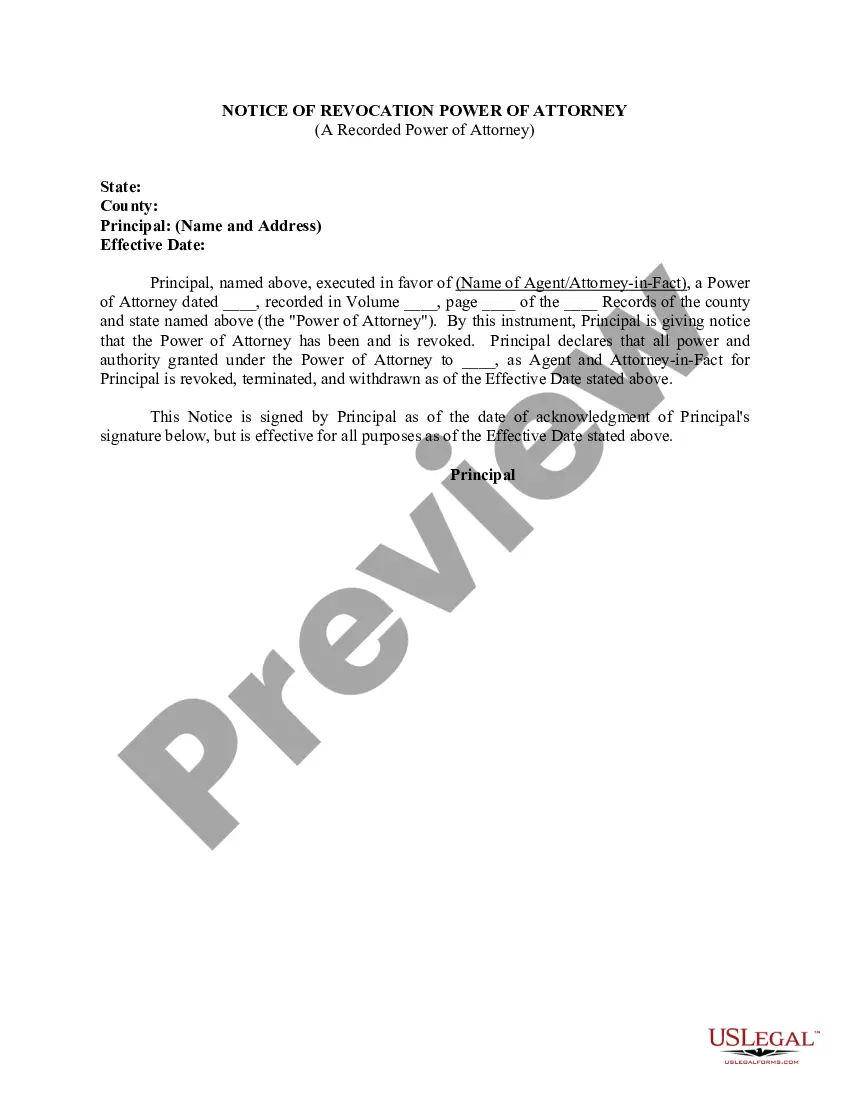
Agreement Between Self-Employed Independent Contractors to Provide Professional Staffing to Mental Health Organization
What this document covers
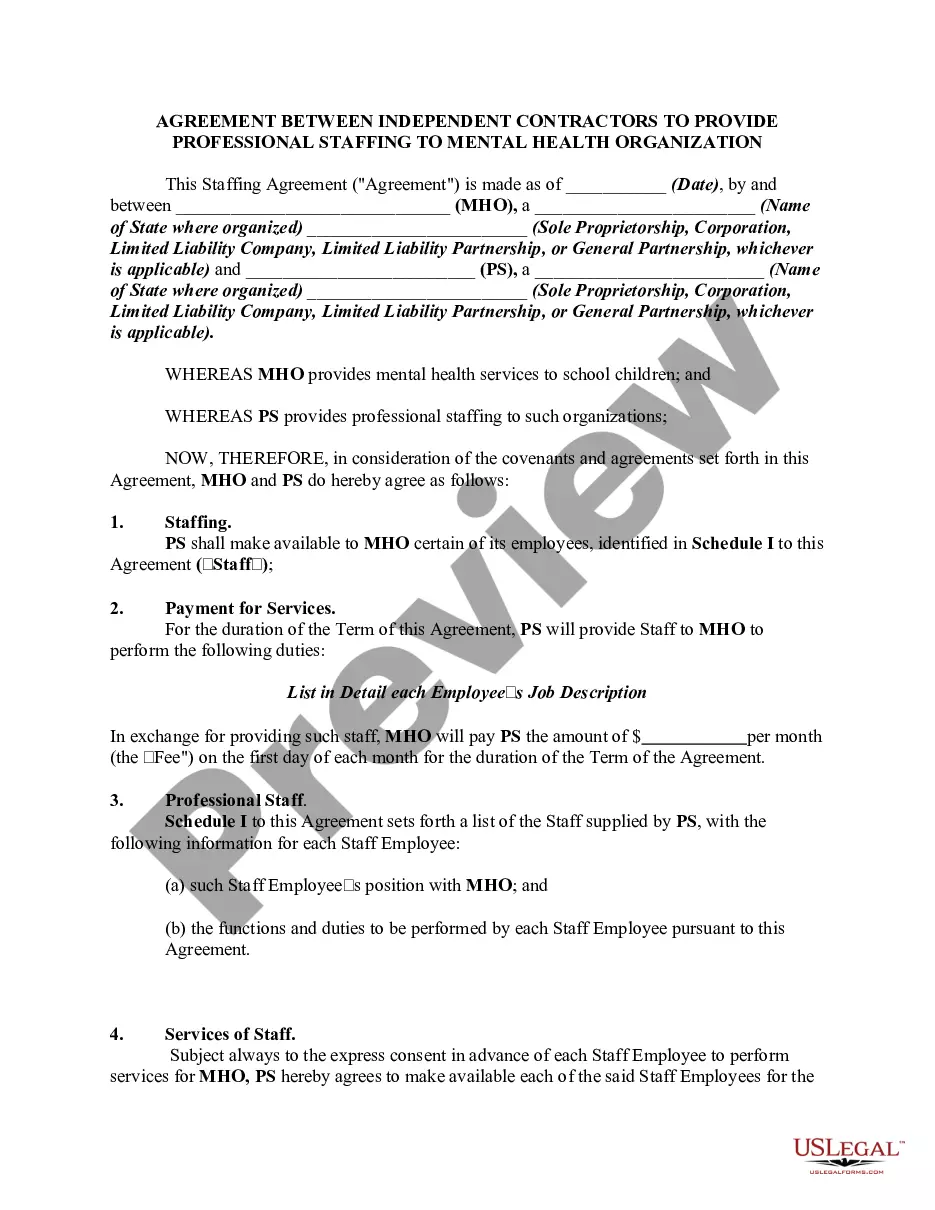
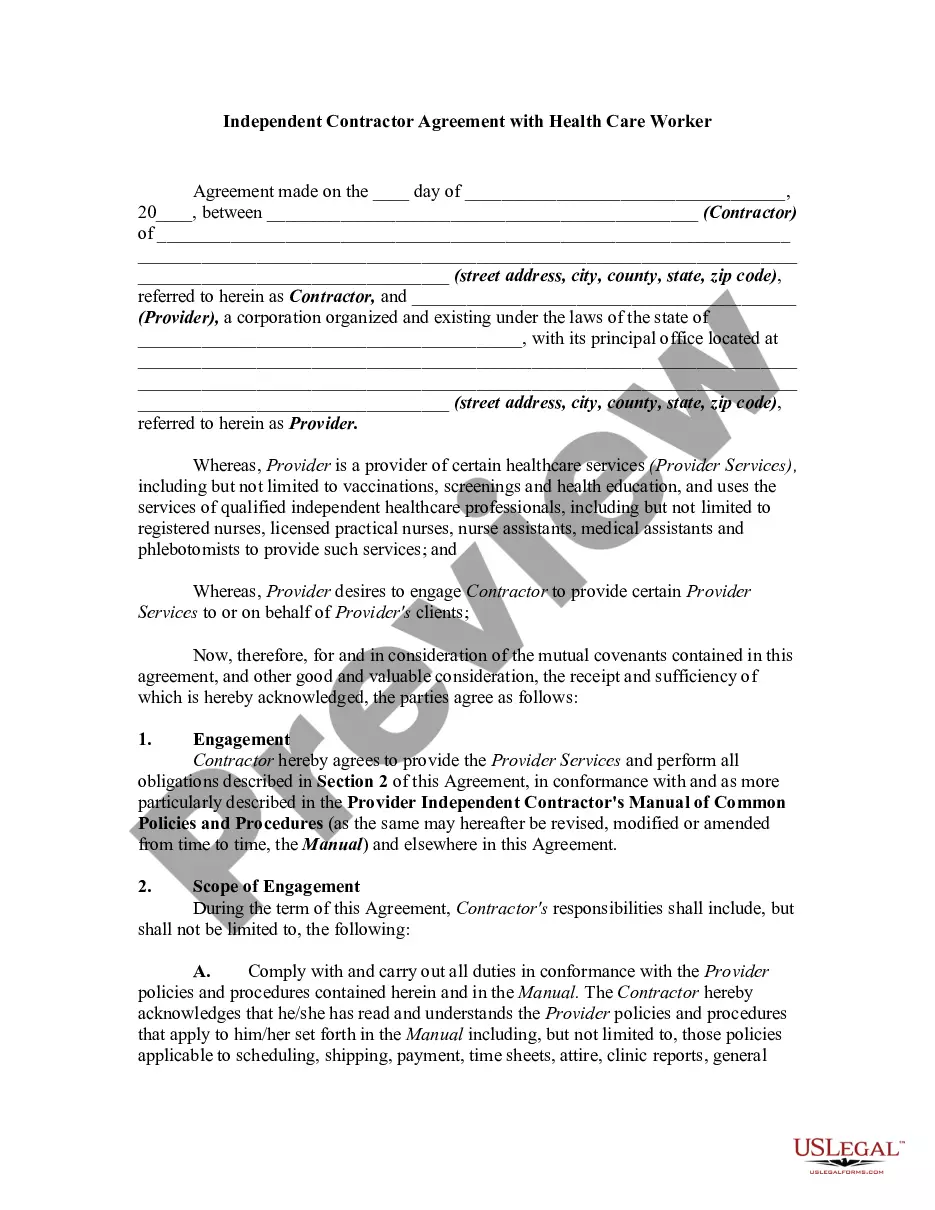
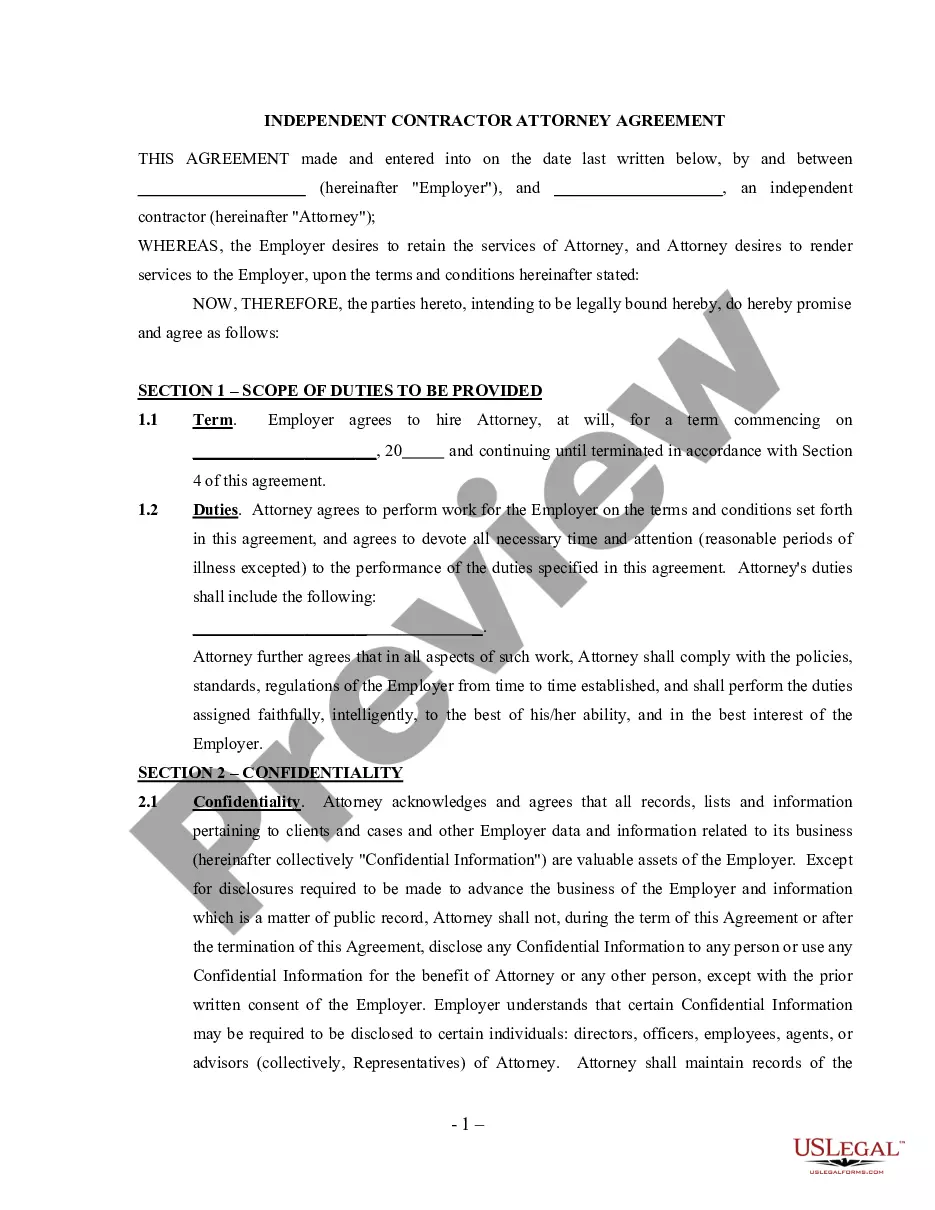
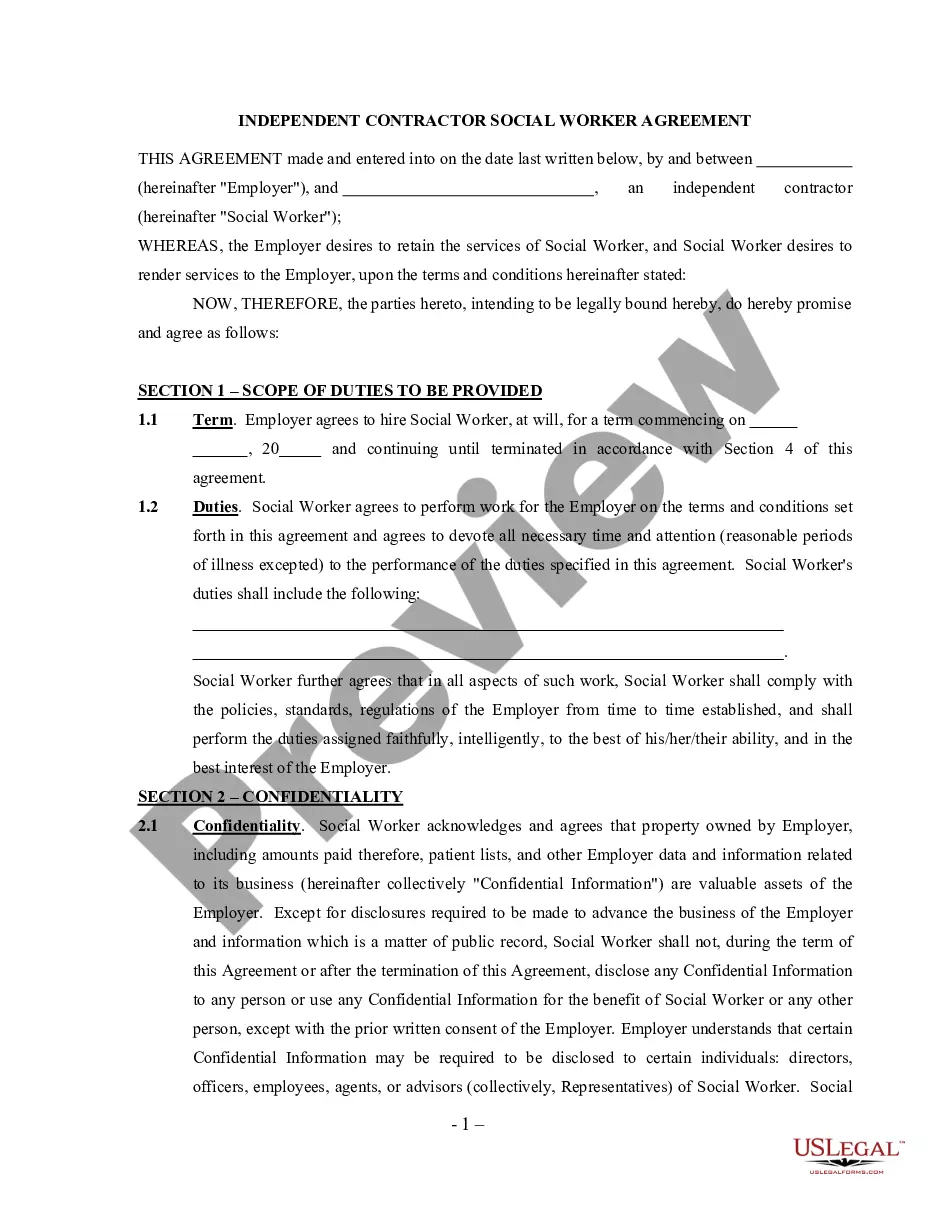
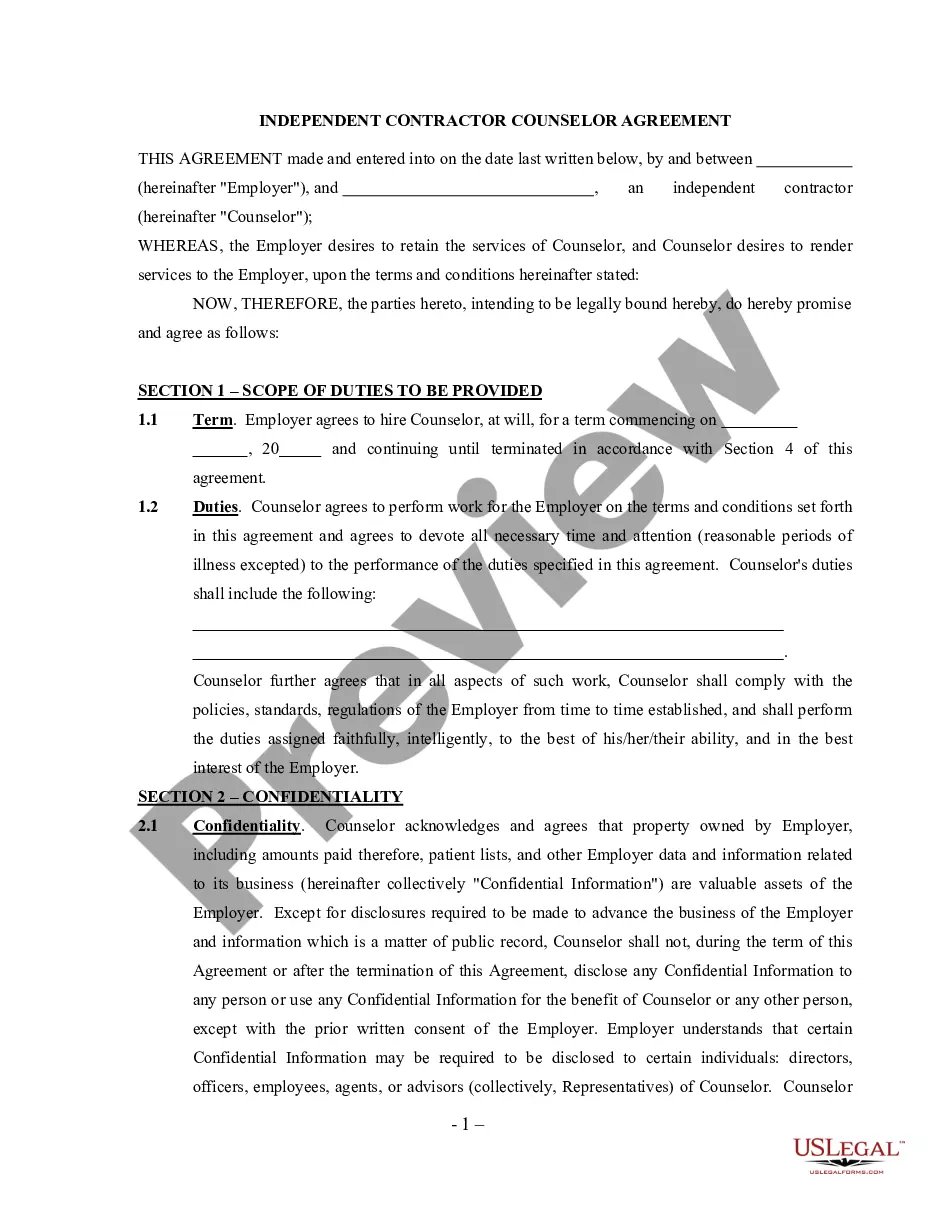
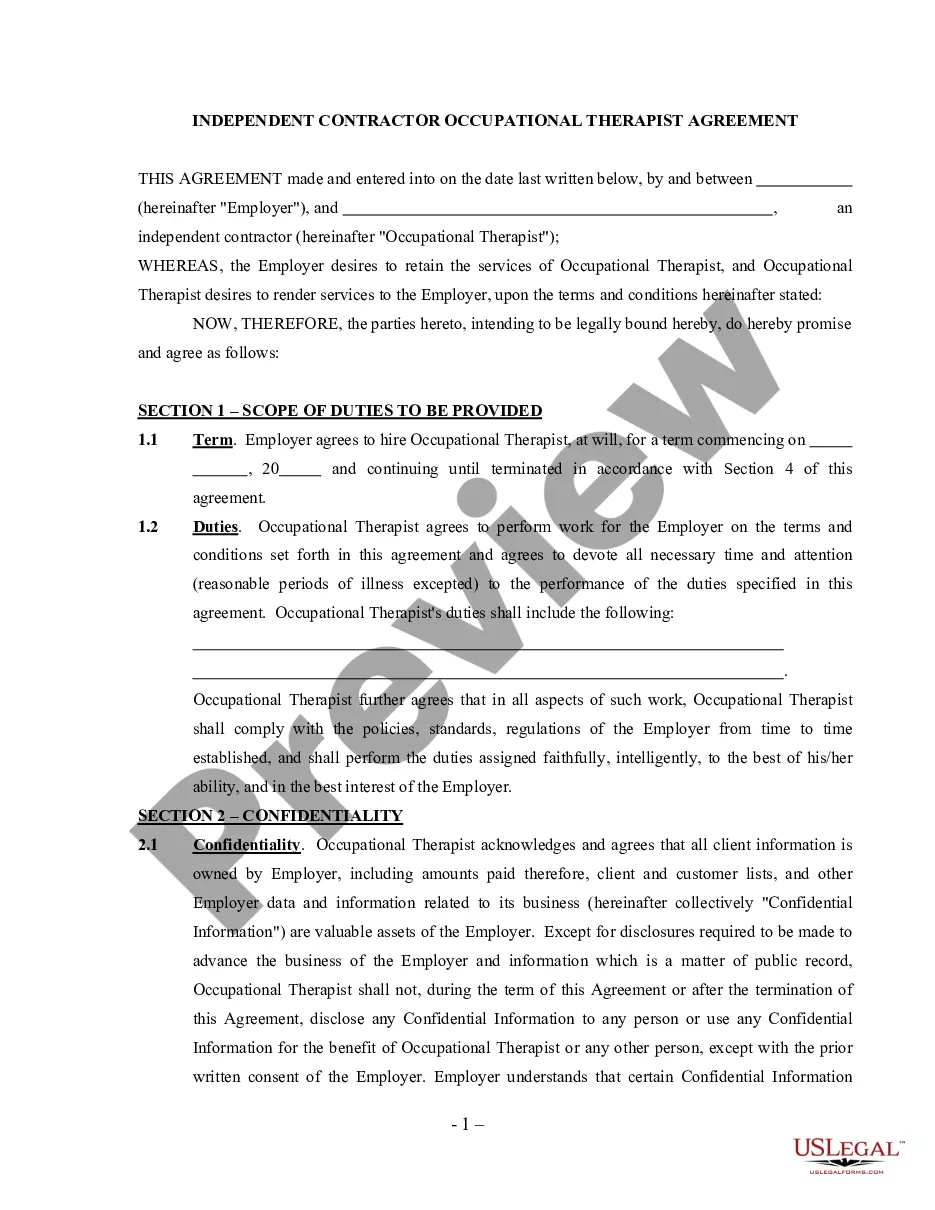
The Agreement Between Self-Employed Independent Contractors to Provide Professional Staffing to Mental Health Organization is a contract that formalizes the relationship between a mental health organization (MHO) and a professional staffing organization (PS). This staffing agreement clearly outlines the responsibilities, rights, and obligations of both parties regarding the provision of trained professional staff to deliver mental health services. Unlike employment contracts, this agreement defines the independent contractor relationship, ensuring that neither party assumes liabilities typical of employer-employee dynamics.
Form components explained
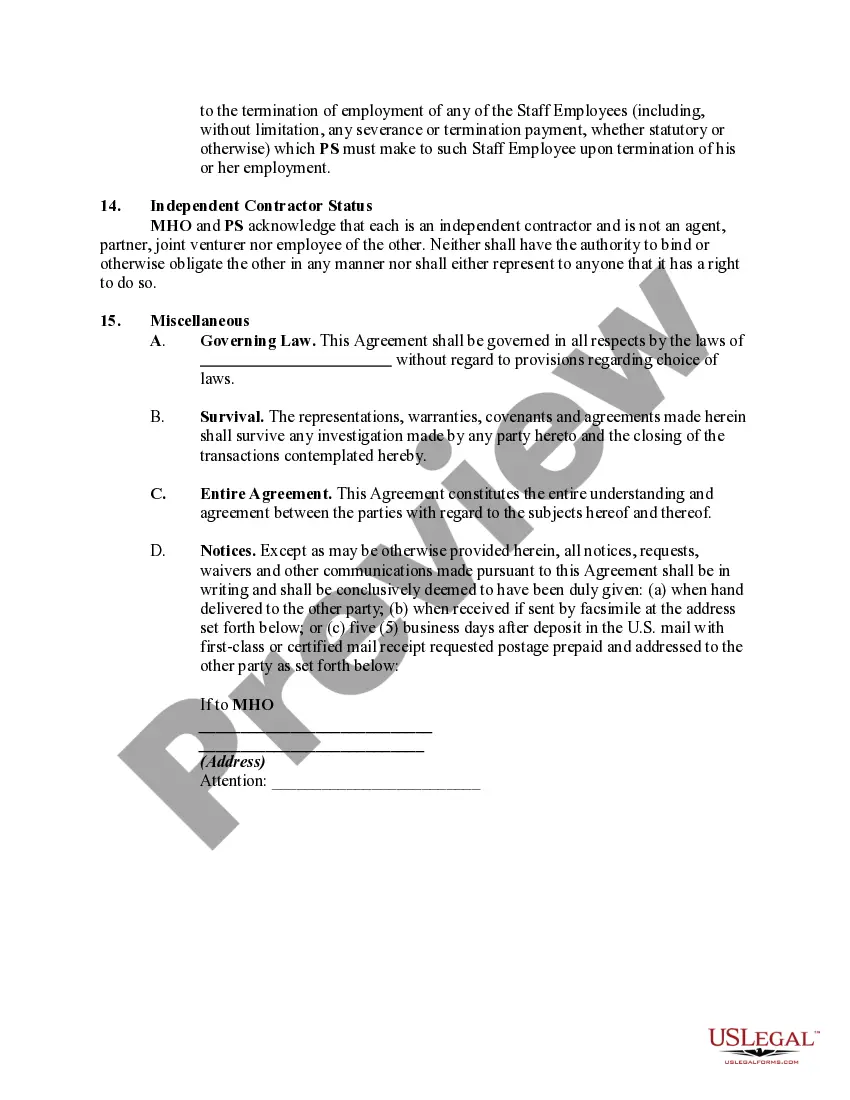
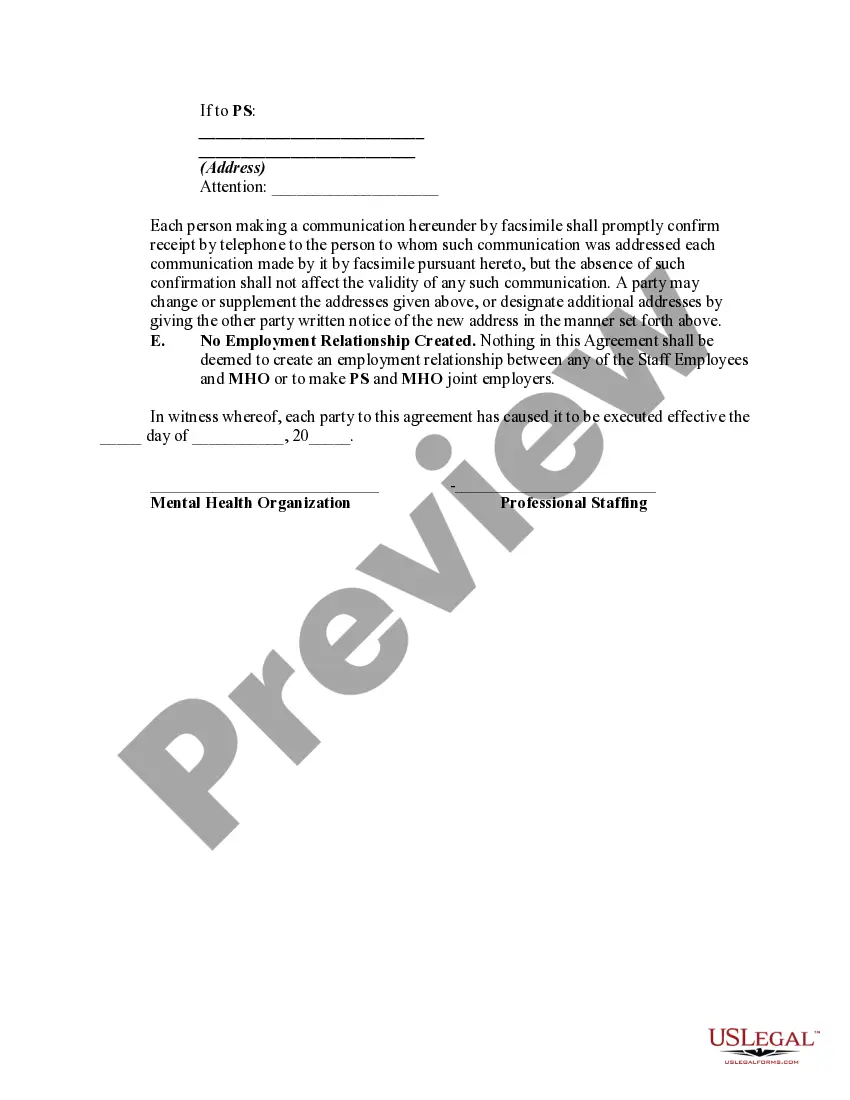
- Parties involved: Identification of the mental health organization and staffing organization.
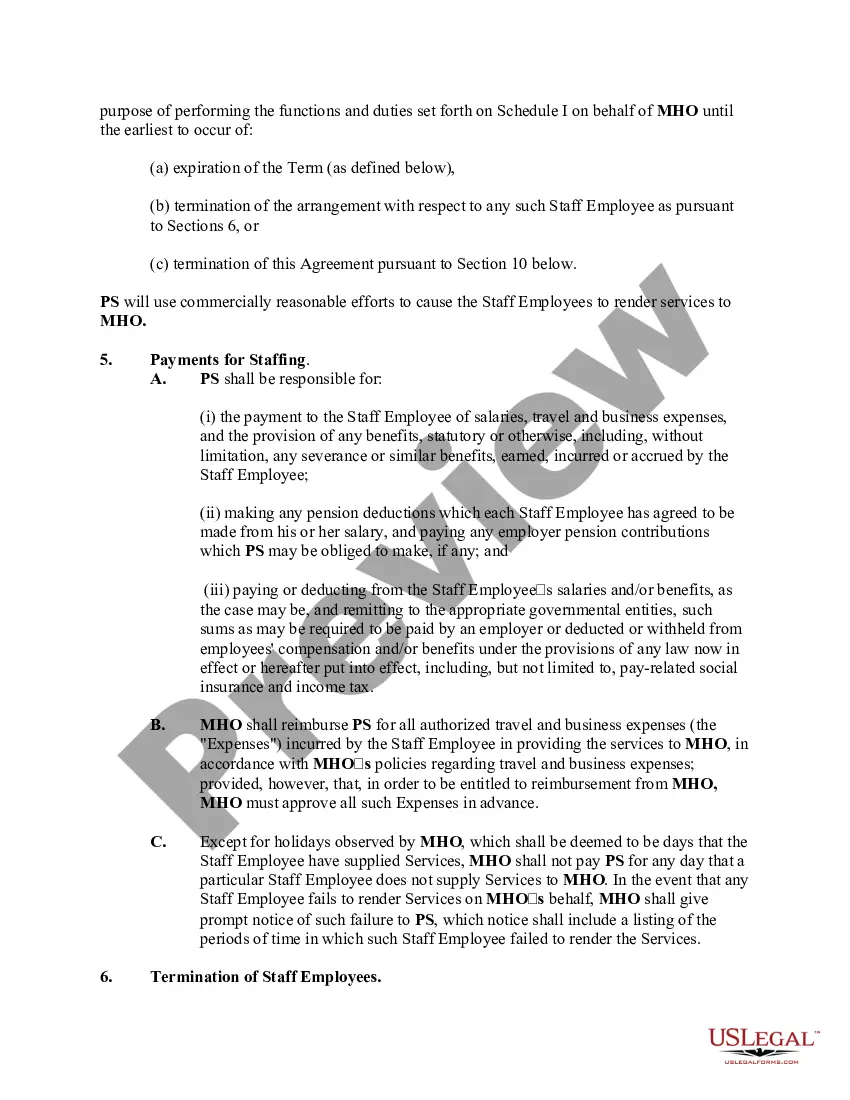
- Staffing arrangements: Details on the staff provided by the PS, including job descriptions and duties.
- Payment terms: Specifications regarding fees paid by the MHO for the services rendered by the PS.
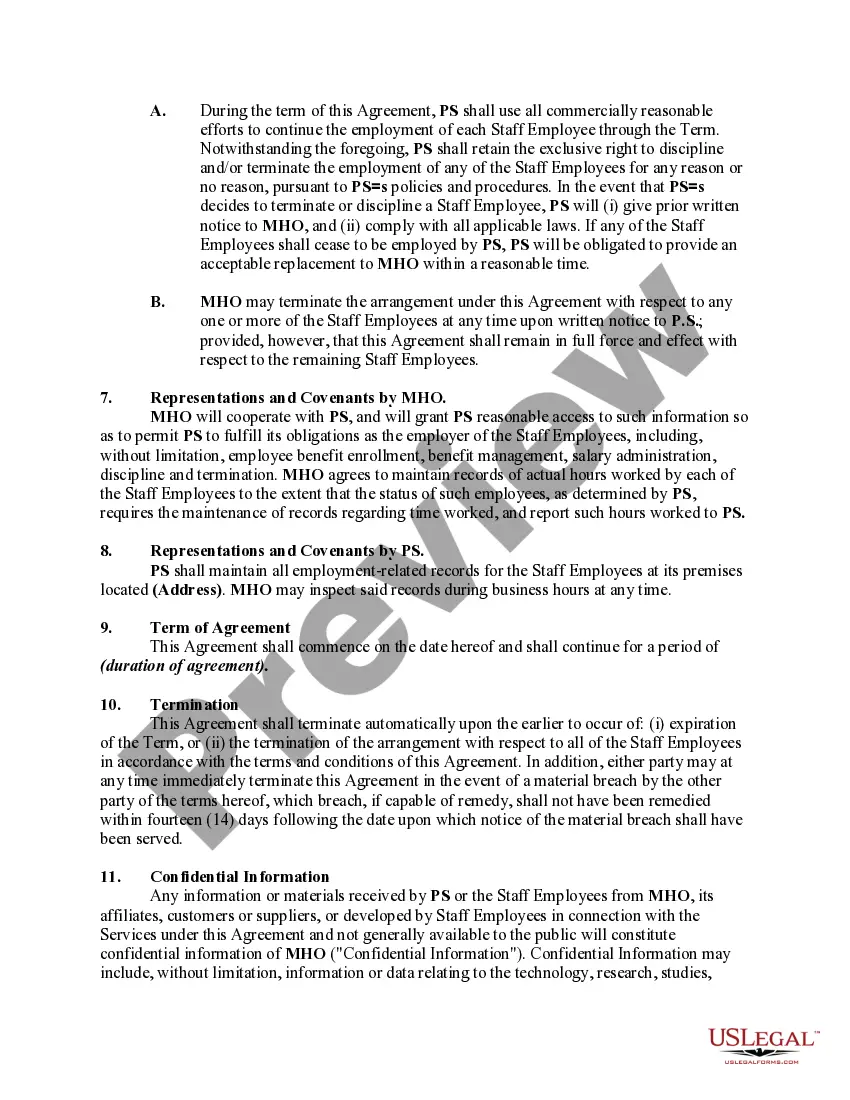
- Termination conditions: Circumstances under which the agreement can be terminated by either party.
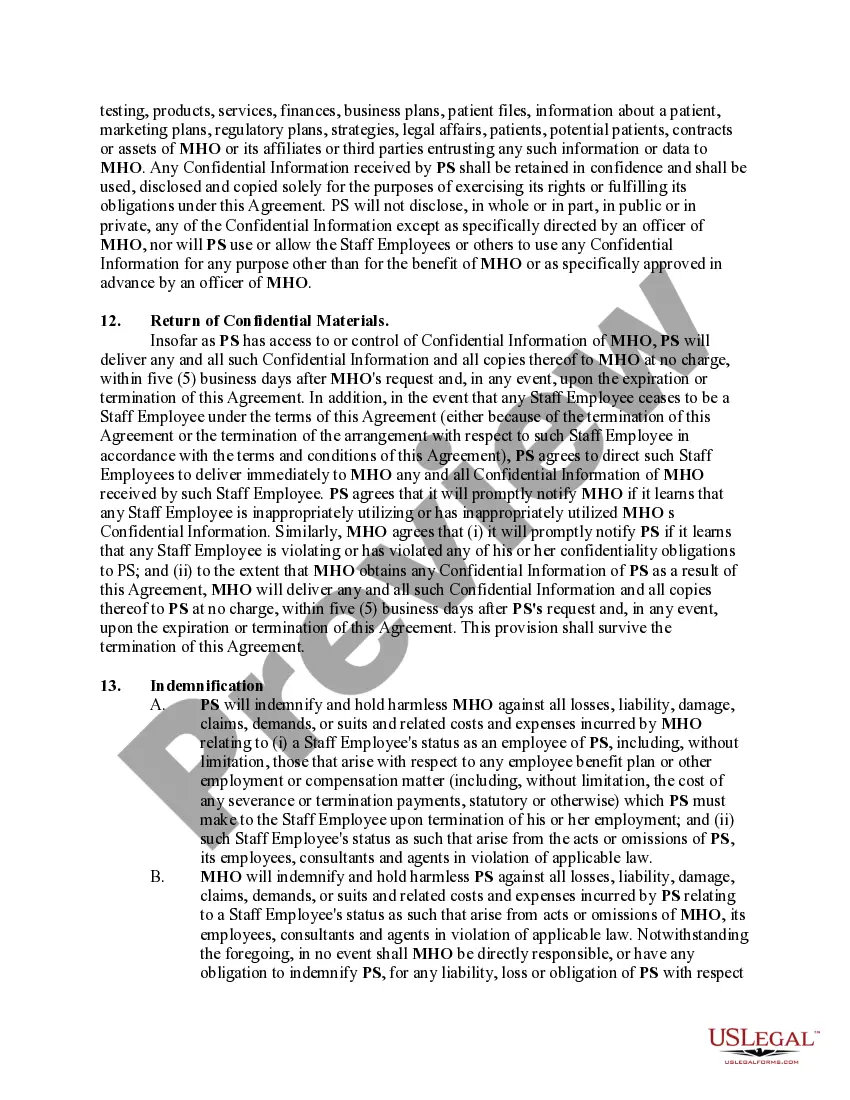
- Confidential information clauses: Protections around sensitive information shared between the parties.
- Indemnification: Responsibility outlines for losses or claims depending on the partyâs actions.
When this form is needed
This form is necessary when a mental health organization seeks to engage independent contractors to supply professional staffing for services provided to clients, such as schools or other institutions. It should be used when both parties want to establish clear terms of engagement, including duties, compensation, and confidentiality, minimizing potential misunderstandings and legal risks.
Intended users of this form
- Mental health organizations looking to hire professional staffing services.
- Independent contractors who provide mental health staffing and wish to formalize their agreement with an organization.
- Legal representatives drafting agreements between mental health organizations and staffing providers.
Instructions for completing this form
- Identify the parties involved: Enter the names of the mental health organization and the professional staffing organization.
- Specify the date and state of agreement: Fill in the effective date and the state where the staffing services will be provided.
- Detail the staffing provisions: Clearly outline the duties and job descriptions for the professional staff to be provided.
- Enter payment terms: State the fees and payment schedule agreed upon by both parties.
- Review and sign: Ensure that designated representatives from both organizations review the agreements before signing to validate the contract.
Notarization requirements for this form
This form does not typically require notarization unless specified by local law. It is, however, recommended to have signatures witnessed to strengthen the validity of the agreement.
Get your form ready online
Our built-in tools help you complete, sign, share, and store your documents in one place.
Make edits, fill in missing information, and update formatting in US Legal Forms—just like you would in MS Word.
Download a copy, print it, send it by email, or mail it via USPS—whatever works best for your next step.
Sign and collect signatures with our SignNow integration. Send to multiple recipients, set reminders, and more. Go Premium to unlock E-Sign.
If this form requires notarization, complete it online through a secure video call—no need to meet a notary in person or wait for an appointment.
We protect your documents and personal data by following strict security and privacy standards.

Make edits, fill in missing information, and update formatting in US Legal Forms—just like you would in MS Word.

Download a copy, print it, send it by email, or mail it via USPS—whatever works best for your next step.

Sign and collect signatures with our SignNow integration. Send to multiple recipients, set reminders, and more. Go Premium to unlock E-Sign.

If this form requires notarization, complete it online through a secure video call—no need to meet a notary in person or wait for an appointment.

We protect your documents and personal data by following strict security and privacy standards.
Common mistakes
- Failing to clearly define the roles and responsibilities of each party.
- Omitting important payment details, leading to disputes over compensation.
- Not including provisions for confidentiality, risking sensitive information exposure.
- Neglecting to specify termination conditions, which can lead to misunderstandings in contract enforcement.
Advantages of online completion
- Instant access to a professionally drafted agreement tailored for mental health staffing needs.
- Editable fields allow customization to suit specific arrangements between contracting parties.
- Time-saving convenience: download and complete the agreement without the need for in-person meetings.
Legal use & context:
- This agreement sets clear expectations between the staffing provider and the mental health organization, enhancing enforceability.
- It minimizes the risk of misclassification of employees and independent contractors.
- Parties should be aware that courts may analyze the actual work relationship beyond the written contract.
Quick recap
- The agreement formalizes the staffing relationship between independent contractors and mental health organizations.
- Clear documentation is critical to avoid legal issues and clarify roles.
- Review state-specific laws to ensure compliance when using this form.
Looking for another form?

Form popularity
FAQ
Can independent contractors hire employees? Sure. As a self-employed person, you're technically your own business. Businesses are allowed to hire employees.
Do you know your ABCs? California's new independent contractor test makes it difficult to hire a former employee, even if they are retired, as an independent contractor.
Finally, the new stimulus bill provides independent contractors with paid sick and paid family leave benefits through March 14, 2021.Under CARES Act II, unemployed or underemployed independent contractors who have an income mix from self-employment and wages paid by an employer are still eligible for PUA.
The good news is that you can employ people and remain a sole trader. There's no need to set up a limited company if you don't want to. While sole traders operate the business on their own, that doesn't mean they have to work alone.
Terms. This is the first section of any agreement or contract and states the names and locations of the parties involved. Responsibilities & Deliverables. Payment-Related Details. Confidentiality Clause. Contract Termination. Choice of Law.
The IRS requires contractors to fill out a Form W-9, request for Taxpayer Identification Number and Certification, which you should keep on file for at least four years after the hiring. This form is used to request the correct name and Taxpayer Identification Number, or TIN, of the worker or their entity.
For most types of projects you hire an independent contractor (IC) to do, the law does not require you to put anything in writing. You can meet with the IC, agree on the terms of your arrangement, and have an oral contract or agreement that is legally binding. Just because you can doesn't mean you should, however.
Terms. This is the first section of any agreement or contract and states the names and locations of the parties involved. Responsibilities & Deliverables. Payment-Related Details. Confidentiality Clause. Contract Termination. Choice of Law.
CARES Act II contains a new provision: unemployed or underemployed independent contractors who have an income mix from self-employment and wages paid by an employer are still eligible for PUA. Under CARES Act I, any such worker was typically eligible only for a state-issued benefit based on their wages.