Self-Employed Independent Contractor Agreement with Health Care Worker
Overview of this form
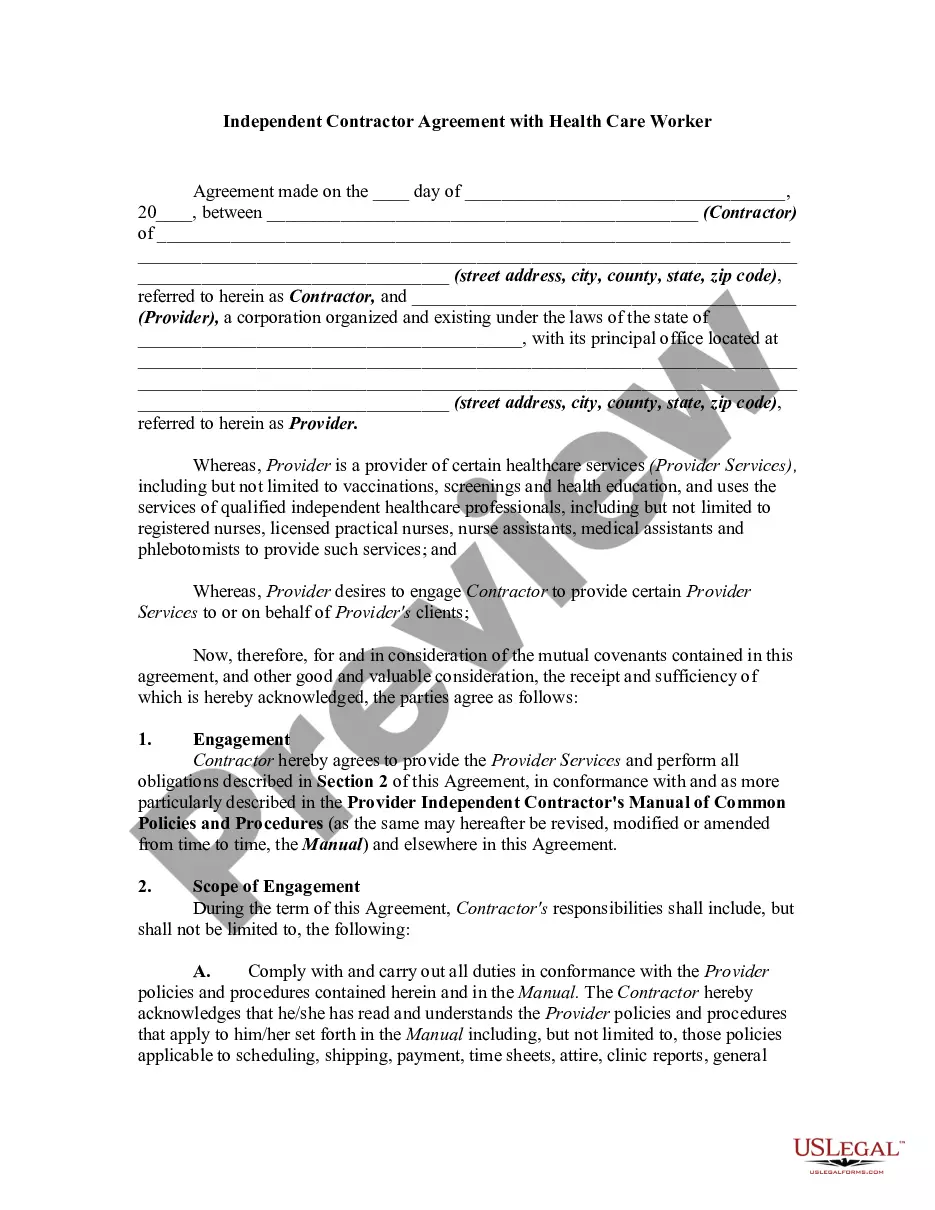
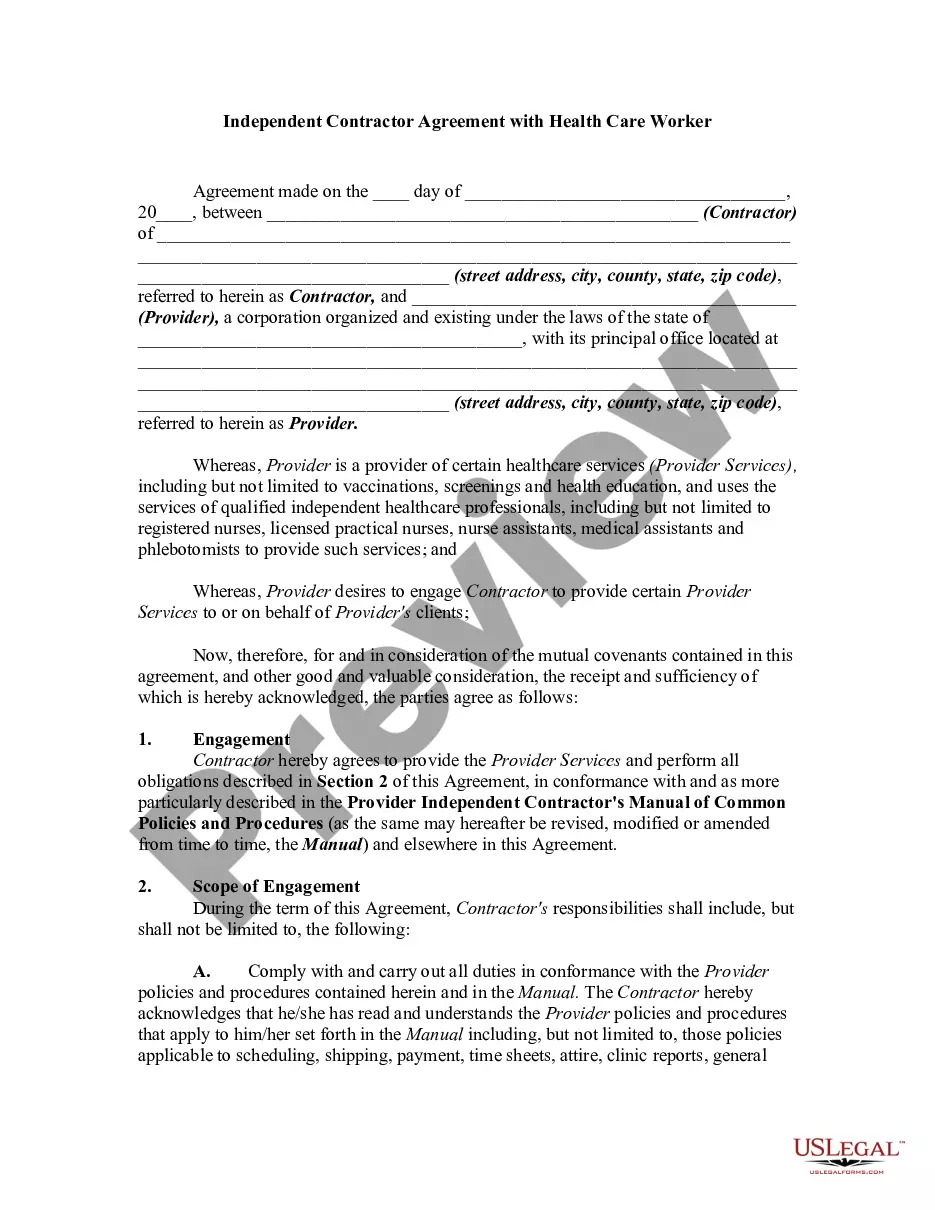
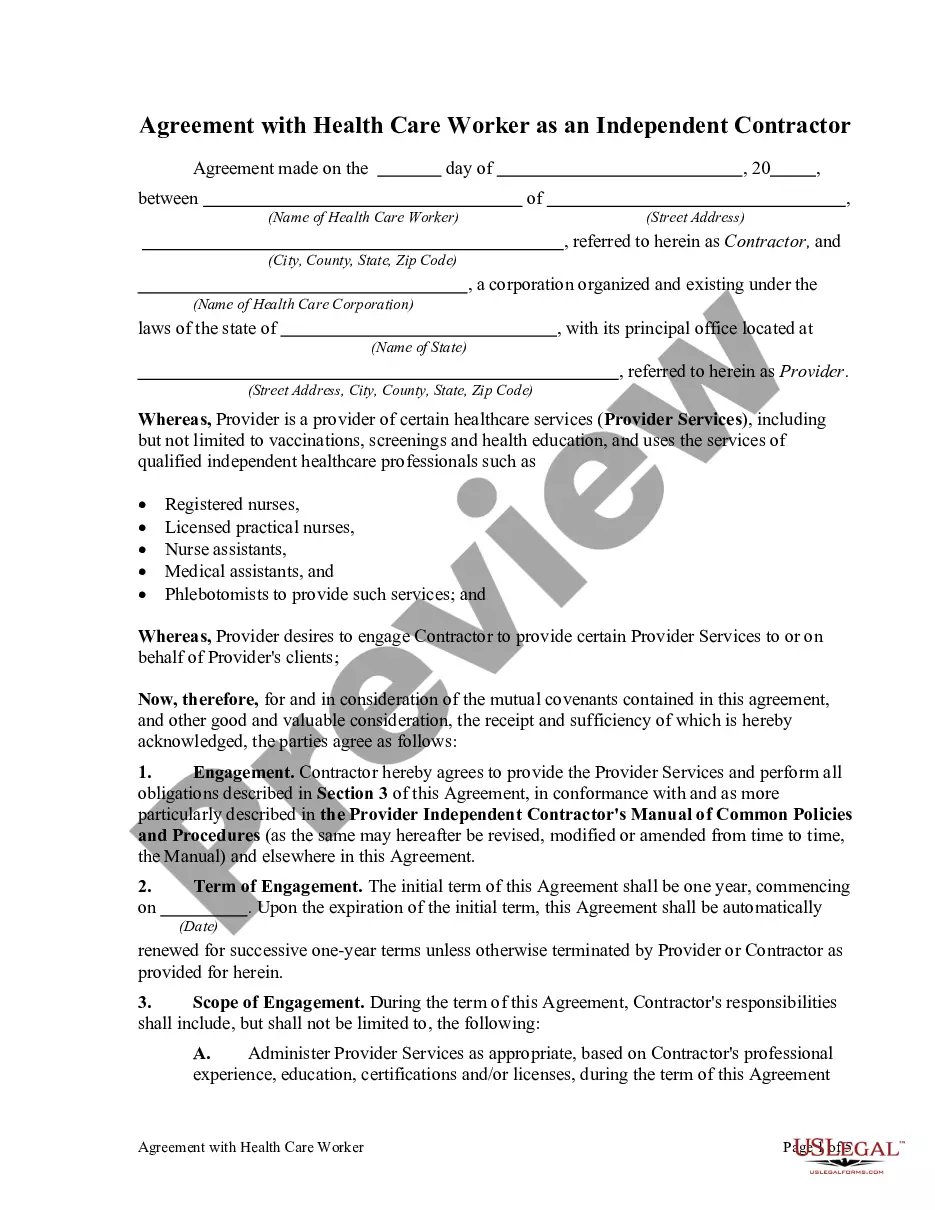
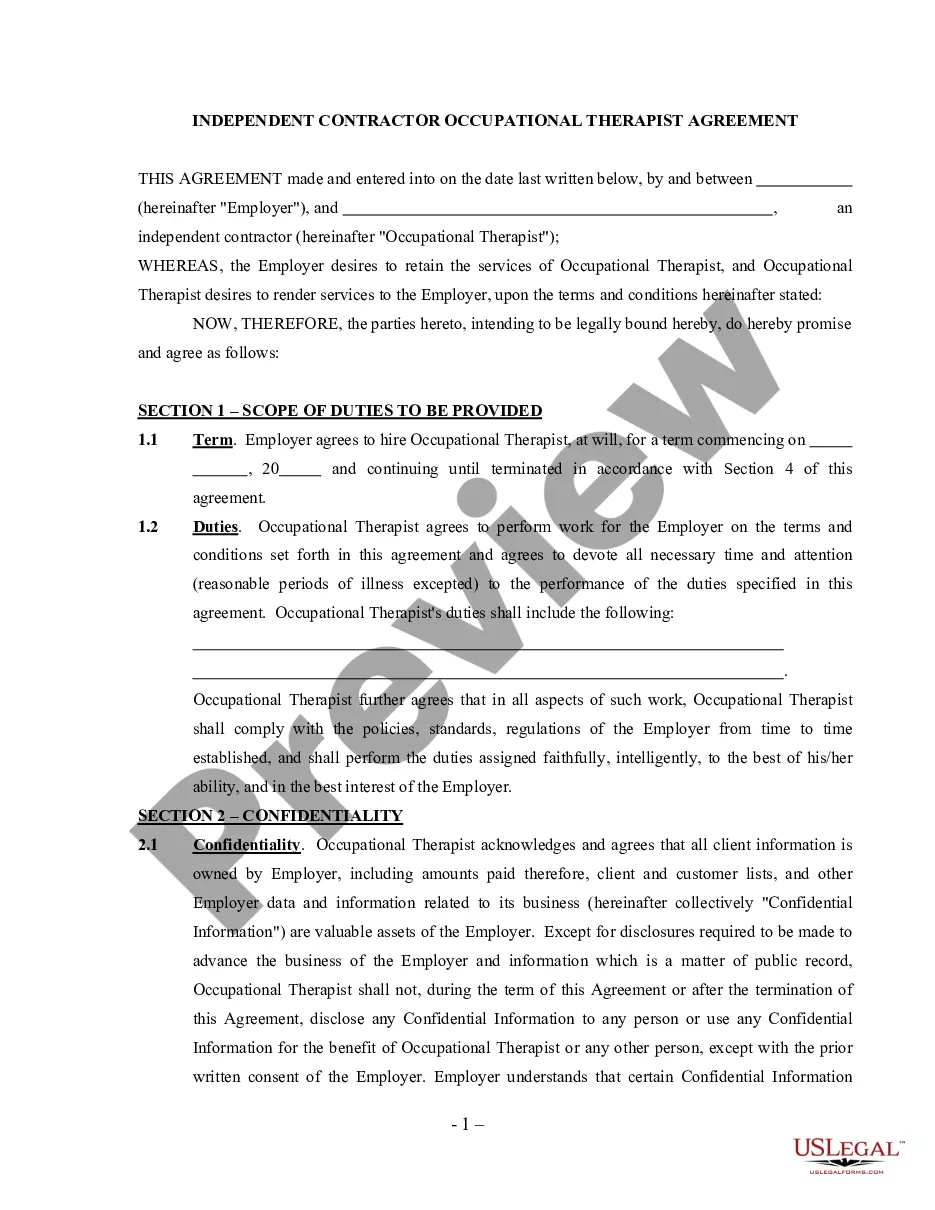
The Self-Employed Independent Contractor Agreement with Health Care Worker is a legal document that outlines the terms of engagement between a health care worker and a health care provider. This agreement defines the responsibilities of the contractor, who is typically hired to provide specific health services such as vaccinations, screenings, and health education. Unlike traditional employment agreements, this contract establishes the contractor's status as an independent professional, making it essential for defining roles, responsibilities, and liabilities within the health care context.
Main sections of this form
- Engagement: Details the contractorâs agreement to provide specified health services.
- Scope of Engagement: Outlines the responsibilities and duties of the contractor under this agreement.
- Term of Engagement: Specifies the duration the agreement is valid and conditions for renewal.
- Fees and Expenses: Defines the payment structure for the services rendered by the contractor.
- Insurance and Indemnification: Requires the contractor to have professional liability insurance.
- Termination: Conditions under which the agreement can be terminated by either party.
When to use this form
This form should be utilized when a health care provider wishes to engage independent contractors to deliver specific health care services. It is particularly relevant in scenarios where the contractor is not an employee but requires a formal agreement to outline responsibilities, remuneration, and compliance with health regulations. Examples include clinics seeking seasonal staffing or outreach programs needing temporary health professionals.
Who this form is for
Eligible users of this form include:
- Health care providers looking to hire independent contractors.
- Independent health care professionals such as nurses, medical assistants, and phlebotomists.
- Organizations managing health care services that need clear terms of engagement with contractors.
Instructions for completing this form
Follow these steps to complete the Self-Employed Independent Contractor Agreement:
- Identify the parties by entering the names and addresses of the contractor and the provider at the start of the agreement.
- Specify the scope of engagement by detailing the services the contractor will provide.
- Set the term of engagement, including start and renewal dates, according to your agreement.
- Enter the fee arrangements as outlined in the provider's policies.
- Ensure both parties sign the agreement to validate the contract.
Notarization requirements for this form
This form does not typically require notarization unless specified by local law. Ensure to verify any additional requirements specific to your jurisdiction before finalizing the agreement.
Get your form ready online
Our built-in tools help you complete, sign, share, and store your documents in one place.
Make edits, fill in missing information, and update formatting in US Legal Forms—just like you would in MS Word.
Download a copy, print it, send it by email, or mail it via USPS—whatever works best for your next step.
Sign and collect signatures with our SignNow integration. Send to multiple recipients, set reminders, and more. Go Premium to unlock E-Sign.
If this form requires notarization, complete it online through a secure video call—no need to meet a notary in person or wait for an appointment.
We protect your documents and personal data by following strict security and privacy standards.

Make edits, fill in missing information, and update formatting in US Legal Forms—just like you would in MS Word.

Download a copy, print it, send it by email, or mail it via USPS—whatever works best for your next step.

Sign and collect signatures with our SignNow integration. Send to multiple recipients, set reminders, and more. Go Premium to unlock E-Sign.

If this form requires notarization, complete it online through a secure video call—no need to meet a notary in person or wait for an appointment.

We protect your documents and personal data by following strict security and privacy standards.
Common mistakes to avoid
- Failing to specify the scope of services clearly, which may lead to misunderstandings.
- Neglecting to include insurance details, leaving liability concerns unaddressed.
- Omitting signatures or dates, which can invalidate the agreement.
Why complete this form online
- Easy access and download of the form for immediate use.
- Editable fields allow customization to meet specific needs.
- Reliability from templates drafted by licensed attorneys, ensuring legal compliance.
- Establishes the independent nature of the contractor's relationship with the provider.
- Defines legal obligations to minimize disputes regarding responsibilities and liabilities.
- Complies with local regulations, ensuring enforceability in legal contexts.
Summary of main points
- The agreement clearly defines the relationship between the contractor and the provider.
- It outlines essential terms regarding scope, payment, and responsibilities.
- Adherence to local laws is essential for the agreementâs validity and effectiveness.
Looking for another form?


Form popularity
FAQ
1099 Employees and BenefitsIf you hire a worker as a 1099 contractor, you are not required under law to offer the contractor the same benefits you provide to your actual employees. However, regulations do allow you to offer self-employed health insurance if you choose to do so.
Generally, if you run your own business and have no employees, or are self-employed, you won't qualify for group coverage. You can purchase qualified health coverage through the Marketplace for individuals and families. With an Individual Marketplace plan, you can: Find coverage for yourself and your family.
CARES Act II contains a new provision: unemployed or underemployed independent contractors who have an income mix from self-employment and wages paid by an employer are still eligible for PUA. Under CARES Act I, any such worker was typically eligible only for a state-issued benefit based on their wages.
Average premium for single coverage without Obamacare subsidies: $393. Average premium for families without Obamacare subsidies: $1,021. Average plan deductibles: $4,328 for individuals and $8,352 for families.
The Bottom Line The CARES Act makes state unemployment benefits available to self-employed, freelance, independent contractor and other gig workers unemployed or underemployed by the COVID-19 pandemic. Benefits are boosted by $600 over regular state benefits, and can be claimed for up to 39 weeks.
Finally, the new stimulus bill provides independent contractors with paid sick and paid family leave benefits through March 14, 2021.Under CARES Act II, unemployed or underemployed independent contractors who have an income mix from self-employment and wages paid by an employer are still eligible for PUA.
Does a 1099 employee count as an eligible employee? No. A 1099 employee is a self-employed independent contractor who works for you and can work for other employers. Therefore, no employer-employee relationship exists and they are not eligible for your group health insurance plan.
If you hire a worker as a 1099 contractor, you are not required under law to offer the contractor the same benefits you provide to your actual employees. However, regulations do allow you to offer self-employed health insurance if you choose to do so.